I have been making garments for American brands for over twenty years. I have sewn millions of labels into millions of garments. I have worked with new brands that are just starting. I have worked with established brands that have been in the market for decades. One question comes up again and again. "What kind of label should I use?" New brands often choose printed labels. They are cheaper. They are easy. But the brands that have been in the market for a long time, the premium brands, the brands that care about every detail, they choose woven labels. There is a reason for this. Woven labels look better. They last longer. They feel more substantial. They communicate quality before a customer even tries on the garment.
Woven labels are preferable for premium brand logos on fabric because they offer superior durability, a higher perceived value, better customization options, and a professional finish that printed labels cannot match. A woven label will last the lifetime of the garment. It will not fade, crack, or peel. The texture adds a tactile quality that signals craftsmanship. For premium brands, the label is not just a legal requirement. It is a statement. It is the final detail that tells the customer, "This is quality."
This is what I want to share with you today. I am a factory owner who has worked with both woven and printed labels for decades. I know the differences. I know the costs. I know what works and what does not. I will walk you through why woven labels are the preferred choice for premium brands. I will use real examples from my own production floor.
How does durability differ between woven and printed labels?
The most important difference between woven and printed labels is how long they last. A premium brand’s label should last as long as the garment. If the label fades or cracks before the garment wears out, that is a problem.

What happens to printed labels over time?
Printed labels are made by printing ink onto a synthetic material. The ink sits on the surface. Over time, washing and wear break down the ink. Colors fade. Text cracks. Edges blur.
I remember a client from Los Angeles in 2021. They were a new brand. They wanted to save money. They chose printed labels. The garments were beautiful. The fit was great. The fabric was high quality. But after 10 washes, the labels started to crack. The brand name became hard to read. Customers complained. They thought the garment was fake or low quality. The client switched to woven labels for their next collection. They never went back.
Here is a durability comparison based on our testing:
| Property | Printed Label | Woven Label |
|---|---|---|
| Wash resistance | 10-30 washes before fading | 100+ washes, no visible change |
| Abrasion resistance | Prone to cracking on edges | Resists abrasion well |
| Color fastness | Inks fade over time | Thread colors remain stable |
| Flexibility | Can crack with fabric stretch | Flexes with fabric |
| Expected lifespan | 6-12 months | Lifetime of garment |
How do woven labels maintain their appearance?
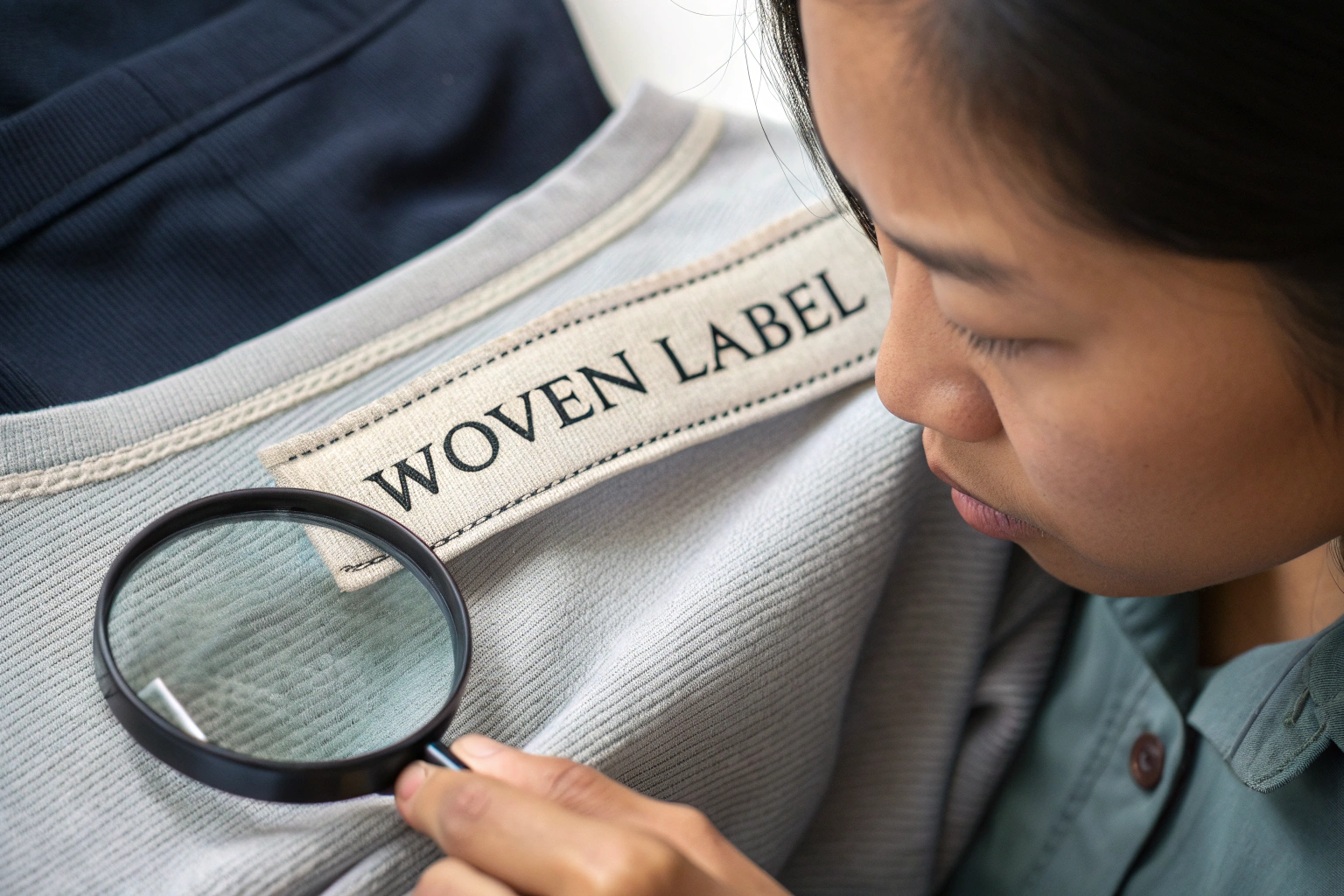
Woven labels are made by weaving threads together. The design is created by the threads themselves. It is not printed on top. This means the label is one piece of fabric. The colors are in the threads. They do not fade easily. The edges are clean. The text is sharp.
A client in Chicago sells high-end children’s clothing. They have used woven labels for ten years. I recently saw a garment they made in 2018. The label looked as good as new. The garment was worn. The fabric had faded. But the label was still sharp. The parent who owned the garment told the client, "I knew it was quality when I saw the label still looked perfect after all those washes."
At Shanghai Fumao, we recommend woven labels to clients who care about longevity. The extra cost is small compared to the value it adds.
How do woven labels enhance brand perception?
The label is the first thing many customers look at. They check the brand name. They check the size. They check the care instructions. A woven label feels substantial. It signals quality before the customer tries on the garment.

What is the tactile experience of a woven label?
Woven labels have texture. They have weight. They feel like a part of the garment. Printed labels feel flat. They feel like an afterthought.
I had a client in New York who sold premium denim. They told me a story about a customer. The customer was trying on jeans. They felt the woven label at the back waistband. They said, "This feels like a quality brand." That small detail made a difference. The customer bought the jeans. They became a repeat customer.
Here is how customers perceive different label types:
| Label Type | Customer Perception | Brand Message |
|---|---|---|
| Woven label | Quality, attention to detail, premium | "We care about every detail" |
| Printed label | Basic, cost-conscious, entry-level | "We focus on the garment, not the details" |
| No label | Generic, unbranded, low quality | No brand message |
How does a woven label support brand positioning?
Your label is your brand’s signature. It should reflect your brand’s position in the market. If you are a premium brand, you need a premium label.
A client in San Francisco started as a mid-tier brand. They used printed labels. As they grew, they moved upmarket. They improved their fabrics. They improved their fits. But customers still saw them as mid-tier. They could not figure out why. I suggested they change to woven labels. They did. The difference was immediate. Customers started commenting on the "attention to detail." The brand perception shifted.
At Shanghai Fumao, we tell our clients that the label is the finishing touch. It is the last thing you add to the garment. But it is the first thing the customer sees. Make it count.
What customization options do woven labels offer?
Woven labels offer more customization than printed labels. You can choose thread colors, border styles, and finishing options. This allows you to create a label that is uniquely yours.

What design elements can you customize?
With woven labels, you have many options. You can choose the thread colors. You can use metallic threads. You can add borders. You can choose different folding styles.
A client in Austin wanted a label that matched their brand’s vintage aesthetic. They chose a woven label with a cream background, navy text, and a merrowed edge. The label looked like a vintage patch. It fit their brand perfectly. A printed label could not have achieved the same effect.
Here are the customization options for woven labels:
| Design Element | Options | Effect |
|---|---|---|
| Thread colors | Any Pantone color, multiple colors | Rich, detailed logos |
| Metallic threads | Gold, silver, copper | Luxury, premium feel |
| Background | Satin, taffeta, damask | Texture variation |
| Border | Merrowed, heat-cut, laser-cut | Clean or vintage finish |
| Folding | Flat, folded ends, center fold | Different placement options |
How do you achieve fine detail in woven labels?
Modern weaving technology allows for very fine detail. You can have small text. You can have complex logos. You can have registered trademarks.
I remember a client in Seattle who had a logo with a very small copyright symbol. They were worried it would not show up on a woven label. We tested it. The weaver was able to capture the detail. The symbol was clear and readable. The client was impressed.
Here is a detail comparison:
| Detail Type | Woven Label | Printed Label |
|---|---|---|
| Minimum text size | 4pt readable | 6pt readable |
| Logo complexity | High (multi-color, shading) | Moderate (flat colors) |
| Fine lines | Sharp, clean | Can blur or bleed |
| Trademark symbols | Clear and readable | Often lost or blurry |
At Shanghai Fumao, we work with weavers who specialize in fine detail. We can help you achieve the look you want, even with complex designs.
How does label placement and finishing affect garment quality?
A good label is not just about how it looks. It is also about how it is attached. A label that is sewn poorly can ruin a garment. It can scratch the neck. It can come loose. It can look cheap.

How do you attach woven labels correctly?
Woven labels are designed to be sewn in. They have edges that can be folded or finished. They sit flat against the fabric. They do not scratch.
A client in Denver had a problem with printed labels. The printed labels were heat-sealed. They had stiff edges. Customers complained that the labels scratched their necks. The client switched to woven labels with folded ends. The soft edges did not scratch. The complaints stopped.
Here are common label attachment methods:
| Method | Best For | Comfort Level |
|---|---|---|
| Folded ends, sewn | Neck labels, side seams | Excellent, no exposed edges |
| Flat, sewn on all sides | Care labels, back neck | Good, but edges exposed |
| Heat seal | Printed labels only | Can be stiff, scratchy |
| Loop label | Garment loops for hanging | Good, not in contact with skin |
How do you choose the right label finish?
The finish of the label affects both comfort and appearance. For neck labels, comfort is most important. For side seam labels, durability is more important.
A client in Portland makes premium activewear. They use woven labels with folded ends for the neck. They use smaller woven labels for the side seam. Both are comfortable. Both last through many washes.
Here is a finish guide:
| Finish | Appearance | Comfort | Best Application |
|---|---|---|---|
| Merrowed edge | Vintage, clean | Good | Outerwear, back neck |
| Heat-cut | Modern, precise | Good | Side seams, small labels |
| Folded ends | Professional, soft | Excellent | Neck labels |
| Laser-cut | Very precise, modern | Good | High-end, minimalist |
At Shanghai Fumao, we advise our clients on label placement and attachment. We want the label to look good and feel good.
What is the cost difference between woven and printed labels?
Many brands choose printed labels because they are cheaper. This is true in the short term. But the cost difference is smaller than most people think. And the value difference is significant.

How much more do woven labels cost?
Woven labels cost more per unit than printed labels. But the difference is usually small. For a typical order, the cost difference is $0.10 to $0.30 per garment.
A client in Boston was considering switching to woven labels. They thought it would add $1 per garment. I showed them the actual cost. For their order of 5,000 units, the additional cost was $1,000 total, or $0.20 per garment. They decided the brand value was worth the small increase.
Here is a cost comparison for a typical label (2.5cm x 5cm):
| Label Type | Setup Cost | Per Label Cost (5,000 units) | Total Cost |
|---|---|---|---|
| Printed label | $50-$100 | $0.08-$0.12 | $450-$700 |
| Woven label | $80-$150 | $0.15-$0.25 | $830-$1,400 |
| Woven with metallic | $100-$200 | $0.20-$0.35 | $1,100-$1,950 |
Is the investment worth it?
For premium brands, the answer is yes. The additional cost is small. The brand value is large. A woven label communicates quality. It builds trust. It supports a higher price point.
A client in Miami increased their retail price by $5 after switching to woven labels. They told me, "The label alone justified the price increase. Customers see it and think premium." Their sales did not drop. They actually increased because the brand perception improved.
At Shanghai Fumao, we help clients make this decision. We provide samples of both options. We explain the costs. We let them choose based on their brand positioning. But for premium brands, we always recommend woven labels.
Conclusion
Woven labels are preferable for premium brand logos on fabric for clear reasons. They last longer. They do not fade or crack. They feel substantial and professional. They offer more customization options. They can be attached comfortably. And while they cost slightly more than printed labels, the investment is small compared to the brand value they create.
I have seen this play out in my factory for over twenty years. The brands that care about quality choose woven labels. The brands that want to be seen as premium choose woven labels. The brands that build lasting relationships with their customers choose woven labels. The label is a small detail. But in premium apparel, small details matter.
When a customer picks up your garment, they look at the label. They feel it. They see if it is well-made. That moment shapes their perception of your brand. A woven label tells them you care about quality. A printed label tells them you care about cost. Which message do you want to send?
At Shanghai Fumao, we work with both printed and woven labels. We can help you choose the right option for your brand. But if you are building a premium brand, we will encourage you to choose woven. The extra cost is worth it.
If you are considering your label options, I invite you to talk to us. Let us show you samples. Let us discuss your brand positioning. Let us help you choose the label that represents your brand best.
You can contact our Business Director, Elaine, directly. She can walk you through the options. She can show you examples of woven labels we have made for other premium brands. She can help you understand the costs and the benefits. Her email is: elaine@fumaoclothing.com. Let us make your label a statement of quality.