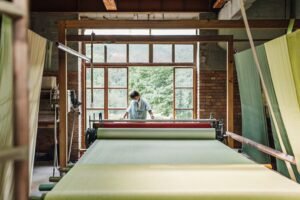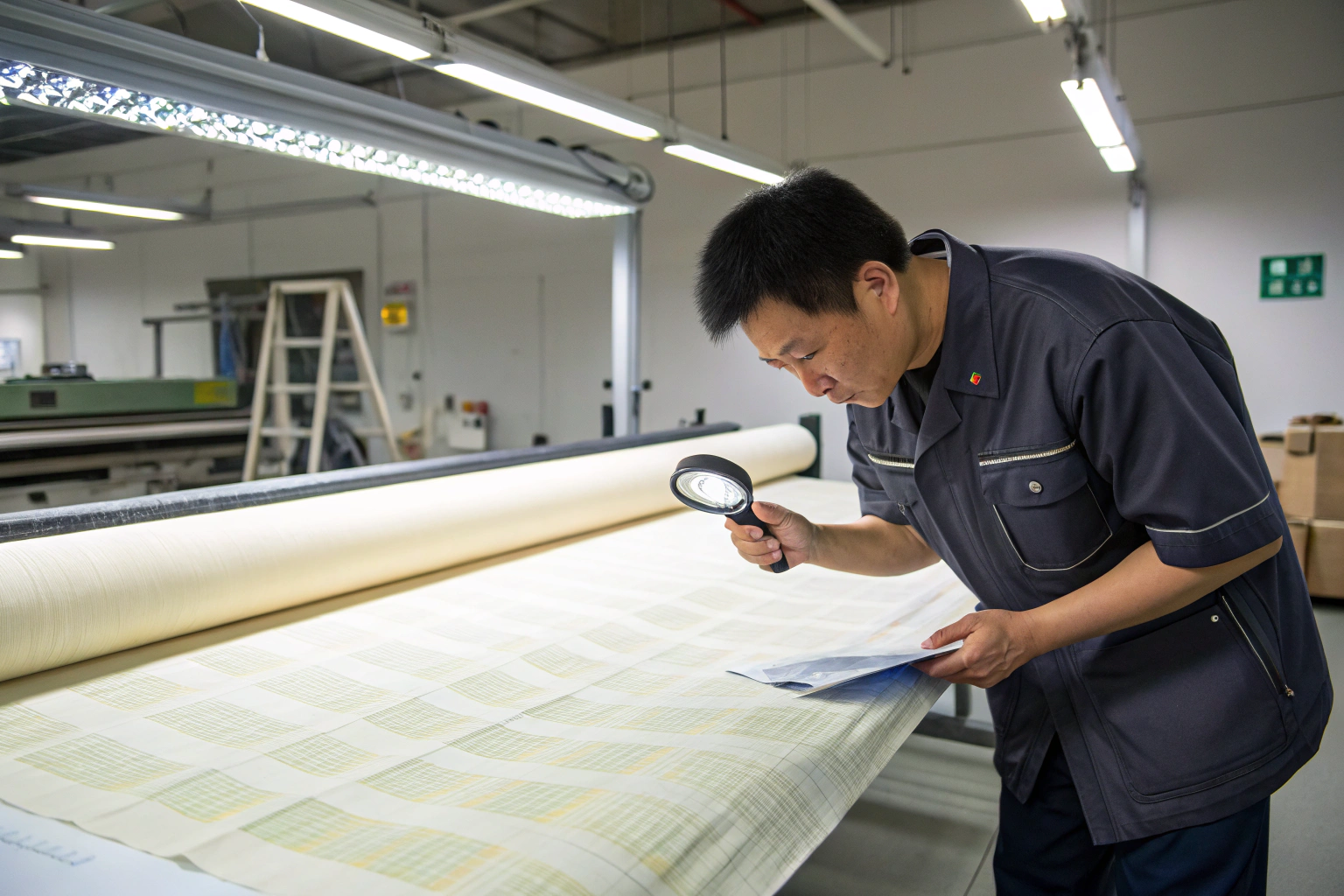
I have been in the garment manufacturing business for over twenty years. I have seen brands succeed. I have seen brands fail. The ones that fail often make the same mistake. They order fabric without really knowing what they are getting. They trust a supplier. They approve a sample. Then they order 10,000 yards. When the bulk fabric arrives, it is different. The color is off. The weight is wrong. The texture is not the same. The garments come out wrong. The brand loses money. They lose time. They lose customer trust. I have seen this happen so many times. And each time, I think the same thing. If only they had known how to check the fabric before they ordered.
Identifying high-quality fabric before placing a bulk order requires a systematic approach. You must examine the fabric’s weight and density, test its strength and stretch, check for color consistency and fastness, evaluate the hand feel and drape, and verify the finishing details. You cannot rely on a sample alone. You need to test. You need to measure. You need to ask the right questions. When you do these things, you can spot problems before they become costly mistakes.
This is what I want to share with you today. I am a factory owner who handles fabric every day. I know what to look for. I will walk you through the steps to identify quality fabric. I will use real examples from my own experience. By the end, you will know how to protect your brand from bad fabric.
How do you check fabric weight and density?
The first thing I check on any fabric is the weight. Weight tells you a lot about quality. If the weight is wrong, everything else will be wrong.
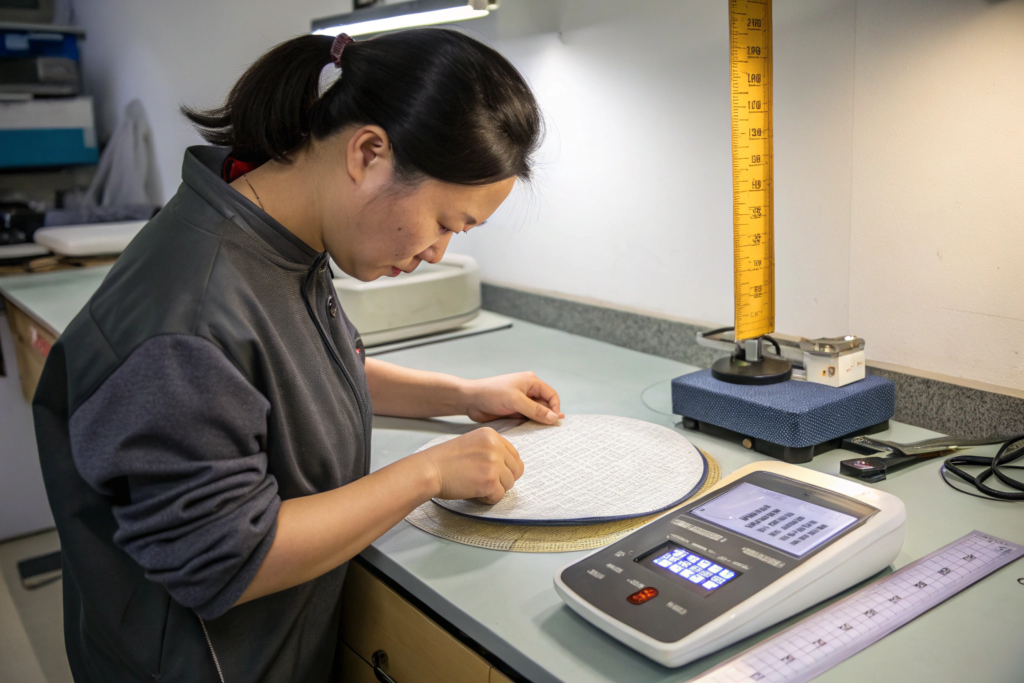
What is GSM and why does it matter?
GSM stands for grams per square meter. It is the standard measure of fabric weight. A higher GSM usually means a heavier, more substantial fabric. A lower GSM means a lighter, more delicate fabric.
I remember a client from Boston in 2022. They ordered a line of t-shirts. They wanted a 180 GSM cotton jersey. They approved the sample. We ordered the fabric. When the bulk fabric arrived, I checked the weight. It was 165 GSM. The supplier had substituted a lighter fabric. I rejected it. The supplier had to remake the fabric. It cost them money and time. But if I had not checked, the client would have received shirts that were lighter and more sheer than they expected.
Here is how to check GSM:
| Step | Action | What to Look For |
|---|---|---|
| 1 | Cut a sample using a GSM cutter | Consistent size, clean edges |
| 2 | Weigh the sample on a digital scale | Accurate reading to 0.1 gram |
| 3 | Calculate GSM if not using cutter | Weight in grams × 100 = GSM |
| 4 | Compare to specification | Should be within 3-5% of target |
How do you measure fabric density and thread count?
Density is about how tightly the fabric is woven or knitted. Higher density usually means better quality. The fabric will be stronger and more resistant to wear.
A client in Seattle wanted a high-quality poplin shirt fabric. They specified a thread count of 80s. The sample looked good. But when the bulk arrived, the thread count was lower. The fabric was looser. The shirts felt cheaper. The client was unhappy.
We now check density on every fabric. For woven fabrics, we count threads per inch. For knits, we check the number of courses and wales per inch.
Here is a density checklist:
| Fabric Type | What to Check | Good Range | Red Flag |
|---|---|---|---|
| Cotton poplin | Thread count (warp + weft) | 80s – 120s | Below 60s |
| Oxford shirt fabric | Thread count | 60s – 80s | Below 40s |
| Jersey knit | Courses per inch | 40-60 | Below 35 |
| Denim | Ounces per yard | 10-14 oz | Inconsistent |
At Shanghai Fumao, we test every fabric batch for weight and density. We do not trust supplier specifications. We measure ourselves. This catches problems before production.
How do you test fabric strength and durability?
Fabric that looks good can still be weak. You need to test strength. This is especially important for children’s wear, activewear, and any garment that will get heavy use.
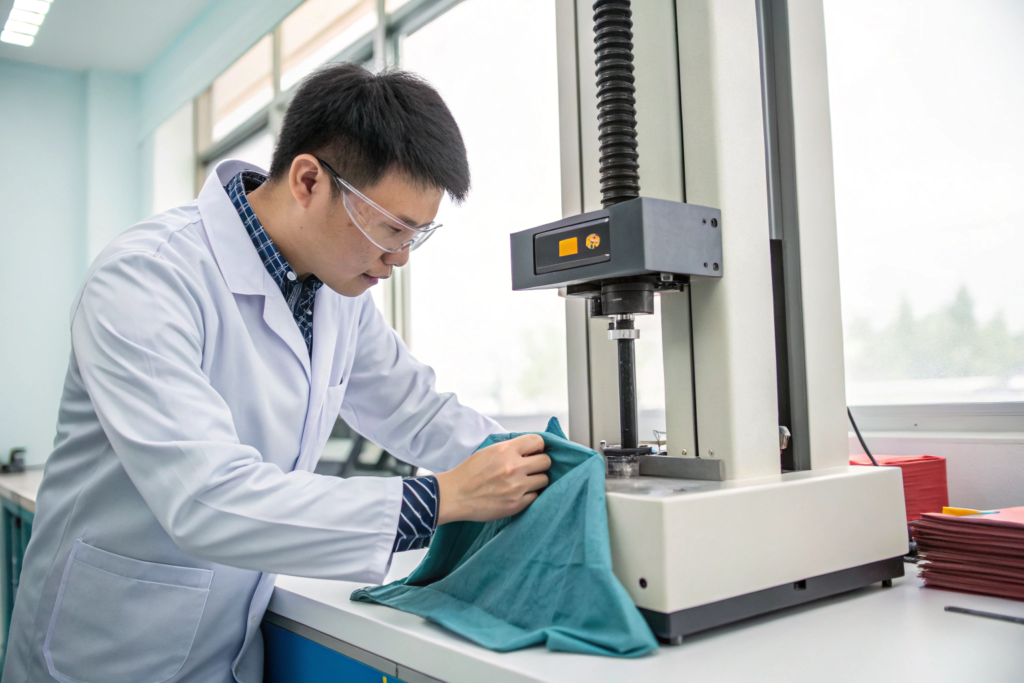
What strength tests should you perform?
There are several strength tests. The most important are tensile strength and tear strength. Tensile strength measures how much force the fabric can take before breaking. Tear strength measures how easily the fabric tears once it has a small cut.
I had a client in Colorado who made kids’ outdoor pants. They had a problem with fabric tearing at the knees. The fabric looked good. It felt good. But it was weak. We tested it. The tear strength was only 1.5 pounds. Good quality fabric for this application should have tear strength above 3 pounds.
Here are the key strength tests:
| Test | What It Measures | Good Value (Woven Cotton) | Test Method |
|---|---|---|---|
| Tensile strength (warp) | Breaking force along length | 50+ lbs | Grab test |
| Tensile strength (weft) | Breaking force across width | 40+ lbs | Grab test |
| Tear strength | Resistance to tearing | 3+ lbs | Elmendorf tear test |
| Bursting strength | Resistance to pressure | 40+ psi | For knits only |
How do you test for pilling and abrasion?
Pilling is those little balls of fiber that form on fabric surface. It makes clothes look old and worn. Abrasion resistance is how well the fabric holds up to rubbing.
A client in Florida had a problem with pilling on their yoga pants. The fabric looked good initially. But after a few washes, pills formed. The pants looked cheap. Customers complained.
We now test all fabrics for pilling. We use a Martindale abrasion tester. This machine rubs the fabric in a circular motion. We check for pilling after 500, 1,000, and 2,000 cycles.
Here is a pilling rating guide:
| Rating | Description | Acceptable For |
|---|---|---|
| 5 | No pilling | Premium garments |
| 4 | Slight surface fuzzing | Good quality |
| 3 | Moderate pilling | Acceptable for some applications |
| 2 | Significant pilling | Not acceptable for most apparel |
| 1 | Severe pilling | Reject |
At Shanghai Fumao, we test every new fabric for strength and pilling. We do not wait for problems. We identify them before production.
How do you evaluate color and dye quality?
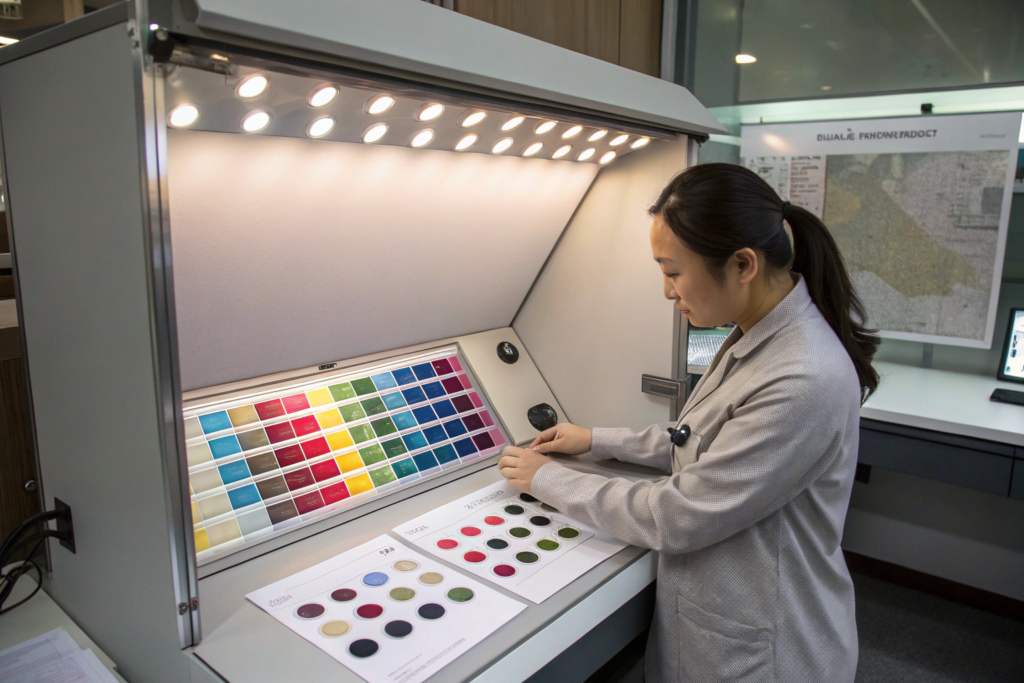
Color is what customers see first. Bad color ruins a garment. You need to check color consistency and fastness before bulk production.
How do you check color consistency across a roll?
Fabric can vary within a single roll. The edges can be different from the center. The beginning can be different from the end. You need to check multiple points.
I remember a client in New York who ordered navy blue fabric. The sample looked great. But when we inspected the bulk, the color varied. The center of the roll was lighter than the edges. This is called "center to selvedge" variation. We rejected the fabric. The supplier had to re-dye.
Here is how to check color consistency:
| Check | What to Do | Red Flag |
|---|---|---|
| Center vs. selvedge | Compare edge and middle of roll | Visible difference |
| Beginning vs. end | Compare start and end of roll | Color shift |
| Roll to roll | Compare multiple rolls | Inconsistent across rolls |
| Batch to batch | Compare different production batches | Significant variation |
How do you test color fastness?
Color fastness is how well the color stays. It should not fade in washing. It should not bleed onto other clothes. It should not change in sunlight.
A client in Texas had a problem with red shirts bleeding in the wash. The shirts looked fine when new. But after the first wash, the color ran. Pink shirts became stained. The client had to refund many customers.
We now test color fastness on every fabric:
| Test | What It Checks | Acceptable Result |
|---|---|---|
| Wash fastness | Color change and bleeding after washing | 4-5 rating (good to excellent) |
| Rubbing fastness | Color transfer when rubbed | 4-5 rating for dry and wet |
| Light fastness | Color change from sunlight | 4+ rating for extended exposure |
| Perspiration fastness | Color change from sweat | 4+ rating for activewear |
At Shanghai Fumao, we have a lab for color testing. We check every fabric batch. We catch problems before they reach your customers.
How do you evaluate hand feel and drape?
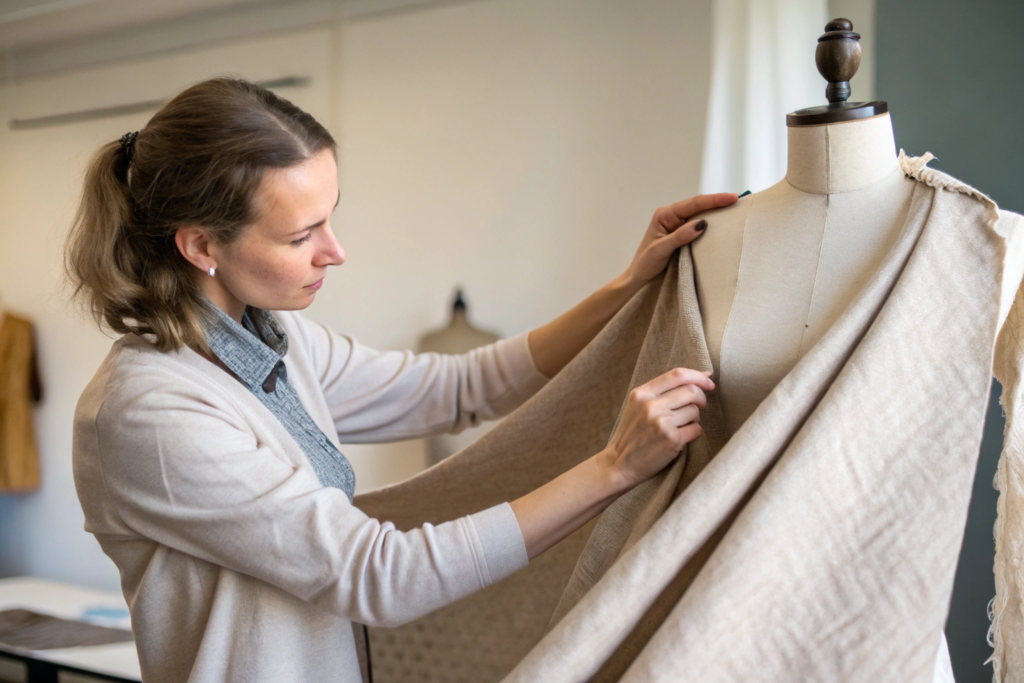
Hand feel is subjective. But it is critical. The fabric must feel right for its intended use. You cannot test hand feel by looking. You need to touch.
How do you assess hand feel consistently?
Hand feel is about softness, smoothness, and weight. Different people describe it differently. You need a consistent method.
I have a client in San Francisco who is very particular about hand feel. They do not trust samples. They visit our factory. They touch the fabric themselves. They bring their own reference samples. They compare side by side.
Here is a hand feel checklist:
| Attribute | What to Feel | Good For |
|---|---|---|
| Softness | How gentle it feels against skin | T-shirts, underwear, children’s wear |
| Smoothness | Surface texture, lack of roughness | Blouses, shirts, dresses |
| Body | Stiffness or flexibility | Jackets, structured garments |
| Drape | How it falls and folds | Dresses, skirts, flowy tops |
How do you test fabric shrinkage?
Shrinkage is a common problem. Fabric that shrinks too much will not fit after washing. You need to test shrinkage before production.
A client in Chicago learned this the hard way. They ordered cotton shirts. The sample was fine. But the bulk fabric shrank 8% in length. The shirts were too short after the first wash. Customers returned them.
We now test shrinkage on every fabric:
| Test | Method | Acceptable |
|---|---|---|
| Wash shrinkage | Wash and dry, measure change | Less than 3% in length and width |
| Relaxation shrinkage | First wash, normal cycle | Less than 2% for quality fabrics |
| Progressive shrinkage | Multiple washes | Stabilizes after 3 washes |
At Shanghai Fumao, we pre-test shrinkage. We adjust patterns if needed. We make sure your garments fit after washing.
How do you verify finishing and coating quality?
Many fabrics have special finishes. Water repellent. Wrinkle resistant. Anti-microbial. These finishes must be consistent and durable.
How do you test functional finishes?
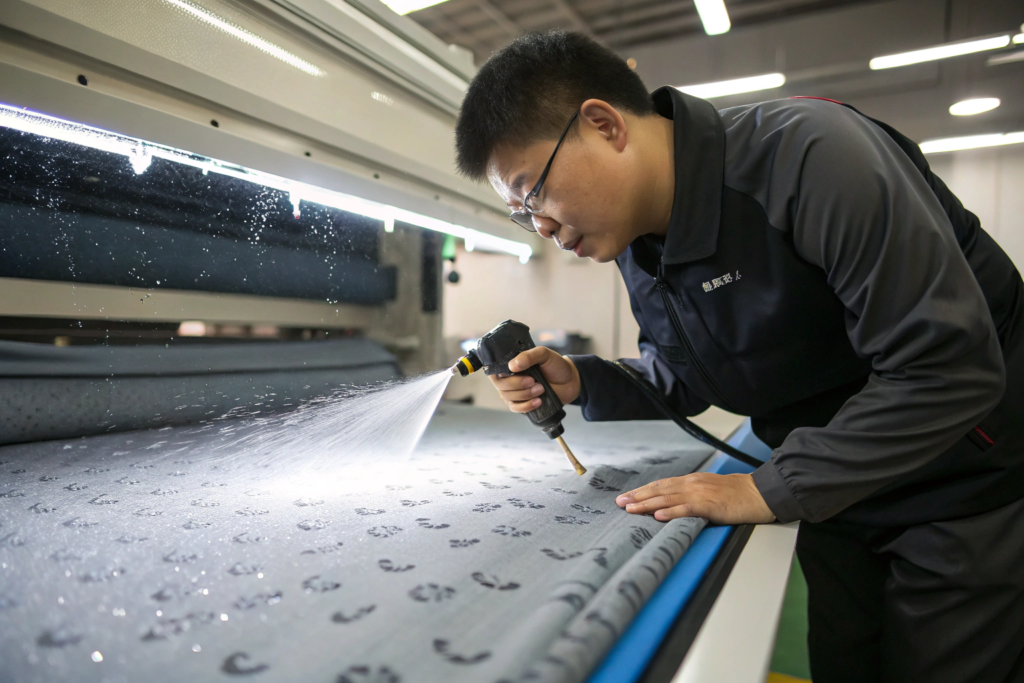
Functional finishes are not visible. You need to test them. A client in Oregon wanted water-repellent jackets. The sample was good. But the bulk fabric had uneven finish. Some parts repelled water. Some parts did not.
We now test finishes with specific methods:
| Finish | Test Method | What to Check |
|---|---|---|
| Water repellent | Spray test | Water beads and rolls off |
| Wrinkle resistant | Wrinkle recovery test | Fabric returns to flat |
| Anti-microbial | Lab test for bacterial growth | Inhibits bacteria as claimed |
| UV protection | UV transmittance test | Blocks UV rays as rated |
How do you check for finishing chemicals?
Some finishes contain chemicals that can be harmful. European buyers are especially strict about this. You need to know what is on your fabric.
A client in Germany rejected a shipment because the fabric had traces of formaldehyde. The fabric was water-repellent. The finish contained formaldehyde. The buyer’s testing caught it.
We now test for restricted substances:
| Substance | Why It Matters | Limit |
|---|---|---|
| Formaldehyde | Skin irritant, potential carcinogen | Below 75 ppm (children’s wear: below 20 ppm) |
| Heavy metals | Toxic, environmental concern | Below OEKO-TEX limits |
| PFAS | Environmental persistence | Increasingly restricted |
| Phthalates | Hormone disruptors | Banned in children’s products |
At Shanghai Fumao, we work with chemical suppliers who provide safe finishes. We test our fabrics. We maintain OEKO-TEX certification. We ensure your products are safe.
Conclusion
Identifying high-quality fabric before placing a bulk order is not difficult. But it requires discipline. You need to check weight and density. You need to test strength and durability. You need to evaluate color and dye quality. You need to feel the hand and test shrinkage. And you need to verify any special finishes.
I have seen too many brands skip these steps. They trust a sample. They trust a supplier. They place a big order. Then they get bad fabric. They lose money. They lose time. They lose customers.
Do not let this happen to you. Take the time to test. Ask for lab dips. Request bulk fabric samples. Visit the factory if you can. Work with a factory that has a quality control system. A good factory will test the fabric for you. They will catch problems before production.
At Shanghai Fumao, we do this for our clients. We test every fabric batch. We check weight, strength, color, shrinkage, and finishes. We reject fabric that does not meet standards. We want your garments to be right. We want your customers to be happy.
If you are looking for a factory that takes fabric quality seriously, I invite you to talk to us. Let us show you our quality control process. Let us prove that we can deliver the quality you need.
You can contact our Business Director, Elaine, directly. She can walk you through our fabric testing process. She can explain how we ensure quality before production starts. Her email is: elaine@fumaoclothing.com. Let us build quality into your products from the start.