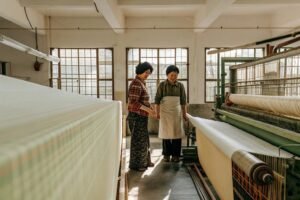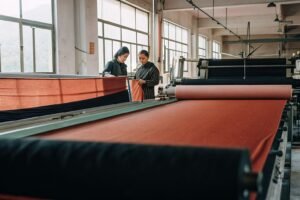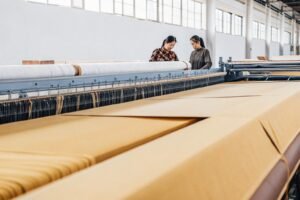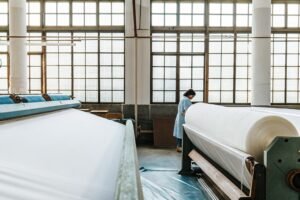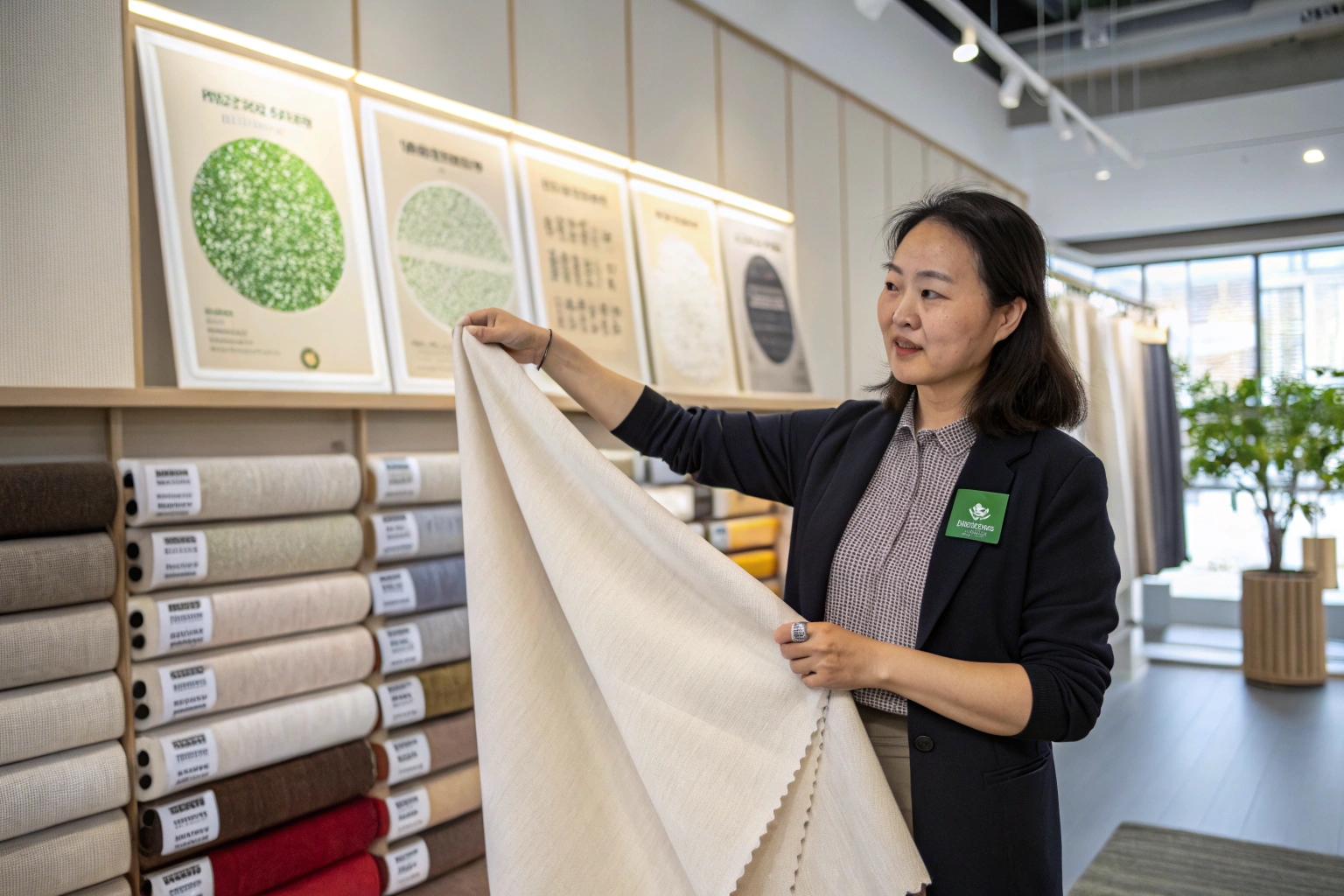
You’ve made the decision. Your brand is going sustainable. No more virgin polyester. No more conventional cotton grown with heavy pesticides. You want fabrics that tell a story your customers can feel good about. But then the questions start. Where do I actually find certified sustainable fabrics? How do I know the certifications are real? And how do I scale sustainability from a sample to a 20,000-yard production run without losing my mind or my margin?
I’ve been answering these questions for over a decade. I watched the sustainable textile movement grow from a niche conversation to a mainstream demand. At Shanghai Fumao, we made our first sustainable fabric in 2012. It was a small run of organic cotton for a European babywear brand. Since then, we’ve invested over ¥550 million in green production. Today, sustainable fabrics represent 30% of our export business, with year-over-year growth that shows no sign of slowing.
Let me walk you through exactly how to source sustainable knitted fabric from us. I’ll cover the certifications you need to know, the sustainable fibers we work with, how we verify our claims, and how we help brands of all sizes make the transition to sustainable sourcing. I’ll share real projects, real challenges, and real solutions from our factory floor in Keqiao.
What Certifications Do You Actually Need for Sustainable Knitted Fabric?
If you’re sourcing sustainable fabric, certifications are your proof. But the world of textile certifications can be confusing. There are dozens of them. Some are meaningful. Some are marketing. And some are outright greenwashing. I want to help you understand which certifications actually matter and how to verify them.
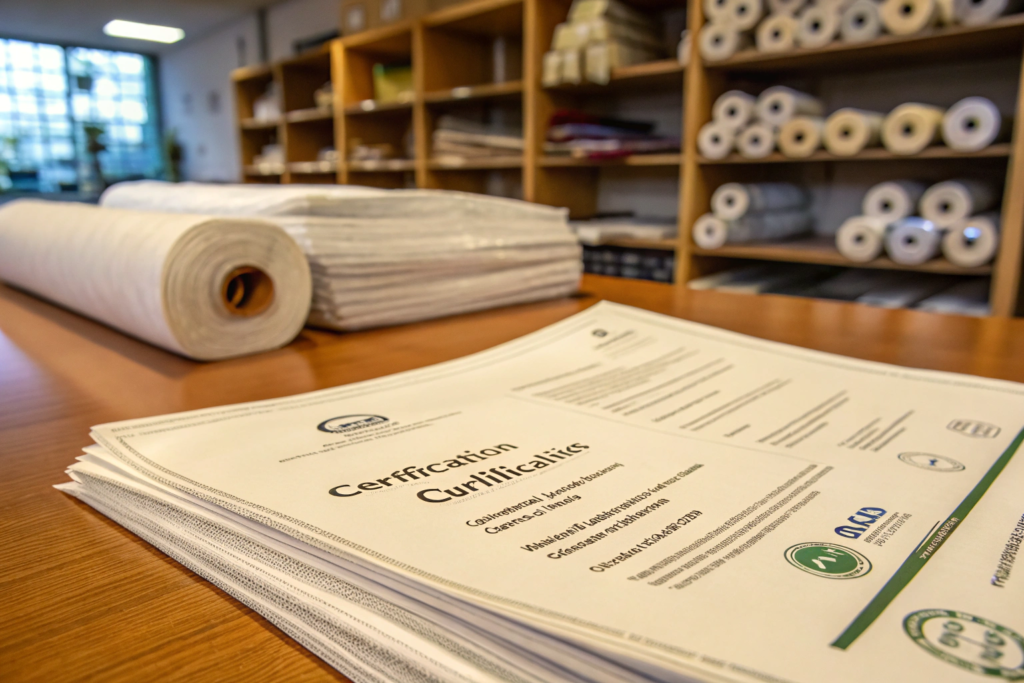
Which Certifications Do We Hold and Why?
We work with several certification bodies. Each serves a different purpose. Here’s what you need to know:
GOTS (Global Organic Textile Standard)
This is the gold standard for organic fibers. GOTS covers the entire supply chain—from farming to manufacturing. It requires that at least 70% of the fibers are organic, and it restricts the use of harmful chemicals in processing. For us, GOTS certification means our organic cotton is traceable from the field in Xinjiang to the finished fabric roll. We issue GOTS transaction certificates with every order. Without that certificate, your organic claim is just words.
In 2023, a client from Denmark asked us to supply GOTS-certified organic cotton jersey for a children’s wear line. They had been burned before by a supplier who claimed organic but couldn’t produce the certificate. We walked them through our certification chain. We showed them the farm certificates, the yarn mill certificates, and our own processing certificates. They placed an order for 8,000 yards. Six months later, they told us their auditor verified every step. That’s the level of documentation we maintain.
GRS (Global Recycled Standard)
This is the standard for recycled materials. GRS verifies that recycled content is what it claims to be. It also requires environmental responsibility in processing. We use GRS for our recycled polyester and recycled nylon. Our rPET comes from post-consumer plastic bottles. We can trace each batch back to the source.
A client from California in early 2024 wanted a fabric made from 100% recycled polyester for an activewear collection. They specifically asked for GRS certification because their retail partners required it. We sourced GRS-certified yarn from a supplier in Taiwan. We produced the fabric, and our GRS certificate covered the entire chain. The client’s products are now in stores with the GRS logo on the hang tag. That logo sells product.
Oeko-Tex Standard 100
This is the certification for harmful substances. Even if your fabric isn’t organic or recycled, Oeko-Tex tells you it’s safe for human use. Every fabric we produce for sensitive applications—children’s wear, underwear, bedding—goes through Oeko-Tex testing. We test for over 100 harmful substances, from formaldehyde to heavy metals.
I remember a client from Japan in 2022 who needed Oeko-Tex Class I certification for a line of baby blankets. Class I is the strictest—it’s for products for babies under 36 months. We ran the tests in our CNAS-accredited lab. The fabric passed. The client told us, “I’ve worked with suppliers who said they were Oeko-Tex certified but couldn’t show me the test report. You sent me the actual data.” That’s how we work.
Other Certifications We Support
We also work with BCI (Better Cotton Initiative) for cotton that’s not certified organic but is grown with better practices. We use FSC-certified fibers for some of our rayon and modal. And for our Tencel™ products, we work directly with Lenzing, the Austrian company that licenses the trademark. Lenzing has its own certification system that guarantees the fibers come from sustainable wood sources.
How Do You Verify That Certifications Are Real?
Here’s something that frustrates me. Some suppliers will tell you they’re certified, but they can’t show you the documentation. Or they have one certificate from five years ago that’s long expired. That’s not certification. That’s a sales pitch.
When you source from us, here’s what you can expect:
-
Transaction Certificates: For every GOTS or GRS order, we issue a transaction certificate from the certifying body. This certificate matches the specific order. It’s not a generic document.
-
Test Reports: For Oeko-Tex and other testing, we provide the actual lab report. You can see the test methods, the results, and the date of testing.
-
Chain of Custody: We can trace any certified fabric back to the source. If you ask us where the organic cotton came from, we can tell you the farm region. If you ask where the recycled polyester was processed, we can show you the mill.
In 2023, a client from the UK had a sustainability auditor visit our facility. The auditor spent two days going through our documentation. They checked yarn mill certificates, our processing records, and our transaction certificates. Everything matched. The client told me afterward, “Your documentation is better than most European suppliers.” That’s because we’ve been doing this for years. We know what auditors look for.
What Sustainable Fibers Can You Source from Us?
The sustainable fiber landscape has expanded dramatically in the past decade. When I started, the only options were organic cotton and maybe some recycled polyester. Now we work with a dozen different sustainable fibers, each with its own properties and applications.
What Are the Most Popular Sustainable Knitted Fabrics We Produce?
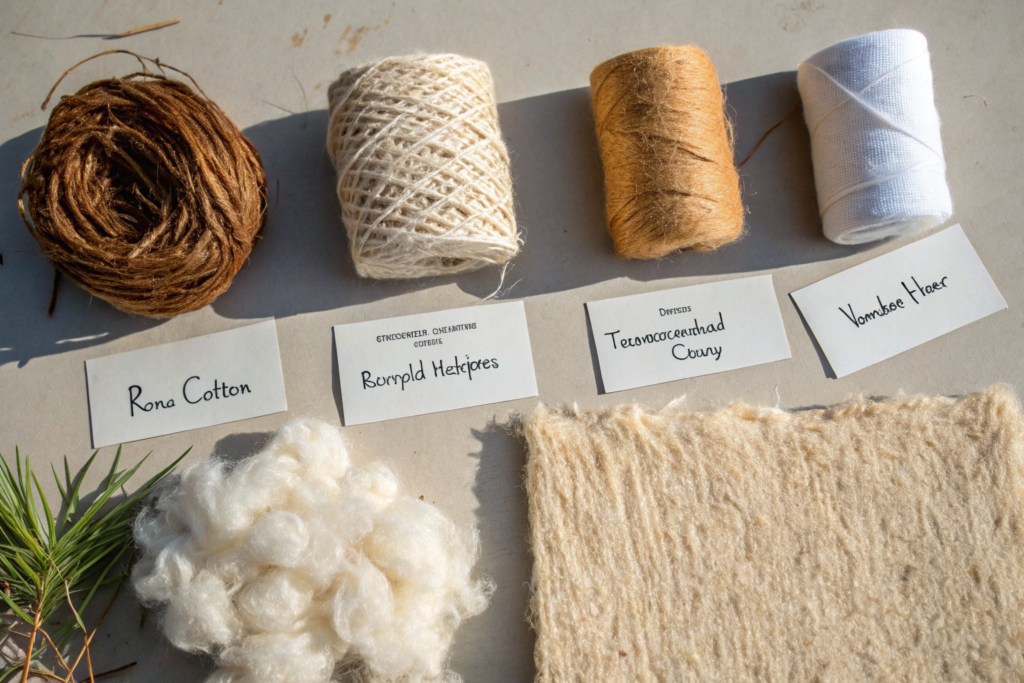
Let me break down the sustainable knitted fabrics we produce most often. I’ll tell you what they’re good for and what you should know about each.
Organic Cotton Jersey
This is our bread and butter. Organic cotton is grown without synthetic pesticides or fertilizers. The yarn is softer and often more durable than conventional cotton. We produce organic cotton jersey in weights from 140gsm for lightweight t-shirts to 320gsm for heavy sweatshirts.
We have a client in Australia who uses our 180gsm organic cotton jersey for their entire basics collection. They’ve been with us for three years. They order 15,000 yards per season. They chose organic not just for the sustainability story, but because the fabric feels better against the skin. Their customers notice the difference.
Recycled Polyester (rPET)
Recycled polyester comes from post-consumer plastic bottles. The bottles are cleaned, shredded, melted, and spun into new fiber. It uses about 60% less energy than virgin polyester. We produce rPET in various knits—single jersey, interlock, fleece, and performance fabrics.
A client from Germany in 2023 needed a moisture-wicking fabric for a running collection. They wanted 100% recycled polyester. We sourced GRS-certified rPET yarn and knitted it into a lightweight single jersey. We added a wicking finish that didn’t affect the recyclability. The collection sold out. They’ve since expanded to rPET fleece for their cold-weather line.
Tencel™ Lyocell
Tencel is a brand name for lyocell fiber made by Lenzing. It’s derived from sustainably harvested wood pulp. The closed-loop production process recovers 99% of the solvents. The result is a fiber that’s incredibly soft, breathable, and biodegradable.
We produce Tencel knits in blends with organic cotton, recycled polyester, and other fibers. Pure Tencel has a beautiful drape and a silky handfeel. A client from Sweden uses our 95% Tencel, 5% spandex jersey for their women’s dress line. They tell us the fabric has the handfeel of silk but the washability of cotton. That’s Tencel.
Hemp Blends
Hemp is making a comeback. It grows quickly, uses little water, and requires no pesticides. The fiber is strong, breathable, and naturally antimicrobial. The challenge is that pure hemp can feel rough. So we blend it with organic cotton or Tencel to improve the handfeel.
We developed a hemp-organic cotton blend for a client from Canada in 2022. The blend was 55% hemp, 45% organic cotton in a 220gsm French terry. They used it for hoodies and sweats. The fabric had a natural texture that their customers loved. They’ve reordered three times.
Bamboo Viscose (Bamboo Silk)
Bamboo viscose is not the same as bamboo linen. Bamboo viscose is a semi-synthetic fiber made from bamboo pulp. It’s incredibly soft, has natural antibacterial properties, and drapes beautifully. We call it BAMSILK in our product line.
A client from the US uses our bamboo viscose-spandex jersey for children’s pajamas. The fabric is so soft that parents rave about it. They’ve grown from 1,000-yard orders to 10,000-yard orders in two years.
What About Blends and Special Finishes?
Sustainable fibers don’t have to be used alone. Some of our most interesting sustainable fabrics are blends that combine the best properties of multiple fibers.
Here are some blends we produce regularly:
| Blend | Properties | Best For |
|---|---|---|
| 50% Organic Cotton / 50% Recycled Polyester | Balanced comfort and durability, lower environmental impact | T-shirts, sweatshirts, casual wear |
| 70% Tencel / 30% Organic Cotton | Soft, breathable, with better structure than pure Tencel | Dresses, shirts, lightweight tops |
| 55% Hemp / 45% Organic Cotton | Natural texture, antimicrobial, durable | Hoodies, outerwear, casual bottoms |
| 95% Recycled Polyester / 5% Spandex | Performance stretch, moisture-wicking | Activewear, athleisure |
| 100% Bamboo Viscose | Ultra-soft, antibacterial, drapes beautifully | Pajamas, loungewear, underwear |
We also offer sustainable finishes. For example, we can apply a water-repellent finish that uses C0 chemistry—no fluorocarbons. We can use natural softeners instead of silicone-based chemicals. We can use low-impact dyes that require less water and energy.
A client from Switzerland asked us in 2023 to produce a sustainable performance fabric. They wanted recycled polyester with a water-repellent finish that was PFC-free. We sourced the recycled yarn, knitted it into a lightweight jersey, and applied a C0 finish. The final fabric was 100% sustainable by their standards. They launched a jacket collection that sold well in the European market.
How Do We Verify and Track Sustainability Across Production?
Certifications are important. But they’re only part of the story. For sustainability to be real, you need to verify it at every step. That’s why we built our testing and tracking systems to capture sustainability data from yarn to finished fabric.
What Testing Do We Run for Sustainable Fabrics?
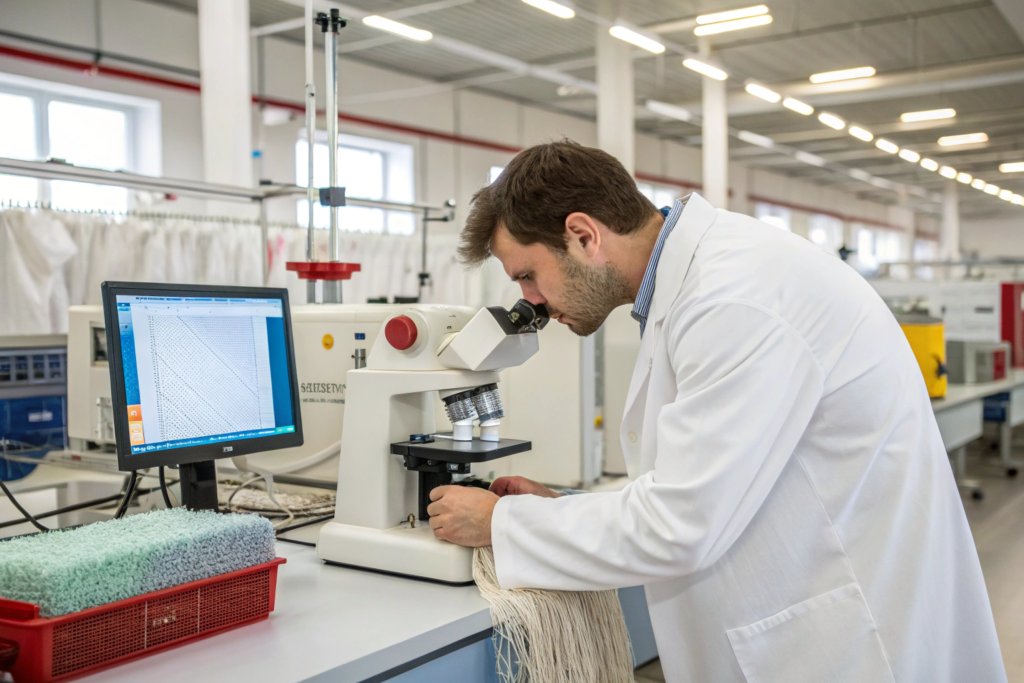
Our CNAS-accredited lab runs a battery of tests for every sustainable fabric we produce. Some of these are required for certifications. Some are additional checks we do for our own quality control.
Fiber Composition Testing
We test every batch of sustainable fabric to verify the fiber content. For organic cotton, we confirm that the fiber is 100% cotton and that no synthetic fibers are mixed in. For recycled polyester, we can verify that the fiber is polyester and that the recycled content matches the claim. Our lab uses chemical testing methods to identify fiber types.
In 2023, we received a shipment of organic cotton yarn from a new supplier. Our lab tested it and found traces of conventional cotton mixed in. The supplier claimed it was 100% organic. We rejected the shipment and went back to our regular supplier. That’s why we test. We don’t trust labels. We verify.
Harmful Substances Testing
For Oeko-Tex and other safety certifications, we test for over 100 harmful substances. This includes heavy metals, formaldehyde, pesticides, and phthalates. Our lab equipment can detect these substances at parts-per-million levels.
A client from the US in early 2024 requested Oeko-Tex Class I certification for a line of baby blankets. We ran the tests in-house and sent the samples to an independent lab for confirmation. The fabric passed both tests. The client told us, “Having your own lab makes this so much easier. I don’t have to wait weeks for third-party testing.”
Performance Testing for Sustainable Finishes
When we apply sustainable finishes—like PFC-free water repellents—we test them for performance. We run water column tests, spray tests, and wash durability tests. We want to make sure the sustainable finish performs as well as the conventional alternative.
We had a client from the UK who wanted a PFC-free water repellent on a recycled polyester fabric. We ran three trials to get the performance right. The first trial had good water repellency but poor wash durability. The second trial improved durability but the handfeel was stiff. The third trial hit the mark. We documented all the test results and shared them with the client. They appreciated the transparency.
How Do We Track Sustainability with QR Codes?
You’ve heard me talk about our QR code tracking system. For sustainable fabrics, the QR code does even more. When you scan a roll of sustainable fabric from us, you can see:
- Source of fibers: Where the organic cotton was grown. Where the recycled polyester was processed.
- Certification details: The certificate numbers for GOTS, GRS, or other certifications. Links to the certifying body’s verification page.
- Test results: Fiber composition test. Harmful substances test. Performance test results for finishes.
- Processing data: Which dyeing factory processed the fabric. What chemicals were used. Water and energy consumption data for the batch.
A client from the Netherlands told me in 2023, “I used to spend weeks collecting sustainability data from my suppliers. Now I scan a code and I have everything in one place. My sustainability report took half the time this year.” That’s the power of integrating sustainability tracking into production systems.
We also use the QR codes for traceability. If a client ever has a question about a specific roll of sustainable fabric, we can trace it back through every step of production. We can tell them which batch of organic cotton yarn was used, which dyeing formula was applied, and which technician operated the finishing machine. That level of detail builds trust.
How Do You Start Sourcing Sustainable Knitted Fabric from Us?
You’ve read about our certifications, our fibers, our testing. Now you’re ready to start. Let me walk you through exactly how to begin sourcing sustainable knitted fabric from Shanghai Fumao. I’ll share the process we use with all our sustainable clients, from small startups to large brands.

What’s the First Step?
The first step is a conversation. Not a purchase order. Not a sample request. A conversation about what you’re trying to achieve.
When you email us, here’s what we want to know:
-
What’s your sustainability goal? Are you trying to hit a specific certification? Reduce your carbon footprint? Appeal to a certain customer segment?
-
What’s your timeline? Are you launching a collection in three months? Six months? Next year?
-
What’s your volume? Are you testing with a small run, or are you ready for bulk production?
-
What’s your budget? Sustainable fabrics can cost more. We need to know what you’re working with.
We had a client from Brazil in 2023 who approached us with a vague request: “We want to be sustainable.” That’s a great goal, but it’s not specific. We walked them through our sustainable product line. They realized they didn’t need full organic certification for their initial collection. They started with recycled polyester blends, which were easier to source and more affordable. Once they proved the market, they moved to organic cotton. They’re now on their third sustainable collection with us.
That’s how we work. We don’t try to sell you the most expensive sustainable option if it’s not right for your brand. We help you find the path that works for your business.
What’s the Sample Process for Sustainable Fabrics?
Once we understand your needs, we move to sampling. For sustainable fabrics, the sample process is similar to conventional fabrics, but with extra documentation.
Step 1: Fiber Sourcing
If we don’t have your desired sustainable fiber in stock, we source it from our certified suppliers. For organic cotton, we have multiple suppliers. For recycled polyester, we work with mills in China and Taiwan. This typically takes 1-2 weeks.
Step 2: Sample Knitting
We knit a small sample—usually 5-10 meters. This allows you to see the construction, weight, and handfeel. We can also run lab dips for colors at this stage.
Step 3: Testing
We test the sample for fiber composition and harmful substances. We can also run performance tests if needed. We provide the test results with the sample.
Step 4: Documentation
We provide preliminary certification documentation with the sample. This includes the chain of custody for the fibers and any available test reports.
In early 2024, a client from the US requested samples of three sustainable fabrics: organic cotton jersey, Tencel-spandex jersey, and recycled polyester fleece. We sent all three samples within 10 days, with test reports and certification documents. The client told us, “I’ve never received such complete documentation with a sample.” That’s our standard.
What About Bulk Production and Pricing?
Once you approve the sample, we move to bulk. For sustainable fabrics, bulk production requires careful planning because the fibers are often more expensive and the certifications require strict separation.
Pricing
Sustainable fabrics typically cost 15-40% more than conventional alternatives. The exact premium depends on the fiber and the certification. Here’s a rough guide:
| Fabric Type | Typical Premium |
|---|---|
| Organic cotton | +20-30% |
| Recycled polyester | +10-20% |
| Tencel Lyocell | +15-25% |
| Hemp blends | +25-40% |
| GOTS-certified (full supply chain) | +30-40% |
A client from Canada asked us in 2023, “Why is organic cotton so much more expensive?” We explained the costs: the organic certification for farmers, the segregated supply chain, the lower yields. They understood. They decided to start with a blend—50% organic, 50% conventional—to manage costs while testing the market.
Lead Times
Sustainable fabrics often have longer lead times because the fibers are less available. Organic cotton yarn may need to be ordered from a specific mill. Recycled polyester might come from a supplier with limited capacity. We typically quote 6-8 weeks for sustainable fabric production, compared to 4-6 weeks for conventional.
But we’ve learned to manage this. We keep stock of our most popular sustainable fibers. We have organic cotton yarn in inventory for our standard weights. We have recycled polyester yarn for common constructions. If you’re ordering a standard sustainable fabric, we can often deliver in 4 weeks.
Minimum Order Quantities
For sustainable fabrics, our MOQs are similar to conventional fabrics: 500 yards for stock fabrics, 1,000 yards for custom development. But we make exceptions. For small brands testing sustainable collections, we’ve done runs as small as 300 yards. The price per yard is higher, but it allows you to test without a huge commitment.
Conclusion
Sourcing sustainable knitted fabric doesn’t have to be complicated. But it does require a partner who understands the certifications, the fibers, and the verification process. At Shanghai Fumao, we’ve been doing this for over a decade. We’ve invested in the infrastructure, the testing, and the documentation to make sustainable sourcing reliable and scalable.
We offer a full range of sustainable fibers—organic cotton, recycled polyester, Tencel, hemp, bamboo—in knitted constructions that work for fashion, activewear, children’s wear, and more. We hold the certifications that matter: GOTS, GRS, Oeko-Tex. We have our own CNAS-accredited lab to test and verify every sustainable fabric we produce. And we use QR code tracking to give you complete visibility into your supply chain.
But beyond the infrastructure, we offer experience. We’ve helped hundreds of brands make the transition to sustainable sourcing. We’ve seen what works and what doesn’t. We know how to manage costs without compromising quality. And we know how to document the supply chain so your sustainability claims stand up to scrutiny.
Whether you’re a global brand launching a sustainable collection or a small startup making your first eco-friendly product, we can help. We’ll work with you to find the right fibers, the right certifications, and the right price point for your market. We’ll send you samples with test reports and certification documents. We’ll produce your bulk order with the same care and transparency. And we’ll stand behind every yard we ship.
If you’re ready to start your sustainable sourcing journey, I want you to reach out to our Business Director, Elaine, at elaine@fumaoclothing.com. Tell her what you’re making. Tell her your sustainability goals. She’ll walk you through our sustainable product line and help you find the right fabric for your collection.
We’re not just selling fabric. We’re helping you build a better supply chain. Let’s start that conversation today.