When you’re an American fashion brand importing woven fabrics from China, the logistics can feel like a puzzle you didn’t sign up for. You worry about hidden costs at the port, unexpected delays, and tariffs that eat into your margin. I’ve been there with our clients, watching them stress over freight forwarders and customs brokers. It’s not why you got into fashion.
At Shanghai Fumao, we’ve seen this play out hundreds of times. And we found a solution that takes the guesswork out: Delivered Duty Paid, or DDP. Simply put, with DDP, we handle everything. We pay for the shipping, we manage the customs clearance, and we pay the duties and taxes. The fabric arrives at your door, and you don’t see another bill. It’s a complete door-to-door service.
So, how does this model actually work for woven fabrics, and why is it changing the game for our American clients? Let’s walk through it. I’ll share real experiences from our factory floor in Keqiao, the challenges we’ve solved, and exactly how we use DDP to make importing simple, predictable, and frankly, a lot less stressful.
Peak Production Periods: How Do We Keep Your Woven Fabric Orders On Time?
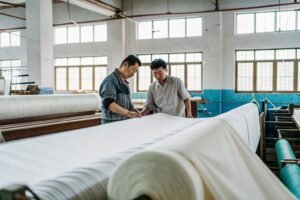
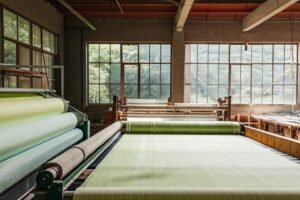
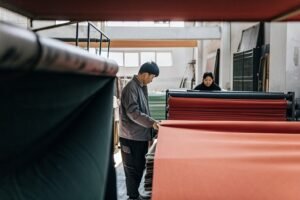
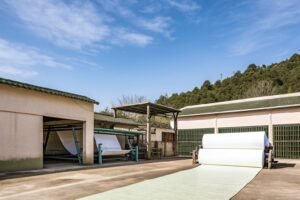
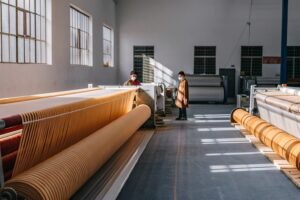
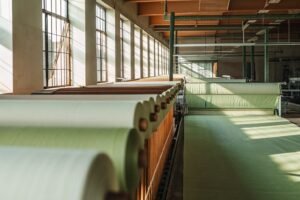
When you place an order for 20,000 yards of cotton twill, the last thing you want to hear is “it’s delayed because the factory is too busy.” I get it. As a supplier in Keqiao, the world’s largest textile cluster, we live and breathe these production cycles. We know that between March and May, and again from August to October, the entire city is in overdrive. This is when everyone, from Zara to small startups, wants their fabric yesterday.

Why Does Chinese Fabric Manufacturing Have Two Peak Seasons?
This isn’t random. These peaks align perfectly with the global fashion calendar. The spring peak (March-May) is for producing fabrics for Fall/Winter collections that need to hit stores in August. The autumn peak (August-October) is for the Spring/Summer lines.
(Here’s a quick insider tip: In Keqiao, during these months, the demand for our dyeing and finishing capacity skyrockets. It’s not just the weaving that gets backed up, it’s the finishing line.)
We learned a hard lesson about this back in 2022. A big client from Los Angeles ordered 15,000 yards of our high-performance moisture-wicking polyester blend for their activewear line. They placed the order in late September, right in the middle of our autumn peak. We told them we could do it, but the standard timeline was 8 weeks. They were worried. So, we sat down with our dyeing factory manager and our weaving supervisor. We used our internal QR code tracking system to reserve a dedicated dyeing line for their order. This meant their fabric wasn’t waiting in a queue with everyone else’s. We completed the order in 6 weeks. They got their fabric to their cut-and-sew factory in Mexico on time. That’s when we really understood the power of having a coordinated supply chain for apparel production, from yarn to finished roll.
How Can You Ensure Your Order Isn’t Caught in the Rush?
The answer is simple, but it requires honesty from your supplier. We tell our clients: don’t try to outsmart the system. A lot of brands think they can just place a rush order and we’ll magically have capacity. We won’t. Not during peak season, unless you’ve planned ahead.
Here’s what we do for our regular buyers:
- Reserved Dyeing Capacity: Because we own a cooperative dyeing factory and have strong partnerships with two others, we can reserve capacity. For our top clients, we book slots 4-6 weeks in advance. It’s like having a VIP reservation at a busy restaurant.
- QR Code Tracking for Every Order: This is a game-changer. When your order enters our system, we issue a unique QR code. You can scan it on our website to see exactly where your fabric is. Is it still in the weaving stage? Has it moved to dyeing? Is it being inspected? This transparency means you’re not calling me at 2 AM asking for an update.
- Strategic Raw Material Sourcing: We keep a 30-day buffer of high-demand yarns like 60s cotton and 150D polyester. If you order a standard fabric, we don’t have to wait for yarn to be spun. We start weaving almost immediately.
So, when you ask, “How do you keep my order on time during your busiest months?”, our answer is always: through planning, capacity control, and a digital system that lets you watch it happen. We don’t just cross our fingers and hope.
Chinese New Year & Golden Week: What’s the Best Way to Plan Around Them?
I’ve seen the panic firsthand. A client from New York emails me on January 20th, asking if we can ship a 40-foot container of sustainable organic cotton canvas by February 10th. My heart sinks a little. Chinese New Year, or Spring Festival, is about to begin. The whole city of Keqiao shuts down. Not just for a long weekend, but for three to four weeks. Factories close. Workers go home. It’s the biggest human migration on earth. For a new buyer, this can be a major supply chain disaster. For us, it’s just a fact of life we’ve learned to navigate.

How Do We Keep the Supply Chain Alive During the Long Shutdown?
We don’t. And it’s important to be upfront about that. We don’t try to run a skeleton crew and pretend we’re open. We close. The entire textile ecosystem here—from the yarn suppliers to the trucking companies—shuts down. But a shutdown doesn’t mean a stop in our planning.
A great example is a European fashion brand we work with. Two years ago, they were always scrambling. They’d send a lab dip request right before the holiday, then wonder why we couldn’t approve it until mid-March. They lost six weeks of production time every year. So, we sat down with their production manager in November. We mapped out their entire spring collection. We said, “Look, let’s complete all your pre-production work six weeks before the holiday.”
In 2024, that’s exactly what we did. By mid-January, all their lab dips were approved. Their tech packs were finalized. The yarn was sourced and waiting in our warehouse. The fabric wasn’t woven, but all the groundwork was done. When our factories reopened on February 18th, their order was the first one on the weaving machine. They were shipping bulk fabric by March 10th. They saved at least a month compared to their old process.
We call this “pre-holiday staging.” Here’s our simple checklist for any client ordering around Chinese New Year or Golden Week (which is a 1-week holiday in October):
- Plan 8 Weeks Ahead: The magic number is 8 weeks. If you want your fabric in April, you need to start the conversation in January, before the holiday.
- Complete Pre-Production Early: Get all samples, lab dips, and strike-offs done and approved before the holiday starts. Use December and early January for this.
- Ship Before, Not After: If you can, push your orders to ship before the holiday. Our freight forwarders work right up until a few days before the holiday. We can get your container on a vessel, and it will sail during the shutdown, arriving at your port right as we get back to work.
So, the best way to plan? Don’t fight the holiday. Respect it. Use it as a deadline for your planning, not a surprise disruption.
The DDP Advantage: How Does It Simplify Duties and Tariffs for You?
Let’s talk about the thing that keeps most of our American clients up at night: tariffs. I remember a conversation in 2023 with a client who runs a mid-sized denim brand in Los Angeles. He was furious. He had just gotten a bill from his freight forwarder for an extra $8,500 in customs duties that he hadn’t budgeted for. The duties were higher than he expected, and his forwarder had also added a processing fee. His margin on that container was gone. He told me, “I just want to know the final cost when I place the order. Is that too much to ask?” It’s not too much. That’s exactly what DDP delivers.

What Exactly is DDP for Fabric Imports and Why Do Our Clients Prefer It?
Delivered Duty Paid (DDP) is an Incoterm. In simple terms, it means we, the seller, take on all the risk and cost until the goods are at your door. That includes:
- Freight: The ocean or air freight cost from our factory in Keqiao to your warehouse.
- Insurance: In case anything happens to the container during transit.
- Customs Clearance: We hire a licensed customs broker in the US to handle all the paperwork.
- Duties and Taxes: We pay the import duties, which for many Chinese fabrics can be up to 25-30%, plus any local state taxes.
For you, the buyer, it means one invoice. One payment. Zero surprises.
We adopted DDP as a core service after that incident with the denim client. We realized that while he was a whiz at designing high-quality selvedge denim, he wasn’t a logistics expert. Why should he be? His skill is fashion. Ours is making and shipping fabric.
Now, we make it even simpler. Our online quote system for bulk orders includes a DDP calculator. We input the fabric weight, the roll dimensions, the port of entry (like Long Beach or New York), and the tariff code. It spits out a final landed cost per yard. This is the price we guarantee.
We have a client in New York who runs a children’s wear line. They use our GOTS-certified organic cotton jersey for all their basics. They used to work with a trading company that gave them one price for the fabric, and then they’d have to coordinate shipping and customs themselves. It was a nightmare. Now, they just send us their purchase order. We send them a final DDP price per yard. They wire us the payment, and 4-5 weeks later, the fabric is in their Brooklyn warehouse. They don’t have to speak to a customs broker. They don’t have to worry about tariff hikes. We absorb that risk. That’s the power of DDP. It’s not just shipping; it’s a financial and logistical safety net.
How Does DDP Protect You From Unpredictable Tariff Costs?
Tariffs can change. A new rule can be announced that adds 10% to your fabric cost overnight. With a traditional FOB (Free On Board) shipment, that’s your problem. You pay it at the port. With DDP, it’s our problem. We quote you a price based on the current tariff. If the tariff increases between our quote and the arrival of the goods, we don’t pass that on to you. We’ve already paid it.
This isn’t just a nice gesture. It’s a calculated business decision. We have a diversified market. We export to the EU, RCEP countries, and nations along the Belt and Road. We are not dependent on the US market alone. So, if tariffs go up, we can often manage that cost through operational efficiencies or by absorbing a small margin hit. It’s a risk we’re willing to take to build a long-term partnership with a client. We’ve had clients stay with us for over five years specifically because of this. They know that when they get a quote from Shanghai Fumao, it’s the final price. No calls from the freight forwarder asking for more money.
Slower Production Periods: How Can You Use Them to Your Advantage?
Not every month is a sprint. There’s a rhythm to our work in Keqiao. And if you know how to move with it, you can gain a huge advantage over your competitors. The slower periods—June to July and November to December—are what I call the “designer’s season.” This is when the pressure is off. The big brands have placed their bulk orders, and the factories have some breathing room. For you, this is the golden opportunity to innovate, test, and build your next collection without the stress of a ticking clock.

Why Are Summer and Early Winter the Best Times for Sample Development?
June and July in Keqiao are hot. Really hot. But on the factory floor, things are a little calmer. The spring peak has ended, and the autumn peak hasn’t started. Our weaving and dyeing machines are still running, but they’re not running at 110% capacity. This is when our R&D team comes alive.
A client from Sweden, a sustainable outdoor wear brand, used this to their advantage last year. They had an idea for a new biodegradable nylon blend for jackets. They needed a fabric that was water-resistant but would break down at the end of its life. They contacted us in early June. Because our dyeing partners had spare capacity, we could dedicate a line to their experimental fabric. Our R&D team, all 20+ of them, got to work. Within 10 days, we had a prototype sample. By the end of July, we had a lab dip and a strike-off they loved. If they had tried this in April or October, they would have been fighting for machine time. It would have taken at least 6 weeks to get that first sample.
During these slower months, we also offer:
- 48-hour Sample Development: Our usual turnaround for a sample is a few days. During the slow season, we guarantee it in 48 hours. We can take your idea, or even just a picture from a magazine, and get a physical sample woven and finished.
- Deep Dive on Testing: Our CNAS-accredited lab is quieter. This is the perfect time to run those extensive tests you’ve been putting off. Want to test for pilling after 10,000 rubs? Or need a full set of SGS certifications? We can do it faster now.
- Virtual Showroom Tours: We can take you on a live video tour of our warehouse to show you the latest 30,000+ seasonal designs we have in stock. You can see the drape of a new rayon challis or the structure of a technical jacquard, all without leaving your office.
What Strategic Moves Should You Make During These Quieter Months?
You shouldn’t just sit back. These slower months are for building your arsenal. Think of it like this: your competitors are probably on vacation or winding down. This is your chance to get ahead.
Here’s a quick checklist we share with our clients:
| Action | Why Do It in Slow Season? | Result |
|---|---|---|
| Request New Development Samples | Our R&D team has more time to experiment and iterate quickly. | You get unique, exclusive fabrics that aren’t available to everyone. |
| Place Small-Batch Custom Orders | We are happy to run 500-yard lots on jacquard looms or specialty dye baths. | You can test a new style with low financial risk. |
| Request Full Certifications | Lab capacity is high, and we can get Oeko-Tex or GOTS paperwork completed faster. | Your fabric arrives with all the necessary paperwork, ready for your retail partners. |
| Negotiate for a Slightly Better Price | Factories want to keep their lines running. There can be more flexibility on pricing. | You secure a better cost basis for your next collection. |
I’ll give you a personal example. We have a client in Canada, a leather goods startup. They use our high-quality eco-friendly PU leather base. They were planning a new bag collection for the following spring. In November 2023, instead of waiting for January, they came to us. We used the quiet weeks to develop a new textured surface for their PU, mimicking a high-end grain leather. We also tested a new water-resistant coating. By December, they had all their tech packs finalized. When the rush started in January, they were ready. Their new collection launched in March, 6 weeks ahead of their competitors who had waited until after Chinese New Year. They got the prime retail slots because they were ready first.
So, my advice? Don’t treat June-July and November-December as downtime. Treat them as your strategic planning and innovation phase. It’s the best way to use our supply chain to your advantage.
Conclusion
At the end of the day, importing woven fabrics from China doesn’t have to be a maze of hidden costs, tariff surprises, and production delays. I’ve seen too many talented designers and brands get bogged down by the logistical side of things. They spend hours, not on creating, but on chasing freight forwarders and trying to decode customs forms. It’s a waste of your talent and your time.
Our goal at Shanghai Fumao has always been to strip away that complexity. We’ve built our business around the simple idea that when you buy fabric from us, you should be able to focus on what you do best: designing and selling your collection. We do that by being honest about our production cycles, by strategically planning for the holidays, and by offering a DDP shipping model that makes your final cost predictable and secure. We don’t just sell you a roll of fabric; we provide a complete solution from yarn sourcing to your doorstep.
Whether you’re a major clothing buyer placing a bulk order for denim, a new designer working on a sustainable line with organic cotton, or a startup looking for small-batch custom jacquards, the principles are the same. Plan for the peaks. Leverage the slow seasons for development. And trust a partner who has the financial stability and supply chain control to handle the tariffs and logistics for you.
The textile industry in Keqiao is powerful, but it’s only as good as the relationships we build. We’ve helped over 100 countries’ worth of clients, from European fashion houses to American activewear brands, navigate these exact challenges. We’d love to do the same for you.
If you’re ready to stop worrying about production timelines and import costs, let’s talk. Reach out to our Business Director, Elaine, directly at elaine@fumaoclothing.com. Tell her about your project—whether it’s a new high-performance fabric you want to develop or a standard bulk order for your core collection. We’ll walk you through our process, from our CNAS-accredited lab to our DDP shipping, and show you how we make the world’s largest textile cluster work for you.