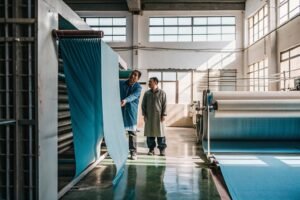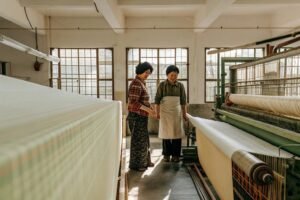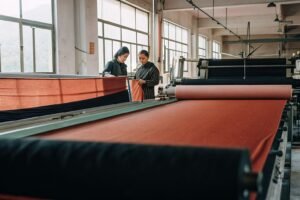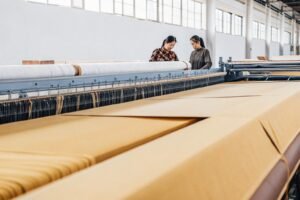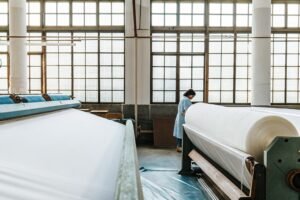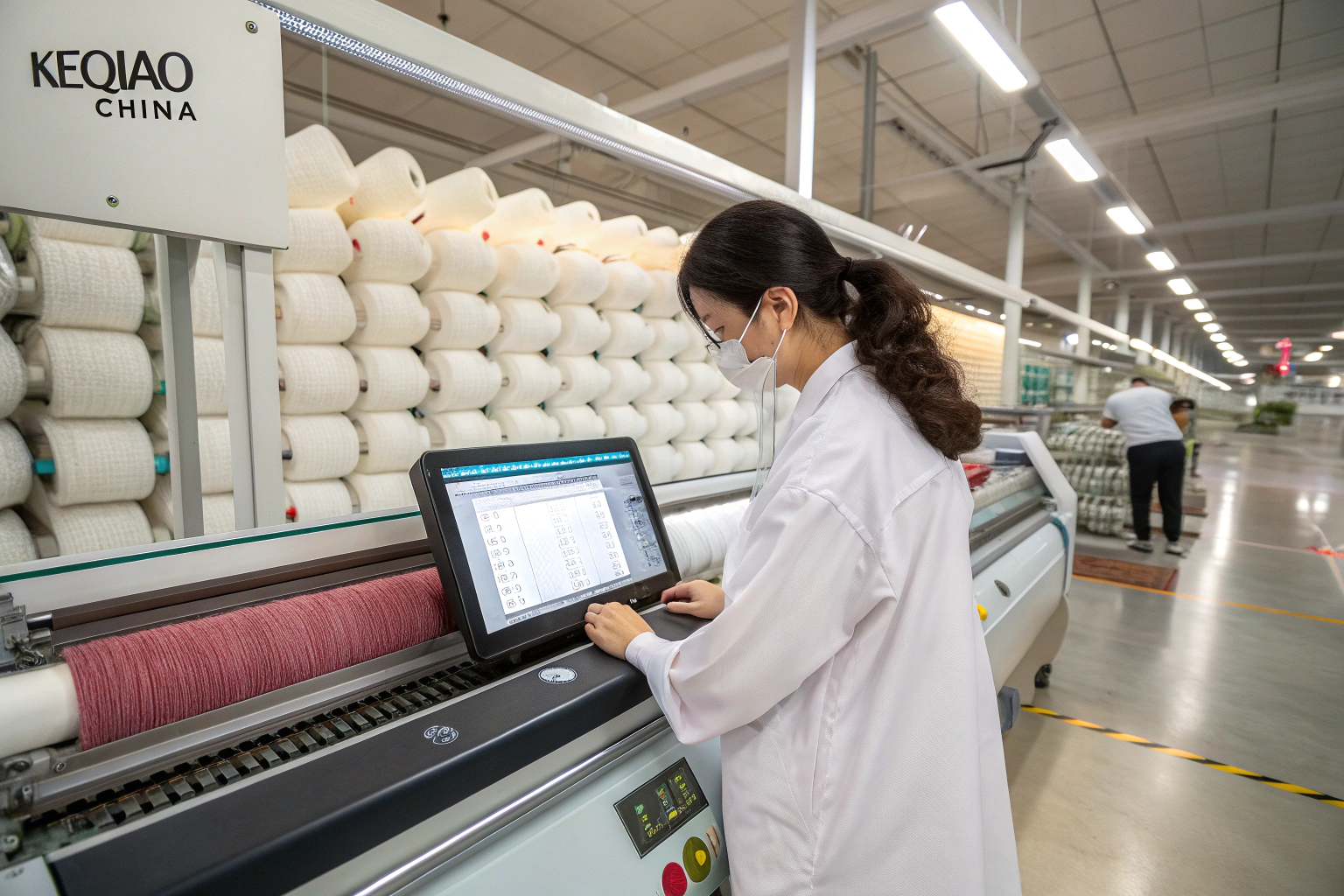
Let me tell you about a shipment we almost sent out in 2023. It was a 15,000-meter order of cotton-spandex jersey for a European activewear brand. The fabric looked beautiful. The color was spot-on. The hand feel was perfect. But when our QC team ran their routine tests, one batch showed seam slippage that was just borderline—0.5mm above our internal tolerance. Most suppliers would have shipped it. The client probably wouldn’t have noticed. But we didn’t ship it. We held the batch, re-tested, and found that the issue was caused by a minor tension inconsistency in the knitting. We re-knitted that batch. The order shipped 10 days later. The client never knew there was a problem. That’s how we think about quality control. It’s not about catching defects after the client complains. It’s about making sure the client never has a reason to complain.
At Shanghai Fumao, quality control for knitted fabric is a system, not a final step. It starts at yarn inspection before a single stitch is knitted. It continues through in-process checks during knitting, dyeing, and finishing. It culminates in final inspection using the 4-point system in our dedicated inspection facility. And it’s backed by our CNAS-accredited testing laboratory, where we test every batch for shrinkage, colorfastness, tensile strength, and other key performance指标. We don’t rely on random sampling. We inspect and test every roll. And we link every roll to a QR code that gives you access to the complete quality history. We don’t just claim quality. We prove it.
I know that for any buyer—whether you’re a large European brand, a US distributor, or a garment factory in Southeast Asia—quality control is the difference between a smooth production run and a nightmare of returns, delays, and lost trust. Let me walk you through exactly how we control quality at every stage of knitted fabric production. No secrets. No shortcuts. Just the systems we’ve built over 20 years.
How Do You Control Quality at the Yarn and Knitting Stage?
Here’s a truth that a lot of buyers don’t realize. You cannot knit a high-quality fabric from low-quality yarn. It doesn’t matter how good your knitting machines are. If the yarn has uneven thickness, excessive slubs, or inconsistent twist, the final fabric will have streaks, barre, or weak spots. That’s why our quality control starts before the first yarn enters the knitting machine. We treat yarn inspection as the foundation.
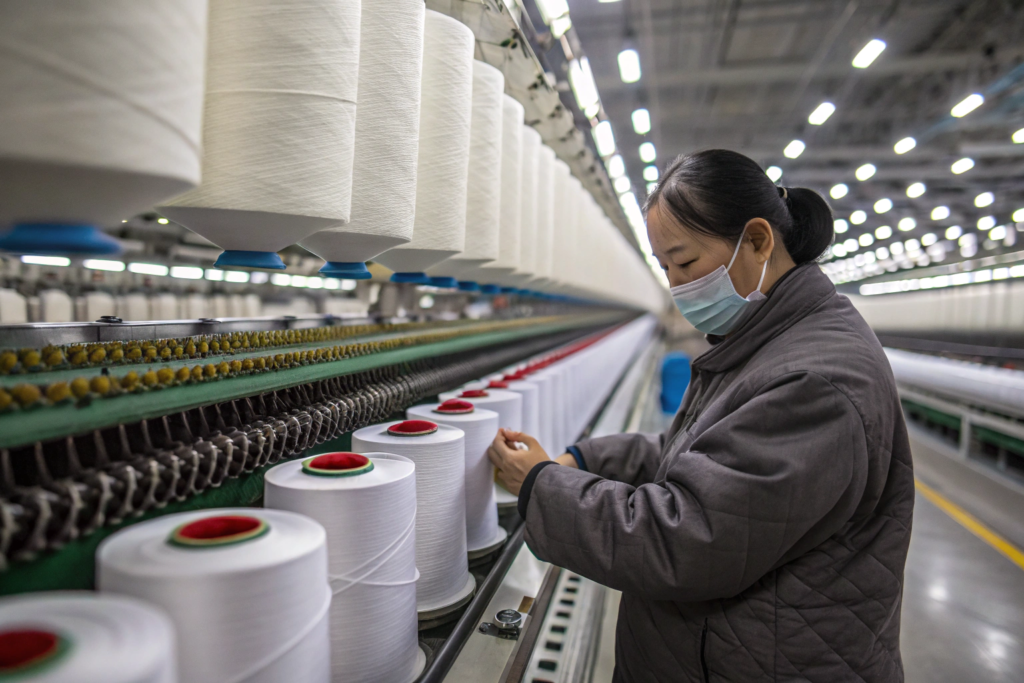
We inspect every batch of yarn before it goes into production. For cotton yarns, we check count (Ne), twist, strength, and evenness using standardized testing methods. For synthetic yarns like polyester or nylon, we test denier, tenacity, and elongation. We also check for shade variation—if the yarn cones come from different dye lots, we segregate them to prevent color streaks in the final fabric. We work with a select group of yarn suppliers who have proven their consistency over years. When a new yarn supplier approaches us, we run a 1,000-meter trial before approving them for bulk orders. We don’t take chances with the raw material.
Let me give you a real example from early 2024. A US distributor ordered 40,000 meters of a fine 32s combed cotton jersey for a premium t-shirt line. Our yarn supplier sent us a batch of yarn that passed their own internal tests. But when our yarn inspection team ran an evenness test (Uster test), they found a 15% variation in yarn count across the batch. That variation would have caused visible streaks—called “barre”—in the finished jersey. We rejected the yarn. The supplier was frustrated. But we sourced replacement yarn from another supplier, delayed the order by one week, and delivered fabric that was flawless. The distributor never knew there was an issue. That’s our job.
What Yarn Tests Do You Perform Before Knitting?
Our yarn testing protocol is designed to catch issues before they become fabric defects. Here are the key tests we perform in our lab:
| Test | What It Measures | Why It Matters |
|---|---|---|
| Yarn Count (Ne) | Thickness/fineness of yarn | Inconsistent count causes streaks and barre |
| Twist (TPI) | Number of twists per inch | Affects strength, hand feel, and pilling tendency |
| Tensile Strength | Breaking strength of yarn | Weak yarn causes breaks during knitting |
| Evenness (Uster) | Variation in yarn thickness | High variation causes visible streaks |
| Shade Variation | Color consistency between cones | Different shades cause color streaks in fabric |
| Moisture Content | Water content in yarn | Affects dye absorption and fabric weight |
We maintain records for every yarn batch. If a defect appears later in the production process, we can trace it back to the yarn and work with the supplier to prevent recurrence. In 2023, we had a rare issue with polyester yarn that caused pilling after washing. Our records showed the yarn came from a specific batch from a specific supplier. We stopped using that supplier and switched to a more reliable source. That’s the value of traceability. For anyone sourcing knitted fabric, understanding how yarn quality affects fabric performance is essential for preventing downstream problems.
How Do You Monitor Quality During Knitting?
Knitting is where the fabric structure is formed. If the machine settings are wrong—incorrect tension, improper needle selection, uneven feed—the resulting fabric will have defects that can’t be fixed later. We monitor knitting quality through a combination of machine settings, operator checks, and in-process inspection. Our knitting machines are equipped with sensors that detect yarn breaks and stop automatically. Our machine operators check fabric quality every hour, looking for holes, drop stitches, or uneven fabric weight. And our QC team pulls samples at the start of each production run to verify weight, width, and stitch density. In early 2024, we were running a 24-gauge rib knit for a European brand. The first 500 meters came out with a slightly tighter stitch than the standard. The operator flagged it. We adjusted the machine settings and re-ran the fabric. The brand received fabric that was consistent from roll to roll. For anyone looking to evaluate a knitted fabric supplier’s production quality, the consistency of the knitting process is a strong indicator of overall capability.
How Do You Control Quality During Dyeing and Finishing?
Knitting creates the structure. But dyeing and finishing create the character. This is where color comes to life, where the hand feel is developed, where the fabric gains its final properties. It’s also where quality can go wrong in ways that are expensive to fix. A bad dye lot can’t be un-dyed. An over-softened fabric can lose its shape. That’s why we treat the dyeing and finishing stage with the same rigor as knitting.
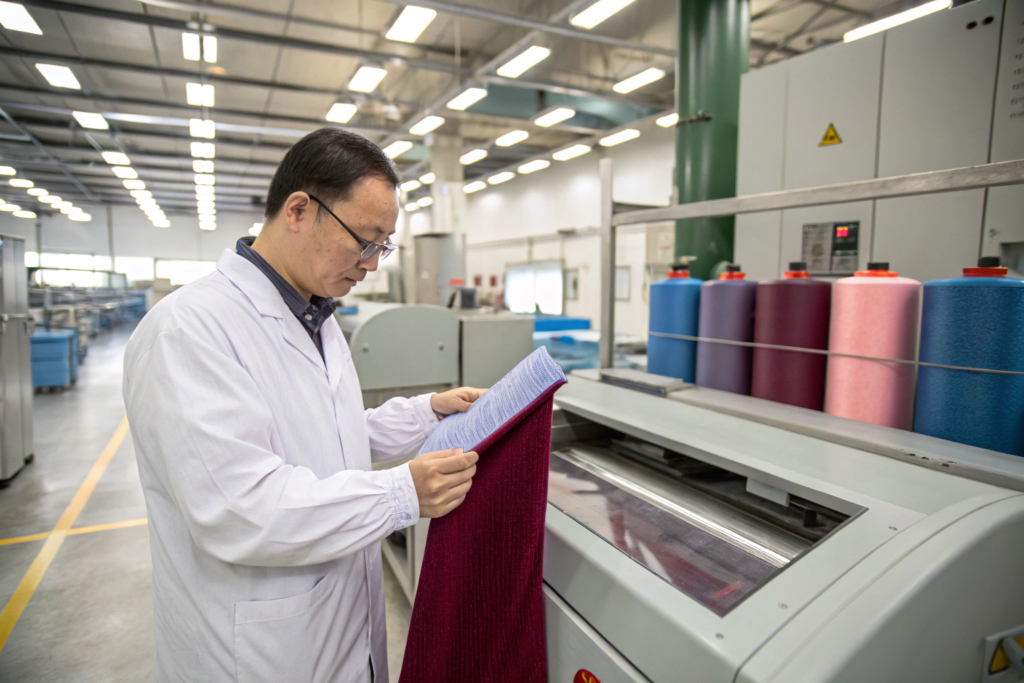
We control quality during dyeing and finishing through recipe standardization, automated dispensing, in-process sampling, and final testing. Every color formula is stored digitally. When we dye a fabric, we don’t rely on a dyer’s “eye.” We use automated dye dispensing to measure dyes to within 0.01 grams. We monitor the dyeing process with sensors that track temperature, pressure, and time. During the process, we pull samples and test them against the approved lab dip using a spectrophotometer. If the color is outside the acceptable ΔE (color difference) range, we adjust. After dyeing, we test for colorfastness to washing, light, and perspiration. Only after the fabric passes these tests does it move to finishing.
Let me give you a specific example from 2023. We were dyeing a custom heather grey for a US sportswear brand. Heather grey is tricky because it’s achieved by dyeing with a combination of dyes that don’t fully penetrate the yarn, creating a mottled effect. Our first batch came out with a slightly bluish cast. The ΔE was 1.2—technically within tolerance for some markets, but not for this brand. We rejected the batch. We adjusted the dye formula, re-dyed the fabric, and achieved a ΔE of 0.6. The brand received the second batch and approved it. The first batch? We sold it as seconds to a different client who didn’t need the same precision. That’s the cost of quality. And we’re willing to pay it.
How Do You Ensure Color Consistency Across Dye Lots?
Color consistency is one of the hardest things to achieve in knitted fabric production. A slight variation in temperature, pressure, or dye concentration can shift the color. Here’s our system for maintaining consistency:
- Digital recipe storage: Every color formula is stored in our system with precise weights for each dye component
- Automated dispensing: Dyes are measured by machine, not by hand, eliminating human error
- Spectrophotometer measurement: Every batch is measured against the approved standard; we maintain a ΔE of ≤0.8 for most commercial orders
- Physical shade bands: We keep 50cm samples of the approved standard and visually compare every batch under standardized lighting (D65)
- Batch segregation: If multiple batches of the same color are produced, we segregate them and clearly label the shade range
In 2024, we produced a deep navy blue for a European distributor across three separate production runs totaling 35,000 meters. The distributor’s garment maker cut fabric from all three runs together and reported no visible color difference. That’s the result of rigorous control. For anyone looking to understand how to manage color consistency in textile production, spectrophotometer measurement and physical shade bands are the essential tools.
What Finishing Quality Checks Do You Perform?
Finishing is the last chemical process before the fabric becomes a finished roll. It includes processes like softening, anti-wrinkle treatment, moisture-wicking finishing, or mechanical finishing like brushing or sueding. Each finishing process can affect the fabric’s hand feel, appearance, and performance. Our quality checks during finishing include:
- Hand feel evaluation: Our QC team checks the fabric’s softness, drape, and surface texture against the approved standard
- Shrinkage test: We test for dimensional stability after finishing to ensure the fabric won’t shrink excessively in the first wash
- pH value: We ensure the fabric’s pH is within the safe range (typically 4.0–7.5 for next-to-skin fabrics)
- Pick-up and add-on checks: For finishes that add weight or coating, we measure the add-on percentage to ensure consistency
In late 2023, we applied a moisture-wicking finish to a polyester-spandex jersey for an Australian activewear brand. The first batch had an inconsistent finish—some areas were wicking, others weren’t. Our QC team caught it during a water absorption test (AATCC 79). We stopped production, cleaned the finishing padder, and re-applied the finish. The second batch passed. The brand received fabric that performed consistently. For anyone sourcing functional knitted fabrics, understanding finishing quality control is critical for ensuring that performance claims are met.
How Do You Inspect and Grade Finished Knitted Fabric?
Here’s where the rubber meets the road. After all the yarn testing, knitting checks, dyeing control, and finishing validation, the fabric goes to final inspection. This is where we separate first-quality fabric from seconds. This is where the buyer’s confidence is either built or broken. We don’t treat final inspection as a formality. It’s the last line of defense before the fabric leaves our facility. And we take it seriously.
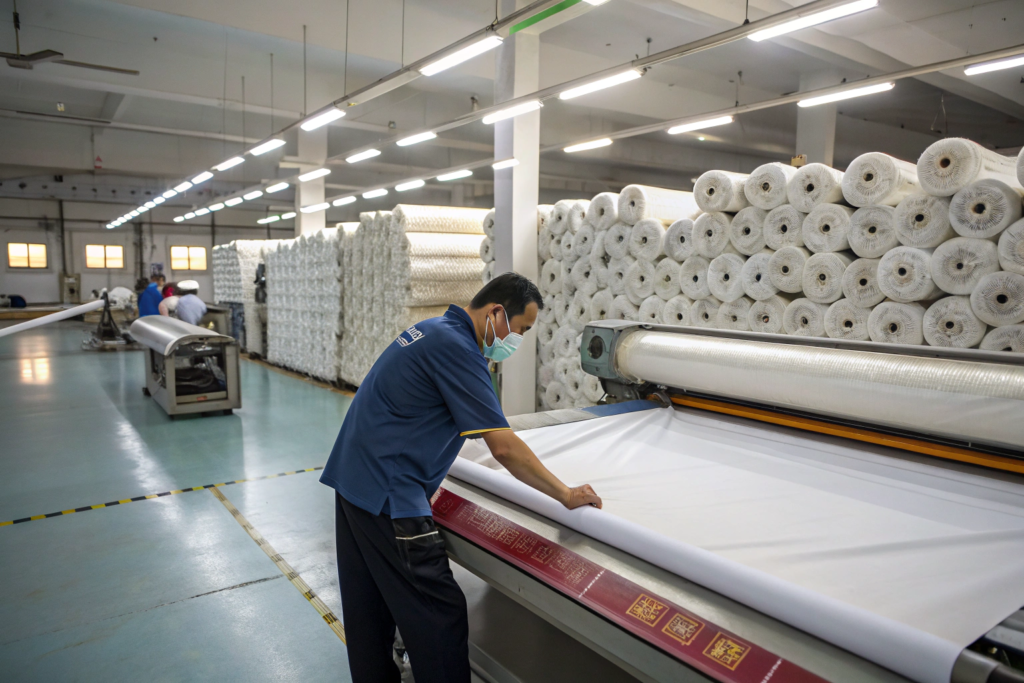
We inspect every roll of knitted fabric using the 4-point system, which is the global standard for fabric grading. Each roll is run through an inspection machine under bright, standardized lighting. Our trained QC inspectors examine the fabric for defects: holes, stains, streaks, uneven dyeing, needle lines, press-off marks, and other imperfections. Each defect is assigned a point value based on its size and severity. The total points per 100 square yards determine the roll’s grade. Rolls that meet the grade—typically 20 points or less per 100 square yards—are labeled as first quality. Rolls that exceed the tolerance are downgraded and either sold as seconds or reworked. We maintain a 98% first-quality pass rate across our production.
Let me give you a real example from early 2024. We were inspecting a 20,000-meter order of cotton fleece for a Canadian streetwear brand. During inspection, our QC team found that one roll—just one roll out of 80—had a faint oil stain about 15cm from the edge. The stain was barely visible. Most suppliers would have shipped it and hoped the client didn’t notice. We flagged it. The roll was downgraded and set aside. We offered to replace it, but the client said they could cut around the stain. We shipped the rest of the order with a note and a credit for that roll. The client appreciated the honesty. That’s how we build trust.
What Is the 4-Point System and How Do You Apply It?
The 4-point system is the industry standard for fabric inspection. It’s simple, objective, and widely accepted. Here’s how it works:
- Each defect is assigned points based on its size or severity
- 1 point: Defects up to 3 inches in length
- 2 points: Defects 3 to 6 inches in length
- 3 points: Defects 6 to 9 inches in length
- 4 points: Defects over 9 inches in length, or any hole or major defect
The points are totaled per 100 square yards of fabric. A roll of 100 square yards with 20 points or less is typically graded as “first quality.” For our European clients, we often use a tighter tolerance—16 points per 100 square yards. Our QC inspectors are trained and certified in the 4-point system. They inspect at a controlled speed (typically 15–20 yards per minute) under 1000-lux lighting. They mark each defect with a sticker. The inspection report is logged into our system and linked to the roll’s QR code. For anyone wanting to learn how the 4-point fabric inspection system works, it’s the standard you should expect from any serious fabric supplier.
What Defects Do You Look for in Knitted Fabric?
Knitted fabrics have their own unique defect types. Here are the most common ones we inspect for:
| Defect Type | Description | Common Cause |
|---|---|---|
| Needle Line | A vertical line caused by a damaged or misaligned needle | Worn needle in knitting machine |
| Hole | A missing stitch or yarn break | Yarn break during knitting |
| Oil Stain | Dark spot from machine lubricant | Over-lubrication or leak |
| Streak/Barre | Visible color variation across the width | Yarn tension variation or dye absorption difference |
| Press-Off | A horizontal line where the machine stopped and restarted | Machine stoppage during knitting |
| Drop Stitch | A missing stitch that creates a ladder effect | Yarn break or needle malfunction |
| Slub | Thick spot in the yarn | Irregularity in yarn spinning |
| Pilling | Formation of small fiber balls on surface | Low-quality yarn or improper finishing |
We train our inspectors to identify these defects quickly. For subtle defects like barre, we use standardized lighting and angled viewing to make the variation visible. In 2023, we caught a barre defect in a batch of 2×2 rib that was barely visible under normal light. Under the inspection machine’s angled light, it was clear. That batch was re-knitted. The client received uniform fabric. For buyers who want to understand common knitted fabric defects and how to prevent them, early detection is the key to minimizing waste.
How Do You Use Technology to Track and Document Quality?
Let me tell you about a call I got from a distributor in Germany last year. They had received a shipment from us and during cutting, their operator found a roll with a minor defect. They wanted to know if the roll was from a specific batch and if other rolls from the same batch might have the same issue. In the old days, that question would have required hours of digging through paper records. Now, it takes 10 seconds. They scanned the QR code on the roll. The code showed the batch number, the knitting machine used, the dyeing batch, the inspection report, and the test data. They saw that the defect was isolated to that roll. They cut it and moved on. No drama. That’s the power of our quality tracking system.
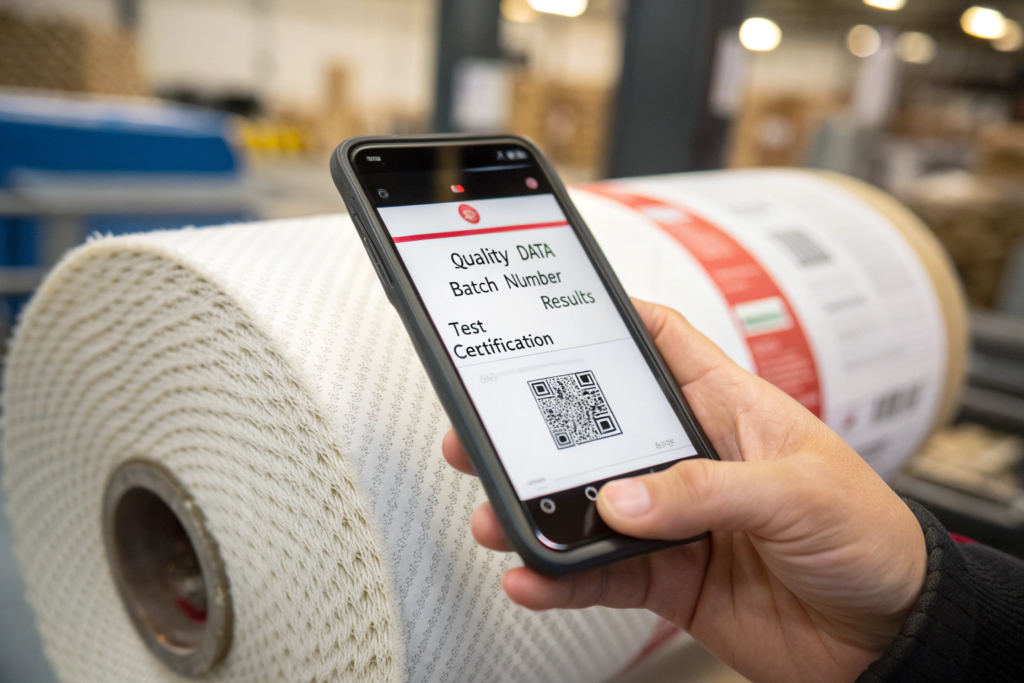
We use QR code technology to track quality at every stage of production. Every roll of knitted fabric that leaves our facility has a QR code label. That QR code links to a digital record that includes:
- Batch number and production date
- Yarn specifications and supplier information
- Knitting machine and production parameters
- Dyeing batch and color formula
- Finishing details (softeners, coatings, etc.)
- QC inspection report (4-point system results)
- Test data (shrinkage, colorfastness, tensile strength, etc.)
- Certifications (OEKO-TEX®, GOTS, GRS, etc.)
You can scan the code with any smartphone and see this data instantly. No phone calls. No email chains. No waiting for someone to “check the records.” The transparency is complete.
Let me give you a specific example of how this system has saved our clients time and money. In early 2024, a US-based garment factory was cutting a large order of our cotton-spandex jersey. They noticed that a few rolls had slightly lower stretch recovery than they expected. They scanned the QR codes on the affected rolls. The system showed that those rolls came from a specific dyeing batch where a softer finish had been applied. The client realized that the finish was affecting the stretch recovery. They adjusted their cutting and sewing process to accommodate. They didn’t need to return the fabric. They didn’t need to halt production. They had the data they needed to adapt. That’s the value of transparency.
What Data Is Stored in Your QR Code System?
Our QR code system stores a comprehensive quality record for every roll. Here’s what you can access:
| Data Category | Specific Information |
|---|---|
| Batch Identification | Batch number, production date, roll number, total meters |
| Yarn Source | Yarn type, count, supplier, dye lot |
| Knitting Details | Machine type, gauge, stitch length, fabric weight |
| Dyeing & Finishing | Dye batch number, color formula, finishing recipe, add-on percentage |
| Inspection Results | 4-point score, defect count, inspection date, inspector name |
| Test Reports | Shrinkage %, colorfastness grade, tensile strength, pH, etc. |
| Certifications | OEKO-TEX® certificate number, GOTS/GRS TC numbers, ISO certifications |
| Shipment Info | Order number, customer name, ship date, container number |
This data is stored in our system permanently. If you reorder the same fabric a year later, we can retrieve the exact specifications and replicate them. In 2023, a European distributor reordered a custom-dyed rib knit that they had first ordered in 2021. We pulled the batch records from 2021, replicated the dye formula, and delivered fabric that matched the original order perfectly. The distributor told me that with their previous suppliers, they had to re-sample every time they reordered. With us, they just placed the order. That’s the power of digital traceability. For anyone interested in how digital traceability improves textile quality management, it’s a game-changer for consistency and efficiency.
How Do You Use Data to Continuously Improve Quality?
Quality control isn’t just about catching defects. It’s about preventing them. We use the data from our QR code system to identify patterns and improve our processes. Here’s how:
- Defect analysis: We track defect types by machine, by operator, by yarn batch, and by time of year. If we see an increase in a specific defect, we investigate the root cause.
- Supplier performance: We track rejection rates by yarn supplier. If a supplier consistently delivers yarn that causes defects, we replace them.
- Machine maintenance: We track machine performance. If a specific knitting machine consistently produces fabric with needle lines, we schedule maintenance.
- Client feedback: When a client reports an issue, we trace it back through the QR code data and identify where in the process the issue occurred.
In 2023, we noticed an increase in oil stain defects across several orders. Our data showed that the stains were coming from a specific model of knitting machine after 400 hours of continuous operation. We adjusted our maintenance schedule to clean those machines more frequently. Oil stain defects dropped by 70% within three months. That’s continuous improvement in action. For buyers looking to understand how data-driven quality control works in textile manufacturing, it’s the difference between reactive problem-solving and proactive prevention.
Conclusion
Let me bring this all together. Quality control for knitted fabric isn’t a single step. It’s a system that runs from the yarn to the finished roll. It starts with yarn inspection—catching problems before they become fabric defects. It continues through knitting quality checks—ensuring consistent structure and weight. It moves to dyeing and finishing control—maintaining color accuracy and performance. It culminates in final inspection using the 4-point system—separating first quality from seconds. And it’s all tracked with QR code technology that gives you full transparency into the quality of every roll.
At Shanghai Fumao, we’ve built this system over 20 years. We’ve invested in the equipment—our CNAS-accredited lab, our inspection machines, our digital tracking systems. But more importantly, we’ve invested in the people. The QC inspectors who catch defects before they ship. The lab technicians who test every batch. The operators who stop the machine when something doesn’t look right. They’re the ones who make quality real.
I’ve been in this business long enough to know that quality is what keeps clients coming back. It’s why European distributors trust us. It’s why US brands rely on us. It’s why garment factories in Southeast Asia prefer our fabric. They know that when they order from Fumao, they’re getting fabric that has been tested, inspected, and verified.
If you’re tired of suppliers who talk about quality but deliver inconsistency, I’d invite you to try something different. Reach out to our Business Director, Elaine. She and her team can walk you through our quality system, show you how we test and inspect, and give you the confidence that your next order will be right.
Let’s make quality the easiest part of your supply chain.
Email Elaine: elaine@fumaoclothing.com
From our factory in Keqiao to your production line—quality you can see, data you can trust, fabric that performs.