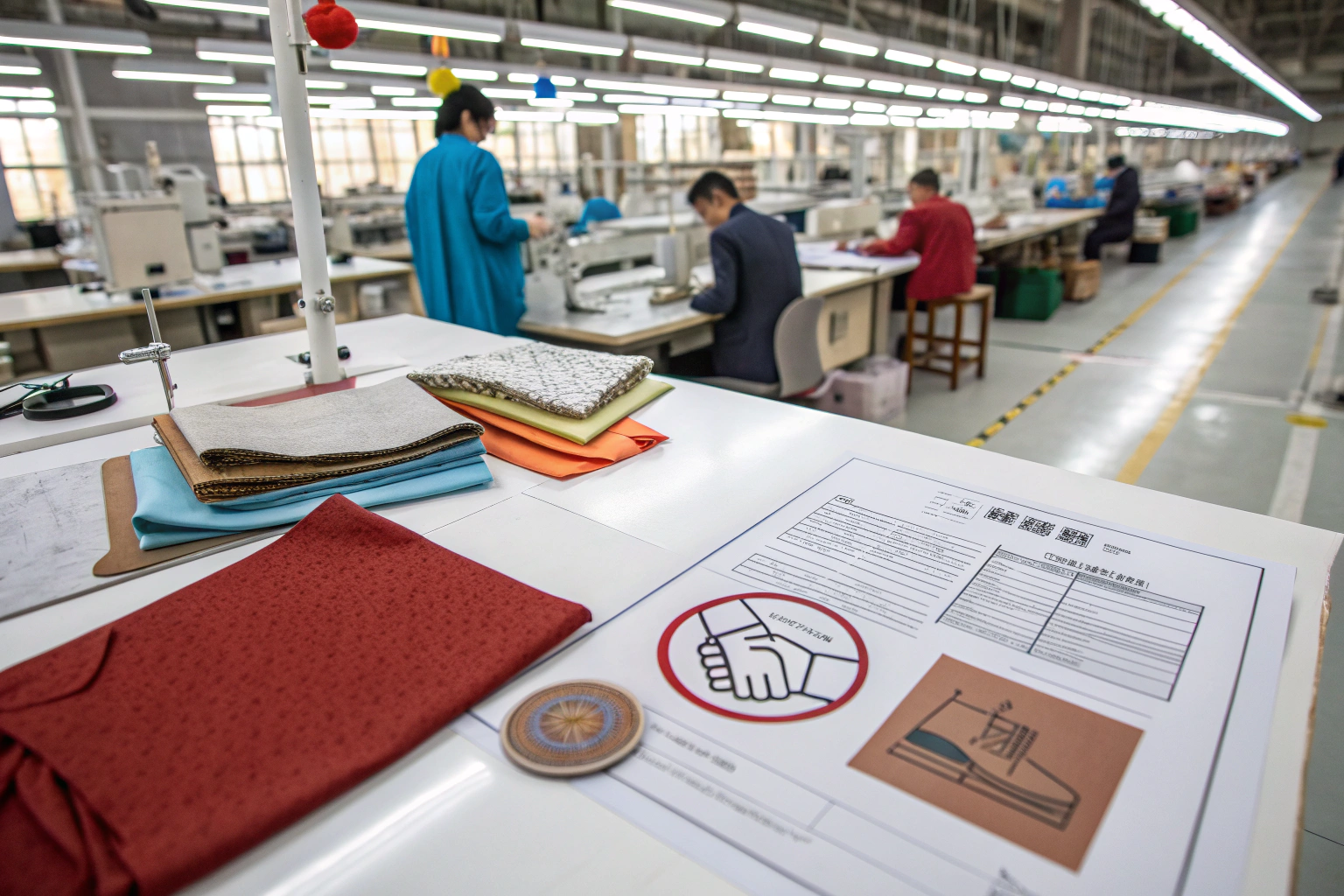
You’ve created something beautiful. Months of sketches, sampling, and refinement went into your unique design. You found a factory in China that can produce it at a price that makes your business model work. You place your first order, and six months later, you’re scrolling through Instagram and see your exact design—same print, same silhouette, same details—being sold by a fast-fashion site for half your price. Your heart sinks. Your exclusive design isn’t exclusive anymore. Your brand’s competitive advantage just evaporated.
This nightmare scenario keeps more designers awake at night than any other sourcing fear. The stories are real—I’ve watched clients lose everything to copycats. But here’s what most designers don’t understand: protecting your IP in China isn’t about keeping secrets. It’s about using the right legal tools, building relationships with ethical suppliers, and designing in ways that make copying harder. After 20 years in Keqiao working with global brands from ZARA suppliers to independent designers, I’ve learned exactly what works and what doesn’t when it comes to protecting your brand.
What legal protections actually work for foreign brands in China?
You’ve heard the myth: "China doesn’t respect intellectual property." That’s outdated and wrong. China now has the world’s largest patent office, the most trademark registrations, and courts that actually enforce IP rights—but only if you’ve registered properly. The biggest mistake foreign brands make is assuming their US or EU trademark protects them in China. It doesn’t. China operates on a first-to-file system, not first-to-use. If you haven’t registered here, someone else can register your brand name and legally own it.
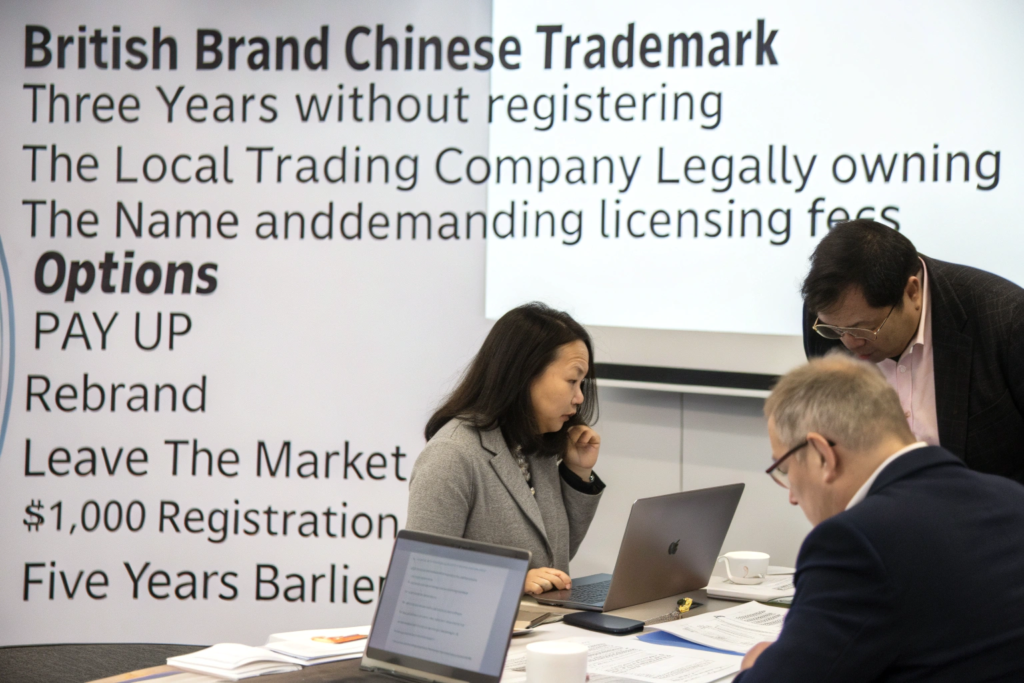
I watched a British brand lose their Chinese trademark in 2022 because a local trading company registered their name first. The brand had been selling in China for three years through distributors, but they never registered. The trading company now legally owns the name and demands licensing fees. The brand’s options: pay up, rebrand in China, or leave the market. All expensive, all avoidable with a $1,000 trademark registration five years earlier.
Why is trademark registration in China urgent for my brand?
Because China’s trademark system rewards the first filer, not the first user. You can prove you’ve been selling your brand in the US since 2015, but if someone filed your trademark in China in 2020, they own it. Chinese courts will enforce their ownership, not yours. This isn’t corruption—it’s the law, clearly stated and consistently applied.
A New York-based accessories brand learned this in 2023. They’d been selling on Tmall through a distributor who registered their brand name "for protection" without telling them. When they switched distributors, the original one refused to transfer the trademark and demanded $50,000 for its release. Legal action would take years. They paid. We now advise every client to register their brand in China before sending their first sample. The cost is minimal—around $1,000-1,500 including legal fees. The protection is absolute. A step-by-step guide to foreign trademark registration in China from the USPTO’s China IP office explains exactly how to do it.
What about design patents—do they stop copycats?
Trademarks protect your brand name and logo. Design patents protect the look of your product—the specific shape, pattern, or ornamentation. In China, design patents are relatively easy and cheap to obtain (around $500-800) and surprisingly effective against direct copies.
A Melbourne-based handbag designer we work with files design patents for every new collection before showing samples to factories. In 2023, she discovered a factory producing exact copies of her bags for another buyer. She filed a complaint with the local market supervision bureau, showed her design patent, and within two weeks the factory was fined and the copycat goods destroyed. The factory owner told us later he didn’t even check for patents—he just assumed she hadn’t registered. Now he checks every new client. A guide to obtaining design patents in China from the China National Intellectual Property Administration walks through the application process.
The key is timing. File BEFORE you show designs to factories. In China, if you show a design publicly before filing, you lose the right to patent it. The first disclosure must be the patent application.
How enforceable are non-disclosure agreements with Chinese factories?
NDAs work, but not the way you think. In the US, an NDA is a threat of lawsuit. In China, an NDA is a statement of seriousness and a relationship builder. Chinese factories sign NDAs all the time—they expect them from professional buyers. But if a factory decides to copy your design, they’re not going to be stopped by the fear of a lawsuit under a foreign legal system they don’t understand.
Where NDAs matter is in establishing expectations and creating leverage. When we sign NDAs with our clients, we’re making a public commitment. Our reputation, our relationships, our ability to attract other premium brands—all depend on honoring that commitment. A Seattle-based outdoor brand requires NDAs from every vendor and has never had a leak. They told us it’s not about the legal threat; it’s about filtering out suppliers who aren’t serious about ethical business. A analysis of NDA effectiveness in cross-border manufacturing on the China Law Blog explains when they work and when they don’t.
How do I choose a factory that won’t steal my designs?
Not all factories steal. Most don’t. The factories that survive and thrive in China’s competitive market do so by building reputations, serving clients well, and growing through partnership, not theft. The key is knowing how to identify the ethical operators before you share your secrets. After vetting hundreds of factories for our clients, I’ve developed a clear system for separating trustworthy partners from potential thieves.
The worst IP disasters I’ve seen happened with factories that looked fine on paper but had underlying problems—financial stress, excess capacity, or a culture of chasing quick profits. When a factory is struggling, the temptation to sell your designs to someone else grows. When a factory is busy with loyal clients, they have too much to lose by betraying trust. The math of theft only works for desperate factories.
What red flags signal a factory might copy my designs?
First red flag: they’re too eager. A factory that agrees to everything, never pushes back on difficult requests, and promises impossible timelines is desperate for work. Desperate factories make desperate choices. A healthy factory pushes back professionally—"that timeline is tight, here’s what we can actually deliver."
Second red flag: they have no other obvious clients. When you visit and the factory seems empty, when they can’t name other brands they work with (even anonymously), when their sample room has no other active projects—they may be surviving on copying rather than serving legitimate clients.
Third red flag: they ask for digital files without context. "Just email us your AI files and we’ll quote" is a danger sign. Professional factories want to understand your needs first, discuss construction, then request files with clear purpose. A Toronto-based brand ignored this red flag in 2022, sent their complete tech pack to a factory that seemed responsive, and saw their designs on Alibaba within three months. The factory had posted them as "similar styles available." A checklist of factory red flags on the Sourcing Journal site helps identify risky partners before you commit.
How do I verify a factory’s reputation with other brands?
You can’t just ask "do you have other clients?" and trust the answer. You need proof. Ask for client references—actual brands they’ve worked with. Then contact those brands. Yes, it’s awkward to cold-call another designer, but most will share their experience if you’re respectful.
Better yet, work through intermediaries who already know the market. We at Shanghai Fumao have relationships with dozens of ethical factories we’ve vetted over years. When a client asks us to recommend a garment factory for their fabric, we only suggest partners with proven track records of protecting client IP. A London-based brand used our network in 2023 to find a cut-and-sew partner and has done three successful collections with zero IP issues. A guide to factory verification on the Better Buying Institute site offers structured approaches to due diligence.
Also check for certifications. Factories that invest in WRAP, BSCI, OEKO-TEX, or other third-party certifications are making public commitments. Losing those certifications over IP theft would cost them more than any single copied design would earn.
What questions should I ask before sharing my designs?
Before you send a single sketch, have a conversation. Ask these specific questions:
"How do you protect client designs? Do you have a policy?"
"Have you ever had an issue with designs being copied? How did you handle it?"
"Can we include specific IP protection clauses in our contract?"
"Do you work with other brands in my category? Will my designs be kept separate?"
The answers matter less than the tone. A factory that’s thoughtful, transparent, and willing to discuss protections is likely safe. A factory that brushes off the questions, gets defensive, or promises vague "we keep everything confidential" without specifics is riskier.
A Chicago-based activewear brand asks every potential factory: "Show me how you store client files. Who has access?" One factory couldn’t answer clearly—files were on a shared drive accessible to anyone. Another showed them a locked server room with access logs and named the three people authorized. They chose the second. Smart move. A list of IP protection questions for factory interviews on the Fashion Law Database helps structure your due diligence.
What contract terms actually protect my designs?
You have a contract. Great. But does it actually protect you? Most sourcing contracts are templates pulled from the internet, full of generic language that sounds good but means nothing in practice. Real protection requires specific clauses tailored to IP risks. After reviewing hundreds of contracts for our clients, I know exactly what works and what’s just window dressing.
The biggest mistake I see: contracts that say "supplier shall keep all information confidential" and stop there. That’s not protection—it’s a wish. Effective contracts define exactly what information is protected, how it must be handled, who can access it, what happens after production ends, and what specific consequences follow a breach. Vagueness is the enemy of enforcement.

What specific IP clauses should my manufacturing contract include?
First, definition of confidential information. Don’t just say "designs." List everything: technical drawings, spec sheets, patterns, samples, material specifications, supplier lists, pricing, and any other proprietary information. The more specific, the better.
Second, handling requirements. How should your files be stored? Who can access them? What happens to them after production? We include clauses requiring that client files be stored on password-protected systems accessible only to named individuals, and that all materials be returned or destroyed within 30 days of order completion.
Third, non-compete and non-circumvention. This prevents the factory from using your designs for other clients or selling to your customers directly. A Denver-based brand had a factory approach their retail customers directly after production, offering "the same product" at lower prices. Their contract didn’t prohibit it. They lost three accounts. Now their contracts explicitly forbid soliciting their customers.
Fourth, consequences of breach. Specify what happens if your designs are stolen. Liquidated damages (a pre-agreed amount), jurisdiction for lawsuits, and responsibility for legal fees. A Boston-based brand’s contract now includes a $50,000 penalty for each proven IP violation. They’ve never had to use it—the clause itself deters problems. A sample IP protection clause library from the Council of Fashion Designers of America offers language you can adapt.
Should I own the patterns and samples the factory creates?
Absolutely. This is a huge source of disputes. You pay for sample development. The factory creates patterns and samples based on your designs. Who owns those physical and digital assets? If your contract doesn’t specify, the factory may claim they do.
We include language stating that all patterns, samples, tech packs, and related materials created for the client are the client’s property. When production ends, we either transfer the physical patterns or destroy them as the client directs. A Swedish brand learned this lesson in 2023 when they switched factories. Their original factory refused to release the patterns, claiming they’d "invested in development." The contract was silent, so they had to pay $3,000 to "buy" their own patterns. A discussion of pattern ownership rights on the Apparel Resources site explains why this matters.
What about moral rights and attribution?
This is subtle but important. In some legal systems, creators have "moral rights" to attribution and integrity of their work. Even if you own the copyright, someone else might claim the right to be identified as the creator or to prevent modifications.
In China, moral rights exist but are rarely asserted in commercial contexts. Still, your contract should specify that the factory waives any moral rights to designs created for you. This prevents future claims like "you modified my design without credit." A Paris-based luxury brand includes this in every contract after a French court case where a supplier sued over unauthorized modifications. A legal analysis of moral rights in manufacturing on the WIPO site explains the international variations.
How can I design in ways that make copying harder?
Legal protection is reactive—it helps you after someone steals your design. Smart designers also use proactive strategies: building copying resistance into the designs themselves. If copying is expensive, difficult, or obviously detectable, most copycats will move on to easier targets. This isn’t about paranoia; it’s about making your brand less attractive to thieves.
Think of it like home security. You don’t need an impenetrable fortress—you just need to be a harder target than the house next door. The same applies to design protection. Simple designs are easy to copy. Complex designs with proprietary elements, custom materials, or difficult constructions are much harder to reproduce accurately.
What design elements are hardest for copycats to replicate?
Complex color combinations. A simple two-color stripe is easy to copy. A gradient with five subtly shifting colors requires precise dye formulation and multiple passes. Most copycats won’t invest that effort.
Proprietary fabric developments. When you develop exclusive fabrics—custom blends, unique finishes, special constructions—copycats can’t easily source them. They’d need to commission their own development, which costs time and money. A Toronto-based activewear brand developed a proprietary moisture-wicking finish with us that uses a specific chemical formulation. Copycats can approximate the look but not the performance. Their customers can tell the difference.
Intricate placement prints. All-over prints are easy to steal. Prints that require precise placement—matching seams, specific positioning on garments—require sophisticated production. Many factories can’t execute them accurately, and copycats’ versions look obviously wrong.
Hardware and trim customization. Custom buttons, zippers, labels, and hang tags with your branding create authentication markers. A London-based brand uses custom-developed buttons with their logo embedded in a way that’s difficult to counterfeit. Customers learn to check the buttons as authenticity signals. A guide to copy-resistant design strategies on the Business of Fashion site offers more techniques.
How do proprietary fabric developments protect my brand?
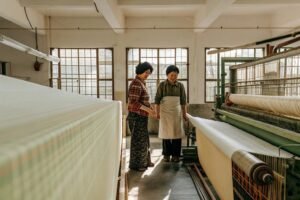
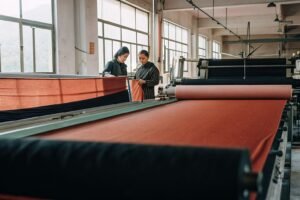
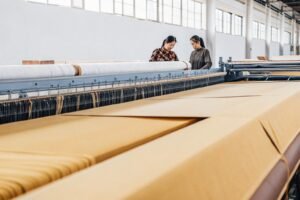
This is our specialty at Shanghai Fumao. When you work with us to develop exclusive fabrics, you’re not just buying material—you’re buying differentiation. We can create custom yarn blends, unique knit structures, proprietary finishes, and exclusive colorways that are difficult or impossible for others to source.
A Melbourne-based swimwear brand worked with us in 2023 to develop an exclusive recycled nylon blend with a specific matte finish and superior chlorine resistance. The development took four months and multiple trials. The resulting fabric is theirs alone. We’ve had inquiries from other brands asking for "that same fabric," and we refuse—it belongs to our client. They now have a two-year head start on any competitor who wants to develop something similar. A case study of exclusive fabric development on the Textile Innovation Network site shows how this approach builds competitive moats.
The economics work: development costs are modest compared to the value of true differentiation. A one-time investment of $5,000-10,000 can create exclusivity that protects your margins for years.
What role does branding play in fighting copycats?
Strong branding is your ultimate protection. When customers buy your brand because they trust you, because they love your story, because they connect with your values—they won’t switch to a cheaper copy even if it looks similar. Copycats steal designs; they can’t steal relationships.
A Portland-based outdoor brand we work with has been copied repeatedly. Their response isn’t lawsuits—it’s community. They engage customers, share their manufacturing process, tell the stories behind their designs. Their customers become brand advocates who spot copies and report them. The copies exist, but they don’t hurt the brand because customers want the real thing.
This doesn’t mean ignoring legal protection. It means building something that can’t be copied: your brand’s meaning. A analysis of brand protection through community on the Harvard Business Review site explains why emotional connection beats legal enforcement alone.
Conclusion
Protecting your brand when sourcing in China isn’t about paranoia or secrecy. It’s about being smart, prepared, and strategic. The brands that succeed long-term don’t hide their designs in fear—they build legal protections, choose ethical partners, write strong contracts, and create products that are genuinely hard to copy. They understand that protection is a system, not a single action.
Register your trademark in China before you send your first sample. File design patents for your unique products. Vet factories thoroughly and trust your instincts about who to work with. Write contracts that actually address IP risks, not generic templates. Develop proprietary elements that copycats can’t easily replicate. Build a brand that customers love, so they want the real thing. Each layer of protection makes you a harder target.
At Shanghai Fumao, we’ve built our reputation on helping brands protect what matters. Our integrated facility means we control every step—no subcontracting to unknown partners, no leakage of designs to third parties. Our relationships with ethical garment factories mean we can connect you with partners who share our commitment to IP protection. Our R&D team helps clients develop exclusive fabrics that become their competitive advantage. We don’t just make fabric; we help build brands that last.
If you’re ready to source with confidence, let’s talk. Elaine, our Business Director, has guided hundreds of brands through the process of protecting their designs while building successful manufacturing partnerships in China. She can review your current approach, identify vulnerabilities, and help you build a protection system that works. Contact Elaine at elaine@fumaoclothing.com to start a conversation about protecting what you’ve built. Let’s make sure your designs stay yours.