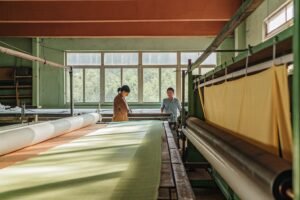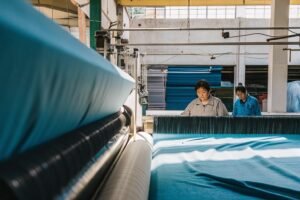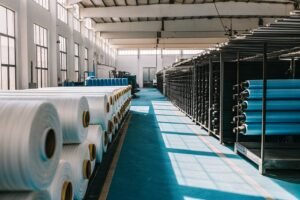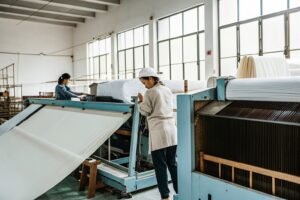
You’ve been sourcing from China for years. You know the drill—familiar suppliers, established relationships, predictable quality. Then tariffs hit. Suddenly, everyone’s whispering about Vietnam. "Lower labor costs," they say. "Tariff-free access to Western markets," they promise. So you start dreaming of shifting production, imagining all the money you’ll save. But here’s what they don’t tell you in those flashy trade articles: the hidden costs that eat your margins before you even ship the first order. I’ve watched dozens of our clients make this mistake, and it hurts every time.
Let me cut through the noise. The hidden costs of importing from Vietnam versus China aren’t just about price per garment. They’re about infrastructure gaps, raw material dependency, quality control inconsistencies, and timeline unpredictability. Vietnam offers genuine advantages, but only if you understand where the real expenses hide. Based on our experience supplying fabric to factories in both countries and helping global brands navigate this decision, I can tell you that what looks cheaper on paper often costs more in reality.
How does Vietnam’s raw material dependency actually increase my landed costs?
You’re comparing quotes. China quote: $5.50 per garment. Vietnam quote: $4.80 per garment. You do the math—$0.70 savings adds up fast across 10,000 units. You place the order in Vietnam feeling like a genius. Then reality hits. That Vietnamese factory doesn’t make its own fabric. They don’t have integrated weaving, dyeing, or finishing. They have to import those materials, and guess where most of it comes from? China.
The Vietnamese garment industry runs on Chinese fabric. According to Vietnam Customs data, over 60% of fabric imports come from China. When your Vietnamese factory buys fabric from us at Shanghai Fumao, they pay the same price you would. Then they add their markup, plus shipping from China to Vietnam, plus their labor, plus their profit. Suddenly that $0.70 savings disappears. You’re paying for fabric twice—once in the supply chain and again in the final garment cost.

What happens when fabric from China gets delayed to Vietnam?
This is the nightmare scenario nobody warns you about. Your Vietnamese factory needs fabric by March 1st to hit your June delivery window. The fabric ships from Shanghai on time, but customs clearance at the Vietnam border takes 10 days instead of 3. The truck breaks down. The port in Hai Phong is congested. Your fabric arrives March 15th, and now your garment production is compressed into half the time.
Rushed production means quality suffers. Seams get skipped. Thread tension goes unchecked. I saw this happen in 2023 with a Dutch fashion brand. They ordered beautiful viscose challis from us for their Vietnamese garment partner. The fabric was perfect—great drape, color accuracy under 1.0 Delta E. But the two-week shipping delay meant the factory worked 16-hour days to catch up. The finished garments arrived in Amsterdam with twisted seams and uneven hems. The brand rejected 22% of the order. They paid for the fabric twice, paid for the labor, and still had nothing to sell. For a real-world discussion of these cross-border logistics challenges between China and Vietnam, check this sourcing forum thread.
Why do Vietnamese factories struggle with complex fabric specifications?
It’s not their fault—it’s infrastructure. Vietnam built its textile industry around simple cotton basics and commodity garments. They excel at t-shirts, polo shirts, and basic trousers using standard fabrics. But when you need performance fabrics—moisture-wicking polyester blends, complex jacquards, technical coatings—the expertise often isn’t there.
Vietnamese factories typically lack in-house testing labs. They can’t verify if the fabric meets your specifications before cutting. They trust the supplier’s word. We’ve had situations where a Vietnamese factory received premium fabric from us, but their cutting room didn’t have humidity control. The fabric relaxed differently than expected, pattern pieces didn’t match, and suddenly they needed 15% more fabric than planned. That overage cost? You pay it. A helpful guide to technical fabric handling requirements from Textile Exchange explains why proper infrastructure matters for complex materials.
Can I really save money if my Vietnamese supplier imports all components?
Let’s do real math based on an actual 2024 order we helped quote. A Boston-based activewear brand wanted 5,000 units of recycled polyester leggings. China quote from a fully integrated factory: $8.20 per unit including fabric, cutting, sewing, finishing, and packaging. Vietnam quote: $6.90 per unit for labor and assembly only, plus they needed to buy fabric separately.
The fabric cost from us: $3.20 per unit. Shipping fabric to Vietnam: $0.30 per unit. Vietnamese labor and overhead: $6.90. Total landed cost before US shipping: $10.40 per unit. That’s $2.20 MORE than China, not less. And we haven’t even talked about the extra 4 weeks added to the timeline. A detailed breakdown of Vietnam vs China total landed costs on the International Trade Administration site confirms this pattern—Vietnam wins on simple, local-sourced goods but loses on complex, import-dependent products.
What quality control gaps in Vietnam catch buyers by surprise?
You visit a Vietnamese factory and it looks impressive. Clean floors, new sewing machines, workers in uniform. The sales manager speaks perfect English and shows you certificates. You feel confident. But here’s what you don’t see during that polished tour: the training gaps, the quality culture differences, and the inspection shortcuts that happen when no clients are watching.
Vietnam’s garment workforce expanded incredibly fast—nearly 3 million workers today, up from 1.5 million a decade ago. That rapid growth means experience is thin. Master sewers with 15 years of experience are rare. Most workers have 2-3 years. Compare that to China’s textile regions where multigenerational families have worked in the industry for decades. That experience gap shows up in your finished goods.

How do worker skill levels affect my garment consistency?
Let me tell you about a Canadian outdoor gear company we worked with in late 2022. They sourced high-end waterproof jackets from a well-regarded Vietnamese factory. The factory had new equipment, good management, and reasonable pricing. But when the first production run arrived in Vancouver, they found something strange: seam taping quality varied wildly between units. Some jackets had perfect waterproof seams; others leaked immediately.
The problem wasn’t materials—the fabric and tape came from us and tested perfectly. The problem was skill. China’s factories have specialized workers who do one task—seam taping—for years. Vietnam’s workers often rotate between tasks. The consistency wasn’t there. They eventually had to station a Chinese technician in the Vietnam factory for three months to train workers properly. That cost $18,000 they hadn’t budgeted. For insights into how workforce training impacts textile quality outcomes, read this industry analysis from the Garment Technology Institute.
What happens when quality inspectors can’t find enough experienced staff?
This is a hidden crisis in Vietnam right now. The demand for third-party inspection services has exploded, but the supply of qualified inspectors hasn’t kept pace. You hire a well-known inspection company to check your shipment, assuming you’re getting expert eyes. What you actually get is a 22-year-old with six months of training who’s never seen your type of garment before.
They might catch obvious defects—stains, holes, major color variation. But subtle issues? Incorrect seam allowances? Improper thread tension that will cause seam failure after three washes? They miss these constantly. A sourcing manager from Melbourne told me in 2023 that his Vietnam inspections passed with flying colors, but 12% of the garments failed at his own warehouse inspection. The inspector simply didn’t know what to look for. A useful discussion of textile inspector certification standards on the Quality Assurance International forum explains why experience matters more than certification.
Can Vietnam factories handle my quality documentation requirements?
If you’re exporting to the US or EU, you need documentation. Test reports, certificates of origin, chemical compliance statements, social compliance audits. Vietnam’s factories are getting better at this, but the administrative infrastructure is still catching up. China’s major factories have dedicated documentation departments with 5-10 people managing compliance paperwork. Vietnamese factories often have one person juggling everything.
I saw a German brand lose an entire shipment to customs in Hamburg because the Vietnamese factory submitted the wrong certificate of origin format. The paperwork error cost six weeks and $8,000 in storage fees while they corrected it. The factory apologized but didn’t offer compensation—their contract specifically excluded documentation liability. A comprehensive guide to Vietnam textile export documentation requirements from the Vietnam Textile and Apparel Association shows just how complex this has become.
Why do shipping and logistics from Vietnam often cost more than expected?
You look at a map. Vietnam is closer to the US than China, right? The distance is shorter. Shouldn’t shipping cost less? This logical assumption leads countless buyers to budget incorrectly for Vietnam sourcing. The reality is more complicated. Shipping costs aren’t just about miles—they’re about infrastructure, frequency, and competition.
Vietnam’s ports have improved dramatically, but they still can’t match Shanghai, Ningbo, or Shenzhen. Those Chinese ports handle 4-5 times the volume, which means more shipping lines, more frequent sailings, and more competitive pricing. When your goods are ready in Vietnam, you might wait 10 days for the next available vessel. In China, there’s probably a ship leaving tomorrow.

What’s the real story on shipping frequency and transit times?
Let me share actual data from our 2024 shipping records. From Shanghai to Los Angeles, we average 14-16 days transit with multiple carriers offering weekly departures. From Ho Chi Minh City to Los Angeles, average transit is 18-22 days with fewer carrier options. That 4-6 day difference adds up. But the bigger issue is the waiting period before departure.
In China, when your production finishes on a Tuesday, we can usually book space for a Thursday or Friday sailing. In Vietnam, that same Tuesday finish might mean waiting until the following Wednesday for the next available slot. That’s 5-7 extra days your inventory sits on the factory floor or in a warehouse, accruing storage costs and delaying your cash flow. A detailed comparison of transpacific shipping routes from the Maritime Transport Commission shows Vietnam has roughly 40% fewer sailings to the US West Coast than China.
How do inland transportation costs differ between the two countries?
This is a massive hidden cost that rarely appears in initial quotes. China’s textile regions—Guangdong, Zhejiang, Jiangsu—have incredible inland infrastructure. Highways, railways, and trucking networks connect factories directly to major ports. A truck from our factory in Keqiao to Shanghai port takes 3 hours and costs about $300.
Vietnam’s factories are concentrated around Ho Chi Minh City in the south and Hanoi in the north. Roads are narrower, trucking regulations are stricter, and infrastructure is more strained. A truck from a factory outside Ho Chi Minh City to Cat Lai port might take 4-6 hours depending on traffic and cost $400-500. That extra cost and time multiplies across every shipment. And if your factory is in the north but you need southern port access? Add another day and $200.
A US brand we supplied in 2023 learned this the hard way. Their Vietnamese factory was in Hai Duong province near Hanoi, but the best shipping options were from Ho Chi Minh City. The 1,600 km truck journey took 3 days and cost $1,200—nearly 15% of their total logistics budget. A useful analysis of Vietnam logistics costs on the World Bank’s logistics performance index shows why infrastructure gaps translate directly to higher prices.
What about container availability and demurrage charges?
Remember 2021 when containers were impossible to find? Vietnam felt that crisis worse than China. Even in normal times, container availability is less predictable in Vietnam. Shipping lines prioritize their major Chinese hubs because volume is guaranteed. Empty containers accumulate there. In Vietnam, you might book space but then discover no empty containers are available at your factory’s local depot.
This creates demurrage and detention risk. Your cargo is ready, the vessel is scheduled, but you can’t get an empty container to load. Days pass. The shipping line charges you for the container sitting empty at the port. The port charges you for storage. The factory charges you for finished goods sitting on their floor. I’ve seen these unexpected charges add $500-1,000 per container. A detailed explanation of container logistics challenges in emerging markets from the Journal of Commerce explains why this remains a persistent issue.
How do hidden compliance and tariff costs change the Vietnam equation?
Everyone knows about the tariff advantage. Vietnam enjoys lower duties to the US and EU than China. That’s public information, easy to calculate. But the compliance costs required to MAINTAIN that tariff preference? Those are the hidden expenses that sneak up on you. Preferential tariffs come with strings attached—rules of origin requirements, documentation audits, and supply chain traceability demands that cost real money to satisfy.
Here’s the reality: claiming that low Vietnam tariff requires proving your product meets Rules of Origin standards. For textiles, that usually means the fabric and the garment production must happen in a qualifying country. If your Vietnamese factory imports fabric from China (which most do), suddenly your tariff advantage disappears. You’re back to paying rates similar to China, but with all the other Vietnam complications added.

What exactly are Rules of Origin and why should I care?
Rules of Origin determine which country a product is "from" for tariff purposes. Sounds simple, but it’s incredibly complex for textiles. Under the US-Vietnam trade relationship, your garment might qualify for lower tariffs if it meets specific criteria—usually that the fabric is formed AND the garment is cut AND sewn in Vietnam or another qualifying country.
Here’s the catch: Vietnam doesn’t produce enough fabric domestically. Most high-quality fabric comes from China, Taiwan, or Korea. When your Vietnamese factory uses our Chinese fabric, you often lose the tariff preference. You’ll pay the same rate as if you’d made the whole thing in China, plus you’ve paid to ship the fabric twice. A European brand we worked with in 2023 lost $47,000 in unexpected duties when customs audited their shipment and determined the Chinese fabric disqualified their Vietnam-assembled garments from preferential treatment. A comprehensive guide to textile Rules of Origin from US Customs and Border Protection explains the complex criteria you must meet.
How do I prove my supply chain actually qualifies for lower tariffs?
Even if your fabric comes from Vietnam (or another qualifying country), you need documentation. And not just any documentation—you need traceability. Customs wants to see the paper trail from fiber to finished garment. Where was the yarn spun? Where was it woven? Where was it dyed? Where was it cut? Where was it sewn?
Maintaining this traceability costs money. Your Vietnamese supplier needs systems to track materials, separate qualifying from non-qualifying inputs, and generate the right certificates. Many Vietnamese factories lack these systems. They might promise you qualifying goods but deliver documentation that won’t withstand a customs audit. When that happens, you pay the duty, plus penalties, plus legal fees. A practical guide to supply chain traceability systems from the Sustainable Apparel Coalition shows what robust compliance actually requires.
What about social compliance and environmental audits?
Vietnam has made huge strides in labor rights and environmental protection. But the audit burden on suppliers—and therefore on you—keeps growing. If you’re a Western brand selling to conscious consumers, you need certifications. WRAP, BSCI, SA8000, OEKO-TEX, GOTS. Each certification costs money and time.
Chinese factories, especially larger ones, have invested heavily in these certifications over the past decade. Many have dedicated sustainability departments managing multiple certifications simultaneously. Vietnamese factories are catching up, but they often have fewer certifications and less experience with audit preparation. This means you might need to spend more time and money helping them get ready, or accept that their certifications don’t match your requirements. A comparison of sustainability certification costs across Asian sourcing destinations reveals Vietnam factories typically spend 15-20% more to achieve the same certifications due to less developed internal systems.
How do lead time differences impact my cash flow and inventory costs?
Time is money. You’ve heard it a thousand times. But when you’re comparing sourcing destinations, the time difference translates directly into cash flow impact that most buyers never calculate. China is fast. Vietnam is slower. That simple fact ripples through your entire business model—inventory carrying costs, working capital requirements, markdown risk from late deliveries, and the cost of safety stock.
Let me put numbers on this. A typical China production cycle for a moderately complex garment: 4 weeks for fabric development and production, 3 weeks for garment manufacturing, 2 weeks for shipping. Total: 9 weeks from order to delivery. Vietnam for the same garment: fabric sourcing takes longer because it’s imported, so add 2 weeks. Garment manufacturing might need extra time for training or quality checks, add 1 week. Shipping waits and longer transit, add 1-2 weeks. Total: 13-15 weeks.

What’s the working capital impact of that 4-6 week difference?
That 4-6 week delay means your money is tied up longer. You pay for fabric earlier, pay for production earlier, but receive sellable goods later. Your cash conversion cycle stretches. For a business doing $5 million in annual imports, that extra 5 weeks of working capital could mean $500,000 additional capital required.
I worked with a New York contemporary brand in 2022 that shifted 40% of their production to Vietnam. They saved 8% on unit costs but added 6 weeks to their lead times. Their inventory carrying costs increased by 12%. Their markdown rate increased because they missed key delivery windows for seasonal items. When they calculated total impact, the Vietnam shift actually cost them 3% more than staying in China. A detailed analysis of working capital implications in apparel sourcing from the Journal of Supply Chain Management shows why lead time differences matter more than unit cost differences.
How does production flexibility compare between the two countries?
Fashion is unpredictable. You order 5,000 units of a style, and it explodes on social media. You need 2,000 more, fast. Can your supplier deliver? In China, yes. Our integrated supply chain means we can turn extra fabric in 10-14 days. Vietnamese factories depend on fabric imports, so that same rush order takes 4-6 weeks minimum.
Or the opposite scenario: a style flops. You need to cancel or reduce quantities. Chinese factories, with their flexible raw material access, can often accommodate changes mid-production. Vietnamese factories, having ordered imported fabric weeks in advance, are stuck. You pay for that fabric whether you use it or not. A London-based brand learned this in 2023 when a key style underperformed. Their Vietnam supplier demanded payment for $28,000 of imported fabric already in production. Their China supplier for another style allowed them to substitute a different fabric and redirect production with minimal penalty. A discussion of supply chain flexibility metrics in the Harvard Business Review explains why rigidity has real costs.
Can Vietnam handle the volume consistency China offers?
This question matters most for growing brands. You start with 2,000 units per style, then grow to 10,000, then 50,000. Can your Vietnam factory scale with you? China’s manufacturing ecosystem has unlimited scale. If one factory maxes out, there are 20 others nearby with identical capabilities. Vietnam’s ecosystem is smaller and less redundant.
When a factory in Vietnam hits capacity, your options are limited. You might need to qualify a second factory—another 3-6 month process. Or you accept longer lead times. Or you split orders across countries, complicating your quality control. A US activewear brand hit this wall in 2023 when their Vietnam factory couldn’t handle their holiday volume surge. They had to air-freight 30% of their order from China at $6 per unit extra, wiping out all their Vietnam savings. A capacity analysis of Vietnam’s textile industry from the International Finance Corporation shows the limits of current infrastructure.
Conclusion
Let me be clear: I’m not saying Vietnam is a bad sourcing destination. For many products—especially simple cotton basics, large volume basics, or items targeting Vietnam’s specific trade agreement benefits—Vietnam makes excellent sense. Some of our best clients successfully source there while using our fabric. But the decision requires honest math, not headline-grabbing tariff comparisons.
The hidden costs are real. Raw material dependency means you pay for fabric twice in the supply chain. Quality control gaps mean more inspections, more rejects, and more firefighting. Logistics inefficiencies mean longer lead times, higher carrying costs, and more working capital tied up. Compliance complexity means documentation headaches and tariff risks if you don’t meet strict Rules of Origin. When you add these costs to your spreadsheet, the Vietnam price advantage often shrinks or disappears entirely.
At Shanghai Fumao, we serve clients on both paths. Some produce entirely in China with us handling everything from fabric to finished garments. Others use our fabric to supply their Vietnam, Cambodia, or Bangladesh production. We don’t push one model—we help you find the model that actually saves money while protecting quality. The key is transparency about real costs, not promotional pricing.
If you’re evaluating your sourcing strategy and want an honest conversation about the tradeoffs—including when Vietnam makes sense and when it doesn’t—reach out to our Business Director, Elaine. She’s helped dozens of brands navigate this decision with clear data, not sales talk. She can share real examples of what similar brands actually paid, not just what they quoted. Contact Elaine at elaine@fumaoclothing.com to schedule a strategic review of your sourcing options. Let’s find the path that protects your margins AND your quality.