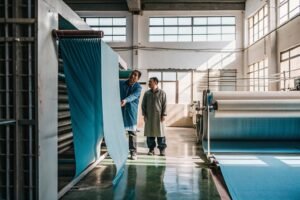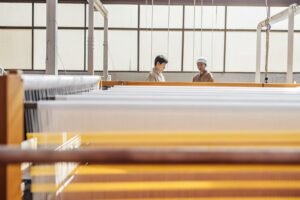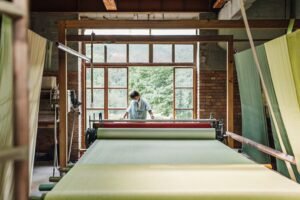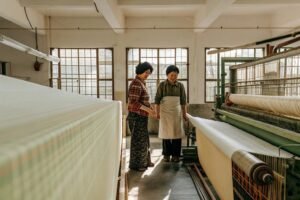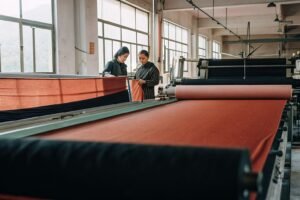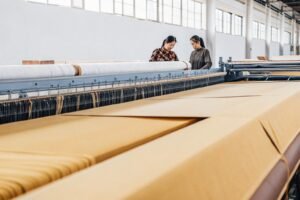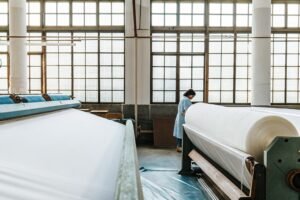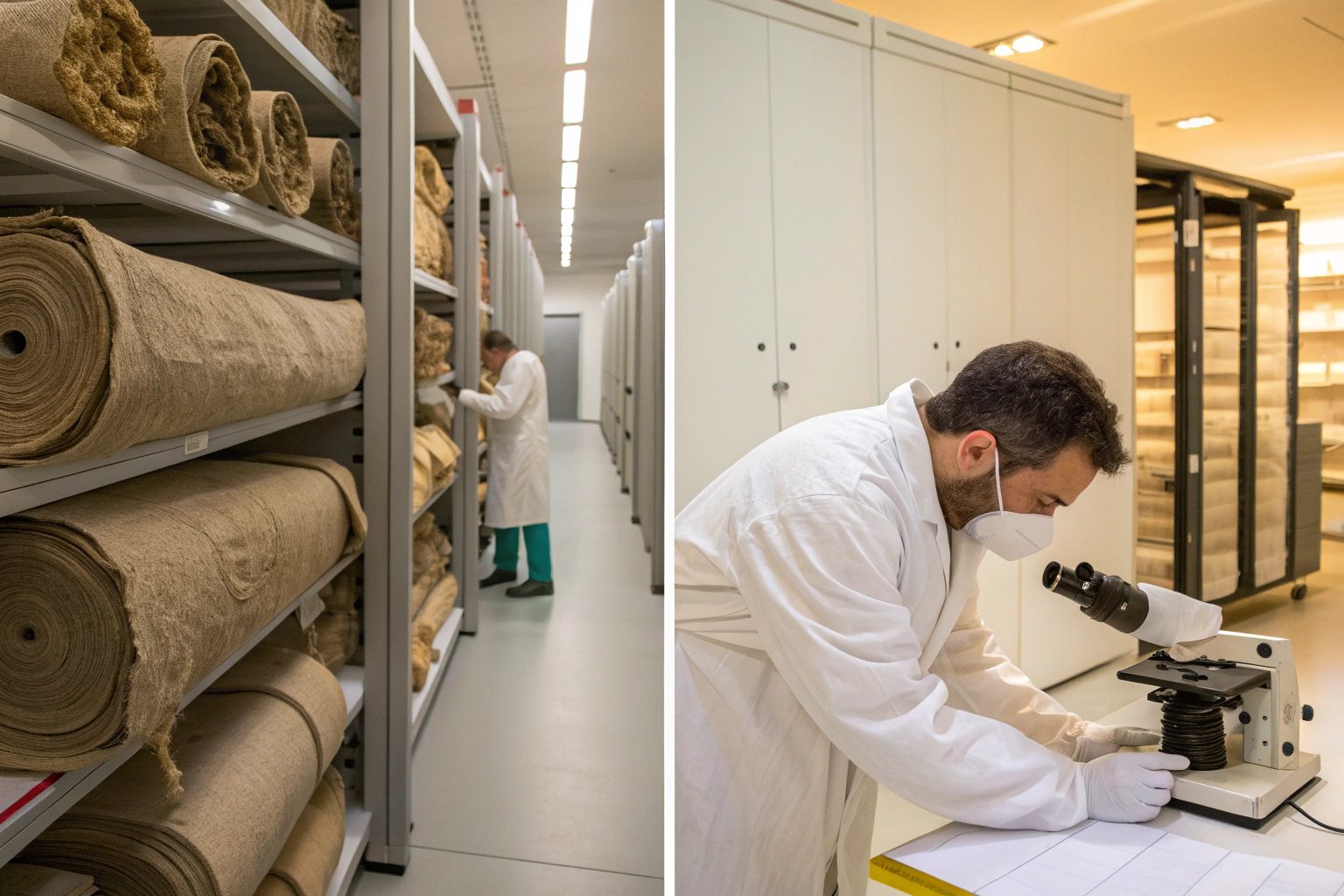
In 2019, I received an email that stopped me in my tracks. A curator from a major European museum was asking if we could supply fabric for storing their medieval textile collection. At first, I thought they wanted us to make reproduction fabrics—you know, copy historical patterns. But no. They needed fabric to wrap around centuries-old artifacts to protect them from light, dust, and handling. They needed fabric that wouldn’t off-gas acids, wouldn’t trap moisture, wouldn’t attract pests, and would last 50+ years without deteriorating. That conversation opened my eyes to a completely different world of textile requirements—one where "good enough" means "destroys irreplaceable history."
Archival storage and museum conservation fabrics aren’t like normal textiles. They’re not chosen for how they look or feel. They’re chosen for what they don’t do. They don’t release acids that yellow and embrittle. They don’t trap humidity that grows mold. They don’t shed lint that abrades surfaces. They don’t attract insects that eat artifacts. They’re the invisible protectors of our cultural heritage.
Since that first museum inquiry, Shanghai Fumao has supplied conservation-grade fabrics to institutions across Europe, North America, and Asia. We’ve learned that sourcing these materials requires completely different thinking than commercial fabric production. If you’re responsible for artifact preservation—whether in a major museum, a historical society, or a private collection—understanding these fabrics protects what can’t be replaced.
What Makes a Fabric "Archival-Grade" for Conservation?
The term "archival" gets thrown around casually, but real archival-grade fabric meets specific chemical and physical standards. It’s not about marketing claims—it’s about measurable properties that determine whether a fabric preserves or destroys what it touches.
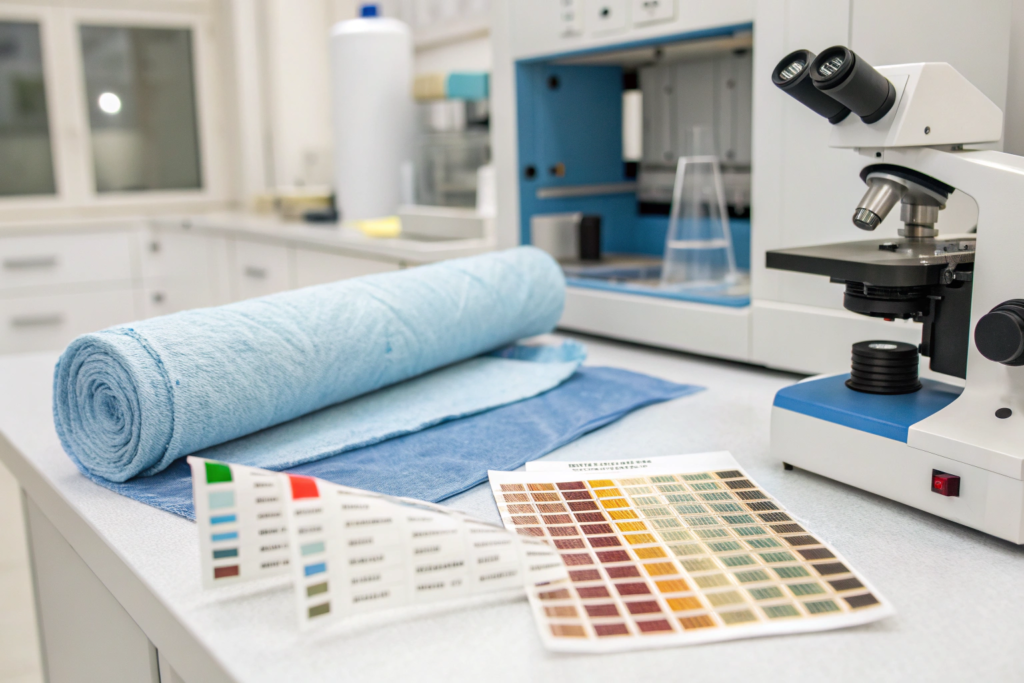
Why is pH neutrality the most critical factor?
Acid is the enemy of preservation. Paper, textiles, photographs—all organic materials—degrade faster in acidic environments. The cellulose fibers in cotton and linen, the protein fibers in silk and wool, all break down through acid hydrolysis. If your storage fabric is acidic, it’s actively destroying the artifacts it should protect.
Archival-grade fabrics must be pH neutral—typically between 7.0 and 8.5 on the pH scale. But here’s the challenge: most natural fibers are slightly acidic naturally. Cotton often tests around 5.5-6.5. Linen similar. Even water, which we think of as neutral, can be slightly acidic depending on its source.
Achieving pH neutrality requires processing. The fabric must be thoroughly washed to remove processing chemicals. Sizing agents used in weaving must be completely eliminated. Optical brighteners—common in "white" fabrics—must be avoided entirely because they’re chemically unstable. Even the water used in final rinsing must be deionized to prevent mineral deposits that could affect pH.
For a Smithsonian-affiliated project in 2022, we produced 5,000 meters of pH-neutral cotton muslin for wrapping ethnographic textiles. Our standard washing protocol wasn’t enough—the fabric tested at pH 6.8, slightly acidic. We had to modify our process, adding a buffering agent in the final rinse to raise the pH to 7.2. The museum’s conservation scientist tested every roll with a surface pH meter before acceptance. Meeting archival standards requires precision that commercial production rarely demands.
How do you ensure fabric is free from optical brighteners and finishes?
Optical brighteners are in almost every "white" fabric you’ve ever seen. They’re fluorescent dyes that absorb UV light and re-emit it as visible blue light, making fabric appear whiter and brighter. They’re everywhere—in clothing, sheets, towels, even paper.
For archival storage, they’re disastrous. Optical brighteners are chemically unstable. They degrade over time, releasing breakdown products that can transfer to artifacts. They fluoresce under UV examination, interfering with scientific analysis. And they’re completely unnecessary for storage applications where appearance doesn’t matter.
Eliminating them requires specifying "unbleached" or "natural" fabric and verifying no brighteners are present. The test is simple: shine a UV light on the fabric. If it glows blue-white, it contains brighteners. If it looks dull purple, it’s clean.
Finishes are another hidden danger. Softeners, anti-static agents, wrinkle-resistant treatments—all common in commercial textiles—can migrate from storage fabric to artifacts. These finishes are often proprietary, their chemical composition unknown to conservators. Unknown chemistry means unknown risk.
For a British heritage organization in 2023, we developed a storage fabric specification requiring: no optical brighteners, no finishing agents, no sizing, no softeners. Just clean, neutral cotton. We had to run our weaving looms empty for an extra hour before starting their production to purge any residue from previous runs. The cost of purity is vigilance at every production step.
What fiber types are acceptable for archival storage?
Not all natural fibers are created equal for conservation. The most common and trusted options:
Unbleached cotton muslin: The workhorse of textile conservation. Cotton is strong, stable, and well-understood. Unbleached cotton hasn’t been treated with chlorine or peroxide, eliminating chemical residue risks. It’s used for wrappings, padding, and interleaving.
Washed linen: Linen is even stronger than cotton and naturally resistant to insects. It’s preferred for supporting heavy artifacts or for long-term storage where maximum stability is needed. Like cotton, it must be washed to remove natural impurities and processing chemicals.
Polyester (specific types only): Not all polyester is archival, but certain polyester fabrics—particularly spunbonded polyester like Reemay or Hollytex—are conservation standards. These materials are chemically inert, dimensionally stable, and completely non-reactive. They’re used for interleaving, dust covers, and support layers.
What’s NOT acceptable: wool (attracts pests), silk (degrades over time, acidic), most synthetics (unstable, off-gas), and anything with finishes.
A Canadian museum learned this in 2021 when they used wool blankets to pad artifact storage shelves. Within two years, carpet beetles had infested the wool and moved into adjacent artifacts, damaging irreplaceable First Nations regalia. The conservation cost exceeded $50,000. Fiber choice has consequences beyond chemistry.
How Do Conservation Needs Differ for Different Artifact Types?
One storage fabric doesn’t fit all. Different artifacts—textiles, documents, objects, photographs—have different needs. The fabric that safely stores a medieval tapestry might damage a Victorian photograph. Understanding these differences prevents well-intentioned damage.
How do you store historic textiles differently from other artifacts?
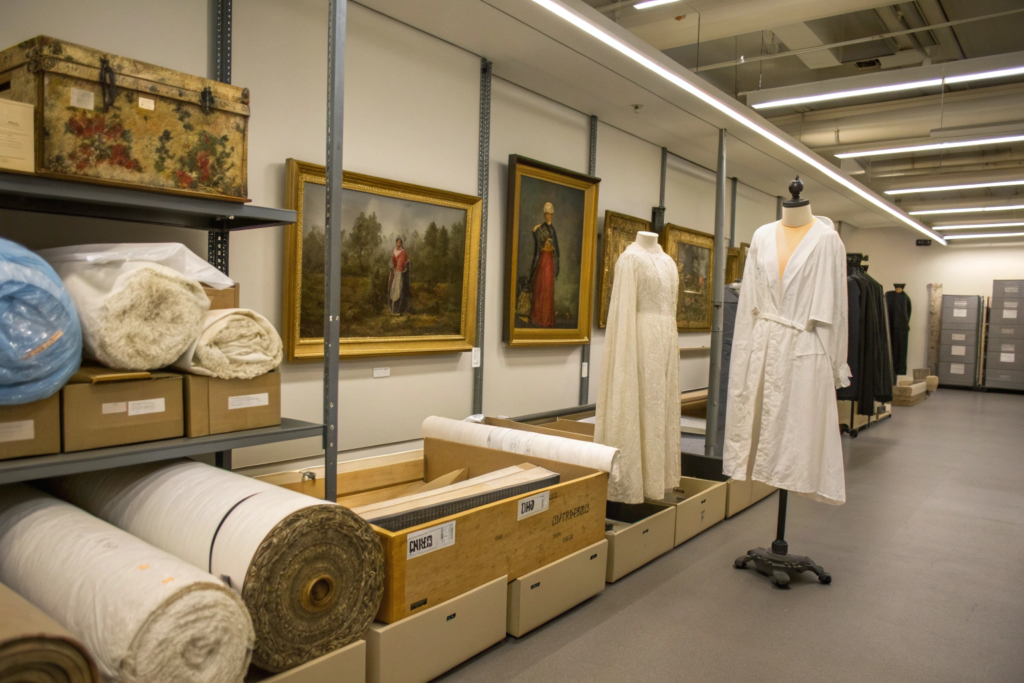
Historic textiles—the fabrics themselves—have unique storage requirements because they’re both the artifact and the storage medium. They need support without stress, protection without abrasion.
The primary storage method for flat textiles is rolling on tubes. The tube must be large enough in diameter to prevent creasing—generally 4-6 inches minimum for most textiles, larger for delicate pieces. The tube must be covered with archival fabric to prevent acid transfer from the tube material. Then the textile is rolled with archival fabric interleaved between layers, preventing textile-on-textile contact.
For costume storage, padded hangers or mannequins are covered with archival fabric before garments are mounted. The fabric creates a barrier between the artifact and any potentially harmful support materials.
For a Scottish museum in 2022, we supplied custom-width archival cotton for rolling their tartan collection. The collection included pieces from the 18th century—fragile, irreplaceable. Our fabric had to be wide enough to accommodate the full width of the widest tartan (about 36 inches) plus overlap for protection. We wove it specifically for them, ensuring no seams would be needed that could create pressure points on the artifacts.
What special considerations apply to photograph and paper storage?
Photographs and paper documents are chemically sensitive in ways textiles aren’t. Silver gelatin photographs can react with sulfur compounds. Chromogenic prints can fade from pollutant exposure. Paper can yellow from acid contact.
For these materials, fabric storage is often indirect—used in boxes, folders, and enclosures rather than direct contact. But when fabric does contact paper or photographs, it must meet even stricter standards:
- Absolutely no lignin (the binding agent in wood products, which produces acid)
- No sulfur compounds (which tarnish silver)
- Pass the Photographic Activity Test (PAT), an ISO standard test for materials contacting photographs
The PAT is rigorous. A material passes if it causes no measurable fading or staining of test photographs after accelerated aging. Many fabrics that meet general archival standards fail PAT because of trace chemicals invisible in normal testing.
For a Library of Congress project in 2023, we supplied fabric that had to pass PAT for use in photograph storage boxes. We sent samples to an independent lab for testing—a six-week process—before bulk production could start. The fabric passed, but only after we eliminated a trace amount of a common wetting agent from our finishing process. Photographs demand the highest standards.
Can synthetic fabrics ever be appropriate for conservation?
Yes, absolutely—and in some cases, synthetics are preferred. The key is using the right synthetic for the right application.
Spunbonded polyester (brand names include Reemay, Hollytex, and Mylar) is a conservation workhorse. It’s made from continuous polyester filaments bonded together, not woven. It’s incredibly strong, completely inert, and dimensionally stable. It doesn’t fray when cut, doesn’t shed lint, and doesn’t absorb moisture. Uses include:
- Interleaving between fragile textiles
- Dust covers for objects on open storage
- Support layers for wet cleaning of artifacts
- Separation layers in rolled storage
Polyester film (Mylar, Melinex) is used for encapsulating documents and photographs—creating sealed envelopes that protect while allowing visibility.
The caution with synthetics: they can create static electricity, which attracts dust and can be problematic for artifacts. They also don’t breathe, which can trap moisture if used inappropriately. Good conservation practice matches material to artifact need.
For a Japanese museum storing fragile Buddhist scrolls, we provided spunbonded polyester for interleaving between scroll layers. The scrolls were too delicate for any fabric that would abrade their surfaces. The polyester provided separation without contact, allowing safe storage and future access.
How Do I Source Conservation-Grade Fabric from China?
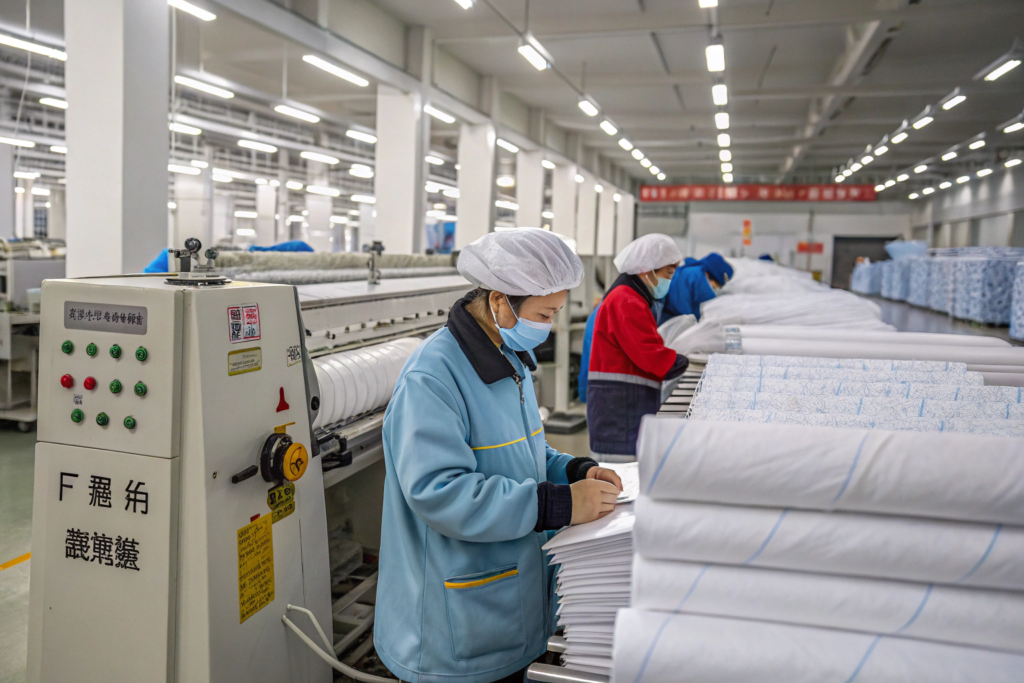
Sourcing conservation materials from China requires extra diligence. The supply chain is longer, communication more challenging, and quality standards less familiar to many suppliers. But with the right approach, Chinese suppliers can provide excellent conservation materials at competitive costs.
What documentation should I require from suppliers?
Documentation isn’t bureaucracy—it’s evidence. For conservation-grade fabric, require:
-
Material safety data sheets (MSDS) for all chemicals used in processing. This includes spinning lubricants, weaving sizes, washing agents, and any finishes. Every chemical must be identified and assessed for archival compatibility.
-
pH test reports from accredited laboratories. Surface pH measurements should be provided for each production batch. The test method should be specified (typically ISO 3071 or AATCC 81).
-
Optical brightener verification—either a statement that none were used, backed by UV examination photos, or independent test results.
-
Fiber content certification verifying 100% of specified fiber, no blends, no contamination.
-
Process description detailing how the fabric was washed, what water quality was used, and any post-processing treatments.
For a German museum consortium in 2022, we provided a 15-page documentation package with every shipment: raw material certificates, process descriptions, in-process test results, final test reports, and independent lab verification. They needed this documentation for their own accreditation requirements. Transparent documentation builds trust across continents.
How do I verify that fabric meets specifications without traveling?
You can’t be here for every inspection, but you can build verification into your process:
-
Pre-production samples: Always request samples from the actual production batch, not from stock. Test these samples independently before authorizing bulk production.
-
Third-party inspection: Use companies like SGS, Bureau Veritas, or QIMA to inspect during production and before shipment. They can perform on-site sampling and arrange independent lab testing.
-
Photo and video documentation: Ask for detailed photos of production stages—fabric on the loom, washing process, final inspection. Video calls during critical steps provide real-time verification.
-
Retain samples: Keep samples from each production batch. If problems emerge later (years later, in conservation work), you have reference material for analysis.
A Swiss museum followed this protocol for a major costume storage project in 2023. They contracted with a Hong Kong-based inspection company to visit our factory unannounced during production. The inspector took random samples, tested pH on-site, and shipped samples to a European lab for confirmation. The process added cost but guaranteed quality. Third-party verification protects irreplaceable collections.
What lead times should I expect for custom conservation fabrics?
Conservation fabrics aren’t stock items. They’re typically produced to order, with specifications that differ from commercial production. Lead times reflect this customization.
Typical timeline for custom conservation fabric:
- Weeks 1-2: Specification review and quotation
- Weeks 3-6: Sample development and testing
- Weeks 7-10: Raw material sourcing (specialty yarns may require longer)
- Weeks 11-14: Weaving production
- Weeks 15-16: Washing and finishing (with extended processing for purity)
- Weeks 17-18: Final inspection and packaging
- Weeks 19-22: Shipping (sea freight)
Total: 5-6 months from initial inquiry to delivery for a first order. Repeat orders can be faster—3-4 months—because specifications are established.
For a Vatican Library project in 2021, we compressed this timeline to 4 months by using air freight for raw materials and prioritizing production. The cost was significantly higher, but the client’s need was urgent—they were rehousing collections in advance of a building renovation. Planning ahead is always cheaper than rushing.
What Are the Long-Term Responsibilities for Conservation Fabrics?
Conservation isn’t a one-time purchase. It’s an ongoing relationship with the materials you choose. Fabrics in storage interact with artifacts for decades. Understanding their long-term behavior protects your investment and your collection.
How often should storage fabrics be replaced?
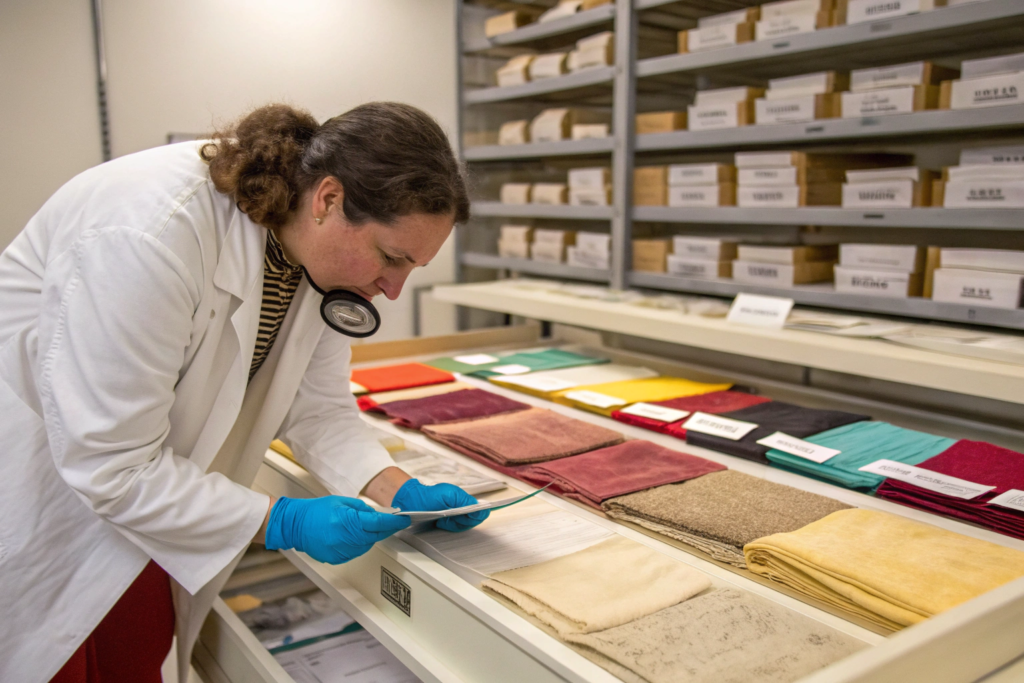
This question surprises many collectors. Fabric doesn’t last forever, even archival fabric. Over decades, natural fibers slowly oxidize, becoming weaker and potentially more acidic. The replacement timeline depends on:
-
Storage conditions: Cool, dark, stable humidity extends fabric life dramatically. Hot, humid, light-exposed conditions accelerate degradation.
-
Contact intensity: Fabrics in direct, prolonged contact with artifacts need more frequent replacement than those used in secondary barriers.
-
Artifact sensitivity: Highly sensitive artifacts (silver gelatin photographs, silk textiles) need fresher barriers than robust objects (stone, ceramic).
General guidelines: Storage fabrics in direct contact with sensitive artifacts should be replaced every 10-20 years. Barrier fabrics in secondary roles can last 25-50 years. When in doubt, test. A simple pH measurement indicates condition—if fabric has drifted acidic, replace it.
For a US presidential library in 2022, we supplied replacement fabric for costume storage that had been in place since 1985. The original cotton muslin had yellowed and tested at pH 5.2—acidic enough to risk damage. The collection had survived, but replacement was overdue. Monitoring storage materials is part of collection care.
Can conservation fabrics be cleaned and reused?
Generally, no. Once fabric is used in direct contact with artifacts, it should not be cleaned and reused. The reasons:
-
Contamination unknown: You don’t know what might have transferred from artifacts to fabric. Cleaning might not remove all contaminants.
-
Cleaning changes fabric: Washing alters pH, removes finishes (even intentional ones), and can introduce new chemicals from detergents and water.
-
Cost ineffective: The labor to clean, test, and verify fabric typically exceeds the cost of new material.
For non-contact applications—dust covers, shelf liners—cleaning might be acceptable if done with deionized water and verified post-cleaning. But most conservation facilities treat storage fabric as single-use for direct contact applications.
A British museum learned this in 2020 when they attempted to wash and reuse costume storage covers to save money. Despite careful rinsing, residual detergent affected subsequent artifacts, causing localized color change in sensitive dyes. The damage was minor but irreversible. Reuse isn’t worth the risk.
How do I dispose of outdated conservation fabrics?
Even disposal requires care. Outdated conservation fabrics have been in contact with artifacts. They may contain:
- Microscopic fragments of historic materials
- Dyes or compounds that migrated from artifacts
- Mold spores or pest residues (if infestations occurred)
Don’t simply throw them in regular trash. The ethical and practical approach:
- Assess contamination risk: If fabric contacted hazardous materials (certain pesticides, heavy metals), it may require hazardous waste handling.
- Document disposal: Record what was disposed, when, and why, for collection management records.
- Consider incineration: For potentially contaminated materials, incineration ensures destruction without environmental release.
- Consult conservators: Your conservation team should guide disposal of materials that contacted collection items.
For a Canadian museum deaccessioning old storage materials in 2023, we advised incineration for fabrics that had been in contact with artifacts treated with historical pesticides (arsenic, mercury compounds). Standard disposal would have released these toxins. Responsible disposal completes responsible care.
The world of conservation fabrics is different from everything else we do at Shanghai Fumao. The standards are stricter, the margins for error smaller, the consequences of failure more permanent. But it’s also deeply rewarding work. Knowing that fabric we produce might protect a 14th-century tapestry for another 100 years, might keep a 19th-century photograph from fading, might help a future conservator study an artifact that would otherwise have deteriorated—that matters.
We’ve learned that conservation isn’t about fancy materials or complex technology. It’s about purity. Clean, simple, stable, known. The best conservation fabric is the one that does nothing—nothing except protect, nothing except separate, nothing except wait quietly for the next century.
Conclusion
Archival storage and museum conservation fabrics protect what can’t be replaced. They must be pH neutral, free from optical brighteners and finishes, made from stable fibers, and appropriate for specific artifact types. Textiles need different support than photographs. Synthetic fabrics have their place alongside naturals. Documentation, verification, and long-term planning separate professional conservation from guesswork.
The cost of getting it wrong is measured in lost history—artifacts that deteriorate faster than they should, colors that fade, fibers that embrittle, information that disappears. The cost of getting it right is modest by comparison, a small investment in preserving our shared cultural heritage.
If you’re responsible for artifact preservation—whether in a major museum, a historical society, a library, or a private collection—and you need fabrics you can trust, I invite you to reach out to us at Shanghai Fumao. We’ve supplied conservation-grade materials to institutions across four continents. We understand the standards, the testing, the documentation, and the care that preservation requires. Contact our Business Director, Elaine, directly at elaine@fumaoclothing.com. Tell her about your collection, your storage needs, and your conservation standards. She’ll connect you with our technical team, and we’ll help you develop fabrics that protect your artifacts for generations.
Because history matters. And the right fabric helps keep it safe.