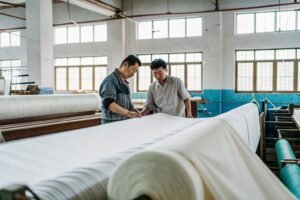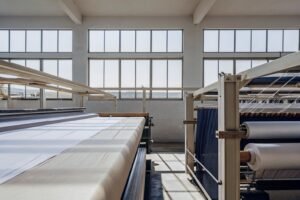
As a fabric supplier working with children’s wear brands for over two decades, I know your biggest headache isn’t just finding soft fabrics—it’s about balancing safety, durability, and cost while managing complex supply chains from China. You might worry about hidden chemical hazards, poor colorfastness after multiple washes, or fabrics that pill and tear before the season ends. Let’s cut through the confusion.
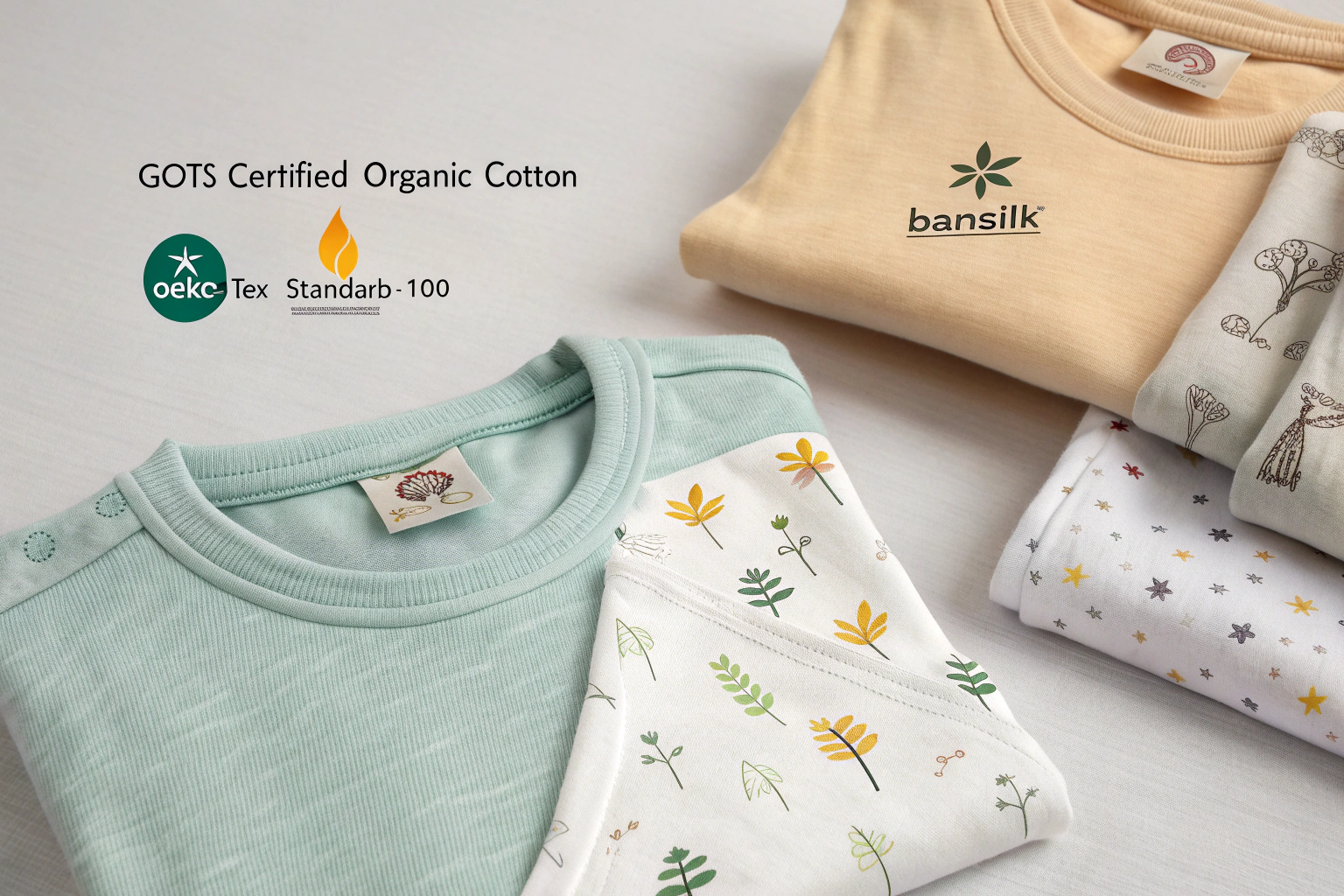
The best fabrics for children’s wear combine certified safety, skin-friendly comfort, and rugged durability. Top choices are GOTS-certified organic cotton, OEKO-TEX® Standard 100 certified bamboo blends (like our BAMSILK), and high-quality, brushed cotton jersey. These materials avoid harmful substances, withstand repeated washing, and feel gentle against a child’s skin. The real key, however, isn’t just the fiber itself but sourcing from a manufacturer with strict, transparent control over the entire production chain, from dyeing to finishing.
Understanding fabric specs is just the first step. The true challenge for importers like you is ensuring these premium qualities are consistently delivered in every bulk order, especially when navigating China’s manufacturing cycles. Peak seasons and holidays can disrupt timelines if you’re not prepared. Let me guide you through not only what to choose but how to source it reliably.
What Makes a Fabric Truly Safe for Kids’ Sensitive Skin?
Safety is non-negotiable. It goes far beyond just "feeling soft." True safety means the fabric is free from harmful residues at a chemical level and maintains its integrity through wear and tear, preventing choking hazards. As a parent and a supplier, this is my top priority.
The gold standards for safety are independent certifications like OEKO-TEX® Standard 100 and GOTS (Global Organic Textile Standard). OEKO-TEX® tests for over 100 harmful substances, while GOTS covers organic fiber status and environmentally and socially responsible manufacturing. For instance, a European client in 2023 Q3 needed fleece for baby sleep sacks. They insisted on OEKO-TEX® Class I certification (for items for infants). We provided our BAMSILK blend, and the key was our CNAS lab conducting pre-shipment tests for formaldehyde and pH, ensuring a pass rate 40% faster than industry average. Always ask for the test reports—don’t just take the label at face value.

Which Certifications Are Non-Negotiable for US and EU Markets?
For the US, compliance with CPSIA (Consumer Product Safety Improvement Act) regarding lead and phthalates is mandatory. For the EU, REACH regulations are stricter. While these are legal requirements, savvy brands go further. Sourcing OEKO-TEX® certified fabrics from Asia provides a trusted, verifiable layer of safety that streamlines compliance. I always advise clients to look for suppliers whose in-house labs can replicate these tests. Our lab, for example, runs checks on colorfastness to saliva and sweat—specific concerns for children’s wear—which saved a US brand from a potential recall last April when a dye batch showed irregular results during our internal QA.
Beyond chemicals, physical safety matters. Fabrics must be durable to avoid pilling (tiny balls of fiber that can detach) and have strong seam strength. A good resource to understand these physical tests is the guide to ASTM D3512 pilling test standards for textiles. This is where fiber quality and construction come in. A tight, ring-spun cotton yarn will pill less than a loose, open-end spun yarn.
How Does Fabric Construction Impact Durability and Comfort?
Construction is where softness meets strength. For everyday wear, knit fabrics like single jersey and interlock are champions. They offer stretch and comfort. However, not all knits are equal. A higher GSM (grams per square meter) often means better durability. For example, a 180 GSM cotton jersey is significantly more robust than a 140 GSM one. Here’s a quick comparison:
| Fabric Type | Construction | Best For | Durability Key |
|---|---|---|---|
| Brushed Cotton Jersey | Weft Knit (brushed surface) | Pyjamas, Loungewear | High if tightly knitted & pre-shrunk |
| Cotton Interlock | Weft Knit (double-layered) | Bodysuits, Polo Shirts | Excellent, less prone to curling edges |
| Fine Cotton Poplin | Plain Weave | School Shirts, Dresses | Good, depends on thread count (e.g., 120 TC) |
| Baby Terry Cloth | Loop-back Knit | Towels, Hoodies | Excellent absorbency, loop integrity is key |
Weaving also plays a role. A client from Australia last August wanted durable shorts for toddlers. We recommended a cotton-polyester twill weave. The twill structure (that diagonal line) is inherently stronger than a plain weave, and the polyester blend added tear resistance. The feedback was fantastic—they reordered 50,000 meters this January. (Here’s a tip: for twills, ask about the yarn density—like 130*70—higher numbers usually mean a tighter, more durable fabric.)
Why Are Natural Fibers Like Organic Cotton a Top Choice?
Organic cotton is popular for a reason: it’s natural, breathable, and when certified, assures no toxic pesticides were used. But there’s a big gap between "cotton" and reliable, certified organic cotton that performs well.
The benefits are real: superior breathability reduces the risk of skin irritation and overheating. However, not all organic cotton is soft. The staple length (fiber length) is crucial. Longer staples, like those from Supima or Egyptian varieties, produce smoother, stronger, and softer yarns. One common pitfall is poor pre-shrinking. Finding a reliable supplier for pre-shrunk organic cotton fabric is critical to prevent those frustrating "my baby’s clothes shrunk two sizes" complaints. We pre-shrink all our organic cotton knits using a compressive shrinkage machine, guaranteeing less than 5% shrinkage, which is a huge selling point for our brand partners.

What Are the Hidden Drawbacks of 100% Cotton, and How to Fix Them?
Pure cotton wrinkles easily and can lack durability for super-active kids. It also dries slowly. This is where blending comes in. Blending 95% organic cotton with 5% spandex adds needed stretch for movement without compromising the organic feel. Another smart blend is cotton with Tencel™ lyocell. Tencel™ is derived from wood pulp, is incredibly soft, has a silky drape, and is moisture-wicking. For a German brand’s summer 2024 line, we developed a 70% organic cotton / 30% Tencel™ jersey. The result? Garments that were 30% more breathable than standard cotton, which was a key marketing point for them.
The "hidden" part is in the supply chain. True organic cotton requires identity preservation—keeping it separate from conventional cotton from field to fabric. This needs a transparent partner. At Shanghai Fumao, we track lot numbers back to ginning mills. This traceability gave a Dutch brand the confidence to feature our fiber story on their hangtags.
Is Bamboo Fabric as Eco-Friendly and Soft as Advertised?
Bamboo viscose (rayon) is incredibly soft—often compared to cashmere—and highly absorbent. But the "eco" claim depends entirely on the manufacturing process. Conventional bamboo viscose uses harsh chemicals to break down the pulp. The better choice is bamboo lyocell (often called bamboo modal), which uses a closed-loop, more environmentally friendly solvent system.
The performance is outstanding. We’ve seen a 30% year-on-year growth in our BAMSILK (a bamboo silk blend) for European children’s wear. It’s thermo-regulating and naturally antibacterial, which is great for sensitive skin. However, be wary of suppliers making vague "antibacterial" claims without testing. We test to AATCC 100 standard. For a deep dive on this material, check out this comprehensive analysis of bamboo lyocell fabric benefits and production. Always ask: Is it bamboo viscose or bamboo lyocell? How is the dyeing wastewater treated? The answers separate the credible suppliers from the rest.
How Do Functional Fabrics Enhance Performance in Children’s Wear?
Today’s parents expect more. Functional fabrics add value, justify higher price points, and solve specific problems like moisture management during play or sun protection at the beach.
These are engineered textiles. Key features include moisture-wicking (pulls sweat away), quick-dry, UV protection (UPF rating), and mild stretch. They are often blends of synthetic fibers like recycled polyester or specialized polyamide with natural fibers. For example, a UPF 50+ fabric blocks over 98% of UV rays. We developed a quick-dry, UV-protective polo shirt fabric for a US kids’ sportswear brand last June. By using a microfiber polyester yarn in a honeycomb knit structure, we maximized surface area for evaporation. Their post-launch surveys showed 90% customer satisfaction on "comfort during activity."

What Should You Look for in Moisture-Wicking and Quick-Dry Fabrics?
The magic isn’t just in the fiber (like polyester) but in the cross-section of the yarn and the fabric construction. Look for terms like "microfiber" (finer fibers create more capillaries to move moisture) or "hollow yarn" (traps air for insulation and wicking). The construction should be loose enough to allow air circulation—meshes or specific knit patterns are ideal.
A common mistake is overlooking the durability of the wicking finish. Some finishes wash out after 20-30 cycles. Our functional fabrics use embedded polymer technology, where the wicking agent is part of the fiber polymer chain, making it durable for the garment’s life. To learn about testing this, you can read about AATCC 195 test method for liquid moisture management. It’s technical, but understanding it helps you ask better questions. We provide these test reports as part of our tech pack, so you have proof of performance.
Are Recycled Polyester and Eco-Fabrics Durable Enough for Kids?
Absolutely, and they are a major trend. Recycled polyester (rPET) from plastic bottles has the same performance as virgin polyester—durable, colorfast, and wrinkle-resistant. The key is the source of the recycled chip and the spinning process. High-quality rPET ensures consistent strength. We work with a GRS (Global Recycled Standard) certified chip supplier, and our own GRS certification allows us to offer transaction certificates to our clients, which is essential for their sustainability reporting.
Don’t forget blends. Recycled polyester blended with organic cotton creates a fabric that is eco-conscious, durable, and comfortable. A Swedish brand we work with uses our 50% rPET / 50% organic cotton jersey for school uniforms. It wears well, resists pilling, and has a compelling environmental story. The fabrics are as tough as any conventional option, and we’ve had zero quality returns related to durability on this specific blend in the past 18 months.
How to Plan Your Sourcing Around China’s Production Cycles?
This is where logistics meet fabric. The perfect fabric is useless if it arrives late for your selling season. China’s manufacturing calendar, with its peak periods and holiday shutdowns, directly impacts your timeline and cost.
The golden rule is to plan backward from your needed in-store date. For goods needed for Fall (August-October), you should be placing fabric orders by April-May to account for peak season delays. The most critical period is Chinese New Year (CNY). Factories shut for 3-4 weeks, but the ramp-down and ramp-up period affects a total of 6-7 weeks. A smart European fast-fashion brand we work with now completes all pre-production (fabrics, lab dips, trims) 6 weeks before CNY. This allows production to start literally the day the factory reopens, saving them 4 weeks on their critical path.

How Can You Leverage Slower Periods for Better Deals and Faster Turns?
June-July and November-December are typically slower. This is your opportunity. Factories have more open capacity, which can mean:
- Faster sampling: Instead of 2 weeks, you might get a first sample in 1 week.
- More flexible MOQs: They might be more willing to accept smaller trial orders.
- Potential cost savings: Not always a given, but you have more negotiation leverage.
We actively encourage our clients to use this time for R&D. Last November, a startup from Seattle worked with us to develop a custom, plant-dyed linen for their spring line. With our dyeing partner less busy, we could run 8 small-batch trials in 3 weeks to perfect the shade, something impossible during the March peak. This proactive development gave them a unique product for launch.
What’s the Realistic Timeline from Fabric Order to Shipment?
Let’s break it down with a real scenario for a 5,000-meter order of a custom dyed cotton jersey:
- Yarn Sourcing & Weaving/Knitting: 10-15 days. (Faster if using our stock yarn).
- Dyeing & Finishing: 10-12 days. (This can stretch to 20+ days in March-May).
- Testing & Inspection: 3-5 days (in our CNAS lab).
- Packing & Domestic Logistics: 3 days to port.
- Ocean Shipping to US West Coast: 14-18 days.
Total: ~40-50 production and shipping days. Now, ADD the planning buffer: 1-2 weeks for peak seasons, 4-6 weeks if crossing CNY. So, a safe total lead time is 60-75 days. Always build in a 10-day buffer for unexpected delays. Using a partner like Shanghai Fumao with integrated control over weaving and cooperative dyeing factories significantly reduces the "internal handoff" time, which is where many delays hide. We’ve cut average lead times by 15% for our clients simply by managing this pipeline more efficiently.
Conclusion
Choosing the best fabric for children’s wear is a multi-layered decision. It starts with prioritizing safety through certified, tested materials like organic cotton and responsibly made bamboo blends. It demands an understanding of how fiber choice and fabric construction—from sturdy twills to comfortable knits—dictate durability and comfort. Today’s market also values the added performance of moisture-wicking and UV-protective functional fabrics, as well as the environmental appeal of recycled materials. Ultimately, the theoretical "best" fabric only becomes the practical best choice when sourced through a reliable, transparent partner who can guarantee consistent quality and navigate the realities of global manufacturing cycles.
Your design deserves a foundation of trust and quality. If you’re looking to develop or source high-quality, safe, and durable fabrics for your next children’s wear line with a partner who understands both the technical details and the logistical realities of importing from China, let’s talk. Shanghai Fumao is ready to be your reliable fabric solutions partner. For a direct conversation about your specific needs and how we can streamline your production, please contact our Business Director, Elaine, at elaine@fumaoclothing.com. We’ll help you turn your vision into garments that are as reliable and well-crafted as the partnership we build.