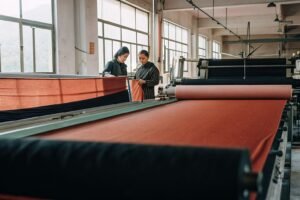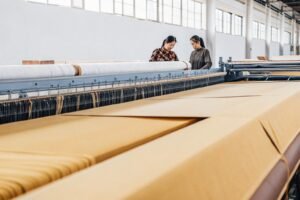
You’re a US apparel buyer. Your job is a constant balance: find quality, hit price points, manage timelines, and now, more than ever, mitigate risk. A new, unseen type of risk is growing faster than any other: chemical compliance risk. It’s no longer just about whether a fabric is strong or a color is pretty. It’s about whether that vibrant red dye contains lead, whether that wrinkle-free finish releases formaldehyde, or whether that performance coating includes a phthalate banned in California. One failed test, one customer complaint about a rash, can trigger a recall, a lawsuit, and irreparable brand damage. This is where the decision to source from OEKO-TEX certified factories moves from a “nice-to-have” to a non-negotiable strategic risk management imperative.
Sourcing from OEKO-TEX certified factories provides US buyers with a pre-verified, science-backed safety net against hazardous substances in textiles. It is the most globally recognized independent certification that a product is free from harmful levels of over 100 regulated chemicals. But for you, the buyer, its value is intensely practical: it dramatically simplifies supply chain due diligence, ensures compliance with a web of US regulations (from CPSIA to Prop 65), satisfies major retailer mandates, and builds defensible trust with increasingly conscious consumers. It transforms a complex chemical compliance puzzle into a single, reliable sourcing criterion.
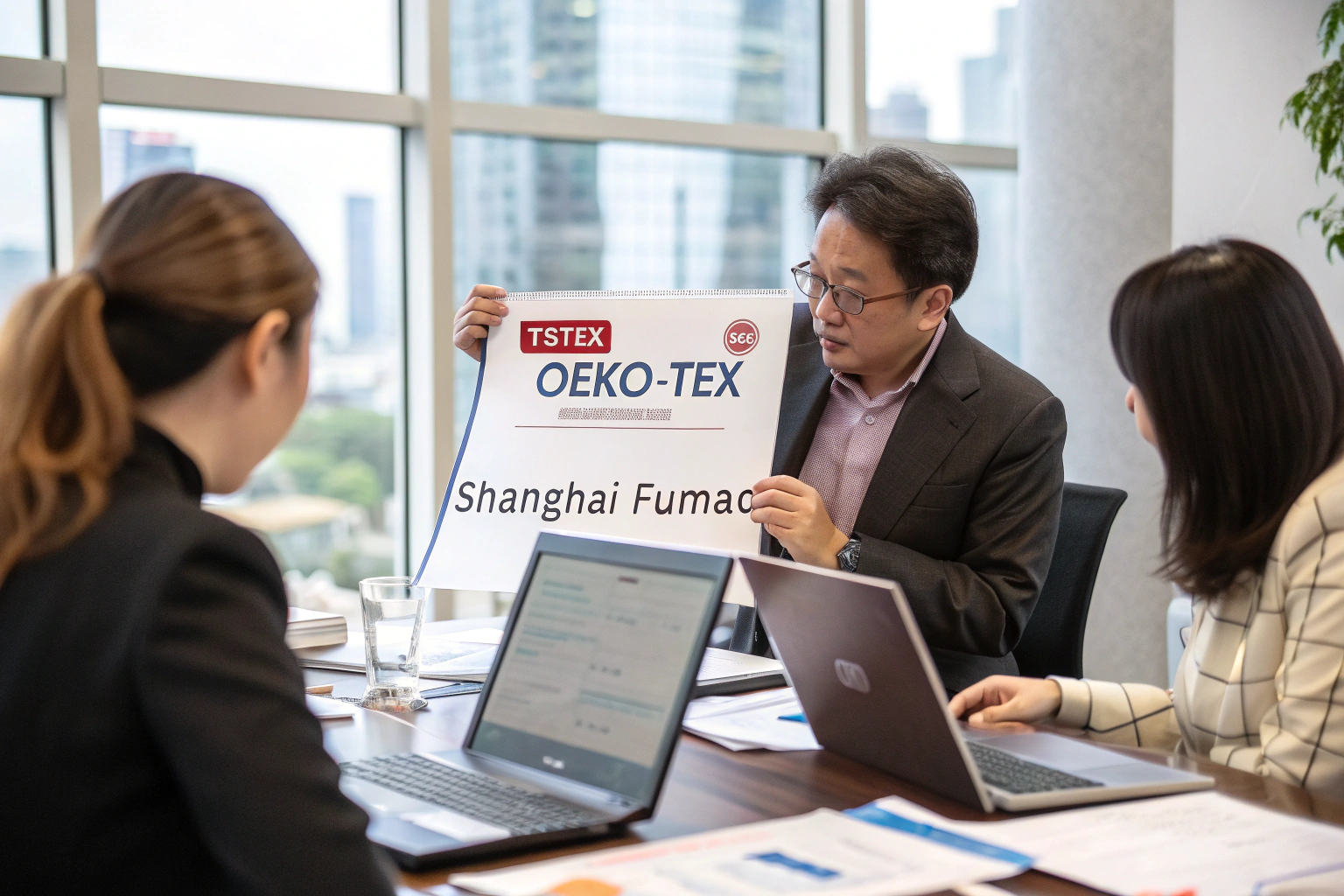
Let’s be blunt: many overseas suppliers will say “yes, we can comply.” But can they prove it with current, verifiable, and product-specific documentation? An OEKO-TEX certification from a recognized institute like TESTEX or SGS is that proof. At Shanghai Fumao, we’ve seen US buyers spend weeks and thousands of dollars conducting their own third-party lab tests on fabric shipments, only to find failures that delay entire seasons. In one stark case from Q4 2023, a mid-sized US brand had to air-fresh a replacement fabric order at triple the cost after their non-certified supplier’s fabric failed a Walmart RSL audit for banned phthalates. The cost of that reactive test-and-fail cycle dwarfed the incremental cost of sourcing from a certified partner like us from the start. OEKO-TEX certification is the proactive, cost-effective insurance policy.
How Does OEKO-TEX Certification Simplify US Regulatory Compliance?
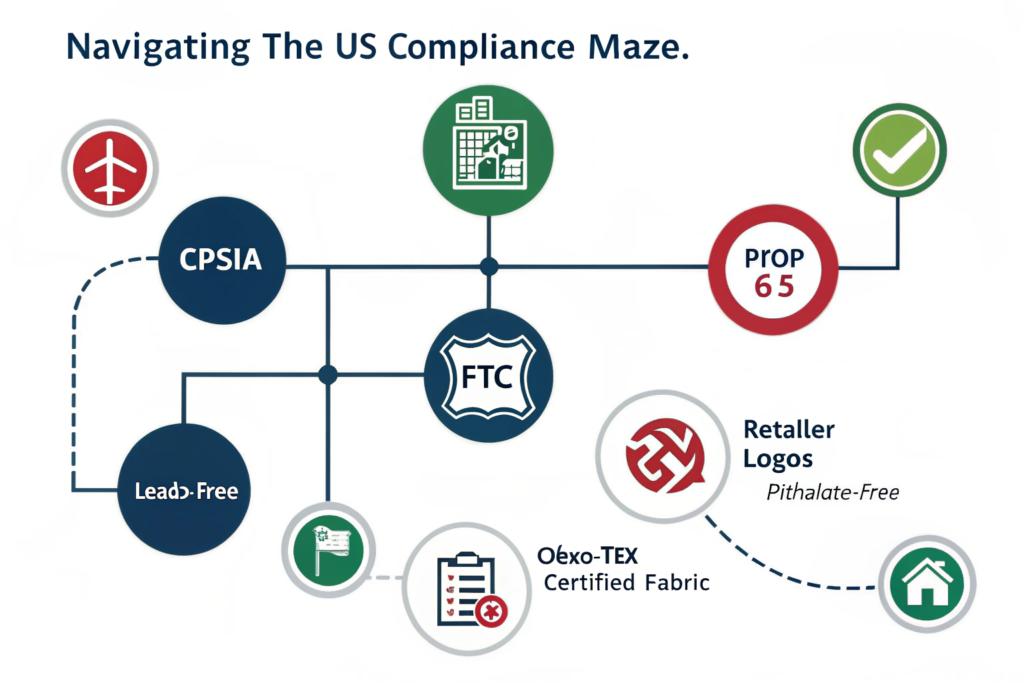
The US regulatory landscape for apparel is a complex patchwork, not a single federal standard. You’re navigating the Consumer Product Safety Improvement Act (CPSIA) for children’s wear (strict lead/phthalate limits), California Proposition 65 (requiring warnings for over 900 chemicals), and the Federal Trade Commission (FTC) rules on fiber labeling and care instructions. Major retailers like Target, Amazon, and Kohl’s then layer on their own, often stricter, Restricted Substances Lists (RSLs). Managing compliance against each of these individually is a logistical and technical nightmare for a buyer.
An OEKO-TEX Standard 100 certificate, particularly for the correct product class (Class I for babies, Class II for general apparel), acts as a powerful, consolidated evidence package. Its testing parameters encompass and often exceed the requirements of these US regulations.
| US Regulation / Requirement | Key Focus | How OEKO-TEX Standard 100 (Class I/II) Addresses It |
|---|---|---|
| CPSIA (Children’s) | Lead (<100 ppm), Phthalates (DEHP, DBP, BBP < 0.1%) | Tests for extractable heavy metals (including lead) and phthalates with strict limits, especially in Class I. |
| CA Proposition 65 | Warning required for exposure to listed chemicals (e.g., formaldehyde, cadmium). | Sets strict limits for formaldehyde, heavy metals (cadmium, lead), and other listed substances, often below "safe harbor" levels. |
| FTC Care Labeling | Accurate fiber content & care instructions. | Requires truthful declaration; certified factories have strict material tracking. |
| Retailer RSLs (e.g., Target, Walmart) | Bans on specific dyes, PFAS, APEOs, etc. | OEKO-TEX RSL covers most retailer-banned substances, providing a strong foundation for compliance. |
How Does It De-Risk Children’s Apparel Sourcing Specifically?
Children’s apparel is the highest-risk category. The consequences of a CPSIA violation are severe: fines, forced recalls, and devastating publicity. OEKO-TEX Class I certification is the gold standard for baby and toddler items. Its limits are the strictest in the OEKO-TEX system, designed for a baby’s vulnerable physiology (thinner skin, mouthing behavior).
When you source from a factory holding valid Class I certificates for its fabrics and components, you are effectively outsourcing the most technical part of CPSIA compliance. The factory has already proven its products meet or exceed the lead and phthalate limits. For you, this means you can confidently provide the Certificate of Compliance (CPC) to the CPSC and retailers, backed by the OEKO-TEX test reports. It shifts the burden of proof and liability onto a system designed to bear it. A key resource for understanding this is the Consumer Product Safety Commission’s guide to testing and certification, but a certified supplier executes it for you daily.
Does OEKO-TEX Help With California Proposition 65 Compliance?
Absolutely. Prop 65 is a particular headache because it’s a “right-to-know” law, not a ban. It requires a warning if a product exposes users to a listed chemical above a “safe harbor” level. Many brands choose to reformulate to avoid the scary warning label altogether.
OEKO-TEX certification is a proactive strategy to avoid the warning. The OEKO-TEX limit for formaldehyde (75 mg/kg for Class II) is well below the Prop 65 “safe harbor” exposure level that would trigger a warning for clothing. Similarly, its limits on heavy metals like cadmium and lead are extremely low. By sourcing OEKO-TEX certified fabrics, you significantly reduce the risk that your product contains a Prop 65 chemical at a level requiring a warning. This is a powerful tool for managing Prop 65 liability in global supply chains, giving buyers peace of mind for the California market.
How Does Sourcing from Certified Factories Protect Brand Value and Consumer Trust?
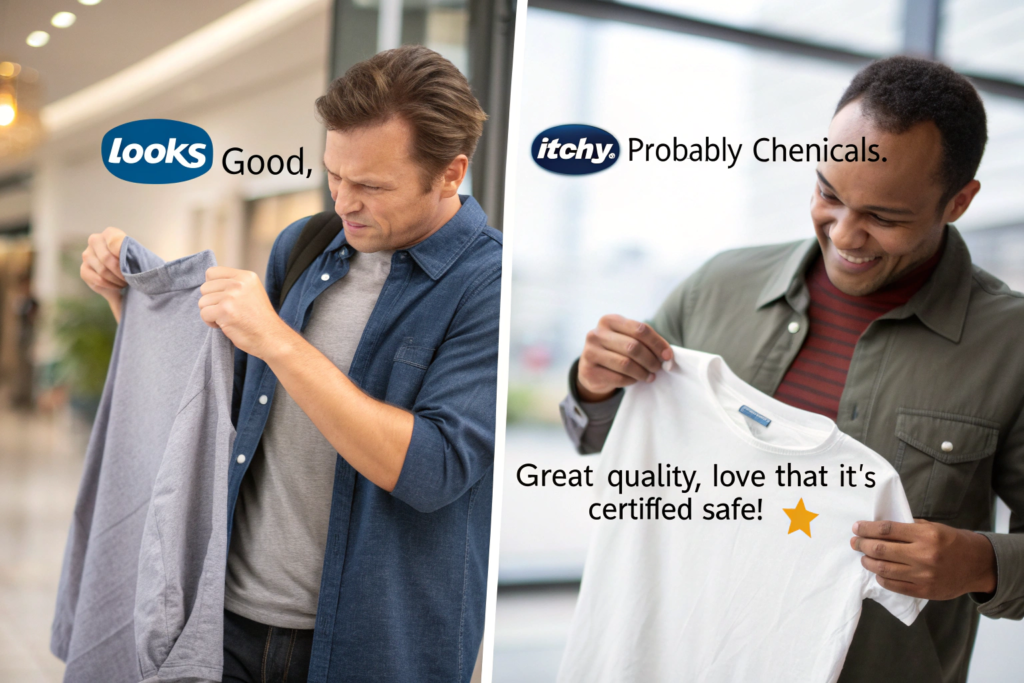
Today’s consumers, especially millennials and Gen Z, are “belief-driven buyers.” They research, they read labels, and they hold brands accountable. A 2023 study showed over 65% of US consumers are more likely to trust a brand that uses independent safety certifications. The OEKO-TEX “Confidence in Textiles” label is one of the most recognized trust marks globally. Sourcing from certified factories allows you to earn the right to use this label, transforming a behind-the-scenes compliance step into a front-and-center marketing asset.
This trust is your brand’s immune system. It defends against social media blowback from a single customer’s skin reaction and builds loyalty that price alone cannot. When you source from a certified partner like Shanghai Fumao, you’re not just buying fabric; you’re buying a share of that verified trust. We enable you to tell a transparent story: “We care enough to ensure every thread is independently certified safe.”
How Does Certification Streamline Onboarding with Major Retailers?
If your goal is to get into major US retailers or marketplaces like Amazon, OEKO-TEX certification is often a de facto requirement. Retailer compliance teams are overwhelmed. They rely on trusted third-party certifications to pre-screen vendors. Presenting products made from OEKO-TEX certified materials dramatically accelerates the vendor approval process.
These retailers know that OEKO-TEX certified factories have been audited, that their products are tested regularly, and that there’s a chain of accountability. It reduces their risk, so they favor you. For example, a client of ours, a sustainable activewear startup, secured a pilot with a major sporting goods retailer largely because their entire line was built on our OEKO-TEX Class II certified fabrics. The certification provided the retailer’s compliance team with the assurance they needed to fast-track the partnership. It’s a ticket to shelf space in today’s retail environment.
Can It Provide a Competitive Advantage in a Crowded Market?
In a market where many brands compete on similar styles and prices, differentiation is key. Product safety is a powerful, yet underutilized, differentiator. While many brands talk about “quality,” few can point to an independent, scientific verification of what that “quality” means for consumer health.
By proactively marketing your OEKO-TEX certification—on your website, in your product descriptions, on your hangtags—you speak directly to the concerns of a growing, conscientious customer segment. You’re not just selling a garment; you’re selling peace of mind. This can justify a slight premium, increase conversion rates, and reduce returns related to quality/safety concerns. It moves the conversation from “cheapest” to “safest and most responsible.”
What Are the Hidden Cost Savings of Sourcing from OEKO-TEX Factories?
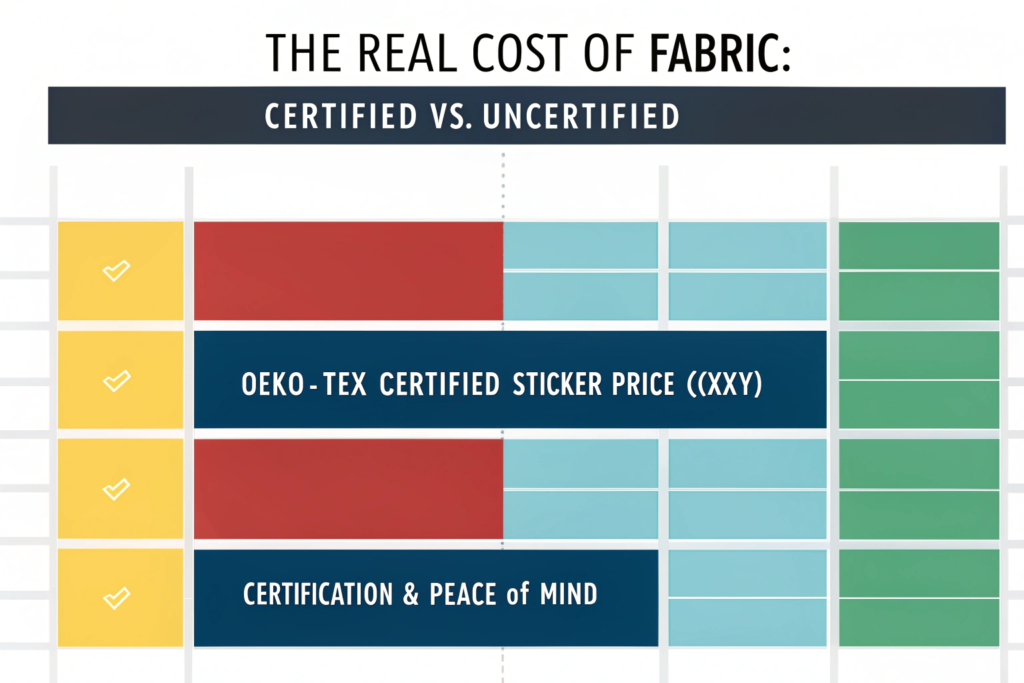
The initial price per meter from a certified factory might be marginally higher. However, a total cost analysis reveals significant savings that non-certified sources cannot offer. These are the hidden costs of not sourcing certified:
- Elimination of Third-Party Testing Costs: Buyers often pay $500-$1500+ per SKU for external lab tests to meet retailer requirements. With OEKO-TEX, the testing is already done and paid for by the factory as part of its certification maintenance.
- Avoidance of Rejection & Recall Costs: The cost of a failed shipment—reworking, destroying, or air-freighting replacement goods—can cripple a season’s margin. Certified sourcing virtually eliminates this risk at the fabric stage.
- Reduction in Administrative Overhead: The time your team spends chasing compliance documents, verifying test reports, and communicating with non-certified suppliers about chemical issues is a real cost. OEKO-TEX provides a standardized, easily verifiable document set.
- Mitigation of Legal Liability: The potential cost of a Proposition 65 lawsuit or a CPSC fine makes the premium for certified fabric look minuscule.
How Does It Improve Supply Chain Speed and Predictability?
Time is the ultimate currency in fashion. Delays are costly. The certification process forces factories to have disciplined, documented production and chemical management systems. This discipline translates into more reliable operations.
- Fewer Production Surprises: Certified factories use pre-approved chemicals and standardized recipes, leading to consistent dye lots and fewer production delays due to quality deviations.
- Faster Approval Cycles: When you receive a fabric sample from a certified factory, you can be confident it’s representative of the bulk. This speeds up your internal approval process, as you’re not waiting for separate lab tests.
- Simplified Logistics: With a lower risk of rejection at destination ports or by the customer’s QC, you can plan shipping more confidently, avoiding expensive expedited freight.
In practice, a US buyer for a fast-fashion brand told us that switching to certified suppliers cut their average “fabric-ready” timeline by 2 weeks per order because they eliminated their own mandatory 3-week testing wait period. That’s a huge competitive advantage.
Does Certification Ensure Consistency Across Multiple Production Runs?
Yes, this is a key operational benefit. OEKO-TEX certification isn’t a one-time test. It requires annual renewal and includes periodic unannounced audits of the factory’s processes and chemical inventory. This ongoing surveillance ensures that the factory maintains its standards over time.
For a buyer placing repeat orders across seasons, this means the blue cotton poplin you sourced in Spring ‘24 will have the same chemical safety profile in Fall ‘24, provided it’s the same certified article. This consistency is incredibly hard to guarantee with an uncertified supplier, where chemical sourcing can change based on price and availability without your knowledge. It provides supply chain stability for long-term apparel production.
How to Verify and Select a Truly Compliant OEKO-TEX Factory?
Not all certificates are equal. As a savvy buyer, you must do your due diligence. The presence of an OEKO-TEX certificate is the start of the conversation, not the end.
Critical Verification Steps:
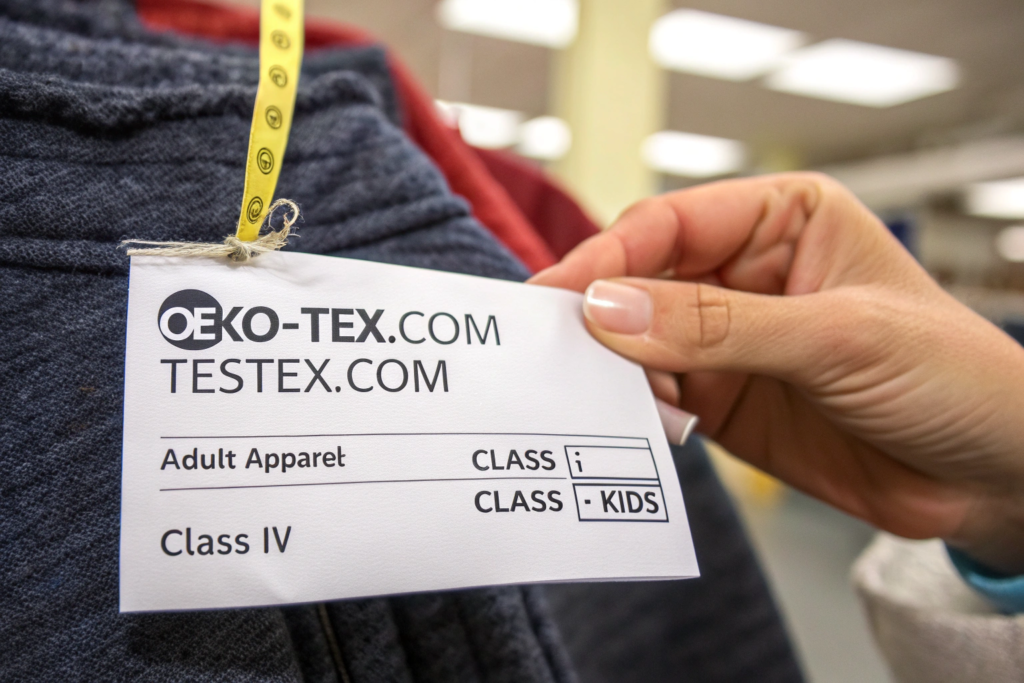
- Check the Validity: Go to the issuing institute’s website (e.g., OEKO-TEX.com, TESTEX.com) and enter the certificate number. Verify it’s active, issued to the factory you’re dealing with, and covers the specific product article you are buying.
- Confirm the Product Class: For adult apparel, it must be Class II or Class I for kids. A Class IV (decorative) certificate is worthless for garments and a major red flag.
- Scope of Certification: Does it cover the exact article number, composition, and finishes you need? Ask for the certificate’s appendix listing the approved articles.
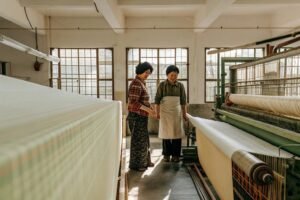
- Audit the Factory’s System: Ask about their chemical management. Do they source from OEKO-TEX compliant chemical suppliers? Do they have in-process testing? A factory like Shanghai Fumao with an in-house CNAS lab and a digital traceability system (QR codes on rolls) demonstrates a deeper commitment than one that merely subcontracts testing.
Why is Fumao’s Integrated Model a Low-Risk Choice for US Buyers?
Our model is built for the risk-averse US buyer. We don’t just hold certificates; we control the process that guarantees them.
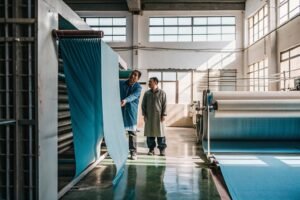
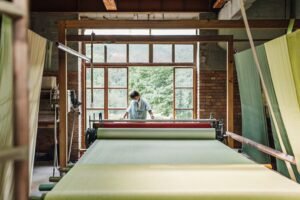
- Vertical Oversight: We manage weaving and partner with certified dyeing/finishing units, maintaining control over the entire production chain.
- In-House Pre-Testing: Our CNAS lab allows us to test for key OEKO-TEX parameters (pH, formaldehyde, colorfastness) during production, preventing bulk non-conformance before an official test is ever run.
- Full Package Traceability: We provide not just fabric certificates, but can also connect you with certified sources for threads, elastics, and labels, closing the compliance loop for your final garment.
- US-Focused Expertise: We understand the specific pressures of CPSIA, Prop 65, and major US retailer RSLs. We structure our compliance data to make your reporting easy.
For a US buyer, this means one point of contact, one set of verifiable credentials, and one less massive headache in an already complex job. We become an extension of your quality and compliance team.
Conclusion
For the US apparel buyer, sourcing from OEKO-TEX certified factories is no longer a question of ethics alone; it is a clear-eyed business decision for risk mitigation, cost control, and brand enhancement. It simplifies the daunting complexity of US chemical regulations, provides a verifiable shield against liability, satisfies critical retailer gatekeepers, and builds a tangible trust asset with consumers. The hidden costs and delays associated with managing compliance through uncertified suppliers far outweigh the marginal premium of certified sourcing.
In a global supply chain fraught with opacity, the OEKO-TEX mark is a beacon of verified safety and operational discipline. It represents a factory’s commitment to doing things the right way, with proof. As a buyer, your choice of supplier is your first and most important quality control checkpoint. Choosing an OEKO-TEX certified partner like Shanghai Fumao is the most effective way to ensure that checkpoint is secured.
Ready to transform compliance from a constant worry into a competitive advantage? Let’s talk. Contact our Business Director, Elaine, to explore our range of OEKO-TEX certified fabrics and see how our integrated control model can bring certainty to your supply chain. Email: elaine@fumaoclothing.com. Source with confidence.