Tired of hearing vague promises about “sustainable sourcing” while juggling price pressures and tight timelines? You know your customers demand eco-friendly options, but navigating the maze of certifications and ensuring they don’t derail your production schedule is a real headache. The fabric is the foundation of your garment, and its origin story is becoming as important as its look and feel.
Choosing the right certified fabric isn’t just a marketing checkbox; it’s a strategic supply chain decision that impacts your brand reputation, compliance, and ultimately, your bottom line. Among the various standards, Better Cotton Initiative (BCI) certification offers a pragmatic and scalable path to more sustainable cotton sourcing, balancing environmental and social goals with the realities of large-scale manufacturing.
This article will cut through the complexity. We’ll break down what BCI truly means for you as a buyer, how it compares to other standards like GOTS, and provide a clear action plan to integrate BCI fabrics into your next order without compromising on cost, quality, or delivery. Let’s transform this from a compliance challenge into a competitive advantage.
What Exactly is BCI Certification and How Does It Work?
You see the BCI logo on tags, but what’s happening behind the scenes? It’s easy to think it’s just another farming standard. The real value lies in its systemic approach to improving mainstream cotton cultivation, making sustainability accessible at the volume you need.
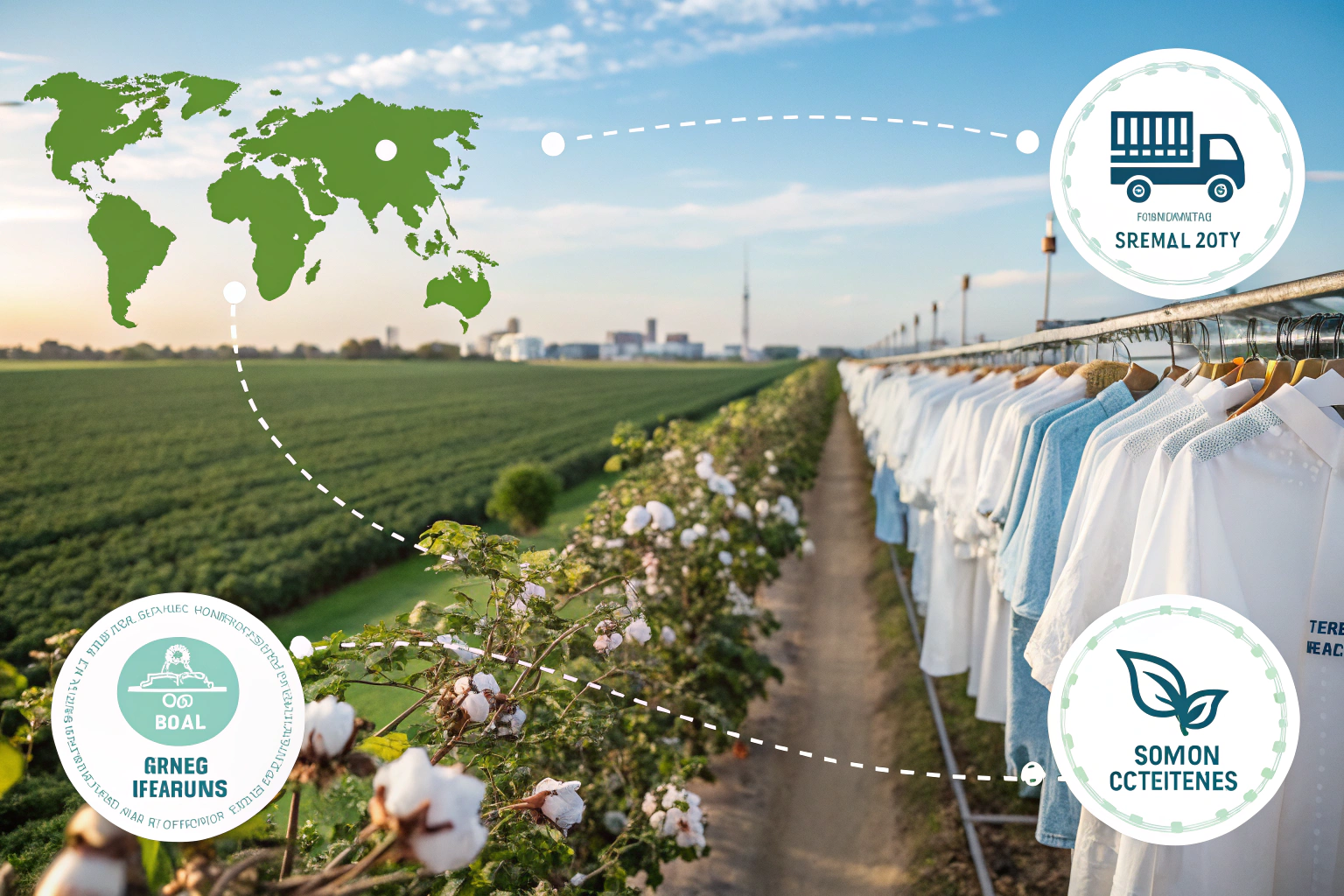
BCI focuses on making global cotton production better for the people who produce it, better for the environment it grows in, and better for the sector’s future. Unlike organic certification which mandates specific farming methods, BCI operates on a principle of continuous improvement. Farmers are trained and licensed to implement the “Better Cotton Principles and Criteria,” which cover water stewardship, soil health, natural habitat protection, fiber quality, and decent work conditions. The cotton they grow is then physically tracked through the supply chain via a Chain of Custody model, ensuring the benefits reach all the way to the final product.

How is BCI Cotton Physically Tracked from Farm to Fabric?
The magic word here is Mass Balance. This is the most common Chain of Custody model for BCI cotton. Think of it like green energy entering the power grid: BCI cotton is mixed with conventional cotton during ginning, spinning, and weaving. For every ton of BCI cotton a mill inputs, they can claim and sell a ton of BCI-certified yarn or fabric. This system is crucial for scalability. It allows us, as fabric suppliers, to source BCI cotton from licensed farms and offer you certified fabrics without needing completely segregated production lines, which keeps costs more manageable. The entire transaction is documented through transaction certificates, creating an auditable paper trail. This pragmatic model is why BCI has become one of the world’s largest cotton sustainability programs. For a deeper understanding of sustainable sourcing models, the Textile Exchange provides excellent resources on various chain of custody models for responsible materials.
What Are the Real, On-Ground Benefits for Farmers and the Environment?
The impact is measurable and significant. On our sourcing trips to Xinjiang and Shandong provinces, we’ve visited BCI-licensed farms. The training leads to tangible changes: farmers learn drip irrigation techniques, reducing water use by up to 20%. They are trained on integrated pest management, lowering pesticide application. This isn’t just theory. A 2023 project with one of our cooperative farms showed a 15% reduction in chemical inputs and a 5% increase in yield after two years of BCI practices—better for the earth and the farmer’s income. The social criteria also ensure safe working conditions and prohibit child labor. This holistic improvement creates a more resilient and ethical supply base for our industry. Brands looking to understand the farmer’s perspective can find valuable insights in discussions on platforms like Sustainable Cotton Forum (example industry forum), which often features case studies on farmer profitability with BCI methods.
BCI vs. GOTS & Organic: Which Certification is Right for My Order?
This is the million-dollar question. Choosing the wrong standard can lead to unnecessary cost or inadequate claims. BCI, GOTS (Global Organic Textile Standard), and organic are often mentioned together, but they serve different purposes and market segments.
Think of it as a spectrum. BCI is about improving conventional cotton on a massive scale. It’s the most accessible entry point for large-volume orders wanting to make a substantive impact. GOTS is the gold standard for organic textiles, covering the entire processing chain with strict environmental and social criteria, but it requires full segregation and carries a higher cost. The right choice depends on your brand positioning, budget, and order volume. For mainstream fashion brands aiming to make their core collections more sustainable, BCI is often the most practical and impactful starting point.

When Should I Choose BCI Over Full Organic Certification?
Choose BCI when your primary goals are scale, affordability, and demonstrable continuous improvement across your supply chain. If you’re ordering 50,000 meters of cotton poplin for a basic t-shirt line, switching to BCI can be done almost seamlessly with a minor cost premium (typically 3-8%, in our experience). It allows you to make a credible sustainability claim—"made with Better Cotton"—immediately. Organic (GOTS) is ideal for niche, premium lines where the organic story is a core marketing pillar and your customers are willing to pay a 20-40% premium. In early 2024, a German mid-market brand we work with, Shanghai Fumao, faced this exact choice. They shifted their entire 200,000-meter annual denim order to BCI cotton. This move gave them a strong sustainability narrative for their catalog without affecting their retail price point, and the volume actually helped us negotiate better terms with our spinners.
Can I Use BCI and Organic Fabrics in the Same Production Run?
Technically, yes, but you lose the organic certification for that batch if you mix them. The key difference is in the Chain of Custody. BCI’s Mass Balance system allows for mixing, so a fabric can be labeled as “BCI” even if it contains non-BCI cotton. GOTS requires full identity preservation; organic and non-organic fibers must be kept separate at every stage to carry the GOTS label. Therefore, you cannot physically blend BCI and GOTS-certified cotton in a single fabric roll and call it GOTS. However, you can certainly produce some styles with BCI fabric and others with GOTS fabric within the same factory and shipment. Planning this requires clear communication with your fabric supplier (like us at Shanghai Fumao) to manage yarn sourcing and production scheduling. For brands navigating these complex decisions, industry resources like Fashion Revolution’s Transparency Forum often discuss practical strategies for blending different certified materials in a collection.
How Does Sourcing BCI Fabrics Impact My Costs and Lead Times?
Let’s talk numbers and calendars. The fear of inflated costs and delayed schedules is the biggest barrier for many buyers. The good news? With a seasoned supplier rooted in the right ecosystem, the impact can be minimal and highly manageable.
The cost premium for BCI-certified fabrics versus conventional equivalents typically ranges from 5% to 15%, depending on the base fabric, volume, and yarn count. The higher end applies to complex constructions or very small batches. The lead time impact is often negligible if your supplier, like us at Shanghai Fumao in Keqiao, has established pipelines with BCI-licensed spinners. The cotton is already in the system. The real scheduling key is advanced planning, especially around peak seasons. Because BCI cotton follows the same Mass Balance pipeline, it’s subject to the same industry rhythms we outlined earlier.

What is the Real Price Premium for BCI Cotton Fabrics?
Don’t rely on generic percentages. The premium is not a fixed tax; it’s a function of your order’s specifics. For standard fabrics like 20s or 30s cotton knits or poplins in bulk (e.g., 10,000m+), we’ve seen premiums as low as 3-5%. For finer counts like 80s combed cotton or specific blends, it can be 10-12%. Here’s a real case: In August 2023, we sourced 40,000 meters of BCI-certified 30/1 cotton jersey for a sportswear client in Florida. The cost was 7% higher than conventional, but by working directly with our partnered spinning mill (already BCI licensed), we avoided middleman markups. (Here’s a pro tip: always ask your supplier if their spinning mill is directly licensed—it cuts cost.) Transparency is key. A reputable supplier should break down the premium for you. For independent benchmarking, buyers can sometimes find crowd-sourced price trend data on platforms like ImportYeti by analyzing US import records for BCI certified cotton garments, which indirectly reflects fabric cost trends.
Will Using BCI Fabrics Add Weeks to My Production Timeline?
Not if you plan smartly. The spinning process for BCI cotton is identical. The “delay” risk comes from supply chain congestion, not the certification itself. BCI cotton yarn is popular, so during peak production periods (March-May, August-Oct), spinners’ capacity for all yarn gets tight. Ordering your fabric 2-3 weeks earlier than your usual schedule effectively mitigates this. Remember the European fashion brand example from the intro? That principle applies here. Complete your fabric development and confirmation at least 6-8 weeks before your desired cutting date. This gives us time to secure the BCI cotton yarn allocation. Our agile R&D can turn around lab dips and samples in 48 hours, so you’re not losing time in development. The slower periods (June-July, Nov-Dec) are indeed golden windows for BCI orders with potential timeline advantages. A deep dive into global shipping and production cycles on logistics blogs like Flexport’s Blog can help you align your fabric order with the broader manufacturing timeline in China for seasonal fashion.
How Do I Verify BCI Claims and Integrate It Into My Brand Story?
Your due diligence doesn’t end at selecting a BCI fabric. You need proof and a compelling narrative. Greenwashing is a real risk, and consumers are savvy. Your partnership with a transparent supplier is your first line of defense.
Verification starts with asking for the Transaction Certificate (TC). Every time BCI cotton changes hands in the supply chain—from spinner to weaver/kinter, to trader, to garment factory—a TC is generated. A legitimate fabric supplier should provide you with a TC that links back to their purchase, proving the volume of BCI material they introduced into the system. At Shanghai Fumao, we provide this documentation as standard practice. For your brand story, move beyond the logo. Use the specific principles: talk about water savings, soil health, or farmer training. Quantify it if possible.

What Documentation Should I Demand from My Fabric Supplier?
Demand these three documents:
- The Supplier’s BCI License: Proof they are a licensed BCI supplier.
- Transaction Certificates (TCs) for Your Order: These are the financial and volume records proving the BCI cotton input for your specific fabric batch. They should have a unique ID.
- Test Reports from an Accredited Lab: While BCI doesn’t change physical properties, you still need your standard tests for composition, colorfastness, etc., from a lab like SGS or ITS, ideally from a CNAS-accredited facility like ours.
This paperwork trail is non-negotiable. In 2023, a UK retailer audited us and specifically traced the TC from our fabric back to the spinning mill, then requested the mill’s TC from the ginner. Our fully linked documentation secured a 3-year partnership with them. Without it, the deal would have collapsed. Understanding the importance of supply chain traceability documentation is critical, and organizations like BCI themselves offer guides on how to ask for proof of BCI in your supply chain.
How Can I Communicate BCI Value to My End-Consumers Effectively?
Be specific and authentic. Don’t just say “made with Better Cotton.” Say: “This shirt is made with cotton sourced from farms committed to using less water and protecting soil health, certified by the Better Cotton Initiative.” Use visuals on your website—short videos or infographics explaining the Mass Balance concept simply. Feature the farmer, not just the field. Collaborate with your fabric supplier for content; we can often provide photos or stories from the farms and mills we work with. This turns a procurement detail into an engaging brand asset. It shows you’ve done the homework down to the fiber level. For inspiration on consumer-facing sustainability communication, many brands share their approaches in articles on Business of Fashion (BoF) under topics like effective storytelling for eco-conscious apparel lines.
Conclusion
Navigating the world of certified fabrics doesn’t have to be a compromise between your ethical goals and your business sense. BCI certification presents a viable, scalable, and pragmatic solution for brands ready to move their core collections toward greater sustainability. By understanding its Mass Balance system, you can access its benefits without the cost and complexity of fully segregated organic supply chains. By planning your orders with the industry’s seasonal rhythms in mind, you can integrate BCI fabrics without sacrificing your critical path. And by demanding and leveraging the right documentation, you build a transparent, verifiable story that resonates with today’s conscious consumers.
The journey starts with choosing the right partner—one embedded in the textile ecosystem, with the expertise to guide you from yarn sourcing to final documentation. If you’re ready to explore how BCI fabrics can strengthen your next collection, streamline your compliance, and elevate your brand narrative, let’s have a conversation. Shanghai Fumao is more than a supplier; we’re your fabric solutions partner in Keqiao, the heart of this industry. For a detailed discussion on your next bulk order, reach out to our Business Director, Elaine. She and her team can provide specific costing, swatches, and a production timeline tailored to your needs. Contact Elaine at: elaine@fumaoclothing.com.