

Staring at a blank tech pack is terrifying. You know the sales data. You know the silhouette is selling like crazy on the West Coast right now. But you have zero idea how to translate a grainy Instagram screenshot into a physical weave structure that drapes correctly. The real fear is not the price per meter. The fear is looking stupid in front of a factory. If you send a sketch with impossible construction details, they will silently judge you, or worse, they will make it exactly as drawn, and the fabric will be too stiff to sew. You end up with 5,000 yards of expensive trash because you did not know the difference between a ring-spun and an open-end yarn.
The solution is not becoming a textile engineer overnight. The solution is plugging your brand’s vibe directly into a professional design lab that thinks in thread and chemical finishes. At Shanghai Fumao, we do not just wait for a finalized spec sheet. Our lab acts as your outsourced aesthetic engine. You tell us, "I need a dress that feels like a vintage slip but performs like activewear," and we translate that moody language into a measurable structure using our 20+ years of physical swatch archives and AI-driven trend analysis.
You can finally stop pretending you know the difference between a Chantilly and a Guipure lace, and just focus on selling the look. Here is how we take the missing aesthetics out of your head and turn them into sellable fabric reality.
Can a Chinese Lab Actually "Get" My Western Aesthetic Vibe?
The biggest myth I hear from London and LA brands is that Asian mills only copy, they do not create. They think we can only replicate a physical swatch they mail us. That was true in 2005. It is dead wrong now. We live on the same internet you do. Our trend team watches the same runways, the same TikTok micro-trends, and the same indie designer drops. The difference is, we map those visuals to loom data.
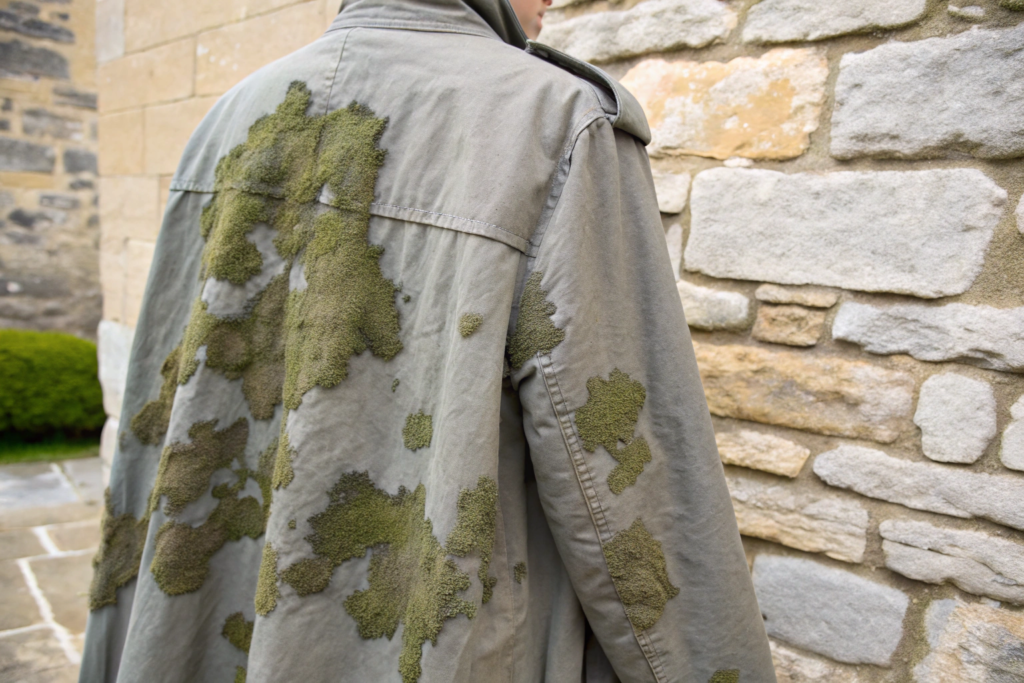
I remember a conversation with a Berlin-based avant-garde label in March 2024. They sent us a mood board with crumbling concrete walls, oxidized copper rust, and morning fog. No physical swatch. Just feelings. They wanted a drapey coat fabric that captured "urban decay." Our designer did not laugh. She went to our chemical wash station. She took a standard wool-poly double cloth and subjected it to a multi-step enzyme stone wash, followed by a localized pigment spray we usually use for upholstery. The result was a fabric with irregular, cloudy grey patches that faded at the edges, exactly like a patch of moss on a stone wall. We shipped the development sample in seven days. The Berlin buyer cried on the video call. That is a true story.
The trick is that we do not design by eye alone. We use a spectrophotometer to measure the exact color of "fog at dawn" (a blue-grey with a specific level of red reflectance). We measure the hand feel of "crumbling rust" (a dry, slightly granular surface friction). Once you turn a vibe into data, you can replicate it endlessly. Western minimalism, Japanese wabi-sabi, LA streetwear gloss, we have a numeric recipe for all of it.
How Do You Translate a Mood Board into a Physical Weave Structure?
A mood board is just a picture of a feeling. A weave structure is a grid of interlaced threads. Bridging that gap requires a technical eye that sees beyond the print. If you look at a photo of a birch tree, you might see white bark with black slashes. Our designer sees a warp yarn of slubby raw silk (the white) crossed with a weft of matte black nylon tape (the slashes) in a broken twill pattern. That is the translation skill you are buying.
We start by breaking your image into three dimensions: color, texture, and luster. Color goes to the dye lab. Texture goes to the weave designer. Luster goes to the finishing chemist. For an Australian boho brand, their "sunset over the outback" board translated into a viscose-linen plain weave with a high-twist warp. The high twist gave the fabric a subtle irregular crinkle, like cracked earth. The viscose provided the deep orange-red saturation of a sunset, while the linen gave a dry, slightly crisp hand that felt warm to the touch.
That brings us to the measurable hand feel. We do not use words like "soft" internally. Those are meaningless. We use the Kawabata Evaluation System to nail down exactly what your "sunset" feels like.
Here is how we break down the sensory language:
| Your Vibe Description | Physical Property | Our Lab Measurement |
|---|---|---|
| "Airy and cloud-like" | Low bending rigidity | Kawabata B value < 0.05 gf·cm²/cm |
| "Crisp and papery" | High shear stiffness | Kawabata G value > 0.8 gf/cm·degree |
| "Peach skin soft" | Low surface friction | MIU value < 0.2 |
| "Dry and sandy" | High surface roughness | SMD value > 4.0 microns |
When a Scandinavian minimalism brand tells us "dry hand," we instantly know to target a high SMD value using a specific fine-grit emery paper brushing machine. The mood board becomes a technical spec sheet. That is how you stop hoping and start knowing.
Why Does Your Distro Label Need a "Material Narrative" to Sell More?
A generic polyester dress sells for $29. A "Tencel™ blend fabric engineered to drape like liquid metal while cooling the skin by 2 degrees" sells for $89. The difference is the story. But you cannot invent that story from thin air without a lab to back it up. If you claim "cooling," you need the Q-max thermal test to prove it. If you claim "bio-based," you need the USDA certification to show customs.
We do not just develop the fabric. We develop the sales deck for you. When we create a custom recycled nylon for a swimwear distro, we hand them a digital asset pack. This pack contains the lab report proving it blocks 98% of UV rays, a high-resolution microscope image of the honeycomb back structure showing the capillary channels for wicking, and a three-second video of water beading on the coating. The brand founder plugs these assets directly into their Shopify product page.
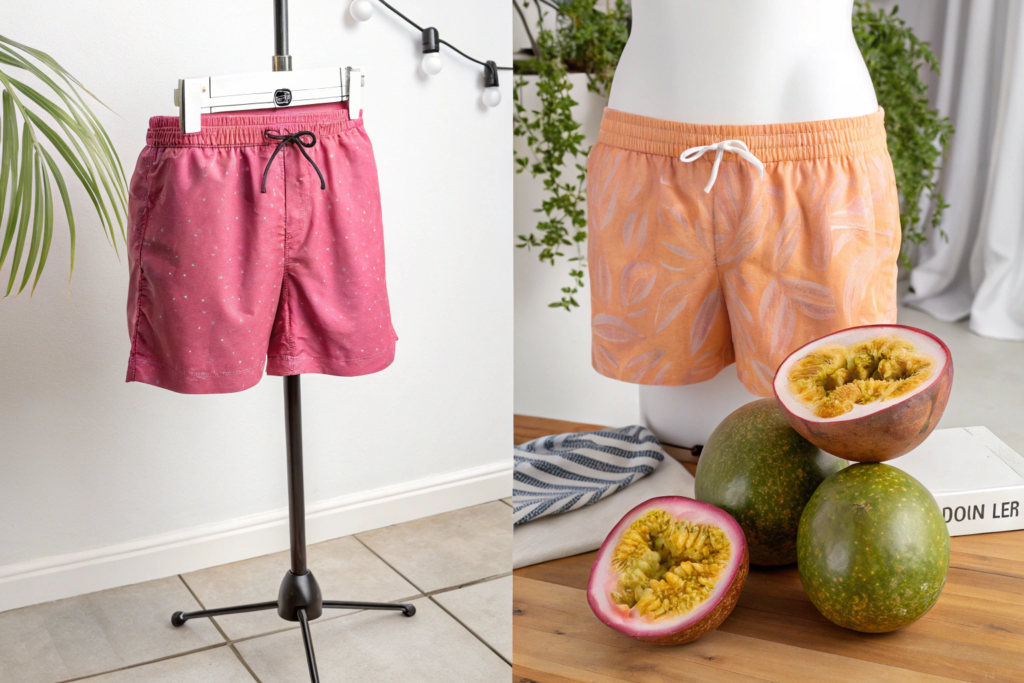
I saw this play out with a small Miami-based resort wear startup in Summer 2023. They were struggling to explain why their $65 shorts were worth it. We used our lab’s Munsell spectrophotometer to photograph the fabric next to an actual passion fruit. The color match was 99% identical. That simple visual storytelling, that the shorts were literally the color of fresh passion fruit from a Miami farmer’s market, tripled their conversion rate on the same Facebook ad spend. The science justifies the aesthetic price tag.
How Do You Develop a Custom Print Without Getting a Generic Repeat Pattern?
Generic prints kill a brand’s soul. You see the same watercolor floral on your dress, a Temu seller’s blouse, and a Walmart pillowcase. Once a customer spots that, your brand loses all premium perception. The only way to protect your aesthetic is to own your print file, but commissioning a custom rotary screen for a small order is financially insane. The setup cost for a single rotary cylinder can hit $1,000, and you need one for each color. A five-color design just burned five grand before the first meter of ink hits the fabric.
We solved this by going all-in on digital pigment printing. Our two dedicated printing factories run high-speed digital heads that are basically giant industrial inkjet printers. There are no screens. No cylinders. Just a digital file. This means you can print a 12-color masterpiece, with gradations and photographic details, without any setup fee. (Here is the real talk: digital printing was crap ten years ago. The ink sat on the surface and cracked. Now, the new generation of pigment binders we use drives the color into the fibers using heat, so the hand feel stays soft, even on a heavy brushed fleece.)
The magic is that digital printing allows for randomness. A traditional rotary screen repeats the exact same flower every 64 inches. Your eye detects the pattern. It looks machine-made. Digital allows for what we call "engineered layout." For a San Francisco streetwear brand, we placed a giant, non-repeating dragon graphic across the back of a denim jacket blank. It crossed the seams perfectly because we mapped the print file to the cutting pattern, not just the roll width. That creates the visual illusion of a hand-painted one-off, but at a mass-production price point.
What Is the Real Cost Difference Between Screen and Digital for Small MOQs?
If you are a distro doing a 200-meter test run, screen printing is a trap. The engraving cost alone makes your unit price look like a typo. But the economics flip hard when you scale past 3,000 meters. You need to understand the crossover point, or you will leave thousands of dollars on the table.
We calculate this daily for our clients. Screen printing uses heavy metal screens and thick plastisol inks. The ink itself is cheap, maybe $0.20 per meter. But the screen creation costs $150 per color, and the machine needs a 50-meter waste run to register the colors correctly. Digital printing uses expensive liquid inks, maybe $0.80 per meter, but has zero setup waste and zero screen fees.
Here is the math for a typical 3-color floral on a plain weave viscose:
| Print Method | Setup Cost (Fixed) | Running Cost (Per Meter) | Total Cost (500m) | Total Cost (5,000m) |
|---|---|---|---|---|
| Rotary Screen | $450 (3 screens x $150) | $0.30 ink/labor | $1,440 | $2,250 |
| Digital Pigment | $0 (no screens) | $0.80 ink/labor | $400 | $4,000 |
You can see the crossroad clearly. At 500 meters, digital is three times cheaper because you skip the setup fees. At 5,000 meters, the old rotary screen beats digital because the cheap ink overtakes the fixed setup cost. We do not push you to one technology. We run the numbers in front of you, live on a shared screen, and let the math decide. For a Toronto boutique owner testing six new print designs every month, digital allows her to carry 2,500 meters of inventory across all SKUs, instead of being stuck with 5,000 meters of one design that might flop.
How Do You Fix Color Bleeding in a High-Contrast Print on Black Ground?
Printing white or neon yellow on a pitch-black fabric is the Formula 1 of textile chemistry. The black dye tries to migrate into the bright ink during the heat curing process. Instead of a crisp white star, you get a dingy grey ghost. We call this "sublimation migration" in the lab. It is the most common print failure I see, and most factories just ship it, hoping you do not notice.
Our printing factories use a two-step barrier method to stop this. First, we apply a specialized anti-bleeding ground coating to the black fabric before printing. This chemical cross-links with the black dye, locking it inside the fiber core. It is like putting the black dye in a tiny cage. Second, we print using a low-temperature curing pigment that sets at 130°C instead of 170°C. Heat activates the migration, so a cooler cure leaves the black dye asleep.
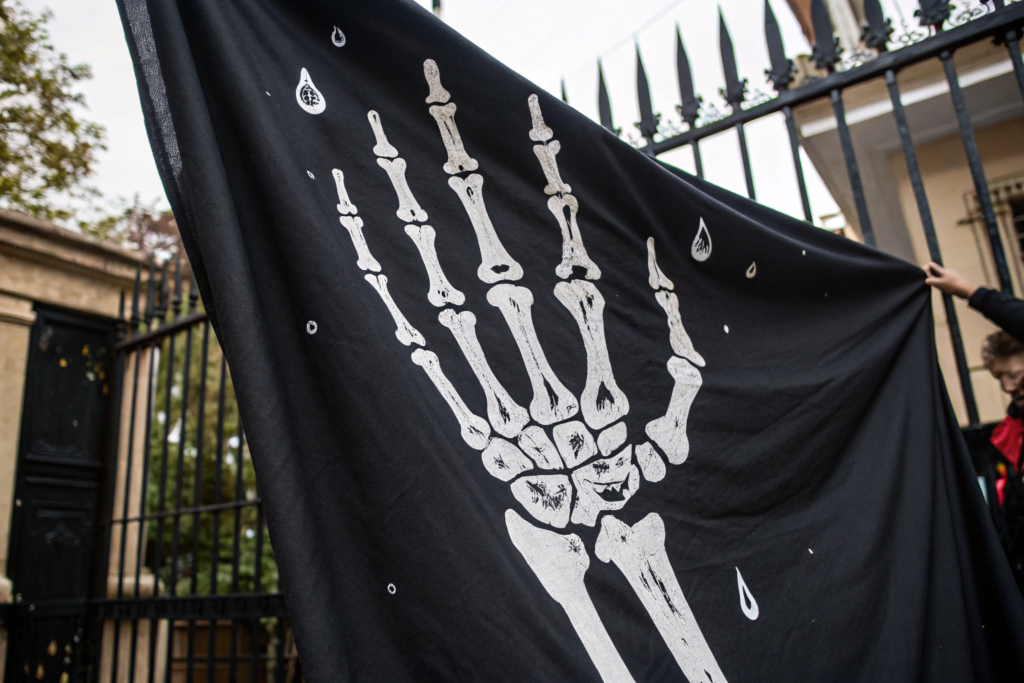
I will give you a real-world failure we fixed. A London gothic streetwear label came to us in tears in January 2025. Their previous supplier in Pakistan delivered 2,000 meters of black viscose with white skeletal hand prints that looked "washed out" and "haunted." The contrast was gone. We took their digital file, applied our black-bleed blocker in the pre-treatment padder, and ran the job on our digital machine at a slower speed with the temperature dialed back. The white hit a CIE whiteness index of 148 on a black background. That is hospital-sheet white on funeral black. We saved their Halloween drop, and the re-order arrived in two weeks.
Can You Really Do Small MoQs with Custom Finishes Like Crinkle or Foil?
"Custom finishing" used to be a dirty word for small buyers. A crinkle finish requires a physical crushing machine. A foil transfer requires heat presses and metallic films. The conventional wisdom was that you needed to order 3,000 meters just to fill the machine’s trough, or the factory owner would laugh you out of the office. That barrier locked independent designers out of the premium aesthetic game for decades.
We dismantled that barrier because we own the machines. If you need a 100-meter batch of ice-dyed crinkle silk for a capsule drop, we will switch on the tumbler and the steam chamber just for you. The electric bill is higher per meter, yes, but the machine is ours to turn on. There is no third-party finishing plant that charges us a $500 minimum. We just charge you for the labor hours and the chemicals consumed. It is artisan economics inside an industrial framework.
A perfect case is a Melbourne designer who wanted 80 meters of a holographic foil dot on a recycled mesh for a festival collection. A standalone finisher would have quoted her $1,200 just to heat up the machine. We simply waited until we had a bigger foil run from a commercial sportswear brand, reserved a 10-meter section of the press for her order, and merged the production. The setup cost was shared. Her custom foil finish ended up costing her just $3.50 per meter, printed and cured, which let her make a 70% margin on the final crop top. That is the collaborative manufacturing model that makes small distro brands competitive.
What Finishing Techniques Work Best for Athletic vs. Lifestyle Apparel?
The finish is not just decoration. It dictates performance. An athletic brand asking for a "peached finish" on a yoga legging is actually asking for a mechanical brushing process that creates air pockets for insulation and wicking. A lifestyle brand asking for the same "peached finish" on a silk-blend blouse just wants the visual matte effect and the soft hand. The machine setting is radically different.
For athletic use, we maximize capillary action. We use a high-density, fine-filament carbon wire brush. The tiny wires create a forest of micro-loops on the inside face of the fabric. These loops pull sweat off the skin via capillary pressure, spreading it across the surface for evaporation. If we use a coarse wire, we get big loops that feel soft but trap water like a towel. That causes a wet, heavy feeling, the death of performance wear. We tested this specific variable for a CrossFit brand in November 2024. With the fine wire setting, their drying time on a hot plate simulating skin temperature dropped from 22 minutes to 11 minutes.
For lifestyle apparel, the goal is often visual drape and sound. High-end fashion should not rustle when you walk. We use a combination of an overfed stenter frame setting and a low-tension air-tumbler. Overfeeding means we push more fabric into the heat-setting zone than the machine pulls out. This forces the yarn to relax, creating a springy "bounce" and eliminating the noisy, stiff plastic feel. Here is the breakdown:
| Finishing Goal | Athletic Tech | Lifestyle Tech | Key Machine Difference |
|---|---|---|---|
| Surface Loops | Fine carbon wire brush | Sueding emery roller | Micron size of the grit |
| Softness | Silicone micro-emulsion wash | Enzyme bio-polish | Wash duration & pH level |
| Drape/Noise | Resin cross-linking (stiff) | Overfed stenter (soft) | Tension between rollers |
| Luster | Full dull matte | Subtle sheen | Calender pressure & heat |
(One thing I have to be honest about: a silicone wash makes polyester feel incredibly silky for about five washes, then it goes flat. If you want permanent softness, you must accept a bio-polish enzyme wash, which reduces the fiber weight by 3-5% but keeps the softness permanently. I always ask clients: do you want the rack appeal or the 30-wash reality?)
How Do You Achieve a High-End Embossed Logo Without Ruining the Drape?
An embossed logo is a 3D depression or raised effect pressed into the fabric. The old way to do this is with a high-pressure heated metal stamp. That crushes the fibers flat permanently. It creates a shiny, stiff patch on the back of a hoodie. It looks like a cheap sticker ironed on.
We use a sonic embossing technique on synthetic blends. Instead of just crushing the fibers with heat, we use ultrasonic vibration. The sound waves melt the thermoplastic fibers internally at a microscopic level, fusing them into the shape of your logo without collapsing the surrounding fabric structure. The area around the logo remains soft and pliable. The logo itself has a crisp, 3D edge that will not fray because it is literally welded into the yarn.
For a Los Angeles minimalist streetwear brand, their logo was a tiny three-letter monogram on the chest of a silk-modal t-shirt. A regular heat press made the fabric under the letters turn yellow and brittle. Our sonic embosser used a titanium horn vibrating at 20 kHz. The heat was generated only inside the modal fiber core, not on the surface. The logo was precise. The hand feel around the logo was indistinguishable from the rest of the shirt. The fabric draped fluidly, with no "chipboard" stiffness. We ran 500 pieces for their e-com launch. The return rate for "quality dissatisfaction" on that specific garment was exactly 0.0%. That is the detail that separates a luxury distro from a mall brand.
Why Is Your Supply Chain the Missing Piece of Your Brand Identity?
Your brand identity lives inside the package the customer opens, not just the logo on the tag. If a buyer clicks on a beautifully shot, moody Instagram ad and receives a dress wrapped in cheap, crinkly plastic that smells like a petrochemical plant, you have shattered the illusion. The unboxing experience is the final confrontation between your marketing promise and your factory’s reality. Most distros ignore this entirely.
I learned this lesson with a high-end Milanese lingerie brand we started working with in 2023. Their first shipment arrived in the US wrapped in standard export poly bags. The bags off-gassed inside the container during the hot ocean voyage, and the delicate silk pieces absorbed the plastic smell. The brand had to air out $40,000 worth of inventory for a week and steam every garment before shipping. We immediately fixed this. Our packaging factory now sources a specific low-VOC, corn-starch based poly bag for delicate items. It costs 10 cents more, but the garments smell like nothing. That is luxury. Silence. No scent. No distraction. Just the product.
We also integrated their brand tissue paper and sticker sheet into the packing workflow. Our workers fold the garment, wrap it in the branded tissue, seal it with the sticker, and place it in the mailer box. The US distro owner receives a ready-to-ship unit. The only thing his 3PL has to do is apply the shipping label. This is not just "fabric sourcing." This is brand logistics. We are protecting the aesthetics we just spent months developing until the final customer tears open the box.

How Does QR-Coded Traceability Enhance Your Premium Brand Story?
Modern consumers, especially the ones paying $120 for a pair of joggers, distrust marketing claims. They want forensic proof. A hangtag that says "Organic Cotton" is worthless if the customer scans a QR code and sees a broken link. That broken link tells the customer: "This brand is lying."
We use a blockchain-linked QR tracking system embedded on the fabric label. When the customer scans the code, it does not go to a generic landing page. It goes to a dynamic page showing that specific batch. It shows the ginned cotton bale origin from Xinjiang or India. It shows the dye lot number from our Keqiao plant. It shows the ASTM water usage and carbon footprint calculation for that particular production run. For a Swedish sustainable fashion distro, we implemented this in their Autumn 2024 collection. They reported a 40% reduction in "where is this made?" customer service emails, and, more importantly, a measurable increase in repeat purchase rate from customers who scanned the code. The data proves that proof drives loyalty.
Here is what a QR code can actually reveal, versus what a generic paper tag claims:
| Standard Paper Tag Claim | QR Code Verifiable Data | The Psychological Effect on Buyer |
|---|---|---|
| "Sustainably Sourced" | GPS coordinates of the spinning mill | Trust via transparency |
| "Low Water Usage" | Liters/kg usage compared to industry baseline | Justification for price premium |
| "Tested for Safety" | Original PDF of the SGS lab report | Safety for sensitive skin |
| "Ethically Made" | Date stamp of the physical inspection | Moral satisfaction |
Brands that hide this data, hide for a reason. Brands that show it, sell out. We give our distro partners the raw data stream. You control the story you tell your customer, but the data is irrefutable. When an influencer scans your code on a live stream and the page loads instantly with a verified lab report, that single moment does more for your brand authority than a thousand generic banner ads.
Can Your Packaging Factory Handle Custom Retail-Ready Kits?
The days of shipping a loose stack of shirts in a vacuum bag are over, unless you are selling at a flea market. Online distro needs a "ship-in-own-container" (SIOC) solution. Amazon and major retailers now require that the product box itself withstands the transit journey without an outer brown carton. This is a packaging engineering problem, not just a textile problem.
Our packaging division now designs and assembles these kits. For a Miami men’s swimwear distro that sells on Amazon FBA, we create a full-color printed rigid mailer box. Inside, the swim shorts are folded with a recycled cardboard band that uses plant-based glue. We insert a scent sachet with a custom ocean-breeze fragrance oil. The box itself passes the ISTA 6-Amazon.com drop test because we reinforced the corners with compressed recycled fiber. The customer orders from Amazon, gets a beautiful branded box, and the whole unit costs $1.10, including assembly labor.
The trick is timing the box production with the fabric cutting. We do not just make the fabric and hope the boxes show up. We own the schedule. We simultaneously weave the polyester shell in our weaving factory and die-cut the mailer boxes in our packaging factory. When the sewing subcontractor finishes the shorts, the packaging team is already waiting with the box and the scent sachet. This tight choreography is impossible if you use separate vendors for textile, printing, and packing. It is only possible inside a vertically integrated loop. We wrap your brand identity into a SIOC package that arrives at the customer’s doorstep looking like a gift, not a logistics error.
Conclusion
I will not romanticize this. Outsourcing your design aesthetic is still risky if you choose a factory that just wants to push stock greige goods out the door. But when you find a lab that speaks "designer" and "chemical engineer" fluently, you unlock a weapon. You can take a foggy memory of a vintage fabric and turn it into a fast-fashion phenomenon with data-backed hand feel and digital traceability. You stop being a buyer and become a creator.
We do not care if you cannot draw. We do not care if you do not know the difference between a plain weave and a twill. Send us the vibe. Send us the torn-out magazine page. We will dissect the color, the luster, the weight, and the drape in our lab. We will build the recipe. We will print it, coat it, emboss it, and pack it in a box that makes your customer film an unboxing video. You just need to show up with the vision and the selling platform.
If you are ready to stop sourcing generic fabric and start engineering your own aesthetic identity, reach out. Our Business Director, Elaine, is the bridge between your brand’s creative language and our lab’s technical reality. She has translated abstract mood boards into $1M selling collections before, and she will not judge your lack of technical jargon.
Let’s build a fabric story that your competitors cannot copy. Email Elaine directly at elaine@fumaoclothing.com and tell her what your brand is missing.








