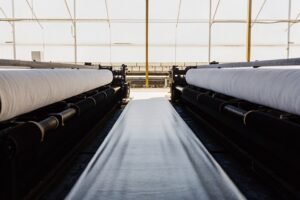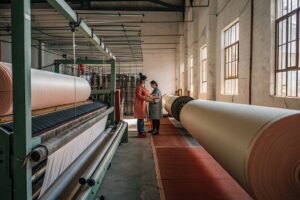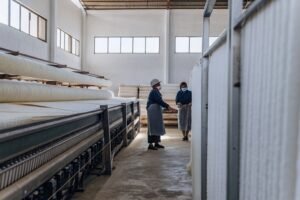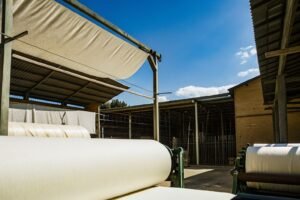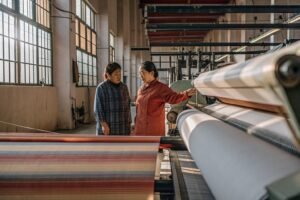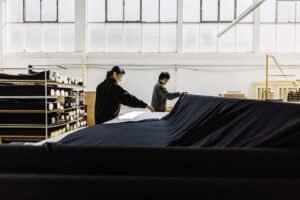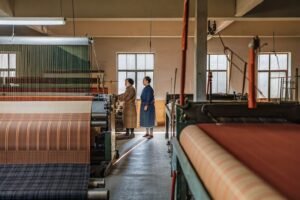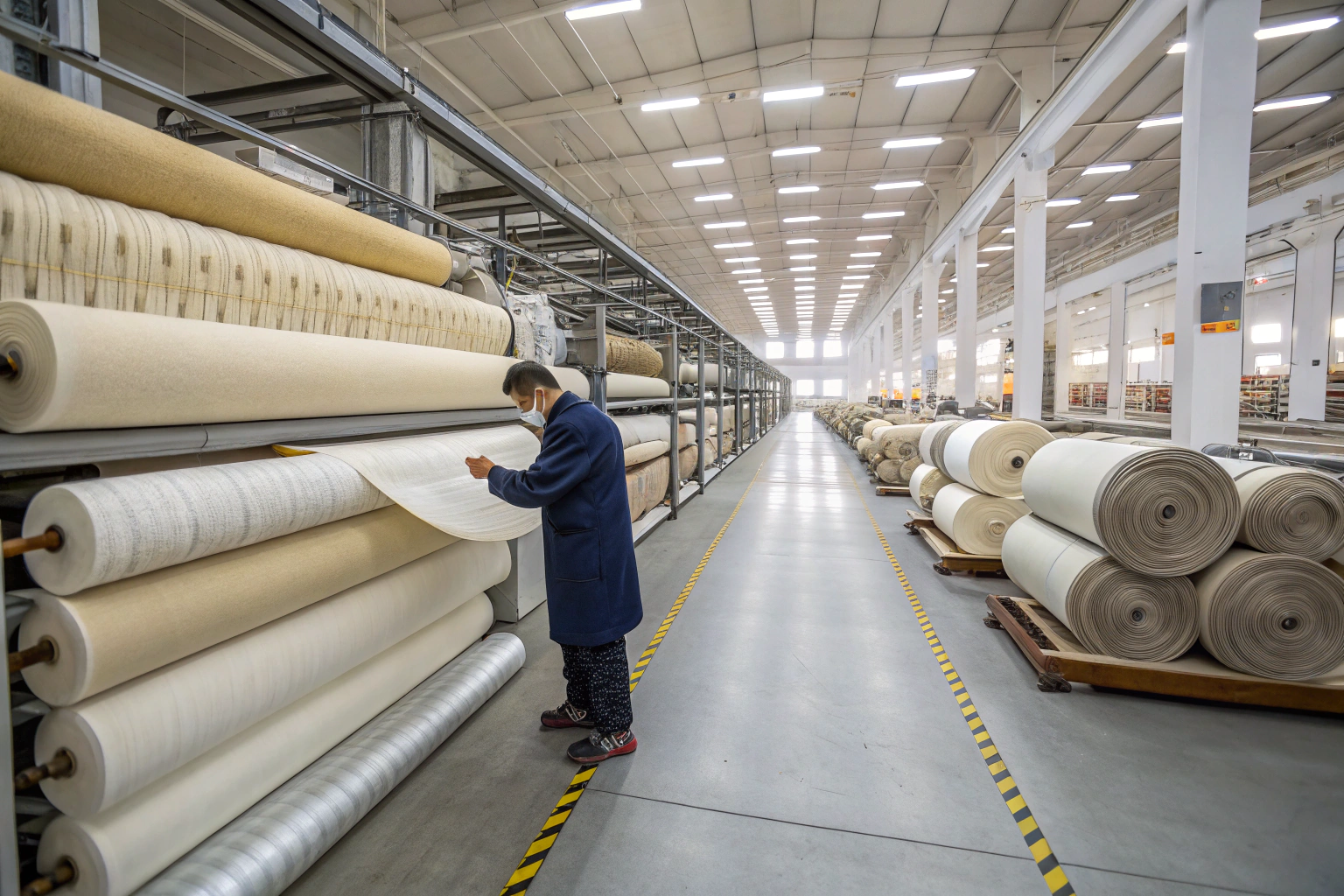
If you’ve ever tried to launch a private label clothing line in the US, you know the real nightmare isn’t designing the clothes. It’s finding that one hero fabric that doesn’t bleed in the wash, doesn’t shrink into a crop top, and doesn’t take 12 weeks to arrive. I’ve been in the textile game for over two decades, running Shanghai Fumao, right in the thick of the Keqiao textile cluster. We’ve seen American brands lose thousands of dollars because they bet on a cheap, neutral-toned base fabric that turned out to be a translucent mess under mall lighting. The frustration isn’t just about money; it’s about the sheer waste of time and creative energy when your supply chain fails you.
The best neutral Fumao fabric for rebranding in the US is actually a mid-weight, yarn-dyed, cotton-polyester elastane blend with a brushed finish. We internally call it our "Vintage Cloud" base. It sits in that sweet spot between stiff denim and flimsy jersey, hitting roughly 280-300 GSM. For US boutiques and streetwear labels, this specific neutral base—available in our signature core colors like Raw Ecru, Shadow Taupe, and Fossil Gray—provides the drape required for modern silhouettes while ensuring high colorfastness for custom dye sublimation or screen printing later.
Now, if you’ve ever wondered why some fabrics feel expensive and others just look like a tablecloth, stick with me. The real difference hides not in the fibers you read on the label, but in the finishing chemistry we apply right here in our Keqiao coating factory. I’m about to walk you through why "neutral" doesn’t just mean beige, and how picking the right construction can actually lower your landed cost in the US market.
How Do Yarn-Dyed Neutrals Hide US Import Stains Better?
I can’t count the times a US client has called me, panicked, because a shipment of "off-white" arrived looking like a dirty sneaker. Here is the hard truth: greige goods (unfinished loom state fabric) absorb dirt like a magnet during the 14-day Pacific crossing. You need a fabric that fights visual defects, and that’s exactly where yarn-dyed construction wins.
If you are re-branding, you aren’t just buying fabric; you are buying a promise of consistency.
Can Yarn-Dyed Fabric Really Lower Your Return Rate?
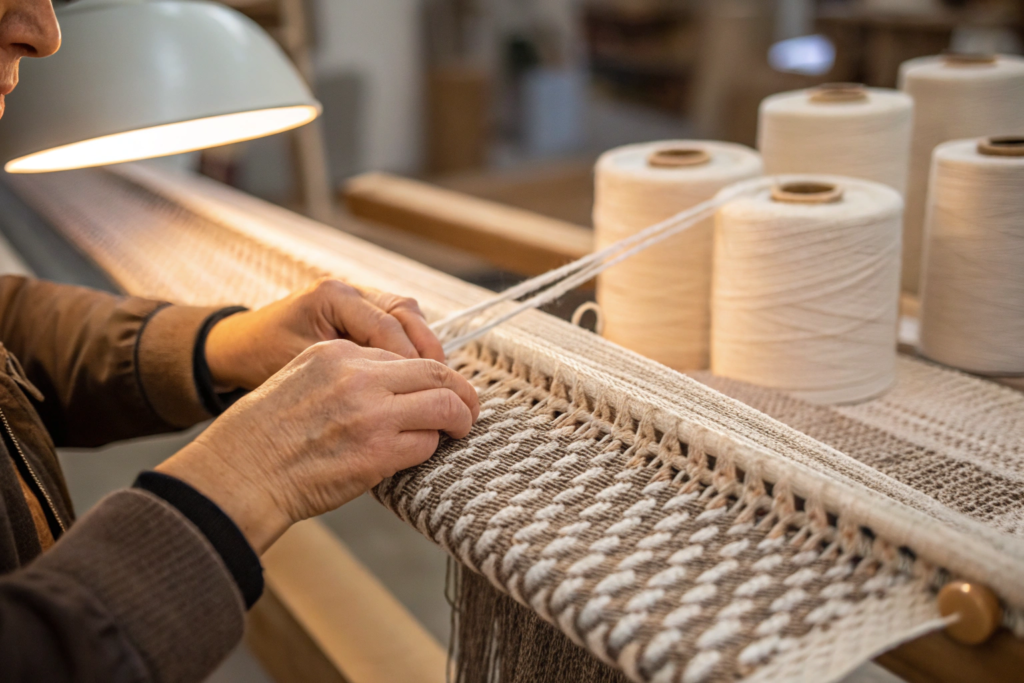
I remember a specific order back in November 2023 for a Los Angeles-based streetwear launch. They ordered 2,000 yards of a piece-dyed light heather gray knit. When it landed, the center crease from the roll had permanent sun-fading because the dye only sat on the surface of the fibers. We solved this immediately by pivoting to yarn-dyed melange. The difference is simple: piece-dyed means we take a white fabric and dip it in a dye bath, so when you scratch it, the white core pops out. Yarn-dyed means we dye the actual raw cotton fibers before we spin and knit them. (Here I have to jump in—our yarn-dyeing partners in Keqiao can turn a sample lot in 48 hours).
Take our "Shadow Taupe" core base. We use a mix of 80% recycled polyester and 20% combed cotton. The polyester yarns are dope-dyed during extrusion—literally melting the pigment into the plastic chip—while the cotton yarns get reactive dyeing under high pressure. This dual-process setup means when you put that fabric through a commercial laundry cycle, the color remains stable down to a 4.5 rating on the AATCC gray scale. For a neutral tone, this is critical because "beige" turns "yellow" fast if you cut corners on oxidation resistance.
Here’s a technical breakdown of how our standard finishing process differs from budget options to protect neutral hues:
| Process Step | Budget Risk (Reactive Dye only) | Fumao Standard (Dope-Dyed Core) |
|---|---|---|
| Dye Penetration | Surface level only; white core exposed when stretched. | Pigment saturated through fiber extrusion. |
| Crocking Test | Fails wet crocking; leaves color on white seat cushions. | Passes ISO 105-X12 wet crocking with 4+ rating. |
| Stain Resistance | Absorbs oil-based stains instantly due to open pore structure. | Tight weave + dope dye resists absorption. |
| Sublimation Migration | High risk of dye gas fading when stored in polybags. | Minimal to zero gas fading due to pigment stability. |
What Is the Difference Between Bleach-Spot Neutrals and Real Ivory?
Don’t get me started on "natural cotton" colors. True neutral fabrics for rebranding should not look like a coffee stain. In 2022, we developed a specific "Optical Bright" neutral line. We start with high-twist cotton yarns and run them through an enclosed singeing machine that burns off the micro-fuzz at 1,200 degrees Celsius. Then, we apply a biodegradable desizing agent. The result is a crisp, bright ivory that doesn’t rely on optical brightening agents (OBAs), which tend to reverse-yellow in humid shipping containers.
If you are sourcing "how to find pre-shrunk neutral woven fabric for wholesale apparel from China," you should look for a Mill Test Certificate that shows a residual shrinkage of less than 2%. We achieve this by running the fabric through a Sanforizing machine three times, feeding it in with zero tension. This pre-compression means your "Fossil Gray" trousers aren’t going to ride up the ankle after the consumer washes them. You can also check communities like The Fashion Incubator for discussions on how to avoid OBAs in natural fibers, but honestly, the easiest route is asking your supplier for the test lot video. We always provide our US clients with a live timestamped video of the fabric stretch recovery test before we cut the bulk.
Why Does GSM Consistency Decide Your Private Label’s Fate?
When we talk to US brands about rebranding, we often hear "I want a heavy French terry." But weight without balance feels like a potato sack. The magic of a good neutral base isn’t just the grams per square meter (GSM); it’s the density of the weave relative to the yarn count.
If you build a brand on a specific silhouette—say, an oversized boxy hoodie—your customer expects that hoodie to drape the same way in January as it does in August.
How Much Does a 1% Weight Variation Cost You?
It costs you more than you think. Imagine you are cutting a slouchy t-shirt dress. You grade your pattern based on a 200 GSM jersey. If we ship you 180 GSM fabric—which, let’s be honest, some "discount" wholesalers do because it’s cheaper to stretch the yarn out—the dress suddenly becomes transparent. The drape collapses. You just ruined your brand reputation because of an ounce of fabric.
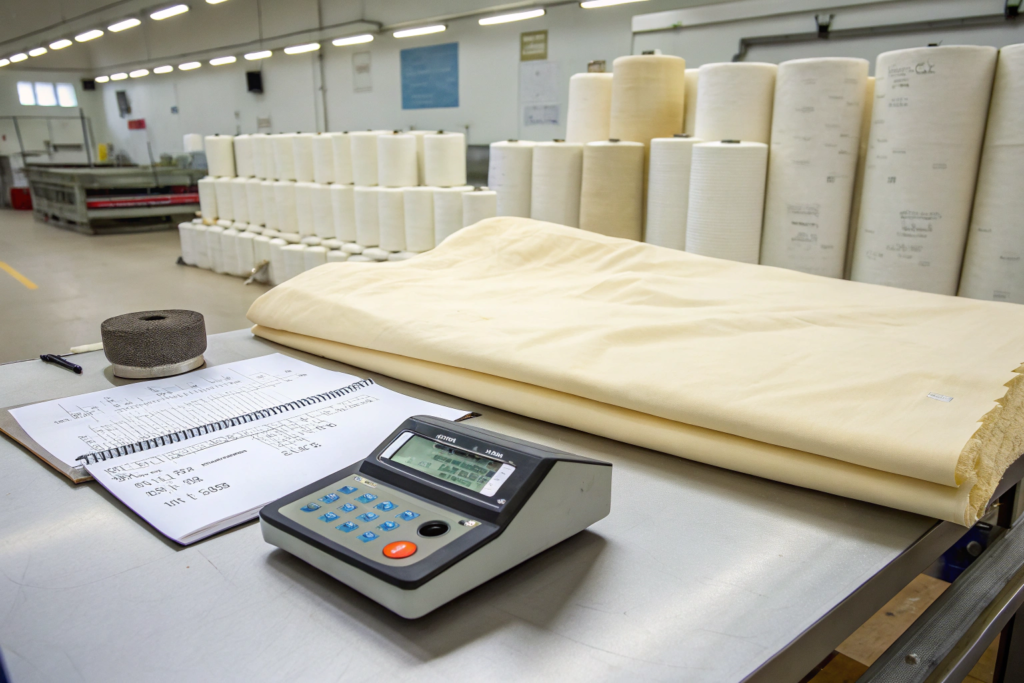
We use a Quadrant Math system here at Shanghai Fumao. Our inspection team (we have a full 12-person dedicated QC room with calibrated MARUITSU circular testing scales) pulls samples from the beginning, middle, and end of every single roll. We don’t average the weight; we check the variance. For our "Vintage Cloud" neutral line, we guarantee a tolerance of ±3% across the entire batch. This matters for your logistics too. If you are paying air freight for 300 kilos of goods, you want to know the actual weight, not just what the tech sheet says.
Let’s look at how fiber composition interacts with weight stability in a standard neutral rebranding fabric:
| Fiber Blend | Typical GSM Variance | Best Use Case |
|---|---|---|
| 100% Cotton (Carded) | ±5-8% (High moisture absorption) | Basic rigid tees (prone to shrinkage) |
| CVC (60/40 C/P) | ±4-5% | Polo shirts, structured uniforms |
| Modal/Cotton/Elastane | ±3-4% | Draped casual wear, loungewear |
| Cotton/Poly/Dope-Dyed Elastane | ±2-3% | Premium streetwear; strict color matching |
Can a "Too Heavy" Fabric Ruin Your US Duty Drawback?
This is something nobody talks about. The US Harmonized Tariff Schedule can be brutal. A fabric that drifts just 30 GSM heavier can technically push your garment into a different cost bracket if it’s a tightly woven poplin vs. a sheeting fabric. For neutrals we destine for the US, we specifically engineer a "light-heavy" hand feel. We use air-jet looms that insert the weft yarn under high pressure, creating a fabric that feels physically thick and structured to the hand but weighs less on the scale than a ring-spun equivalent.
I recall a project in March 2024 with a brand focusing on "elevated basics." We developed a 260 GSM slub jersey in a neutral oat color. The trick was using hollow-core cotton yarn. This is a spinning technique where the cotton wraps around a dissolvable PVA filament. When we scour the fabric, the PVA melts away, leaving a hollow center. You get a fabric as thick as a 300 GSM fleece, but it weighs 15% less. For a rebranding startup, this means you pay less for shipping, you pay less for duty (since duty is often weight-based), yet your customer feels a substantial garment that justifies a $68 retail price tag. It’s these tiny engineering tweaks, shared on sites like a textile machinery forum about how to set tension on Tsudakoma air-jet looms for hollow core yarns, that separate average suppliers from strategic partners.
How to Match Your Pantone Neutral to Chinese Raw Stock White?
Lab dips are the silent killer of small brands. You pick a beautiful "Sandstone" from the Pantone Fashion, Home + Interiors book, only to receive a lab dip from China that looks like pastel peach under fluorescent light. The culprit? Raw stock white base, or the optical brightener in it.
Rebranding is about owning a color palette. If your "Bone" is different from your competitor’s "Bone," you lose.
Why Does Metamerism Kill Your Beige in Retail Lighting?
Metamerism is when two fabrics match under one light source but look completely different under another. You might approve a lab dip under the warm morning sun in your LA office, but when the goods hit a Nordstrom rack with cool LED lighting, your top and bottom look like two different outfits.
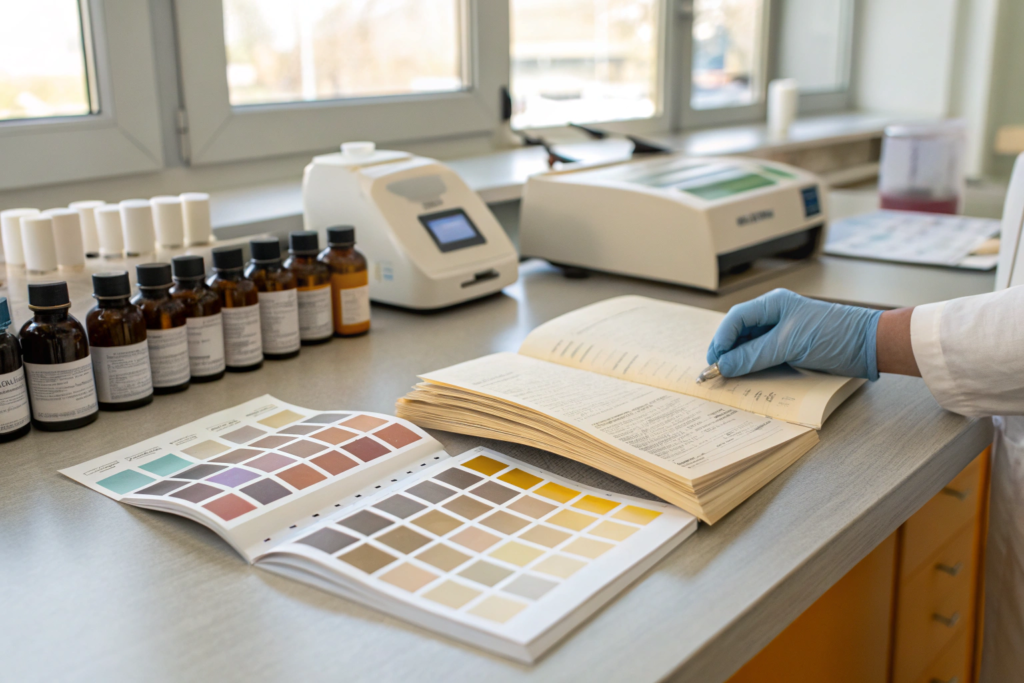
We fight this by standardizing our neutral bases on "Absolute White" polyester staple fiber from a single supplier. We never mix optical brighteners unless the client demands a "Digital White" look. For US brands doing rebranding, I strongly suggest asking your supplier to provide the Delta E (dE) value under D65 (Daylight) and TL84 (Store Light). We use a DATACOLOR 1000 spectrophotometer. My QC manager has a strict rule: if the dE on a neutral tone exceeds 0.8, the batch gets rejected and goes straight back to our cooperative dyeing facility. No discussion.
(Let me just say, if you’re looking for advice on setting up a color standard for private label streetwear brands, don’t rely on random supplier photos. We actually ship a physical "Hanging Swatch" sealed in a UV-blocking bag with every contract, so you have a touchstone.)
Here is a simplified view of how we track color from lab to bulk for neutral fabrics:
- Step 1: Spectral Analysis – We scan your physical sample or Pantone reference into the DATACOLOR system.
- Step 2: Substrate Selection – We choose a base fabric with a known reflectivity value. For US rebranding, we often recommend a 90%+ reflectivity base to ensure the neutral is clean, not muddy.
- Step 3: Right-First-Time Dosing – Our automated dye kitchen calculates the recipe based on the actual moisture content of the fabric entering the bath. (Fabric from the knitting department might sit for 2 days and change weight due to humidity. We compensate for this.)
- Step 4: Finished Fabric Check – After finishing, we compare the bulk to the original lab dip, providing a digital report that shows the spectral curve, not just a "pass/fail."
Is It Cheaper to Dye Neutrals Piece-Dyed or Top-Dyed?
It depends on the volume, but most people get this backward. If you’re doing a small batch of 300 yards for a rebranding test, piece-dyeing sounds cheaper but it’s a trap. Neutrals are unforgiving. If the dyeing machine in Shaoxing has a slight residue from the previous batch of navy blue, your "Cream" turns into a dirty dishwater color. This is called tailing.
For the US market, where returns are expensive, I always steer clients toward dope-dyed black and yarn-dyed heathers for their cores, and reserve piece-dyeing only for large seamless circular knit runs. We had a case in August 2024 with a client who needed a specific "Latte" rib knit for a bralette set. The color was so sensitive that a pH shift of just 0.5 during the softener application turned the batch slightly pink. We solved it by adding a citric acid buffer washdown before the silicone softener stage. This isn’t rocket science, but it requires a chemical management system that cheap factories just don’t have. You can read up on the chemical engineering aspects of this on resources like the American Association of Textile Chemists and Colorists (AATCC) database, but for a practical walkthrough, many dye masters share tips on niche industry blogs about how to neutralize fabric pH after reactive dyeing to prevent yellowing.
Can Cheap Neutrals Pass the US Flammability CPSC Test?
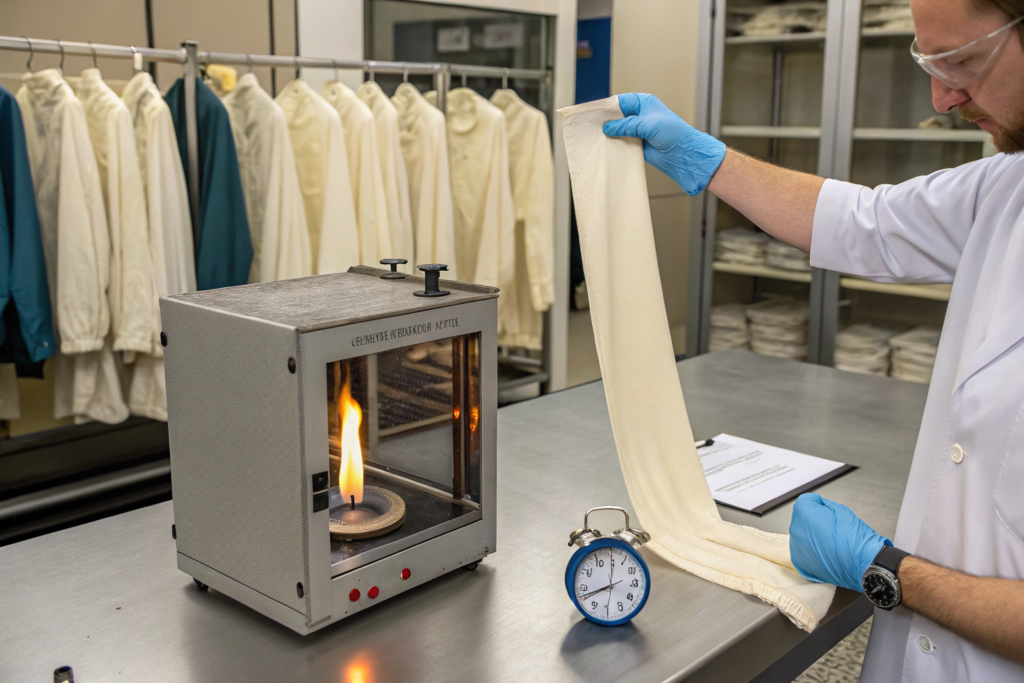
You see it all the time on TikTok: a brand blows up overnight, and a week later, they get shut down by the CPSC because their brushed polyester robe turned into a melting fireball. Neutrals aren’t just about aesthetics; they are about chemical safety, especially when we talk about the processes required to get that soft, washed hand feel.
We have to plan production around Chinese holidays to ensure safety treatments aren’t rushed. For example, if you want your pre-production samples done right, you need to complete them 6 weeks before Chinese New Year, just like that European brand strategy you read about. Otherwise, the rush batch right before the factory closes might skip the critical flame retardant (FR) cycle.
Why Does Brushing Destroy Your 1610 Compliance?
The US standard 16 CFR Part 1610 is the gatekeeper. A lot of rebranding startups want that cozy, peached, fuzzy surface on their neutral loungewear. We achieve that through mechanical brushing, where the fabric passes over rotating metal rollers covered in tiny wire needles that pull the fibers up to create nap. The problem? You just increased the surface area of the fuel by 300%.
A plain jersey knit of 100% polyester will likely melt and self-extinguish. But that same polyester, once heavily brushed into a "polar fleece" neutral, becomes a candle wick. We fix this by adding a phosphorus-based FR agent into the dye bath or padding mangle. The trick is that these FR chemicals can make neutrals turn slightly yellow after heat setting at 190°C.
In January 2025, we ran a trial for a children’s wear brand targeting a specific "Almond" flannel. The initial brushed sample burned faster than the standard 3.5-second surface flash limit. We changed the pile loop density and used a finer gauge wire on the brushing machine—think of it as scratching the surface with a soft rake rather than a coarse shovel. Then, we applied a cyclic phosphonate compound. The result was a 2.8-second surface flash time with zero char length, and we kept the color delta under 1.0. (This is where you need a supplier like Shanghai Fumao who understands that you can’t just "spray and pray" with chemicals).
Are OEKO-TEX Neutrals Still Soft Enough for Baby Gear?
Absolutely. The old myth is that organic cotton and GOTS-certified neutrals have to be stiff as cardboard because you can’t use the "good" softeners. We use a mechanical approach called "Airflow Tumbling." Instead of relying on cationic silicone softeners that coat the fiber like plastic wrap (and often have limits under OEKO-TEX Appendix 4), we literally beat the fabric soft. We use machines from Biancalani that tumble the dry fabric at high speeds, knocking the fibers against each other to naturally soften the cellulose structure.
For US clients, the advantage is twofold. First, you pass the strict California Prop 65 requirements because we aren’t introducing volatile organic compounds. Second, the neutral color remains pristine because we didn’t apply a chemical that could change refractive index. If you need to learn more about how to source OEKO-TEX Standard 100 certified fabric from China for US baby product brands, you can check out marketplaces like the Maker’s Row forum, but I always advise buyers to check the certificate number directly on the OEKO-TEX website. A lot of "neutral" cheap goods from uncertified mills still contain trace formaldehyde from the anti-wrinkle finish, which is a definite red flag for rebranding a sustainable US line.
Conclusion
Look, I’ve been weaving and dyeing fabric in China for 20 years, and I still get excited when a new brand picks the perfect neutral base because I know it’s the foundation of their entire visual identity. It’s not just a piece of cloth; it’s the background for their graphics, the vehicle for their cut-and-sew, and the thing that determines whether a garment hangs in a closet for 5 years or gets tossed after two washes. We covered the necessity of yarn-dyed construction to fight import staining, the financial risk of GSM variance, the science of hitting Pantone neutrals with a Delta E under 0.8, and the strict safety protocols needed to pass US flammability laws without turning your fabric yellow. Whether it’s our “Vintage Cloud” base or a high-end hollow-core slub, the goal is always to give you a strategic advantage in the US market, not just a shipment of cloth. We control the process from the weaving mill to the packaging line, right here in the Keqiao textile hub.
If you are tired of chasing suppliers who don’t understand why your "Latte" rib knit looked pink, let’s fix this. We can take your US rebranding project from a sketch to a fully compliant, beautifully textured garment. We hold the certifications, but more importantly, we hold the institutional knowledge. If you want to discuss your next private label collection or need a technical deep-dive on our neutral fabric stock, reach out to our Business Director, Elaine, directly at elaine@fumaoclothing.com. Tell her what kind of neutral you’re dreaming of, and we’ll get the lab dips moving within 48 hours.