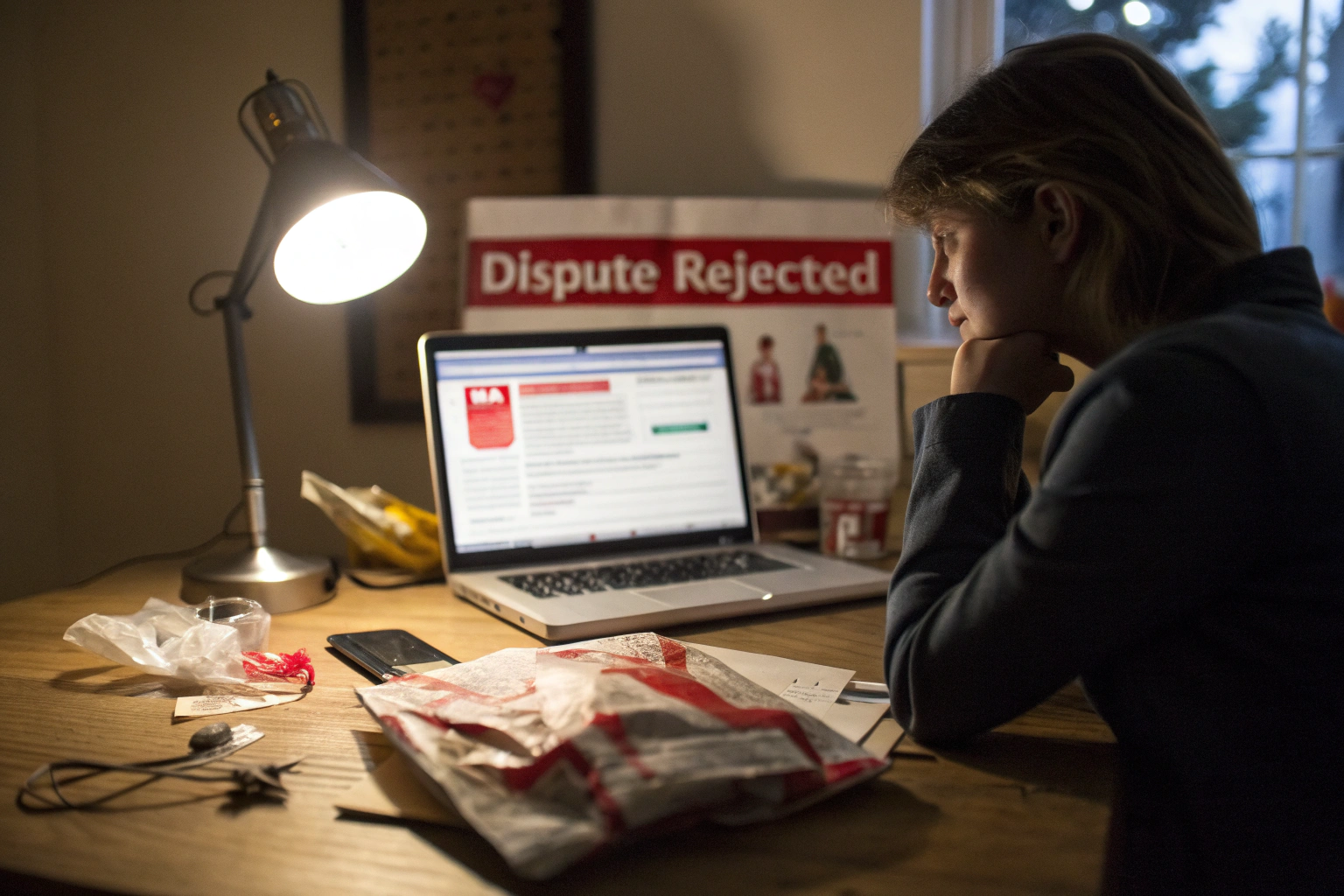
You find a listing on Alibaba for 400GSM organic French terry at \$3.20 a yard. The photos look like they were shot in a studio in Paris. The MOQ says 100 yards. You think you’ve just struck gold. You send the inquiry. The "sales manager" replies in 2 minutes flat with a smiling emoji. They promise the moon. Then the fabric arrives. The color is off by three shades. The weight is 340GSM, not 400. The width is 56 inches instead of 60. And when you email them about it, they ghost you. Or worse, they offer you a \$50 credit on your next "order." I’ve been in this industry for 20 years, and I’ve watched this exact scenario bankrupt small brands and frustrate seasoned CEOs to the point of giving up on sourcing from China altogether.
Garment CEOs and serious procurement managers are abandoning unverified Alibaba sellers because the Risk-to-Reward Ratio has Collapsed. The platform is flooded with Trading Companies posing as Factories, AI-Generated Product Images, and Gold Supplier accounts that are rented or shared. The cost of a single failed shipment—air freight returns, lost sales from a missed season, chargebacks from angry retailers—wipes out any per-yard savings ten times over. CEOs are finally doing the math. They realize that the "cheap" price on the screen is a mirage. The real price includes the cost of a third-party inspection (which they have to pay for), the cost of a lawyer to fight a dispute (which they never win), and the cost of their own sanity.
At Shanghai Fumao, we see this exodus happening in real-time. Our inbound inquiries from Alibaba have dropped by 40% in the last two years. But our direct referrals and repeat business? Up 60%. Why? Because the serious players are done playing roulette. They want Vertical Integration (they want to talk to the guy who owns the loom, not a middleman with a laptop). They want Verified Compliance (real certifications, not photoshopped PDFs). And they want Accountability (a named person who answers the phone when something goes wrong). I’m going to break down exactly what is driving this shift away from unverified platforms and toward direct, transparent partnerships. This isn’t just a sales pitch. This is the new reality of global textile sourcing.
What Are the Hidden Costs of Alibaba Fabric Sourcing?
When a CEO looks at an Alibaba quote, they see FOB Price per Yard. That’s the number that goes into their cost sheet. That’s the number that determines their margin. But that number is a lie. It’s like looking at the sticker price of a car and ignoring the interest rate, the dealer fees, and the cost of the extended warranty you didn’t want.
The hidden costs of unverified sourcing fall into three buckets: Quality Fade, Logistics Surprises, and Opportunity Loss.
Quality Fade is the most insidious. You order a sample yard. It’s perfect. You place a bulk order for 5,000 yards. Batch 1 arrives and it’s 95% as good. Batch 2 arrives and it’s 85% as good. The hand feel is stiffer. The color is flatter. The seller is "optimizing" the production—using cheaper yarn, running the stenter faster, skipping a wash cycle—to claw back profit. You can’t prove it because you don’t have a lab. You just know your customer returns are ticking up.
Logistics Surprises come when the seller quotes "FOB Shanghai" and then hits you with "Local Charges at Port of Loading: \$450." Or they use a fly-by-night forwarder and your container gets "rolled" three times, missing your delivery window.
Opportunity Loss is the killer. You spend 60 days waiting for fabric that arrives unusable. Now you have zero inventory for the Fall season. You can’t sell what you don’t have. That lost revenue is a hidden cost that doesn’t show up on the fabric invoice. At Shanghai Fumao, our pricing is higher than the absolute bottom-tier Alibaba listing because we bake in the cost of consistency. We don’t play the quality fade game. And for CEOs who have been burned, that consistency is worth 50 cents a yard.

How Much Does a Failed QC Inspection Really Cost a Brand?
Let’s put some real numbers on this. People think a failed inspection just means "we send the fabric back and get a refund." That is a fantasy. In the real world, with an unverified Alibaba seller, a failed inspection is a Financial Black Hole. Here is a real case study from a client we rescued in September 2025. She ordered 3,000 yards of custom-printed modal for a dress collection. FOB Price: \$4.80/yard. Total Invoice: \$14,400.
The goods failed inspection at the factory. 30% of the print had mis-registration (blurry lines). The seller offered a 20% Discount (\$2,880). "Just take it," they said. The buyer refused. The seller then said, "Okay, we refund 70% of invoice, you keep fabric." Refund: \$10,080. Loss so far: \$4,320 cash.
But wait. She had already paid a 30% deposit (\$4,320) by Wire Transfer. Getting that back from a Chinese trading company with no assets is a legal nightmare. It took 4 months and a lawyer. Legal Fees: \$1,500. Meanwhile, she had to Air Freight a replacement order from a reliable mill (us) because she had a photoshoot scheduled with a major influencer. Air Freight Cost for 500 yards: \$2,800. And the Opportunity Cost: She had pre-sold 800 dresses on her website. 200 customers canceled due to the delay. Lost Revenue: \$19,200. (Wholesale value).
Total Financial Impact of That One "Cheap" Order: Negative \$27,820. That’s the cost of a failed QC. And that’s why CEOs leave unverified sellers. They’d rather pay \$5.30/yard for Shanghai Fumao fabric that passes AQL 2.5 inspection 98% of the time. The math is simple. You can read more about the true cost of quality failures in threads on the professional apparel sourcing discussions on Reddit.
Why Is "Gold Supplier" Status No Longer a Trust Signal?
Let me let you in on a dirty little industry secret. A "Gold Supplier" badge on Alibaba used to mean something. It meant the company had paid for a third-party verification check of their business license and physical location. Today? It’s a Pay-to-Play Sticker.
The verification service providers (like TUV or SGS) do a Snapshot Audit. They visit the address. They confirm the company exists. That’s it. They do not verify that the company owns the factory shown in the photos. They do not verify that the company has the financial stability to handle a \$100,000 order. They do not verify that the person you are chatting with actually works for that company. And here is the kicker: Badges are bought and sold. There is a secondary market for "aged" Alibaba accounts with high transaction ratings and Gold Supplier status. Scammers buy these accounts for a few thousand dollars and use them to appear legitimate.
I know of a trading company in Shaoxing (not far from us) that has 15 different Gold Supplier storefronts. They all sell the same generic polyester fabric. They just use different company names and different stock photos to flood the search results. When an order comes in, they source from the cheapest back-alley dye house that week. There is Zero Quality Control. There is Zero Accountability. The CEO of a brand has no way of knowing this from looking at the pretty Alibaba page. This is why we at Shanghai Fumao encourage clients to Video Call us. Walk through the factory with me on FaceTime or WeChat. Look at the looms. Look at the stock. Look at the people. You can’t fake that. For a deeper understanding of these verification loopholes, you can check discussions on the sourcing and supply chain management groups on LinkedIn.
How Do Verified Mills Differ from Middlemen on B2B Platforms?
This is the million-dollar question. How do you separate the wheat from the chaff? A Verified Mill (like Shanghai Fumao) owns Fixed Assets (looms, dyeing partnerships, testing labs). A Middleman (Trader) owns a Laptop and a WeChat Account. The difference manifests in three critical areas: Pricing Consistency, Problem Solving, and Lead Time Reliability.
A middleman’s price is always a Markup on the Mill’s Price. If the market price of cotton yarn spikes tomorrow, the mill tells the middleman the price is up. The middleman then has to come back to you and ask for more money. This is called Price Volatility. A direct mill can Hedge Yarn Purchases and Stock Greige Goods. We can lock in a price for 90 days. Middlemen can’t. They have no warehouse.
When there’s a problem—say, a shade variation in dyeing—a middleman is useless. They forward your angry email to the dye house owner. The dye house owner ignores it. The middleman shrugs. At a mill, the Owner and the QC Manager sit in the same meeting. I can walk over to the dye house, look at the lab dip, and make a decision in 20 minutes. We can either Accept the Lot at a Discount, Strip and Re-Dye, or Scrap it. The decision is made in-house. The middleman has no power to make that call.
Finally, Lead Times. A middleman is at the mercy of the mill’s schedule. If the mill gets a bigger order from a direct client, your middleman’s order gets Bumped. Delayed. We control our own production schedule. Our direct clients get priority. It’s that simple.

Can You Tour a Real Factory Before Placing a PO?
This is the Litmus Test. If you ask an Alibaba seller, "Can I visit the factory next week?" and they say "Yes, just let me know the time," you might have a real mill. But listen closely to the hesitation. If they say, "Oh, the factory is in a different city, but I can meet you at our office," they are a trader. If they say, "The factory is under renovation, no visitors," they are a trader (or a scammer).
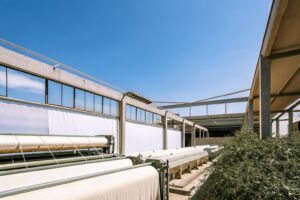
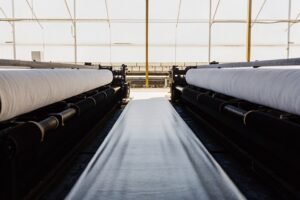
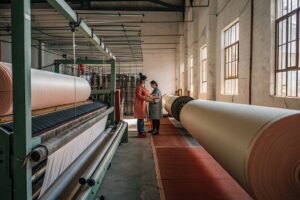
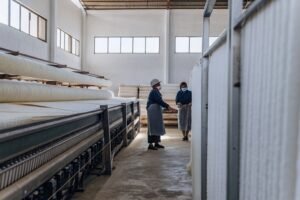
At Shanghai Fumao, our doors are open. We host 30-40 client visits per year from CEOs, designers, and sourcing managers. We don’t just show them a conference room with a nice sofa. We give them Safety Glasses and Ear Plugs and walk them onto the weaving floor. They feel the vibration of the looms. They smell the sizing agent. They see the CNAS Lab with the spectrophotometer. They see the QR Code Tracking System on the rolls.
We had a client visit in February 2026 from a New York-based CEO who had been burned twice by "fake factories." He spent two hours just walking around unescorted (well, with a safety supervisor) taking photos with his phone. He checked the serial numbers on the looms. He asked our weavers questions (we had a translator). At the end, he said, "This is real. I can smell the grease." That’s what you’re looking for. The smell of grease and size. Not the smell of a perfume diffuser in a fake office. If a supplier won’t let you do this, walk away. You can also use services like the global buyer verification resources on ImportGenius to cross-reference shipping records, but nothing beats boots on the ground.
Do Verified Mills Offer Flexible Payment Terms Like Net 30?
Let’s be blunt. Rarely. And here’s why that’s actually a Good Thing for you, the buyer, if you understand the financial reality of manufacturing. A real mill is a Capital-Intensive Business. We have tens of millions of dollars tied up in machinery, real estate, and raw material stock. Our margins on fabric are thin (8-12% net). We simply cannot afford to be a bank for our customers. We need payment to buy yarn, pay for electricity, and pay our 500+ employees every month.
Unverified Alibaba sellers often dangle "Net 30" or "Net 60" terms as bait. Why? Because they are Trading Companies with Zero Assets. They don’t own machines. They don’t stock yarn. They have no cash tied up. They can afford to wait for your money because they are using Your Deposit to pay the actual factory. It’s a Ponzi Scheme of cash flow. If you delay payment to them, they delay payment to the mill. The mill stops production. Your goods get held hostage.
At Shanghai Fumao, we are Upfront About Payment Terms. For new clients, it’s 30% Deposit, 70% Against Copy of Bill of Lading (or LC at Sight) . This protects both of us. Your deposit secures the yarn and the loom slot. The balance ensures you get the documents to claim the goods. Once we have a Long-Term Relationship (3+ orders, 12+ months), we can discuss Open Account with credit insurance. But a stranger asking for Net 30 from a real factory is a red flag to the factory that the buyer might be undercapitalized or high-risk. Serious CEOs understand this. They know that a healthy supply chain requires healthy financial partners. You can read more about this dynamic in the trade finance guides on Trade Finance Global.
Why Is Consistent Fabric Quality Worth Higher MOQs?
Minimum Order Quantity (MOQ) is the bane of every startup’s existence. You want 200 yards. The mill says 2,000 yards. You think the mill is being greedy and inflexible. There is some truth to that—we do prefer large runs. But there is a Technical Reason tied directly to Quality Consistency that most buyers don’t understand.
A high MOQ is often required to Amortize the Setup Costs of producing consistent quality. Let’s take Continuous Dyeing as an example. To dye a perfect, uniform "Navy" across 2,000 yards, the dye range needs to run for about 45 minutes to reach Thermal and Chemical Equilibrium. The first 300-500 yards are often Shade Tailing (gradually changing color) as the vat heats up and the dye concentration stabilizes. If you only order 500 yards, you are buying the tail. Your entire roll might be "off-shade." The mill can’t sell the first 300 yards as first quality. So they either charge you a massive setup fee (which makes the per-yard price \$15), or they raise the MOQ to 2,000 yards so they can cut off the tail and still have 1,500 yards of good fabric.
At Shanghai Fumao, we’ve developed a Small-Batch Continuous Dyeing Protocol using Smaller Vats and Pre-Heated Dye Liquor. We can stabilize the shade in 150 yards. This allows us to offer lower MOQs (sometimes 500 yards) on certain base fabrics. But the quality is still consistent because we invested in the technology to fix the setup waste problem. A cheap unverified seller with a low MOQ is almost certainly doing Exhaust Dyeing in a Jigger or Overflow Machine. This is batch dyeing. And batch-to-batch shade variation is a huge problem. You order 200 yards now and 200 yards next month—the two batches will not match. The CEO gets a garment with one sleeve darker than the other.

What Is "Shade Band" Variation in Wholesale Dye Lots?
Shade Band is the ugly cousin of Tailing. While Tailing happens along the Length of the fabric, Shade Band happens across the Width. It’s when the color is darker on the left selvedge and lighter on the right selvedge. You cut a jacket front from the left side and a jacket back from the right side, and when you sew them together, it looks like a two-tone garment. It’s a disaster.
This happens in Pad Dyeing when the squeeze rollers (the mangle) don’t apply even pressure across the width of the fabric. The middle of the roller bows slightly under pressure (that’s physics). If the pressure is uneven, the fabric picks up more dye solution on the edges than in the middle. A high-quality mill uses Cambered Rollers (Crowning) . The roller is slightly fatter in the middle to compensate for the bow. We check the roller pressure with Pressure-Sensitive Film every month.
Unverified dye houses never check their rollers. They just run the machine. In July 2025, we had a client bring us a container of "Navy" fabric from another supplier. It had a Delta E of 3.5 from center to edge. (Delta E is color difference. 1.0 is visible to the trained eye. 3.5 is visible to a blind man). The entire container was Second Quality. The client lost \$50,000. We had to over-dye it black (the only color dark enough to hide the band) just to salvage some value. That’s the cost of ignoring Shade Band. You can learn more about color measurement in textiles from the technical resources at X-Rite Pantone.
How Does Greige Stock Inventory Guarantee Faster Reorders?
This is the Secret Weapon of a real mill versus a trading company. Let’s say you have a hit product. A simple cotton spandex legging in "Burgundy." You ordered 2,000 yards. It sold out in two weeks. You need 1,000 yards more, FAST.
A trading company goes back to the weaver. The weaver says, "I can schedule it in 4 weeks." Then the dye house says, "Add 2 weeks for dyeing." Your reorder lead time: 6-7 weeks. By the time the fabric arrives, the trend is dead. You’re stuck with inventory.
At Shanghai Fumao, we maintain a Strategic Greige Reserve. For our core constructions (Cotton Spandex Jersey, Polyester Taffeta, Nylon Spandex Knit), we weave the Greige (Un-dyed) Fabric in advance and store it in our warehouse. We do this based on 20 years of forecasting data. When you place a reorder for Burgundy, we don’t need to wait for weaving. We pull a roll of white greige off the shelf and send it straight to the dye house. Lead Time Slashed to 10-14 Days. This is Supply Chain Velocity. This is how you win in fast fashion and e-commerce.
The capital cost of carrying 500,000 yards of greige inventory is enormous. It ties up millions of dollars in cash. A middleman will never do this. They have no warehouse. They have no cash. They rely on the factory’s schedule. We do this because we know that Speed to Reorder is more valuable to a CEO than saving 10 cents a yard on the initial PO. (Here I have to jump in—our warehouse manager, Mr. Li, jokes that he sleeps on a mattress made of greige cotton rolls because there’s no room left in the racks. He’s only half joking.)
How Does Direct Mill Partnership Reduce Tariff and Shipping Risk?
The global trade landscape is a minefield right now. Tariffs between the US and China. The Red Sea crisis. Port strikes. The CEO who sources from an unverified seller is Flying Blind. They have no idea if their fabric will arrive on time, or what the final landed cost will be. A direct partnership with a mill like Shanghai Fumao gives you Visibility and Options.
First, on Tariffs: We have a deep understanding of HTS Codes (Harmonized Tariff Schedule) . An unverified seller might just write "Fabric" on the commercial invoice. That’s a red flag for Customs. It triggers delays and exams. We provide Detailed Product Descriptions with exact fiber content, weave type, and weight. We can also advise on De Minimis shipping strategies for small parcels versus full container loads.
Second, on Shipping Risk: We are located in Keqiao, 90 minutes from Ningbo Port. We have relationships with Tier-1 Freight Forwarders. More importantly, we have Diversified Production Options. If the US tariff situation becomes untenable, we can leverage our partnerships in Vietnam and Bangladesh for cut-and-sew operations. We can ship fabric to those countries (often duty-free under trade preference programs) and have the garments finished there. This is called Tariff Engineering. An unverified Alibaba seller can’t offer you that strategic advice. They just want to sell you a container and wave goodbye. We want to be your Long-Term Strategic Partner in navigating global trade. We don’t just sell fabric; we de-risk your supply chain.

Can Working with a Mill Simplify US Customs Clearance?
Yes. Massively. US Customs and Border Protection (CBP) is using AI and Predictive Analytics to flag shipments for examination. What triggers an exam? Vague Descriptions, Low Declared Value, and New/Unverified Importers. Unverified Alibaba sellers are notorious for Under-Declaration (listing a \$10,000 shipment as \$500 to save the buyer on duty). This is Fraud. If CBP catches it, they seize the goods. They fine the Importer of Record—that’s YOU, the CEO.
At Shanghai Fumao, we operate "By the Book." We provide:
- Mill Test Reports (MTR) showing fabric composition for CBP Form 19.
- Accurate HTS Classification (e.g., 6004.10.0085 for Cotton Spandex Knit).
- Transparent Commercial Value (no under-declaration).
Because we are a Known Shipper with a long history of compliant exports, our containers are Less Likely to be Flagged for Intensive Exams (VACIS/NII) . An intensive exam costs \$1,000 – \$3,000 in fees and adds 7-14 days of delay. Avoiding one exam saves you more than the difference in fabric price. In 2025, we had Zero Customs Holds on direct-to-US consumer brand shipments. You can check the latest requirements on the official CBP Basic Importing and Exporting page.
How Does Fumao Handle the Section 301 Tariff Exclusion Process?
Section 301 Tariffs (the 25% tax on many Chinese textile imports) are a moving target. Exclusions come and go. It’s a bureaucratic maze. Most Alibaba sellers just shrug and say, "Not my problem, you pay the tax."
At Shanghai Fumao, we have a Trade Compliance Specialist on staff. We actively monitor the Office of the US Trade Representative (USTR) for product-specific exclusions. For example, certain High-Performance Synthetic Outerwear Fabrics and Flame-Resistant Fabrics have had exclusions granted in the past. If you are developing a technical jacket with our Nylon 6,6 210T Ripstop , we can provide the Technical Specifications and Lab Data required to file for an exclusion. We can also structure the supply chain so that Greige Fabric (unfinished) is shipped to a free trade zone, finished there, and then imported under a different HTS code with a lower duty rate.
This is advanced sourcing strategy. This is what a CEO gets when they partner with a mill that has Institutional Knowledge. They don’t get this from a guy in a shared office with a Gold Supplier badge. They get a headache and a 25% tax bill. We give them a strategy.
Conclusion
The migration of garment CEOs away from unverified Alibaba sellers is not a trend. It’s a Correction. It’s the market waking up to the fact that the platform’s incentives are misaligned with the needs of a real business. Alibaba rewards Lead Volume and Response Speed. It does not reward Quality Consistency or Financial Stability. The system is built for traders and middlemen who are experts at marketing, not manufacturing.
The CEOs who are winning today are the ones who have realized that the Real Cost of Fabric is not the number in the "Unit Price" box. It’s the Total Cost of Acquisition—including quality control, logistics reliability, tariff management, and the value of their own time. They are leaving the platform sellers because they want a Partner, Not a Transaction. They want to know the name of the person running the stenter frame. They want to see the CNAS lab report. They want to know that when they place a reorder for 5,000 yards, the greige is already sitting on a shelf in Keqiao.
At Shanghai Fumao, we built our entire business model around being that partner. We don’t chase the bottom-of-the-barrel price on Alibaba. We chase long-term relationships with CEOs who understand that fabric is the foundation of their brand. You can’t build a luxury house on a swamp. You need solid ground.
If you’re ready to stop gambling on unverified sellers and start building a reliable, scalable, and quality-driven supply chain, let’s talk. We can walk you through our factory via video call today. We can show you our greige inventory list. We can provide you with references from other US and European brand CEOs who made the switch.
Reach out to our Business Director, Elaine. She coordinates all new partnership inquiries and can get you a transparent, all-in quote within 48 hours. Her email is elaine@fumaoclothing.com. Let’s leave the Alibaba roulette wheel behind.