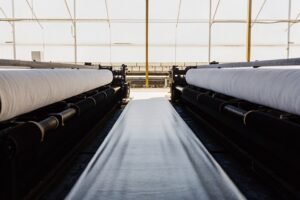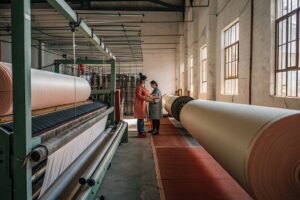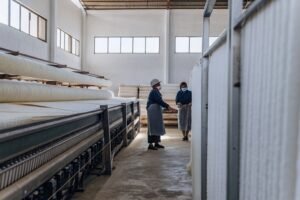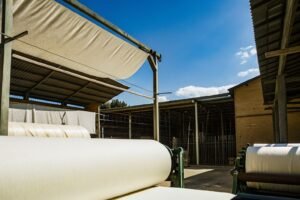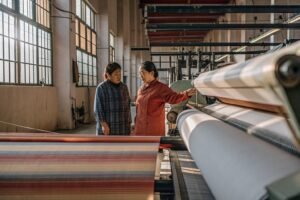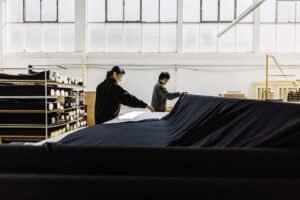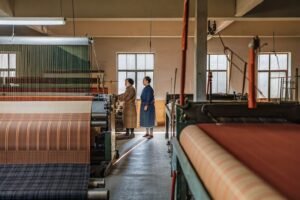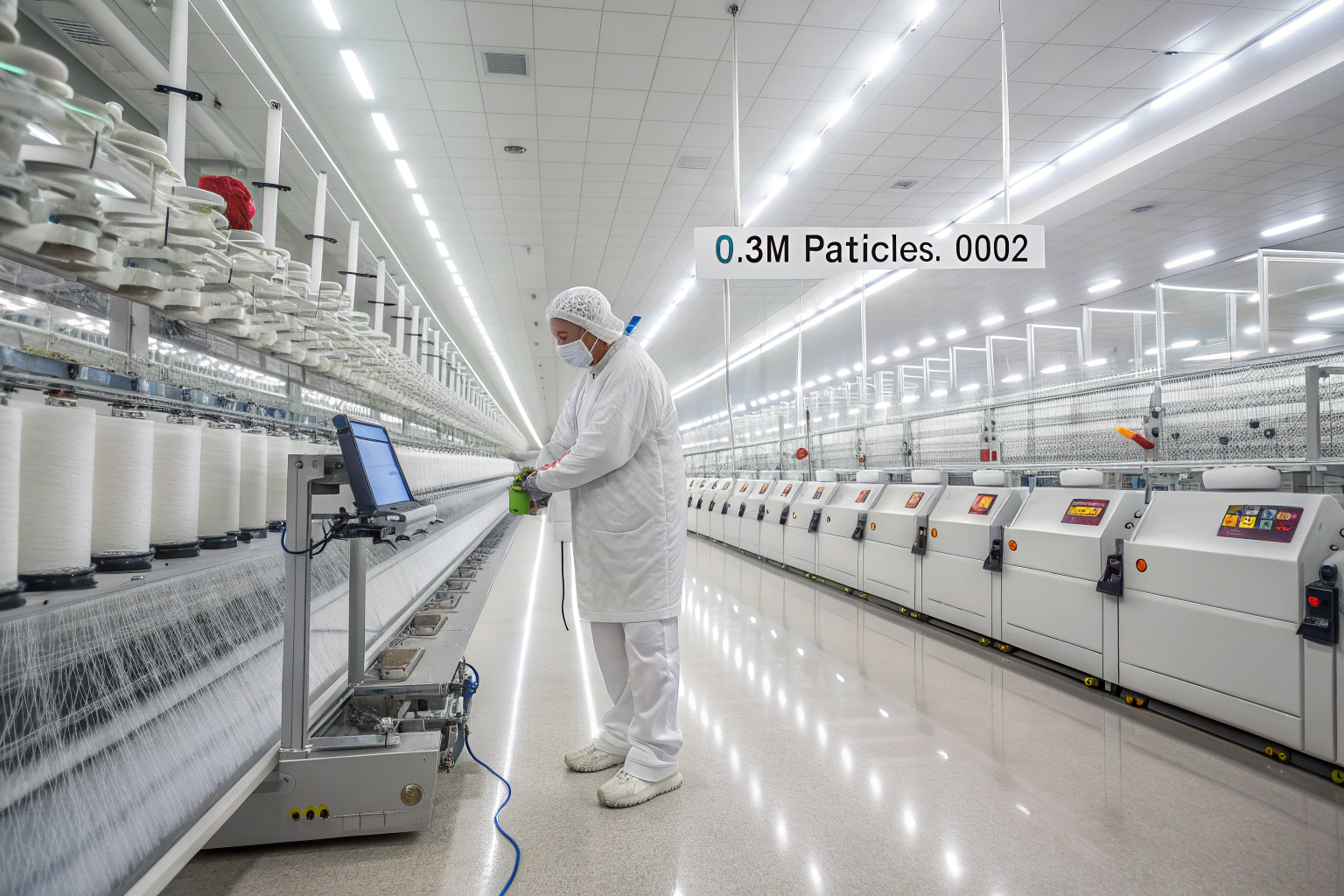
You know that moment when you cut into a beautiful roll of white silk organza and find a single black fiber embedded right in the middle? Or worse, you’re sewing a navy blazer and a piece of bright red thread—one you never ordered—is woven into the face of the fabric. That’s contamination. And it’s a death sentence for a garment. I’ve seen a whole container of premium bedsheets rejected at a US port because the inspector found a single strand of human hair between the layers. The cost? Fifty thousand dollars in chargebacks and a lost retail account. Contamination isn’t just about "dirt." It’s about foreign fibers, stray yarns, oil spots, and even insects. In textile manufacturing, these gremlins are everywhere. They float in the air. They hide in the creases of old machinery. They stick to workers’ uniforms.
At Shanghai Fumao, we treat contamination control like a hospital treats infection control. It’s not a department. It’s a culture. Our Zero Contamination Protocol is built on three pillars: Environmental Segregation (keeping colors and fibers apart), Mechanical Filtration (cleaning the air and the machines), and Human Discipline (strict uniform and cleaning schedules). We don’t just rely on final inspection to "catch" the contamination. We prevent it from happening in the first place. Because by the time a stray fiber is woven into the fabric, it’s already too late. You can’t pick it out without breaking the warp. That fabric is now B-grade. We lose money. You lose time. Nobody wins.
I’m going to walk you through exactly how we maintain a contamination-free environment in a facility that processes thousands of tons of fluffy, lint-prone fibers every year. This isn’t theory from a quality manual that sits on a shelf. This is the gritty, daily reality of keeping a white warp pristine while a black warp runs on the loom right next to it. I’ll explain our "Clean Room" approach to weaving, how we hunt down invisible oil spots with UV light, and why our workers wear uniforms without pockets. If you’ve ever had a fabric order ruined by "fly waste" or "dead cotton," this is the inside scoop on how we stop it.
How Do Textile Mills Prevent Cross-Contamination of Fibers?
Cross-contamination is the bogeyman of the textile world. It’s when fibers from one production run—say, a bright red acrylic sweater knit—find their way into another run—say, a pristine white cotton shirting. The red fiber gets tangled in the white yarn during spinning or weaving. It’s invisible until the fabric is dyed (if piece-dyed) or until the customer sees it on the final garment (if yarn-dyed). And it’s not just color. It’s fiber type. A polyester fiber contaminating a 100% cotton lot will not take the reactive dye the same way. It leaves a white speck that looks like dandruff on a dark shirt. That’s a defect called "White Speck" or "Barré."
Prevention starts with Physical Segregation. You cannot run cotton and polyester on adjacent machines without a barrier. The fly waste (short fibers floating in the air) travels. It settles on everything like dust. At Shanghai Fumao, our Cotton Weaving Shed is in a separate building from our Synthetic Weaving Shed. They don’t share the same HVAC system. The air from the cotton room—which is full of flammable, tiny lint particles—is filtered and exhausted, not recirculated into the polyester room. This is expensive real estate and complex ductwork, but it’s the only way to guarantee a 100% Pure Cotton or 100% Virgin Polyester claim on a spec sheet. In March 2025, a European organic certification auditor spent two days in our facility specifically tracing the airflow between the organic cotton storage and the conventional polyester weaving area. We passed with zero findings because of this building separation.
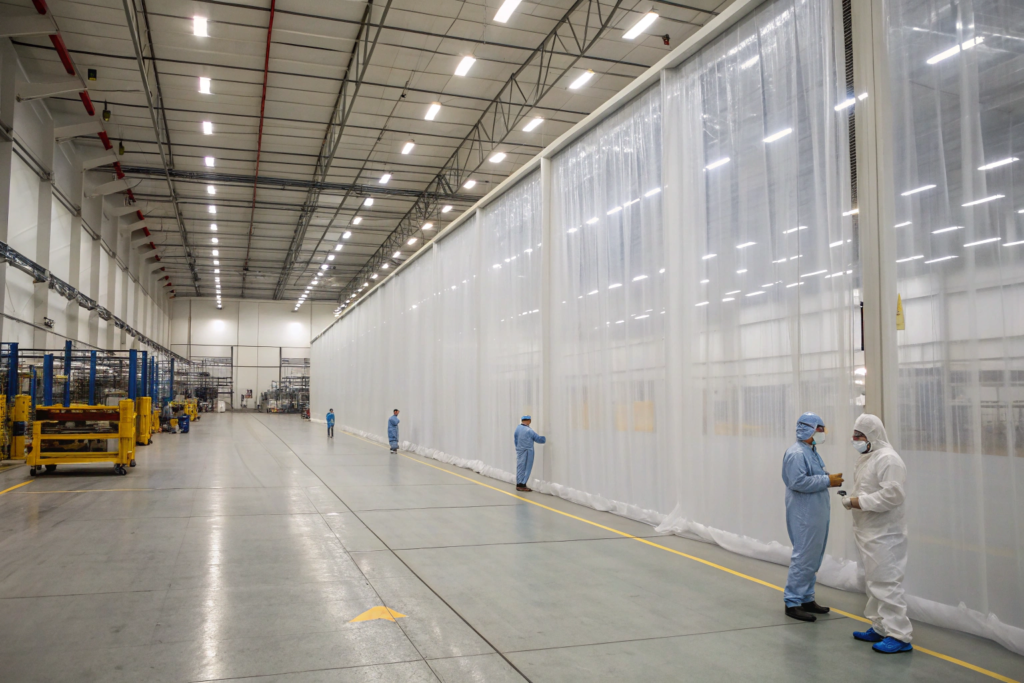
Why Are Dedicated Machines Crucial for White Fabric Orders?
White fabric is a diva. It complains about everything. A single speck of dark lint, a tiny rust flake from a metal guide, or a drop of yellow gear oil… and that roll is ruined. You can’t hide it. You can’t over-dye it (unless you planned to dye it dark anyway). This is why we maintain a Dedicated White Line within our weaving factory.
What does "dedicated" mean? It means Looms #101 through #110 are never allowed to weave colored yarn. Ever. The warp beams, the heddles, the reeds, the drop wires—all those metal parts that touch the yarn—are cleaned with isopropyl alcohol after every single beam change. We use Color-Coded Tools: White handles for white looms, blue handles for colored looms. A mechanic cannot pick up a wrench from the blue section and use it on a white loom without a deep clean. Why? Because a wrench used to tighten a bolt on a navy blue dye machine might have a microscopic flake of blue dye on it. If that flake gets on a white warp, it will smear into a 50-yard blue stain when we apply the finishing softener.
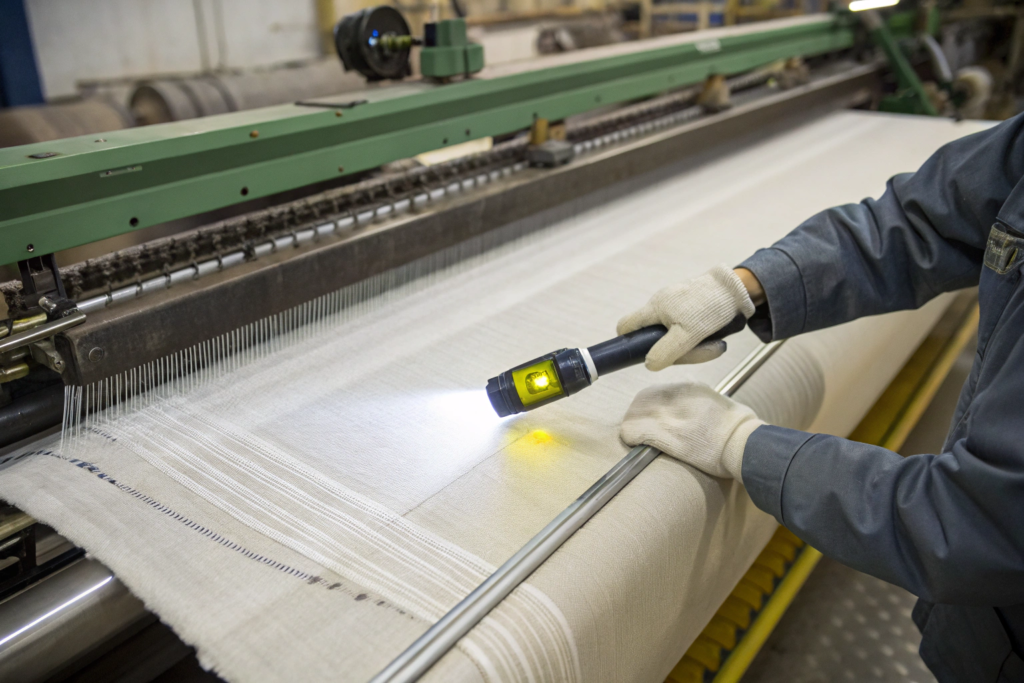
In October 2025, we ran a 20,000-yard order of Stretch Cotton Poplin for White Shirts destined for a US uniform company. The spec required Zero Foreign Fibers. We ran the entire order on our Dedicated White Line. During final inspection under Ultraviolet (UV) Blacklight (which makes polyester and oil glow like a disco ball), we found three small fluorescent spots on one roll. They were invisible to the naked eye under normal light. We cut that 5-yard section out and scrapped it. The client’s cut-and-sew factory reported 0.0% defect rate due to contamination. That’s the standard.
How Does Fumao Manage Lint and Fly Waste in Weaving Sheds?
Lint is the enemy. It’s the fine, fluffy dust that sheds from yarn as it rubs against the metal parts of the loom at 500 revolutions per minute. Lint builds up in the air, on the floor, and in the crevices of the machine. Then it clumps together into a "Lint Ball" or "Fly." When the loom stops and starts, a clump of lint can drop off the top frame right onto the weaving point and get punched into the fabric by the reed.
Managing this is a 24/7 job. We use a Three-Layer Defense System:
- Overhead Traveling Cleaners (OHTC): These are robotic blowers that ride on rails attached to the ceiling. They creep along the row of looms, blowing compressed air to dislodge lint from the top of the machines and suck it into a filter.
- Underfloor Vacuum: Our floors are raised metal grates. Lint falls through the floor into a plenum. A central vacuum system pulls it away to a collection bag. We don’t sweep lint around with a broom—that just puts it back in the air. In fact, Brooms are Banned on the production floor.
- Positive Air Pressure: The weaving room is kept at a slightly higher air pressure than the outside hallway. When you open the door, air rushes out. This prevents dirty, unfiltered air from the warehouse from rushing in and bringing dust with it.
We monitor the air quality with Laser Particle Counters. If the PM2.5 (fine particulate) level spikes, we know we have a problem with a specific yarn batch shedding too much. We stop production and fix the issue. For a deeper look at the industrial engineering side of this, you can check out resources on industrial air filtration systems for textile manufacturing environments.
What Cleaning Protocols Prevent Oil Stains on Premium Fabric?
Oil is the silent assassin. It’s clear and invisible when it first hits the yarn. Then the fabric goes through the Stenter Frame (the giant oven that dries and sets the fabric). The heat bakes the oil. It oxidizes. It turns into a permanent yellow/brown spot that looks like a grease stain on a pizza box. And it’s chemically bonded to the polyester or nylon. You cannot wash it out. You cannot scour it out. That fabric is scrap.
Where does the oil come from? The Loom Itself. High-speed rapier looms have dozens of gearboxes, cam boxes, and bearings that are lubricated with Food-Grade White Mineral Oil (we use food-grade so it’s non-toxic, but it still stains). Over time, vibration can cause a tiny mist of oil to spray from a gearbox seal or a single drip to fall from a lubrication point onto the fabric below.
At Shanghai Fumao, we use Laser Oil Detection during the rolling process. As the fabric comes off the loom and onto the take-up roll, it passes under a UV Laser Scanner. If a droplet of oil is present—even microscopic—it fluoresces. The machine stops automatically. An alarm sounds. A technician must come and find the source of the leak before we can restart. We also perform Weekly Torque Checks on all gearbox seals to catch leaks before they happen. In the dye house, we add a Scouring Agent that emulsifies any trace oils missed during weaving, but prevention is the real cure.
How Are Weaving Reeds and Heddles Kept Contaminant-Free?
This is the nitty-gritty detail that separates a world-class mill from a back-alley workshop. The Reed is the metal "comb" that beats the weft yarn into place. The Heddles are the thin wires with an eyelet that hold the warp yarns. These parts are in constant contact with the yarn. Over time, they accumulate Size (Starch), Wax, and Yarn Debris. This gunk is abrasive. It wears down the yarn. It creates dust. And sometimes it hardens into sharp edges that Cut the Yarn.
Every time a warp beam runs out (usually every 2-3 days), we don’t just tie on the new beam. We pull out the Reed and Heddles and clean them. We have a dedicated Ultrasonic Cleaning Station. The reed is submerged in a tank of hot water and detergent, and high-frequency sound waves literally shake the dirt loose from between the metal blades. It’s the same technology they use to clean surgical instruments. After ultrasonic cleaning, the reed is Air Knife Dried with compressed air to prevent rust.
For Heddles, we use a Heddle Cleaning Machine. It looks like a giant zipper. The heddles are fed through rotating brushes and air jets that scrub the eyelets clean. If an eyelet is even slightly dirty, it increases Warp Friction. Friction = Broken Ends = Loom Stops = Defects. In August 2024, we saw a spike in warp breaks on a fine 80s cotton style. We traced it to a batch of heddles that had been cleaned but not polished. We pulled the set, re-polished the eyelets, and the break rate dropped by 60%. You can read more about this in technical papers on warp preparation and weaving efficiency on Textile Today.
Do Workers’ Uniforms Really Impact Fabric Cleanliness?
Yes. Emphatically. The human body is a walking contamination generator. We shed skin flakes. We have hair. Our clothes shed fibers. If you’re wearing a fluffy wool sweater to work in a weaving mill making white satin, you are the problem.
At Shanghai Fumao, we enforce a Strict Uniform Policy in the weaving and inspection areas:
- No Pockets Above the Waist: Things fall out of pockets—pens, phones, keys. A pen falling into a running loom will cause thousands of dollars in damage and ruin 50 yards of fabric. No pens allowed on the floor. We use tie-down tools and lanyards for all small items.
- Lint-Free Smocks: Workers wear 100% polyester taffeta smocks. Why polyester? Because it doesn’t shed lint like cotton does. And the smocks are Color-Coded by Department (e.g., Blue = Weaving, Green = QC, White = Inspection). This makes it instantly obvious if someone is in the wrong area.
- Hairnets and Beard Nets: Mandatory for everyone entering the weaving shed. A single strand of human hair woven into a piece of fabric is a Class A Defect in the apparel industry. It looks disgusting to the end consumer. We provide free, comfortable hairnets and have mirrors at every entrance.
- Shoe Covers or Dedicated Shoes: You cannot walk into the inspection room wearing the shoes you wore outside in the parking lot. You either put on disposable sticky mats that pull dirt off your soles, or you change into Factory-Only Crocs. We have a Shoe Cleaning Station with rotating brushes at the entrance to the finishing department.
This might sound like overkill. But in January 2026, a major US retailer did an unannounced Social Compliance and Quality Audit. The auditor spent 20 minutes just watching our workers enter the weaving floor. He noted the hairnets, the sticky mats, the absence of personal items near the looms. We scored 100% on Housekeeping and Contamination Control. That score is why we get the orders that smaller, messier mills lose.
Why Is Batching and Segregation Vital in the Dye House?
The dye house is where the magic happens, but it’s also a swamp of potential contamination. You’ve got hundreds of kilos of fabric moving through water baths that contain dyes, salts, and acids. If you don’t control the flow of fabric and the cleanliness of the machines, you get Cross-Staining, Tailing, and Chemical Spots.
The first rule of our dye house is Never Mix Colors in the Same Machine. This is called Dedicated Machine Allocation. A dye vessel (jet dyer) that runs Black this week will not run Pale Pink next week without a Full Boil-Out Clean. We use a Caustic Soda and Hydrosulfite Reduction Clear cycle. This is a harsh chemical wash that strips any residual dye molecules off the stainless steel walls of the machine. We then test the machine by running White Bleached Cotton through it as a "sacrificial" load. If the cotton comes out perfectly white, the machine is clean. If it comes out with a hint of grey, we boil it out again.
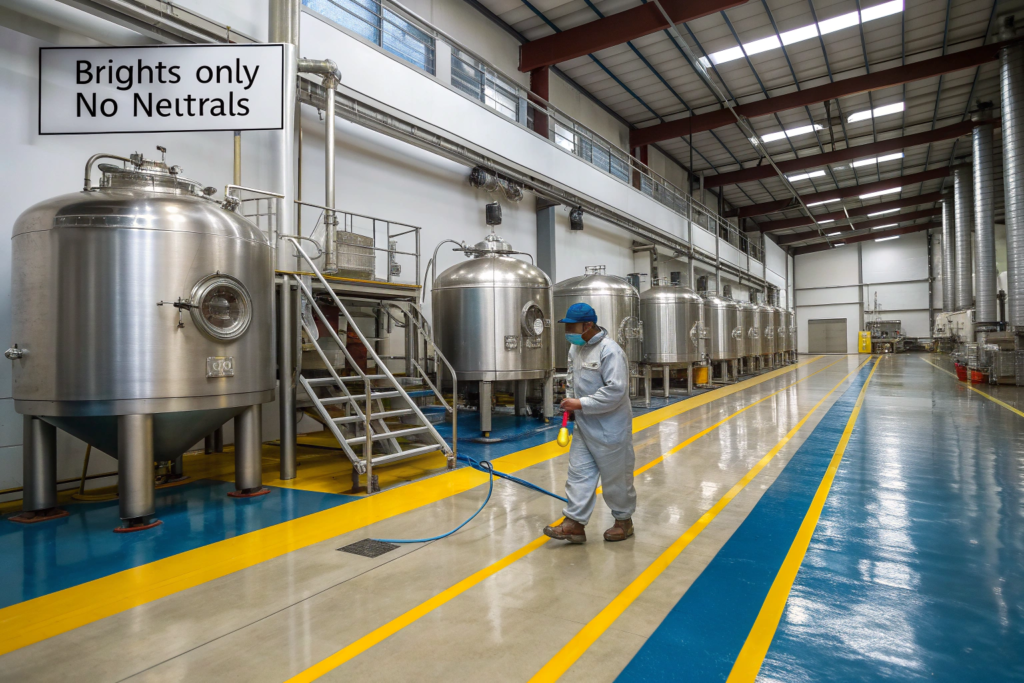
We also segregate Bright Colors from Dull Colors. Our Fluorescent Dye Range (Neon Yellow, Hot Pink) is processed in a completely separate set of machines from our Neutral Beige Dye Range. A single particle of fluorescent dye dust floating in the air can ruin a whole batch of "Natural Linen." At Shanghai Fumao, we don’t take that risk.
How Do You Clean a Dye Machine Between Light and Dark Shades?
This is a process that takes time, and time is money. Bad mills skip this step. Good mills do it religiously. Here is our Standard Operating Procedure (SOP) for a Shade Change from Dark Navy to Sky Blue:
- Drain and Rinse: Empty the machine of the dark navy dye liquor. Rinse with cold water for 5 minutes.
- Reduction Clear (The Boil-Out): Fill the machine with water. Add Caustic Soda (NaOH) and Sodium Hydrosulfite (Hydro) . Heat to 130°C and circulate under high pressure for 30 minutes. This chemically reduces the dye molecules stuck to the machine walls, turning them colorless.
- Acid Neutralization: Drain the caustic solution. Rinse. Add Acetic Acid to neutralize any remaining alkali (which would ruin the new sky blue dye).
- Scouring Run (The Sacrifice): Load a piece of Clean White Polyester into the machine. Run a blank dye cycle with just water and a scouring agent. Heat to 130°C. This white fabric acts like a sponge to pick up any last trace of contaminant.
- Visual Inspection: Examine the sacrificial white fabric under D65 Daylight. If it is Pure White, proceed. If there is a Hint of Tint, repeat Step 2.
This whole process takes 4-6 hours. A shady factory might just rinse with cold water for 20 minutes. That’s why their sky blue fabric has a dirty, dull cast to it. Our clients pay for the 4-hour clean. It’s baked into our price. And when their fabric matches the Pantone swatch perfectly, they know where the money went.
Can Dye Dust Contaminate Undyed Greige Fabric Storage?
Absolutely. Dye powder is incredibly fine. It’s like talcum powder. It gets airborne easily. If you store your beautiful, expensive greige fabric rolls next to the dye kitchen where they are mixing powders, the dye dust will settle on the rolls. It’s invisible. But when that greige goes into the steamer to set the twist, the heat and moisture will "develop" that dye dust into a Speckled Stain.
Our dye kitchen is a Negative Pressure Room. Air is sucked out of the room through powerful filters, not blown into the warehouse. The workers mixing dyes wear full Powered Air Purifying Respirators (PAPRs) . And our Greige Warehouse is located on the opposite end of the campus from the dye house. We don’t even transport greige on the same forklifts as dyed fabric. We have a fleet of White Forklifts for greige and Blue Forklifts for dyed fabric.
In a crisis situation in 2024, a neighboring factory had a dye dust explosion (yes, that happens). The cloud of blue dust drifted over the fence. We immediately put our greige warehouse under Plastic Wrap Quarantine and HEPA-vacuumed every single roll before it was allowed into production. It cost us \$5,000 in labor, but it saved \$200,000 worth of greige goods from being ruined. You can read about the dangers of this in the OSHA guidelines for combustible dust in textile industries.
How Does Fumao Packaging Protect Fabric from Post-Production Dirt?
You’ve made it. The fabric is woven. It’s dyed. It’s inspected. It’s perfect. Then you roll it on a cheap cardboard tube, throw it in a dusty corner, and a rat chews on the end. I’ve seen it happen. The journey from our dock to your cutting table is long and brutal. Containers get hot. They sweat. Forklifts puncture things. Post-Production Contamination is the final boss.
Our packaging protocol is designed for Export Durability. Every roll is first wrapped in a Clear Polyethylene (PE) Sleeve. This is a continuous tube of plastic that is heat-sealed on both ends. It’s waterproof and transparent. Then, we place the roll into a Heavy-Duty Woven Polypropylene Bag. This outer bag is tough. It resists tearing from forklift tines. Finally, we use Plastic End Plugs to protect the roll edges from getting crushed and dirty. For premium white fabrics, we add a layer of Tissue Paper inside the plastic sleeve to prevent the plastic from abrading the fabric surface during vibration in transit. (Here I have to jump in—we learned this the hard way after a shipment of black velvet arrived with "plastic burn" marks where the sleeve rubbed against the fabric for 30 days on a boat. We changed the spec immediately.)
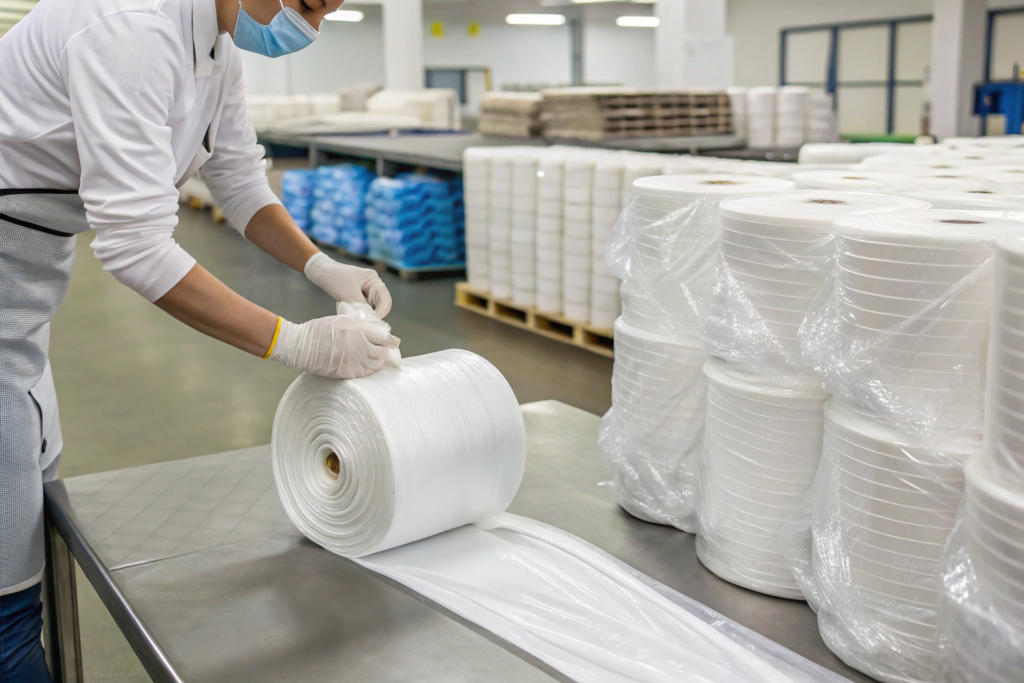
What Are the Best Materials for Shipping Fabric Rolls Overseas?
Let’s talk specifics. This is what we use at Shanghai Fumao, and we have a 99.8% Damage-Free Delivery Rate to the US and Europe.
| Packaging Component | Material Specification | Purpose / Contamination Prevention |
|---|---|---|
| Inner Core | Spiral Kraft Paper Tube (10mm wall thickness) | Provides rigid support. Must be clean and dry. We reject cores with mold or rust. |
| Inner Wrap | Acid-Free Tissue Paper (White/Black fabrics only) | Prevents Plastic Burn (friction heat melting). Protects against Micro-Abrasions. |
| Primary Barrier | 2.5 Mil Polyethylene Sleeve (UV Stabilized) | Waterproofing. Prevents condensation sweat inside container from wetting fabric. |
| Outer Bag | 200 GSM Woven Polypropylene Sack (Laminated) | Abrasion Resistance. Protects against forklift rubs and handling damage. |
| Labeling | Synthetic Weatherproof Label with QR Code | Traceability. Inkjet labels smear in humidity. Our labels stay readable after 6 weeks at sea. |
| Pallet Wrap | Black Opaque Stretch Film | Theft Deterrent. You can’t see what’s inside. Also UV Protection for the outer bags. |
We use Desiccants (Silica Gel Packs) inside every sealed plastic sleeve. One 10g pack per roll. This absorbs the moisture that naturally evaporates from the fabric and condenses inside the bag during temperature swings (the "Greenhouse Effect"). Without desiccants, you get Mildew. Mildew smells like a basement and ruins fabric. You can learn more about this from the Container Handbook guide on preventing cargo condensation damage.
How Does the Inspection Environment Affect Final Cleanliness?
You can have the cleanest production line in the world, but if the Final Inspection is done in a dirty room with open windows, you just ruined all that work. The fabric is in its final form—rolled, open width, static-prone—as it passes over the inspection table. It’s a magnet for airborne dirt.
Our Inspection Factory is a Positive Pressure Cleanroom (Class 100,000). The air is filtered through HEPA Filters on the ceiling. The floor is sealed epoxy (no concrete dust). The lighting is Overhead D65 Daylight and Side-Lit Angle Lighting to reveal surface defects. And this is critical: The Inspection Table is Covered with Anti-Static Mats. When fabric moves fast over a metal table, it generates Static Electricity. Static attracts lint and dust from the air like a magnet. The anti-static mat grounds the charge.
Every inspector at Shanghai Fumao wears White Cotton Gloves. Not just to protect the fabric from hand oils, but to see contamination. If the glove gets dirty, the fabric is dirty. We change gloves every 2 hours. Each inspector also has a Lint Roller (like the kind you use on a suit) to clean their own smock and the table surface before a new roll is loaded. It’s obsessive. It’s necessary.
Conclusion
Zero Contamination is a myth if you think it means "nothing ever goes wrong." In a factory with moving parts and human beings, something will go wrong. The question is: Do you have the Systems, Protocols, and Culture to catch it before it ships? That’s the real difference.
At Shanghai Fumao, we’ve invested millions in physical segregation, HEPA filtration, ultrasonic cleaning, and cleanroom inspection protocols. But the real investment is in the mindset. It’s the worker who stops the loom to pick up a piece of lint off the floor. It’s the dye master who spends 4 hours boiling out a machine just to be safe. It’s the packer who adds an extra piece of tape to keep the dust out. Contamination control is a thousand small decisions made correctly, every single day.
We do this because we know that one black speck in a white wedding dress fabric isn’t just a fabric defect. It’s a ruined bride’s day. It’s a chargeback. It’s a lost customer. We don’t just sell fabric. We sell Reliability. We sell the confidence that when you open that roll in your cutting room in Los Angeles or London, it’s going to be exactly what you paid for—clean, pure, and ready to become something beautiful.
If you’re tired of dealing with fabric that arrives with "mystery stains" or "fly waste," let’s talk. Our Zero Contamination Protocol is available for every order, from 500 yards to 50,000 yards. We can provide you with our Full Quality Assurance Manual and show you the data from our particle counters. Reach out to our Business Director, Elaine, to schedule a virtual tour of our cleanroom inspection facility. Her email is elaine@fumaoclothing.com. Let’s make sure your next project starts with a clean slate.