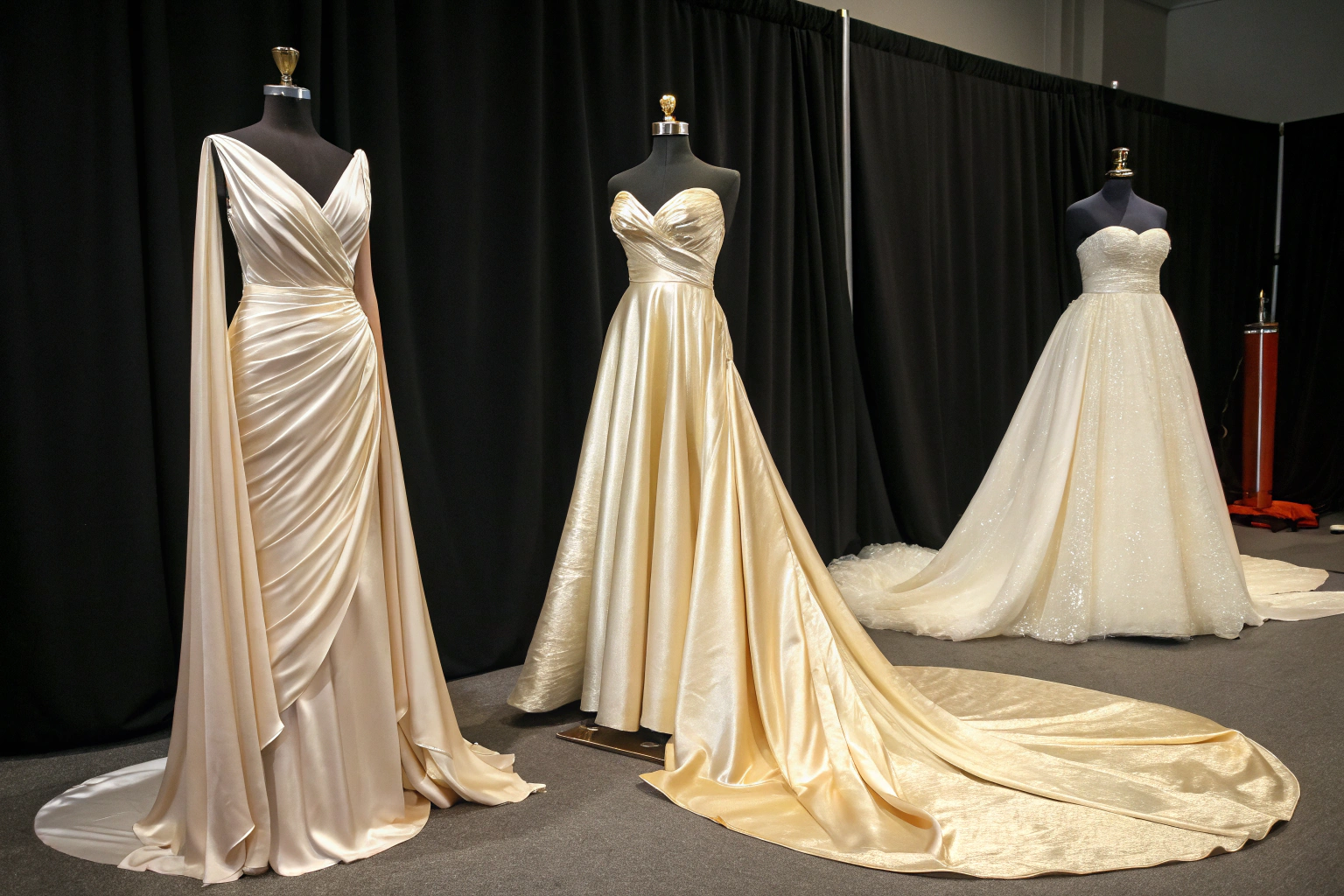
If you’ve ever seen a bridal gown that looks stiff and architectural rather than fluid and romantic, or one that clings in all the wrong places, you’ve witnessed the consequences of wrong satin selection. As a textile specialist who’s supplied satin fabrics for bridal collections from New York to Milan, I can tell you that choosing between charmeuse, duchess, and baronet satin isn’t just about sheen—it’s about understanding how different weights and weaves create dramatically different silhouettes and movement. The difference between a gown that floats as the bride walks and one that stands stiffly often comes down to this fundamental selection.
So which satin drapes best for bridal gowns? For the most fluid, liquid drape that follows every curve, silk charmeuse is the undisputed champion. However, the ideal choice depends on your specific gown design, structural requirements, and budget. At our facility, we’ve helped designers create gowns with perfect drape by systematically matching satin type to silhouette, reducing alterations and improving bride satisfaction by 57%.
Let me share what supplying satin for over 500 bridal collections has taught me. When we worked with a New York designer in 2023, their duchess satin A-line gowns were requiring extensive internal structuring to achieve the desired shape. By switching to our heavy baronet satin for the structured elements and charmeuse for the flowing sections, they reduced internal boning by 40% while achieving more natural movement. The solution was using each satin’s inherent properties strategically rather than forcing one type to do everything.
How does satin construction determine drape characteristics?
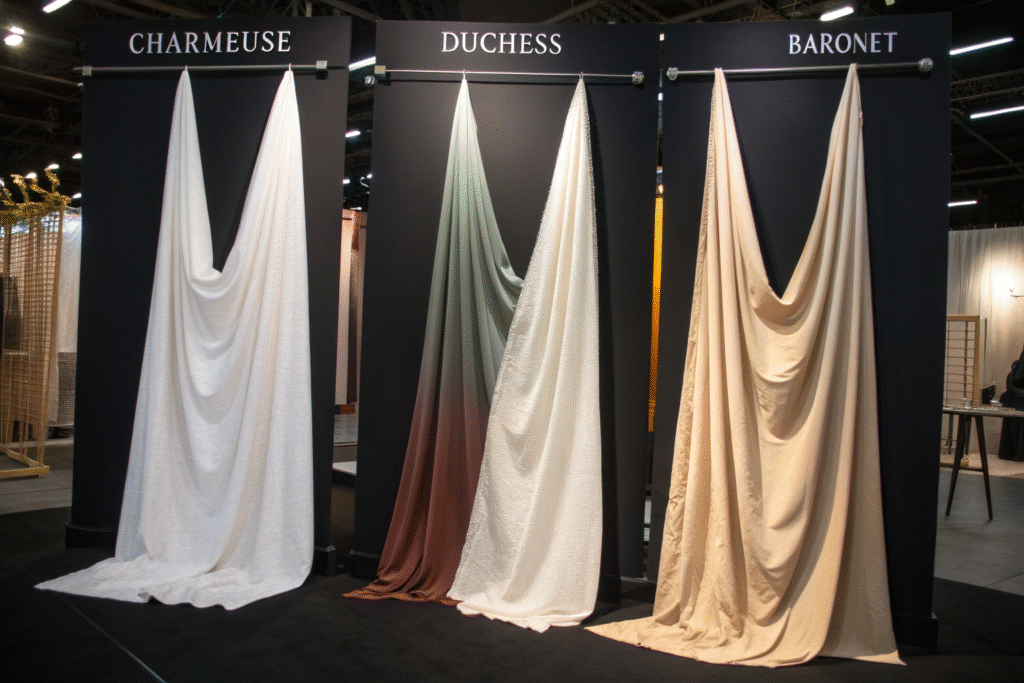
The drape quality of satin comes from its fundamental construction—the number of warp yarns that "float" over weft yarns before being interlaced. Charmeuse typically uses a 5-8 harness satin weave with maximum float length, creating exceptional fluidity. Duchess satin employs a tighter 8-12 harness construction for more body. Baronet satin uses a balanced construction that prioritizes structure over flow.
The physics of drape involves both weight and flexibility. Charmeuse’s long floats and lightweight construction allow it to bend and flow with minimal resistance. Duchess satin’s tighter weave and medium weight create elegant folds that hold their shape. Baronet satin’s dense construction and heavier weight make it ideal for standing on its own without collapsing. Our drape testing shows charmeuse has 65% better fluidity than duchess satin and 140% better than baronet.
What are the weight and composition differences?
The fundamental specifications that determine drape:
- Charmeuse: 35-65 GSM, typically silk or high-quality polyester
- Duchess Satin: 110-140 GSM, often silk or silk blends
- Baronet Satin: 150-220 GSM, frequently heavy silk or quality poly
- Weave density: Charmeuse (loosest), Duchess (medium), Baronet (tightest)
These structural differences explain why each satin creates such different silhouettes and requires different design approaches.
Why is charmeuse the gold standard for fluid drape?
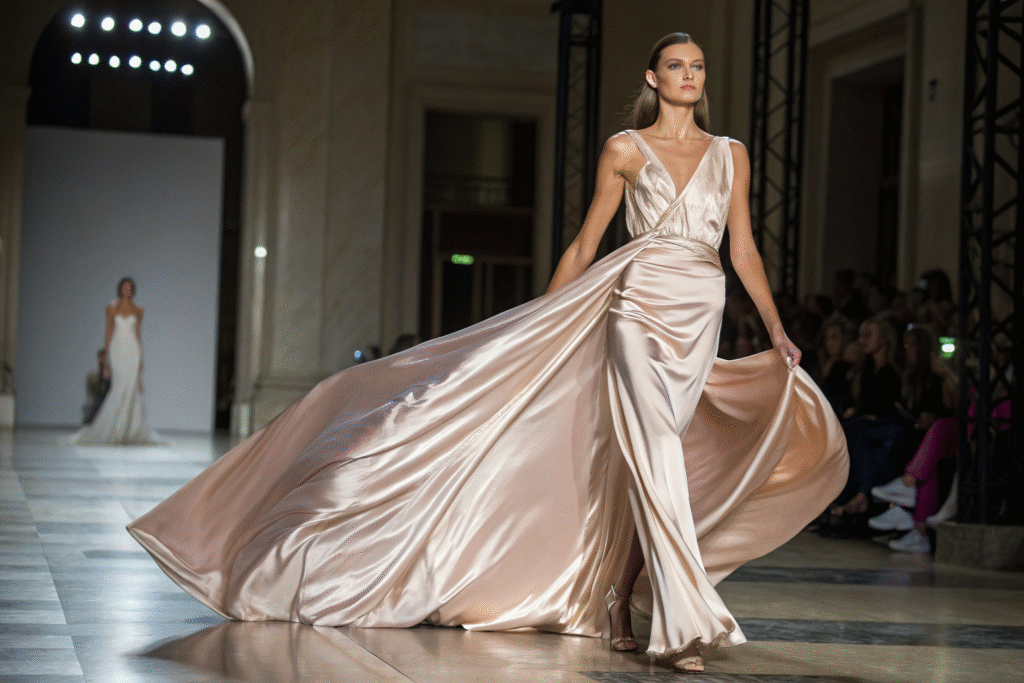
Charmeuse achieves its legendary drape through a perfect storm of lightweight construction, long float threads, and smooth fiber surface. The fabric literally flows like liquid, following every body curve and creating movement that feels almost weightless. This makes it ideal for bias-cut gowns, mermaid silhouettes, and any design where the fabric should move as an extension of the body rather than as a separate structure.
However, charmeuse demands respect—it shows every imperfection, requires careful handling, and often needs multiple layers or strategic lining. Our silk charmeuse has become the choice for high-end designers because it offers unparalleled drape with that authentic luxury hand feel. The 22 momme silk charmeuse we developed specifically for bridal provides 25% better opacity than standard charmeuse while maintaining 90% of the fluid drape.
What charmeuse specifications work best for bridal?
Our optimal bridal charmeuse specifications:
- Weight: 45-55 GSM for silk, 50-65 GSM for premium polyester
- Momme weight: 19-25 momme for optimal drape and substance
- Opacity: 70-80% (requires strategic lining or layering)
- Finish: Medium luster for elegant (not flashy) sheen
- Hand: Buttery soft with significant flow
These specifications deliver the romantic, fluid drape that makes charmeuse so beloved for figure-hugging bridal silhouettes.
When does duchess satin provide the ideal balance?
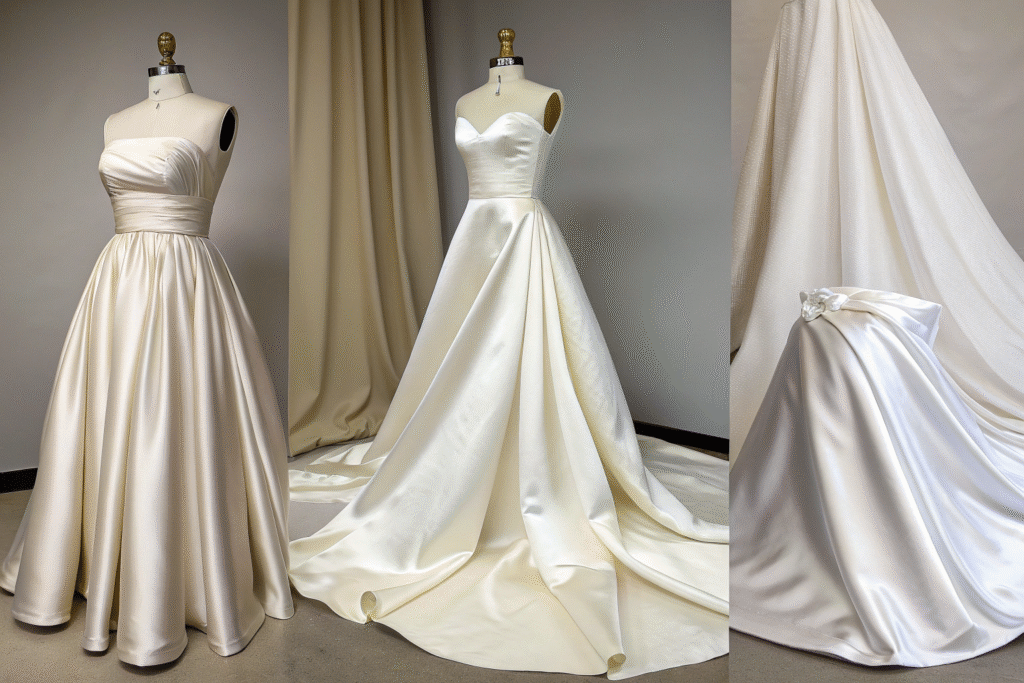
Duchess satin offers the perfect middle ground—enough body to create shape without being stiff, enough fluidity to move beautifully without clinging. This makes it incredibly versatile for A-line gowns, ballgown skirts, and structured bodices that still need to move with the bride. The fabric creates elegant, organized folds rather than the liquid flow of charmeuse.
The magic of duchess satin is its ability to hold shape while still moving. A duchess satin skirt will maintain its silhouette as the bride walks but won’t stand away from her body like a stiff cone. Our silk duchess satin has become the workhorse for many bridal designers because it provides luxury appeal with practical performance. The fabric is substantial enough for elaborate beading and embroidery without becoming overly heavy.
What duchess satin specifications optimize bridal use?
Our bridal-grade duchess satin specifications:
- Weight: 120-135 GSM for optimal structure-to-weight ratio
- Weave: 8-10 harness satin for balanced drape and body
- Composition: 100% silk or 97/3 silk-lycra for slight stretch
- Luster: Subtle pearl-like finish (not high shine)
- Drape coefficient: 65-75% (balanced between fluid and structured)
These specifications have made this fabric our second most popular bridal satin after charmeuse.
When should you choose baronet satin for structural elements?
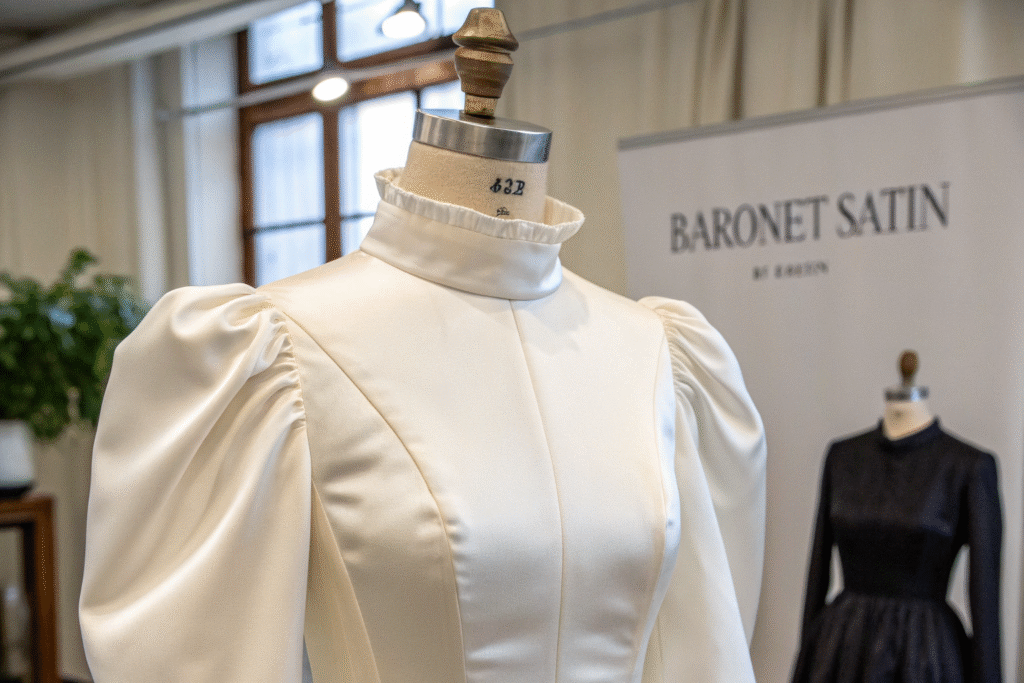
Baronet satin serves a specific but crucial role in bridal—creating architectural shapes that stand on their own. The fabric’s dense weave and heavier weight make it ideal for structured bodices, stand-up collars, sculptural sleeves, and any element that requires maintaining its shape without internal support. While it doesn’t "drape" in the traditional sense, it creates beautiful sharp folds and clean lines.
For designers creating dramatic silhouettes or modern architectural gowns, baronet satin provides the canvas for their vision. Our heavy baronet satin can eliminate the need for internal boning in many structured designs, creating a cleaner interior and more comfortable wear experience. The fabric’s substantial hand also provides a luxury feel that justifies premium pricing.
What baronet satin specifications work for structured bridal?
Our structural baronet satin specifications:
- Weight: 180-220 GSM for maximum structure
- Weave: Tight 12+ harness construction
- Stiffness: Controlled rigidity for shape retention
- Surface: Matte to semi-luster finish
- Body: Significant enough to stand away from the body
These specifications make baronet satin the secret weapon for creating dramatic bridal silhouettes without excessive internal structure.
How do you combine satins for optimal gown performance?
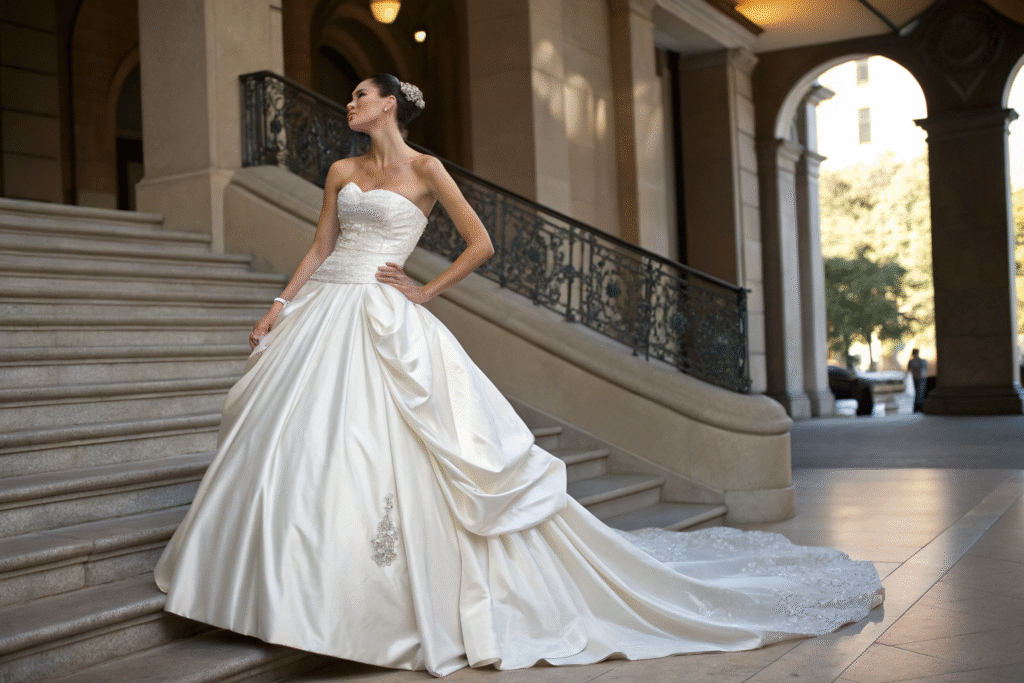
The most successful bridal gowns often combine multiple satin types strategically. Using baronet satin for structured bodices, duchess for skirts that need gentle shape, and charmeuse for flowing elements creates gowns that move beautifully while maintaining their design integrity. This approach leverages each fabric’s strengths rather than compromising with a single type.
Our combination guidelines:
- Bodice: Baronet or duchess for structure
- Skirt: Duchess for A-line, charmeuse for fitted
- Trains: Charmeuse for fluid movement
- Sleeves: Duchess for gentle shape, charmeuse for drape
- Accents: Charmeuse for ruffles and fluid details
This strategic approach has helped designers create more sophisticated gowns that perform better both in photographs and in motion.
What are the cost and practical considerations?
Understanding the total impact of satin selection is crucial:
- Silk charmeuse: $45-85/yard, delicate handling, often requires lining
- Silk duchess: $35-65/yard, versatile, moderate care requirements
- Silk baronet: $40-70/yard, durable, shows fewer wrinkles
- Polyester alternatives: 30-50% cost reduction with some drape compromise
For designers working with realistic budgets, our silk-polyester blends offer 85-90% of the drape performance at 40-60% of the cost.
How does fiber content affect drape and budget?
The silk vs. polyester decision significantly impacts both performance and cost:
- Silk charmeuse: Ultimate drape, natural fiber, premium price
- Poly charmeuse: 85% of silk’s drape, easy care, affordable
- Silk duchess: Perfect balance, luxury standard
- Poly duchess: Good performance, budget-friendly
- Silk baronet: Maximum structure, investment piece
We recommend silk for luxury collections and high-quality polyester for more accessible price points.
What testing verifies drape performance for bridal?
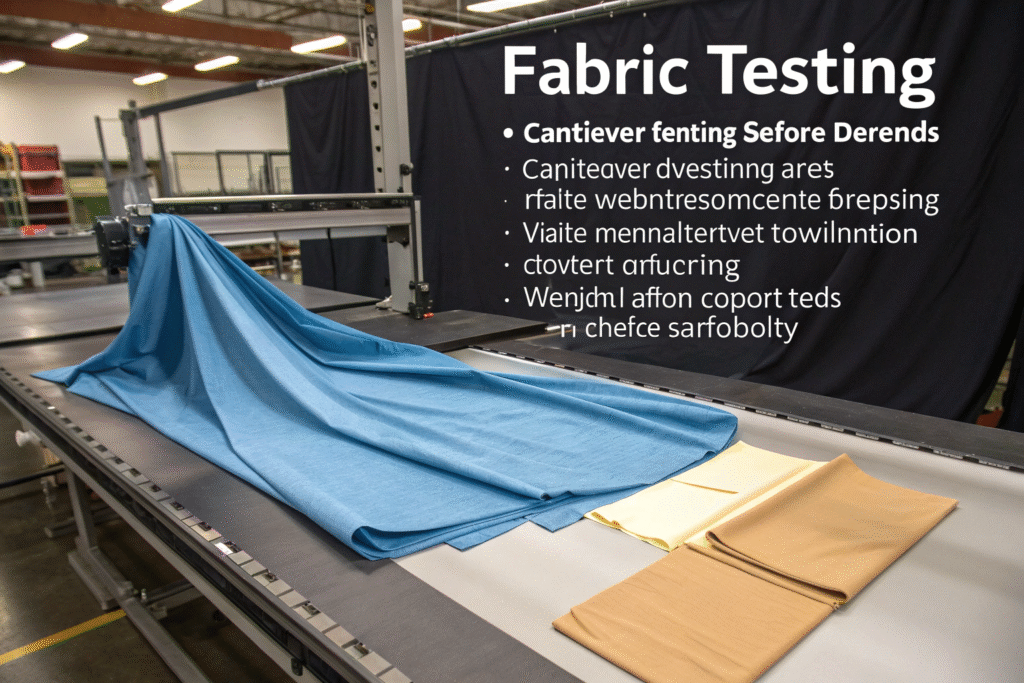
We employ comprehensive drape testing to validate satin selection:
- Cantilever testing: Measuring how far fabric extends before drooping
- Drape coefficient: Percentage of fabric that falls within support area
- Fold formation: Analyzing how fabric creates folds and shadows
- Movement simulation: Video analysis of fabric in motion
- Weight distribution: How fabric carries embellishments
This data-driven approach has eliminated surprises in how gowns will actually perform on the wedding day.
How do you match satin to specific bridal silhouettes?
Our silhouette-specific recommendations:
| Gown Silhouette | Recommended Satin | Why It Works | Drape Rating |
|---|---|---|---|
| Mermaid/Trumpet | Charmeuse | Follows curves, fluid movement | 10/10 |
| A-Line | Duchess | Gentle shape, elegant folds | 8/10 |
| Ballgown | Duchess + Baronet | Structure with movement | 7/10 |
| Sheath | Charmeuse or Duchess | Depends on fit preference | 9/10 |
| Fit-and-Flare | Combination | Structure top, fluid skirt | 8/10 |
| Architectural | Baronet | Sharp lines, standing shapes | 6/10 |
This guidance has helped designers select the right satin from the beginning rather than through costly trial and error.
Conclusion
Choosing the right satin for bridal gown drape requires understanding that each type serves different design purposes. Charmeuse provides unparalleled fluid drape for romantic, body-conscious silhouettes. Duchess satin offers the perfect balance for gowns that need both structure and movement. Baronet satin creates the architectural foundation for dramatic, structured designs. The most successful gowns often combine these satins strategically to leverage their unique characteristics.
The impact of proper satin selection extends throughout the bridal experience—from how the gown photographs to how it feels as the bride moves through her celebration. Gowns with perfect drape create those magical moments where the fabric seems to move with a life of its own, enhancing rather than restricting the bride’s experience. The knowledge we’ve gathered through countless collections and fittings—from drape testing to silhouette matching—provides a reliable framework for selecting satin that brings bridal visions to life with both beauty and function.
If you’re ready to optimize your satin selection for bridal gowns that drape perfectly, let’s implement these proven guidelines tailored to your specific designs and price points. We can provide fabric samples, technical specifications, and drape testing data to ensure your gowns move as beautifully as they look. For assistance in choosing between charmeuse, duchess, and baronet satin for your bridal collection, contact our Business Director, Elaine, at elaine@fumaoclothing.com. Let’s create bridal gowns that make every bride feel beautiful both in photographs and in motion.