Ron, if you’re sourcing fabrics from China right now, you might be feeling the pinch. Your container is delayed, the factory is “too busy,” and your entire production schedule is slipping. You’re worried about missing your sales window. The root cause often isn’t your supplier’s capability, but a fundamental mismatch with China’s industrial rhythm. The chaotic dance of peak seasons, national holidays, and production lulls can wreck even the best-laid plans. But what if you could turn this calendar from a liability into your greatest strategic advantage?
Mastering China’s manufacturing calendar is the non-negotiable key to reliable lead times. It’s about proactive planning, not reactive firefighting. The year is defined by two intense production peaks (March-May and August-October), two major holiday shutdowns (Chinese New Year and Golden Week), and two relative slowdowns (June-July, November-December). Success comes from scheduling your order cycles to leverage these periods, not fight them. For instance, completing pre-production 6 weeks before Chinese New Year allows production to kick off the moment factories reopen, securing your place in the queue and ensuring timely summer collection delivery. This strategic alignment is what separates brands that thrive from those that constantly struggle with delays.
This isn’t just theory. For over 20 years at Shanghai Fumao, nestled in the world’s textile hub of Keqiao, we’ve lived this cycle. We’ve helped hundreds of global clients navigate these ebbs and flows to achieve consistent, on-time delivery. Let’s break down the annual calendar into a practical, actionable strategy. We’ll explore each season’s unique challenges and opportunities, and show you how to build a sourcing plan that’s resilient, efficient, and keeps your collections landing right on schedule.
Why Do Chinese New Year & Golden Week Shutdowns Require 6-Week Pre-Production?
If you’ve ever had a production run vaporize because a factory closed for the holidays, you know the pain. These aren’t just “days off”; they are massive, nationwide logistical resets. The entire supply chain—from yarn spinners to dye houses to truckers—grinds to a halt. Attempting to rush an order right before these breaks is a recipe for disaster, leading to quality shortcuts and guaranteed delays. The solution isn’t to work faster before the break; it’s to finish critical pre-production stages well in advance.
The proven strategy is to complete all pre-production—finalized lab dips, approved strike-offs, confirmed fabric testing, and signed tech packs—a full 6 weeks before the holiday shutdown begins. This gives your factory a clear, actionable package to start bulk production immediately upon reopening. Think of it as giving them a loaded gun to fire on day one, instead of asking them to assemble the bullet first. This head start is critical because the first two weeks after reopening are pure chaos as factories work through backlogs and re-staff lines. Your order needs to be at the front of that queue.
What Exactly Needs to Be “Done” 6 Weeks Before the Holiday?
Pre-production isn’t just a “sample approval.” It’s a locked-down, multi-stage process. First, you must have your fabric quality testing for international compliance completed and passed. This includes colorfastness, shrinkage, and composition checks against standards like AATCC or ISO. Second, all lab dips and strike-offs must be physically approved and signed off, not just “looked okay on screen.” Third, and most importantly, your technical package must be 100% finalized. Any change after this point resets the clock. A European client in 2023 learned this the hard way; they requested a minor stitch change on a jersey order two weeks before CNY. The result? Their production slot was lost, delaying their entire Spring line by 5 weeks. At Shanghai Fumao, our CNAS lab handles this testing in-house, and we provide a detailed pre-production checklist to ensure nothing is missed, turning a chaotic period into a structured advantage. You can learn more about building a fail-safe tech pack from resources like The Techpacker’s comprehensive guide to avoiding pre-production mistakes.
How Do Factory Reopening Realities Impact Your Timeline?
The week after a major holiday is not a normal work week. Worker return rates can be as low as 70%, leading to understaffed production lines. Raw material suppliers are also restarting, causing bottlenecks. This is why your 6-week pre-production buffer is crucial. It allows the factory to order all greige fabric and dyestuffs before the holiday, so materials are on the floor ready for cutting on Day 1. Without this, your order joins a 2-3 week waiting list just for materials. Furthermore, communication is slow as management catches up. Having all decisions made upfront eliminates back-and-forth emails during this turbulent time. A practical tip is to schedule a virtual “pre-start” meeting with your supplier the day after they reopen. At Shanghai Fumao, we proactively schedule these with our clients to confirm the production roll-out plan, ensuring everyone is aligned from minute one. For insights into managing post-holiday supply chain volatility, industry forums like Fashion Incubator’s discussions on post-CNY production resets offer valuable peer perspectives.
How Can You Leverage June-July & Nov-Dec Slower Periods?
Many buyers see the summer and year-end lulls as dead time. Smart buyers see them as a golden opportunity to gain timeline advantages, negotiate better terms, and secure factory focus. During peak seasons, factories are juggling 10-15 clients; during these slower periods, you might be one of only 3-4 major projects. This means more attention from senior production managers, more flexibility for small adjustments, and often, a greater willingness to accommodate value-added services like specialized finishing or smaller MOQs.
The key is to plan your development and production for these windows intentionally. Schedule your bulk production for November-December to ship in January, avoiding the pre-CNY rush. Or, use June-July to produce your early Fall capsules. The factory capacity is there, and the pressure is off. This is the perfect time to work on more complex, innovative fabrics that require extra R&D attention. (Here’s a tip from our floor: this is when we get our best results on new functional fabric blends because the technicians aren’t rushed).
What Specific Advantages Do Slow Periods Offer for Complex Orders?
Slower periods translate directly to more engineering time. For example, developing a moisture-wicking fabric with odor control requires multiple trials to balance chemical application with hand feel. During peak season, a factory might do one trial and push it to production. In July, they can run 3-4 iterations to perfect it. In late 2022, a US-based athleisure start-up partnered with us to develop a recycled polyester with biostatic coating. By scheduling the R&D and initial bulk run for November, we achieved a 98% pass rate on their performance tests, something that would have been a 50/50 gamble during the September peak. The table below contrasts the outcomes:
| Activity | Peak Season (Sept) Outcome | Slow Period (Nov) Outcome |
|---|---|---|
| R&D Iterations | Rushed, 1-2 attempts max | Thorough, 3-4 controlled attempts |
| QC Attention | General inspection, focus on speed | Detailed inspection, spot-checking for consistency |
| Lead Time | Fixed, often extended due to queue | Negotiable, often can be accelerated |
| Communication | Slow, fragmented responses | Fast, direct access to decision-makers |
How Does This Affect Pricing and Minimum Order Quantities (MOQs)?
This is where you can find real value. A factory’s primary goal in slow periods is to keep lines running and workers employed. This gives you leverage. While base fabric costs may not drop drastically, you can often negotiate better terms on peripheral costs. We’ve seen clients successfully reduce charges for custom color matching, waive fees for additional lab dips, or secure a 20-30% reduction in MOQs for stock fabrics. The factory would rather run a 2,000-meter order of a specialty fabric at a slight discount than have the loom sit idle. It’s a classic win-win. To understand the nuances of MOQ negotiation, resources like Sourcing Journal’s analysis of fabric MOQ flexibility provide excellent context for these discussions.
What Are the Hidden Challenges of March-May & August-October Peak Times?
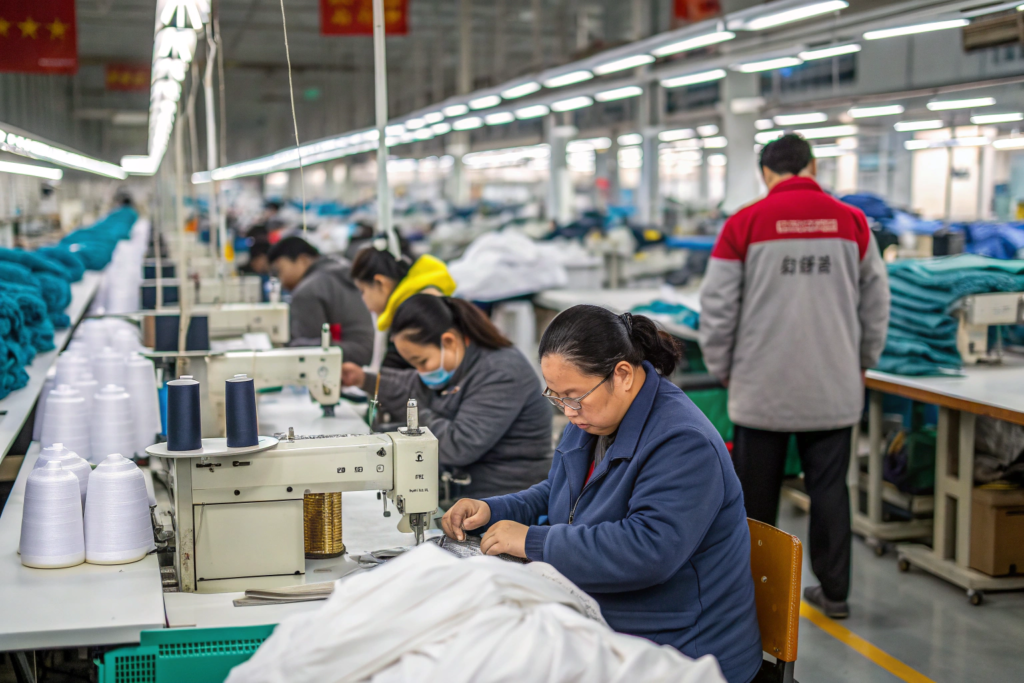
Peak seasons are a double-edged sword. Yes, every factory is operating at full throttle, but that’s precisely the problem. The entire ecosystem is overloaded. It’s not just your fabric mill that’s busy; it’s the dye house, the printing facility, the coating plant, and the trucking company. A bottleneck at any one point adds 1-2 weeks to your timeline as standard. The hidden challenge isn’t finding a willing factory; it’s navigating a congested, stressed supply chain where your order is just one in a massive pile.
The most common mistake is assuming a 30-day lead time quoted in April is firm. In reality, you must build in a 15-20% buffer. Communication also suffers. Your usual contact is managing crises on three other production lines, so responses are slow. Quality control can become perfunctory as the focus shifts to hitting output targets. To succeed during peaks, you need a supplier with deeply integrated control over its sub-processes or one that plans its capacity with military precision.
How Do Supply Chain Bottlenecks Multiply During Peak Season?
The domino effect is real. Let’s say you’re producing a printed jacquard. The weaving might be done in-house, but the dyeing and printing are outsourced to partner facilities. In peak season, the dye house has a queue. Your fabric waits 5 extra days for dyeing. Then it waits another 7 days for a slot at the printing factory. The coating for a light water-resistant finish adds another 4-day delay. Suddenly, your internal processing time has doubled from 16 days to 32 days, before shipping even enters the picture. This is why Shanghai Fumao’s model of controlling weaving and having solidified partnerships with dyeing and printing units is critical. We book capacity slots at these partner facilities in advance based on our production forecast, shielding our clients from the worst of the queue. For brands looking to map their own supply chain risks, Supply Chain Dive’s reports on textile industry bottlenecks offer a macro-view of these pressures.
Why Is Quality Control Especially Critical During High-Volume Periods?
When the pressure is on, quality is the first thing that can slip if not vigilantly guarded. Fatigue sets in for QC inspectors, and the temptation to let “minor” defects pass increases. Your defense is a clear, unambiguous quality standard (backed by an AQL level like 2.5 for major defects) and a supplier with a dedicated, incentivized QC team. In our operation, the QC team’s bonus is tied to client pass rates, not factory output speed. This aligns their goals with yours. For instance, during the August 2023 peak, a large order for sustainable bamboo silk for luxury sleepwear required perfect selvedge alignment. Our QC team performed 100% inspection on the first 500 meters to set the standard, then spot-checked every 200 meters thereafter, catching and correcting a loom tension issue early. This proactive approach saved the 10,000-meter order from a 15% rejection rate. Understanding how to implement effective AQL inspection in fashion production is essential knowledge for any serious buyer.
How to Build a Proactive Sourcing Plan Around This Calendar?
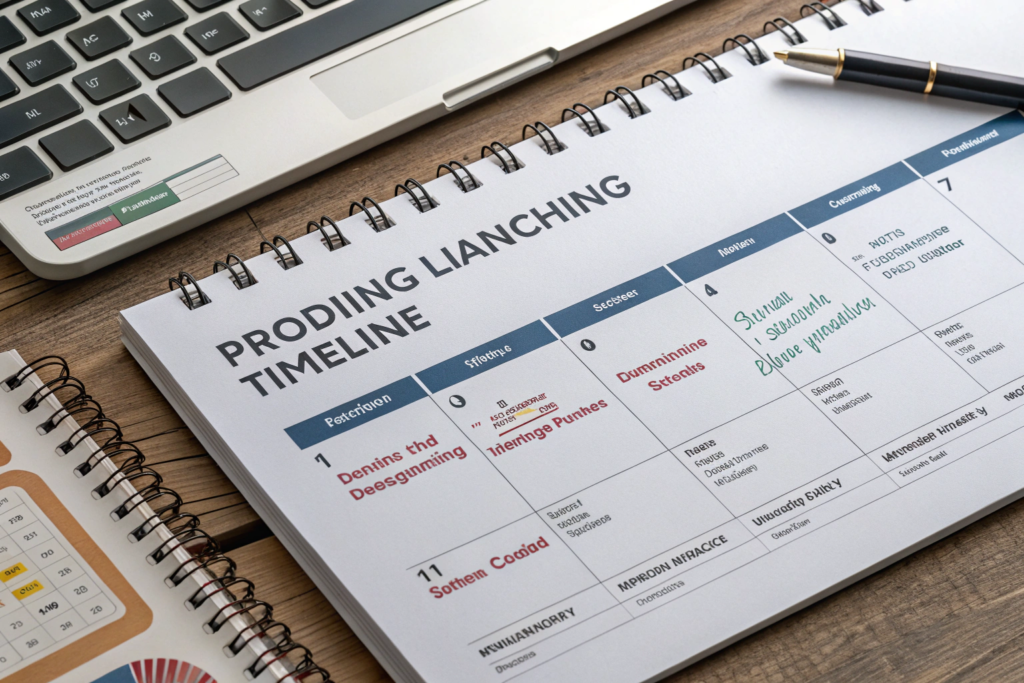
Knowledge is useless without a plan. A proactive sourcing plan isn’t a single order timeline; it’s an annual rhythm that syncs your design, development, and production cycles with China’s manufacturing heartbeat. It turns you from a passive customer into a strategic partner your supplier can rely on—and prioritize. This plan should be visualized on a 12-month calendar, blocking out not just your delivery dates, but the key milestone dates for your supplier.
Start by working backward from your in-store or online launch date. Factor in shipping (45-60 days for ocean freight to the US West Coast), production (adding a 2-week peak-season buffer), and then lock in your pre-production deadlines relative to the holidays. The goal is to have your bulk production falling during slower periods or the beginning of peak periods, not at the chaotic tail end.
What Should a 12-Month Sourcing Timeline Look Like?
Here’s a simplified framework for a brand targeting a Spring/Summer collection launch in March:
- April-May (Year Prior): Trend analysis, initial fabric sourcing and sampling. This is during a slow period—perfect for innovation.
- June-July: Finalize fabric selections, begin lab dips and strike-offs for core styles. Contact Shanghai Fumao early in this phase to leverage our 48-hour sample service.
- August-September: Complete all pre-production approvals. Place bulk fabric orders to hit production in early October.
- Early October-November: Bulk fabric production and garment manufacturing. You’re at the front of the post-Golden Week queue.
- December: Final QC, packaging, and booking of ocean freight.
- January: Goods ship. Avoids CNY port congestion.
- February: Goods in transit.
- March: Goods arrive at distribution center, launch.
This plan uses the June-July lull for development, avoids the CNY shutdown entirely for production, and leverages post-Golden Week factory capacity.
What Tools and Communication Protocols Ensure Plan Adherence?
A plan on a spreadsheet is fragile. You need shared digital tools and clear protocols. Use a cloud-based project management tool (like Trello or Asana) with shared boards where milestones are tracked. Agree on weekly update cadences—perhaps every Monday morning China time. More importantly, establish a single point of contact (like a Project Manager) at your supplier who owns the timeline. At Shanghai Fumao, each client is assigned a dedicated account manager who acts as their quarterback, coordinating internally across our weaving, dyeing, and QC teams. They provide real-time updates through our system, which can even track the real-time container location for international shipping, giving you peace of mind. This transparency turns a black-box process into a collaborative workflow.
Conclusion
Mastering China’s manufacturing calendar is not about working harder; it’s about working smarter. It’s the strategic shift from being a victim of delays to becoming the architect of your own reliable supply chain. By respecting the profound impact of holiday resets, capitalizing on the hidden opportunities in slower periods, building buffers for peak season realities, and translating all this into a disciplined, proactive plan, you transform timing from your biggest anxiety into your most competitive edge. You gain predictability, improve quality, and build a stronger, more trustworthy partnership with your supplier.
This level of strategic sourcing requires a partner who understands the rhythm as intimately as you need to. At Shanghai Fumao Fabric, this rhythm is in our DNA. Based in Keqiao, at the heart of the global textile ecosystem, we’ve spent over 20 years helping brands like yours not just navigate, but master this calendar. Our integrated control from yarn to shipment, combined with agile R&D and digital transparency, is designed to execute your proactive plan flawlessly. Ready to build a sourcing strategy that delivers on time, every season?
Let’s create a predictable and efficient production timeline for your next collection. Reach out to our Business Director, Elaine, to discuss your specific needs. Email her directly at elaine@fumaoclothing.com to start the conversation.