You’ve found the perfect supplier in China. The quotes are competitive, the samples are approved, and you’re ready to launch your next collection. But then, your production timeline gets hit with an unexpected, massive delay. The entire factory has shut down for a month. Sound familiar? For many importers, especially those new to sourcing from Asia, the cyclical nature of China’s manufacturing calendar is the single biggest disruptor to their supply chain. Miss a critical deadline, and you miss your selling season entirely.
The solution isn’t to avoid Chinese manufacturing—its scale and expertise are unparalleled. The solution is strategic calendar mastery. By understanding and planning around China’s predictable production peaks, holiday shutdowns, and slower seasons, you can turn potential chaos into a competitive advantage. You can secure better prices, faster turnaround times, and guaranteed capacity, ensuring your goods land exactly when you need them.
Think of it like surfing. You don’t fight the wave; you learn its rhythm and paddle out at the right time to catch it perfectly. This article is your guide to reading China’s manufacturing tides. We’ll break down the annual cycle, share insider strategies for navigating key holiday periods like Chinese New Year, and show you how to leverage quieter months to your benefit. As a factory owner in Keqiao for over two decades, I’ve seen clients thrive with this knowledge and others struggle without it. Let’s make sure you’re in the first group.
What Are the Key Peak and Slow Seasons in China’s Textile Calendar?
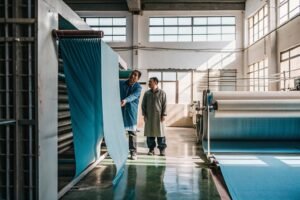
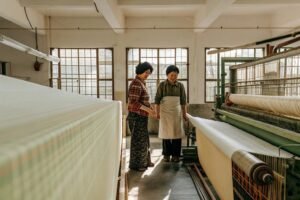
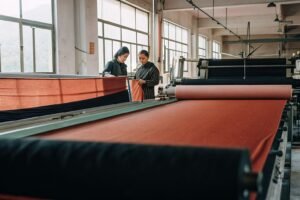
If your fabric sourcing feels like a constant rush against time, you’re likely caught in China’s production peaks. The manufacturing heartbeats in two major surges: Spring (March-May) and Autumn (August-October). These periods follow the global fashion cycle, as brands rush to develop samples and produce goods for the Fall/Winter and Spring/Summer collections, respectively. Factory floors are at full capacity, machinery runs 24/7, and every slot is booked. During these months, adding 1-2 weeks to your standard lead time isn’t a suggestion—it’s a necessity. I tell my clients at Shanghai Fumao that planning for this buffer is the most basic rule of sourcing sanity.
Conversely, the smartest importers target the golden windows: June-July and November-December. After the spring rush subsides and before the autumn frenzy begins, there’s a palpable slowdown. Similarly, after the October holidays, activity dips before the Chinese New Year preparations. These are not "dead" periods but strategic opportunities. Factories are eager for orders to keep their lines running. You have more negotiating power on price, more flexibility on minimum order quantities (MOQs), and, most importantly, faster production times. It’s the ideal window for development, re-orders, or producing for less time-sensitive lines.
Why Do Lead Times Stretch During March-May and August-October?
The stretch is a simple matter of physics: limited capacity meets overwhelming demand. Every brand is on the same schedule. Our dyeing and weaving partners are juggling dozens of orders simultaneously. Queues for specific processes, like digital printing or functional coating, can form. Also, raw material suppliers face the same pressure, causing slight delays upstream. I recall a client in 2023, a UK-based activewear brand, who insisted on starting production for their high-performance leggings line in early April. Despite our warnings, they didn’t finalize their tech packs until mid-March. The result? Their order for moisture-wicking polyester with antibacterial finish got stuck behind three others at the finishing plant, delaying shipment by 18 days. Had they placed their deposit just two weeks earlier in February, they would have sailed through.
Furthermore, quality control takes longer during peaks. Our QC team is meticulous, inspecting every meter against SGS standards for colorfastness, shrinkage, and composition. Rushing this process is not an option. When volume is high, the thorough inspection simply requires more man-hours. This is where having an integrated supply chain like ours at Shanghai Fumao proves crucial. Because we control or have deep partnerships across weaving, dyeing, and finishing, we can prioritize and internally streamline the workflow better than a trader who is at the mercy of third-party factories. For a deeper dive into managing lead times with multiple suppliers, industry forums like Supply Chain Dive often discuss strategies for managing lead time variability in global supplier networks.
How Can You Leverage June-July for Better Deals and Faster Samples?
This period is your secret weapon for R&D and negotiation. With the Spring production wave completed, factories have breathing room. This is the perfect time to develop new fabrics without the pressure of a ticking clock. For instance, last June, a Los Angeles-based startup approached us with a concept for a biodegradable blend of organic cotton and Tencel™. Our R&D team had the bandwidth to run five different sample iterations in three weeks, tweaking the yarn blend and weave structure each time until the hand feel and drape were perfect. By July, they had their final sample, and we locked in production for a September start at a 5% lower cost than if they had begun development in April.
Use this window to audit and build relationships. Visit factories (we love hosting clients in Keqiao!), discuss your plans for the year, and negotiate annual pricing. Suppliers are more receptive. It’s also an ideal time for conducting rigorous pre-production fabric testing, as labs are less backlogged. You can verify the ISO 17025 standards for laboratory competence your supplier uses without delaying a critical order. Think of it as the off-season training that prepares your team for the championship game—it’s where foundations for a successful year are laid.
How to Navigate Chinese New Year Without Derailing Your Production?
Chinese New Year (CNY) is the most important holiday in China, a time for family reunion that results in a nationwide industrial shutdown for 3-4 weeks. For importers, it’s not just a week off; it’s a complete supply chain freeze. Factories close, workers travel home, and logistics slow to a crawl. The panic I see every January from buyers who didn’t plan is entirely preventable. The key isn’t to work during CNY; it’s to work around it with military precision.
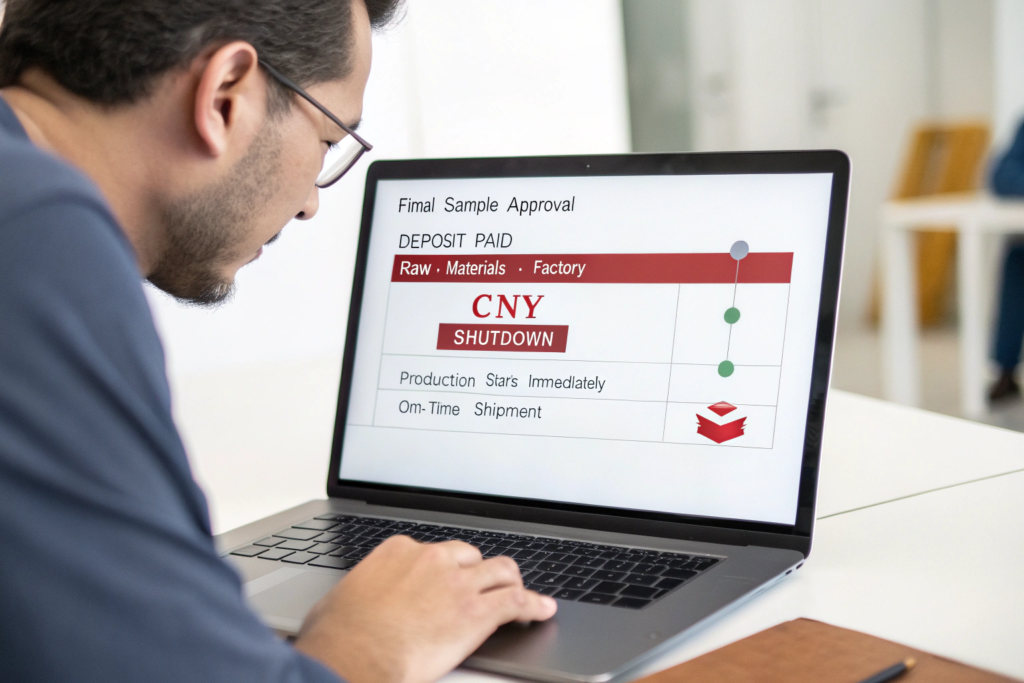
The successful strategy, adopted by savvy European brands we work with, involves treating the pre-CNY period as your final deadline. Your goal is to have all pre-production completed—final samples approved, deposits paid, and all materials (fabrics, trims, dyes) physically inside the factory—at least 6 weeks before the holiday begins. This allows the factory to queue your order as the first to run when the workers return. As one of our long-term partners, a German fashion house, does: they have their Autumn/Winter fabric orders for wool blends and technical coatings finalized with us by early December. This allows Shanghai Fumao to schedule the weaving and dyeing in early January, ensuring the greige fabric is ready and waiting for immediate post-holiday production startup.
What Exactly Needs to Be Done 6 Weeks Before CNY?
This is your critical pre-holiday checklist. It goes far beyond just placing an order.
- Final Sample Approval & Tech Packs: All development must be 100% signed off. Any "we’ll finalize it later" thinking will cause a 4-week delay. This includes lab dips, strike-offs, and garment samples if you’re doing full-package production.
- Raw Material Procurement: Your factory must have purchased all yarns, dyes, and specialty chemicals. Global supply chains for raw materials are also affected. In mid-January 2024, we had a client who approved a silk-blend sample but delayed the deposit. By the time they sent it, our Tencel™ yarn supplier had already closed for CNY. Production was pushed back by 5 weeks.
- Production Slot & Deposit: Secure your slot in the factory’s post-CNY schedule with a formal purchase order and the standard 30% deposit. Get written confirmation of your scheduled start date.
| Task | Ideal Completion Date (Before CNY) | Consequence of Delay |
|---|---|---|
| Final Sample Sign-off | 7-8 Weeks | Factory R&D team leaves, no one to make changes. |
| Raw Material Order Placement | 6 Weeks | Suppliers close, materials unavailable; production cannot start. |
| Production Deposit & PO | 6 Weeks | Lose your queue position; schedule delayed by competing orders. |
| Logistics Booking Forecast | 5 Weeks | Secure container space; post-holiday logistics are congested. |
What’s the Realistic Timeline for Post-CNY Recovery?
Don’t expect factories to hit 100% productivity on Day 1. The first week back is often for cleaning machinery, settling workers back in, and dealing with administrative tasks. Full production rhythm usually resumes by the second week. Therefore, even if your production starts "immediately," factor in a 1-2 week ramp-up period. Communication is vital here. At Shanghai Fumao, we provide weekly updates during this period, often with photos, to give clients peace of mind. Also, be aware that port congestion is common 2-3 weeks after CNY as a flood of shipments hits the logistics network. Working with a forwarder who understands this pattern, or leveraging our integrated logistics service, is key. For insights into post-holiday logistics, Flexport’s blog offers valuable resources on navigating logistics around Chinese New Year.
Can Golden Week and Other Holidays Impact Your Shipment?
While Chinese New Year is the giant, other holidays create smaller but significant ripples. National Day Golden Week (around October 1st) is a one-week national holiday. Factory closures are shorter, but the impact is real, especially if it falls close to your shipping date. The May 1st Labor Day holiday and the Mid-Autumn Festival also cause shorter breaks of 2-3 days. The cumulative effect of these can nibble at your timeline if you’re cutting it close.
The risk isn’t just the closure days themselves; it’s the condensed production rush before them. To meet deadlines, factories may work overtime the week before a holiday, which can sometimes impact quality consistency if not managed well. The week after can see a slower return to full staffing. For just-in-time inventory models, these micro-disruptions can be the straw that breaks the camel’s back. A Swedish client once had a shipment of linen-cotton voile delayed because their finishing factory closed for Mid-Autumn Festival, and a key inspector was away for two extra days—the entire shipment missed its vessel.

How to Proactively Manage Golden Week Scheduling?
The strategy is simple: map all Chinese public holidays onto your production calendar at the start of the year. For Golden Week in October, if your shipment is due in late October or early November, you must push your production start date forward by at least 1.5 weeks. Confirm with your supplier the exact dates they will be closed (some extend it) and the last possible date they can receive your fabric or components to guarantee pre-holiday processing. Always add a "holiday buffer" of 3-5 business days to any milestone near a known break. This isn’t inefficiency; it’s realism. Our system at Shanghai Fumao automatically flags any order in our pipeline that intersects with a public holiday and alerts the project manager to discuss scheduling with the client.
What Are the Often-Forgotten Regional Holiday Variations?
This is an insider point. While national holidays are fixed, some manufacturing regions have local factory holidays or traditions that can extend closures. For example, in certain parts of Zhejiang and Guangdong, factories might close a day early for the Mid-Autumn Festival to allow for longer travel. It’s always worth asking your supplier, "Are there any local holiday adjustments I should be aware of?" Building this into your effective supplier communication checklist can prevent surprises. Furthermore, extreme weather during holiday travel periods can delay workers’ return. Proactive suppliers will have contingency plans. You can find discussions on regional variations and best practices on platforms like Quality Inspection.org, which covers practical tips for supplier communication in China.
What Is the Step-by-Step Plan for Year-Round Sourcing Success?
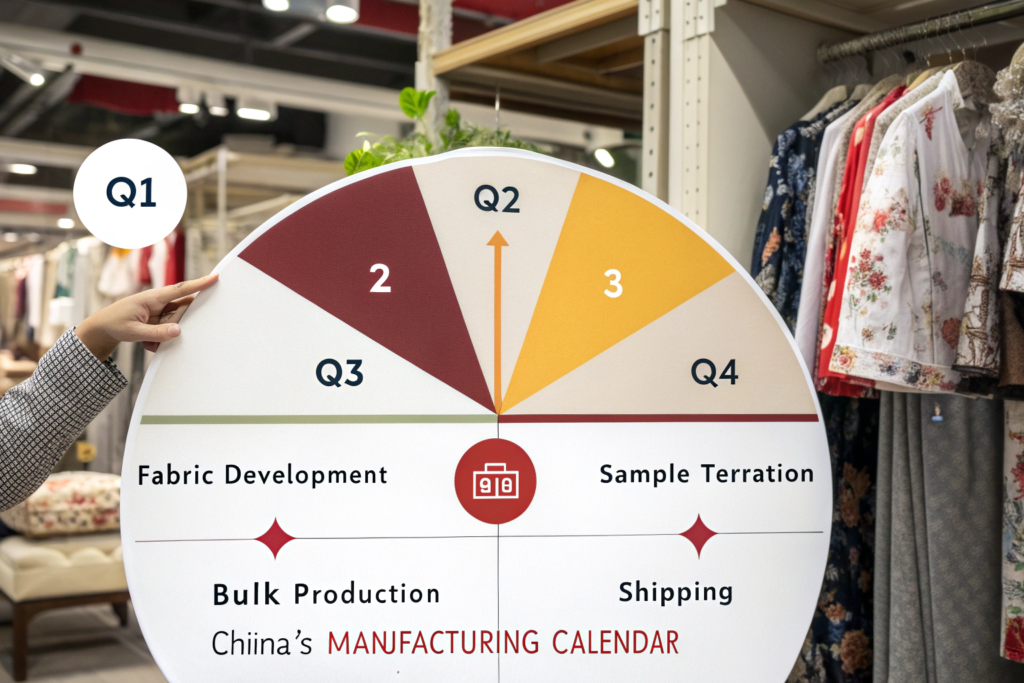
Mastering the calendar means moving from reactive firefighting to proactive orchestration. It transforms sourcing from a cost center into a strategic advantage. Here’s a practical, quarter-by-quarter framework that our most successful clients use. It aligns your design, development, and production cycles with the realities of the Chinese manufacturing rhythm. (Here’s a pro tip: we really can make this process smooth if we start early.)
Think of your year in two main cycles, each mirrored around a major holiday. Cycle 1 targets production in the March-May peak for Fall/Winter delivery. Cycle 2 targets the August-October peak for Spring/Summer delivery. The quiet periods in between are for the crucial work that makes the peaks run smoothly.
How to Build Your Q1-Q2 Sourcing Roadmap (For Fall/Winter Goods)?
Q1 (Jan-Mar): This is high-stakes execution time, dominated by Chinese New Year.
- January: If you haven’t finalized everything pre-CNY, your goal is damage control. Communicate clearly with your supplier to get the earliest possible post-holiday slot. For those who planned well, this is when your production begins.
- February: Navigate the CNY shutdown and recovery. Use this time for finalizing marketing plans and logistics bookings for the goods that will be produced.
- March: Production is in full swing. Conduct mid-production checks if possible (we offer virtual QC photos). Finalize shipping details. This is also the time to initiate development for next year’s Spring/Summer collection, leveraging the post-CNY calm before the Q2 rush.
Q2 (Apr-Jun): Focus shifts to shipping and leveraging the slow season.
- April/May: Your Fall/Winter fabrics are being finished, inspected, and shipped. Track shipments closely. (Our QR code tracking system gives clients real-time updates, which is a game-changer.)
- June-July (The Strategic Window): This is your golden period. Action: Ramp up sampling for next Spring/Summer. Negotiate contracts. Visit suppliers. Test new materials like recycled polyester or BAMSILK. A client from Seattle used July last year to audit our CNAS lab and run a full batch of tests on our UV-resistant nylon, which gave them the confidence to place a large order for their swimwear line in August.
How to Build Your Q3-Q4 Sourcing Roadmap (For Spring/Summer Goods)?
Q3 (Jul-Sep): This is the second major production push.
- July/August: Finalize all Spring/Summer fabric development. Approve samples and place bulk orders to hit the August-October production window.
- September/October: Bulk production is ongoing. Be mindful of the Golden Week shutdown in early October. Ensure all pre-holiday deadlines are met.
Q4 (Oct-Dec): Focus on shipping and annual planning.
- October/November: Your Spring/Summer goods are shipping. Manage post-Golden Week logistics.
- November-December (The Second Strategic Window): Another excellent time for development and negotiation. Action: Review the year’s performance with your supplier. Plan for the next year’s Fall/Winter collection. This is when you should finalize designs to be ready for pre-CNY production in January. It’s also a good time to discuss sustainable development goals (SDG) alignment for your future product lines, a conversation we are increasingly having with partners at Shanghai Fumao.
Conclusion
Mastering China’s manufacturing calendar isn’t about having a secret map; it’s about adopting a disciplined, proactive rhythm that aligns with the realities on the ground. By respecting the peak seasons, strategically planning around major holidays like Chinese New Year, and aggressively leveraging the slower periods for R&D and negotiation, you transform your supply chain from a source of stress into a pillar of competitive advantage. You secure better pricing, ensure higher quality through less-rushed production, and, most importantly, guarantee your products hit the market at the right time. The difference between brands that do this and those that don’t is the difference between surfing the wave and being wiped out by it.
Your success in sourcing hinges on partnership with a supplier who not only understands this calendar but helps you navigate it. At Shanghai Fumao, this rhythm is in our DNA. From our integrated mills in Keqiao to our QC team and logistics desk, we build these cycles into every project plan we create for our clients. We’ve guided countless brands through these seasons, turning potential delays into stories of on-time success. Ready to plan your next collection with confidence and precision? Let’s build your production schedule together. Contact our Business Director, Elaine, to start the conversation about your specific needs at elaine@fumaoclothing.com. Let’s make your next season your most seamless yet.