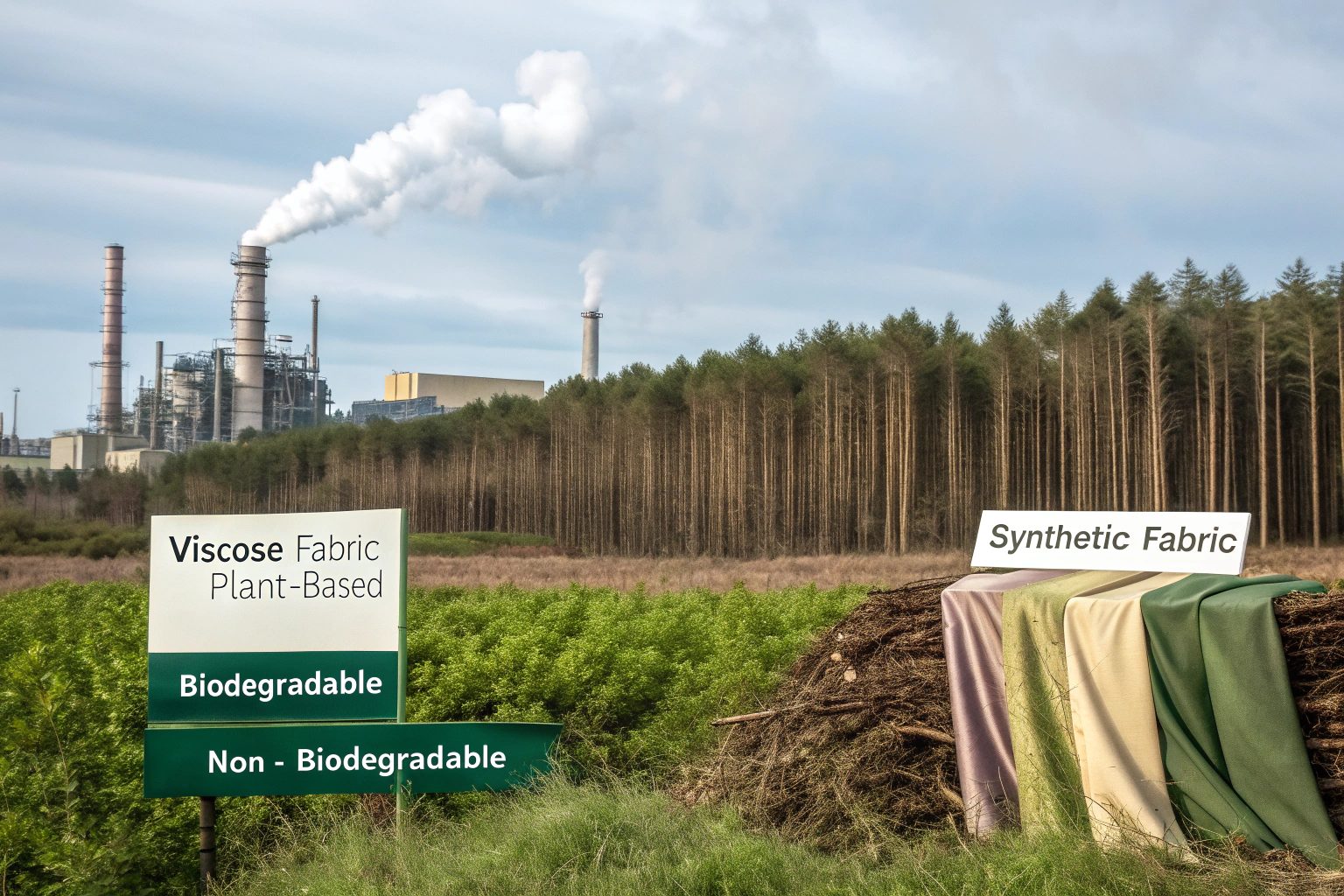
In the quest for sustainable fabrics, viscose (also known as rayon) often occupies a confusing middle ground. Marketed as a "plant-based" and "biodegradable" alternative to polyester, it has become a darling of fast fashion and eco-conscious collections alike. But behind this green facade lies a manufacturing process with a notorious environmental legacy—one involving toxic chemicals, deforestation, and polluted waterways. So, as a buyer or brand, how do you navigate the complex reality of viscose? Is it an environmental villain, or can it be part of a responsible supply chain?
The environmental impact of conventional viscose/rayon production is significant and occurs across its lifecycle: from unsustainable wood pulp sourcing that drives deforestation, to a chemical-intensive manufacturing process that releases hazardous air and water pollutants like carbon disulfide (CS₂) and hydrogen sulfide (H₂S). The key determinant of impact is the production technology and supply chain governance used. While conventional viscose is highly damaging, next-generation technologies like closed-loop Lyocell (Tencel™) offer a dramatically cleaner alternative. Therefore, the question isn’t simply "Is viscose bad?" but "What kind of viscose is this, and how was it made?"
Understanding this spectrum—from the worst conventional practices to the best available technology—is essential for making informed, ethical sourcing decisions that align with your brand’s sustainability claims. Let’s dissect the supply chain, from forest to fabric.
Where does the wood pulp come from, and why does it matter?
Viscose begins as cellulose, most commonly derived from wood pulp. The environmental story starts right here, in the forest. The type of tree, its origin, and how it is harvested set the stage for the fabric’s ultimate footprint.
The Problem: Endangered Forests and Deforestation
For decades, the industry relied on pulp from ancient and endangered forests (AEFs), including old-growth and rainforests in Canada, Indonesia, and the Amazon. This practice destroys irreplaceable ecosystems, threatens biodiversity, and contributes to climate change. Even when trees are replanted, replacing a diverse, mature forest with a monoculture plantation (like eucalyptus or acacia) creates a "green desert" with poor soil health and low biodiversity. The 2020 report "Dirty Fashion: How Rainforest Destruction is Making Your Clothes" by the Changing Markets Foundation exposed major brands sourcing from suppliers linked to Indonesian rainforest clearance.
The Solution: Certified Sustainable Sourcing
Responsible sourcing requires traceability and certification. Look for pulp certified by:
- FSC (Forest Stewardship Council): The gold standard. Ensures wood comes from responsibly managed forests that provide environmental, social, and economic benefits.
- PEFC (Programme for the Endorsement of Forest Certification): Another credible international system.
Leading producers now publicly commit to AEF-free and FSC/PEFC-certified pulp. For example, Lenzing AG (maker of Tencel™) sources wood primarily from FSC-certified forests in Austria and neighboring countries. As a buyer, your first question to any viscose supplier should be: "Can you provide a chain-of-custody certificate (FSC or PEFC) for the wood pulp used in this fiber?" If they cannot, the risk of complicity in deforestation is high.

Can alternative feedstocks reduce forestry pressure?
Yes, and this is a growing area of innovation. Some producers are developing viscose from:
- Agricultural Waste: Using leftover straw from wheat, bamboo, or rice production.
- Recycled Cotton: Transforming post-consumer cotton textile waste into new viscose fiber (technically "recycled cellulose").
While promising, these technologies are not yet mainstream. Their scalability and true lifecycle impact (e.g., chemical use in processing waste) are still being evaluated. For now, certified wood pulp remains the most verifiable and scalable sustainable feedstock.
What about bamboo viscose?
"Bamboo" is often marketed as an eco-friendly wonder fiber. The reality is more nuanced. While bamboo the plant grows rapidly without pesticides, the process to turn tough bamboo grass into soft fiber is almost always the same chemical-intensive viscose process. Therefore, unless specifically labeled as "mechanically processed bamboo linen" (a rare, labor-intensive method), bamboo viscose has a similar chemical footprint to wood-based viscose. Its "green" image is largely a marketing myth unless accompanied by credible closed-loop production certifications. Resources like the Ecotextile News analysis on bamboo textiles delve into this greenwashing issue.
What happens in the factory: the chemical processing problem?
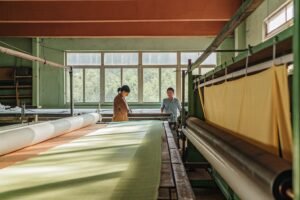
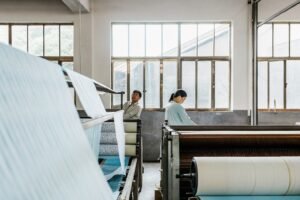
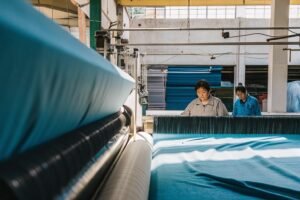
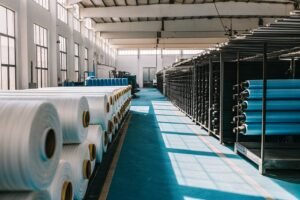
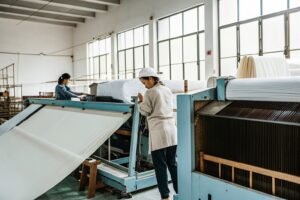
This is the heart of viscose’s environmental burden. The process of dissolving wood pulp and regenerating it into fibers is chemically intensive and historically poorly managed.
The Conventional Viscose Process:
- Pulp Steeping & Alkali Treatment: Wood pulp sheets are steeped in a strong sodium hydroxide (caustic soda) solution.
- Pressing & Shredding: The resulting "alkali cellulose" is pressed and shredded.
- Aging & Xanthation: The crumbs are aged, then reacted with carbon disulfide (CS₂) to form cellulose xanthate, a viscous orange substance—this is the "viscose" name origin.
- Dissolving & Ripening: The xanthate is dissolved in more caustic soda to create the spinning solution.
- Spinning & Regeneration: The solution is forced through a spinneret into a sulfuric acid bath, where it solidifies (regenerates) into filaments.
- Washing, Bleaching, Finishing: The fibers are washed, often bleached with chlorine compounds, and finished.
The Primary Hazards:
- Carbon Disulfide (CS₂): A highly toxic, volatile neurotoxin. Factory emissions and wastewater contamination can cause severe neurological damage to workers and local communities. It is also a potent greenhouse gas.
- Sulfuric Acid & Caustic Soda: Contribute to water acidification and toxicity if not neutralized and treated.
- Heavy Metals & Other Byproducts: Can be present in wastewater.
The environmental impact is direct: air pollution from CS₂ emissions, and water pollution from toxic effluent discharged into rivers, harming aquatic life and communities downstream. A stark example is the 2017 investigative report on the viscose industry in India, which documented severe pollution and health impacts near major plants.

What is "closed-loop" production, and does it solve this?
This is the critical differentiator. Closed-loop production, as practiced in the Lyocell process (commercialized as Tencel™), represents a technological leap.
- Different Solvent: It uses a non-toxic, organic solvent called N-Methylmorpholine N-oxide (NMMO) to dissolve the pulp.
- High Recovery Rate: Over 99% of the solvent is recovered, purified, and reused in a closed loop within the factory.
- Minimal Emissions: The process generates negligible toxic air emissions and uses less water.
- Biodegradable Output: The resulting Lyocell fiber is fully biodegradable and compostable.
The Lyocell process is demonstrably cleaner. When sourcing, prioritize fibers explicitly labeled as "Lyocell" (often Tencel™) and look for evidence of the closed-loop process. Brands like Lenzing and Birla (with their Livaeco™ with GreenTrack™) now offer such fibers. The EU’s upcoming Ecodesign for Sustainable Products Regulation (ESPR) will likely favor such technologies.
How can I verify a supplier’s chemical management?
Ask for specific certifications and audit reports:
- EU Ecolabel or STeP by OEKO-TEX®: These assess and certify environmental performance of manufacturing sites, including chemical management, wastewater treatment, and air emissions.
- ZDHC (Zero Discharge of Hazardous Chemicals) MRSL Conformance: Indicates the mill restricts the use of hazardous chemicals.
- Transparency on Wastewater Treatment: Request data on Chemical Oxygen Demand (COD) and Biological Oxygen Demand (BOD) levels in treated effluent. Lower numbers indicate better treatment.
At Shanghai Fumao, when we source viscose for clients demanding sustainability, we exclusively work with mills that can provide STeP certification and FSC chain-of-custody documents. This multi-layered verification is non-negotiable. The CanopyStyle initiative is another excellent resource, auditing viscose producers on their forest sourcing and chemical practices.
What about water use, energy, and biodegradability?
The environmental assessment must extend beyond chemicals to the full lifecycle: resource consumption and end-of-life.
Water Use: The conventional viscose process is water-intensive, used for washing pulp, processing, and cooling. While less than cotton’s field irrigation, it is significant, especially if wastewater is not treated and recycled. Closed-loop Lyocell systems inherently recycle process water, dramatically reducing net consumption.
Energy & Carbon Footprint: The process is energy-intensive, primarily from dissolving pulp and driving chemical reactions. The carbon footprint depends on the energy grid (coal-based vs. renewable). Some leading producers, like Lenzing, now power their plants with bioenergy from processed wood byproducts and aim for carbon neutrality.
Biodegradability: This is viscose’s strong suit. Cellulose-based fibers will biodegrade in soil and marine environments within weeks under the right conditions, unlike polyester which sheds microplastics. However, this benefit is negated if the fiber is blended with synthetic materials or treated with persistent chemical finishes. A 100% Lyocell garment in a home compost pile will break down cleanly.

Is viscose truly "circular"?
The answer is: It has the potential to be, but currently is not in a systemic way. True circularity requires:
- Sustainable Inputs: FSC-certified or alternative pulp (✔️ achievable).
- Clean, Efficient Manufacturing: Closed-loop Lyocell (✔️ achievable).
- Effective End-of-Life Recycling: This is the major gap. While technologies exist to chemically recycle cotton/polyester blends into new viscose (e.g., Infinna™ by Infinited Fiber Company), large-scale infrastructure for collecting and processing post-consumer textile waste into new viscose is still nascent.
Therefore, most viscose today is a linear product made with better practices, not yet part of a circular economy. The onus is on brands to design for recyclability and invest in take-back schemes.
How do I compare the impact of viscose to cotton and polyester?
Use a simplified comparative lens:
- vs. Conventional Cotton: Viscose uses less water (if excluding forestry) but more toxic chemicals. Cotton uses vast amounts of water and pesticides.
- vs. Polyester: Viscose is biodegradable and plant-based, but its production can be more polluting. Polyester is derived from fossil fuels, sheds microplastics, but its production can be more controlled and less chemically toxic.
- The Verdict: Next-Gen Viscose (Lyocell) > Organic Cotton > Conventional Viscose > Polyester > Conventional Cotton—when considering a combined index of toxicity, resource use, and end-of-life impact. Tools like the Textile Exchange Material Sustainability Index provide detailed data-driven comparisons.
How can I source viscose responsibly as a brand?
As a buyer, you have the power to drive change by demanding transparency and preferring cleaner technologies. Your sourcing checklist should be rigorous.
1. Prioritize Fiber Type & Technology:
- First Choice: Closed-Loop Lyocell (Tencel™, Excel™, etc.). This is the benchmark.
- Second Choice: Conventional Viscose with Credible Certifications (see below). Use sparingly and for specific applications where Lyocell is not suitable.
2. Demand Triple-Verification Certifications:
- For Forests: FSC or PEFC Chain-of-Custody Certificate.
- For Manufacturing:
- EU Ecolabel or OEKO-TEX® STeP (for the production site).
- OEKO-TEX® STANDARD 100 (for the final fabric, ensuring low chemical residues).
- For Transparency: Support suppliers who publish Higg FEM (Facility Environmental Module) scores or undergo CanopyStyle audits.
3. Ask the Right Questions to Your Supplier:
- "Who is the fiber producer (e.g., Lenzing, Aditya Birla, Sateri) and what is their specific fiber brand?"
- "Can you share the FSC certificate number for the pulp used in this batch?"
- "What is the mill’s wastewater treatment standard, and can you share recent test data?"
- "Is this fiber produced in a closed-loop system? If not, what measures control CS₂ emissions?"
4. Consider Blends Carefully: A 50% Lyocell / 50% Organic Cotton blend is more sustainable than a 100% conventional viscose. Avoid blending with polyester if you want to retain biodegradability.
In 2023, we assisted a UK-based womenswear brand in transitioning their entire viscose range. We audited three potential suppliers. The winner was a mill using Lenzing Tencel™ Modal with FSC pulp, with a STeP-certified dyeing facility. While the fabric cost was 25% higher, the brand used the verifiable story (FSC license number on hangtags) to justify a price premium and saw a 15% sales increase in those items, proving consumers value true transparency.

What are the cost implications of sourcing responsible viscose?
Responsible viscose (Lyocell, FSC-certified) typically carries a 15-30% cost premium over generic, uncertified viscose. This is due to:
- Higher cost of certified pulp.
- Capital investment in closed-loop technology and pollution control.
- Costs of third-party auditing and certification.
View this not as a cost, but as an investment in risk mitigation and brand equity. It protects you from association with deforestation scandals and allows for credible marketing. The price gap is narrowing as demand grows and technology scales.
Where can I find verified suppliers?
Start with the producers themselves. Companies like Lenzing, Aditya Birla Group (Livaeco), and Sateri (with their "EcoCosy®" brand) have preferred fabric mill partners listed on their websites. Trade shows like Première Vision now have dedicated "Smart Creation" areas filtering exhibitors by such certifications. Ultimately, partnering with a knowledgeable sourcing agent like Shanghai Fumao who has pre-vetted this complex supply chain can save immense time and risk. The Common Objective guide on sustainable viscose sourcing provides a practical action plan.
Conclusion
The environmental impact of viscose/rayon is not a monolith; it is a spectrum defined by choices made in the forest and the factory. Conventional production remains a heavy polluter, tarnishing the "natural" image of the fiber. However, the emergence of certified sustainable wood pulp and, crucially, closed-loop Lyocell technology, offers a clear and commercially viable pathway to a genuinely responsible viscose.
For brands and buyers, the mandate is clear: move beyond the generic term "viscose." Specify and demand "FSC-certified, closed-loop Lyocell" as your baseline. Invest in traceability and verification, understanding that the modest cost premium is the price of integrity. By doing so, you can harness the desirable qualities of this fiber—its drape, softness, and biodegradability—without compromising on the ecological and ethical values that the modern market increasingly demands.
The future of cellulosic fibers is clean and circular. Your sourcing decisions today can accelerate that future. At Shanghai Fumao, we are committed to providing our clients with transparent, certified sustainable fabric options. We offer a curated range of Tencel™ and other responsible viscose fabrics, backed by full documentation from fiber to finish. Let us help you make your viscose sourcing a force for good. Contact our Business Director Elaine to explore our sustainable collections: elaine@fumaoclothing.com.