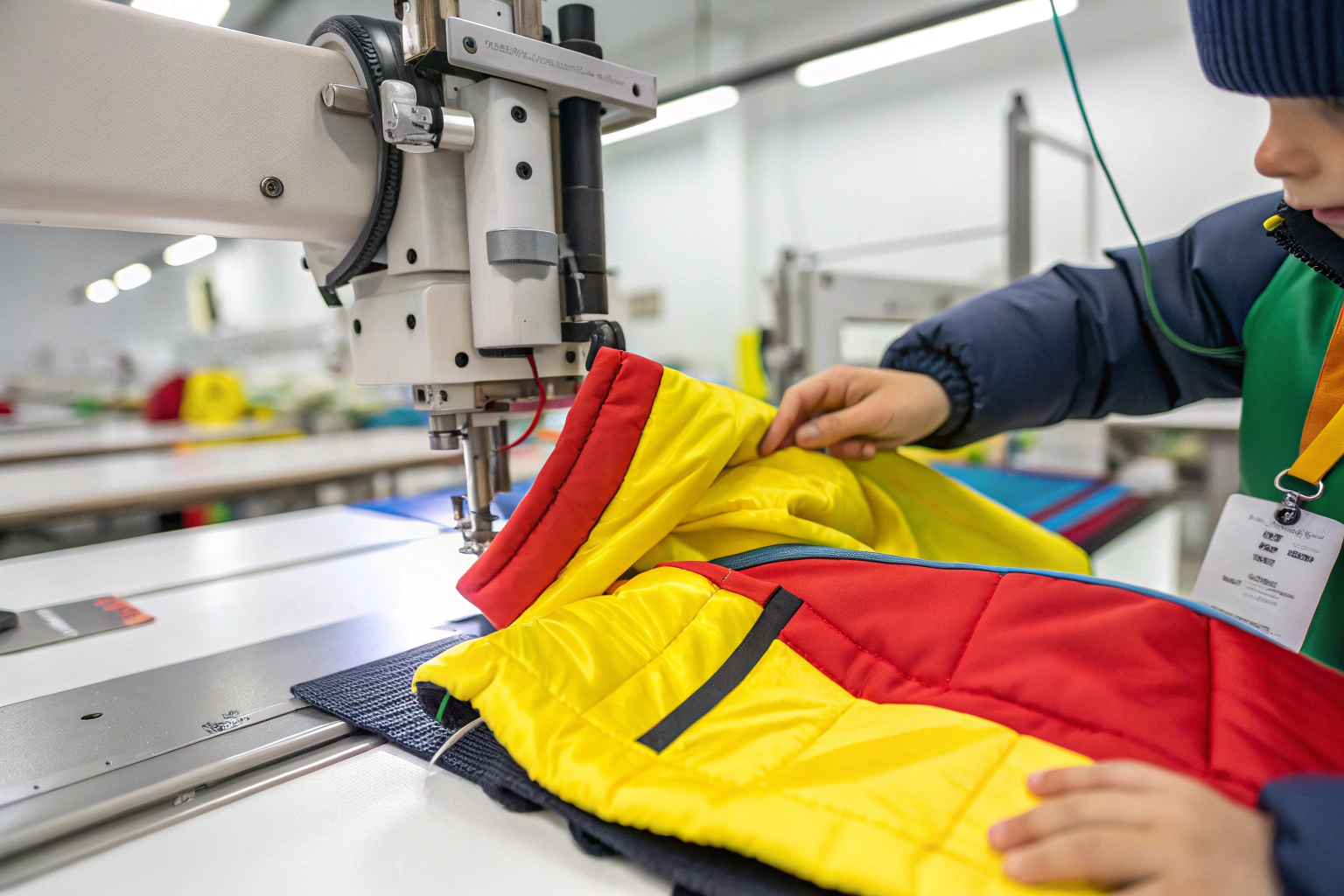
Let me tell you a story that keeps kids’ wear brand owners up at night. A mom buys your beautiful $68 puffer vest for her four-year-old son. He loves it. He wears it to the playground. He catches the sleeve on a protruding bolt on the slide. Instead of just stopping him for a second, the fabric rips open like a wet paper bag. The sleeve is shredded. The down feathers are flying everywhere. The mom is furious. She posts a photo on Instagram with your brand tagged. That photo gets 400 comments from other moms saying, "Thanks for the warning, I was about to buy that." Your $68 vest just cost you $20,000 in lost sales and a permanent scar on your brand reputation.
That, right there, is Tear Strength. It is the single most under-discussed, yet most critical, performance metric in children’s outerwear. And here is the scary part: Most fabric suppliers never test for it unless you specifically ask. They assume if the fabric looks thick and feels strong, it is strong. That is a dangerous assumption. Kids do not wear clothes. They assault them. They crawl on concrete. They snag on branches. They pull hoods over their heads with the force of a small gorilla. If the fabric lacks tear resistance, it fails catastrophically and instantly. It is not a slow fade like pilling. It is a sudden, garment-ending failure.
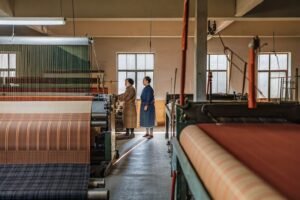
At Shanghai Fumao, we have been engineering fabrics for active children’s wear for over a decade. We know that a kid’s jacket needs to be a suit of armor disguised as a soft, cuddly blanket. In this article, I am going to break down exactly what tear strength is, how we measure it, and why ripstop weaves and high-tenacity yarns are non-negotiable for the playground. If you are sourcing fabric for toddlers, tweens, or teens, you need to read this. Your liability insurance depends on it.
How Is Tear Strength Tested Differently Than Tensile (Pull) Strength?
This is the most common point of confusion I hear from new designers. They look at a spec sheet and see "Tensile Strength: 400 Newtons." They think, "Wow, that is strong. Good for kids." Wrong. Tensile strength tells you how much force it takes to pull the fabric apart in a straight line . That is useful for a rope or a seatbelt. It is almost useless for predicting how a garment will survive a snag.
Tear Strength measures the force required to propagate a rip once a small cut or hole has already been made. Think about it. A kid’s jacket does not fail because someone attaches clamps to the top and bottom and pulls steadily. It fails because a nail or a zipper tooth catches a single yarn and starts a tiny hole. The question is: Does that hole stop, or does it run across the entire panel?
The test for this is called the Elmendorf Tear Test (ASTM D1424). It uses a machine with a pendulum that swings down and tears a pre-cut slit in the fabric. The machine measures the energy absorbed in propagating that tear. The result is in Grams (g) or Newtons (N) .
I had a client in February 2025 who was switching from adult activewear to a kids’ adventure line. She sent me a sample of her "strong" adult softshell fabric. It had a Tensile Strength of 450N. Great, right? I put it in the Elmendorf tester. The Tear Strength was 800g in the warp direction. That is tissue paper territory. For a kids’ jacket that will snag on tree bark, that is a lawsuit waiting to happen. We switched her to a Fumao mechanical stretch woven with a Tear Strength of 2,800g . The weight was similar. The hand feel was similar. The performance on the playground was night and day.

What Is the Difference Between Warp Tear and Weft Tear in Woven Fabrics?
When you look at a Tear Strength Test Report, you will see two numbers: Warp and Weft (or Filling). They are almost never the same. And the lower number is the one that will fail you.
- Warp Tear: This measures the force to tear across the weft yarns. The rip is running lengthwise up the sleeve. It is testing the strength of the weft yarns.
- Weft Tear: This measures the force to tear across the warp yarns. The rip is running horizontally across the chest. It is testing the strength of the warp yarns.
In a standard plain weave fabric, Weft Tear is usually lower than Warp Tear. Why? Because the weft yarns are less dense and often have less twist to give the fabric drape. But a jacket sleeve usually fails along the Warp direction (a snag on the arm runs down toward the cuff). So, you need balanced tear strength.
At Shanghai Fumao, our standard for kids’ outerwear is a minimum of 1,500g in BOTH directions . I will not ship a roll that is 2,000g Warp but only 900g Weft. That is a ticking time bomb. I had a batch of printed nylon taffeta come back from the finishing plant last year. The Warp tear was fine. The Weft tear was 1,100g. Too low. We traced it to an over-drying issue in the stenter that made the weft yarns brittle. We had to strip the coating and re-finish the entire lot. It cost us time and money, but it saved the client from a catastrophic failure on the market. If you want to understand why weft tear strength is often lower than warp in lightweight fabrics, look at the yarn crimp percentage. In a typical weave, the warp yarns are straighter and the weft yarns do more bending. The bent yarns are under more stress and break easier.
How Does the Elmendorf Test Simulate a Child’s Snag on Playground Equipment?
I love the Elmendorf test because it is brutally honest. It simulates the exact physics of a dynamic snag. The pendulum swings at a specific speed. It applies a sudden, shock load to a small cut. This is exactly what happens when a kid jumps off a swing and their jacket catches the chain link.
There is another test called the Trouser Tear Test (ASTM D2261). This uses a slow, steady pull on a universal testing machine (like an Instron). It is useful, but it is more for static loads (like a seam pulling apart when a kid sits down). The Elmendorf is the dynamic, high-speed test. It is the difference between slowly tearing a piece of paper and ripping it fast. Fast ripping requires more energy if the fabric is tough.
I always tell my clients: "If you are making pants, worry about Trouser Tear. If you are making jackets, worry about Elmendorf." Jackets snag. Pants split. The mechanics are different. For a deep dive into how the Elmendorf tear test method correlates to actual playground snag resistance, you can check the ASTM standards for fabric impact resistance. The pendulum simulates that sudden yank of a child’s full body weight hitting a snag.
Why Do Fumao Ripstop Weaves Prevent Catastrophic Tear Propagation?
Alright, let’s talk about the superhero of kids’ outerwear: Ripstop. You see it in hiking gear, military uniforms, and hot air balloons. It is a fabric that has a distinct grid pattern woven into it. That grid is not a print. It is a reinforcement yarn—usually a thicker, stronger nylon or polyester filament—woven every 5mm or 8mm in both directions.
Here is the magic. A standard plain weave fabric is like a chain-link fence. If you cut one link, the stress concentrates at the end of the cut. It is easy to keep pulling that one link out. The tear runs like a zipper. A ripstop weave is like a fence with steel posts every few feet. You might break one link in the middle, but when the tear hits that thick "Ripstop" yarn, it stops dead. The energy required to break that thick yarn is much higher. The tear arrests.
At Shanghai Fumao, we use a high-density polyester ripstop grid for our kids’ outerwear shells. We do not just use the standard 70D nylon. We use a core-spun polyester with a tenacity of 7.0 cN/dtex. This is almost as strong as industrial nylon but with better UV resistance and color fastness. I had a client who was making toddler snowsuits. The previous factory gave them a standard 50D polyester taffeta. The knees and elbows were blowing out. We switched them to our Fumao 70D Ripstop with a DWR finish. The fabric weight was only 10 grams heavier per square meter, but the Elmendorf Tear Strength went from 900g to 3,500g . That is a 4x improvement in resistance to catastrophic failure. The snowsuits survived the entire season.

What Denier (D) Rating Is Recommended for Active Kids’ Jacket Shells?
Denier is a measure of fiber thickness. Specifically, it is the weight in grams of 9,000 meters of the fiber. Higher denier generally means thicker, stronger yarn. But denier alone is not the whole story. A High-Tenacity 70D yarn can be stronger than a Standard 100D yarn.
However, for kids’ outerwear, here is my practical guide based on 20 years of wear-testing on actual playgrounds:
- 50D – 70D: Lightweight windbreakers and packable jackets. Good for preschoolers in mild weather. Minimum requirement: Must be Ripstop. If it is plain weave 50D, do not use it for kids under 10. It will shred.
- 100D – 150D: Everyday school jacket / Midweight puffer. This is the sweet spot. It balances weight, drape, and durability. We do most of our kids’ outerwear in 100D Fumao Mechanical Stretch Ripstop.
- 200D – 400D: Snow pants, reinforced knees, heavy winter coats. This is overkill for a full jacket for a 6-year-old (it would be stiff and heavy), but perfect for high-abrasion zones like the seat of snow pants or elbow patches.
Here is a table to visualize the trade-off:
| Denier | Fabric Type | Tear Strength (Typical) | Best Use for Kids |
|---|---|---|---|
| 50D Plain | Nylon Taffeta | 700 – 900g | AVOID. Lining only. |
| 70D Ripstop | Polyester/Nylon | 2,500 – 3,500g | Windbreaker, Light Puffer. |
| 100D Ripstop | Textured Poly | 4,000 – 5,500g | Ideal School Jacket. |
| 160D Cordura | Nylon Blend | 8,000g + | Reinforced Knees/Seat. |
(Here is a tip: You can mix deniers in one garment. Use 100D for the body and 160D for the sleeves and shoulders. That is smart engineering. We do this for our private label clients.)
How Does "Ripstop" Grid Density Impact Breathability and Weight?
This is the pushback I get from designers. "I love the strength, but I don’t want the jacket to look like a camping tent. And I don’t want it to be a sweat box." The grid density—how far apart those thick ripstop yarns are—is the tuning knob.
- Tight Grid (3mm spacing): Maximum tear stop. Used for down-proof fabrics (keeps feathers in) and extreme durability. It can look technical and feel slightly stiffer.
- Standard Grid (5-8mm spacing): Our go-to for kids’ fashion outerwear. You get the tear-arresting benefit without the "tactical gear" aesthetic. The grid is subtle. It actually adds a nice texture to the fabric that hides dirt.
- Wide Grid (>10mm spacing): Better breathability, softer hand, but less tear resistance. Good for linings.
Breathability is controlled by the base weave, not the ripstop yarn. We use a plain weave base that allows plenty of airflow. The ripstop yarns cover less than 5% of the total surface area. They have a negligible impact on Moisture Vapor Transmission Rate (MVTR) . So you get the durability without the clamminess.
I worked with a brand in late 2025 that was launching a "City Slicker" raincoat for kids. They wanted the look of a classic rubberized mac but the breathability of a modern shell. We used a 70D Polyester Ripstop with a microporous PU coating. The ripstop grid was spaced at 6mm. It was barely visible under the solid color dye. The coat looked vintage. It performed like a $200 technical shell. That is the art of hiding high performance inside a beautiful design.
Which Fiber Blends Maximize Tear Strength Without Sacrificing Softness?
Here is the eternal battle in kids’ wear: Durability vs. Comfort. You can make a jacket out of 100% ballistic nylon. It will last 100 years. But your kid will refuse to wear it because it feels like a cardboard box. You can make a jacket out of super-soft brushed cotton flannel. Your kid will love it. It will tear the first time they look at a stick.
The solution is intelligent blending. We use synthetic fibers for the skeleton and natural or regenerated fibers for the skin . But the way we blend them is what makes Fumao fabric different.
The most common mistake I see is a 50/50 intimate blend of cotton and polyester. You card the fibers together, spin them into a single yarn. This creates a fabric that is neither soft nor strong. The short cotton fibers weaken the polyester. The polyester makes the cotton feel clammy. It is the worst of both worlds.
Our approach is Yarn Engineering:
- Core-Spun Yarn: We wrap a High-Tenacity Polyester Filament (the strong core) with a layer of Combed Cotton (the soft touch). The cotton protects the skin from the plastic feel. The polyester provides the Tear Strength.
- Plied Yarns: We twist a fine Nylon 6,6 yarn together with a Modal yarn. Modal is incredibly soft (softer than cotton). Nylon 6,6 is incredibly strong. The combination is a fabric that feels like a luxury lounge piece but has the tear resistance of light luggage.
I had a client in the organic kids’ wear space. They refused to use virgin polyester. They wanted 100% natural. I respected that. But I warned them about tear strength. We developed a 100% Organic Cotton fabric for them using a very tight, compact weave and a double-twisted yarn. It had a Tear Strength of 1,200g. That is the absolute upper limit for 100% cotton. It is okay for a toddler cardigan, but I would never use it for an active jacket. They understood the trade-off. If you are committed to natural fibers, you must accept lower durability or higher fabric weight .

What Is the Advantage of Nylon 6,6 Over Polyester for High-Abrasion Kids’ Wear?
This is the advanced class in fiber science. Most people think "Nylon" and "Polyester" are interchangeable. They are not. For tear strength and abrasion resistance in kids’ wear, Nylon 6,6 is the king.
- Molecular Structure: Nylon 6,6 has a tighter, more crystalline structure. It forms stronger hydrogen bonds between polymer chains. This gives it a higher melting point and superior abrasion resistance.
- Elongation: Nylon stretches more before it breaks. This is critical for a snag. When a nail catches a nylon jacket, the fiber stretches to absorb the energy. Polyester is stiffer; it resists stretching but then snaps suddenly.
- Toughness: Nylon has higher "Work of Rupture." It just takes more punishment.
The downside? Nylon is more expensive. It absorbs more water (though we fix that with DWR finishes). It is less UV resistant (it degrades in sunlight faster than polyester unless treated).
For a kids’ winter parka that will see snow, mud, and playground slides, I almost always recommend a Nylon 6,6 face fabric. The upfront fabric cost is about 15-20% higher than polyester. But the garment lasts two seasons instead of one. The cost-per-wear is actually lower. If you are interested in comparing nylon 66 vs polyester tear strength for childrens outerwear fabrics, look at the ASTM D3884 Abrasion Resistance data. Nylon 6,6 will outlast standard polyester by 2x to 3x on a Taber abrasion test.
How Does Cordura Brand Fabric Compare to Standard Nylon for Longevity?
Cordura is not a fiber. It is a brand of certified high-tenacity nylon 6,6 (mostly). When you see a hangtag that says "Cordura," it means the fabric has been tested and certified by Invista to meet specific tear and abrasion standards. It is a guarantee of durability.
Standard Nylon 6,6 might be good. Cordura Nylon is guaranteed great. The certification means the fabric passed rigorous lab testing for Tear Strength, Tensile Strength, and Taber Abrasion.
At Shanghai Fumao, we use both Standard High-Tenacity Nylon and Certified Cordura. Here is how I guide my clients:
- Certified Cordura: Use this if you are marketing "Tough Gear" or "Adventure Proof" and you want the brand halo effect of the Cordura name. It is a selling feature. Parents recognize it from luggage and workwear. It justifies a higher retail price.
- Fumao High-Tenacity Nylon: Use this if you want Cordura-level performance but do not need the hangtag (and the associated licensing fee/cost). We engineer our in-house nylon to the same specs. The fabric performs identically in the Elmendorf test. You just cannot use the word "Cordura" on your swing tag.
I had a client who was doing school uniform trousers. The knees were failing after 6 weeks. We switched them to our Fumao 160D Nylon 6,6 Ripstop. The tear strength quadrupled. They asked about Cordura. I said, "We can do Cordura, but it adds $0.80 per yard and you are selling to school districts on a tight budget. Let’s use the Fumao spec and keep the price down." They did. The pants lasted the whole school year. No returns. No complaints. That is the smart play.
When Should Safety Standards Dictate Tear Strength Specifications?
This is the section that separates the professionals from the amateurs. If you are selling kids’ outerwear in the United States or European Union, Tear Strength is not optional. It is the law. Well, it is a de facto law enforced by the Consumer Product Safety Commission (CPSC) and General Product Safety Directive (GPSD) .
The specific regulation you need to know is 16 CFR Part 1610 (Standard for the Flammability of Clothing Textiles). Wait, that is flammability, not tear. Here is the connection: Seam Slippage and Tear Strength are critical for Small Parts Prevention. If a fabric tears easily, the filling (down or polyfill) escapes. That filling is a choking hazard for children under 3. Additionally, zippers and snaps can pull out of weak fabric, becoming detachable small parts.
The CPSC does not say "You must have 1,500g Elmendorf Tear." But if a child chokes on a piece of insulation that escaped through a tear, and the CPSC investigates, they will test the fabric. If the fabric is found to be "insufficiently durable for intended use," you are facing a Recall. And recalls kill small brands.
At Shanghai Fumao, we have a Children’s Product Certificate (CPC) compliance program. For any fabric intended for kids under 12, we automatically test to:
- ASTM D1424 (Elmendorf Tear): Minimum 1,500g for shells.
- ASTM D1683 (Seam Slippage): Minimum 15 lbs resistance.
We do not ship fabric that falls below these thresholds for kids’ wear clients. It is not worth the liability for us or for you.

How Does 16 CFR Part 1610 Flammability Relate to Fabric Durability?
This is the test everyone focuses on—Flammability. You want a Class 1 (Normal Flammability) rating. Here is what most people miss: Fabric construction affects both flammability AND tear strength. And sometimes they work against each other.
To make a synthetic fabric (polyester/nylon) pass flammability, you want it to melt and shrink away from the flame. That is good for fire safety. But that same thermoplastic shrinkage can make the fabric weaker and more brittle if it is not heat-set properly. If you over-heat the fabric to control shrinkage for flammability, you can reduce the Elmendorf Tear Strength by 20-30%.
We balance this in our Stenter Frame settings. It takes precise temperature control. A generic mill might just crank the heat to pass the burn test, sacrificing durability. We use phosphorous-based flame retardants for polyester that allow us to use lower heat settings, preserving the fiber tenacity.
I had a client fail a flammability test on a brushed cotton flannel . Their solution was to add a heavy chemical FR finish. That made the fabric stiff and dropped the tear strength. We re-engineered the fabric with a tighter weave and a different napping process to pass flammability without the harsh chemicals. It kept the soft hand and the tear strength. That is the level of integrated engineering required for compliant kids’ wear.
What Is the ASTM D1683 Standard for Seam Slippage in Kids’ Garments?
Let’s talk about the seam. The fabric can be bulletproof, but if the yarns slide apart at the shoulder seam, the jacket fails. This is Seam Slippage. It is tested by ASTM D1683. You sew a standard seam, cut it open, and pull it in a tensile tester. You measure the force required to open the seam by 6mm (1/4 inch) .
For kids’ outerwear, the industry standard (per most major retailer manuals) is minimum 15 lbs (6.8 kg) resistance . I have seen cheap fabrics with a Tear Strength of 2,000g but a Seam Slippage of only 8 lbs. That means a kid reaches up to grab a monkey bar, and the armhole seam opens up like a zipper. The fabric did not tear. The yarns just shifted.
Why does this happen? Low yarn density and low friction. If the weave is too loose, the warp and weft yarns slide over each other easily. To fix this, we use a higher picks per inch (PPI) and sometimes a mechanical compaction finish (Sanforizing) to jam the yarns together.
I always tell my clients: "Spec the Seam Slippage." It is a separate line item on the test report. Do not assume a strong fabric has strong seams. You must specify "ASTM D1683 Seam Slippage > 15 lbs at 6mm opening" on your purchase order. If you want to know how to interpret ASTM D1683 seam slippage test results for woven apparel, look for the "Seam Opening" value. That is the number that predicts if the sleeve is going to stay attached to the body.
Conclusion
Tear Strength is not a luxury feature for kids’ outerwear. It is the foundation of product safety and brand integrity. It is the difference between a garment that survives a childhood and one that ends up in the trash—or worse, in a CPSC incident report—after one trip to the playground.
We have covered the mechanics of the Elmendorf test, showing why it mimics that deadly snag on the monkey bars. We have explored the magic of ripstop weaves, the grid that says "Stop" to a running tear. We have looked inside the yarn to see why Nylon 6,6 and core-spun polyester give you strength without the cardboard feel. And we have navigated the legal landscape of 16 CFR Part 1610 and ASTM D1683, showing that compliance is about more than just passing a burn test.
At Shanghai Fumao, we do not guess when it comes to kids’ safety. We test every lot. We engineer the fabric from the yarn up to handle the beautiful chaos of childhood. We balance softness with survivability. We do this because we know that a happy kid in a durable jacket is a kid whose parents will buy your brand again next year. And the year after that.
If you are ready to build a kids’ outerwear line that parents trust and kids cannot destroy, let’s look at the spec sheets together. I can send you our Kids’ Durability Fabric Deck with actual test data, not just marketing claims. Reach out to our Business Director, Elaine. She can set you up with lab dips and technical data for any of our ripstop or high-tenacity bases. Email her at elaine@fumaoclothing.com. Let’s build something that lasts longer than recess.