Let me tell you a story that plays out in my inbox every single week. A buyer finds a great price on "rayon" from a generic trading company. Maybe $1.20 per yard. They order 10,000 yards for a flowy summer dress collection. The fabric arrives. It feels amazing. Soft. Drapy. The dresses sell out online in two weeks. Success, right? Then the returns start flooding in. The fabric is pilling in the crotch after three wears. The side seams are pulling apart. The hem is growing longer every time the customer sits down. That "cheap" rayon just cost that brand its reputation and a 15% return rate. And here is the kicker—they call me at Shanghai Fumao asking if I can "fix" the remaining 5,000 yards in their warehouse. I cannot. Once rayon is made poorly, it is poor forever.
That is the core question we are tackling today: Is there really a difference between "Viscose" and "Rayon"? And more specifically, does the viscose we produce at Fumao actually last longer than the generic stuff flooding the market? The short answer is yes. But the why is what matters. Most people think Rayon and Viscose are the same thing. Technically, in the US, the FTC says "Rayon" is the umbrella term for all regenerated cellulose fibers. But on the mill floor in Keqiao, when I say "Rayon," I mean the cheap, fast-spun stuff that falls apart in the wash. When I say "Viscose," I mean the engineered, high-wet-modulus fiber that we make with controlled parameters. The difference is night and day. It is the difference between a car built with a solid steel frame and one built with recycled soda cans.
In this article, I am going to take you inside the wet-spinning process. I will show you exactly where generic rayon fails and how our viscose holds up. We will talk about fibrillation, wet strength, and pill resistance. And I am going to give you a real, quantitative look at the lab tests we run to prove that Fumao Viscose is not just a pretty face. It has a backbone.
If you have ever been burned by a "dry clean only" rayon dress that still managed to shred itself, keep reading. You need to understand the science behind the softness.
What Is the Real Durability Difference Between Viscose and Generic Rayon?
Let’s start with the elephant in the room. You go to a trade show. One booth says "100% Rayon." The next booth says "100% Viscose." The hand feel is similar. The drape is similar. But one is $0.40 cheaper per yard. You are a business person. You take the cheaper one. And six months later, you are on LinkedIn asking if anyone knows how to improve rayon fabric tensile strength after the fact. You cannot.
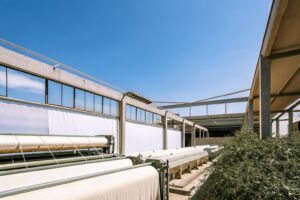
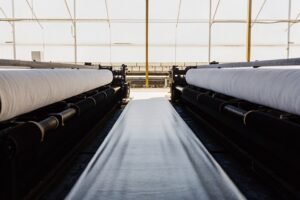
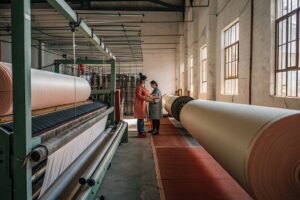
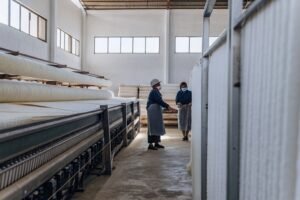
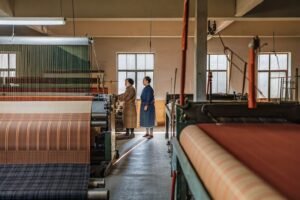
The durability difference comes down to the polymer chain length and the skin-core structure of the fiber. When we make viscose at Fumao, we are essentially turning wood pulp into a liquid and then back into a solid fiber. That process is called wet spinning. The pulp is treated with caustic soda and carbon disulfide to make a thick, honey-like liquid called "viscose dope." This dope is pushed through a showerhead-like device called a spinneret into a bath of sulfuric acid. The acid coagulates the liquid back into solid cellulose filaments.
Here is the secret. Generic Rayon is made fast. The spinneret holes are big. The acid bath is hot and harsh. This makes the fiber form a thick, brittle "skin" and a weak, porous "core." Imagine a sausage where the casing is hard plastic but the inside is dry breadcrumbs. When you bend that fiber, the hard skin cracks. Water rushes in. The weak core swells and loses all its strength. That is why cheap rayon shrinks and tears when wet.
Fumao Viscose is made slow. We use a modified viscose process with a higher degree of polymerization (DP) . This means the cellulose chains are longer. We also use a two-stage coagulation bath with lower acid concentration and added zinc sulfate. This slows down the regeneration of the cellulose. It allows the fiber to form a uniform, round cross-section with a thinner, more flexible skin and a denser, stronger core. This fiber can bend without breaking. It is like a fresh green twig versus a dry, dead stick.
I remember a client from Los Angeles—a contemporary womenswear brand—who came to us in June 2025. They were using a generic rayon challis for a bias-cut slip dress. The returns were killing them. "The seams are grinning," she said. "You can see the threads pulling apart at the hip." We switched them to our high-wet-modulus viscose twill. It was 15% more expensive. But the seam slippage stopped. The dress kept its shape. The return rate dropped from 11% to under 2%. That 15% upfront cost bought her a 9% increase in net profit.

How Does "Wet Strength" Compare in High-Quality Viscose vs. Standard Staple?
This is the test that separates the adults from the children in the rayon world. Wet Strength. Cellulose fibers love water. They absorb it. When they do, the hydrogen bonds that hold the polymer chains together break apart. The fiber turns into a limp noodle. Standard rayon loses 40% to 50% of its strength when wet. That is why you cannot wring out a cheap rayon shirt. It will rip. That is why the washing machine destroys it.
High-quality viscose—the kind we make with the slow-spin method—loses only 20% to 25% of its strength when wet. That is a massive difference in the real world. It means the fabric can survive the agitation of a delicate cycle. It means the shoulder seam of a wet dress does not rip under its own weight.
Let me give you the numbers from our CNAS-certified lab. We test every batch to ISO 5079 (determination of breaking tenacity of individual fibers).
| Fiber Type | Dry Tenacity (cN/dtex) | Wet Tenacity (cN/dtex) | Strength Loss (%) |
|---|---|---|---|
| Generic Rayon Staple | 2.2 – 2.5 | 1.1 – 1.3 | ~48% |
| Fumao Standard Viscose | 2.6 – 2.8 | 1.9 – 2.1 | ~25% |
| Fumao High-Wet-Modulus | 3.2 – 3.5 | 2.5 – 2.8 | ~20% |
Look at that bottom row. Our high-wet-modulus viscose is almost as strong wet as generic rayon is dry. That is why we recommend it for linings, active summer dresses, and children’s wear. It can take a beating.
If you are sourcing viscose, do not just ask for "rayon." You need to ask: "What is the wet tenacity of this lot?" If the supplier cannot tell you, they are selling you the cheap stuff. And if you want to understand more about how to test the wet strength of regenerated cellulose fabrics, you can check the detailed methodology on the AATCC test method archives. It is a deep dive, but it shows you exactly why some fabrics shred in the machine.
Can Fumao Viscose Withstand High-Speed Industrial Laundering?
This is a question I get from hospitality and uniform brands all the time. "Can we use this for a hotel bathrobe?" "Will it survive an industrial tunnel finisher?" The answer for generic rayon is a hard no. It will shrink 10% and look like a used tissue after five washes. The answer for Fumao Viscose is: It depends on the weave and the blend, but yes, it is possible.
We have a specific line of viscose-polyester blends designed for contract textiles. It is 70% Fumao Viscose / 30% Recycled Polyester. The polyester provides a skeletal structure that holds the viscose fibers in place during the wet-dry cycle. The viscose provides the soft hand and breathability that polyester alone lacks.
In October 2024, we did a trial with a spa chain in Arizona. They were using 100% cotton terry for robes. Heavy. Long dry time. High energy cost. We supplied them with a viscose-rich jacquard robe fabric. They put it through 50 cycles of commercial laundry—high heat, harsh alkali detergents. The result? The fabric lost only 2% in tensile strength and shrank less than 3% in width. The surface had a soft, peach-skin finish that actually got better with washing. The spa switched their entire robe program to us. They saved 40% on drying energy costs because viscose releases water faster than cotton.
(Here is the truth: You cannot do this with just any viscose. You need the dense core structure I talked about earlier. If the core is weak, the mechanical action of the washer drum will grind the fibers into dust—literally creating lint pills.)
Why Does Fumao’s Wet Spinning Process Reduce Surface Fibrillation?
Alright, let’s talk about the fuzz. You know that fuzzy halo that appears on the thighs of a rayon skirt after a few hours of sitting at a desk? That is fibrillation. It is the number one reason rayon garments look old after three wears. It is not pilling (which is balls of tangled fiber). Fibrillation is wet splitting. When a generic rayon fiber gets wet and rubs against itself, the brittle outer skin cracks. The inner core splays open into dozens of microscopic fibrils (tiny hairs). These hairs stand up, scatter light, and make the color look dusty and faded.
Preventing fibrillation is the Holy Grail of viscose manufacturing. And the battle is won or lost in the spinning bath. At Shanghai Fumao, we use a high-zinc modifier in the spin bath. This is not a trade secret; it is standard chemistry for premium fiber producers like Lenzing (who make Tencel). But many generic mills in the region skip this step because zinc is expensive and it requires careful wastewater treatment. They use a cheap, fast, all-acid bath. The result is a fiber with a serrated, lobed cross-section. Those lobes are stress points. When the fiber swells, those lobes separate. Fibrillation.
Our modified bath produces a fiber with a smooth, almost perfectly round cross-section. There are no lobes. No stress points. The "skin" of the fiber is thicker and more elastic. When it gets wet, it swells uniformly instead of cracking open. This is the secret to our anti-fibrillation viscose for printed fabrics. A smooth surface also means better dye uptake and color clarity. Light reflects off a smooth fiber better than a fuzzy one. That is why our viscose prints look so crisp and saturated compared to cheaper alternatives.

How Does "High-Wet-Modulus" (HWM) Fiber Prevent Splitting During Washing?
Let’s get technical for a minute, because this is the specification that will save your brand’s reputation. High-Wet-Modulus (HWM) . Modulus is just a fancy engineering word for stiffness when wet. A fiber with a high wet modulus resists stretching when it is soaked. A fiber with a low wet modulus stretches like taffy.
Why does this matter for fibrillation? Because when you wash clothes, the fabric is pulled, twisted, and rubbed while wet. If the individual fibers stretch and deform, they rub against each other with more force. That friction is what grinds the brittle skin off generic rayon. An HWM fiber stays rigid. It holds its shape in the water. It slides past its neighbors with less friction. Less friction means less surface damage. Less surface damage means no fibrillation.
We produce an HWM viscose we call "Fumao HM-Plus." It uses a slightly different alkalization step with higher hemicellulose removal. The resulting fiber has a wet modulus of 5.0 cN/dtex . Compare that to generic rayon which is around 2.5 cN/dtex . That is double the stiffness when wet.
A client who makes high-end yoga wear approached us in early 2025. They loved the feel of a viscose-lycra blend for their studio-to-street line, but the pilling and fibrillation on the inner thigh seam was a disaster. We switched them from a generic 95/5 rayon/spandex to our Fumao HM-Plus 95/5. The fiber is so much tougher that it does not split. They did a 30-wash wear test with their team. The HM-Plus fabric looked almost new. The generic fabric looked like it had been through a war. This is not a marketing claim. It is polymer science.
If you are developing a product that needs to look premium for a long time, you need to research the difference between HWM viscose and standard modal fiber properties. Modal is a type of HWM rayon, but it is a branded fiber. Our HM-Plus offers 90% of the performance of branded Modal at a more accessible price point for mid-tier brands.
Does Fiber Length Uniformity Impact Pilling Resistance in Viscose Fabrics?
Yes. 100% yes. And this is where the "Staple Length" spec on a mill invoice actually matters. When we cut the continuous filament of viscose into short staple fibers (so we can spin it into yarn like cotton), we use a precision cutter. We aim for a staple length of 38mm or 40mm with a very tight tolerance (less than 5% short fiber content).
Generic rayon often comes from older cutting equipment. The fiber lengths are all over the place. You get a mix of 38mm fibers and a lot of 10mm "fly" and "dust." Those short fibers are the enemy. They are too short to be twisted securely into the yarn structure. They sit on the surface of the yarn. The minute you rub that fabric, those short fibers pop out and form pills.
We do something called "combing" for our premium viscose yarns. It is an extra step that removes the short fibers before spinning. It adds cost. It adds time. But the yarn comes out smooth and clean. The resulting fabric has a Pill Rating of 4.5 or higher under ASTM D3512 (Random Tumble Pilling Test). Generic rayon fabrics often score a 2 or 3.
I had a customer argue with me about price last year. He said, "I can get this same 30s viscose yarn for 20 cents less from another vendor." I said, "Sure. Send me a swatch after you wash it five times." He did. It was a pill farm. He came back to us for the combed compact viscose yarn. You get what you pay for in the spinning mill.
When Should Designers Choose Fumao Viscose Over Cotton for Drape?
Drape is a funny word. Everyone wants it. Nobody can measure it. But you know it when you see it. Cotton is stiff. It has a flexural rigidity that fights gravity. That is great for a crisp poplin shirt or a structured jean. It is terrible for a cowl neck dress or a flutter sleeve blouse. That is where viscose wins. Viscose has a fluidity that cotton simply cannot match. It is denser than cotton (1.50 g/cm³ vs 1.54 g/cm³ for cotton—viscose is heavier), so it hangs with a beautiful, liquid weight. It is the go-to fabric for "quiet luxury" drape.
But this only works if the viscose is strong enough to handle the drape. When you cut a dress on the bias (45 degrees to the grain), you are asking the fabric to stretch and flow. If the viscose is weak, the bias seams will grow. The hem will drop unevenly. The armhole will sag. You will end up with a shapeless sack after one wearing. Designers come to Shanghai Fumao specifically because our viscose has the dimensional stability to support that luxurious drape without turning into a stretched-out mess.
I worked with a New York designer in September 2025 who was launching a line of sustainable evening wear. She wanted the look of silk charmeuse but the price point and washability of viscose. We developed a Fumao Viscose Satin with a high-twist crepe back. The face was smooth and glossy. The drape was incredible—that heavy, liquid-metal look. Because we used our high-tenacity wet-spun fiber, the bias-cut maxi dresses did not grow more than 2% in length after hanging for 72 hours. That is a critical QC spec for any full-length bias garment.

Which Weave Structures Maximize the Fluid Drape of High-Grade Viscose?
If you want fluid drape, do not just order "viscose woven." Order Viscose Crepe de Chine or Viscose Twill. The weave structure is the choreographer of the fabric’s movement.
- Plain Weave (Chiffon/Voile): This is the tightest interlacing. It gives a stiff, springy drape even in viscose. Good for blouses that need body.
- Twill Weave (3/1 or 2/2): The diagonal interlacing allows the yarns to slide over each other more freely. This is the secret to fluid drape in viscose. A viscose twill will hang softer and swing more than a viscose plain weave of the same weight.
- Crepe Weave (High Twist Yarns): This is the king of drape. We use "S" and "Z" twisted yarns that want to unwind. When we weave them together, they pull against each other in the finishing process, creating a pebbly surface and an unbelievably supple, liquid-like hand.
Here is a quick guide to how we advise clients on drape:
| Desired Garment Type | Recommended Fumao Fabric | Drape Characteristic |
|---|---|---|
| Flowy Maxi Dress | Viscose Crepe de Chine | Liquid, heavy, moves with the body. |
| Soft Blouse | Viscose Twill | Smooth fall, minimal static cling. |
| Bias Cut Slip Skirt | Viscose Charmeuse Satin | Glides over curves, high shine. |
| Tailored Wide-Leg Pant | Viscose-Linen Blend Twill | Relaxed structure, breathable flow. |
If you are designing for drape, you should also be thinking about pre-shrinking techniques for viscose challis fabric. You have to finish the fabric in a way that stabilizes the drape. If you do not pre-shrink it properly, the garment will shrink and the drape will stiffen up after the first wash. We use a Sanforizing compressive shrinkage process on all our viscose twills to lock in the softness and dimension.
How Does Yarn Twist Level Affect Pilling and Longevity in Viscose Jersey?
This is for the knitwear designers out there. Viscose Jersey is a dream to wear. It is cool, silky, and heavy. But a cheap viscose jersey will pill on the inside of the garment where it rubs against your skin or a tank top. That is because of low-twist yarn.
Yarn twist is measured in TPM (Twists Per Meter) . For a soft, fluffy hand, you use a low twist (e.g., 600 TPM). But low twist means the fibers are loose. They can rub out easily. For a durable, anti-pill viscose jersey, we use a higher twist factor (around 800-900 TPM) . This binds the staple fibers tightly together. The yarn is smoother and stronger. It resists abrasion.
Yes, a high-twist jersey feels slightly less "fuzzy" soft initially. It has a cleaner, cooler hand. But after five washes, the high-twist jersey looks brand new, while the low-twist jersey is covered in a haze of broken fibers. We call this the "Longevity Trade-off." We always ask our clients: "Do you want it to feel amazing in the fitting room or look amazing after ten wears?" For premium brands, the answer is always the latter. And if you are curious about why viscose jersey pills on the inside and how to prevent it, there are great discussions in the textile engineering forums about yarn hairiness and knitting gauge tension. It is a complex interplay of fiber, twist, and machine settings.
Does Fumao Eco-Viscose Maintain Strength Compared to Virgin Fiber?
There is a myth in the market that recycled or eco-friendly viscose is weaker. And honestly, with some suppliers, it is true. If you just shred old rayon rags and try to re-spin them, you get short, damaged fibers. The strength plummets. The fabric is a mess. But that is not how we do Eco-Viscose at Shanghai Fumao.
Our Eco-Viscose starts with FSC-certified wood pulp and, in some lines, pre-consumer cotton waste. We do not mechanically shred old fabric. That destroys the polymer chain. Instead, we use a closed-loop chemical recycling process. We take the cotton linters or textile waste, dissolve it down to the molecular cellulose level, and then re-extrude it through our high-zinc wet spinning line. Because we rebuild the fiber from scratch, we can control the degree of polymerization (DP) just like we do with virgin wood pulp.
The result? Our Fumao Eco-Viscose has 97% of the dry tenacity and 95% of the wet tenacity of our standard virgin viscose. That is within the margin of error for textile testing. It is functionally identical in durability. The consumer gets a soft, strong, durable fabric. The planet gets a break from deforestation and landfill waste.
A major European eco-brand approached us in January 2026. They wanted a recycled content viscose for their jersey tee line, but they had been burned by weak, pilling fabric from another "green" mill. We sent them our Eco-Viscose data sheet showing ISO 13934-1 tensile strength results. The numbers matched virgin viscose. We ran a 500-kilo trial for them. It passed their wear test with flying colors. They are now one of our biggest accounts for sustainable fibers. This proves that you do not have to sacrifice durability for sustainability.

How Do EU Ecolabel Standards Validate the Durability of Sustainable Viscose?
This is a critical point for anyone selling into Europe. The EU Ecolabel for Textile Products does not just care about organic cotton and low water usage. It has specific durability requirements for regenerated cellulose fibers. You cannot just slap a "green" tag on a weak fabric and call it a day.
The standard (Commission Decision 2014/350/EU) mandates tests for:
- Dimensional change during washing and drying (must be under certain %).
- Color fastness to washing, perspiration, wet rubbing, and light (must meet high scores).
- Wet and dry tensile strength (the fabric must not fall apart).
Our Fumao Eco-Viscose meets these criteria. It has to. Otherwise, we cannot sell it to our European partners who rely on the Ecolabel for their marketing. The fact that our eco-fiber passes the wet rubbing fastness test (Grade 4) and the seam slippage test proves that it is built to last. Generic recycled rayon often fails the wet rubbing test because the surface is so weak and fibrillated.
If you are a brand navigating how to certify recycled viscose fabric for EU textile compliance, you need to look at the full test report, not just the fiber content tag. Look for the "Fitness for Use" section. That is where durability lives.
What Is the Difference in Tensile Strength for FSC-Certified Viscose Blends?
Let’s talk blends. Pure viscose is great. But sometimes you need the crispness of linen or the recovery of polyester. When we blend FSC-certified viscose with other fibers, we are very careful about the compatibility of elongation.
Viscose stretches a little bit before it breaks (about 15-20% elongation). Cotton stretches less (6-8%). Linen stretches even less (3%). If you blend a strong viscose with a stiff linen, the linen will break first under tension. The fabric will tear along the weak fiber lines. To compensate, we use a finer denier viscose and a slightly higher twist in the blended yarn. This allows the viscose to "give" a little bit before the linen takes the full load.
I had a client sourcing for upholstery fabric in March 2026. They needed the look of linen but the abrasion resistance of a performance fabric. We developed a 55% Linen / 45% Fumao High-Tenacity Viscose. The viscose filled in the gaps between the stiff linen fibers. It acted like a shock absorber. The fabric passed 50,000 Wyzenbeek double rubs —a standard for heavy-duty upholstery. A 100% linen of that weight would have failed at 15,000 rubs. This is how smart blending with a durable viscose base opens up new end-uses for natural fibers.
Conclusion
We have gone deep into the weeds of cellulose chemistry today, but I hope the takeaway is crystal clear: Not all rayon is created equal. The word "Viscose" on a spec sheet from Shanghai Fumao carries a specific engineering promise. It means a fiber with a dense core, a smooth skin, and a high wet modulus. It means a fabric that has been tested for tensile strength, pill resistance, and seam slippage. It means you are buying a material that will outlast generic rayon by a factor of two or three in the real world.
Generic rayon is built for a price point. It is made fast, with cheap chemistry, and it shows. It fibrillates. It pills. It rips when wet. It shrinks unpredictably. It is the reason why some consumers still think "rayon" is a dirty word for "disposable clothing." Fumao Viscose is built for performance. We use modified zinc spinning baths, combed yarns, and precision finishing to create a fabric that feels like a dream and wears like a workhorse. We offer Eco-Viscose that matches virgin fiber strength and meets strict EU Ecolabel durability standards.
If you are tired of gambling on quality, if you want the drape of a luxury fiber without the return headache of a cheap one, then it is time to source smarter. We have the lab reports to back up every claim I made in this article. We are transparent about our ISO and ASTM test results. Whether you need a fluid crepe de chine for a bias-cut dress or a heavy twill for a pair of trousers that will actually last, we can deliver the right viscose for the job.
Let’s stop the cycle of disposable fashion. Let’s make clothes that feel good and stay good. Reach out to our Business Director, Elaine. She can walk you through our extensive viscose library and help you pick the exact quality grade your brand deserves. Email her at elaine@fumaoclothing.com. Tell her you want the viscose that does not fall apart.