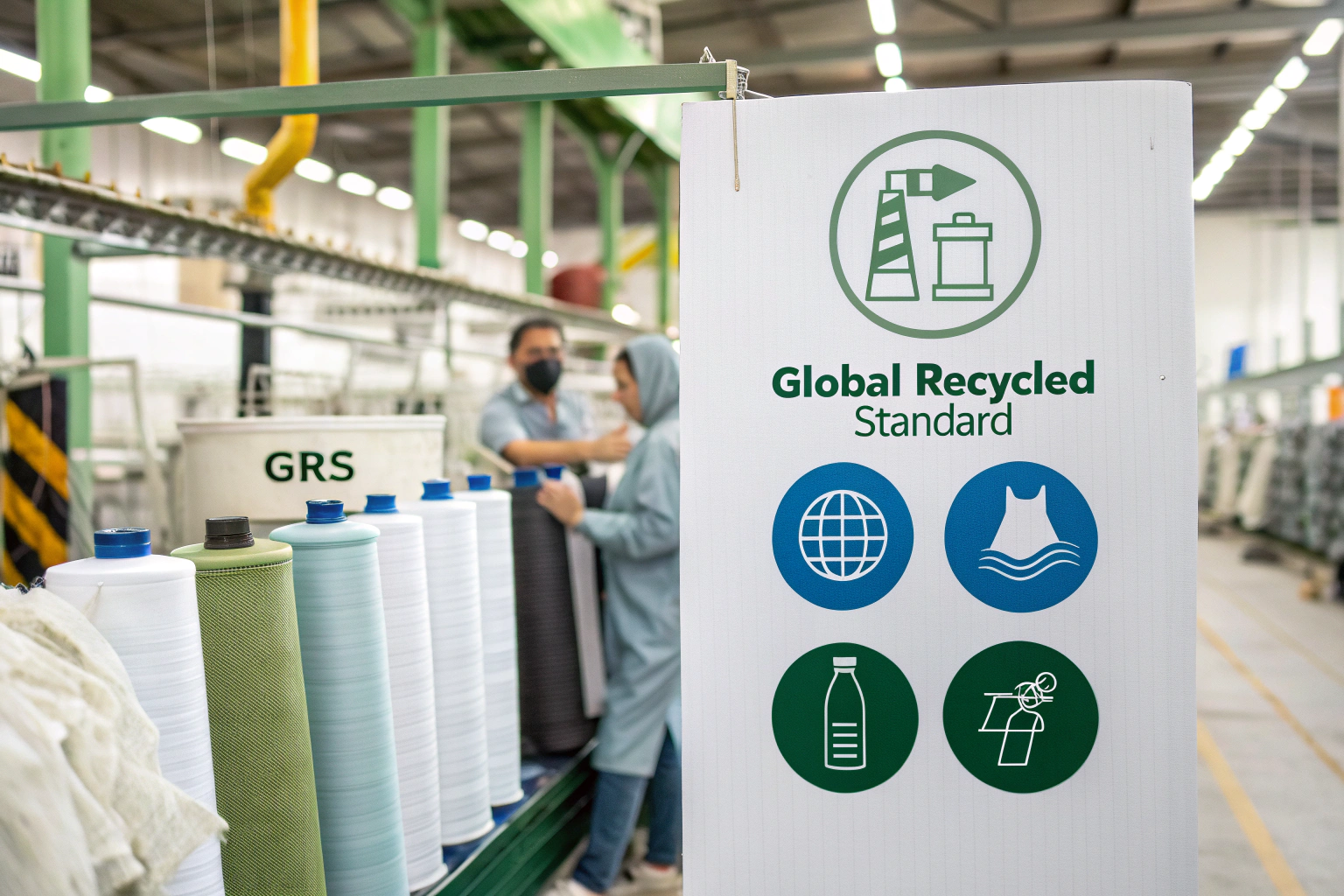
Is your brand’s "sustainable" collection truly sustainable, or could it be accused of greenwashing? In today’s textile industry, vague claims about "eco-friendly materials" or "recycled content" are no longer enough to satisfy informed consumers or meet retailer requirements. Without a verifiable, third-party standard, your sustainability story has no credible backbone. This is where the Global Recycled Standard (GRS) transforms from an optional certification into a critical business tool.
The GRS is an international, voluntary product standard that tracks and verifies recycled content in a finished product, while also addressing social and environmental practices in production and chemical restrictions. It’s not just about having recycled materials—it’s about proving their existence through a documented chain of custody, from raw material to final product. For fabric suppliers and brands alike, GRS certification provides the transparency needed to make authentic sustainability claims that can withstand scrutiny.
At Shanghai Fumao, having achieved GRS certification for our recycled fabric lines, we’ve seen firsthand how it transforms client trust and market access. It’s a rigorous process that validates our commitment and gives our partners—from global brands to conscious startups—the confidence they need. Let’s break down what GRS truly entails and why it has become a non-negotiable in modern textile sourcing.
What Exactly Does the GRS Certification Measure and Verify?
Many people think GRS is simply a label for recycled content. It’s much more comprehensive. Think of GRS as a three-pillar verification system that audits a product’s material composition, environmental processes, and social responsibility throughout the supply chain. It’s a holistic check that ensures sustainability claims are backed by real, auditable data at every step.
The core pillars of GRS are:
- Recycled Content Verification: This is the fundamental requirement. GRS certifies the percentage of recycled material in a final product (with certified products containing a minimum of 20% recycled content). It uses a Chain of Custody (CoC) model, meaning every entity that handles the material—from the recycler, to the yarn spinner, to the fabric mill, to the garment factory—must be GRS-certified and maintain meticulous transaction records (TCs). This guarantees that the recycled material you pay for is actually in the product.
- Environmental Criteria: GRS sets restrictions on chemical inputs used in processing. It bans certain harmful substances and requires certified facilities to have policies for managing wastewater, energy use, and waste. This means the process of making the recycled fabric is also held to a higher standard.
- Social Criteria: The standard requires certified facilities to adhere to strict social guidelines based on International Labour Organization (ILO) conventions. This includes ensuring safe working conditions, no child or forced labor, fair wages, and reasonable working hours. For brands, this extends their ethical due diligence deep into their supply chain.
For a fabric supplier like us, obtaining certification meant overhauling our documentation system. Every batch of GRS-certified recycled polyester (rPET) chips we purchase comes with a Transaction Certificate (TC). When we produce fabric, we issue a new TC to our client, stating the exact recycled content percentage in that specific fabric lot. This creates an unbroken, auditable paper trail. Understanding this system is crucial; organizations like Textile Exchange (the standard owner) provide detailed guides to understanding recycled material certifications.

How is the Chain of Custody Different from a Simple Supplier’s Letter?
This is where GRS separates the serious from the superficial. A supplier can easily provide a letter claiming "50% recycled content." A GRS Chain of Custody provides independently verified proof.
Here’s how it works in practice: Let’s say we produce a fabric with 80% GRS rPET and 20% virgin polyester. Our yarn supplier must give us a TC for the rPET yarn. We then calculate the recycled content mass balance through our production, accounting for any losses. The final fabric roll receives a TC from us, which our client (the garment maker) uses to calculate the content in their finished garment. An annual audit by a third-party body (like Control Union or SGS) checks all these records, material flows, and storage practices to prevent contamination or fraud.
In 2023, a Scandinavian outdoor brand audited our facility specifically for this process. They traced a TC from a finished jacket back through the garment factory, to our fabric TC, and ultimately to the TC from our polymer supplier. This level of traceability gave them the evidence needed for their own marketing claims and to comply with upcoming EU legislation. Without GRS, this deep traceability is almost impossible to reliably achieve. For brands building a traceability strategy, resources like The Sustainability Consortium offer insights into implementing effective supply chain tracking systems.
What Are the Different Certification Levels and Scopes?
GRS has clear tiers and scopes, which adds nuance to your claims:
- Certification Levels: Products are labeled based on their verified recycled content:
- GRS 95%+: Product contains 95-100% recycled material.
- GRS 70%+: Product contains 70-94% recycled material.
- GRS 50%+: Product contains 50-69% recycled material.
- (No label for 20-49%): While the minimum standard is 20% for product eligibility, only products with 50%+ can use the GRS label. Products with 20-49% are "GRS-compliant" and covered by the CoC but cannot be labelled.
- Scope vs. Product Certification: A company can be certified for a specific scope (e.g., "trading and warehousing of GRS fabrics") or have specific products certified. It’s vital to ask a supplier for the scope certificate and the product-specific TC, not just a logo.
We always advise our clients to be precise in their communication. Instead of "made with recycled materials," they can say, "This jacket is made with fabric containing 78% GRS-certified recycled polyester (GRS 70%+)." This specificity is powerful and legally defensible.
Why is GRS Critical for Brands Selling in the EU and US Markets?
For brands targeting the EU and North America, GRS has evolved from a "nice-to-have" to a "must-have" for three compelling reasons: compliance with looming legislation, meeting stringent retailer requirements, and building authentic consumer trust. In these markets, unverified environmental claims are becoming a legal and reputational minefield.
1. Regulatory Compliance: The EU is leading the charge with aggressive legislation. The EU Strategy for Sustainable and Circular Textiles and proposed Green Claims Directive will soon require companies to substantiate any environmental claim with detailed, verifiable evidence. GRS provides a ready-made, internationally recognized framework to prove recycled content claims, potentially saving brands from costly legal challenges or fines. It’s a proactive compliance tool.
2. Retailer & B2B Gatekeeping: Major retailers like H&M, Inditex (Zara), and Decathlon, as well as sportswear giants like Nike and Adidas, now routinely require GRS certification for products making recycled claims in their supply chains. It has become a baseline ticket to enter their sourcing programs. For a fabric supplier, being GRS-certified like Shanghai Fumao is often a prerequisite to even be considered by these brands’ sourcing teams.
3. Consumer Trust & Transparency: Modern consumers, especially Gen Z, are skeptical. They use apps to scan labels and research brand claims. A GRS label, often accompanied by a QR code or ID that links to certification details, provides a tangible token of trust. It moves the conversation from "we say we’re sustainable" to "here is the proof from an independent third party."
A concrete example: In early 2024, we helped a German sustainable streetwear brand prepare for the French AGEC Law, which requires products to display detailed environmental characteristics. By providing them with GRS TCs for every fabric lot, we gave them the precise, legally required data on recycled content percentage and traceability, streamlining their compliance process dramatically. Staying ahead of such regulations is key; following updates from The European Commission’s environment department is essential for tracking new textile sustainability regulations.

How Does GRS Compare to Other Recycled Content Standards?
| GRS isn’t the only player, but it has become the most widely adopted in the textile industry for finished goods. Understanding the landscape helps in choosing the right tool: | Standard | Focus | Key Differentiator |
|---|---|---|---|
| GRS (Global Recycled Standard) | Finished Products (yarn, fabric, garments). | Comprehensive: Covers recycled content + environmental + social criteria via Chain of Custody. | |
| RCS (Recycled Claim Standard) | Recycled Content Only. | Simpler, lighter version of GRS. Tracks recycled content only, without the environmental and social modules. Often used for lower-cost verification. | |
| SCS Recycled Content Certification | Material or finished product. | A respected standard often used in other industries (like packaging). Strong in content verification but less textile-specific in its supply chain approach. | |
| OEKO-TEX® STANDARD 100 | Product Safety (harmful substances). | Different purpose. Certifies a product is free from harmful chemicals. It does not verify recycled content. A GRS-certified product can also be OEKO-TEX certified for safety. |
For most apparel brands needing a robust, textile-focused verification of both content and ethics, GRS is the industry benchmark. The RCS is a valid option if you only need to verify content and want a faster, less expensive path. We often produce fabrics that are dual-certified GRS and OEKO-TEX®, giving clients proof of both recycled content and consumer safety.
What is the Process and Cost for a Fabric Supplier to Get GRS Certified?
For brands, understanding what your supplier goes through to achieve GRS certification builds partnership and underscores the value. It’s not a simple paperwork exercise; it’s a significant operational investment that demonstrates a supplier’s long-term commitment to sustainable practices.
The process is rigorous and involves several key steps:
- Application & Contract: The supplier selects an accredited certification body (e.g., Control Union, SGS, ITS) and signs a contract.
- Documentation Preparation: This is the most intensive phase. The supplier must develop:
- A detailed Quality Management Manual outlining their GRS management system.
- Procedures for identifying, storing, and processing GRS materials to prevent mixing with conventional goods.
- Record-keeping systems for all GRS material inputs, production, and outputs (the basis for Transaction Certificates).
- Policies for chemical management, environmental impact, and social compliance (based on ILO standards).
- On-Site Audit: An auditor visits the facility for 1-3 days. They will:
- Review all documentation.
- Inspect the factory floor to verify physical separation of GRS and non-GRS materials (different storage areas, marked production lines).
- Interview workers and management on social practices (working hours, contracts, safety).
- Trace a batch of GRS material through the entire production process, from intake to shipping, checking records at every step.
- Audit Report & Certification: The auditor submits a report. If non-conformities are found, the supplier must correct them. Once all is satisfied, the certification body issues a Scope Certificate.
The costs are not trivial. They include the certification body’s fees (which can range from $3,000 to $10,000+ depending on facility size and complexity), consultant fees (if used), internal labor costs for months of preparation, and potential physical modifications to the factory (new storage racks, signage). For a supplier like us, it was a strategic decision to serve forward-thinking global clients. The investment is recouped not by charging exorbitant premiums, but by securing larger, more stable orders from quality-conscious brands. Industry analyses, such as those by McKinsey & Company, often detail the business case for investing in sustainable textile production.

What Ongoing Obligations Does a Certified Supplier Have?
Certification isn’t a one-time event; it’s an ongoing commitment with annual surveillance audits. We must:
- Maintain the System: Keep all records up-to-date for every GRS order.
- Issue TCs: Generate a Transaction Certificate for every shipment of GRS material to a downstream certified client.
- Annual Audit: Undergo a lighter surveillance audit each year to ensure continued compliance, with a full re-certification audit every three years.
- Stay Updated: Adhere to any updates to the GRS standard itself.
This continuous process ensures the integrity of the system. It means when you source from a certified supplier year after year, you can be confident the standards are being actively maintained, not just a plaque on the wall from a one-off audit.
How Can Brands Use GRS to Communicate Authentically and Avoid Greenwashing?
Obtaining GRS-certified fabric is a major achievement, but miscommunicating its meaning can backfire. Authentic communication is about precision, transparency, and education—not vague, exaggerated claims that erode trust.
The Right Way to Communicate:
- Be Specific and Accurate: Use the exact certified percentage and level. "Made with 85% GRS-certified recycled polyester (GRS 70%+)."
- Explain What It Means: Briefly educate your customer. "The GRS certification verifies the recycled content in this product and ensures responsible social and environmental practices in its production."
- Show the Chain: Use storytelling. "This hoodie starts its life as post-consumer plastic bottles, which are traced through our supply chain via the Global Recycled Standard."
- Link to Proof: Include the GRS logo on hangtags and consider adding a QR code that links to a page explaining the certification and possibly showing the supplier’s scope.
What to Avoid (Greenwashing Pitfalls):
- Vague Language: Avoid "eco-friendly," "green," or "sustainable" without the GRS qualifier.
- Exaggeration: Don’t imply that GRS certification makes the entire product or company "sustainable." It certifies specific materials and processes for specific products.
- Ignoring Other Impacts: GRS doesn’t cover everything (e.g., carbon footprint of transportation, water use in dyeing). Be honest about your overall journey. Frame GRS as a key part of your strategy, not the entire solution.
We collaborated with a US-based DTC athleisure brand on their launch of a recycled collection. We provided them with not just the fabric and TCs, but also high-quality assets: video of the rPET yarn production, infographics on the CoC, and clear language about the GRS. Their campaign, focused on "Verified Recycled," saw a 25% higher engagement rate than their previous marketing efforts. For crafting credible messaging, frameworks from The Competition and Markets Authority (CMA) or FTC Green Guides are essential reading on making truthful environmental marketing claims.

What is the Future of GRS and Circularity in Textiles?
GRS is a cornerstone of the current "linear-to-circular" transition, but it’s part of an evolving landscape. The future points toward:
- Integration with Digital Traceability: Platforms like Eon or TextileGenesis are linking physical GRS certification with digital product passports (DPPs), a concept central to the EU’s strategy. This will allow real-time, granular tracking of a garment’s life cycle.
- Focus on Post-Consumer vs. Pre-Consumer: The market is increasingly valuing post-consumer recycled (PCR) content (from used bottles or garments) over pre-consumer (factory scrap), as it tackles waste more directly. GRS clearly distinguishes between the two, requiring disclosure.
- Beyond Recycled Polyester: While rPET dominates today, the standard is crucial for scaling up recycling for other fibers like nylon, cotton (through the RCS), and eventually complex blends.
As a supplier, our R&D is now focused on GRS-certified recycled nylon from fishing nets and carpets, and exploring chemical recycling technologies to handle polyester-cotton blends, which mechanical recycling cannot separate. This proactive approach ensures we and our clients stay ahead of the curve. Following thought leaders like The Ellen MacArthur Foundation is critical for understanding the future of circular economy standards in fashion.
Conclusion
The Global Recycled Standard is far more than a label; it is a comprehensive verification system that brings rigor, transparency, and credibility to the complex world of recycled textiles. It solves the core problem of greenwashing by providing an auditable chain of custody from waste to finished product, backed by environmental and social safeguards. For brands, it is a critical tool for regulatory compliance, market access, and building genuine consumer trust.
As legislation tightens and consumer awareness deepens, partnering with GRS-certified suppliers like Shanghai Fumao is no longer a strategic advantage—it’s a baseline requirement for any brand serious about making authentic sustainability claims. The investment in certified materials is an investment in your brand’s integrity and long-term viability in a circular economy.
Ready to build your collections on a foundation of verified sustainability? Shanghai Fumao offers a full range of GRS-certified fabrics and the traceability documentation you need. Contact our Business Director Elaine today at elaine@fumaoclothing.com to explore our certified recycled fabric portfolio and start a transparent supply chain for your brand.