Have you ever felt a fabric that’s unmistakably textured, slightly springy to the touch, and drapes with a beautifully fluid, almost liquid movement? Chances are, you were touching a crepe. From the elegant, structured fall of a crepe de Chine blouse to the ethereal flutter of a chiffon scarf, crepe fabrics define sophistication and versatility in fashion. But with so many names—georgette, chiffon, crepe de Chine—it’s easy to get lost. Are they all the same? What truly defines this beloved textile family?
So, what is crepe fabric, and what are its key varieties? At its core, crepe is a weaving or yarn treatment technique that creates a characteristic crinkled, pebbled, or grained texture. This signature "crepe" effect is achieved through high-twist yarns, special weaves, or chemical treatments. The major varieties—Georgette, Chiffon, and Crepe de Chine—are distinguished by fiber content, yarn twist, weight, and transparency, leading to vastly different drape and use cases. Understanding these nuances is the key to sourcing the right crepe for your design, whether it’s a flowing evening gown or a sharp tailored dress.
Crepe isn’t a single fabric; it’s a universe of textures. Its magic lies in its ability to be both elegant and resilient, fluid yet structured. For designers and brands, navigating this universe means moving beyond generic terms to the specific technicalities that make each type unique. Let’s unravel the world of crepe, from its fundamental construction to the distinct personalities of its most famous children.
What Defines the Signature Crepe Texture and Drape?
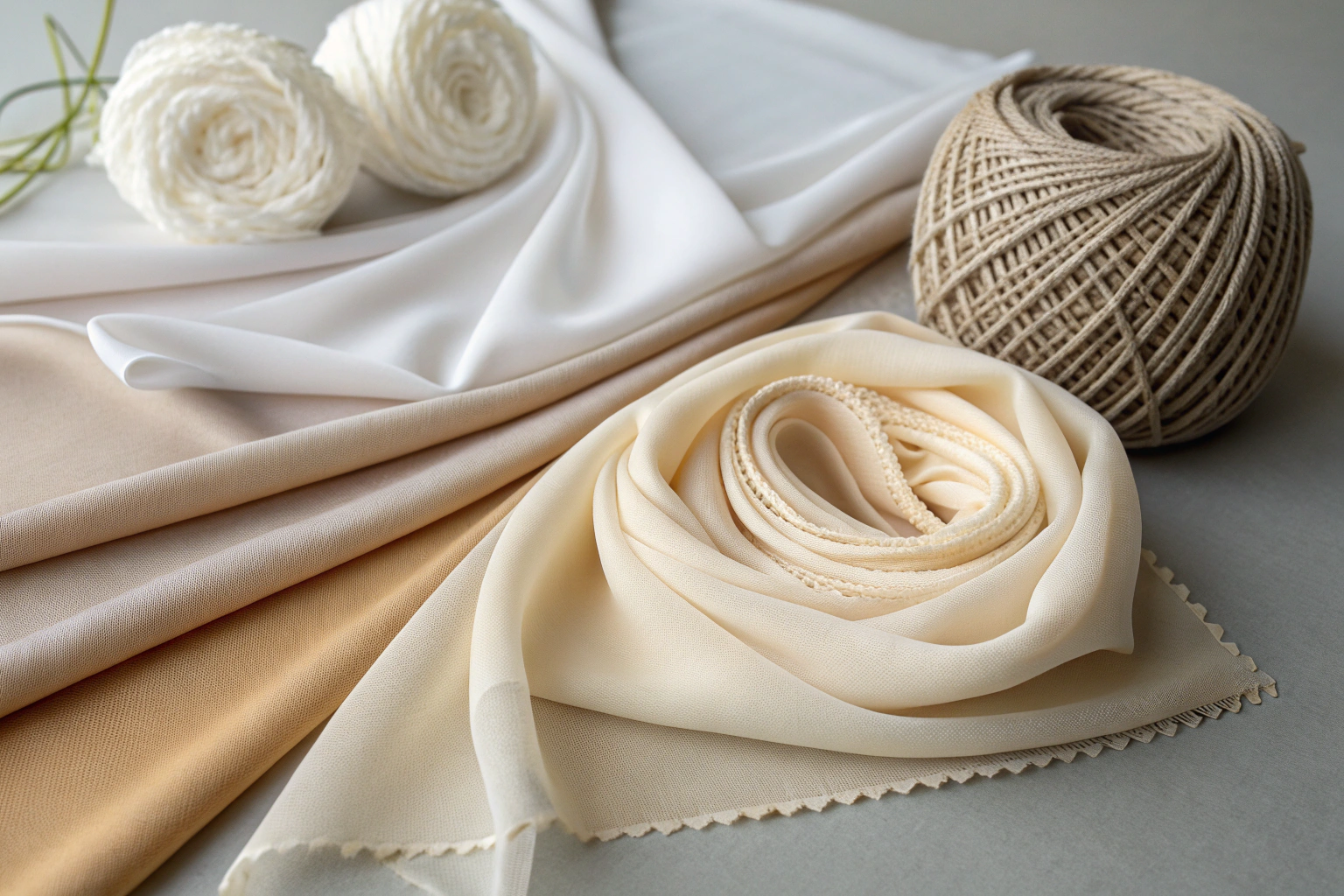
The essence of crepe is all in the twist. Unlike smooth fabrics like poplin or satin, crepe’s identity comes from intentional irregularity. This isn’t a flaw; it’s engineered beauty. The hallmark pebbled surface isn’t just for visual interest—it creates a fabric with minimal sheen, excellent drape, and a graceful resistance to wrinkling. The texture also helps conceal minor stains and wear, making many crepes surprisingly practical for daily wear.
The drape of a crepe is directly tied to its weight and yarn construction. A lightweight crepe like chiffon will float and flutter, while a heavier crepe like a wool crepe will fall in clean, sculptural folds. This versatility is why crepe has been a staple from ancient times to modern runways, adapting across centuries and styles.

How is the Crepe Effect Created?
There are three primary methods, often used in combination:
- High-Twist Yarns (The Most Common Method): Yarns are twisted so tightly that they have a natural tendency to kink and crinkle. In weaving, these yarns are used in both the warp and weft. After weaving, the fabric is finished with heat or moisture, allowing the twisted yarns to contract and create the pebbled texture. This is how classic Crepe de Chine and Georgette are made.
- Crepe Weave: A specific weaving pattern that alternates regular right-hand twist yarns with left-hand twist yarns in a balanced way. This creates a subtle, all-over texture even without using high-twist yarns. This method is often used for heavier fabrics.
- Chemical or Embossing Treatment: A plain fabric can be passed through engraved rollers that crush the surface to create a crepe pattern, or treated with chemicals that shrink fibers differentially. This is a more economical way to achieve a crepe-like appearance, but the texture is often less durable and may wash out.
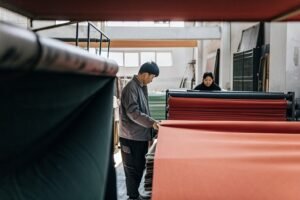
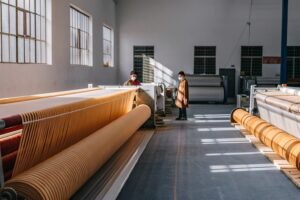
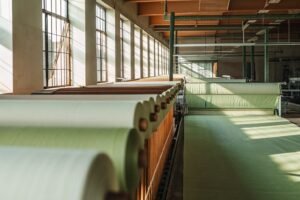
The quality of a crepe is evident in the fineness and consistency of its pebble. A cheap crepe will have a coarse, irregular texture that can feel rough. A high-quality crepe, like the ones we source from specialized mills in Zhejiang, has a fine, even, and luxurious pebble that feels soft against the skin. For designers, understanding the manufacturing process of high-twist crepe yarns is key to evaluating quality and cost.
Why Does Crepe Drape So Well?
The secret is in the combination of structure and give. The high-twist yarns create a fabric with a slight springiness or "live" quality. It’s not stiff; it has a gentle resistance that allows it to fall into soft folds rather than cling or stand away from the body. Additionally, the textured surface reduces friction between layers of fabric, enhancing its fluid movement. This makes it a dream for bias cutting, a technique that exploits the fabric’s diagonal stretch for a supremely flattering fit.
In practice, this means a dress cut from a good quality crepe will skim the body elegantly, move gracefully with the wearer, and hold its shape without adding bulk. A client from New York creating a luxury resort wear line specifically sought out a silk crepe de Chine with a 25-momme weight for this exact reason—it was heavy enough to have a luxurious fall and resist transparency, but light enough to flow in the breeze. Selecting the correct fabric weight (GSM or momme) for desired garment drape is a critical specification.
How Do Georgette, Chiffon, and Crepe de Chine Differ?
While united by the crepe technique, these three stars have distinct personalities, weights, and best uses. Confusing them can lead to a design disaster—imagine ordering a sheer georgette expecting the opacity of crepe de Chine. Knowing their specific profiles is essential for accurate sourcing and design execution.
Think of them as siblings: Crepe de Chine is the elegant, polished older sibling; Chiffon is the delicate, romantic one; and Georgette is the textured, slightly boho middle child. Each brings a unique attitude to a collection.

What is Crepe de Chine?
- Character: The most refined and versatile of the trio. It has a smooth face with a subtle, fine crepe texture. It is opaque, has a beautiful fluid drape, and a slight luster (especially in silk).
- Construction: Traditionally made from silk using high-twist yarns in a plain weave. Today, it’s also widely made from polyester and rayon. The key is the balanced, fine texture and substantial hand feel.
- Weight: Heavier than georgette and chiffon, typically around 50-70 GSM for polyester, or 16-25 momme for silk.
- Best For: Blouses, dresses, skirts, lingerie, and luxury linings. It’s the workhorse of high-end occasion wear and tailored separates.
A key sourcing tip: "Crepe de Chine" on a price list can mean many things. Always ask for the fiber content and actual weight (GSM). A 68 GSM polyester crepe de Chine will drape and perform very differently from a 110 GSM viscose crepe de Chine. We always provide this data to our clients to prevent mismatches. For eveningwear, understanding the differences between silk and synthetic crepe de Chine is crucial for both cost and sustainability decisions.
What is Chiffon?
- Character: The lightest and most sheer. It is translucent, airy, and has a very soft, flowing drape. It has a slightly more pronounced crepe texture than crepe de Chine but is much finer.
- Construction: Made from highly twisted yarns in a plain weave, but the yarns are finer and the fabric is much more loosely woven to achieve its sheerness.
- Weight: Very lightweight, often 20-50 GSM. It’s famously delicate and can be slippery to work with.
- Best For: Overlays, scarves, sleeves, wedding gowns, and flowing eveningwear where a dreamy, ethereal effect is desired.
Chiffon’s delicacy is a double-edged sword. A European bridal brand learned this when they used a low-quality polyester chiffon that snagged easily on beaded embroidery. We sourced a nylon chiffon for them, which had a slightly stronger fiber and better resistance to abrasion from the beads, while maintaining the necessary drape. This is an example of selecting the right fiber for delicate, decorative fabrics.
What is Georgette?
- Character: Occupies the middle ground. It is semi-sheer to opaque (depending on weight), with a more pronounced, dry, and pebbly texture than crepe de Chine. It has a muted, matte finish and a slightly more structured, bouncy drape.
- Construction: Uses highly twisted yarns, but they are often plied (multiple threads twisted together), creating a stronger, more textured yarn. It can be made from silk, polyester, rayon, or blends.
- Weight: Generally heavier than chiffon but can be lighter than some crepe de Chine, typically in the 60-100 GSM range.
- Best For: Flowy blouses, dresses, sarees (it’s a staple in Indian fashion), and skirts where more body and texture are desired without heaviness.
A US-based contemporary brand wanted a fabric for a tiered ruffle dress that held its shape in the ruffles but still moved. A standard crepe de Chine was too fluid, and chiffon was too flimsy. We recommended a polyester georgette with a 90 GSM weight. It provided the perfect combination of body for the ruffles and a beautiful, textured flow for the skirt. Knowing how fabric weight and texture influence garment structure is a fundamental design skill.
What Are the Fiber Options and Their Impact?
Crepe can be made from almost any fiber, and the choice dramatically alters the fabric’s hand, cost, care, and sustainability profile. The classic association is with silk, but modern crepes are predominantly made from synthetic or semi-synthetic fibers for reasons of cost, durability, and accessibility. Your choice here will define the price point and character of your final garment.
Each fiber brings its inherent properties to the crepe structure. Silk gives luxury and breathability; polyester offers durability and affordability; rayon/viscose provides a beautiful drape and matte finish at a mid-range price. Blends are also common to balance properties.

Silk Crepe vs. Synthetic Crepe: A Comparison
| Property | Silk Crepe (e.g., Silk Crepe de Chine) | Synthetic Crepe (e.g., Polyester Georgette) |
|---|---|---|
| Hand Feel | Luxuriously soft, smooth, dry. | Can range from soft to slightly crisp; often has a more "slippery" feel. |
| Drape | Unparalleled fluidity and weight. | Very good, but can sometimes be stiffer or more "papery" than silk. |
| Breathability | Excellent. Highly absorbent and temperature-regulating. | Poor. Hydrophobic, can feel clammy in heat. |
| Care | Delicate. Often dry-clean only. Hand washable with care. | Easy. Machine washable, wrinkle-resistant, quick-drying. |
| Cost | High. Raw material and production are expensive. | Low to moderate. Very cost-effective for large-scale production. |
| Luster | Subtle, natural pearl-like sheen. | Can be matte or have a high, sometimes artificial-looking sheen. |
| Sustainability | Natural, biodegradable, but silk production has its own environmental/ethical considerations. | Derived from petroleum, not biodegradable, but can be made from recycled PET (rPET). |
For a sustainable luxury brand, the choice isn’t simple. We worked with a brand that opted for a crepe made from Tencel™ (Lyocell), a semi-synthetic from wood pulp. It offered the beautiful drape and matte feel of silk with better moisture-wicking and a lower environmental impact than polyester, at a price point between silk and premium polyester. Exploring eco-friendly alternatives to traditional silk crepe is a growing area of innovation.
How Do Blends Change the Game?
Blends are used to get the best of both worlds or to reduce cost.
- Polyester-Viscose Blends: Very common. The polyester adds strength and easy-care, the viscose adds softness and a better drape. A 65% Polyester / 35% Viscose crepe is a staple for mid-market blouses.
- Silk-Cotton Blends: Adds more structure and a matte, casual feel to silk’s luxury. Easier to care for than pure silk.
- Crepe with Spandex: Adding 2-5% spandex creates "stretch crepe," a revolutionary fabric for modern tailoring. It offers all the elegance of crepe with added comfort and fit retention.
A great example is the "power crepe" used in contemporary suiting. This is often a 97% Polyester / 3% Spandex crepe that mimics the look of wool crepe but is machine-washable, travel-friendly, and offers incredible comfort. A corporate wear client switched their uniform dress fabric to this, receiving massive positive feedback for comfort. Sourcing stretch crepe fabrics for modern workwear is a major trend.
How to Source and Specify Crepe Fabrics Correctly?
With so many variables, accurately sourcing crepe requires precise communication. Simply asking for "georgette" will result in a huge range of samples, many of which won’t suit your needs. Your technical pack or sourcing brief must be detailed to filter suppliers and ensure you get the right fabric on the first try.
This is where working with a specialized supplier pays off. A general fabric trader might not understand the nuance between a 70 GSM and a 100 GSM georgette, but a specialist will. They can guide you based on your desired end-use.

What Specifications Are Crucial in a Sourcing Brief?
When requesting samples or quotes, always include:
- Target Fabric Name & Type: Be specific (e.g., "Polyester Crepe de Chine," "Silk Chiffon," "Rayon Georgette").
- Weight (GSM or Momme): This is the most important objective metric after fiber content. Specify a range (e.g., "Crepe de Chine, 65-75 GSM").
- Width: Standard widths are 114cm or 150cm, but always confirm.
- Hand Feel & Drape Description: Use descriptive terms like "fluid drape," "crisp hand," "soft and pebbly."
- Opacity Requirement: "Fully opaque," "semi-sheer," or "sheer."
- Color/Fastness Requirements: If for dyeing, specify colorfastness to washing and light.
- Certifications: Oeko-Tex, GRS for recycled content, etc.
We once saved a client from a major error. They requested "chiffon" for a lined dress. The supplier sent a sample of standard 30 GSM polyester chiffon. It was too flimsy. Based on their description of a "dress with body," we intervened and sent samples of a 90 GSM polyester chiffon crepe, which had the sheerness they liked but much more substance. They had no idea such an option existed. This highlights the value of consultative fabric sourcing for fashion designers.
What Are Common Quality Issues to Watch For?
When evaluating crepe samples, be vigilant:
- Poor Recovery: Stretch the fabric widthwise. Does it spring back instantly, or does it stay distorted? Poor recovery indicates low-quality yarn or insufficient twist.
- Uneven Texture: The pebble should be fine and even across the fabric. Large, irregular bumps are a sign of poor manufacturing control.
- Excessive Shrinkage: Especially with viscose-based crepes. Always pre-wash a sample meter before committing to bulk.
- Color Bleeding: Particularly in dark or vibrant colors on synthetic crepes. Ask for a crocking test report.
- Fabric Slitting: On tubular knitted crepes (like some stretch crepes), the edges can curl severely. Ask how the supplier manages this during rolling and packing.
A consistent quality issue we help clients solve is shrinkage control in viscose crepes. Our partner dyeing mills use advanced pre-shrinking (compacting) finishes that can reduce residual shrinkage to under 3%, making the fabric safe for garment washing. This kind of technical finish is a value-add that separates a good supplier from a great one.
Conclusion
Crepe fabric, in all its glorious varieties, remains a timeless cornerstone of fashion due to its unique marriage of texture, drape, and versatility. Understanding the distinct identities of Crepe de Chine, Georgette, and Chiffon—defined by weight, transparency, and texture—empowers you to make precise, creative choices. Further, selecting the right fiber, from luxurious silk to practical polyester or innovative Tencel™, allows you to align the fabric with your brand’s cost, performance, and ethical values.
Sourcing crepe successfully requires moving beyond vague terminology to precise specifications like GSM, fiber content, and finish. By partnering with a knowledgeable supplier who understands these nuances, you can unlock the full potential of this fabric family, ensuring your designs have the exact fluidity, structure, and feel you envision.
If you are looking to source high-quality crepe fabrics with confidence—from the finest silk chiffon to durable polyester crepe de Chine—we offer the expertise and curated supply chain to match your exact needs. At Shanghai Fumao, we provide detailed specifications and samples so you can make informed decisions. Contact our Business Director, Elaine, at elaine@fumaoclothing.com to explore our crepe collection and find the perfect texture for your next collection.