Imagine a factory worker, an electrician, or a firefighter whose daily uniform is their first and last line of defense against a sudden flash of flames or an electrical arc. The difference between a severe injury and walking away unscathed can hinge on a few seconds of protection provided by their clothing. This is the critical, life-saving role of Flame Retardant (FR) fabrics. Yet, in the world of sourcing and procurement, FR is often misunderstood—treated as a generic checkbox rather than a complex, standards-driven science. So, what truly defines an FR fabric, and how can you navigate the labyrinth of safety standards to ensure you’re sourcing genuine protection, not just a marketing claim?
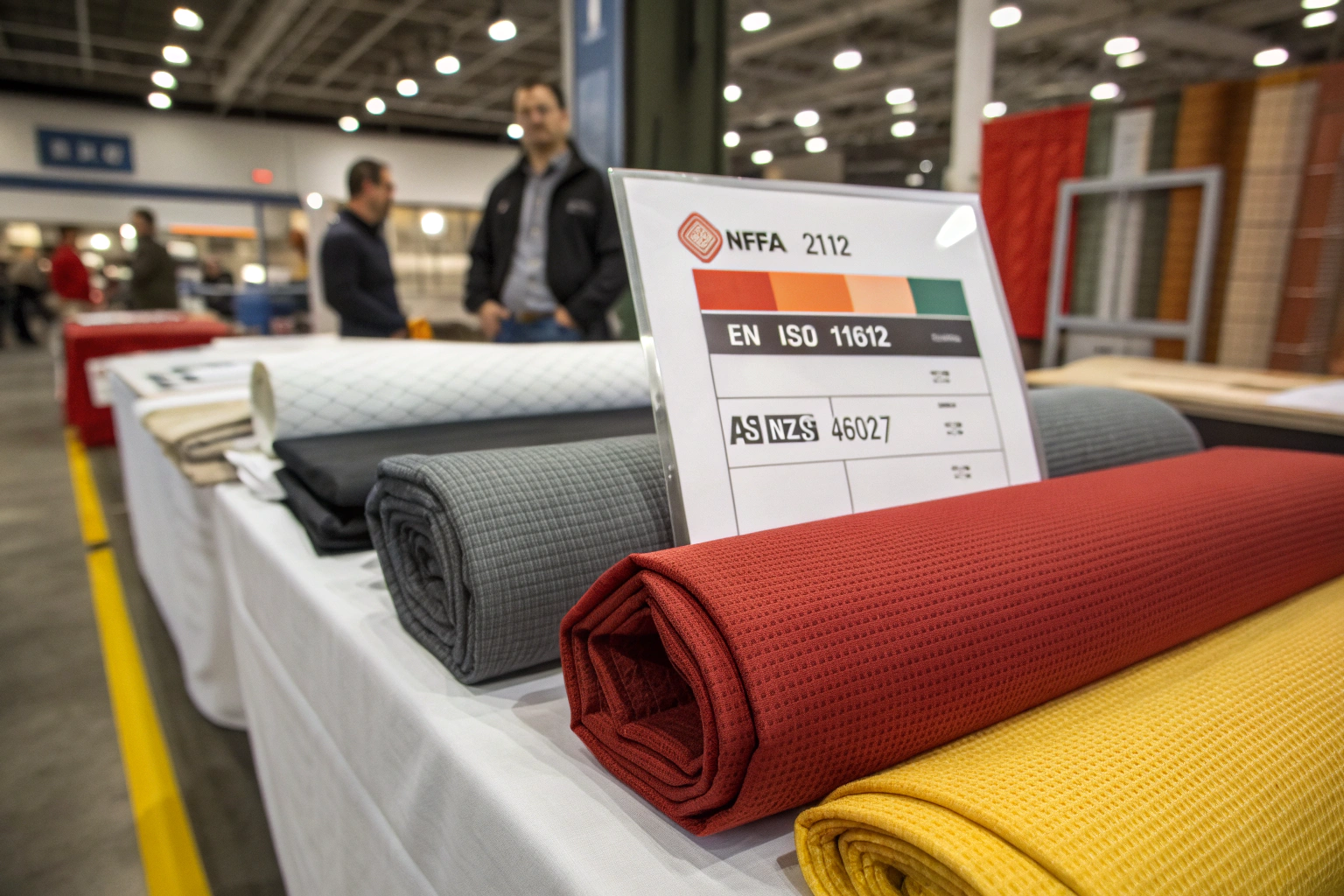
Flame Retardant (FR) fabrics are specialized textiles engineered to resist ignition, self-extinguish once the ignition source is removed, and minimize heat transfer to the skin. They are not "fireproof"; they are designed to provide crucial escape time. Their performance is defined by a global framework of rigorous safety standards and certifications (e.g., NFPA 2112, EN ISO 11612, AS/NZS 4602.1) that specify exact testing methods for flammability, heat resistance, and durability. Sourcing FR fabric correctly means moving beyond the term "FR" to specify the exact standard required for the end-use application, understanding the technology behind it (inherent vs. treated), and verifying compliance through certified testing.
Choosing the wrong FR fabric isn’t just a quality issue—it’s a liability. Let’s dissect the technologies, decode the key standards, and outline a foolproof process for sourcing and verifying genuine FR protective apparel.
What are the two fundamental types of FR fabric technology?
All FR fabrics achieve their resistance through one of two pathways: Inherent FR or Treated/Finished FR. This distinction is the single most important factor affecting performance longevity, comfort, and cost.
Inherent FR Fabrics are made from fibers that have flame resistance built into their polymer structure at a molecular level. Common examples include:
- Aramid Fibers (e.g., Nomex®, Kevlar®): Legendary for high heat and flame resistance, used in firefighting and military gear.
- Modacrylic (e.g., Protex®, Kanecaron®): A soft, wool-like fiber often blended with others for cost-effective FR workwear.
- FR-treated Inherent Fibers: Some fibers like FR Viscose/Rayon or FR Polyester have the flame-retardant agent integrated during the fiber extrusion process, making it a permanent part of the fiber.
Key Advantage: The FR protection is permanent. It cannot be washed out or worn away. It generally offers excellent protection and durability over the garment’s entire life.
Treated/Finished FR Fabrics start as standard, non-FR fibers (like cotton or polyester-cotton blends). The fabric is then put through a chemical bath process where FR chemicals (like ammonium polyphosphate-based formulations) are applied and bonded to the surface of the fibers.
Key Advantage: Lower initial cost and often better comfort/hand feel (starting with natural fibers like cotton). However, the protection can degrade over time with repeated industrial laundering, abrasion, or exposure to UV light and chemicals. It requires careful care and has a limited protective lifespan.

Which technology is right for my application?
The choice is dictated by risk level, durability needs, and budget.
- High-Risk, Long-Lifecycle (e.g., Firefighting Turnout Gear, Electrical Arc Suits): Inherent FR (Aramid blends) is mandatory. The cost is justified by the permanent protection and extreme durability.
- General Industrial Workwear (e.g., Oil & Gas, Utilities, Welding): A balance is often struck. Inherent FR Modacrylic/Cotton blends or high-quality durable FR-treated cotton are common. The standard (e.g., NFPA 2112) will dictate the required durability through specified laundering cycles.
- Hospitality, Contract Furnishing, or Low-Frequency Risk: Treated FR fabrics may be sufficient and cost-effective.
At Shanghai Fumao, we developed a proprietary 88/12 FR Cotton/Modacrylic blended fabric for a global energy company’s standard workwear. The inherent FR from the modacrylic provides a permanent base of safety, while the cotton majority offers comfort and breathability. This blend passed 100+ industrial launderings per ASTM F2700 (the durability test for NFPA 2112), providing long-term value.
How does "durability of flame resistance" get tested?
This is the key question for treated FR fabrics. Standards don’t just test new fabric; they test it after specified aging. The most common is the "Vertical Flame Test" (like ASTM D6413) performed on fabric samples after 100 industrial washes and drying cycles (per ASTM F2700). The fabric must still self-extinguish within 2 seconds and have a char length under a specified limit (e.g., 4 inches for NFPA 2112). Always ask your supplier for test reports that include "after-flame" and "char length" results after laundering. A resource like ASTM’s overview of vertical flame testing explains the methodology.
How to decode the major FR safety standards (NFPA, EN, AS/NZS)?
"FR Certified" is meaningless without a standard number. Each standard is a comprehensive rulebook for a specific hazard and region. You must source to the exact standard required by your client’s industry regulation or corporate policy.
1. NFPA 2112 (USA & Americas) – Industrial Flash Fire Protection
- Scope: Standard on Flame-Resistant Garments for Protection of Industrial Personnel Against Short-Duration Thermal Exposures from Fire (Flash Fire).
- Key Tests: It’s a garment standard, not just a fabric standard. It includes:
- Fabric Performance: Vertical Flame Test (ASTM D6413) after 100 launders, Heat Resistance, Thermal Shrinkage.
- Garment Design: Prohibits meltable materials, specifies seam strength, and requires labeling.
- Who Needs It: Oil & Gas, Petrochemical, Refinery workers.
2. NFPA 70E (USA) – Electrical Arc Flash Protection
- Scope: Standard for Electrical Safety in the Workplace. It defines the Arc Thermal Performance Value (ATPV) or Energy Breakopen Threshold (EBT) of a fabric, measured in cal/cm².
- Key Concept: Hazard Risk Category (HRC) levels (1-4) dictate the minimum ATPV rating required. An HRC 2 requires at least 8 cal/cm², HRC 4 requires at least 40 cal/cm². The fabric is tested using the Arc Rating Test (ASTM F1959).
- Who Needs It: Electricians, utility workers, anyone working on or near energized electrical equipment.
3. EN ISO 11612 (Europe & International) – Heat and Flame Protection
- Scope: Protective clothing against heat and flame. Covers a broader range of hazards: flame spread, convective heat, radiant heat, molten metal splash, etc.
- Key Tests: Fabrics are tested and given alphabetical codes for performance (e.g., A1 for flame spread, B for convective heat, C for radiant heat, D for molten aluminum, E for molten iron). A fabric’s rating might be "EN ISO 11612: A1 B1 C1".
- Who Needs It: A wide range of European industrial workers exposed to heat and flame.
4. AS/NZS 4602.1 (Australia/New Zealand) – for High Visibility FR
- Scope: Combines FR requirements with high-visibility coloring (AS/NZS 1906.4). Common in mining, roadwork, and rail.
- Key Feature: Requires the fabric to maintain both its FR properties and its colorfastness/retro-reflectivity after laundering and UV exposure.

Why can’t I use an EN 11612 fabric for an NFPA 2112 project?
The standards are not directly equivalent. They simulate different threats. NFPA 2112 is specifically engineered for a sudden, engulfing flash fire (like a gas explosion). EN 11612 is a more general heat and flame standard. A fabric passing EN 11612 may not provide adequate protection in a flash fire scenario as defined by NFPA. Always source to the standard mandated by the worksite’s local jurisdiction or the client’s corporate EHS (Environment, Health & Safety) policy. The NFPA website’s code list is the authoritative source for their standards.
What do the test numbers on a certification report actually mean?
You must learn to read a test report. For NFPA 2112 after a vertical flame test, you’ll see:
- Afterflame Time: Must be ≤ 2.0 seconds. (The time the fabric continues to burn after the flame is removed).
- Char Length: Must be ≤ 4.0 inches (102 mm). (The length of the destroyed fabric).
- Melt/Drip: Observation of any melting or dripping (prohibited for materials that could cause secondary burns).
For NFPA 70E / Arc Rating, the key number is the ATPV or EBT value in cal/cm². This number represents the incident energy level at which there is a 50% probability of causing a second-degree burn. A higher number means better protection.
What is the step-by-step process to source and verify FR fabric?
Sourcing FR fabric is a forensic process. Trust must be verified at every step. Here is a mandated due diligence checklist.
Step 1: Define the Hazard and Standard
Don’t ask for "FR fabric." Ask: "We require fabric certified to NFPA 2112 (2023 edition) for flash fire protection for oil and gas coveralls." This instantly filters out non-compliant suppliers.
Step 2: Request Compliance Documentation
For the specific standard, demand:
- Fabric Certificate: From an accredited third-party lab (e.g., UL, SGS, Bureau Veritas, SATRA). It must be recent and reference the exact standard.
- Full Test Report: The detailed document showing all test parameters and results (Afterflame, Char Length, ATPV, etc.).
- Mill’s FR Technology Declaration: Is it Inherent or Treated? If treated, what is the expected durable lifespan (number of launderings)?
Step 3: Verify the Documentation
- Check the Lab’s Accreditation: Is the testing lab itself accredited (e.g., by ILAC, CNAS) for that specific test?
- Check Dates: Is the certificate current? Standards are updated (e.g., NFPA 2112: 2023). Old reports may not be valid.
- Check the "Applicant" or "Client": Does it match your supplier or their direct mill? If it lists another company, ask why.
Step 4: Conduct a Supplier Audit (Virtual/On-site)
Ask pointed questions:
- "How do you segregate and identify FR fabric production from regular fabric in your warehouse and production line?" (Prevents mix-ups).
- "Can you show me your quality control procedure for checking FR treatment uniformity?"
- "What is your process if a batch fails an internal FR check?"
Step 5: Perform Your Own Due Diligence Testing (Recommended for Bulk Orders)
For large or high-risk orders, invest in third-party verification testing. Send fabric cut from the beginning of the actual bulk production roll to a lab of your choice (not the supplier’s lab) to confirm it meets the standard. This is your ultimate insurance.

What are the red flags in FR fabric sourcing?
- Vague Claims: "Meets NFPA 2112" vs. "Certified to NFPA 2112."
- Outdated Standards: A certificate to NFPA 2112 (2018) when the current edition is 2023.
- No After-Laundering Data: Only providing test results on virgin fabric.
- Price Too Good to Be True: High-quality inherent FR fiber has a significant raw material cost. A rock-bottom price almost always indicates a compromised product, often a treated fabric that won’t survive 25 washes.
- Reluctance to Share Full Reports. A trustworthy supplier is transparent. We experienced this with a competitor claiming EN 11612 certification. Upon our client’s request for the full test report, they could only produce a self-issued "declaration of conformity," not an independent lab report—a major red flag we helped our client avoid.
How does care and maintenance affect FR performance?
FR garments come with mandatory care labels. For treated FR, harsh detergents, bleach, or fabric softeners can strip the FR chemicals. Industrial laundering with specified pH-neutral detergents is often required. Even inherent FR can be compromised by contaminants like oil and grease, which are flammable. Educating end-users on proper care is part of the safety ecosystem. The Industrial Laundry Guide to FR garment care details these critical procedures.
How are FR fabrics evolving with sustainability and comfort?
The old paradigm of FR meant heavy, stiff, and uncomfortable garments. Today, innovation is driving a revolution focused on enhanced wearer compliance through better comfort and reduced environmental impact.
Comfort Innovations:
- Lighter Weight Fabrics: Advanced spinning and weaving allow for lighter yet equally protective fabrics (e.g., 5.5 oz/yd² vs. traditional 7 oz/yd²), improving mobility and reducing heat stress.
- Moisture-Wicking & Breathable Finishes: Incorporating phase-change materials or engineered knits that pull sweat away, crucial for workers in hot climates.
- Stretch FR Fabrics: Integrating a small percentage of FR elastane (like LYCRA® FR) for freedom of movement without compromising protection.
Sustainability Innovations:
- Recycled FR Fibers: Development of FR polyester made from recycled PET (rPET) bottles.
- Bio-Based FR Chemicals: Research into phosphorus-based FR treatments derived from more sustainable sources.
- Durable FR Treatments: Improving the longevity of treated FR to extend garment life, reducing waste.
A leading example from our work at Shanghai Fumao is our EcoFR line. For a European wind turbine service company, we developed a fabric using recycled FR polyester blended with organic cotton. The fabric passed EN ISO 11612 (A1 B1) and provided the required protection for electrical and hot work risks, while meeting the company’s ambitious 2025 sustainability targets for recycled content. This project proved that safety and sustainability are no longer mutually exclusive.

What is the future of FR fabric testing and smart integration?
The future lies in predictive testing (using AI to model fabric behavior) and smart FR garments. Imagine workwear with integrated thermal sensors that alert the wearer and a control room to dangerous heat buildup before a flashover occurs. While nascent, these technologies are in development. For now, the focus remains on perfecting the core protection while making it wearable all day, every day. Staying informed through resources like Technical Textiles Net’s coverage of advanced protective materials is key for forward-thinking sourcing.
Conclusion
Flame Retardant fabrics represent where textile engineering meets life-saving necessity. Sourcing them correctly is a profound responsibility that extends far beyond cost and lead time. It demands a technical understanding of the inherent vs. treated technology divide, fluency in the specific language of global safety standards (NFPA, EN, AS/NZS), and a rigorous, verification-first approach to supplier qualification and testing.
By adopting a disciplined process—defining the precise hazard, demanding and verifying accredited test reports, and understanding the care and limitations of the technology—you transform from a passive buyer into an active guardian of end-user safety. This expertise not only mitigates legal and reputational risk but also builds trust with the workers who rely on the protection your sourced garments provide.
Ready to source FR fabrics with absolute confidence and technical precision? Partner with a supplier that navigates this complex landscape daily. At Shanghai Fumao, we specialize in engineering and sourcing FR fabrics to meet exacting global standards. From NFPA 2112 for flash fire to EN 11612 for general heat and flame, we provide full transparency with certified test reports and expert guidance on selection, compliance, and care. Let’s ensure your workforce is protected by the best. Contact our Business Director Elaine to discuss your FR fabric requirements: elaine@fumaoclothing.com.