Let’s cut straight to the chase: you’re sourcing fabrics from China or Asia, and your buyer or your end-market keeps asking for "certifications." You hear "SGS" all the time, but then a supplier like us mentions "CNAS" and your eyes might glaze over. Are they just fancy acronyms to justify a higher price, or do they actually protect your business? As someone who’s spent over two decades in the heart of China’s textile industry in Keqiao, I can tell you—it’s the difference between a smooth, successful order and a nightmare of rejected shipments, chargebacks, and legal headaches.
Think of fabric certifications as your product’s passport and health certificate for global trade. They are not just pieces of paper; they are independent, verifiable proof that your fabric is safe, high-quality, and legal to sell in your target market. Ignoring them is like flying a plane without checking the engines. You might take off, but the landing will be disastrous.
In this guide, I’ll demystify these two critical certifications—CNAS and SGS—from a manufacturer’s perspective. I’ll explain what they actually mean on the factory floor, why your supplier having them (or not) directly impacts your risk, and how savvy brands use them not as a cost, but as a strategic tool for faster market entry and stronger brand trust.
What Exactly Is a CNAS Certification, and Is It a Chinese Standard?
You probably trust international names like SGS more readily. So, when a Chinese supplier talks about their "CNAS-accredited lab," it’s fair to be skeptical. Is this just an internal Chinese standard with no global weight? The truth is more powerful and directly beneficial to you.
A CNAS (China National Accreditation Service) accreditation is China’s official, government-recognized body that assesses and verifies the competence of testing laboratories and inspection agencies. Think of it as China’s equivalent to the UK’s UKAS or the U.S.’s A2LA. Its core purpose is to ensure that a lab in China operates to internationally recognized standards (like ISO/IEC 17025). So, a CNAS-accredited lab in our factory isn’t just using our own rulers; it’s using internationally calibrated rulers, and its methods and results are subject to regular, rigorous audits.

How Does a CNAS Lab Inside a Factory Actually Protect My Order?
Many importers think third-party testing is enough. But what about the 99% of fabric produced before you pay for that final SGS test? That’s where an in-house CNAS lab becomes your first and most crucial line of defense. It’s about process control, not just final inspection.
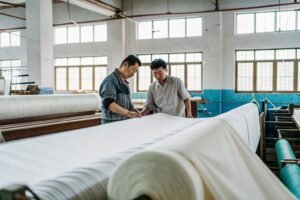
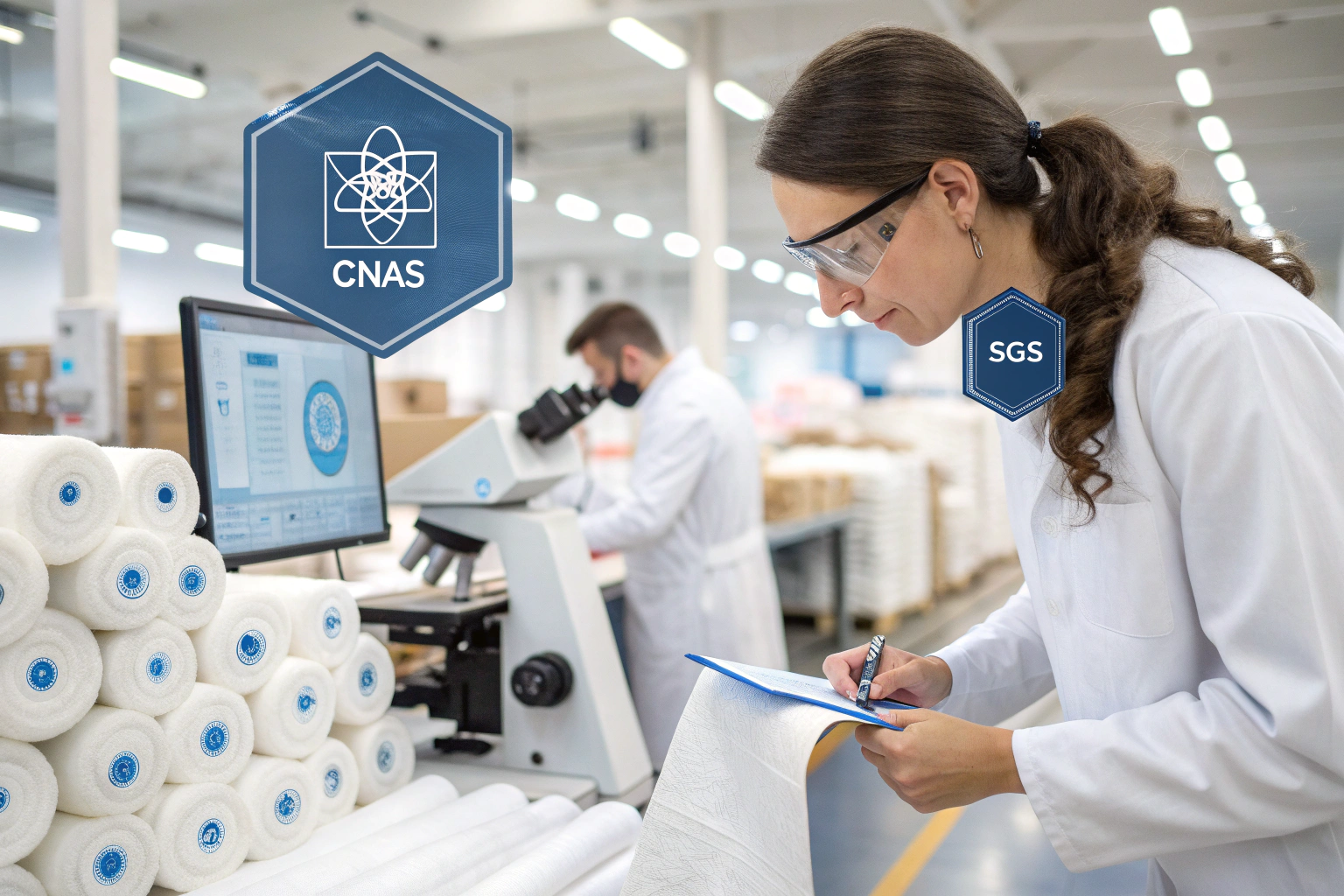
At Shanghai Fumao, our CNAS-accredited lab is integrated into every production stage. For example, before a batch of recycled polyester for activewear goes into dyeing, we test the raw yarn’s strength and evenness. During dyeing, we pull small samples to check colorfastness to washing and perspiration against the approved lab dip. This real-time data lets us adjust the process immediately. In late 2023, for a German sportswear startup, this caught a potential color bleed issue in a moisture-wicking fabric during production. We adjusted the dyeing pH and temperature on the spot, avoiding a 20,000-meter batch that would have failed later. The cost of that internal test was minimal; the cost of remaking the entire batch would have been tens of thousands of dollars and a missed season.
The key advantage is speed and prevention. You can learn more about the critical role of in-process quality control in textile manufacturing from resources like Textile World’s guide to quality assurance. Waiting for an external lab report after production is complete is a reactive, high-risk strategy. An internal CNAS lab is proactive.
Does CNAS Certification Help with Customs Clearance in the EU or USA?
This is a nuanced but critical point. CNAS itself is not a product certification that EU or US customs automatically recognize like a CE mark. Its value here is indirect but immensely powerful: it generates reliable test data that forms the basis for your mandatory compliance documents.
When you need to provide a Declaration of Conformity (DoC) for the EU’s REACH regulations or prove flammability standards for the US, the testing must be done by a competent lab. A CNAS-accredited lab provides data that is trusted by third-party certification bodies. For instance, we use our CNAS lab’s test reports on formaldehyde content, pH, and banned amines as the foundation when applying for an OEKO-TEX® Standard 100 certificate through an authorized institute. Customs and retailers trust OEKO-TEX; they trust the data from a CNAS lab that underpins it.
Furthermore, understanding how to navigate EU textile labelling and compliance regulations is easier when your supplier’s lab speaks the same "quality language" as international standards. A detailed breakdown of these requirements can be found on platforms like Europa’s official EU product compliance guides. In essence, a supplier with CNAS is giving you a head start on the complex paperwork required for smooth customs clearance.
What Does SGS Certification for Fabrics Really Cover?
"SGS tested" is a common phrase, but it’s dangerously vague. SGS is a company—the world’s leading inspection, verification, testing, and certification company. They don’t issue one "SGS certificate" for fabric. Instead, they provide specific services based on what you request. Ordering the wrong one is like buying car insurance that only covers the radio.
Typically, for fabric buyers, SGS provides two core services: Pre-shipment Inspection (PSI) and Specific Testing Reports. The PSI is a visual and measurement check of the finished goods against your purchase order specs (quantity, color, weight, width, defects). The Testing Report is a laboratory analysis of the fabric’s physical properties and chemical safety against a chosen standard (e.g., AATCC for performance, US CPSC for flammability, EU REACH for chemicals).

When Should I Pay for an SGS Pre-Shipment Inspection vs. Full Testing?
This is a classic cost-versus-risk decision. Let me break it down with a real case. In early 2024, an American e-commerce brand ordered 5,000 meters of linen-cotton blend from us. They were confident in our Shanghai Fumao internal QC but wanted an extra layer of security for their first order. We advised a Pre-shipment Inspection.
The SGS inspector came, checked that the rolls matched the ordered 300gsm weight (they did), the olive green color was consistent (it was), and the number of weaving defects per 100 yards was below the agreed AQL 2.5 level (it was 1.2). The PSI report gave them the confidence to release payment and ship. They skipped full chemical testing because linen-cotton is generally low-risk, and our in-house CNAS tests had already screened for basics like pH. This cost them a few hundred dollars—smart insurance.
Conversely, for a Russian children’s wear brand ordering printed polyester fleece in August 2023, we insisted they add full chemical testing to their SGS order. Why? Printed, synthetic fabrics for kids have high chemical risks (heavy metals in inks, formaldehyde in anti-wrinkle agents). The SGS test covered CPSIA (USA) and ECE (Eurasia) standards. It passed, and that report became a marketing tool for them. Knowing when to choose a fabric testing protocol for your target market is crucial. Resources like the American Apparel & Footwear Association’s compliance resources can help you determine the level of scrutiny needed.
Can a Supplier "Cheat" or Influence an SGS Inspection?
This is a major fear. The short answer is: it’s very difficult if the process is followed correctly, and a reputable supplier wouldn’t risk it. SGS has strict protocols to ensure integrity. The inspector is assigned centrally, the factory location and lot to be inspected are confirmed directly with the buyer, and the inspector selects samples randomly from the entire finished batch, not just a "golden sample" prepared by the factory.
However, the "gray area" isn’t in cheating the inspection day, but in timing and preparation. An unethical supplier might produce 120% of your order, knowing that 20% is defective, and then try to hide the bad rolls during inspection. A good supplier, like our operation, ensures 100% of the batch is inspection-ready. (Here’s a trade secret: we actually do our own 100% inspection and grading before SGS arrives, so we know exactly what they’ll find). The system works best when the buyer is specific in the inspection order and the supplier is transparent. You can read about managing third-party inspection risks in China from industry observers on platforms like China Law Blog.
Why Do I Need Both CNAS and SGS? Isn’t That Redundant?
This is the million-dollar question. Think of it not as redundancy, but as a two-tiered defense system. CNAS (in-house, process-focused) is your daily immune system, fighting problems as they arise. SGS (third-party, product-focused) is your annual comprehensive health check-up, providing an unbiased report card.
Relying solely on SGS is risky and slow. You’re inspecting the final product after all time and money has been spent. If it fails, you’re stuck with three bad choices: ship defective goods, pay for costly rework (if even possible), or cancel and lose your deposit and timeline. Relying solely on a supplier’s in-house QC, without accreditation like CNAS, is like taking their word for it—you have no proof of their competence.

How Does This Combined Approach Save Me Money and Time?
Let’s talk numbers with a case study. A UK-based fashion brand approached us in October 2023 for a complex custom jacquard with a specialty coating. Timeline was tight for their Spring collection.
- Phase 1 (CNAS): Our R&D and lab worked on the coating formulation. Each sample batch was tested for adhesion, wash resistance, and drape in our CNAS lab. We iterated four times in two weeks. Cost to them: $0 (part of our development). If each iteration had gone to an external lab, add at least 5 days and $500 per test.
- Phase 2 (CNAS): During bulk production, our lab monitored coating thickness and evenness hourly. One tank showed a minor viscosity shift. We corrected it within 30 minutes, preventing an inconsistent batch.
- Phase 3 (SGS): Upon completion, the brand requested an SGS PSI and specific abrasion resistance test. Because of our internal controls, we were confident. The SGS inspection was scheduled immediately, passed without issue, and the report was issued in 3 days. The container shipped on schedule.
The result? The brand got a perfect, innovative fabric on time. The combined system prevented a potential failure (saving maybe $15,000 in remakes) and accelerated the final verification (saving 2+ weeks). For more on optimizing textile sourcing timelines with strategic quality checks, see discussions in professional forums like The Fashion Network’s sourcing community.
What Happens If My Fabric Fails an SGS Test?
First, don’t panic. This is where your supplier’s internal system (hopefully CNAS-backed) shows its true value. If a failure happens with a supplier that has strong process controls, the response is analytical, not chaotic.
The process should be: 1) Immediate Containment: The supplier quarantines the entire batch. 2) Root Cause Analysis: They use their internal lab to replicate the SGS test and diagnose why it failed. Was it a raw material issue? A machine calibration error? A miscommunication on the standard? 3) Corrective Action Plan: They present you with data, not excuses, and a proposal: rework, replace, or discount.
A supplier without a proper lab will just guess or blame the testing house. With Shanghai Fumao, we trace back using our production QR codes to pinpoint the exact dye lot or weaving shift. In one instance, an SGS report showed a slight variance in UV protection factor. Our data showed it was from the first two hours of a new finishing chemical batch. We isolated that small portion, re-finished it, and re-submitted only that portion for testing, minimizing cost and delay for the client. This level of response is only possible with integrated, accredited process control.
How Do I Verify My Supplier’s CNAS and SGS Claims?
Trust, but verify. Any reputable supplier will be transparent with their certification details. Asking for proof is not rude; it’s professional.
For CNAS, ask for the official accreditation certificate. It will have a unique number, the scope of accreditation (e.g., "Testing for textile colorfastness, fiber composition, and dimensional change"), and an expiration date. You can even verify this number on the CNAS website (though it’s in Chinese). Also, ask for sample test reports from their lab. The report header should clearly state the CNAS accreditation and logo.
For SGS, remember they are providing a service to you. You should be the one defining the Statement of Work (SOW) for the inspection or test. You receive the report directly from SGS (or through a portal) – you shouldn’t just get a PDF forwarded by the supplier without context. You can verify the authenticity of an SGS report online using the unique report number.

What Are the Red Flags in a Supplier’s Certification Claims?
Watch out for these warning signs:
| Red Flag | What It Might Mean |
|---|---|
| "We are SGS certified." | Factories aren’t "SGS certified." Products or processes are. This is vague and misleading. |
| Expired CNAS Certificate | The lab’s competence is no longer under official supervision. The data may not be reliable. |
| Scope Mismatch | Their lab can test cotton, but you’re buying waterproof laminate. Can they really test it? |
| Refusal to Provide Evidence | Hiding or delaying sending certificates or reports is a major warning sign. |
| "Trust Us, We Don’t Need It" | For high-risk orders (kids, functional wear), this is irresponsible and risky. |
A genuine supplier will educate you. We often walk clients through our CNAS lab scope document to show exactly which tests we can perform in-house, and which ones (like some highly specialized eco-toxicology tests) we recommend using SGS or ITS for. Building a reliable supplier vetting checklist for textile imports is a critical step. You can find frameworks to build your own on global trade advisory sites like ImportYeti’s blog.
Can Small Orders Benefit from This Certified Framework?
Absolutely. You don’t pay directly for our CNAS accreditation; it’s part of our infrastructure, like our electricity. You benefit from it whether you order 100 meters or 100,000 meters. The quality control, the process rigor, the preventive mindset—it’s baked in.
For small orders, the SGS third-party service might seem like a large percentage of the order cost. Here’s our practical advice: For low-risk, basic fabrics (plain cotton poplin, standard polyester), you might rely on our CNAS internal reports and a detailed final inspection by your agent or our QC team. For any order involving children, synthetics with prints/finishes, or functional claims (waterproof, fire-resistant), the few hundred dollars for a targeted SGS test is non-negotiable insurance. It protects your brand from liability and gives you a marketing asset.
Conclusion
Navigating fabric certifications doesn’t have to be a confusing compliance exercise. When understood, CNAS and SGS become powerful tools that de-risk your supply chain, protect your brand reputation, and ultimately save you time and money. CNAS represents your supplier’s internal capability and commitment to consistent, science-based quality control throughout production. SGS provides the unbiased, internationally recognized final verification that your specific product meets specific market standards.
The smartest brands we partner with don’t see these as costs, but as investments in supply chain resilience. They choose partners whose internal systems (like our CNAS-accredited lab) prevent problems, and they strategically use third-party verification (like SGS) to validate and document compliance. This two-pillar approach is what turns a sourcing transaction into a true partnership.
If you’re tired of rolling the dice with uncertified suppliers and want to work with a partner who builds quality into every meter of fabric, let’s talk. At Shanghai Fumao, our integrated system from CNAS-process control to seamless SGS coordination is designed to make your sourcing confident and successful. For a consultation on how we can apply this certified framework to your next fabric or apparel order, please reach out to our Business Director, Elaine. She can guide you through our capabilities and how they align with your market needs. Contact Elaine at: elaine@fumaoclothing.com.