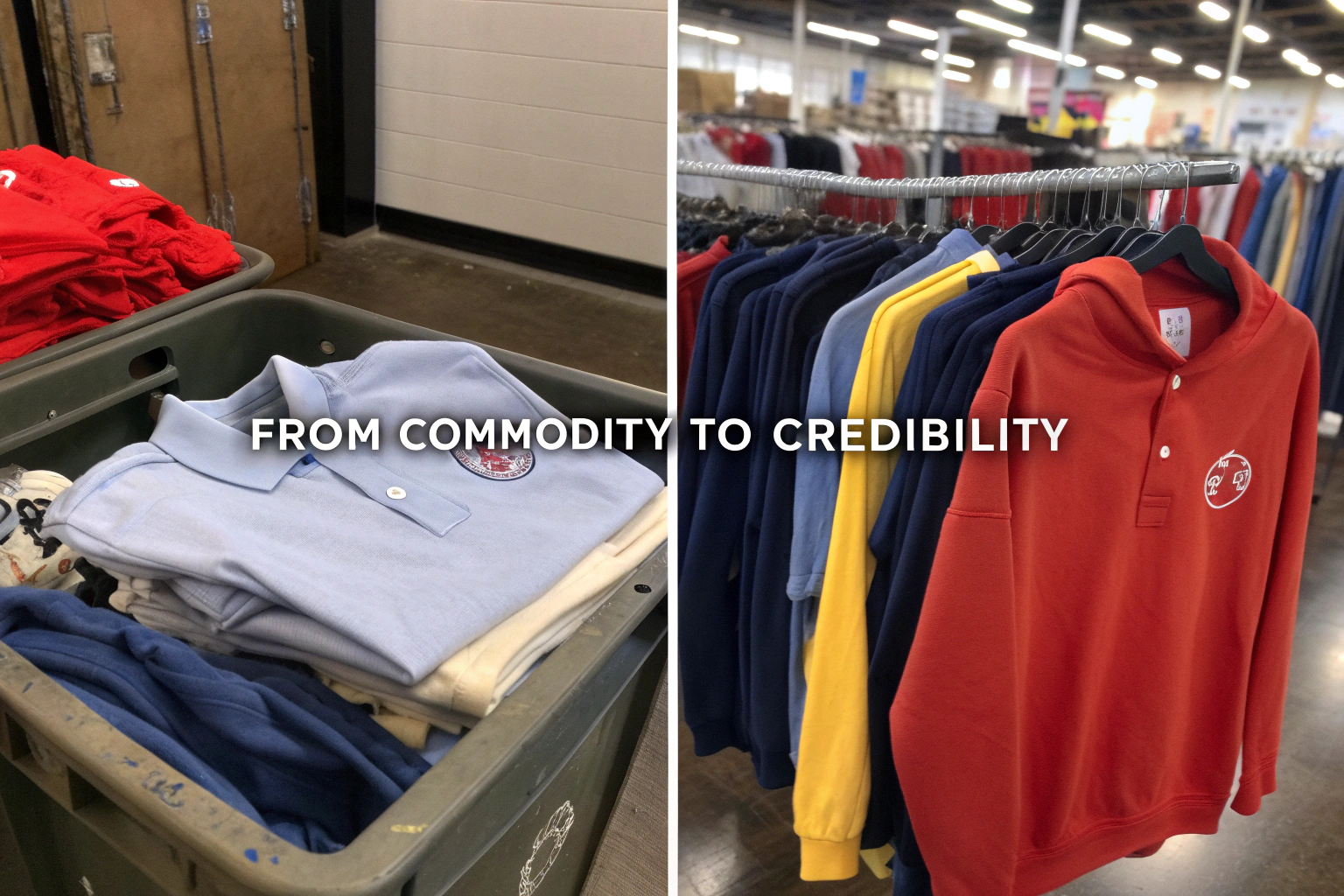
Look at the branded polo shirt on your back, the company hoodie in your closet, the event t-shirt from last year. Now ask: What does that logo actually stand for? For decades, logo wear has been a walking contradiction—a symbol of team spirit or brand pride, stitched onto a garment that often represents the worst of fast, disposable, and opaque fashion. That era is ending. The future of customizable logo wear isn’t about cheaper polyester or faster turnaround; it’s about aligning the ethics of the logo with the integrity of the garment it’s printed on. Organic cotton, backed by verifiable certification like OCS, isn’t just a material option; it’s becoming the new baseline for companies that want their public identity to reflect their private values. The question isn’t if it’s the future, but how fast that future will arrive.
Organic cotton is unequivocally the future of customizable logo wear because it directly addresses the three seismic shifts redefining the corporate and promotional markets: the demand for authentic ESG (Environmental, Social, and Governance) action, the rise of employee and consumer activism around supply chains, and the commercial necessity of premium, durable merchandise that doesn’t end up in landfill. Customization is no longer just about placing a logo; it’s about curating a total brand experience where every element, down to the fiber, tells a cohesive story.
Let’s break down why this shift is inevitable and how forward-thinking companies are already leveraging it to turn their logo wear from a cost center into a value-driven asset.
The ESG Imperative: Walking the Talk on Corporate Responsibility
For a corporation today, every public-facing item is a potential ESG report. A conventional cotton t-shirt given to 10,000 conference attendees tells a hidden story of water-intensive farming, pesticide use, and uncertain labor conditions—a story directly at odds with the sustainability pledges on the company’s website. This dissonance is a reputational landmine. Organic cotton, particularly OCS-certified, provides the verifiable data to close this gap.
It turns logo wear from a marketing expense into a tangible, measurable sustainability initiative. The OCS Transaction Certificates (TCs) become quantifiable evidence for ESG reporting, demonstrating investment in regenerative agriculture and transparent supply chains.

How does OCS logo wear simplify ESG reporting?
It provides the "S" in ESG with hard numbers. When reporting on sustainable procurement, a company can state:
- "X% of our promotional materials budget was allocated to certified organic products."
- "We sourced Y kilograms of OCS-certified organic cotton, supporting Z hectares of pesticide-free farmland."
- "Our supplier, Fumao, maintains OCS and social compliance audits (like SMETA), mitigating supply chain risk."
This moves ESG from abstract goals to specific, purchase-level actions. A tech giant we work with now mandates OCS or GOTS for all employee apparel. Their procurement team said it simplified vendor selection and provided clean data for their annual impact report—turning a logistical task into a strategic contribution.
What is the risk of "greenwashing" in corporate merchandise?
It’s extremely high and damaging. If a company launches a "sustainability campaign" with merchandise made from uncertified, vague "eco-friendly" materials, it will be called out—by employees, by customers, or by watchdog groups. The backlash can overshadow the campaign itself.
OCS certification is the antidote. It is a specific, governed claim with a paper trail. When questioned, the company can produce the TC. This transforms the logo wear from a potential liability into a credibility shield. It shows the company did its due diligence, investing in proof, not just promises.
The Human Capital Advantage: Logo Wear That Employees Actually Want to Wear
The old model of logo wear was top-down: the company orders cheap polos, employees are obligated to wear them, and they sit in the back of a drawer. The new model is cultural currency. Today’s workforce, especially Gen Z and millennials, values employers whose actions match their stated values. Providing high-quality, ethically made apparel is a powerful signal of respect and shared principles.
Organic cotton logo wear becomes a perk, not an obligation. It’s comfortable, it looks good, and it allows employees to represent the company with genuine pride, knowing the garment aligns with their personal ethics.

How does material quality impact perceived brand value?
A flimsy, scratchy polo shirt with a pixelated logo subliminally communicates carelessness. A heavyweight, soft-to-the-touch organic cotton polo with precise embroidery communicates quality, attention to detail, and investment in people.
This perception extends beyond the employee. When employees wear the apparel outside work, it acts as walking recruitment and brand marketing. A well-made, ethically sourced garment sparks conversations and attracts talent who notice these details. It says the company cares about the long-term, about details, and about its impact.
What are the practical benefits of durability in logo wear?
Organic cotton, when woven into quality fabrics (like robust jersey or French terry), is inherently durable due to longer, undamaged fibers. This means:
- Longer Garment Life: The item withstands more washes without fading, pilling, or losing shape.
- Higher Per-Wear Cost Efficiency: While the upfront cost is higher, the cost per wear over the garment’s lifespan is often lower than that of a cheap alternative that needs replacing after one season.
- Reduced Waste: Durable items are kept and used, aligning with circular economy goals. They are less likely to become instant "swag bag" landfill.
For companies, this means a better return on investment and a smaller environmental footprint per item distributed—a key metric for progressive procurement teams.
The Customization Evolution: Beyond the Logo to Total Brand Storytelling
The future of customization isn’t just embroidering a vector file. It’s co-creating the entire product. Organic cotton provides a superior, brandable canvas for this deeper collaboration. Companies can now customize not just the logo, but the story of the garment itself.
This involves selecting from a range of OCS-certified fabrics (performance blends, heirloom cottons, unique textures), choosing low-impact decoration methods, and even co-designing hangtags that explain the garment’s sustainable provenance.

What are the advanced decoration options for organic cotton?
Organic cotton accepts decoration beautifully, but the method should align with the ethos:
- Embroidery: The gold standard for premium feel. Use Madeira or other OEKO-TEX certified threads. Best on mid-to-heavy weight OCS fabrics like pique or fleece.
- Screen Printing: Use water-based or PVC-free plastisol inks for a softer hand-feel and lower chemical impact.
- Direct-to-Garment (DTG) Printing: Ideal for complex, full-color designs on 100% cotton. Uses water-based inks.
- Woven Labels & Tags: Customize these with recycled materials and print the OCS license number on them for full traceability.
The key is to ensure the decoration provider is integrated into the OCS chain or, at minimum, uses compliant materials that don’t compromise the garment’s safety or end-of-life recyclability.
How can a company build a narrative around its custom organic wear?
The product itself becomes a communication tool. Consider this package:
- The Garment: A premium OCS organic cotton crewneck.
- The Hangtag: A two-part tag. Part 1: Care instructions. Part 2: "This garment is made with OCS-certified organic cotton, traceable from seed to shirt. Scan the QR code to learn more."
- The Digital Landing Page: The QR code leads to a page on the company’s site showing the supply chain, the water saved, and a message from the CEO about why sustainable procurement matters to the company’s mission.
This turns a simple piece of apparel into an immersive brand experience that educates and inspires. It’s marketing that doesn’t feel like marketing.
Navigating the Transition: Cost, Sourcing, and Strategy
Adopting organic cotton for logo wear requires a strategic shift, not just a line-item change. The focus moves from lowest unit cost to highest total value. This requires educating stakeholders, finding the right supplier, and possibly starting with a pilot program.

How to justify the higher upfront cost to procurement?
Build a business case around Total Value of Ownership:
- Brand Equity Value: Enhanced reputation and alignment with corporate values.
- Employee Engagement Value: Improved morale, retention, and recruitment.
- ESG Reporting Value: Tangible data for sustainability reports and investor communications.
- Durability Value: Longer lifecycle reduces frequency of repurchase.
- Risk Mitigation Value: Avoids greenwashing accusations and supply chain scandals.
Presenting this holistic value picture often wins over finance teams focused solely on unit price.
How to find a reliable supplier for bulk organic logo wear?
You need a partner, not just a decorator. Look for:
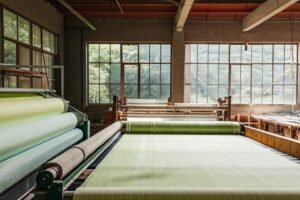
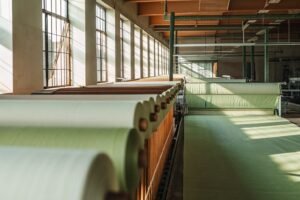
- Vertical Integration: A supplier like Fumao that controls fabric production ensures consistency and certification integrity.
- In-House Decoration: Capability to handle embroidery/printing under the same roof as garment making simplifies logistics and quality control.
- Transparency: Willingness to provide OCS TCs, factory audit reports, and full cost breakdowns.
- Strategic Guidance: Ability to help you select fabrics and decoration methods that balance aesthetics, ethics, and budget.
Conclusion
Organic cotton is not just the future of customizable logo wear; it is the necessary evolution. As corporate responsibility moves from PR statements to operational mandates, and as employees and consumers demand authenticity, the garment that carries a company’s logo must embody its highest standards. OCS-certified organic cotton provides the verifiable foundation for this new era—turning logo wear from a cheap commodity into a strategic asset that builds brand equity, fosters culture, and delivers measurable ESG impact.
The companies that recognize this shift now will define the standard for the next decade. They will attract better talent, build deeper trust, and wear their values—literally—with pride.
If your company is ready to align its logo with its legacy, you need a supplier built for this purpose. At Shanghai Fumao, we specialize in turning ethical sourcing into exceptional branded apparel. Contact our Business Director, Elaine, to start designing your company’s future, one thread at a time: elaine@fumaoclothing.com. Let’s make your logo mean more.