For conscious brands and buyers, the question isn’t just about making clothes anymore—it’s about making them right. You want to ensure your products are safe, responsibly made, and trusted by your customers. But with so many labels like “eco-friendly,” “green,” and “sustainable” floating around, how do you find a standard that’s both credible and comprehensive? One name consistently rises to the top: OEKO-TEX®. But is it truly the new benchmark for ethical manufacturing, or is it just another badge?
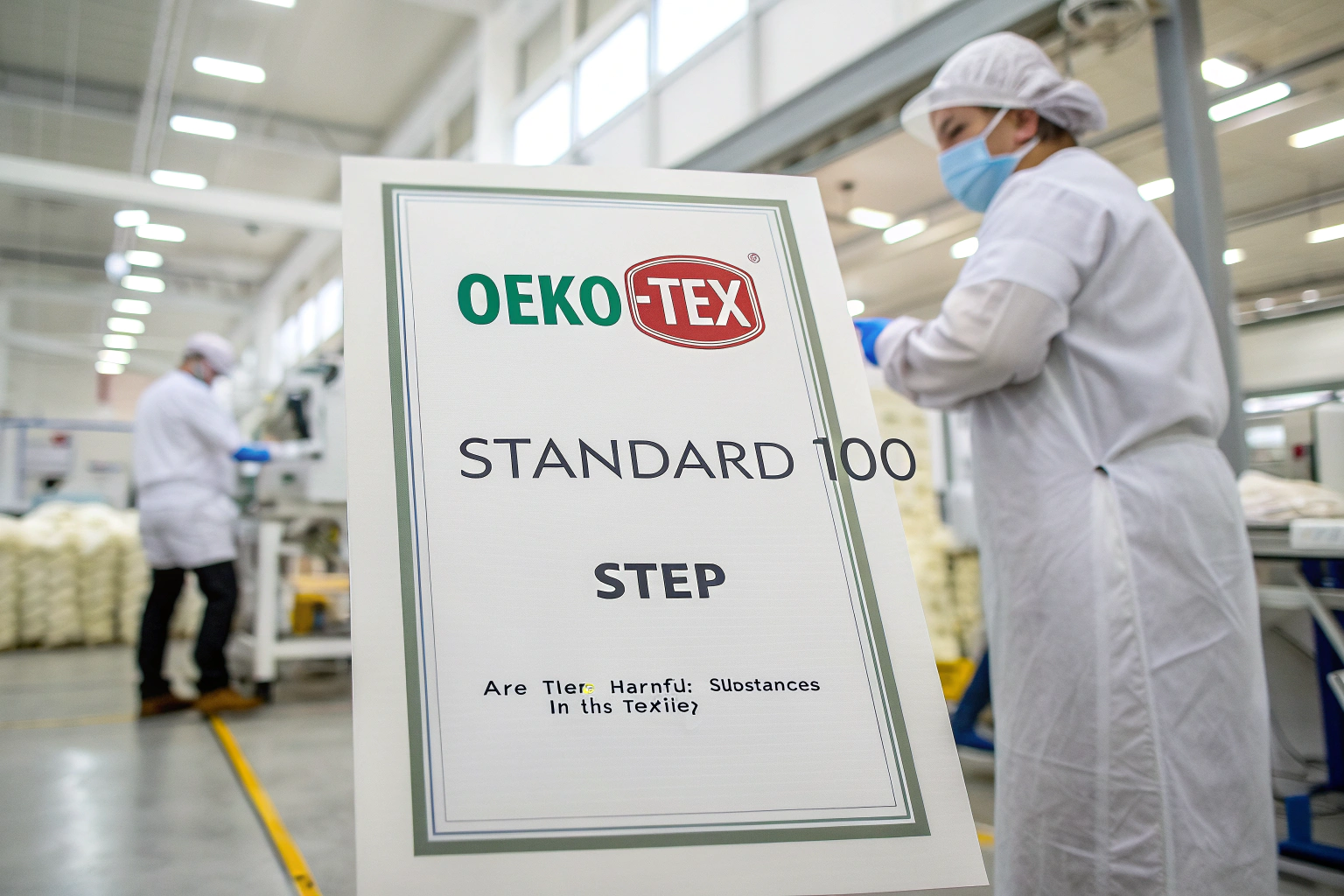
Let’s cut through the noise. While “ethical manufacturing” broadly covers social fairness, environmental care, and product safety, OEKO-TEX® specifically provides a globally standardized, scientifically grounded system for ensuring human-ecological safety. It directly answers the critical question: “Are there harmful substances in this textile?” For a growing number of leading brands, OEKO-TEX® certification, particularly the STANDARD 100 and STeP modules, has become a non-negotiable baseline—the first concrete proof point in their ethical sourcing checklist. It’s not the whole story of ethics, but it’s a foundational chapter written in hard data.
However, calling it the singular "new standard" misses the full picture. True ethical manufacturing is a multi-layered fabric. OEKO-TEX® is the strong, reliable warp thread ensuring product safety, but it must be woven together with the weft threads of fair labor (like SMETA or BSCI), organic integrity (like GOTS), and carbon accountability. The brands that truly lead are those that use OEKO-TEX® as a critical component within a broader, verified framework. This article will explore where OEKO-TEX® excels, where it needs to be complemented, and how forward-thinking suppliers are integrating it into a genuine ethos of responsibility.
What Does OEKO-TEX® Actually Guarantee for Your Brand?
When you see the OEKO-TEX® label, you need to know exactly what you’re paying for and promising your customers. It’s not a vague sustainability claim. OEKO-TEX® STANDARD 100 is a product certification that guarantees a textile article has been tested for a defined set of up to 350 regulated and non-regulated harmful substances, from heavy metals and pesticides to allergenic dyes and phthalates, based on its intended use. The key phrase is “human-ecological safety.” It scientifically ensures that the item poses no risk to human health.
But here’s what’s equally important: it’s a verifiable promise. Every certificate has a unique number that can be checked online, linking directly to the tested product, the certified company, and the applicable standard. This turns a marketing claim into a transparent, auditable fact. For instance, a children’s sleepwear brand can use this to directly address parent concerns about chemical safety. It’s a powerful risk mitigation tool that protects your brand from recalls and reputational damage related to product safety issues.

How does the product class system work, and why is it crucial?
OEKO-TEX® isn’t one-size-fits-all. It uses a four-tier product class system with increasing strictness:
- Class I (Baby Articles): Most stringent. For all items for babies and toddlers up to 36 months.
- Class II (Articles Close to Skin): For garments and textiles worn primarily with direct skin contact (e.g., underwear, t-shirts, bed linens).
- Class III (Articles Not Close to Skin): For items with little or no direct skin contact (e.g., jackets, coats, linings).
- Class IV (Decoration Materials): For textiles used for decorative purposes (e.g., curtains, tablecloths, upholstery).
Why this matters: A common pitfall for brands is certifying a garment under the wrong class, either creating unnecessary cost (testing a coat as Class II) or serious compliance risk (testing baby clothes as Class III). A savvy supplier like Shanghai Fumao guides clients through this classification from the first sample, ensuring the testing protocol matches the product’s real-world use and legal requirements. Understanding this system is foundational, and resources like the OEKO-TEX® Association’s official guide provide the definitive breakdown.
Does OEKO-TEX® cover environmental and social ethics?
This is the critical nuance. STANDARD 100 focuses squarely on product safety. It does not audit environmental footprint during production, water usage, or fair labor practices. That’s where the complementary OEKO-TEX® STeP (Sustainable Textile & Leather Production) certification comes in. STeP assesses factory conditions across six modules: Chemicals, Environmental Performance, Environmental Management, Social Responsibility, Quality, and Health & Safety.
For a brand seeking comprehensive ethics, the combination of STANDARD 100 (safe product) + STeP (responsible factory) is incredibly powerful. It tells a complete story. For example, in 2023, a German outdoor brand partnered with us specifically because our dyeing partner held STeP certification alongside our STANDARD 100 certified fabrics. They needed the data to prove both material safety and reduced environmental impact in their supply chain. To explore how leading factories implement such systems, industry analyses on Textile Exchange’s platform can be very insightful.
Where Does OEKO-TEX® Fall Short in the "Ethical" Conversation?
To rely solely on OEKO-TEX® as your ethical north star is to risk a significant blind spot. While it brilliantly solves for chemical safety and responsible production conditions (via STeP), the modern definition of "ethical" demanded by consumers and investors has expanded. A truly ethical framework must also address the origin of materials, the dignity of workers, and the carbon footprint of the entire lifecycle.
The most frequent critique is that OEKO-TEX® does not mandate organic or recycled materials. A fabric can be made from conventional, pesticide-intensive cotton or virgin polyester and still achieve STANDARD 100 certification if the residual chemicals are below threshold limits. It ensures safety from what’s on the fiber, not necessarily the ecological cost of the fiber. Similarly, it doesn’t address animal welfare in wool or down supply chains. For brands built on organic or regenerative principles, GOTS (Global Organic Textile Standard) remains the essential, complementary certification for raw material integrity.

Can a product be OEKO-TEX® certified but still be made unethically?
Unfortunately, yes, if we consider ethics in its broadest sense. The STeP module includes social criteria based on International Labour Organization (ILO) conventions, which is a strong baseline. However, it may not delve as deeply into living wage guarantees, collective bargaining freedom, or community impact as some dedicated social audits. A factory could pass STeP while still facing criticisms on advanced social metrics. Furthermore, a brand could source certified fabric from a STeP-certified mill but then have it sewn in an uncertified, exploitative garment factory—breaking the ethical chain. This is why leading brands use OEKO-TEX® as part of a hybrid audit approach, often combining it with specialized social compliance programs. Discussions on The Sustainable Fashion Forum often tackle these complex layers of ethical compliance.
How does it compare to holistic standards like GOTS or B Corp?
It’s more of a specialist versus a generalist.
- GOTS is a holistic, material-specific standard. It starts with organic fibers and tracks them through environmentally and socially responsible processing. It includes strict chemical input criteria (overlapping with OEKO-TEX®) but adds core requirements on organic content, wastewater treatment, and strong social criteria.
- B Corp Certification assesses a entire company’s social and environmental performance, from governance and worker treatment to community engagement and environmental impact. It’s not a product certificate.
The most robust brands don’t choose one; they layer them. They might use GOTS-certified organic cotton that is also OEKO-TEX® STANDARD 100 certified for added safety assurance, and their corporate entity might be a B Corp. This layered approach is what we help clients navigate at Shanghai Fumao, especially when developing premium ethical collections. Understanding these differences is key, and comparisons published by ECOtextile News can provide valuable independent perspectives.
How Are Leading Brands Integrating OEKO-TEX® into a Broader Strategy?
The smartest players in the fashion industry are no longer treating certifications as isolated checkboxes. They are weaving them into a coherent, transparent story for their customers. OEKO-TEX®, with its strong brand recognition and scientific credibility, often serves as the entry point or the consistent safety thread running through diverse product lines. The strategy is about using it as a foundational trust-builder, upon which other ethical attributes are stacked.
For example, a contemporary women’s wear brand might have three lines:
- A core line: Uses OEKO-TEX® STANDARD 100 as the baseline guarantee of safety.
- A sustainable line: Combines OEKO-TEX® with GOTS for organic cotton items and recycled polyester certified by GRS (Global Recycled Standard).
- A innovation line: Features OEKO-TEX® certified fabrics with traceable wool or innovative biodegradable fibers.
This tiered approach allows brands to communicate clearly: "Everything we make is safe (OEKO-TEX®), and here’s how we’re pushing further." It’s pragmatic and scalable.

What does a practical, multi-certification supply chain look like?
It requires a supplier with deep operational control and documentation expertise. Let’s take a real case from our work at Shanghai Fumao. In early 2024, a UK-based retailer commissioned a jersey collection requiring three badges: OEKO-TEX® STANDARD 100, GOTS, and the Fair Wear Foundation code of conduct.
Our integrated process looked like this:
- Sourcing: We procured GOTS-certified organic cotton yarn from a spinner also certified to GOTS and STeP.
- Production: The yarn was knitted and dyed in a mill with both GOTS and STeP certification, using GOTS-approved, OEKO-TEX® compliant dyes. This dual compliance was critical.
- Verification: The finished fabric received its OEKO-TEX® certificate (referencing the GOTS-certified mill) and its GOTS Transaction Certificate.
- Social Compliance: The retailer’s chosen garment factory, pre-audited by Fair Wear, used our certified fabric to complete the chain.
The result was a product with a transparent, multi-layered ethical passport. This level of integration is complex but is becoming the new benchmark for serious brands. For suppliers, managing this requires digital traceability systems. Learnings about building such transparent chains are often shared on platforms like Fashion for Good’s resource library.
How is technology like blockchain being used with OEKO-TEX® data?
This is the cutting edge. The QR code on an OEKO-TEX® label is just the beginning. Progressive suppliers are linking that certificate number to blockchain-powered platforms. When a consumer scans the code, they don’t just see “certified.” They see a journey: the fabric’s OEKO-TEX® test report, the STeP profile of the factory, the lot number of the GOTS organic cotton, and even the carbon footprint of the transportation leg.
This transforms OEKO-TEX® from a static certificate into a dynamic node in a story of provenance. It answers the next logical question from an informed customer: “Okay, it’s safe, but is it truly responsible?” By connecting these data points, brands can demonstrate a genuine commitment to holistic ethics. We are actively piloting this with select clients at Shanghai Fumao, because we believe transparency is the ultimate foundation of trust.
What Should Your Next Step Be as a Conscious Buyer?
Navigating the certification landscape can feel overwhelming. Your next step shouldn’t be to blindly chase every label, but to strategically align certifications with your brand’s specific values, customer expectations, and operational capabilities. Start by asking: “What does ‘ethical’ mean to my brand, and what proof does my target customer actually care about?”
For almost every brand, product safety is non-negotiable. This makes OEKO-TEX® STANDARD 100 a logical, high-return starting point. It’s a globally recognized standard that mitigates tangible business risk. From there, you can build outward based on your priorities: add GOTS for organic focus, STeP for production environmentalism, or a social compliance standard for worker welfare.

How do I talk to my supplier about OEKO-TEX® and beyond?
Move beyond asking, “Are you certified?” to asking “How is certification integrated into your production control?” and “Can you help us achieve multiple certifications in one supply chain?”
Ask these probing questions:
- “Can you provide the specific OEKO-TEX® certificate for this fabric article, and is your factory also STeP certified?”
- “If we need GOTS-certified organic cotton, can you manage the entire certified chain and provide the Transaction Certificates?”
- “What is your process if a batch fails a compliance test?”
- “Do you have a digital traceability system to track certified materials?”
The answers will separate order-takers from true partners. A partner like Shanghai Fumao will have these processes documented, will guide you on cost and timeline implications, and will view certifications as a shared commitment to quality, not a sales obstacle.
Where can I find reliable, independent information?
Start with the source. The OEKO-TEX® official website is the definitive resource for its standards. For broader context, turn to non-profit industry drivers:
- Textile Exchange for materials (organic, recycled) standards.
- Fair Wear Foundation or SA8000 for in-depth social compliance.
- ZDHC Foundation for chemical management, which aligns closely with OEKO-TEX® goals.
Remember, the goal is not certification for its own sake. The goal is to build a responsible, resilient, and trusted brand. Certifications are the measurable tools to get you there.
Conclusion
So, is OEKO-TEX® certification the new standard for ethical clothing manufacturing? The answer is both yes and no. Yes, it has undeniably become the new global baseline standard for product safety and responsible production conditions—a critical, non-negotiable pillar of modern ethics that addresses direct consumer health concerns. It provides the trust and risk mitigation that brands urgently need.
However, no, it is not the complete, singular standard for holistic ethical manufacturing. True ethics is a mosaic. OEKO-TEX® provides several crucial pieces—the safety piece and the clean production piece—but the picture isn’t complete without the pieces for fair labor, material origin, and circularity. The brands that will lead the next decade are those that skillfully combine OEKO-TEX® with standards like GOTS, Fair Trade, and transparent carbon accounting to tell a full and authentic story.
Therefore, OEKO-TEX® is not the finish line; it is a powerful and essential starting line. It is the foundation upon which a truly ethical supply chain can be reliably built. It gives you the confidence that your foundation is solid, so you can focus on building the rest of the structure.
Ready to build your ethical sourcing on a solid foundation? At Shanghai Fumao, we specialize in guiding brands through this integrated certification landscape. We provide OEKO-TEX® STANDARD 100 certified fabrics from STeP-assessed production partners, and we seamlessly integrate GOTS, recycled content, and traceability solutions into a single, manageable supply chain. Let’s discuss how to align your ethical goals with a practical, scalable production plan. Contact our Business Director, Elaine, at elaine@fumaoclothing.com to begin building your responsibly certified collection.