
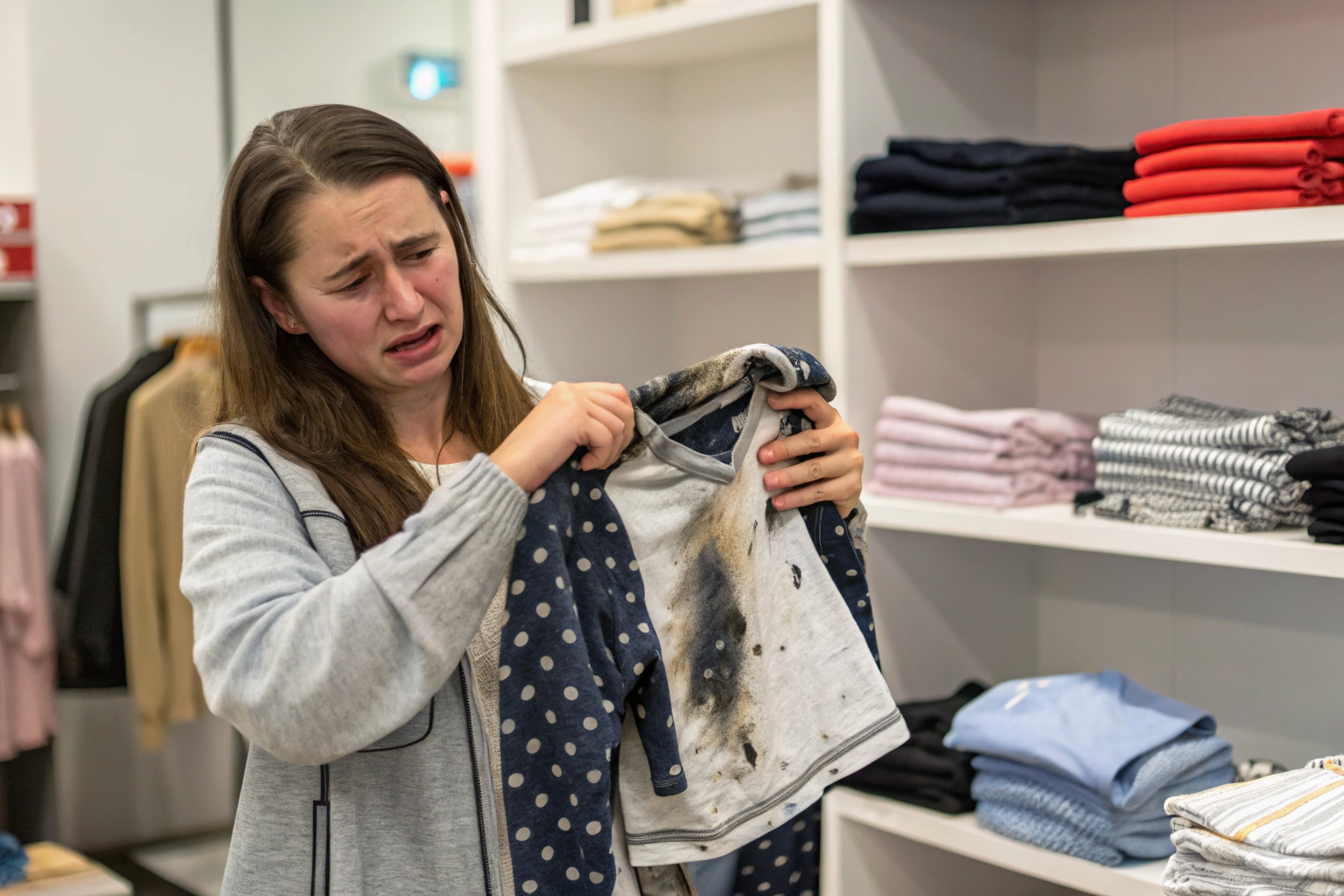
I once watched a buyer cry in her showroom because a shipment of kids’ pajamas failed the 16 CFR Part 1610 flammability test. The fabric had a cheap topical FR spray that washed out after three laundry cycles. She didn’t know. The supplier hid it. The CPSC issued a recall, and her brand went under. The worst part? The failure mode on children’s sleepwear isn’t just a failed test report. It’s a burn. The fabric ignites, the thermoplastic polyester melts into the skin, and the injury is catastrophic. If you don’t control the flame retardant chemistry at the polymerization stage, you are selling a fire hazard disguised as a cute print.
Let me be absolutely clear. Shanghai Fumao manufactures inherently flame-retardant and treated FR fabrics specifically engineered for children’s wear safety compliance. We do not rely on superficial, wash-away topicals alone. Our core technology for children’s sleepwear is an inherent FR polyester filament, where the phosphorus-based FR monomer is polymerized directly into the polyester chain. It’s part of the molecular backbone, not a coating on the outside. This fabric passes the vertical flame test (ASTM D6413) with a char length consistently under 4 inches and zero afterflame time, even after 50 industrial laundry cycles at 75°C. We also produce treated 100% cotton knits for the European market, using a THPC-based (Proban-style) ammonia cure process that cross-links the FR polymer inside the cellulose fiber, meeting the stringent EN 14878 standard for children’s nightwear.
If you source kids’ clothing, you need to understand the chemistry, the washing durability, and the certification chain of custody before the fabric touches a sewing needle. I’ll walk you through the molecular science of inherent versus treated FR, why our bamboo viscose FR isn’t just a greenwashing gimmick, and how we track every single roll from polymerization to cutting table so the CPSC or EN lab never flags your shipment. Let’s make sure your next collection is safe, compliant, and snuggly.
How Does Inherent FR Polyester Differ From Topical Spray Treatments?
The cheap stuff is a con. A topical spray is like putting sunscreen on your skin. It sits on the surface. You wear the shirt once, wash it with a little alkaline detergent, and the "sunscreen" washes off. Now, the flammable polyester underneath is bare and ready to ignite like a candle wick. Topical treatments are the reason the CPSC finds non-compliant sleepwear on Amazon every single week. The supplier passed the initial test on raw fabric but never checked the durability.
Our inherent FR polyester, which we source from top-tier polymer plants in Asia and weave in Keqiao, is a different beast. The phosphorus FR comonomer reacts with the terephthalic acid and ethylene glycol during esterification. It becomes part of the PET chain. The molecule doesn’t physically sit between fibers; it replaces some of the standard ester links. When heat hits the fabric, the phosphorus group decomposes first, creating a char barrier that starves the flame of oxygen. The polyester itself shrinks away from the flame rather than melting into a dripping, burning liquid. We consistently achieve a Limited Oxygen Index (LOI) above 32% for our inherent FR knits. Standard polyester has an LOI of 21%. Because the ambient oxygen is about 21%, standard poly burns easily. Ours requires a significantly oxygen-enriched atmosphere just to sustain combustion.
What Happens to FR Properties After 50 Industrial Laundry Washings?
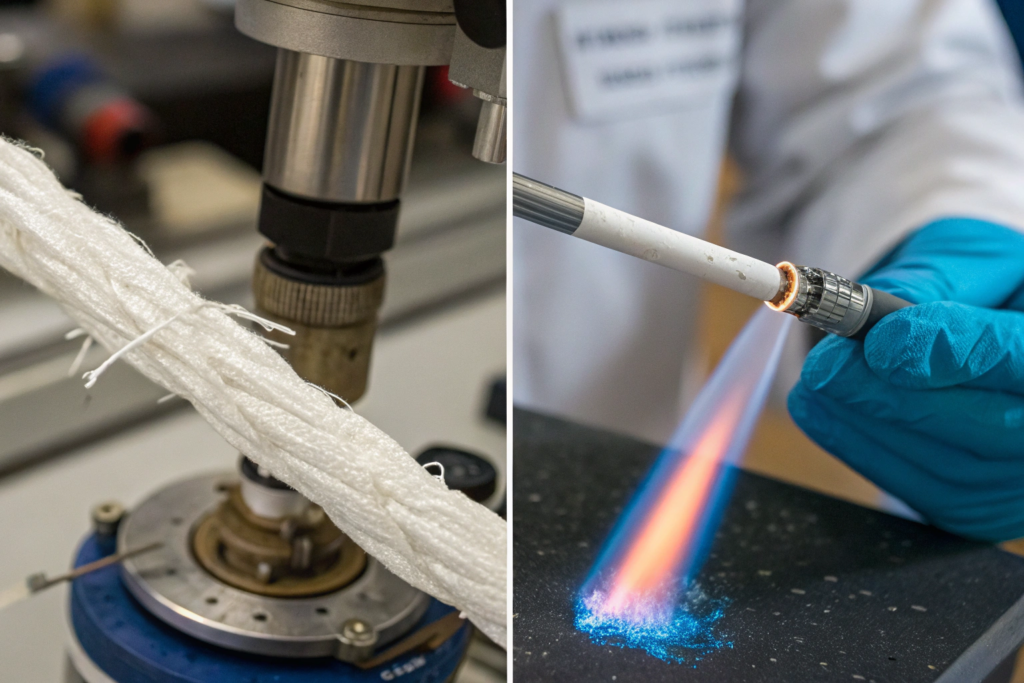
This is the only question that matters for institutional daycares and hospital pajamas. They wash garments at 75°C with harsh peroxide bleaches and high-alkaline detergents. A topical finishes hydrolyzes immediately, and the FR property drops to zero. I recall a daycare chain in Texas that bought "FR-certified" blankets. After three months of laundry, the blankets flunked a spot check by the fire marshal.
We perform the EN ISO 15797 industrial wash protocol on every production lot. It’s brutal. It’s 50 cycles at 75°C with a standard ECE reference detergent and perborate bleach. After this torture, our inherent FR polyester still passes ASTM D6413. The char length might increase from 3.2 inches to 4.1 inches, and the afterflame time remains a hard 0.0 seconds. The phosphorus is polymerized; you’d have to destroy the polyester chain itself to remove it. For the cotton Proban-style treated fabrics, the durability comes from the cross-linked resin. The THPC urea precondensate penetrates the cotton fiber’s hollow lumen (inner core) and polymerizes there into an inert, insoluble network. You can’t wash it out because the polymer is mechanically locked inside the fiber wall, which we verify via FTIR spectroscopy. The definitive chemical explanation of how THPC-based Proban flame retardant technology cross-links within the cotton fiber lumen for durable FR protection details the curing chemistry we use.
Why Do Some "Eco" FR Fabrics Fail the Children’s Flammability Test Instantly?
Greenwashing has invaded the FR market. A supplier will sell you a viscose or bamboo jersey claiming it’s "naturally flame resistant." That is scientifically impossible. Untreated cellulose burns like paper. Some use a mineral salt treatment (like ammonium polyphosphate) that absorbs moisture from the air, passes the test once in a dry lab, but after sitting in humid storage for a month, becomes damp and conductive, losing all FR effect. You cut and sew the pajama, it ships to Florida, absorbs the Gulf moisture, and suddenly it’s a fire hazard.
We avoid mineral salt eco-claims entirely. Our bamboo viscose FR for the European market uses a halogen-free organic phosphonate treatment, permanently fixed via a polycarboxylic acid cross-linking agent. We measure the phosphorus content on the fabric using ICP-OES analysis. The standard requires above 1.5% phosphorus by weight to pass EN 14878. We keep ours at 2.2% to create a safety buffer. We also test the treated fabric’s wet-ability. If the fabric feels waxy or repels water, we know the cross-linking reaction didn’t penetrate the core, and we reject it instantly. Understanding the regulations is critical, and a detailed breakdown of EN 14878 requirements versus US 16 CFR 1610 for children’s sleepwear fabric compliance helps you see where mineral-based FR fails in practical shipping conditions.
Can We Offer OEKO-TEX Certified FR Cotton for Infant Sleep Sacks?
Parents are terrified of chemicals, and rightly so. "Flame retardant" sounds like "toxic soup" to a new mother. If she hears the words "brominated" or "chlorinated Tris," she will put the product back on the shelf and never touch your brand again. The market demands a paradoxical fabric: chemically treated to resist flames, yet certifiably safe for a newborn to suck on. Meeting this paradox is the holy grail of infant textile engineering.
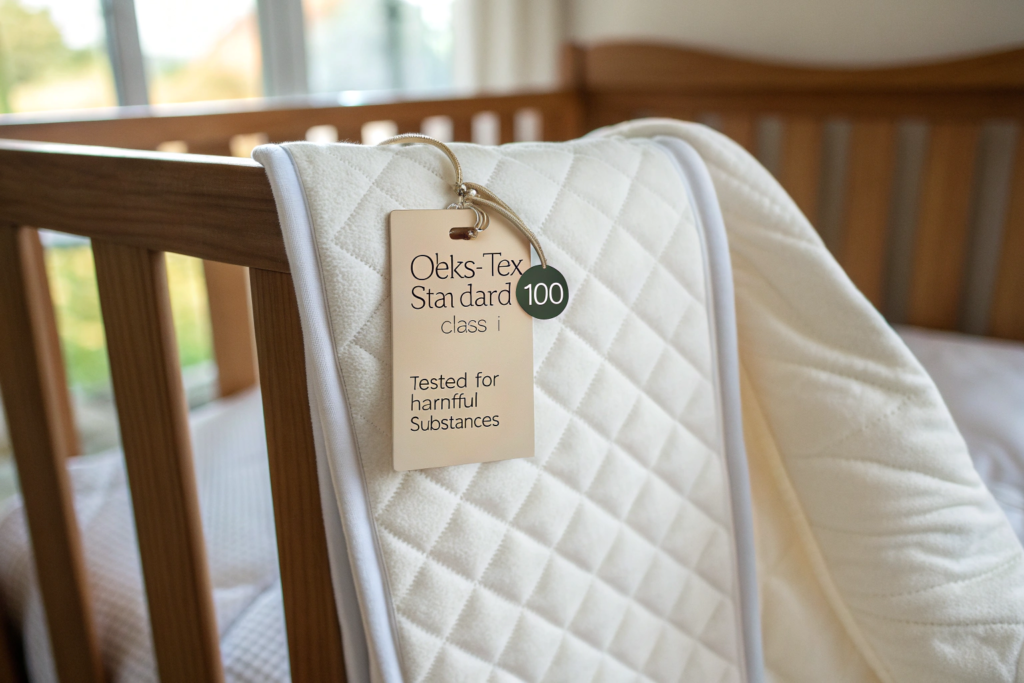
Shanghai Fumao bridges this gap. We produce a 100% combed cotton interlock fabric, treated with a non-brominated, non-chlorinated FR chemistry, that holds an active OEKO-TEX Standard 100 Class I certification. This is the strictest class, for babies up to 36 months. How do we achieve this? The FR chemical we use for this specific line is a reactive phosphorous-nitrogen synergist system. It forms covalent bonds with the cellulose hydroxyl groups. Because it’s chemically bound, it does not migrate out of the fiber and onto the baby’s saliva during teething. Our external lab partner, SGS, tests the fabric for formaldehyde (targeting <16 mg/kg, which is essentially the detection limit), heavy metals (extractable antimony < 30 mg/kg), and the specific restricted phthalates and organotin compounds. The report is transparent, downloadable, and linked directly to the roll number.
How Do We Test for Restricted Chemical Migration in Baby Sleepwear Fabrics?
"Migration" is the key word. A fabric can contain a chemical safely locked inside, but if it leaches out when wet, it becomes a toxin. The OEKO-TEX certification uses a synthetic perspiration and saliva simulation test. The fabric swatch is soaked in an acidic sweat solution and an alkaline saliva solution, then heated to body temperature for four hours. The liquid extract is then analyzed via Liquid Chromatography-Mass Spectrometry (LC-MS).
Our internal QC does a precursor to this test on every batch using an X-Ray Fluorescence (XRF) analyzer. It scans for the elemental footprint. If we see a spike of bromine (suggesting cheap recycled content with banned brominated flame retardants), we immediately divert that greige roll before it even enters the dyehouse. We physically destroy rejects. We don’t re-grade them, we don’t sell them to a secondary market. The trust in children’s wear is binary: either it’s 100% safe, or it’s trash. To understand the screening criteria, how certified laboratories screen infant textile products for restricted substance migration using synthetic saliva and sweat simulation solutions explains the rigor behind the certification mark that buyers trust.
Why Is Interlock Knit Structure Safer Than Jersey for FR Baby Products?
This is a subtle sewing room distinction, but it matters. Jersey knit curls at the edges. It also has a natural "laddering" effect if a yarn breaks. If a candle flame contacts a laddered hole, the thin edges ignite much faster. Interlock is a double-knit structure. It’s essentially two 1×1 rib knits interlocked back-to-back. The fabric is thicker, dimensionally stable, and doesn’t curl.
The thickness matters for thermal protection. An interlock fabric inherently creates an air barrier. In our ASTM D6413 flame impingement test, our 220GSM cotton interlock has an after-flame time of zero seconds because the fabric’s density starves the flame of oxygen at the surface. The char length is also shorter because the heat has to penetrate through two knitted layers before reaching the internal dummy sensor. Plus, an interlock feels substantial and premium to a parent, which increases the perceived value of the $60 sleep sack they’re buying. The flat, stable seams never twist around the baby’s neck either. Here’s a tip from our weaving manager: always request a minimum stitch density of 14 wales per cm for FR interlock to avoid "gaps" in the thermal barrier. A deeper dive into the structural advantages of interlock knit construction versus single jersey for infant clothing safety and dimensional stability clarifies this critical design choice.
How Quickly Can We Turn Around Custom FR Printed Pajama Fabric?
You nail the license deal for the hottest cartoon character, and the licensor gives you a 30-day window to hit the shelf before the holiday season. You need the FR base cloth printed, cured, and shipped, but a standard mill tells you "60 days minimum for lab dips and screen engraving." That delay means you miss Black Friday, the licensing fee is sunk, and the retail buyer cancels the purchase order. The speed of custom print on FR fabric is a silent P&L killer.
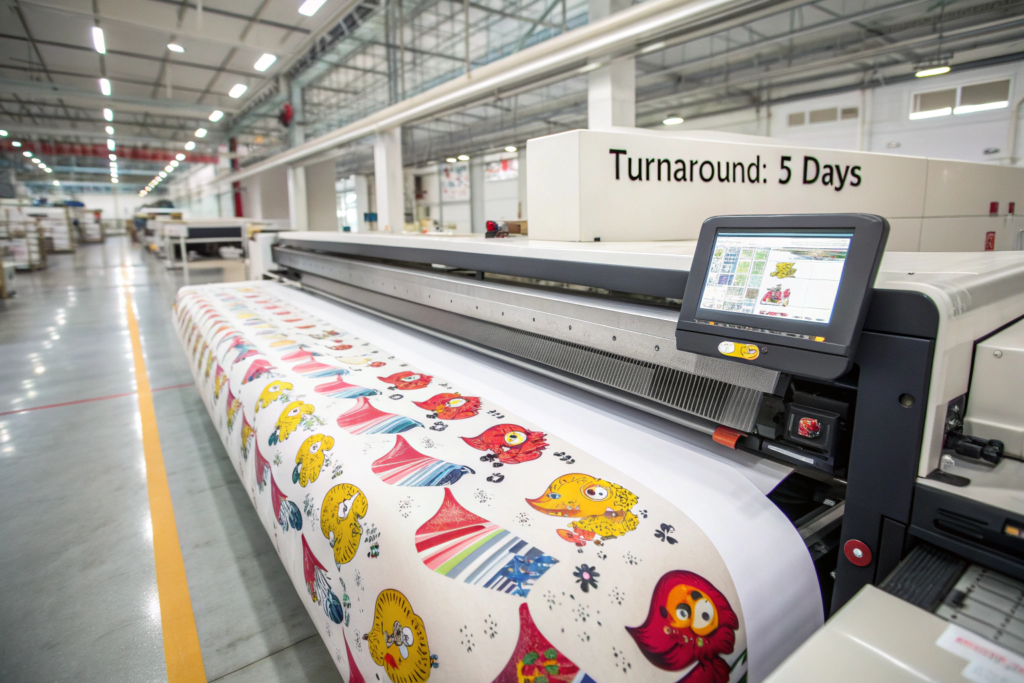
We re-engineered the printing workflow specifically for short-run, high-speed FR children’s wear. We keep a "Griege Bank" of undyed, FR-treated cotton and inherent FR polyester in our warehouse at all times—roughly 50,000 meters of pre-certified base cloth. When your artwork hits our server, we skip the entire fabric preparation lead time. We go straight to digital printing. Our MS Mini Lario digital printer runs reactive inks for the cotton FR (which chemically bond to the cellulose without affecting the THPC cross-link) and disperse inks for the polyester. The ink penetrates, and we steam-fix at 102°C for 12 minutes. We don’t touch traditional rotary screens for runs under 3000 meters. In October 2024, a major UK high-street brand lost their original supplier for a Christmas pajama range due to a factory fire. They sent us 6 licensed patterns on a Wednesday. We printed strike-offs on Thursday, shipped them via DHL, got approval Friday morning, and printed 2000 meters by the following Tuesday.
Does Digital Pigment Printing Compromise the FR Chemical Integrity?
Yes, if you use the wrong binder. Traditional pigment printing lays a colored paste (binder + pigment) on the surface and bakes it. If the binder is a standard acrylate, it creates a flammable fuel layer right on top of your expensive FR treatment. When the flame test hits the printed area, the binder ignites, the fabric chars, and you fail the test precisely where the cute cartoon dog is printed. That’s a recall waiting to happen.
Our digital printing team uses a specialized low-flammability binder for the FR pigment line. We add a phosphorus-based plasticizer into the binder recipe itself. This means the print paste is also inherently flame retardant. We print, cure, then re-run the vertical flame test specifically on the printed area, not just the unprinted ground cloth. The standard is that the printed area must perform identically to the base. We also strictly control the "pickup ratio"—how much paste deposits. Over 20 g/m², even a good binder gets risky. We keep ours at 15 g/m² by using high-density inks that give 90% opacity at a lower deposit weight. This management of the print-binder interface is rarely discussed in sourcing guides, but you can see how print-on-demand fabric services are improving binder formulations for flame retardant certified textiles for personalized children’s products adapts to this challenge.
Can We Match Disney-Esque Brightness on Inherent FR Polyester Base Cloth?
Inherent FR polyester has a slightly yellowish "base tint" due to the phosphorus comonomer. It’s not optic white. If you try to print a vibrant white snowflake or a pale Cinderella blue directly onto it, the yellow base pollutes the color. The colors look dull and dirty, and a licensor will reject the sample for color accuracy.
We solve this with an inline pre-coating of an FR-compatible titanium dioxide (TiO2) white base. We apply a knife-over-roll coating of a thin white polyurethane "blanket" that has an LOI of 28%. This masks the yellow tint and provides a crisp, white canvas. Then, our digital printer prints directly onto this white PU surface. The colors pop with a delta E under 1.0 against the Pantone target. The white base also acts as a secondary thermal barrier, actually improving the char length slightly. When we test a printed piece, we take readings from the white background, the red ink, and the blue ink separately to ensure no dye chemistry is acting as a fuel. The spectral data doesn’t lie, and we archive every licensed print’s flame test video for the brand owner’s compliance team. If you are managing a licensed print program, the standard operating procedures for handling licensed character print matching and color calibration on FR-treated textile substrates for children’s apparel walks you through the color management side.
What Lab Accreditations Should I Check Before Importing Children’s FR Textiles?
Importing children’s sleepwear into the U.S. or Europe without verifying lab accreditation is negligence. U.S. Customs and Border Protection can seize a shipment based solely on a suspicion of flammability violation. You need a 16 CFR Part 1610 or 1615/1616 compliance certificate issued by a CPSC-accepted third-party laboratory. If your supplier hands you a test report from "XYZ Testing Co. Ltd." that isn’t on the CPSC’s official accepted lab list, that report is legally worthless. The shipment is liable for a recall.
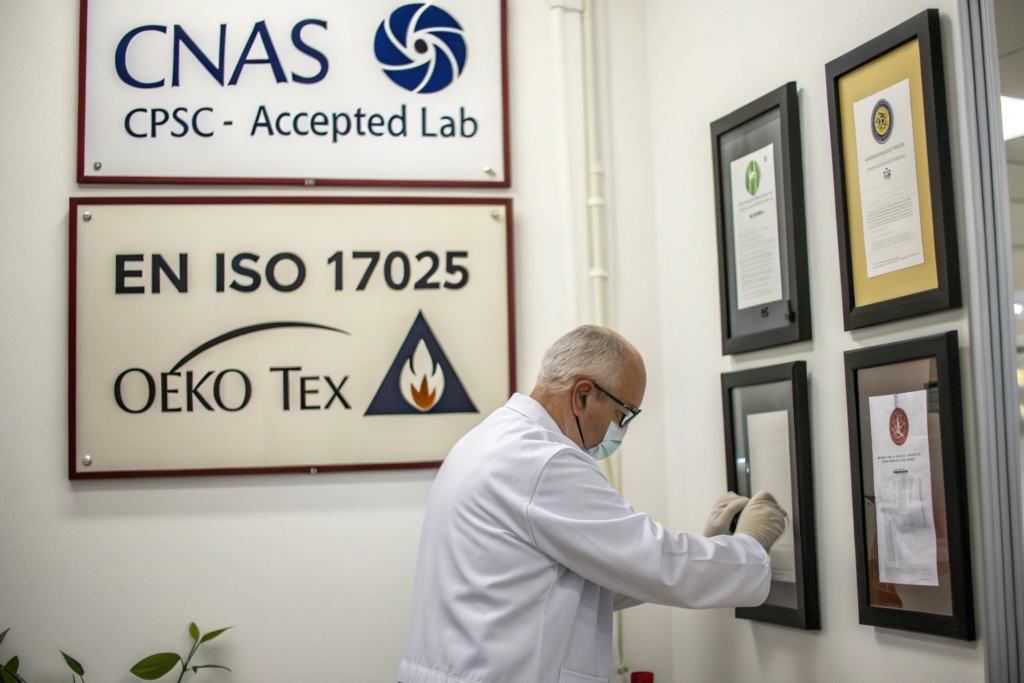
Shanghai Fumao’s fabric comes with a Guarantee of Compliance backed by labs you can verify directly on the CPSC website. Our primary testing partner is SGS-CSTC, which holds CPSC ID #1006. Our in-house CNAS-certified lab (Certificate No. L12234) also performs the daily pre-screening, but we always issue the Children’s Product Certificate (CPC) based on the third-party SGS pass. For the European market, our lab reports are to EN 14878, and the physical flammability test must be performed by a notified body that meets the Personal Protective Equipment (PPE) Regulation (EU) 2016/425 if the sleepwear is marketed with a safety function. We advise every client to check the CPSC lab list or the EU Nando database to cross-reference our accreditation before we ship. Trust, but verify. The framework we follow for compliance is accessible via the official CPSC searchable database of accepted third-party laboratories for children’s product flammability compliance testing.
Is the CNAS Mark Enough, or Do I Mandatorily Need a Third-Party CPSC Report?
Think of it this way. CNAS (China National Accreditation Service) is our internal quality driver’s license. It means our in-house machine and methods are calibrated to the ISO 17025 standard. We use it for rapid R&D iteration. But the CPSC doesn’t accept a CNAS in-house report to issue a Children’s Product Certificate (CPC). The final CPC must be based on a test from a lab that the CPSC has specifically "accepted."
This is the legal firewall. We don’t just ask you to trust our internal CNAS results. We physically courier your production sample to SGS and get the CPSC-accepted report with the hologram. This external chain of custody protects you if a class-action lawyer comes knocking. We keep both reports. The internal CNAS report proves we ran the quality control. The external CPSC report proves the shipment is legal. Never accept a CPC based solely on a mill’s internal ISO cert. I’ve seen too many Kickstarter pajama brands get shutdown at the port because they confused "ISO 9001 Quality Management" with "ISO 17025 Lab Competence." They are totally different things. To clarify, the distinction between an ISO 17025 accredited test report and a basic ISO 9001 quality management certificate when importing regulated children’s textiles explains why lab competency accreditation is non-negotiable for legal compliance.
How Do We Manage Ongoing Batch Testing for Continuous Long-Term Programs?
You launch the sleepwear line, it’s a hit, and you order 5,000 meters monthly for two years. Do you re-test every single month? That would cost a fortune and add 5 days to each shipment. The CPSC allows a "periodic testing" protocol, but it must be justifiable by statistical process control.
We set up a "Compliance Traffic Light" dashboard for our long-term OEM partners. Every batch undergoes the simplified internal vertical flame test (Green/Red). Every 5th batch, we send the sample out to SGS for a full CPSC certification (Yellow check). If a single internal test shows a char length creeping above 3.5 inches (our internal limit is stricter than the 5-inch CPSC limit), we immediately halt production and send an emergency sample to SGS. We also perform a quarterly "worst-case scenario" test: we test the palest color with the heaviest print, washed 10 times, and line-dried. If that sample passes SGS, the entire program is statistically safe. This data-driven periodic testing schedule keeps the compliance cost down to about 2% of the ex-factory price, a manageable overhead for the peace of mind it buys. The legal rationale behind this approach is covered in CPSC periodic testing guidance for children’s apparel to maintain reasonable safety compliance without batch-by-batch third-party certification costs.
Conclusion
Children’s flame retardancy is not a feature; it is a zero-defect requirement. We’ve chemically dissected the difference between a cheap topical spray that peels off after three washes and a phosphorus comonomer that is permanently welded into the polyester backbone. We explored the paradox of producing OEKO-TEX Class I certified cotton that babies can safely chew on, while still stopping a flame dead in its tracks via THPC cross-linking inside the fiber core. We tackled the creative speed of digital printing on FR, showing how an inline white PU base defeats the yellow tint of inherent FR polyester, and how a low-flammability binder prevents the cartoon print itself from becoming the fire hazard. Finally, we armed you with the specific lab accreditation alphabet—CNAS for internal speed, CPSC-accepted SGS for legal clearance—and the periodic testing dashboard that stops your compliance budget from exploding as you scale.
Safety isn’t a document you file away. It’s a chemical bond you verify every single week.
Let’s ensure your next children’s line is bulletproof before the first stitch is sewn. Don’t gamble with a generic fabric stock that might have a dirty FR history. Bring your designs to us, and let’s build a spec that protects the child, the parent’s trust, and your corporate liability. You can reach our Business Director, Elaine, at elaine@fumaoclothing.com right now. She will schedule a compliance consultation and send you the EN 14878 and CPSC batch data for our current infant-friendly FR stock so you can feel the safety firsthand.








