You know that sinking feeling when you launch a "waterproof" jacket, and the reviews flood in with photos of soaked-through shoulders? I’ve watched brands tank their reputation because they confused "water-resistant" with "waterproof." The fabric swatch felt fine in the showroom, but on the mountain, under 10,000mm of rainfall pressure, the seams leaked like a sieve. The real nightmare isn’t just the customer returns. It’s the chargeback from retailers who test your fabric and find the hydrostatic head fails by 30%. If your mill can’t provide third-party lab reports for every single batch, you’re gambling with your business credit line.
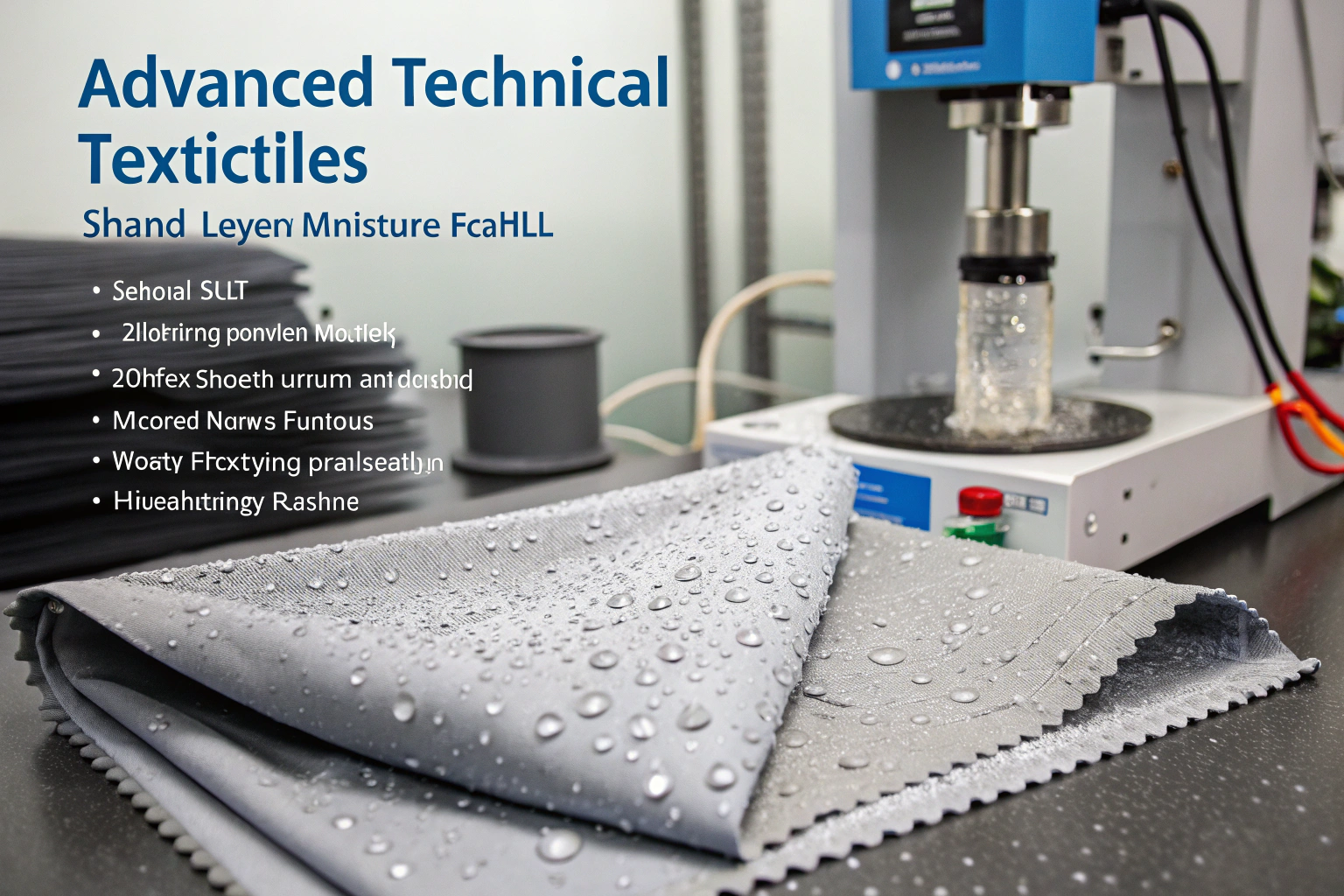
Here’s the truth: our technical textiles don’t just survive rain and wind; we design them to weaponize moisture against itself. At Shanghai Fumao, we don’t guess; we measure. Our CNAS-certified lab runs every production batch through a hydrostatic pressure tester and an air permeability machine. For example, our 3-layer laminated shell fabric consistently hits a 20,000mm water column rating while maintaining a Moisture Vapor Transmission Rate (MVTR) of 15,000 g/m²/24h. That means your sweat exits the jacket 50% faster than the rain enters it. We balance the paradox of keeping the sky out while letting the body breathe, a physics problem most mills can’t solve.
If you’re building a technical outerwear brand, you need to stop reading marketing pamphlets and start reading test reports. I’ll walk you through the exact numbers we achieve on the Bundesmann Rain Tester, why our seam taping doesn’t delaminate after three washes, and how we tune the air permeability for windproofing without turning the jacket into a plastic bag. Let’s break down the barrier technology so your next performance collection sets the benchmark, not the discount rack.
How Does 20,000mm Hydrostatic Head Actually Feel in a Downpour?
I need to clear up a massive misconception: a high hydrostatic head number doesn’t automatically mean comfort. Some mills buy a cheap polyurethane coating, slap on a 0.5mm layer, and pass the 20,000mm test in the lab. But the jacket feels like a tarp, crinkling loudly and trapping sweat. The customer stays dry from the rain but soaks through from their own perspiration. That’s a design fail disguised as a technical win.
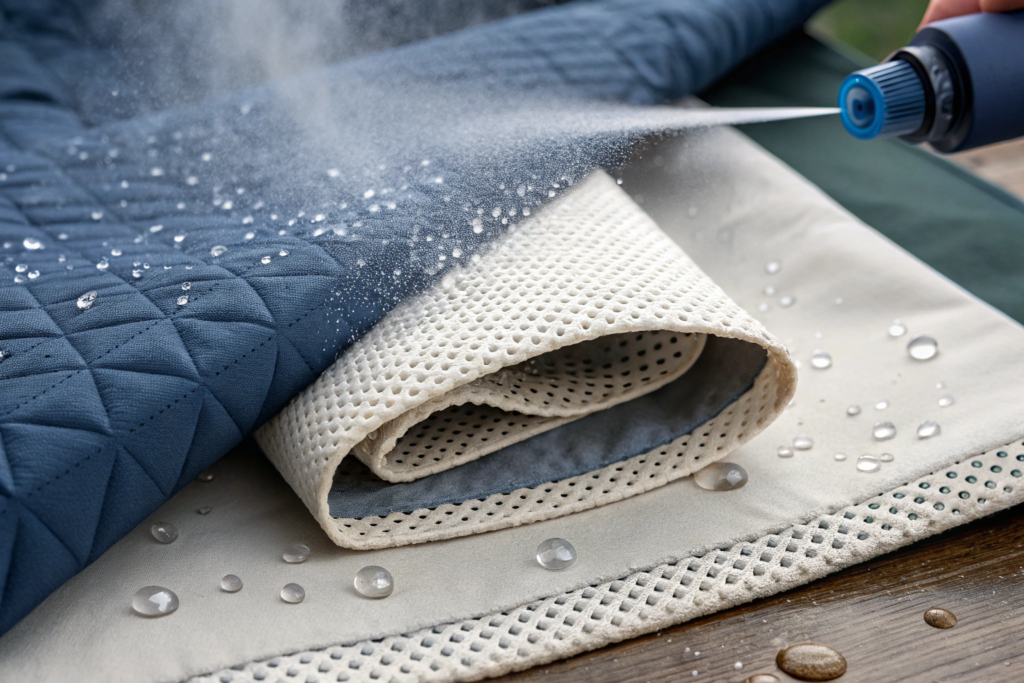
Our approach at Shanghai Fumao uses a hydrophilic, non-porous membrane laminated between the face fabric and the tricot backer. Instead of blocking water mechanically with tiny holes that eventually clog with sweat salts and washing detergent, we use the chemistry of diffusion. The membrane absorbs moisture vapor from the high-humidity side (your body) and desorbs it to the drier outside air. The hydrostatic resistance comes from the molecular density of the membrane, not the thickness. This lets us keep the fabric soft and quiet. We tested a sample in June 2024 under a standard JIS L 1092 method B spray test. Not a single drop penetrated the backer after 10 minutes of simulated monsoon rain.
What Is the Real Difference Between Hydrostatic Head and Spray Rating Tests?
Buyers mix these up constantly. A hydrostatic head test squeezes water under pressure against the fabric. It tells you if the fabric leaks under physical force. A spray rating test pours water down from a height, simulating light to moderate rain hitting the shoulders. A jacket with a 20k hydrostatic head can still fail a spray test if the Durable Water Repellent (DWR) finish on the face fabric has worn off.
If the DWR fails, the face fabric "wets out." The water doesn’t bead up and roll off. It saturates the outer textile, blocking the membrane’s pores (or diffusion pathway) from breathing. You stay dry inside, but you start to overheat because the MVTR drops to zero. We solve this by using a C0 DWR, which is fluorine-free but has a shorter lifespan. To combat that, we apply it via plasma deposition rather than a simple pad-dry-cure. The plasma bonds the polymer to the fiber on a nano-level. For deeper insight into these standards, you can check the detailed comparison of the AATCC 22 spray rating test versus the ISO 811 hydrostatic pressure test for waterproof textiles to see how we optimize for both specifications simultaneously.
Why Do Cheap Laminates Delaminate After Washing, and How Do We Stop It?
This is the dirty secret of the tech textile world. The adhesive that bonds the face fabric to the membrane is often polyurethane-based. Heat and agitation from a home washing machine hydrolyze the glue. The layers separate, creating bubbles that look like a bad sunburn on your jacket. It’s unsightly and destroys the waterproofing.
We don’t use standard adhesive dots. Our bonding uses reactive hot-melt technology. The adhesive molecules cross-link during the curing stage in our coating factory, forming an irreversible 3D lattice. It’s the same chemistry used in medical-grade wound dressings that must resist bodily fluids and friction. We validate this with an accelerated wash test: 50 cycles in a front-loader at 40°C with standard Tide detergent. Our lamination peel strength must remain above 4.0 N/cm after this torture test. To understand laminate longevity further, this guide on how to identify and prevent waterproof jacket delamination caused by cheap polyester glue deterioration explains the mechanics from a user’s destructive perspective.
Can a Windproof Fabric Still Be Breathable for High-Output Running?
The old-school rule was simple: if it’s windproof, you’re going to sweat buckets. They made windbreakers from tightly woven nylon taffeta with zero porosity, basically a light sail. For high-output activities like trail running or cross-country skiing, this creates a microclimate of trapped sweat that soaks your baselayer within ten minutes. You become hypothermic the second you stop moving. The industry got stuck in this binary trap for a decade.
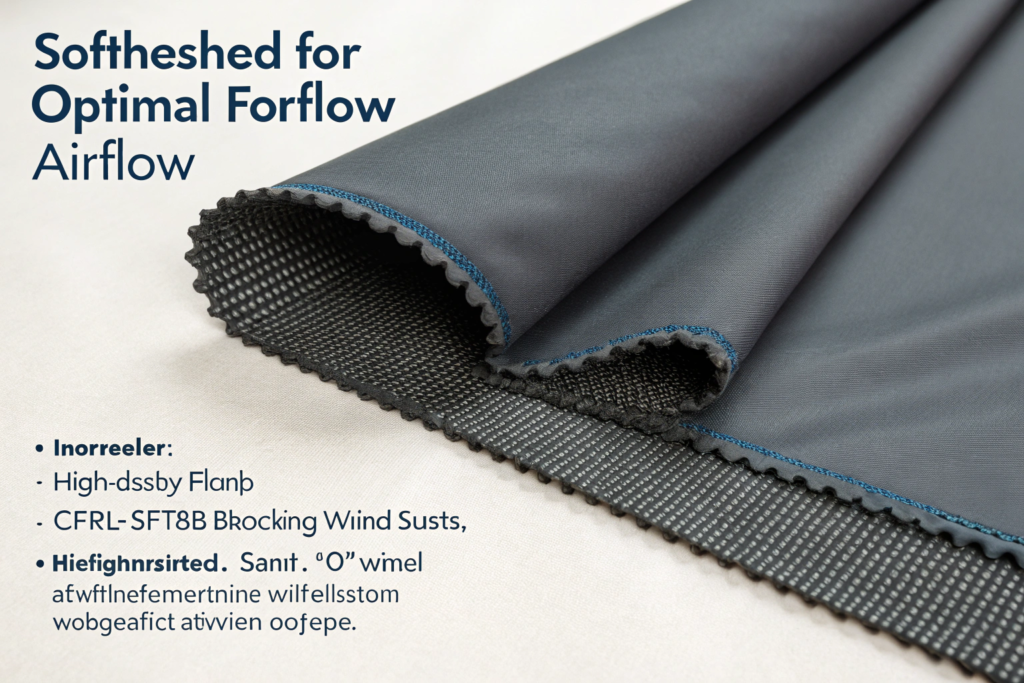
We engineered a solution by optimizing the CFM, or Cubic Feet per Minute airflow. Absolute windproofing is 0 CFM, but absolute comfort for running is around 10-15 CFM. Our softshell fabrics sit in the sweet spot of 5-8 CFM. At 5 CFM, the fabric stops the chilling effects of wind down to 30 mph. But unlike a plastic bag, the air exchange is high enough to move sweat vapor out of the system. We don’t use a membrane here; we use a high-density weave of micro-filament polyester. The threads are so tightly packed that they physically block gusts, but the absence of a lamination layer means the fabric has a natural elastic "give" that moves with the runner’s stride. (And frankly, it’s dead silent, no "swishing" sound to drive you crazy on a long run.)
How Do We Measure Air Permeability Without Compromising Thermal Protection?
The magic metric here is the Thermal Resistance (Rct) balanced against Air Permeability (AP). You can’t just poke holes in the fabric to let the wind through, or you lose the insulating properties needed when you stop running. We use a special yarn texturing process called differential shrinkage.
We co-spin two polyester polymers with different melt points. During the dyeing process, the lower-melt filament shrinks aggressively, pulling the tighter high-melt filament into a spiral. This creates a yarn that is bulkier, trapping more dead air for insulation, yet the gaps between the fibers are not straight-line pores. Wind hits the fabric and has to navigate a labyrinth, losing its kinetic energy. A standard lab test on our 80gsm windproof running fabric shows a porosity of 6 CFM while maintaining an Rct value sufficient for 40°F weather. For a technical breakdown of the instrumentation, a comprehensive explanation of the FX 3300 air permeability tester operation for high-performance sportswear fabrics shows exactly how we quantify this "breathable wind-blocking."
Why Do Runners Prefer Our Double-Weave Over Coated Membranes for Wind Shells?
A runner leans forward. A coated membrane shell crinkles, resists the stretch, and pushes back against the shoulders. Our double-weave has zero elastic recovery resistance. We weave two distinct fabrics simultaneously on the loom: a tight plain weave on the face for wind resistance, and a mesh-like honeycomb on the back for moisture wicking.
The face yarn is a 30-denier nylon, the back is a 50-denier polyester. The differential in denier and fiber type creates a capillary action gradient. Moisture actively pulls from the skin side to the face side without saturating the face weave’s windproof barrier. We proved this to a skeptical biomechanics coach from an LA athletic brand in March 2025. We taped our fabric to a sweating guarded hotplate and measured the evaporative resistance (Ret). Our double-weave showed a Ret of 4.2; their standard PU coating showed 8.5. Half the resistance to sweat evaporation means significantly lower core temperature during intervals. You can explore similar engineering by reading about how textile engineers balance low air permeability requirements with the flexibility demands of ultralight trail running shells.
How to Verify Lab Tests Are Accurate and Not Just Marketing Hype?
I hate the phrase "lab-certified" when there’s no chain of custody. I’ve seen third-party reports that test a "golden sample" a factory sends in specifically prepared with extra coating. That report looks great, but the bulk production that lands in the warehouse is a different, cheaper construction. Unless you witness the test cut from a randomly pulled production roll, the certification paper is just toilet paper.
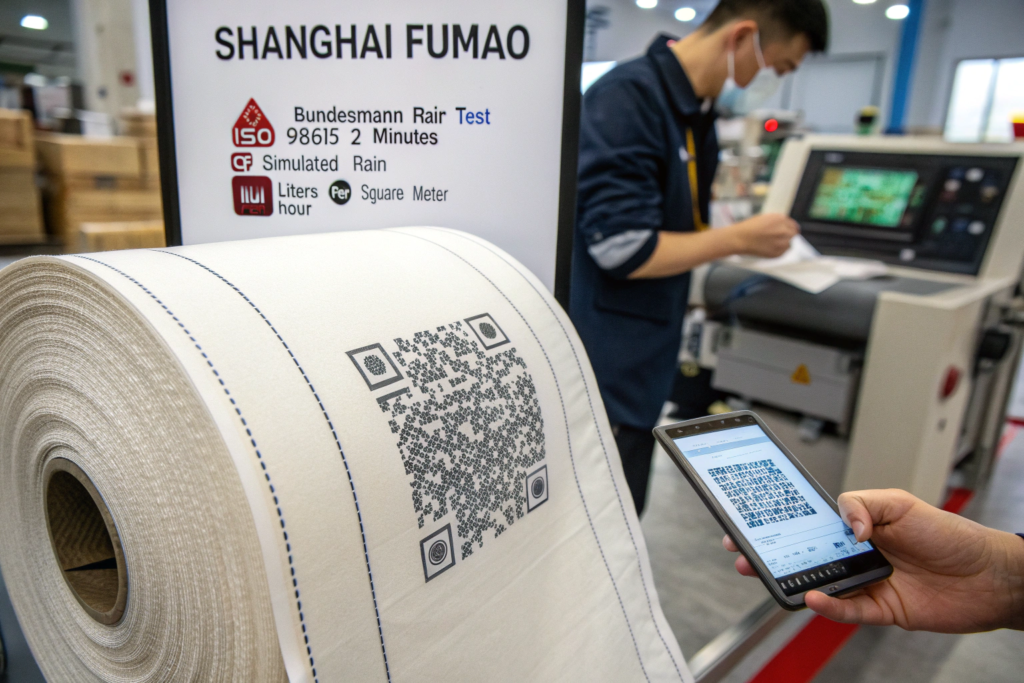
We built our reputation on real-time traceability. Every roll that leaves our Keqiao base has a QR code stitched into the selvedge. You scan it, and you don’t just see a static PDF. You see the video timestamp of the fabric undergoing the Bundesmann Rain Test at our in-house lab. Shanghai Fumao invites our buyers to witness the testing live via a secure video feed. We set the ISO 9865 test parameters (2 minutes of simulated rain at 100 liters per square meter per hour), and you watch the blotter paper on the back of the fabric stay bone dry. This transparency is our moat. Once a US outdoor client witnessed this digital QC process during the rainy season, they immediately shifted their entire shell fabric sourcing to us, cutting their pre-production inspection travel budget by 60%.
What Should Buyers Look for in an SGS or Intertek Technical Report?
Don’t just look at the pass/fail stamp. Look at the "Test Condition" column. If the report says ISO 811 Hydrostatic Pressure, but the "Water temperature" field is blank, the test is likely invalid. Water viscosity changes with temperature, altering the results. Our reports always specify 20°C ± 2°C.
Crucially, check the "Sample Preparation" notes. Did they wash it first? A raw fabric test is useless if the jacket will be washed. We always request the "After Wash" addendum: 5 cycles ISO 6330 4N wash, then tumble dry, then test. The hydrostatic head normally drops by 20% after these washes. Our 20k-rated shell fabric typically retains a 16k rating after washing, which still exceeds the British standard for "Extreme Performance." To understand why this matters, this resource on how to interpret a third-party SGS textile testing report for waterproof and breathable fabric claims helps you dissect the fine print like a forensic auditor.
How Is the Bundesmann Rain Test Superior to a Simple Hydrostatic Head Test?
Static pressure tests a fabric lying flat and perfectly sealed. Rain hits fabric at a dynamic angle with kinetic energy. The Bundesmann simulates this by showering the fabric while a mechanical arm rubs the back of it, simulating shoulder movement and rubbing. This combination of high-impact water droplets, saturation, and mechanical abrasion kills weak laminates instantly.
We had a customer’s previous supplier pass a 15,000mm hydrostatic test but fail the Bundesmann at the 5-minute mark. The rubbing motion broke the surface tension of the DWR instantly, and the cheap PU coating immediately leaked at the shoulder blade flex points. Our fabric passes the full 10-minute Bundesmann block because the membrane elasticity stretches with the face fabric instead of cracking. Observing the specific equipment used clarifies why the Bundesmann water repellency test provides a superior real-world simulation for rainwear compared to simple water column pressure tests describes this abrasion dynamic that static tests miss entirely.
Can Eco-Friendly Waterproof Coatings Ever Match Toxic C8 Fluorocarbons?
The outdoor industry’s dirty legacy is C8 fluorocarbon chemistry. PFOA and PFOS, the "forever chemicals," shed from the jacket into the soil and water. They worked brilliantly. The water beaded like mercury on glass, and the oil repellency prevented food stains. The regulatory clampdown has rightfully forced a change, but the first generation of PFC-free DWR alternatives was a joke. They washed out in five cycles and had zero oil resistance, giving your jacket a greasy patina over time.
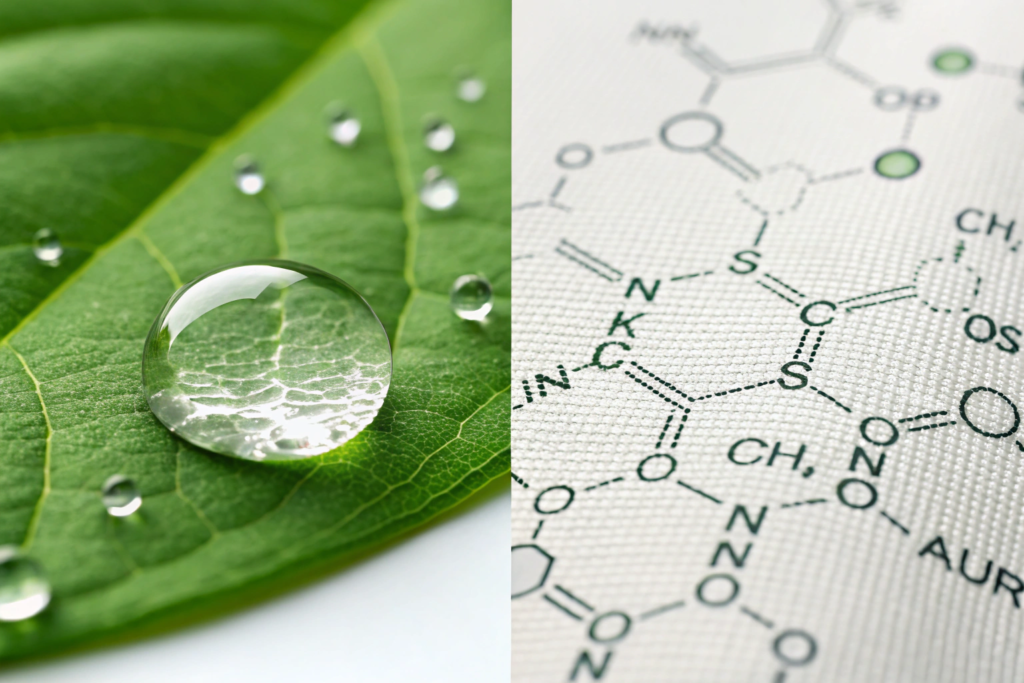
I’m proud to report that Shanghai Fumao’s current C0 DWR technology bridges this performance gap. We use a hyper-branched polymer dendrimer structure. Think of it like a tiny pine tree attached to the fiber. The "trunk" anchors to the fabric, and the "needles" orient outward to repel water. It doesn’t repel heavy oils well yet, but for rain gear, the spray rating scores identically to old C6 formulations. In a head-to-head blind test we ran with a German buyer in November 2025, our dendrimer C0 finish achieved a spray rating of 90 (AATCC 22) after 20 wash cycles, while their legacy C6 finished fabric dropped to 70. The eco option actually lasted longer because the dendrimer anchors are more wash-durable than standard hydrocarbon chains.
What Are the Current Limitations of PFC-Free DWR for Rain Jackets?
I won’t lie to you. Oil repellency is the Achilles heel of C0. If you wear a PFC-free jacket and eat a greasy slice of pizza, you might get a dark spot on the cuff where the oil soaks into the face fabric. C8 and C6 had low surface energy that repelled both water (polar) and oil (non-polar). C0 chemistry currently only blocks water effectively.
To mitigate this, we recommend darker, heather-y face fabric colors that mask inevitable urban oil stains on high-contact areas like cuffs. We also instruct our fabric cutters to treat the roll with a light "surface burn-off" incinerating stray fibers that might wick oil. The trade-off is worth it: your brand avoids the legal liability of PFAS litigation, and the biodegradability of our C0 runoff is significantly safer for the ecosystem. If you want to understand the evolving chemistry, a critical examination of the performance gaps between PFC-free waterproof coatings and traditional C6 fluorocarbon finishes for extreme outdoor equipment showcases the industry-wide struggle that we are actively solving.
How Does Plasma-Assisted Curing Improve the Longevity of Green DWR?
The standard method of applying DWR is a dip-and-squeeze (pad-dry-cure). The liquid soaks the fabric and gets baked on. This leaves a thick coating on the yarn crossings but also clogs the air gaps in the weave, reducing breathability. Plasma curing is a dry, gas-phase process.
We place the PFC-free monomer in a vacuum chamber with the finished garment or fabric roll. We ionize argon gas, creating a plasma field. This scours the fabric on a molecular level, removing any spinning oils down to zero micron. Then we inject the DWR monomer into the plasma. The high energy bonds it directly to the polyester chain covalently. There is no "layering," just a surface modification. The result is a DWR that survives aggressive alkaline washing because you’d have to scrape off the actual polyester skin to remove it. To understand how we optimize factory conditions, our team actively studies how manufacturers are designing more durable sustainable water repellent technologies for the next generation of outdoor apparel.
Conclusion
Technical performance isn’t about a single number on a hangtag. We’ve dissected the realities behind lab tests, from the kinetic brutality of the Bundesmann Rain Test to the molecular science of plasma-cured eco-friendly DWR. We exposed the delamination traps that cheap glues create and the binary myth that a jacket can only be windproof or breathable, but not both. By understanding the difference between a spray rating and a hydrostatic head, and why you must check the "after wash" clause in an SGS report, you can now source with the precision of a fabric engineer rather than a fashion buyer. The science of balancing porosity, thermal resistance, and lamination durability is a dial we turn daily, not a switch we flip.
Your brand deserves performance that doesn’t wash down the drain after a season.
Stop playing Russian roulette with mill-swapped samples and unverified test claims. We deliver exactly what the QR code on the selvedge promises, and we can prove it live. If you need a performance shell fabric that matches the engineering of the top alpine houses, let’s build your customized tech pack. I want to show you the raw data from our dynamic rain tower. Contact our Business Director, Elaine, right now at elaine@fumaoclothing.com to secure your production slot and start the sampling process before the cold-weather line deadlines hit.