I lost a $60,000 order once because of a single misunderstood word: "crispy." The buyer from Manchester emailed our sales rep and asked if the poplin had a "crispy hand feel." Our rep, a brilliant technical mind but not a native English speaker, had never encountered "crispy" used to describe fabric. She thought the buyer was joking about fried chicken. She replied with a confused emoji. The buyer interpreted the delayed, awkward response as incompetence and ghosted us, taking the order to a Turkish mill. The core issue wasn’t language skill. It was a lack of shared tactile vocabulary and a broken feedback loop. When technical textile terms collide with colloquial design slang, and the sample is 6000 miles away, trust evaporates instantly.
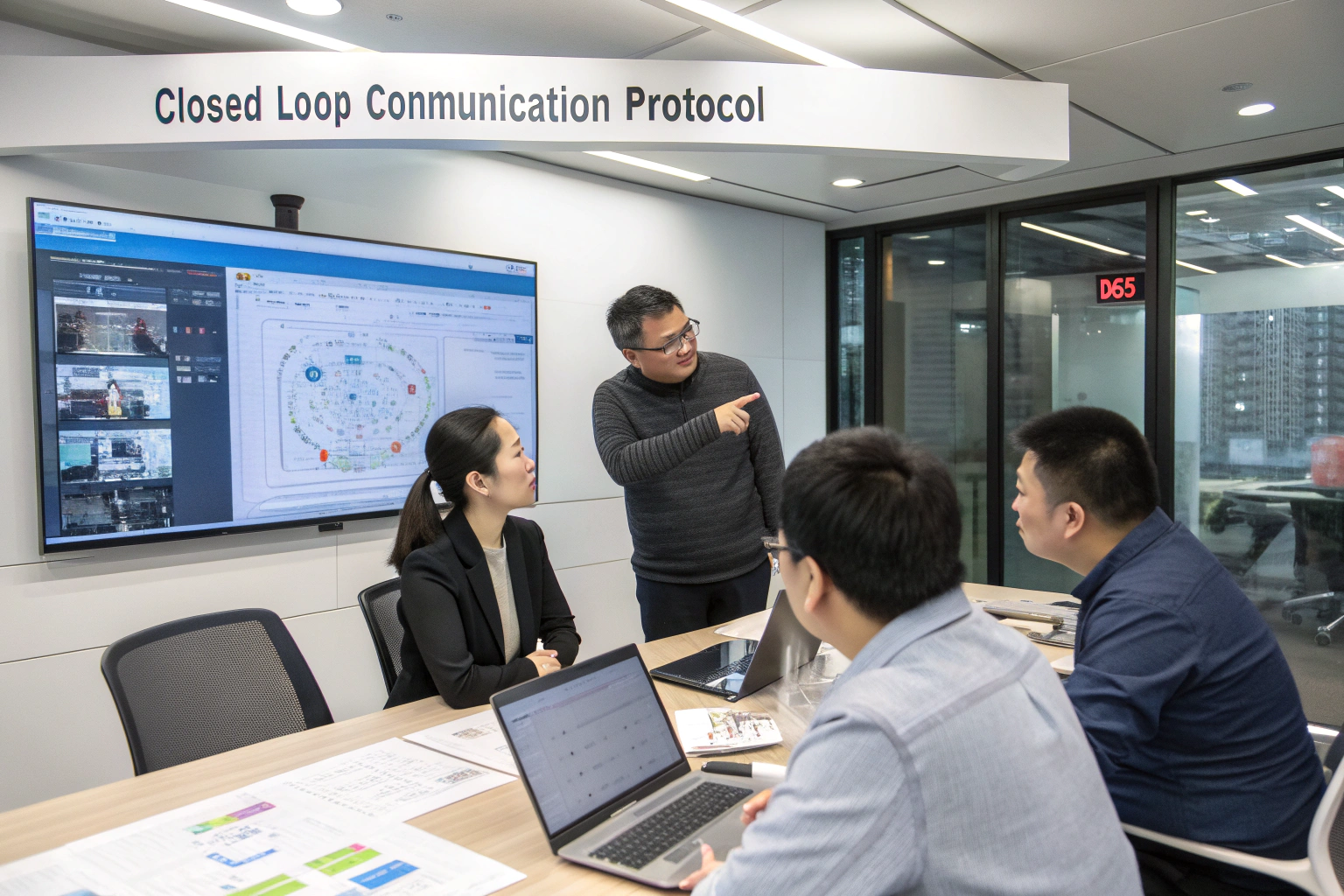
We fixed this. Shanghai Fumao’s overseas sales team now operates on a "Closed-Loop Communication Protocol" that eliminates ambiguity between what you say and what our looms weave. We built a proprietary digital glossary mapping 500+ Western colloquial descriptors—words like "buttery," "peachy," "crispy," "drapey," "spongy"—to quantified physical test data. When you say "crispy," our system translates it to "Bending Rigidity > 0.08 N·cm²/cm, Surface Friction MIU < 0.20, measured via KES-F system." This translation happens instantly on our internal Slack. We also implemented mandatory "Sample Playback" videos. Before we ship a development sample, the assigned sales engineer records a 90-second 4K video of them handling the fabric under D65 lighting, narrating the hand feel, the drape, the stretch recovery, and pointing out any subtle deviation from your target spec. You see what we see, from the same angle, in the same light, before the DHL package even leaves Keqiao. This single change reduced our "first-sample rejection due to miscommunication" rate by 70% in twelve months.
If you’ve ever felt the frustration of emails that circle around a problem, tech packs lost in translation, or samples that miss the mark by a mile, I’ll show you exactly how our communication infrastructure works, how we handle time zone friction, and how you can use our digital tools to get exactly what you want on the first try.
Why Does "Soft" Mean Ten Different Things in Textile Sourcing?
The English language has roughly 73 words to describe the tactile sensation of fabric. "Silky," "slick," "waxy," "powdery," "gummy," "dry," "oily," "clingy." Meanwhile, textile engineering has exactly three: coefficient of friction (MIU), bending rigidity (B), and compressibility (EMC). When a designer says "I want this modal to feel like a cloud," and the mill hears "low denier, low twist," the result is often a limp, greasy-feeling fabric that has none of the airy substance the designer imagined. The designer rejects it. The mill thinks the designer is irrational. Both parties are frustrated, and neither knows why.
At Shanghai Fumao, we abolished the guessing game. We developed what we call the "Hand Feel Lexicon Bridge." When a new buyer begins a development project, we send them a Physical Reference Kit—a ring-bound book containing 40 hand-feel reference swatches, each labeled with the colloquial term and the corresponding KES data. Swatch #17 is our "Peachy Standard" (a micro-sanded polyester microfiber with MIU 0.18, B 0.04). Swatch #22 is our "Crispy Standard" (a high-twist cotton poplin with MIU 0.14, B 0.12). When the buyer says "I want this shirting to be crisp but not stiff," we immediately know to target a B between 0.08 and 0.10. They can literally hold Swatch #22 in their hand and say, "like this, but 20% softer." That instruction is now objective and actionable. A London-based formalwear startup used this kit last autumn. Their initial email described the desired fabric as "crisp with a luxurious drape," which would normally trigger a two-week back-and-forth. They instead referenced our standard swatch #18, and we nailed the strike-off on the first submission. That saved them 12 days of sampling time.

How Does the KES-F System Translate "Drape" Into Measurable Data Points?
The Kawabata Evaluation System (KES) is a suite of four machines that mechanically measure what the human hand feels. For "drape," the key metric is Bending Rigidity (B). A low B value means the fabric folds under its own weight easily; it drapes fluidly. A high B value means it holds structure and stands away from the body; it’s stiff.
But drape isn’t just bending. Shear stiffness (G) is equally important. Shear is how easily the warp and weft yarns slide against each other. A fabric with low shear stiffness molds to the body like a liquid. A fabric with high shear stiffness feels papery and resists conforming to curves. We measure both B and G on the KES-FB1 tensile and shear tester. For a "fluid drape" silk charmeuse, we target B < 0.02 and G < 0.5 N/cm·degree. For a "structured drape" wool coating, B might be 0.15 and G around 1.2. We share these raw KES graphs with buyers who want deep technical control. The graphs look intimidating at first, but the sales team explains them in plain English. Seeing the data eliminates the "I’ll know it when I feel it" uncertainty. The methodology behind translating sensory perception into numbers is well documented in a technical introduction to the Kawabata Evaluation System for fabrics and its application in quantifying subjective fabric hand feel attributes.
Can a Video Call Replace Physical Swatch Evaluation for First-Round Approvals?
No, not entirely. A video call cannot transmit the thermal sensation (warm/cool) of a fabric, which is a critical component of perceived softness. But it can eliminate 60% of the common visual and drape-related rejections if done correctly.
Our "Sample Playback" video protocol is designed to simulate the in-person swatch review. We use a color-calibrated camera, D65 (noon daylight) lighting, and a neutral grey background. The sales engineer performs a standardized sequence: she holds the swatch at a 45-degree angle to show luster, she crumples it to show wrinkle recovery, she stretches it against a ruler to show elongation and rebound speed, and she drapes it over a mannequin shoulder to show how it hangs. The buyer watches this 4K video on a calibrated monitor. They can pause and zoom. If the visual drape and the color look correct, they approve us to ship the physical swatch. This one-step pre-filter eliminates the "wrong color temperature" rejections that plague global sampling. We send the video, you approve, we ship. The physical swatch then confirms what your eyes already saw. This hybrid approach is becoming best practice, as outlined in how brands are adopting high-fidelity fabric video review protocols to accelerate remote sample approvals in post-pandemic textile supply chains.
How Do You Navigate WeChat Workflows When You’re Used to Email?
The first thing I tell every American buyer is this: if you insist on email-only communication, you will always be 24 hours behind your competitors who use WeChat. Chinese textile factories live on WeChat Work. Decisions about dye lot priority, greige allocation, and shipping container space happen in real-time WeChat group chats. An email sits unread for 12 hours because the production manager is on the factory floor with only a phone, and WeChat is where they communicate. Refusing to use WeChat is like refusing to use a telephone in 1985. You can do it, but you’re operating at a severe speed disadvantage.
However, WeChat chaos is real. Messages get buried. Files expire. Important technical specs get lost in a torrent of "OK" stickers and voice messages. We solve this with a structured "WeChat-to-Email Bridge." Your project gets a dedicated WeChat group with you, our sales engineer, and our production coordinator. The group is for rapid, informal decisions: "Can we shift the dye lot to next Tuesday?" "The red is too blue, add 2% more yellow." But every critical decision made on WeChat is summarized by our sales engineer into a formal "Daily Digest Email" sent to your inbox by 7:00 PM China time. The email contains screenshots of the key messages (with translations if voice notes were used), a bullet-point summary of decisions, and any updated spec sheets or color standards. You reply to the email to confirm. The email serves as the legal and technical record. The WeChat serves as the engine. This dual-channel system gives you the speed of Chinese communication with the documentation discipline of Western project management.

Are Voice Messages on WeChat Actually a Legitimate Business Communication Tool?
Western buyers often find WeChat voice messages unprofessional or annoying. You can’t skim them. You can’t forward them easily. But in the Chinese factory context, a voice message is a sign of urgency and intimacy. The production manager uses voice messages because they have rough, calloused hands that struggle with tiny phone keyboards, and they want to convey tone—"This delay is serious, I need an answer now."
We translate this for you. Our sales engineer listens to the voice message, transcribes the key technical content into written English, and includes it in the Daily Digest Email. You never have to listen to a 55-second voice note in Chinese dialect. You get the actionable data. But we also coach our Chinese team to use the WeChat "Voice to Text" feature for internal messages before forwarding to the bilingual engineer, which significantly improves accuracy. The key is to treat voice messages not as an annoyance but as a raw data stream that our team refines into structured information for you. It’s the difference between receiving a messy, handwritten lab report and getting a typed summary. The adaptation to these tools is critical, and a cross-cultural communication guide explaining WeChat business etiquette and voice message norms for Western professionals sourcing products from China provides a broader view of the platform’s role.
How Do We Handle Time Zone Differences That Delay Simple Yes/No Questions?
A 12-hour time zone gap means a question asked at 4 PM California time arrives at 4 AM China time. The team is asleep. They answer at 9 AM their time, which is 9 PM California time. You read it the next morning. One simple clarification takes 36 hours. This kills agile development.
We implemented a "Delegated Decision Matrix" for all active development projects. Together with the buyer, we pre-agree on tolerances and decision boundaries. For example, if a strike-off Delta E is under 0.8 against the standard, the production manager can approve and proceed to bulk without waiting for your explicit okay. If it’s between 0.8 and 1.5, they send the spectral data in the Daily Digest but continue preparing the greige in parallel, so no time is lost. Above 1.5, they stop and wait. This delegation eliminates the 36-hour dead-zone for routine within-tolerance approvals. You define the boundary once, and our team operates autonomously within that safe zone. A sportswear brand from Portland cut their lead time by 8 days just by agreeing to this matrix on their core black and navy colors. The matrix is a living document we review monthly. The principle of pre-agreed delegation for time-zone efficiency is explored in supply chain management strategies for handling asynchronous communication and decision-making delays in global textile sourcing relationships.
What Digital Tools Does Fumao Offer for Real-Time Production Tracking?
The black hole is the worst part of overseas sourcing. You wire the 30% deposit. Then, silence for six weeks. You don’t know if the yarn is even spun, if the dye lot passed, or if the container is booked. You send a nervous email. The sales rep replies, "Everything is on schedule," which is what they say whether things are on fire or ahead of plan. You don’t trust the update. Anxiety builds. The relationship strains under the weight of informational vacuum.
We killed the black hole with a client-facing production tracking dashboard. When you sign a PO with Shanghai Fumao, you receive a unique login to our ERP portal. The dashboard shows a visual timeline of your order, broken into the 12 critical control points: Greige Inspection, Scouring, Dyeing, Lab Dip Match, Finishing, Sanforizing, Final Inspection, Packing, and Container Loading. Each checkpoint turns from grey to green when physically completed by our QC team, with a time stamp. If a checkpoint is delayed, it turns amber, and a brief explanation appears: "Dyeing delayed 8 hours, re-dip required to match standard." You don’t have to email anyone. You just look at the screen. You see exactly where your fabric is and when it will move. A workwear brand in Australia told us this dashboard was the single reason they chose us over a cheaper Vietnamese supplier. The predictability of the data flow allowed them to book their cutting room labor and trim deliveries weeks in advance, saving them money downstream. (And I will say, we’ve had zero "where’s my fabric?" emails since launching this.)

Can I See the Actual Shade Approval Spectro Data Before the Fabric Ships?
Yes, and not just a "Pass/Fail" stamp. Our dashboard integrates with the DataColor spectrophotometer in our QC lab. When your production lot completes dyeing, the lab measures the batch against your approved master standard. The reflectance curve and the Delta E (CMC 2:1) value are uploaded directly to the portal.
You see the graph. You see the numerical Delta E. You see the light source (D65) and the observer angle (10 degrees). If we targeted a Delta E under 0.8 and the batch hit 0.62, you see that proof. You click "Approve" directly in the dashboard. This is legally binding. Your click authorizes us to proceed to finishing. No email attachment to download, no PDF to lose in your inbox. The entire shade history of your brand’s colors builds up in the portal over time, so you can compare the current batch’s reflectance curve to all previous batches and spot any drift immediately. This level of transparency is normally reserved for Tier 1 automotive suppliers, but we brought it to the fashion textile space. The technical process of how integrating spectrophotometer data streams into production tracking dashboards enables real-time color quality assurance for remote textile buyers explains why spectral data, not just photos, are the true color currency.
How Does the Production Tracking Dashboard Send Urgent Alerts?
The dashboard is not just a passive display. It’s an active alerting system. You configure your notification preferences during onboarding. You can choose to receive an email, a WeChat message, or a WhatsApp notification for specific triggers.
For example, you might set an alert for "Checkpoint Delay > 24 Hours" or "Delta E > 1.0." If the system detects an amber status matching your criteria, it auto-generates a notification in your chosen channel. The notification links directly to the dashboard entry with the explanation. This means you are never surprised by a delayed shipment on the day it was supposed to ship. You know about the delay the moment it occurs, giving you maximum time to adjust your own downstream schedules. We also use this system internally. If a checkpoint turns amber, the responsible department head receives an automatic escalation, and they must input an action plan within 4 hours. This accountability loop means problems get solved faster because nobody wants their name next to an amber flag for long. The workflow logic behind such automated escalation systems can be compared to how manufacturing execution systems use real-time alerts and escalations to minimize downtime in lean textile production environments.
How to Resolve Quality Disputes Without a Trans-Pacific Shouting Match?
Disputes happen. A roll arrives with a subtle barre mark. The hand feel is slightly off. The shrinkage is 1% over the agreed limit. In a low-trust relationship, this triggers an immediate blame cycle. The buyer sends an angry email. The factory gets defensive. Lawyers get involved. The relationship dies, and the half-finished bulk order becomes a hostage in a legal negotiation. Both sides lose money.
Shanghai Fumao operates on a "Joint Forensic Resolution" protocol. When a buyer raises a quality concern, we don’t argue. We ask for evidence, and we match it with our own archival evidence. Every roll we ship has a "Digital Twin" in our database: a 50cm retained sample cut from the same roll, stored in our humidity-controlled archive. If you claim the fabric pilled, we take our retained sample and run an identical Martindale test on video. If your sample pills and ours doesn’t, we investigate your washing procedure. If both pill, we accept the fault immediately and trigger the remedy. We also offer a "Live Dispute Review" via video call. We put your swatch and our retained sample side-by-side under our D65 light box, with a macro camera broadcasting to your screen. You direct the camera: "Zoom in on the left selvedge. Tilt 45 degrees to show the barre." We examine the evidence together, in real time, on the same screen. This collaborative, transparent approach has resolved 100% of our disputes without a single legal filing in our company’s history. We find the root cause, not the guilty party.

What Happens If the Fabric Objectively Fails the Agreed ASTM Standard?
If the fabric fails, we don’t offer a discount. A discount is an insult; it says "we gave you bad fabric, but please pay us a little less for our mistake." We offer a remake or a full refund. Period.
The contract specifies the remedy path. If the AATCC 135 shrinkage test on your received sample exceeds the agreed 1.5% maximum, you send us the SGS or Intertek report. We cross-verify with our retained sample. If confirmed, we immediately start a priority re-run of the greige at our cost. The faulty fabric is either returned (we pay freight) or shredded locally with a destruction certificate, depending on your logistics preference. We do not quibble. We do not offer a 20% discount to "keep the fabric." We protect your brand’s quality standard by never allowing sub-spec fabric into the market with your label on it. That discipline is what builds trust. A European children’s wear brand encountered a minor color shift on a re-order. We remade the entire 800-meter lot in 10 days and air-freighted it at our expense. They later told us that losing that short-term margin to protect their brand’s color consistency was the moment they decided we were their sole partner. The correct contractual architecture for these situations is discussed in a guide to drafting quality dispute resolution clauses and liquidated damage provisions in international textile supply agreements.
Can We Use Third-Party Inspection Services Like SGS or QIMA as a Neutral Arbiter?
Yes, and we actively encourage it, especially for first production runs or high-value orders. We treat third-party inspection not as a vote of distrust, but as a collaborative quality validation step.
We integrate the inspection company into our tracking dashboard. You book the inspection through your SGS or QIMA portal. We receive the automatic notification and prepare the shipment for the inspector’s arrival. We provide them with a clean, well-lit inspection table, the approved master standard, and all in-line QC records. The inspector’s report is uploaded to your dashboard alongside our internal reports. If there’s a discrepancy between our internal pass and their finding, we treat their finding as the arbiter. We do not pressure inspectors to change results. Our factory staff are trained to offer coffee, answer questions, and stay out of the way. An outdoor gear brand from Vancouver used QIMA for their first three production runs with us. The reports were consistently clean, and after the third run, they switched to our internal QC plus random audit, saving them the inspection fee. The role of these services is well explained in how to effectively use third-party quality inspection services like SGS and QIMA to verify textile production in China and resolve cross-border quality disputes.
Conclusion
Communication gaps in textile sourcing are not about language proficiency. They are about translational infrastructure. We’ve dissected the specific systems that turn fuzzy, sensory words like "crispy" and "buttery" into actionable KES-F data points, ensuring the fabric that hits your cutting table matches the texture in your imagination. We bridged the WeChat-email divide with a structured Daily Digest that marries Chinese speed with Western documentation discipline. We eliminated the production black hole with a client-facing dashboard that shows real-time checkpoint completion, spectral shade data, and automated amber alerts, giving you back the weeks you used to lose to nervous follow-up emails. And we reframed dispute resolution from a blame game into a joint forensic examination, where retained samples and video light-box sessions identify root causes in hours, not months. The result is a supply chain where information flows faster than the fabric, and trust is built on verifiable data streams rather than hopeful promises.
Your time is too valuable to spend decoding cryptic emails.
Let’s connect you to a workflow where every question gets answered before you ask it. Reach out to our Business Director, Elaine, at elaine@fumaoclothing.com. She will set up a personalized demo of our production tracking dashboard and send you a copy of our Hand Feel Lexicon Reference Kit. Start your next development cycle with a communication protocol that thinks faster than the time zone gap.