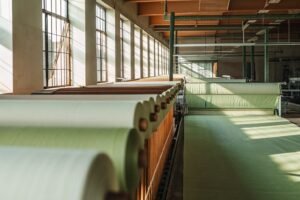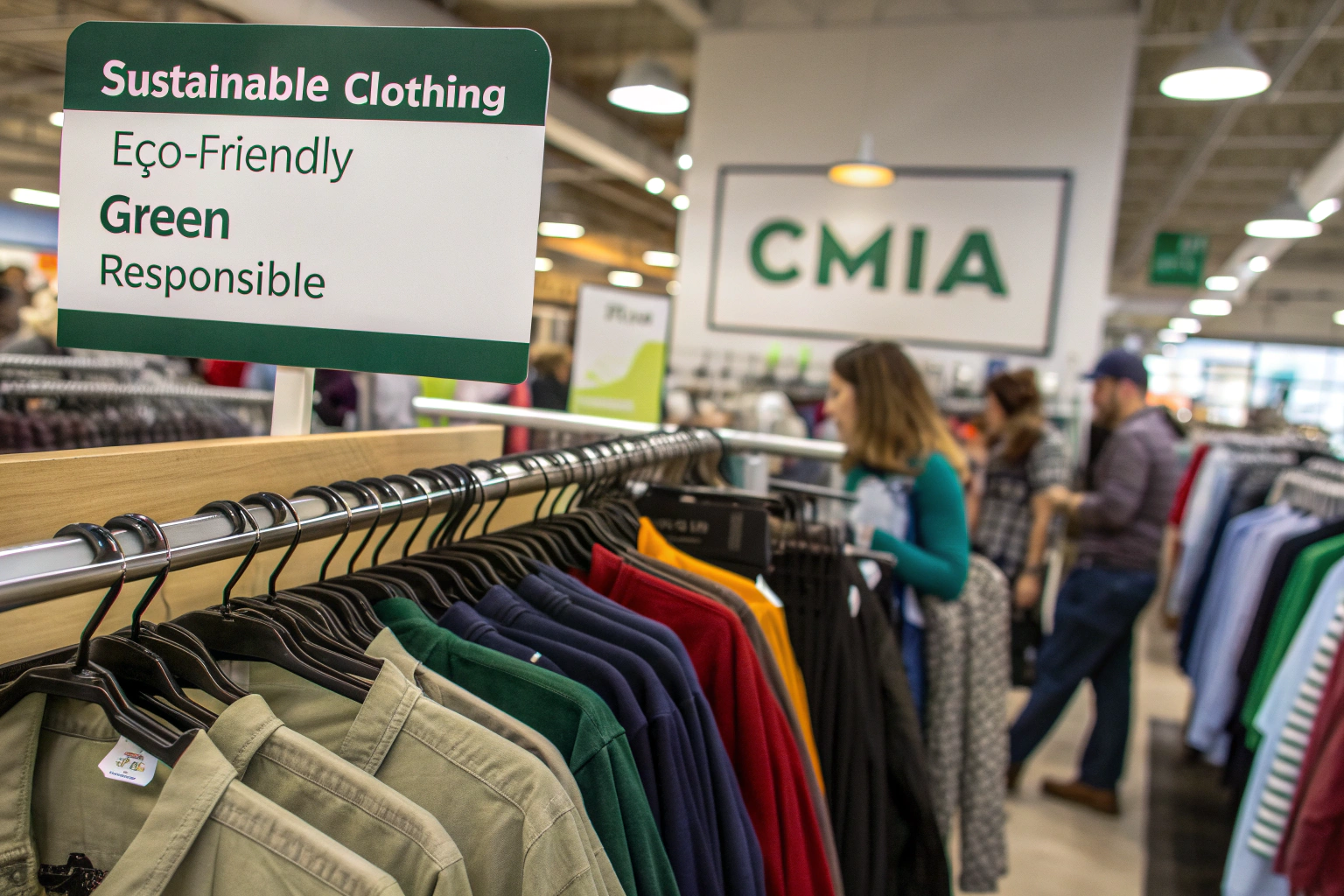
You see the term "sustainable clothing" everywhere. As a brand owner, retailer, or conscious consumer, you’re bombarded with claims: "eco-friendly," "green," "responsible." It’s overwhelming. In this noise, certifications like CMIA emerge as beacons of credibility. But is CMIA certification the key—the single most important tool—to achieving truly sustainable clothing production? Having worked at the heart of the textile supply chain for over two decades, I can give you a nuanced answer: CMIA is not the master key, but it is the most critical lock-picking set you can own. It provides the essential, verifiable framework for measuring and managing the environmental impact of manufacturing, without which all other sustainability efforts are built on sand. It’s the system that turns good intentions into actionable, auditable data.
Think of sustainable clothing production as a complex security system protecting a vault of genuine impact reduction. Inside the vault are the real goals: lower carbon emissions, cleaner water, less waste, and ethical labor. There are many keys: using organic cotton (a material key), installing solar panels (a technology key), paying fair wages (a social key). CMIA is not one of those keys. It is the standardized, tamper-proof alarm system and audit log that proves the vault is actually secure and tells you if someone is trying to pick the lock. Without it, you can have all the right keys, but you can’t prove they work, and you can’t systematically improve the security over time.
So, no, CMIA alone doesn’t make clothing sustainable. But without something like CMIA, you can never be sure your production is sustainable, nor can you reliably make it more sustainable year after year. Let’s unpack why this distinction is everything.
What CMIA Actually Unlocks: The Discipline of Data & Continuous Improvement
The core genius of CMIA is that it doesn’t prescribe what you must do (e.g., "you must use organic cotton"). Instead, it prescribes how you must manage your environmental aspects. It forces a factory into a cycle of Plan-Do-Check-Act (PDCA). This is transformative.
1. It Forces Measurement (The "Check"): You cannot manage what you do not measure. Most factories have no idea how many kilowatt-hours of electricity go into a dozen t-shirts or how many cubic meters of water are used to dye a batch of denim. CMIA mandates this measurement. This alone is a revolution. It changes conversations from "we try to be efficient" to "our energy consumption per unit is X, and our target is Y."
2. It Mandates Management Accountability (The "Plan" & "Act"): Senior management must formally review this data, set reduction targets, and allocate resources to meet them. Sustainability moves from the marketing department to the operations and finance departments—where real change is funded and executed.
3. It Creates a Verifiable Trail (The Proof): Every claim is backed by records: utility bills, meter readings, waste manifests, training logs. This is what makes it credible. When a brand says, "made in a CMIA-certified factory," they are saying, "you can trust this claim because an independent auditor checks the data trail."
A Real-World Example: The Dye House Transformation.
A dyeing mill we partner with in Suzhou achieved CMIA certification. Pre-CMIA, they said they were "working to reduce water use." Post-CMIA, their data showed they used 150 liters per kg of fabric. They set a target to reduce it to 130 L/kg within a year. They invested in water flow meters and optimized their rinse cycles. At their next audit, they proved they achieved 128 L/kg. The CMIA system didn’t give them the technology; it gave them the disciplined framework to identify the problem, set a goal, implement a solution, and verify the result. This is sustainable production in action.

The Limitation: CMIA Doesn’t Define "Sustainable"
CMIA is agnostic about the absolute level of impact. A terribly inefficient, coal-powered factory could get CMIA certified if it simply started measuring its massive pollution and showed a 1% year-on-year reduction plan. That’s progress, but is it "sustainable"? Not by any reasonable consumer definition. Therefore, CMIA is necessary for managing sustainability, but it is not sufficient to define it. It needs to be paired with absolute performance benchmarks and material choices.
The Synergy with Other Certifications
CMIA works best in tandem with other standards:
- For Materials: Use GOTS (organic cotton) or GRS (recycled polyester) to define what you use.
- For Chemical Safety: Use OEKO-TEX Standard 100 to ensure the final product is safe.
- For Process Management: Use CMIA to manage how efficiently and cleanly you process those materials.
Together, they form a complete picture.
The "Key" vs. The "System": Why This Distinction Matters for Your Brand
If you’re a brand building a sustainable line, understanding this distinction is crucial for your strategy and communication.
If you treat CMIA as the key: You might source from a CMIA-certified factory using the cheapest, most polluting conventional polyester and call your collection "sustainable." This is greenwashing. You have the management system but the wrong foundational materials.
If you ignore CMIA and focus only on materials: You might source beautiful GOTS organic cotton but have it spun, woven, and dyed in a factory with no environmental controls, dumping toxic effluent and wasting massive energy. Your "sustainable" fabric is produced unsustainably. This is a critical blind spot.
The balanced, credible approach is to require BOTH: Specify preferred materials (e.g., GOTS cotton, recycled fibers from Shanghai Fumao) AND mandate that your manufacturing partners have a verified environmental management system like CMIA. This ensures the right stuff is made the right way.

How Leading Brands Are Using This Framework
Progressive brands are no longer just asking "Are you certified?" They are asking layered questions:
- "What is the composition and certification of your key fabrics?" (Material key)
- "Is your factory CMIA (or equivalent) certified?" (Management system key)
- "Can you provide the environmental data (carbon, water) for our specific product?" (Data output)
This layered due diligence is what builds truly resilient, transparent, and credible sustainable supply chains.
The Business Case for Brands
For a brand, investing in CMIA-certified production is a risk mitigation and value creation strategy. It future-proofs you against tightening regulations (like carbon taxes), provides authentic stories for marketing, and builds deeper partnerships with factories invested in long-term efficiency. It’s how you move from seasonal "sustainable collections" to a sustainably managed core business.
The Critical Gaps: What CMIA Doesn’t Cover (And What You Must Add)
To claim holistic "sustainable clothing production," you must acknowledge and address CMIA’s boundaries. It is an environmental management system, not a sustainability silver bullet.
Gap 1: Social Responsibility & Labor Ethics.
CMIA focuses on the planet (Environmental), not people (Social). A CMIA-certified factory could, in theory, have poor labor practices. To cover this, you need social compliance certifications like SMETA, BSCI, or WRAP. The complete sustainability picture requires both environmental and social governance.
Gap 2: Circularity & End-of-Life.
CMIA is about reducing the impact of making new products. It does not address what happens to the garment after use (recycling, biodegradability). For circularity, you need strategies like design for disassembly, take-back programs, and using mono-materials or certified biodegradable fibers.
Gap 3: Animal Welfare.
For materials like wool, down, or leather, CMIA says nothing about animal treatment. You need standards like Responsible Wool Standard (RWS) or Responsible Down Standard (RDS).
Gap 4: Biodiversity and Land Use.
While CMIA’s resource management indirectly helps, it doesn’t specifically address the impact of raw material cultivation (e.g., cotton farming) on biodiversity. This is covered by regenerative agriculture certifications or FSC certification for forest-derived fibers.

The Holistic Sustainability Framework
Therefore, sustainable clothing production requires a multi-layered framework:
- Environmental Management: CMIA (for processing) + LCA data.
- Material Integrity: GOTS, GRS, FSC, RWS, etc.
- Social Equity: SMETA, Fair Trade, living wage initiatives.
- Circular Design: Durability, reparability, recyclability.
CMIA is the foundational layer for the production phase of this framework. It’s the indispensable system that makes the environmental part of the promise measurable and improvable.
The Evolving Role of CMIA
As regulations like the EU’s Carbon Border Adjustment Mechanism (CBAM) come into force, the data-driven aspect of CMIA becomes a commercial and legal necessity, not just an environmental choice. It transitions from a "key" to a mandatory passport for doing business in certain markets.
Conclusion
So, is CMIA certification the key to sustainable clothing production? The answer is a definitive no—and yes.
No, it is not the only key. Sustainable production is a multi-locked door requiring many keys: ethical materials, fair labor, circular design, and more. CMIA does not address all of these.
Yes, it is utterly indispensable. It is the master system for environmental accountability and continuous improvement in manufacturing. Without the rigorous, data-driven discipline that CMIA provides, claims about reducing water, energy, and carbon are just hopes, not strategies. You cannot manage, improve, or credibly claim what you do not measure.
Therefore, for any brand or manufacturer serious about moving beyond greenwashing, CMIA certification (or an equivalent robust environmental management system) is non-negotiable. It is the backbone upon which all other environmental efforts must be built. It turns sustainability from a static marketing label into a dynamic, verifiable process of getting better every single year.
The journey to truly sustainable clothing starts with transparency and measurement. That journey is exactly what CMIA certifies. To build a product line with integrity from the ground up, start by partnering with suppliers who embrace this discipline. At Shanghai Fumao, we are committed to this path, providing materials that meet the highest content standards while advocating for and partnering with manufacturers who invest in systems like CMIA. To explore how to integrate this comprehensive approach into your supply chain, contact our Business Director, Elaine, at elaine@fumaoclothing.com. Let’s build clothing that is not only made to last but made with a lasting, positive impact.