You’re developing a new line of workwear or performance apparel. Durability is non-negotiable—these garments need to withstand abrasion, repeated washing, and tough conditions. In your search for a reliable factory, you come across one that’s CMIA certified. It makes you wonder: does this environmental certification mean they also excel at physical durability testing? It’s a logical connection to make. A factory disciplined enough to track its carbon footprint surely must have rigorous quality controls, right? Here’s the pragmatic truth from inside the industry: No, CMIA certification is not formally or directly linked to garment durability testing. They are two separate disciplines with different goals, governed by different standards, and audited by different experts. Assuming one guarantees the other is a fast track to product failure and costly returns.
Let me frame it this way. A chef might have a Michelin star for sustainability (sourcing local, organic ingredients and minimizing waste). That star doesn’t automatically mean their soufflé will never collapse. The soufflé’s success depends on specific culinary techniques, precise oven temperature, and timing—skills that are related to, but separate from, sustainable sourcing. Similarly, CMIA certifies the factory’s environmental management system—its recipe for reducing impact. Durability testing validates the physical performance of the final product—the soufflé itself. A factory can have a brilliant environmental system (CMIA) but lack the specific equipment, expertise, or rigor to conduct accurate Martindale abrasion or tensile strength tests.
So, where’s the link? It’s in the culture of process control and documentation that CMIA instills. A CMIA-certified factory is forced to be data-driven and systematic. This mindset can create a more fertile ground for implementing rigorous quality testing, but it is not a substitute for it. As an importer, your job is to verify the durability testing capabilities separately, using the factory’s CMIA discipline as a sign of their overall professionalism, not as proof of their lab’s competence. Let’s dissect this crucial distinction.
The Core Divide: System vs. Product
To understand why CMIA and durability testing aren’t linked, you need to see what each one actually assesses.
What CMIA Audits (The System):
An environmental management auditor examines:
- Process Controls & Documentation: Are there procedures for controlling significant environmental aspects? (e.g., a procedure for wastewater discharge from the dye house).
- Data Tracking & Objectives: Is the factory tracking energy/water use per unit of production? Do they have annual reduction targets?
- Compliance & Management Review: Are they complying with local environmental laws? Does top management regularly review this data to drive improvement?
- Supply Chain Influence: Do they request environmental data from their key suppliers (like fabric mills)?
The auditor is not trained to calibrate a tensile strength machine or interpret a pilling test result. Their checklist is about resource management, not product resilience.
What Durability Testing Validates (The Product):
This is purely product-focused, governed by standards like:
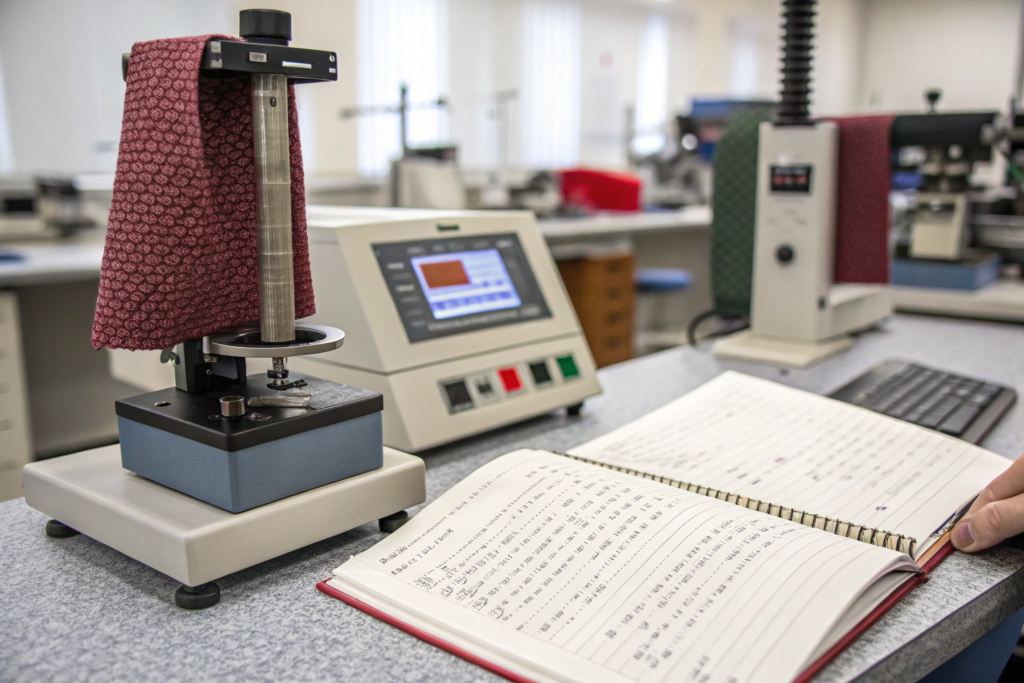
- Abrasion Resistance (Martindale, Wyzenbeek – ASTM D4966, D4157): How many cycles before fabric shows wear?
- Tensile & Tear Strength (Grab Test – ASTM D5034, Elmendorf Tear – ASTM D1424): How much force to break or tear the fabric?
- Pilling Resistance (ASTM D4970): How prone is the fabric to forming pills?
- Seam Slippage & Strength (ASTM D1683): How strong are the stitched seams?
This testing requires specialized lab equipment, calibrated instruments, and technicians trained in specific test methods. A factory’s quality lab might be world-class at this, but that has zero bearing on their CMIA audit score.

A Real Scenario from the Field
In 2023, a brand sourcing heavy-duty canvas bags faced a dilemma. Factory A was newly CMIA-certified, with impressive energy savings data. Factory B was not CMIA certified but had an in-house lab accredited to ISO 17025 for physical testing. The brand required a minimum of 40,000 Martindale cycles for the fabric. Factory A provided a generic "pass" report from an unaccredited internal lab. Factory B provided a detailed test report from their accredited lab, showing a result of 52,000 cycles with full traceability to the fabric batch. The brand chose Factory B. The bags performed flawlessly in the field. The lesson? Certification does not equal capability. You must verify the specific capability you need.
The Indirect Connection: A Culture of Evidence
While not linked, a CMIA-certified factory’s systemic approach can be beneficial. They are accustomed to:
- Generating and keeping records: They might be more organized in maintaining test reports.
- Investigating root causes: If a durability failure occurs, their problem-solving mindset (from addressing environmental non-conformities) can be applied.
- Investing in infrastructure: The capital to invest in environmental upgrades sometimes correlates with investment in better quality infrastructure.
However, this is correlation, not causation. It is a positive signal, but not evidence.
How To Vet a Factory’s True Durability Testing Capability
Since CMIA doesn’t cover it, you must conduct your own technical due diligence. Here is a step-by-step guide to separate marketing from reality.
1. Ask for Specific, Third-Party Test Reports.
This is non-negotiable. When discussing a new fabric or product, immediately ask: "Can you share a third-party test report for [specific test, e.g., Martindale abrasion] on this exact fabric from an accredited lab (SGS, ITS, BV, etc.)?" A credible factory will have this on hand or be willing to generate it. A report from their "in-house lab" is not sufficient for critical durability claims unless that lab is ISO/IEC 17025 accredited for that specific test method.
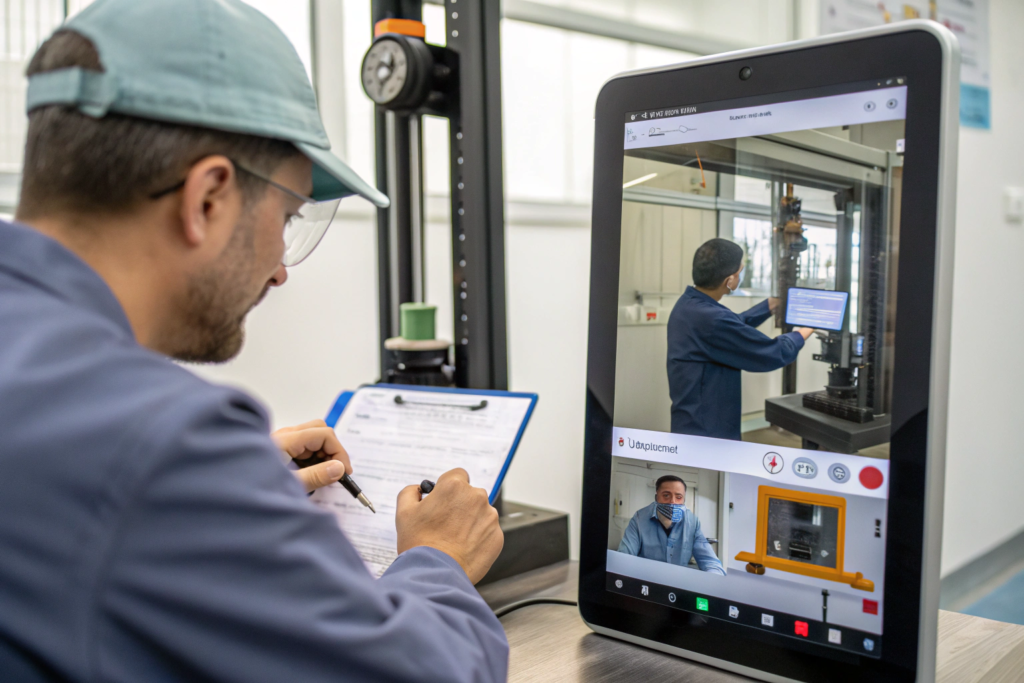
2. Request a Virtual Tour of Their Lab.
"Can we do a video call where you walk us through your testing lab?" During the tour, ask them to:
- Show the specific equipment for the tests you need (e.g., "Point to your Martindale tester.").
- Demonstrate basic knowledge: "What is the standard test method you follow for seam strength?" or "How often do you calibrate this machine?"
- Show a sample being tested or recent data logs. This exposes if the lab is actively used or just for show.
3. Inquire About Their Technical Staff.
"Who is responsible for your physical testing? What is their background/qualification?" The answer should be a specific person or department, not "our QC people." A factory serious about durability will have trained technicians or an engineer overseeing the lab.
4. Challenge Them with a Scenario.
Pose a problem: "If our field reports show premature pocket tearing, what is your process to investigate the root cause? What tests would you run?" A sophisticated partner will describe a process involving reviewing seam construction, thread type, and fabric tear strength tests. A weak partner will give a vague answer about "checking the sewing."
How a Partner Like Shanghai Fumao Adds Value:
We bridge this gap for our clients. When you are sourcing high-tenacity nylon for tactical gear or abrasion-resistant polyester for workwear from us, we don’t just sell you fabric. We provide the full dossier of mill test reports (often from accredited labs) for that specific material. This gives you a baseline of proven performance before the garment is even made. You can then mandate that the factory’s garment construction must not degrade this proven durability.
Red Flags in Durability Claims
- "Our fabric is very strong." (Subjective, meaningless)
- "We guarantee good quality." (Not a technical parameter)
- Reluctance to test: "Testing is too expensive/time-consuming for a sample."
- Providing only a "Supplier’s Declaration of Conformity" without underlying test data.
- Using CMIA certification as proof: "We are CMIA certified, so our products are durable." (This is the critical logical failure you must avoid.)
The Strategic Overlap: Where CMIA and Durability Align
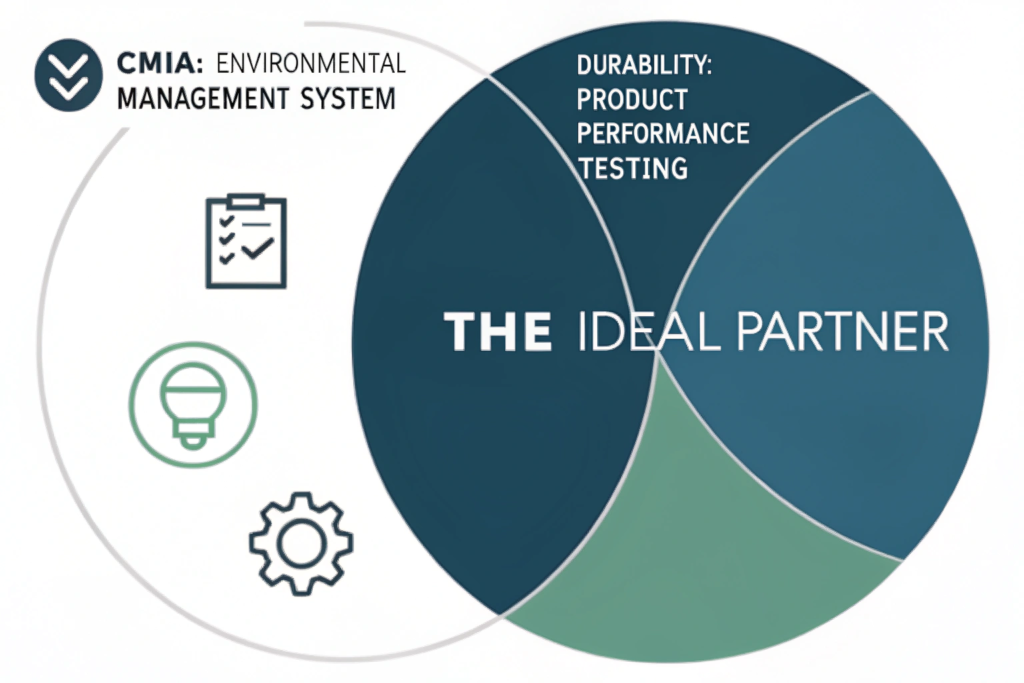
While not directly linked, there are strategic intersections where a factory excelling in both areas becomes an unparalleled partner. This is the "sweet spot" for importers of technical apparel.
1. Material Efficiency & Durability by Design.
A core CMIA objective is reducing waste, including fabric waste. This drives factories to use Nesting Software to optimize fabric cutting layouts. Interestingly, a key input for good nesting is accurate fabric data—including how the fabric behaves (its shrinkage, stability). A factory investing in this software for environmental reasons often develops a deeper understanding of their material’s properties, which can inform durability-focused pattern engineering (e.g., placing stress points along the fabric’s stronger grain).
2. Process Control for Consistent Outcomes.
Durability isn’t just about the fabric; it’s about consistent construction. CMIA’s emphasis on controlled processes (like maintaining specific temperatures in fusing or heat-setting) ensures that treatments that affect durability (e.g., heat-setting elasticity, applying durable water repellent finishes) are applied consistently batch-to-batch. Inconsistency here can lead to some garments failing prematurely while others hold up.
3. Lifecycle Thinking and Longevity.
The most profound, though indirect, link is philosophical. CMIA encourages a lifecycle perspective. A factory thinking about its product’s end-of-life (recycling, etc.) is indirectly considering the product’s lifespan. There’s a growing argument that the most sustainable garment is a durable one that doesn’t need quick replacement. A forward-thinking, CMIA-certified factory might be more receptive to your designs that enhance durability (like bar-tacking stress points, using heavier duty zippers) because it aligns with a broader ethos of reducing waste over the product’s life.
Case Study: The High-Performance Outerwear Partner
A brand making recycled polyester shells needed a factory that could handle laminated fabrics (where delamination is a critical durability failure point) and prove low environmental impact. They found a partner that was:
- CMIA Certified: Tracking and reducing energy in their lamination and sealing processes.
- Equipped with a ISO 17025 Accredited Lab: Could perform peel strength tests (ASTM D2724) to quantitatively prove the bond strength of the laminate, and hydrostatic pressure tests for waterproofing.
This factory used its CMIA data to optimize lamination temperatures, reducing energy use and achieving a more consistent, stronger bond. Their certified lab provided the hard durability data. The combination was irresistible to the brand.
The Importer’s Checklist for a "Best of Both" Partner
Seek a factory that can provide evidence for both columns:
| Environmental & System Proof (CMIA World) | Product Performance Proof (Durability World) |
|---|---|
| Valid CMIA certificate with clear scope | Third-party test reports for key durability tests (Abrasion, Tear, Seam) |
| Data on energy/water use per garment | ISO 17025 accreditation for their in-house lab (or named partner lab) |
| Documentation of chemical management (SDS) | Technical staff profiles (e.g., fabric/garment engineers) |
| Evidence of waste reduction programs | Willingness to run pre-production durability validation on your specific prototype |
The Bottom Line: Your Action Plan
As an importer, you cannot delegate the responsibility for durability to an environmental certificate. You must own the verification process. Here is your action plan:
- Use CMIA as a Filter for Operational Maturity. It effectively weeds out disorganized, opaque, or purely short-term thinking suppliers. It indicates a baseline of professionalism and systematic operation.
- Conduct Separate, Rigorous Technical Due Diligence on Durability. Follow the vetting steps above. Insist on third-party data for the specific performance criteria your product needs.
- Integrate Requirements into Your Contract. Specify the exact durability test methods, acceptable results (e.g., "Martindale Abrasion: >30,000 cycles per ASTM D4966"), and the requirement for submission of certified third-party test reports before shipment approval.
- Leverage Your Fabric Supplier’s Expertise. Work with mills and suppliers like Shanghai Fumao who understand both material performance and the manufacturing landscape. We can recommend factories that have proven capability with performance fabrics and can often provide the foundational fabric test data that makes your garment-level durability goals achievable.
What to Do If a Factory Has Only One (CMIA or a Great Lab)?
- Has CMIA but unproven durability testing? Proceed with extreme caution. Use their process discipline as a positive sign, but mandate and fund third-party testing at an accredited lab of your choice for the first order. Use the results to decide on continued partnership.
- Has fantastic durability lab but no CMIA? This may be acceptable for purely performance-driven products where environmental claims are secondary. However, be aware of potential future risk as brand/consumer expectations and regulations evolve.
Conclusion
CMIA certification and garment durability testing are not linked in a direct, guaranteed way. One is a framework for managing environmental impact; the other is a set of empirical methods for measuring physical product performance. Assuming a factory’s competency in one automatically translates to competency in the other is a critical and expensive error.
The savvy importer uses CMIA certification as a signal of a factory’s management capability and cultural alignment with data-driven processes. This makes them a potentially better partner. However, the importer must then independently verify the factory’s specific technical capabilities for durability testing through evidence, audits, and clear contractual requirements.
The most valuable manufacturing partners are those who excel in both spheres—who combine the systematic, transparent approach of CMIA with the rigorous, empirical science of a top-tier testing lab. These partners don’t just make clothes; they engineer reliable, high-performance products in a responsible manner. Finding them requires looking beyond any single certificate and demanding proof across the entire spectrum of what makes a garment truly great and sustainable in the long run.
To build a supply chain that delivers both proven durability and verifiable responsibility, start with partners who understand the entire picture. Contact Shanghai Fumao to discuss how our performance fabrics and industry network can connect you with factories capable of meeting your highest standards for both product resilience and manufacturing integrity. Reach our Business Director, Elaine, at elaine@fumaoclothing.com. Let’s ensure your products are built to last, from every angle.