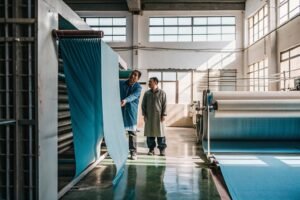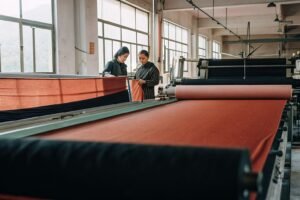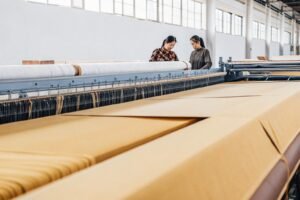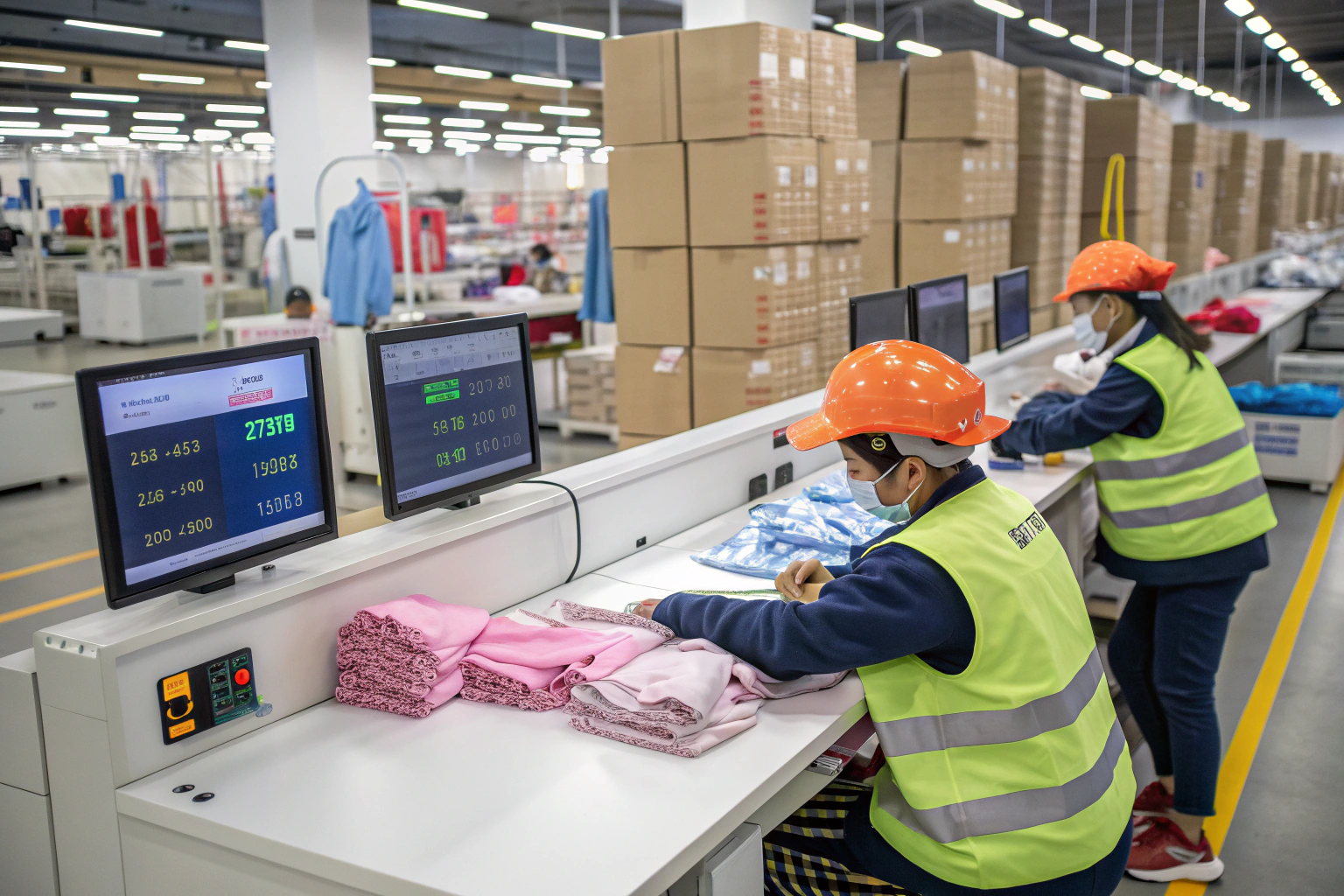
You ask about certifications, and any factory can show you a framed certificate. But here’s the real question I get from smart buyers: "How do I know this isn’t just paperwork? How do these standards actually live on your factory floor?" It’s a fair challenge. At Shanghai Fumao, we believe a certification is a promise, and the production line is where that promise is kept—or broken. Let me pull back the curtain and show you, step-by-step, how CMIA isn’t just a test we pass, but a language our entire operation speaks every single day.
Integrating CMIA standards means building safety into the DNA of our production, not inspecting it in at the end. It’s a proactive, process-driven system that starts the moment your design file arrives and only ends when the sealed carton is loaded. For us, it’s a non-negotiable workflow with checkpoints, digital tracking, and specialized training at every stage. This is how we ensure that every piece of children’s wear we produce isn’t just cute, but fundamentally safe.
Seeing is believing. So, let me walk you through the concrete, tangible actions we take from raw material to finished product. This transparency is what builds real trust. By the end, you’ll understand not just what we do, but why our method fundamentally de-risks your supply chain.
How Does CMIA Compliance Start Before Fabric Even Arrives?
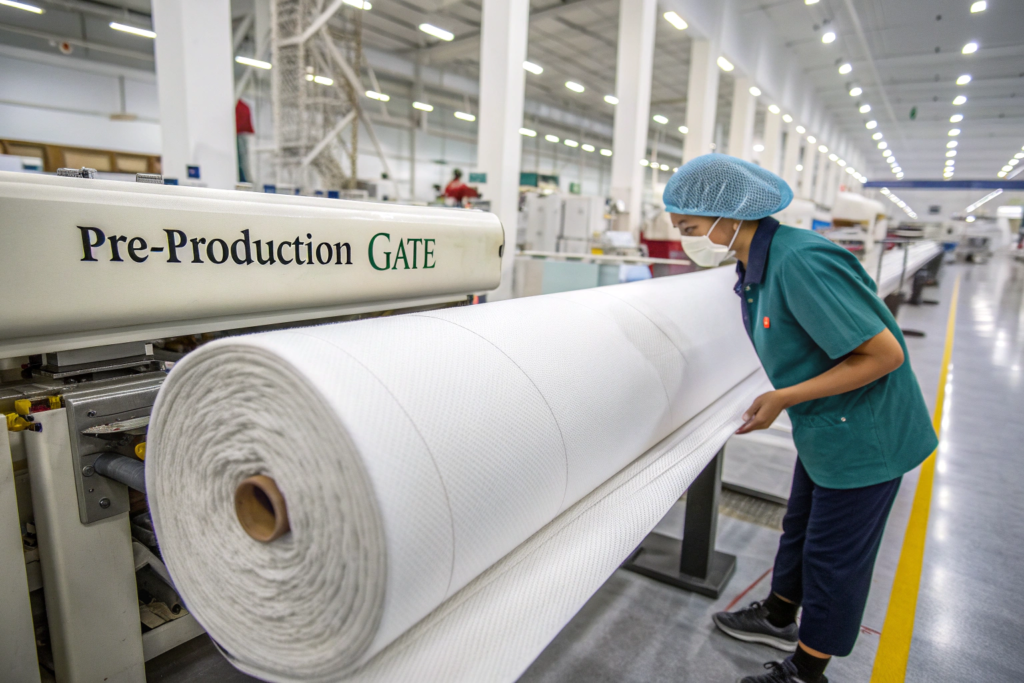
The biggest myth is that safety control begins in the sewing room. In truth, by then, it’s almost too late. Our most critical CMIA integration happens upstream, in what we call the "Pre-Production Gate." This is where we prevent problems from ever entering our pipeline. We treat compliance like a filter—the stricter it is at the beginning, the cleaner the output.
Our system is built on Approved Vendor Lists (AVLs) and pre-emptive testing. We don’t buy materials based on price alone; we source them based on a proven history of passing our stringent CMIA-aligned protocols. This upfront investment saves countless hours and costs in rework or rejection later.
What is Our Approved Material Sourcing Protocol?
Every supplier of fabric, thread, button, zipper, or print ink must be on our CMIA-compliant AVL. To get on this list, they must provide full material composition sheets and pass a batch test conducted by our CNAS lab or a partnered third-party lab like SGS. We test for the core CMIA chemical parameters: formaldehyde, pH, azo dyes, and heavy metals.
For example, last month, a new elastic webbing supplier offered a cost 15% lower than our current one. Before even discussing price, we requested 5-meter samples from three different production batches. Our lab ran the tests. Two batches passed, but one showed a pH value slightly out of range for infant wear. Result? We did not add them to the AVL. This strict gatekeeping ensures that when your order for baby leggings comes in, every component is pre-vetted. Managing such a compliant textile raw material supplier database is complex but foundational, as outlined in supply chain management resources.
How Do We Handle Custom Development with CMIA in Mind?
When you bring us a new design, our R&D and compliance teams engage in a "Safety-by-Design" review from day one. We analyze your tech pack not just for manufacturability, but for potential CMIA pitfalls. Are there loose sequins? Is the drawstring design compliant? Could the print affect flammability?
A recent case: A client from the UK wanted a neon, all-over sublimation print on polyester kids’ athletic wear. Our team knew that some bright neon pigments can sometimes have issues with heavy metal content. We proactively sourced three different ink sets from our AVL, created lab dips, and had them tested for lead and cadmium content before presenting the options to the client. They chose the safest one, and we proceeded with full confidence. This is the essence of co-developing children’s apparel with integrated safety protocols, a practice that turns your supplier into a true partner.
What Happens on the Production Floor: Our Real-Time Control Points?
Once certified materials are on the floor, our integration shifts to process control. This is where CMIA moves from the lab to the hands of every line worker and inspector. We use visual management, standardized work instructions, and real-time monitoring to make compliance unavoidable.
Each workstation has clear guides. For instance, at the button-attachment station, there are diagrams showing the correct stitch pattern and torque specification required to pass the pull test. At the cutting table, there are rulers to immediately check if a drawstring length is within the safe limit. Compliance is built into the job itself.

How is In-Process Quality Control (IPQC) Executed?
Our IPQC inspectors are specially trained on CMIA physical safety standards. They don’t just walk the line occasionally; they have fixed checkpoints with a defined frequency (e.g., every 30 pieces). They use calibrated tools—like force gauges for snap pull tests and sharpness testers for metal components.
Let me give you a tangible example from last week’s production of toddler jeans. The IPQC inspector, doing her hourly check, randomly selected a half-finished pair from the line. She used the force gauge to test a decorative rivet. The gauge read 70 Newtons, but our CMIA-based internal standard requires a minimum of 90N for this size. She immediately flagged the batch, halted the section, and we traced it to a slight misalignment in the attaching machine. It was adjusted within 15 minutes, and the affected pieces were reworked. This real-time intervention is what prevents a whole shipment from failing. Understanding the role of calibrated tools in apparel quality assurance is critical, as industry quality forums often emphasize.
What is Our Traceability and Segregation System?
For CMIA, knowing what went into which garment is crucial. We operate a batch-based traceability system. Every roll of fabric, every bag of buttons, has a unique LOT code. When fabric is cut, a ticket with the fabric LOT code travels with that bundle of pieces through sewing, printing, and finishing.
Why does this matter? Imagine a scenario where a lab test later flags a potential issue with a specific button. With our system, we can instantly identify all garments that used buttons from that LOT code, isolate them, and investigate—without needing to hold or recall the entire production run. This precision minimizes disruption. This level of garment-level traceability in mass production is a benchmark for serious manufacturers, a capability often highlighted in audits.
How Do We Lock in Compliance at the Final Stage?
The final audit and testing phase is our last defense. It’s not a formality; it’s a verification that all the upstream controls worked. We treat this phase with the rigor of a final exam. This is where we generate the evidence—the test reports and certificates—that you receive with your shipment.
Our process involves AQL (Acceptable Quality Level) sampling for physical inspection and statistical sampling for destructive lab testing. The two work in tandem: one checks the visible and tactile, the other confirms the chemical and mechanical integrity.
What Does Our Pre-Shipment Audit Involve?
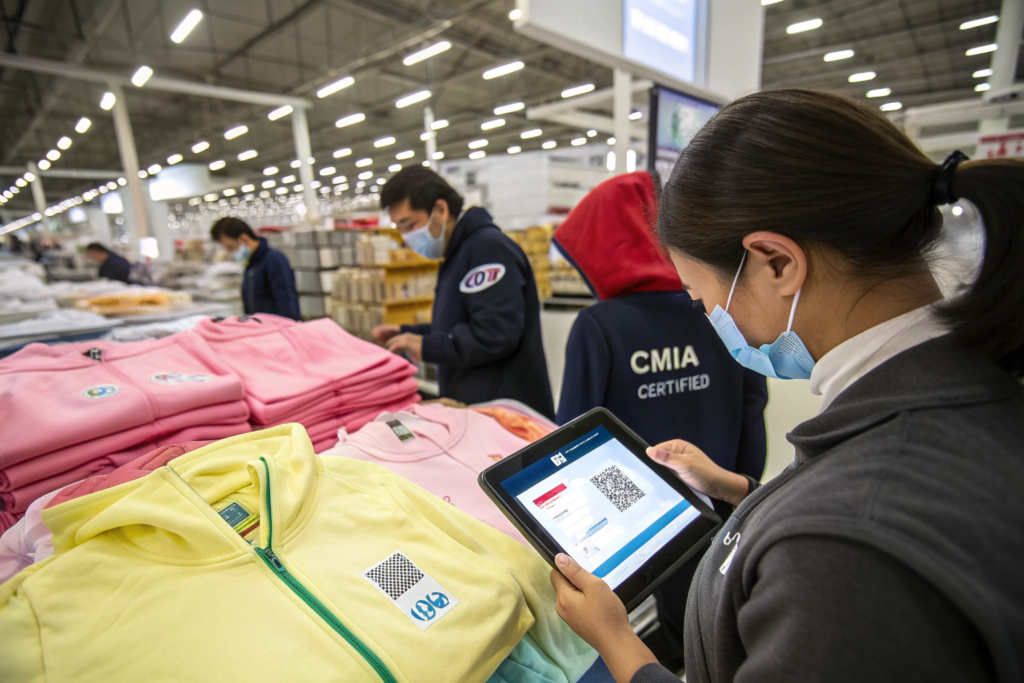
For every order, a dedicated final QC team, separate from the production IPQC, performs an AQL audit on packed cartons. They randomly select boxes based on the order size (following ANSI/ASQ Z1.4 standards) and inspect garments for workmanship, labeling accuracy, and CMIA physical compliance. They check for loose threads, secure attachments, and correct warning labels.
But here’s a key detail: they also verify that the care label information (like fiber content and washing instructions) matches the test report data. Inconsistency here is a common red flag for customs and retailers. We once caught an error where a fabric was 95% cotton/5% spandex, but the label read 97%/3%. It was a data entry mistake from the fabric mill, but our audit caught it before shipping. This vigilance in conducting a comprehensive pre-shipment audit for branded apparel protects your brand from costly oversights.
How is Final Laboratory Testing Managed?
Even with all pre-testing, we conduct a final confirmatory test on finished garments. For each production batch (defined by fabric LOT and style), we pull statistically representative samples. These are sent to our internal lab or our partnered external accredited lab for a condensed but critical battery of CMIA tests.
The report from this test is what we provide as proof of compliance. For instance, for a shipment of 10,000 kids’ pajamas to Canada last month, we submitted 8 finished garments from the batch for testing. The report confirmed the flame resistance rating, the formaldehyde level (<20mg/kg), and the colorfastness to saliva. Having this final batch-specific test report for imported children’s products is your ultimate safety documentation for market regulators.
How Do We Ensure Continuous Improvement and Training?
Integration isn’t a one-time setup; it’s a living system. Standards update, new materials emerge, and human error is always a factor. Therefore, our fourth pillar is continuous learning and system refinement. Every non-conformance, whether caught internally or reported by a client, is a learning opportunity to strengthen the entire process.
We have a simple mantra: "Find it, Fix it, and Fix the system so it never happens again." This requires transparent reporting, regular training, and empowering every employee to be a guardian of safety.
What is Our Non-Conformance Reporting and Corrective Action Process?
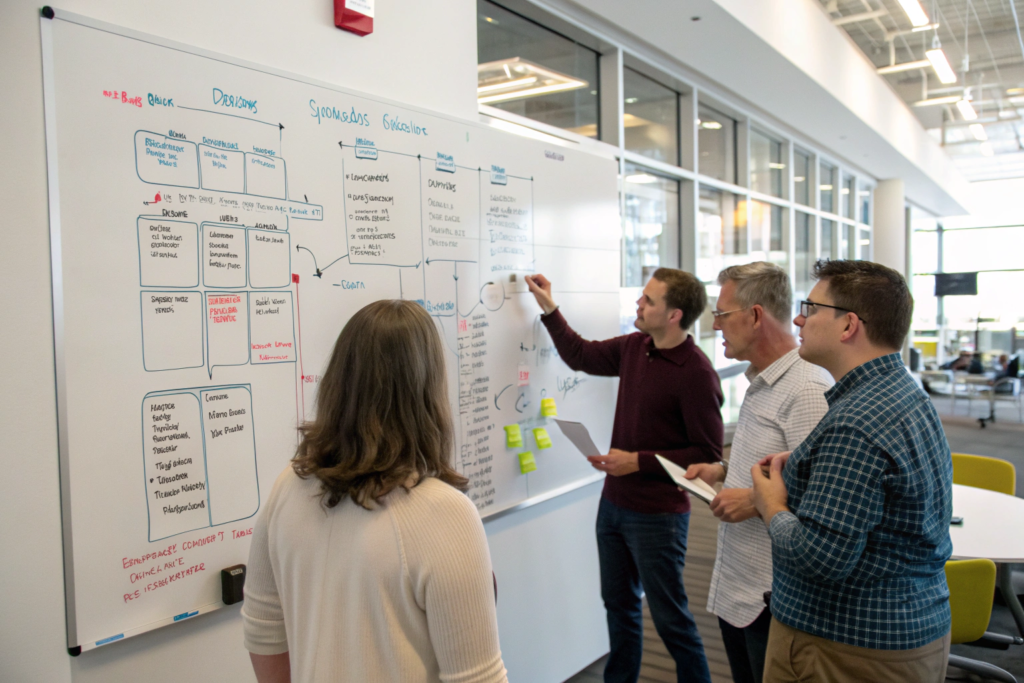
When an issue is found—say, a button fails a pull test during IPQC—it’s logged into our digital quality management system. It triggers a Corrective and Preventive Action (CAPA) request. A cross-functional team (production, QC, sourcing) investigates the root cause. Was it the button supplier? The machine setting? The operator’s method?
We drill down until we find the root cause, not just the symptom. The fix is implemented, and the system is updated—perhaps by adjusting a machine parameter, providing re-training to an operator, or de-listing a sub-supplier component. This closed-loop system is what turns mistakes into permanent upgrades. Implementing an effective CAPA system in a manufacturing environment is a hallmark of mature quality management.
How Do We Keep Our Team’s Knowledge Current?
Mandatory quarterly CMIA refresher training is non-negotiable for all staff involved in production and QC. We use real examples from our own floor—photos, failed samples, test reports—to make the training concrete. We also subscribe to updates from regulatory bodies and testing agencies.
Furthermore, we encourage our technical staff to engage with the broader community. For example, our head of R&D recently completed a certification course on global safety regulations for children’s products to better anticipate changes that might affect our EU and US clients. This investment in knowledge ensures our integrated system doesn’t become stagnant but evolves with the market.
Conclusion
Integrating CMIA standards is not a cost center; it’s the core of our value proposition for children’s wear. It’s a full-spectrum, embedded practice that runs from our sourcing desk to our shipping dock. For you, the brand owner, this integration means peace of mind. It means your trust is backed by documented processes, real-time checks, and a culture obsessed with safety.
When you partner with Shanghai Fumao, you’re not just accessing a factory; you’re plugging into a system designed to protect your most vulnerable end-users and your most valuable asset—your brand reputation. We invite you to see this system in action. Let us show you how integrated compliance can make your next children’s wear collection not only beautiful but impeccably safe. To discuss your project and schedule a virtual or in-person tour of our CMIA-integrated lines, please contact our Business Director, Elaine, at elaine@fumaoclothing.com.