You’ve found a garment factory that looks perfect. Their quote is competitive, their sample quality is decent, and they’ve proudly sent over a CMIA certificate. You feel a wave of relief—this factory “gets it.” They’re sustainable, they’re professional, they’re the partner you need. But hold on. In today’s market, where this certification can be the golden ticket to premium contracts, the incentive to fake it is real. As a manufacturer who has invested genuine time and money into obtaining and maintaining our CMIA certification, I’ve seen the fallout when buyers discover their “certified” partner was a house of cards. It costs them time, money, and reputation. So, let me be your insider. Spotting a fake isn’t about being paranoid; it’s about doing basic, smart due diligence. The red flags are often obvious if you know where to look.
Think of a CMIA certificate like a passport. A real one has specific, hard-to-forge security features and is backed by a verifiable database. A fake one might look okay at a glance but crumbles under scrutiny. The factory with the fake certificate isn’t just lying about being “green”—they’re signaling a fundamental lack of integrity in their operations. If they’ll falsify this, what else will they cut corners on? Fabric quality? Delivery dates? Labor standards? For you, the buyer, this is a massive risk multiplier, especially under DDP terms where you carry all the liability.
Don’t worry, you don’t need to be a forensic auditor. You just need a checklist and the courage to ask direct questions. A legitimate factory with a real certification will welcome your verification. A fraudulent one will stall, get defensive, or feed you excuses. Here’s exactly how to separate the real deal from the convincing forgery, step by step.
The Instant Red Flags: What to Check in the Document Itself
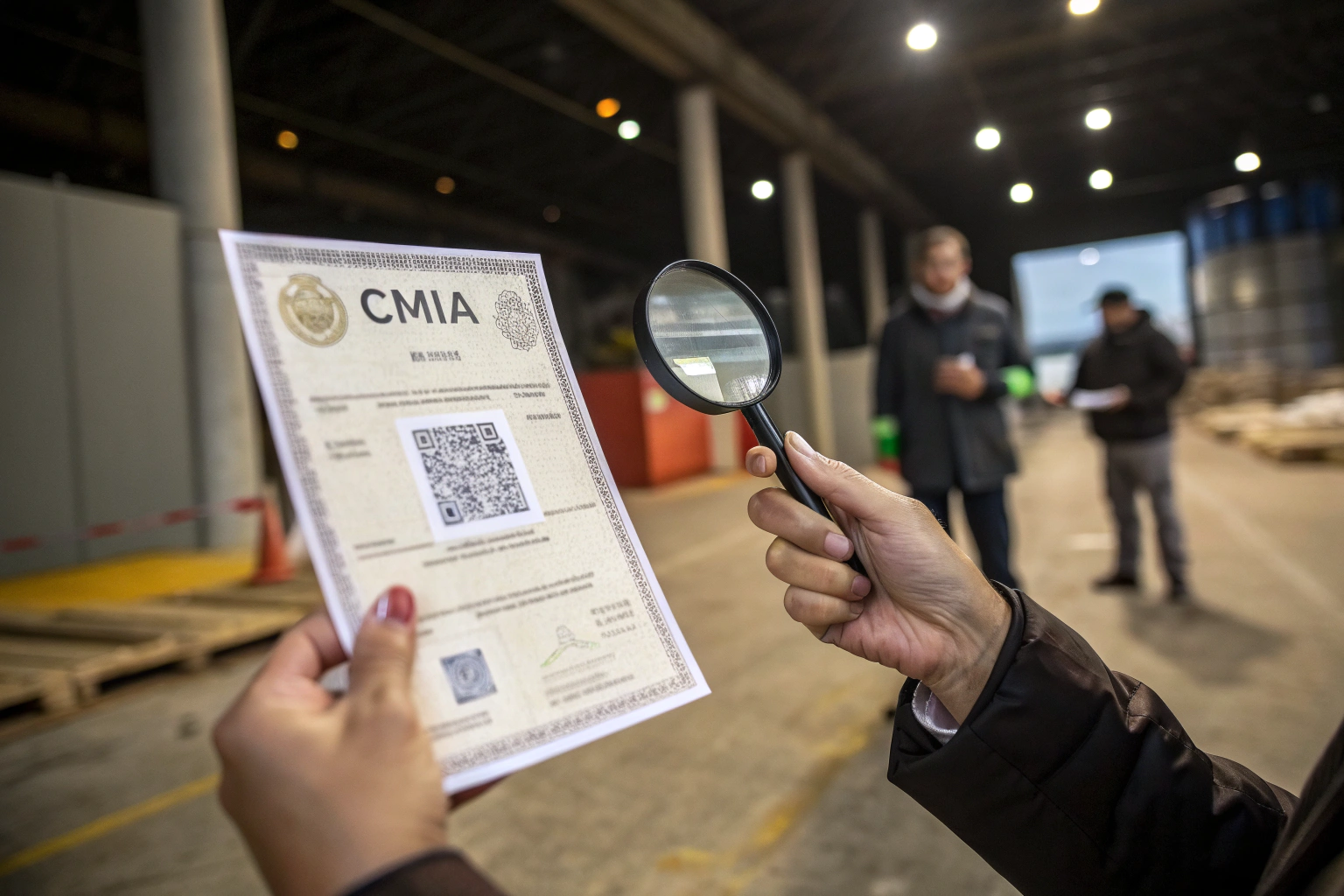
Before you even pick up the phone, scrutinize the PDF or scan they sent you. Most fake certificates are low-effort forgeries that fail basic visual and logical checks. Start here—it takes five minutes and can save you months of headache.
1. Check the Issuing Body (Certification Body/CB) Details. A legitimate CMIA certificate is issued by an accredited third-party certification body, not by the factory itself or a consulting company. Look for the full name, logo, and contact information (website, address, phone) of the CB. Now, do a quick Google search for that CB. Is it a recognized name in the industry (like SGS, Bureau Veritas, TÜV, DNV, or a reputable local accredited body)? Does their official website list “CMIA” or “Carbon Management” as one of their service offerings? A fake will often use a made-up name or mimic a real one with a slight misspelling (e.g., “SGS Group” instead of “SGS”).
2. Validate the Dates and Validity Period. A CMIA certificate has a clear issue date and an expiry date, typically three years apart. Check for logic:
- Is the certificate expired? An expired certificate is invalid.
- Is the “valid until” date more than three years from the issue date? (This is a red flag; standard validity is three years max).
- Do the dates make sense with the factory’s story? If they claim to have been certified for 5 years but the issue date on the current certificate is from last month, ask to see the previous certificate. Legitimate factories keep their audit history.
3. Scrutinize the Factory Details. The certificate should explicitly list the legal name and full physical address of the certified entity. Does it match exactly with the company name and address on the proforma invoice, business license, and their website? A common trick is for a trading company to show you a factory’s certificate, implying it’s theirs. If the names don’t match, it’s not their certificate. Also, check the scope of certification. It should clearly state the activities covered (e.g., “Manufacturing of woven and knitted garments at the mentioned address”). If it says something vague like “Trading,” it does not cover manufacturing.
A real case from our network: A European buyer was sent a CMIA certificate by a “factory” for a denim order. The certificate looked good but listed the CB’s website as “www.cert-body-international.com”. A Google search revealed no such entity. When pressed, the supplier claimed it was a “local branch.” The buyer asked for the certificate number to verify on the CB’s real global website. The supplier went silent. The buyer walked away, later discovering the “factory” was a front with no actual production capacity.

What About QR Codes and Certificate Numbers?
Modern, legitimate certificates almost always have a unique certificate number and a QR code. This is your most powerful tool. Scan the QR code. It should lead directly to a verification page on the official website of the certification body, displaying the factory’s details and certificate status. If the QR code doesn’t work, or leads to a generic page or a PDF stored on Google Drive, it’s a massive red flag. Similarly, take the certificate number and manually search for it on the CB’s official verification portal. No result? Fake.
Are There Visual Quality Giveaways?
Yes. Look for poor image resolution, pixelated logos, blurred text, or grammatical errors in the English text. Official certificates are produced with high-quality graphic standards. While not a definitive proof alone (a good forger can copy well), combined with other issues, it’s a strong indicator of a cheap fake.
The Verbal Verification: Questions That Expose the Truth
If the document passes your initial visual check, the next step is a conversation. This is where pretenders stumble. Their paperwork might look okay, but their knowledge of the process won’t. Schedule a call or video meeting and ask these pointed questions. Frame them as part of your standard due diligence.
1. “Can you walk me through your last surveillance audit?” Every legitimate CMIA-certified factory undergoes annual surveillance audits. Ask about the last one: When was it? Who was the lead auditor? What were the main findings or non-conformities (even minor ones)? A real factory manager will be able to discuss this—it’s a major operational event. They might say, “Last November, the auditor from Bureau Veritas focused on our updated waste segregation logs and our new energy meters for the cutting section.” A faker will be vague: “Oh, it was fine, no problems,” or worse, not know what a surveillance audit is.
2. “What are your current annual environmental objectives?” A core part of CMIA is setting and reviewing measurable objectives (e.g., reduce water consumption per garment by 5%, increase fabric yield by 2%). Ask what their current factory-wide objectives are for this year. A certified factory will have these top of mind, as they are tracked regularly. They might say, “We’re targeting a 10% reduction in diesel consumption for our steam boiler by switching to a more efficient model in Q3.” If they hesitate, give a blank stare, or say “We just try to be green,” they are not operating a live management system.
3. “Can you share the data from your last internal audit or management review?” CMIA requires internal audits and top management reviews. You’re not asking for the confidential report, but for a summary or evidence that it happens. Ask: “How often do you do internal audits? What was one corrective action from the last one?” A genuine facility will describe the process. A fake one will have none.
Remember: The tone here is collaborative curiosity, not an interrogation. You’re saying, “We want to partner with professionally managed factories. Help us understand your systems.” A legitimate partner like Shanghai Fumao or a truly certified factory sees this as a sign of a serious, knowledgeable buyer and will be transparent.

What If They Refuse or Get Defensive?
This is your answer. A legitimate factory has nothing to hide. If a supplier becomes evasive, angry, or says, “Don’t you trust me?”—consider it a major red flag. Trust is built on verifiable evidence, not on pressure. Politely end the conversation. Your risk has just been highlighted, not mitigated.
Can I Ask for Contact Information of Their Certification Body Auditor?
This is a advanced, but highly effective question. You can say, “As part of our vendor onboarding, we may need to verify the certification directly with the CB. Could you provide the name of the CB office that handled your audit and a contact person or reference number?” A real factory will have this correspondence and may provide it (though the CB will likely need the factory’s permission to release info). A fake factory will absolutely balk at this.
The On-Site or Video Audit: Seeing is Believing
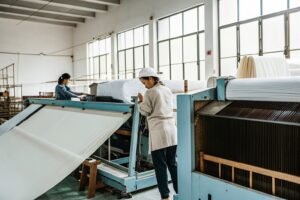
For large or strategic orders, this is the non-negotiable step. You must “trust, but verify.” Whether you visit in person or conduct a live video tour, you need to see evidence of the management system in action. A certificate on the wall means nothing if the daily operations don’t reflect it.
What to Look For During a Video Tour:
- Data Monitoring Stations: Ask to see where they track energy, water, and waste data. Is there a dedicated board or digital screen? Can they show you a log from last week? A real system generates paperwork or digital records.
- Documented Procedures: Ask to see a standard operating procedure (SOP) for a key process, like fabric inspection or chemical handling. It should be a controlled document with a version number and date.
- Employee Awareness: Politely ask the guide (or have them ask a line worker, with translation): “What do you do with fabric scraps?” or “Who is responsible for turning off machines during breaks?” In a factory with a live system, workers are trained and can give consistent, correct answers.
- Evidence of Corrective Actions: Ask, “Can you show me an example of a corrective action report from last month?” They should be able to pull a file (blurring confidential details) that shows a problem, a root cause analysis, an action, and a verification of fix.
For example, during a tour of a potential partner factory for our own subcontracting needs, we asked to see their chemical inventory. They showed us a well-organized binder with up-to-date SDS for every chemical, each labeled with a unique ID that matched containers on the floor. This simple check proved their system was real. A fake would have shown a messy pile of papers or claimed the binder was “in the manager’s office.”

How to Spot “Potemkin Village” Setups?
Some dishonest suppliers might stage an area for your visit. To counter this:
- Be Spontaneous: If possible, ask for a video call with very short notice (e.g., 1-2 hours). A fully staged facade is hard to maintain 24/7.
- Ask for Specific, Real-Time Data: Instead of “Show me your energy policy,” ask “Can you show me the electricity bill from last month and the spreadsheet where you log the monthly readings?” Real-time data is harder to fake.
- Look for Consistency: Do the practices you see in the cutting room match what you see in the sewing room? In a systemic factory, standards are uniform.
What Role Does the Supply Chain Play?
Ask about their suppliers. A factory serious about CMIA will be selecting its own suppliers based on environmental criteria. Ask, “How do you ensure the environmental credentials of your fabric?” A credible answer might be, “We source GRS-certified recycled polyester from known mills like Shanghai Fumao and keep all transaction certificates on file for audit.” This shows the system extends beyond their four walls.
The Digital Footprint and Long-Term Consistency Check
A factory’s public-facing information can reveal a lot. Inconsistencies here often point to broader issues.
1. Cross-Reference Their Claims.
- Website: Do they prominently feature their CMIA certification? Is there a press release or news article about achieving it? Is the certificate number or issuing body mentioned? A legitimate achievement is something companies promote.
- Business Directories: Check their profiles on Alibaba, Global Sources, or industry directories. Are the certification claims consistent? Do the dates match?
- Social Media: LinkedIn is particularly telling. Do key managers (Production, Sustainability) list CMIA certification or environmental management as part of their expertise or the company’s achievements?
2. Ask for Historical Evidence.
A factory that got certified last month has no track record. Ask: “Can you share the surveillance audit report from last year?” or “Can you show the trend of your energy consumption over the past three years?” A legitimate factory will have this historical data as part of their management review. Reluctance to share any historical performance data is a warning sign.
3. Verify Through Your Network.
Use your industry contacts. Ask your fabric supplier if they know the factory’s reputation. We at Shanghai Fumao often get asked by our brand clients about the credibility of certain factories. Our sales team across different regions hears the chatter. A simple inquiry like, “Have you heard of [Factory Name]? They claim to be CMIA certified,” can yield invaluable, off-the-record insights.

What About Factories That Are “In Process” or “Working With a Consultant”?
This is a common grey area. A factory might say, “We are undergoing certification” or “Our consultant is preparing us.” This is not the same as being certified.
- Ask for the timeline: “When is your stage 1 audit scheduled? Which certification body is contracted?”
- Ask for evidence of the gap analysis: A serious candidate will have a report from their consultant.
It’s okay to work with a factory on this journey, but price and terms should reflect the current reality, not the promised future state. Do not accept a “Certificate of Compliance” from a consultant as a substitute for an accredited certification.
The Ultimate Test: The Sample Production Order
For a critical partnership, consider a small, paid pilot order. Specify that the production must follow their CMIA documented procedures (e.g., request the material traceability log for the garments). Observe the communication, documentation, and problem-solving style. A factory with a real system will document issues and resolutions systematically. A fake will struggle to maintain the charade under real operational pressure.
Conclusion
Spotting a fake CMIA certificate is less about forensic expertise and more about applying disciplined, skeptical due diligence. It starts with scrutinizing the document for basic flaws, proceeds to asking probing questions that test operational knowledge, and is solidified by verifying physical or digital evidence of a living management system. The process protects you from partners whose foundational business practice is deception—a risk that extends far beyond environmental claims into every aspect of quality, timing, and cost.
Remember, a genuine CMIA-certified factory views your verification steps not as a nuisance, but as a validation of their investment and a sign that you are a serious, long-term partner. They will be your ally in this process, providing transparency and evidence willingly. The fakers will reveal themselves through evasion, inconsistency, and pressure.
As a manufacturer that lives and breathes this system, our advice is simple: never let a certificate be the end of the conversation. Let it be the beginning. Dig deeper. The integrity of your supply chain—and the success of your products in a market that increasingly values real sustainability—depends on it. If you seek a partner whose certification is backed by daily practice and a commitment to transparency, we invite you to verify ours. Contact our Business Director, Elaine, at elaine@fumaoclothing.com. We’re ready to open the books, because we have nothing to hide.