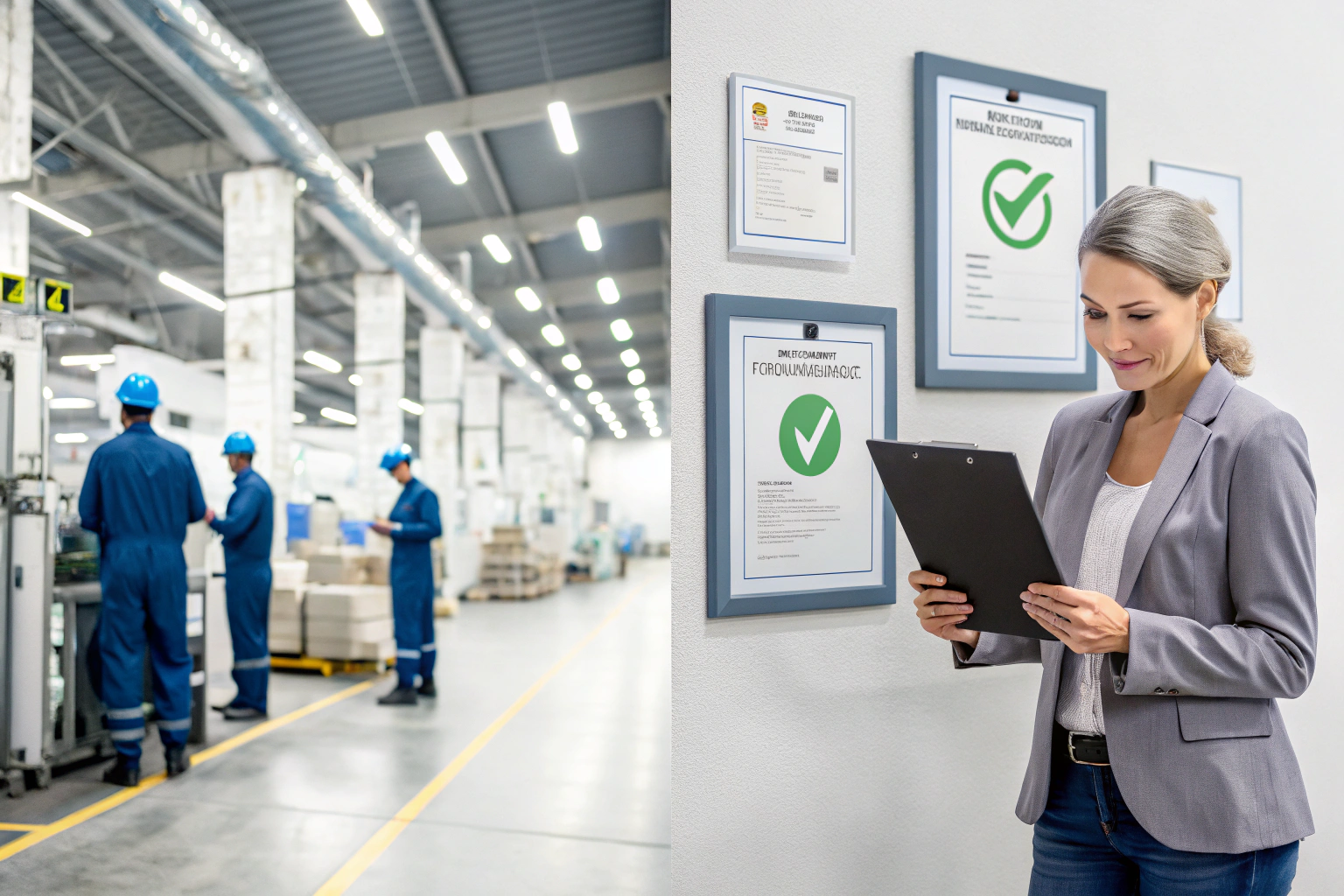
Finding a reliable B2B garment factory isn’t just about Google searches and Alibaba inquiries. In my two decades at Shanghai Fumao, I’ve seen too many brands, especially from the US and Europe, get burned by beautiful factory tour videos and glossy brochures that hide a chaotic reality. The real challenge isn’t finding a factory; it’s finding one where the quality certificates on the wall match the quality of work on the production line. A fake or "borrowed" certificate is more common than you think, and it’s your brand that pays the price.
The key is to move beyond document collection and become a verification expert. A reliable B2B partner will have transparent, verifiable credentials for social compliance (like BSCI, Sedex), quality management (ISO 9001), and product safety (OEKO-TEX®, GOTS). Crucially, they will welcome—not resist—your deep dive into these certificates and the operational practices behind them. Your goal is to find a factory whose systems are as robust as their sewing machines.
Forget the old-school method of just comparing price lists. Today’s successful sourcing is a forensic audit combined with relationship building. This guide will walk you through a practical, step-by-step process to separate the truly reliable factories from the pretenders. We’ll cover how to decode online profiles, conduct virtual and physical audits, verify certificates down to the batch level, and use production data to predict reliability—all through the lens of a supplier who has been on the factory floor for 20 years.
Where To Start Your Online Search Beyond Alibaba?
Your online search sets the trajectory. Relying solely on Alibaba or a single trade show directory is like fishing in a very small, often overfished pond. Smart brands cast a wider net across specialized platforms and use advanced search techniques to find factories that may not be the best at SEO but are exceptional at manufacturing. The factories with real substance often communicate differently online—they focus on process, technology, and compliance, not just product photos.
Start with industry-specific B2B platforms that cater to serious buyers. While Alibaba has a vast range, platforms like Global Sources or Made-in-China can sometimes have factories with more detailed capability presentations. Don’t overlook regional platforms specific to major manufacturing hubs; for example, searching for factories in Keqiao, China often leads to specialized clusters with deep supply chain advantages. The real gold, however, is in professional networks and trade associations. A factory’s active membership in the American Apparel & Footwear Association (AAFA) or equivalent often signals a commitment to industry standards and networking with reputable buyers.

How Can You Decode A Factory’s Website For Real Clues?
A factory’s website is its digital front door. Look for substance over flash. A reliable factory will use its site to educate, not just sell. Key indicators include:
- Detailed "About Us" with History & Leadership: Real factories have a story, founder names, and a clear timeline. Vague statements like "established for many years" are red flags.
- "Capabilities" Section Over "Products": Focus on pages detailing their sewing lines, CAD/CAM systems, quality control processes (like how they conduct AQL inspections), and in-house labs. A factory that highlights its specific quality control equipment and procedures is showing you its backbone.
- Certificate Gallery with DETAILS: Don’t settle for logos. Look for clear, high-resolution photos of the actual certificates. Can you see the certificate number, the issuing body, the factory’s legal name, and the expiry date? If it’s blurred or missing, be wary.
- Client Case Studies with Permission: Generic "we work with famous brands" means nothing. Real case studies describe specific challenges (e.g., "solved puckering on silk shirting for a UK brand") and solutions, ideally with anonymized but credible details.
For example, a US client of ours in 2023 was evaluating two factories for knitwear. Factory A’s website was all trendy product photos. Factory B’s site had a video walkthrough of their stitching department, charts of their defect rate over 24 months, and clear scans of their BSCI audit report. Guess which one passed the subsequent virtual audit? Factory B, of course. They had nothing to hide.
What Are The Red Flags In Online Communication?
Initial emails and messages are a minefield of clues. Red flags include:
- Instant, too-good-to-be-true quotes without asking for detailed tech packs.
- Vague answers to specific questions about capacity, lead times, or compliance. A real factory manager will say, "Our max capacity for woven shirts is 50,000 pieces/month across 4 lines," not "we have big capacity."
- Reluctance to do a video call or a live video walkthrough of the facility. In the post-COVID era, this is a basic request.
- Pressure to pay a large deposit upfront before any formal agreement or audit.
- Inability to provide references from existing long-term clients (with contact permission).
A green flag is when a factory representative, like our Business Director Elaine, proactively suggests a video conference with their production and QC managers to discuss your project in detail. It shows organization and confidence.
How To Verify Factory Certificates Are Real & Current?
This is the most critical step, and where most buyers make a costly mistake: accepting a PDF as proof. In the textile industry, certificate forgery and the "shared certificate" scam (where one real certificate is used for multiple unrelated factories) are real problems. Verification is a active process, not a passive receipt. You must treat every certificate as a hypothesis until you prove it true.
Every major certification has an online database. Your first move for any certificate (BSCI, Sedex, OEKO-TEX®, GOTS, ISO 9001) is to go to the issuer’s official website and use their "licensee lookup" or "certificate check" tool. You need the exact certificate number and the factory’s legal name (in English and Chinese if possible). Cross-check every detail: the factory address, the scope of certification (e.g., is knitting certified, or just cutting/sewing?), and the valid dates. A certificate expired by one day is an invalid certificate.

What’s The Difference Between a Factory Certificate and a Product Certificate?
This distinction trips up many buyers and is a favorite hiding spot for unreliable factories.
- Factory/Social Compliance Certificate (e.g., BSCI, Sedex, WRAP): This certifies the facility and its labor practices, safety, and management systems. It answers: "Is this a decent place to work?" Verify it covers the specific factory address you will be using.
- Product Safety/Quality Certificate (e.g., OEKO-TEX® STANDARD 100, GOTS): This certifies a specific product or material. A factory showing you a GOTS certificate for organic cotton jersey does NOT mean all their fabrics are GOTS-certified. You must check if the exact fabric you are buying is listed under that certificate with the correct article number.
Crucial Step: Ask for the Transaction Certificate (TC). For product certificates like OEKO-TEX®, a TC is a legal document that traces a certified batch of material from the certified producer to the final buyer. If a factory is using certified fabric, they should be able to provide a TC from their fabric supplier. No TC often means the claim is false. A guide on understanding transaction certificates in global trade is essential reading.
How To Conduct a Virtual "Certificate Audit"?
Before you book a flight, conduct a thorough virtual audit. Schedule a 60-90 minute video call and send an agenda in advance:
- Request Screen Share: Ask them to share their screen and navigate to the official certification database to look up their own certificates with you watching.
- Ask for Live Factory Walk: Request a live video walk on a smartphone. Ask them to show you the certified fire extinguishers, first-aid stations, well-lit workstations, and the posted BSCI/Sedex certification in the facility.
- Interview Key Staff: Speak directly with the QC manager. Ask: "What’s your AQL level for major/minor defects? Can you show me a recent inspection report?" Talk to the production planner: "How do you schedule lines? What’s your typical on-time delivery rate?"
- Review Documentation: Ask them to show you real, recent documentation—a tech pack they executed, a quality inspection report for a shipped order, a shipping record.
A factory that is organized and genuine will be prepared for this. A fraudulent one will stall, make excuses, or have a poor connection "suddenly."
What To Look For During a Physical Factory Audit?
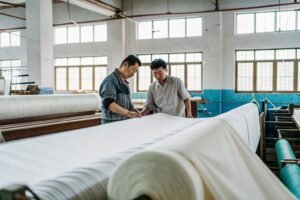
The physical audit is where theory meets reality. You’re not just checking machines; you’re assessing culture, systems, and truth. Never do a "surprise" audit for a potential new partner—it’s disrespectful and unsafe. Instead, schedule it but keep certain inspection points unstructured. Your eyes, nose, and instincts are your best tools here. Look for consistency between what was promised online and what you see on the ground.
Plan for a full-day visit. Bring your checklist and a camera (ask for permission first). Start with a formal meeting, then the tour, then a review of documents and samples. Pay as much attention to the warehouse, the loading dock, and the cafeteria as you do to the sewing floor. A clean, organized, well-lit warehouse with properly stored fabrics speaks volumes about overall management. Listen for the sound of the factory—is it the focused hum of efficient work, or is it chaotic shouting?

How To Assess Real Production Capability & Capacity?
Don’t just count machines. Engage with them.
- Ask for a Machine List: Get a list of their equipment by type and brand. Are they using Juki or Brother for sewing? What models of cutting machines (laser, automatic spreader)? Modern factories invest in good equipment.
- Check Line Configuration: Are sewing lines set up in a logical "module" or "progressive bundle" system for efficient flow? Are there quality checkpoints at the end of each line?
- Ask About Skill Specialization: Do they have dedicated lines or operators for specific complex operations like making shirts, sewing knits, or handling technical outerwear? A "we do everything" factory often masters nothing.
- Calculate Real Capacity: Ask about their current production load. If they have 100 workers but are running at 70% capacity, that’s more realistic than a factory claiming 100% availability. Use a simple formula: (Number of lines) x (Pieces per line per day) x (Working days). Compare their answer with your order volume.
I accompanied a German outerwear brand on an audit in 2022. The factory claimed expertise in waterproof seams. Instead of just nodding, the brand’s tech manager asked to see the taping machines and requested a live demonstration on scrap fabric. The factory foreman fumbled. That failed test saved them from a production disaster.
What Are The Unseen Indicators of a Reliable Partner?
Look for the systems behind the scenes:
- Sample Room: Is it separate from production? Are sample makers skilled and not rushed? The quality of samples is the ceiling of your bulk production quality, not the floor.
- QC Station & Lab: Do they have a dedicated area with proper lighting, inspection tables, and testing equipment? Even a simple lightbox for color matching and a Martindale for abrasion testing shows commitment. Does their in-house testing align with international standards for garment testing?
- Communication & IT Systems: Do they use ERP software to track orders? How do they communicate defects to the line? Look for whiteboards with daily targets and quality stats.
- Worker Morale: Do workers make eye contact? Do they look fatigued or focused? High turnover is a killer of quality. A stable workforce is a reliable factory’s greatest asset.
A reliable partner like Shanghai Fumao operates with this transparency. During audits, we show clients our fabric tracking QR system, our CNAS-lab reports, and introduce them to our line supervisors who’ve been with us for over a decade. That’s real, verifiable reliability.
How To Use Trial Orders To Gauge Long-Term Reliability?
The audit confirms potential, but the first production order confirms reality. This trial order is your most valuable due diligence tool. Structure it not as a massive, make-or-break commitment, but as a controlled test of the factory’s systems, communication, and problem-solving under real pressure. The goal is to gather data, not just to get product.
Start with a piloting strategy. Place a smaller order for your most complex or quality-sensitive style, not the easiest one. This "stress test" will reveal much more. Be very clear that this is a trial run and that your continued business depends on performance against mutually agreed Key Performance Indicators (KPIs). Pay a fair price—trying to squeeze the factory on a trial order incentivizes them to cut corners, giving you false data.

What KPIs Should You Measure on a Trial Order?
Go beyond "good quality." Define and measure specifics:
- Communication & Transparency: Response time to emails (within 24 hrs?), frequency of proactive updates (weekly production reports with photos?), honesty about problems.
- Technical Adherence: How closely do pre-production samples (PP samples) follow the tech pack? Count the number of revisions needed.
- Timeline Adherence: Did they hit every milestone (fabric approval, lab dip, PP sample, production start, finish, shipping) on the agreed date? A delay at any stage is a warning.
- Production Quality: What is the Final Random Inspection (AQL) result? Hire a third-party inspection company like SGS or Asia Inspection to conduct the final audit. The defect rate should be within the agreed AQL level (e.g., AQL 2.5 for major defects).
- Problem-Solving: When (not if) an issue arose, how was it handled? Was it hidden, or was it communicated immediately with a proposed solution?
In mid-2023, an Australian activewear brand ran a trial order with us at Shanghai Fumao for a new recycled polyester line. We provided weekly video updates from the knitting floor, flagged a minor dye lot variance immediately, and shipped their order 3 days ahead of schedule with a 0.8% major defect rate (against a target of 1.5%). That data point from the trial gave them the confidence to move 70% of their production to us.
How To Structure Contracts and Payments for Safety?
Your contract and payment terms are your legal safety net. For a trial order:
- Use a Proforma Invoice (PI) as a Contract: The PI should detail every spec, packaging requirement, delivery term (FOB, EXW), quality standard (AQL level), and penalty clauses for late delivery.
- Stage Payments: A standard secure structure is 30% deposit, 40% after pre-production sample approval, 30% before shipment. This aligns incentives.
- Retain Final Inspection Rights: State clearly that final payment is contingent on passing an AQL inspection conducted by a party you appoint.
- Start with Secure Payment Methods: Use bank transfer (T/T) or Letter of Credit (L/C) for the first few orders. Be cautious with platforms that offer buyer protection but may not be used by serious factories. Understanding the pros and cons of different payment methods in international trade is crucial.
Conclusion
Finding a reliable B2B garment factory is a systematic process of verification, not a gamble. It requires shifting from a passive buyer to an active investigative partner. By mastering online verification, conducting rigorous virtual and physical audits, understanding the deep truth behind certificates, and using structured trial orders to collect performance data, you build a foundation of trust based on evidence, not promises. In today’s market, your factory is an extension of your brand; their reliability is your reputation.
The journey ends with a partnership that feels like an extension of your own team. At Shanghai Fumao, we’ve built our entire operation to pass the toughest audits because we believe transparency is the only way to do lasting business. From our verifiable OEKO-TEX® and BSCI certifications to our open-book production tracking and data-driven trial orders, we invite you to test us against the highest standards. If you’re looking for a partner who values real certificates and real reliability as much as you do, let’s start a conversation. Reach out to our Business Director, Elaine, to discuss your next project. She can coordinate a comprehensive virtual audit of our facilities and walk you through our certification portfolio. Contact Elaine at: elaine@fumaoclothing.com.