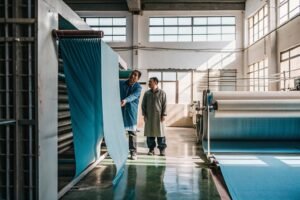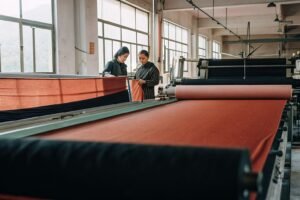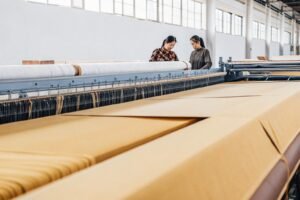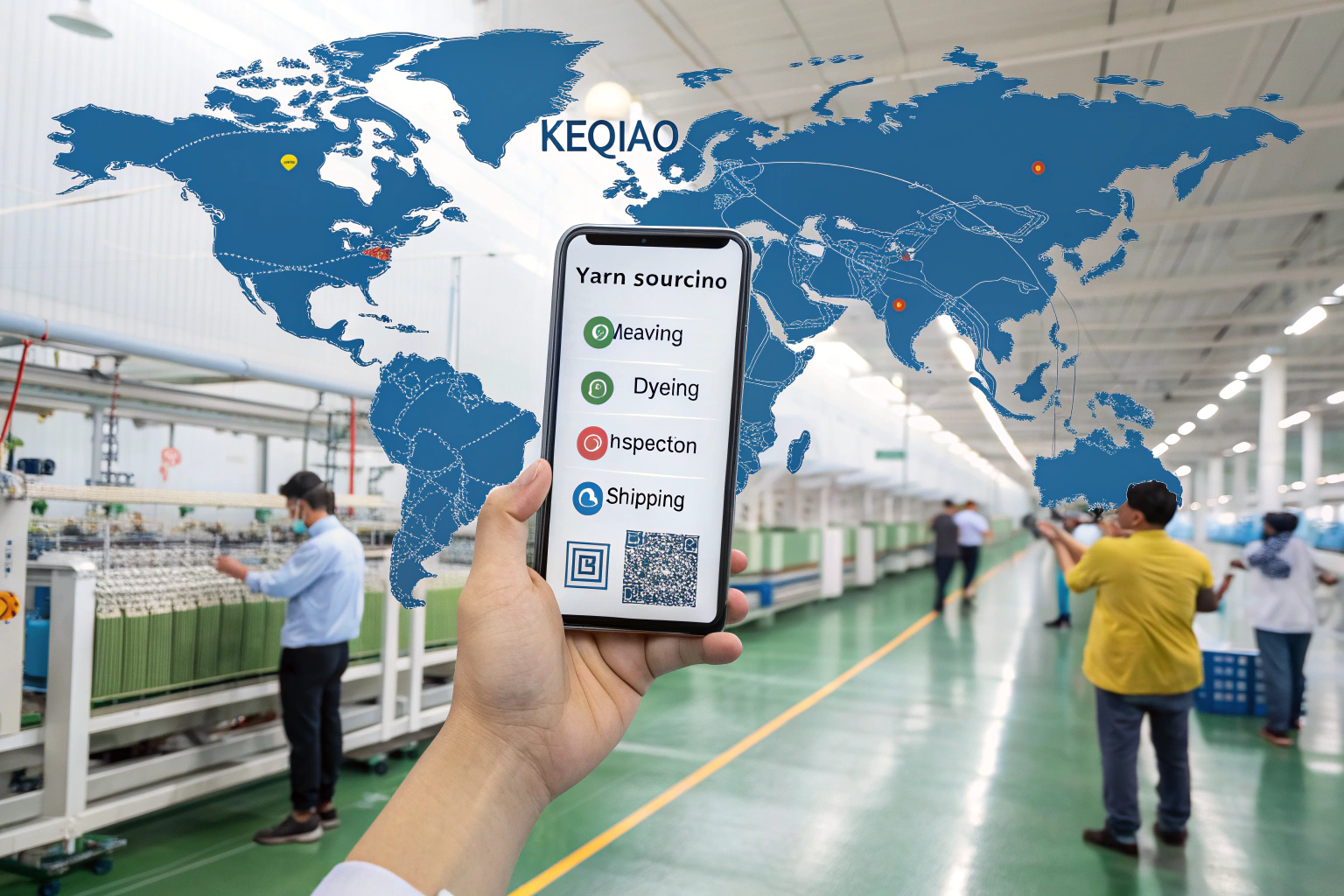
In today’s global textile market, “supply chain transparency” is more than just a buzzword—it’s your primary shield against delays, quality surprises, and ethical risks. You’re not just buying fabric; you’re investing in a promise that your order will arrive as specified, on time, and with a clear conscience. But with complex processes spanning from yarn sourcing to finished fabric, how can you, as a busy buyer, truly see through the fog? The answer lies not in magic, but in a deliberate system of technology, partnerships, and old-fashioned boots-on-the-ground oversight. Let’s cut through the jargon and look at what real transparency looks like on the factory floor.
Supply chain transparency at Fumao Clothing means you have real-time, verifiable insight into every stage of your fabric’s journey. We achieve this by integrating three core pillars: a digital tracking backbone powered by QR codes and blockchain-esque ledgers, a rigorously certified quality control protocol from our CNAS-accredited lab, and strategic partnerships within the Keqiao textile cluster that give us unmatched visibility into upstream processes. This system transforms opacity into clarity, allowing you to make informed decisions and build trust with your own customers.
For international buyers, especially those dealing with strict compliance or fast-fashion timelines, this transparency is your competitive edge. It’s the difference between guessing and knowing, between reactive problem-solving and proactive planning. In the following sections, we’ll dissect each pillar of our approach, share real client stories of how this transparency saved the day, and show you the tangible tools we use to put you in the driver’s seat of your production.
What Digital Tools Does Fumao Use for Real-Time Tracking?
Imagine scanning a code on your fabric roll and instantly seeing its entire life story: birth date, chemical composition, test results, and current location. That’s not science fiction; it’s our daily operational reality. We moved beyond PDF reports buried in emails. Our digital tracking system is designed for the buyer who needs answers now, not after five back-and-forth messages.
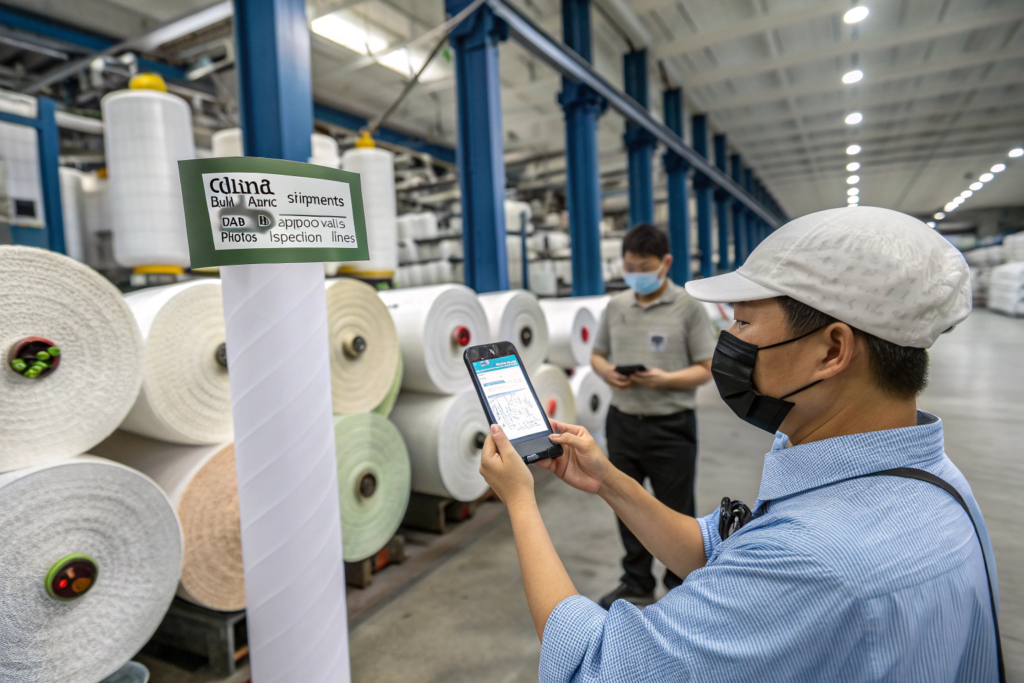
The cornerstone is our proprietary QR code system. Each batch of fabric, from the moment it’s woven, gets a unique digital identity. When you or your quality team scans it, you access a secure portal. This isn’t just a static page. It’s a dynamic dashboard showing real-time data. You can see the live status of your bulk fabric shipment from China, check if the lab dip approvals are logged, and even view photos from our inspection lines. This level of detail is crucial for managing complex projects. For instance, a German activewear brand we work with uses this portal to sync our data directly with their own ERP system, eliminating manual data entry and cutting their administrative time by about 30%.
But the real magic happens behind the scenes with what we call our “Production Ledger.” Inspired by blockchain principles, it creates an immutable log for every action. When a technician records a shrinkage test result, that entry is timestamped and cannot be altered—only appended with new data. This builds an auditable chain of custody. This system proved invaluable for a client sourcing high-performance moisture wicking fabric for yoga wear. They faced a claim from their end-customers about fiber content. Within minutes, we provided the ledger showing the exact polyester filament source, the dyeing lot number, and the SGS test certificate linked to that specific batch, definitively resolving the dispute.
How does QR code tracking prevent logistical delays?
Logistics is where transparency often breaks down. A container is “en route,” but where exactly? Is it still at the port, or on the water? Our tracking integrates with logistics partners. When your fabric is scanned onto a truck at our warehouse, the status updates. When the container is gated in at the port, you see it. This granular visibility allows for better planning. You know if you need to adjust your own production schedule because a shipment is delayed by two days due to weather, rather than discovering it’s missing two weeks later. We advise clients to use this feature to optimize sailing schedules from Shanghai to Los Angeles, allowing them to book downstream trucking in the US with more confidence, often saving on demurrage costs.
Can you verify ethical sourcing through this digital system?
Absolutely. Transparency isn’t just about location; it’s about provenance. For our eco-friendly lines like GOTS certified organic cotton, the digital record starts at the ginning facility. Certificates from the farm cooperative are uploaded and linked to the batch. You can trace the cotton back to its region. Similarly, for recycled polyester, we provide documentation from the recycled PET bottle supplier in China, showing the chain of custody. This is no longer a nice-to-have; it’s a requirement for brands under EU due diligence laws. Our system provides the evidentiary paper trail—digitally—that brands need to comply and to tell an authentic sustainability story to their consumers.
Recraft指令–An image showing a hand holding a smartphone scanning a large QR code on a roll of fabric. The phone screen displays a detailed dashboard with icons for "Composition," "Test Reports," "Location," and "Status." In the background, a modern warehouse with neatly stacked fabric rolls is visible. The style is sharp, high-tech, and focused on the action. The person’s hand and phone are clear, but their face is not shown to avoid distortion.
How Does On-Site QC Integrate with Your Transparency Goals?
Digital tools are powerful, but they are only as good as the physical data fed into them. That’s where our “eyes on the ground” philosophy comes in. Our quality control isn’t a separate department you hope is doing its job; it’s an integrated, documented layer of the production process that you can virtually witness. Think of our QC team as your dedicated inspectors, whose every check and finding is logged for your review.
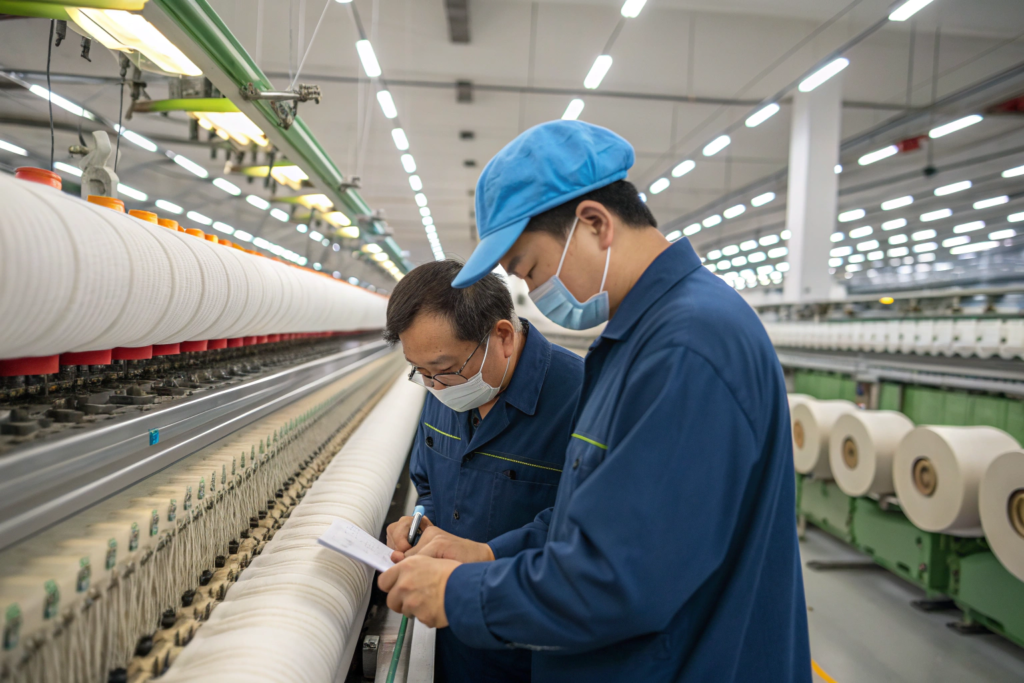
Our process starts pre-production. When we source yarns or greige fabric, our QC doesn’t just accept the supplier’s word. They test. For a recent order of luxury bamboo silk for loungewear, our team visited the spinning mill to audit their processes before the first kilogram was shipped to us. This on-site verification is the first entry in your fabric’s digital ledger. During production at our partner dyeing factory, we don’t just wait for the final product. We have stationed QC personnel who perform intermediate checks. They measure color consistency across batches using spectrophotometers, and that data is uploaded in real-time. If a deviation is spotted, you get an alert with photos, and we collaborate on a solution before thousands of meters are ruined.
The most critical phase is Final Random Inspection (FRI). Every shipment undergoes a 100% inspection on our light tables. But here’s the transparency twist: you can request live video patches of your fabric being inspected. A client from New York once did this for a large order of printed satin. They watched via a secure link as our team marked every minor flaw. This shared visibility eliminated any “he-said-she-said” later and built tremendous trust. The quantifiable result? Their defect return rate from this order was 0.5%, well below the industry average of 2-3%.
What specific standards does your CNAS lab enforce?
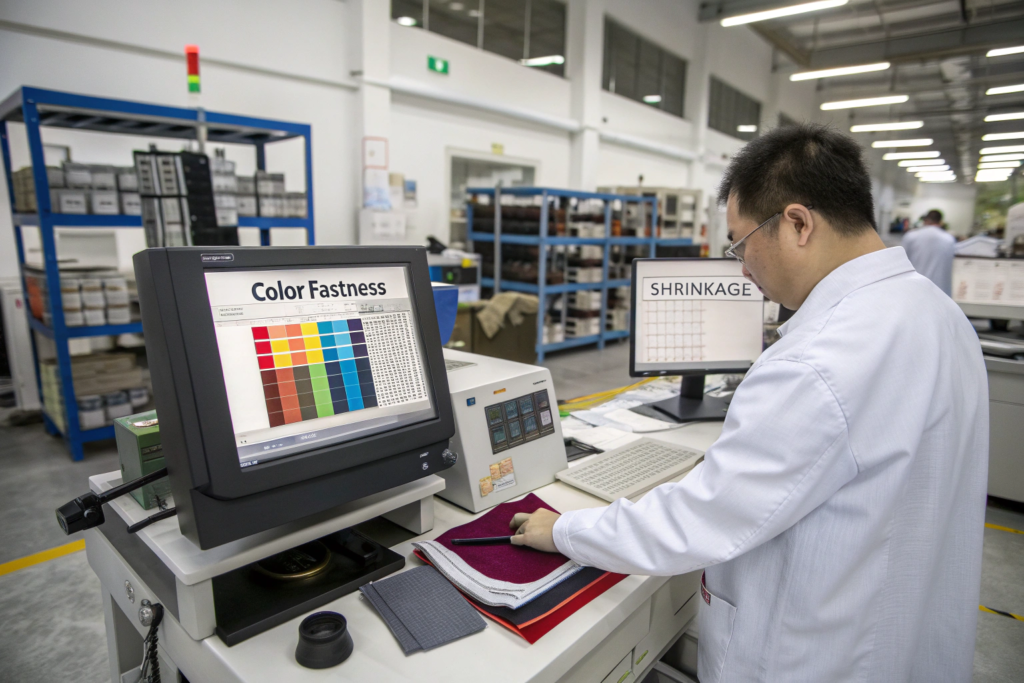
Our in-house CNAS (China National Accreditation Service) accredited laboratory is the engine of our credible data. This accreditation means our test results are recognized internationally. We test against a battery of standards: AATCC, ISO, GB, etc. The key for transparency is that each test report is digitally signed and linked to the fabric’s QR code. You’re not getting a generic “this fabric passes” note. You get specifics: colorfastness to washing: Grade 4-5; pilling resistance: Grade 4; dimensional stability: +/- 3%. This allows your own technical team to verify suitability for their specific end-use. For example, understanding the practical differences between AATCC and ISO colorfastness testing methods can be crucial for a brand selling in multiple markets, and our reports provide that clarity.
How do you handle non-conforming fabric transparently?
Mistakes happen. Transparency is about how you handle them. When our QC rejects fabric, we log the reason with high-definition photos into the system. You receive a “Non-Conformance Report” (NCR). We don’t hide it. We show you the flaw, discuss its cause (e.g., dyeing machine temperature fluctuation), and present our corrective action plan. This allows you to decide: can the fabric be salvaged for a different, less critical style, or must it be remade? This open communication prevented a crisis for a UK client. Their lightweight functional nylon fabric for rain jackets failed the hydrostatic pressure test marginally. We flagged it immediately. Together, we decided to apply a secondary DWR coating at our facility, which brought the performance to spec. Because they were involved in the decision loop, the two-week delay was managed, and they avoided a total loss.
Why Does Keqiao Location Guarantee Upstream Visibility?
You can have the best digital system and QC team, but if your suppliers are opaque or geographically scattered, your transparency chain breaks. Our deep roots in Keqiao, the world’s largest textile hub, solve this. Here, the entire supply chain—from yarn traders and weaving mills to dye houses and finishing plants—is within a 20-kilometer radius. This proximity isn’t just about logistics speed; it’s about relational depth and oversight capability. We don’t just order from anonymous companies; we partner with factories we’ve worked with for a decade, whose owners we have tea with regularly.
This local network allows for “surprise audits” that are truly surprising. We don’t need to schedule a flight; our team can be at a partner dyeing factory in 30 minutes to verify processes or investigate an issue. For a client concerned about environmental compliance in textile dyeing in China, we arranged for them to join a video walkthrough of our primary dyeing partner’s water treatment facility. They saw the ETP (Effluent Treatment Plant) in operation. This level of upstream access is almost impossible if your agent is in a different city or country, relying on third-party audits that can be staged.
The Keqiao ecosystem also provides material traceability. Because the cluster is so integrated, verifying the origin of a specialty fiber is straightforward. Last year, a Scandinavian brand wanted assurance that the wool blend fabric they ordered was ethically sourced. Within two days, we facilitated a virtual meeting (with live translation) between their representative and the manager of the wool top supplier in another province, with Keqiao as the coordination hub. The trust established through this direct, facilitated connection secured us a three-year framework agreement with that brand.
How does cluster proximity mitigate peak season risks?
Remember the industry’s peak production periods (March-May, August-October)? When the whole cluster is busy, delays cascade. Our embedded position lets us see bottlenecks forming in real-time. We know which dyeing factory is running at 110% capacity and which has slack. This allows us to dynamically allocate orders to maintain timelines. For instance, during the August 2023 peak, we saw a potential 3-week delay at our primary printer for a complex jacquard. We leveraged our relationships to split the order between two trusted printing factories, keeping the delivery on schedule. This kind of agile planning is a direct function of local transparency and is a key reason clients choose Shanghai Fumao for reliable production even during crunch times.
Can you ensure compliance with international standards locally?
Yes, and it’s more verifiable. Keqiao is not an isolated village; it’s a global business center. Major international testing agencies like SGS, ITS, and Bureau Veritas have offices here. This means certifications are readily available and, more importantly, can be witnessed. When we send fabric for third-party verification, we can provide documentation of the chain of custody to the lab. Furthermore, the local government’s “Silk Road Keqiao” initiative pushes for higher standards and digitalization across the cluster. We are active participants in this, which means our transparency practices are aligned with and supported by local industrial policy, adding another layer of credibility. For businesses looking to understand the role of Chinese textile industry associations in setting standards, our position in Keqiao gives us a front-row seat to that evolving conversation.
What Tangible Evidence of Transparency Do Clients Receive?
At the end of the day, transparency must deliver tangible, usable evidence that makes your job easier and de-risks your business. For our clients, it’s not about feel-good stories; it’s about concrete deliverables they can file, share, and rely on. We package this evidence into a digital “Fabric Dossier” that accompanies every shipment, turning abstract promises into verified facts.
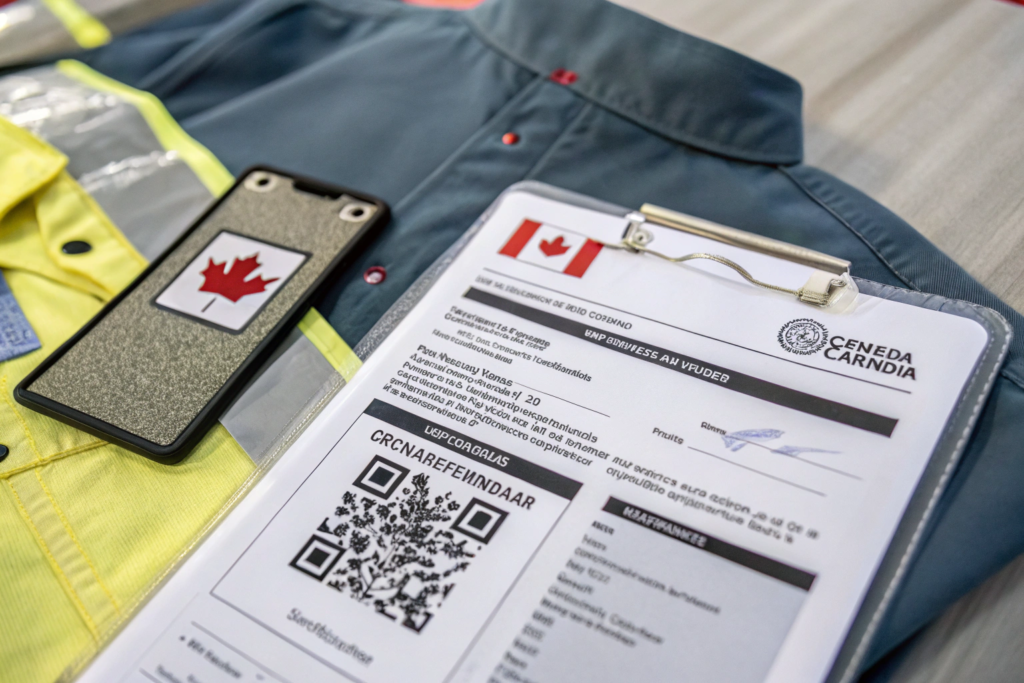
The dossier starts with the Digital ID Card (the QR code). Scanning it gives access to the core evidence: 1) SGS/ITS test reports for imported textiles specific to the batch, 2) Mill certificates of origin and composition, 3) A time-lapse log of production milestones (weaving completed, dyeing commenced, inspection passed), and 4) Photographic evidence pack, including lab dips, bulk samples, and shipping marks. For a Canadian outerwear brand, this dossier was invaluable. They used the time-lapse log and photos as marketing content, showing their customers the “story behind the shell fabric” of their jackets, which enhanced their brand’s authenticity and commitment to responsible sourcing.
Furthermore, we provide a Supply Chain Map for each order. It’s a simple flowchart showing each entity that touched your fabric: Yarn Supplier (Company A, Location X), Weaving Mill (Our owned facility), Dyeing Partner (Company B), etc. This map is crucial for modern compliance. A major EU brand we supply needed this to comply with the German Supply Chain Due Diligence Act (LkSG). We didn’t just give them our name; we provided the mapped chain, which they then used for their own risk assessment. This proactive evidence provision solidified our position as a strategic partner, not just a vendor.
How does this evidence simplify customs clearance?
Surprisingly, a transparent supply chain speeds up customs. When you have verified documents instantly accessible, brokers can quickly address questions about origin, value, or composition. For our US clients, having a clear, digital record of the fabric’s composition and value helps in accurate HTS code classification and reduces the risk of audits or holds. We’ve seen shipments for clients who use our full dossier clear US customs 1-2 days faster on average than those relying on scrambled, last-minute paperwork. This is a direct, financial benefit of transparency. Resources like the U.S. Fashion Industry Association’s guide on import compliance stress the importance of accurate documentation, which our system is built to provide.
Can this transparency be leveraged for marketing?
100%. Modern consumers demand brand transparency. The evidence we provide becomes the foundation for your “product story.” You can confidently claim “traceable organic cotton” or “ethically manufactured fabric” because you have the proof. A sustainable swimwear brand from Australia uses photos from our inspection process and the recycled polyester source documentation in their “Our Materials” webpage. This isn’t greenwashing; it’s green-proving. It builds consumer trust and can justify a premium price point. In an era where authenticity is currency, the tangible evidence from a transparent supply chain like ours becomes a powerful marketing asset. Exploring consumer trends driving demand for transparent fashion brands reveals that this is not a passing fad but a fundamental shift in the market.
Conclusion
Supply chain transparency in the textile industry is no longer a luxury or a vague ideal. It is a practical, operational necessity for brands that want to manage risk, ensure quality, meet compliance, and build authentic relationships with their customers. As we’ve explored, true transparency is a multi-layered effort: it requires robust digital tools for tracking, rigorous and integrated physical quality control, deep-rooted local partnerships for upstream visibility, and the provision of tangible, verifiable evidence to the client.
At Shanghai Fumao, we’ve built our entire operation around these principles because we’ve seen firsthand how they prevent problems and create value. From helping a European brand navigate peak season crunches by re-routing production within Keqiao, to providing an American client with the digital evidence to swiftly resolve a compliance inquiry, our commitment to openness is the foundation of every partnership. We believe that when you see what we see, we both succeed.
If you are tired of supply chain black boxes and are looking for a fabric partner who treats transparency as a tangible deliverable, we should talk. Let us show you how our system can bring clarity, confidence, and efficiency to your sourcing. For a detailed discussion on how we can apply these principles to your specific product needs, please reach out to our Business Director, Elaine. She and her team are ready to help you weave transparency into your next collection. Contact Elaine at: elaine@fumaoclothing.com.