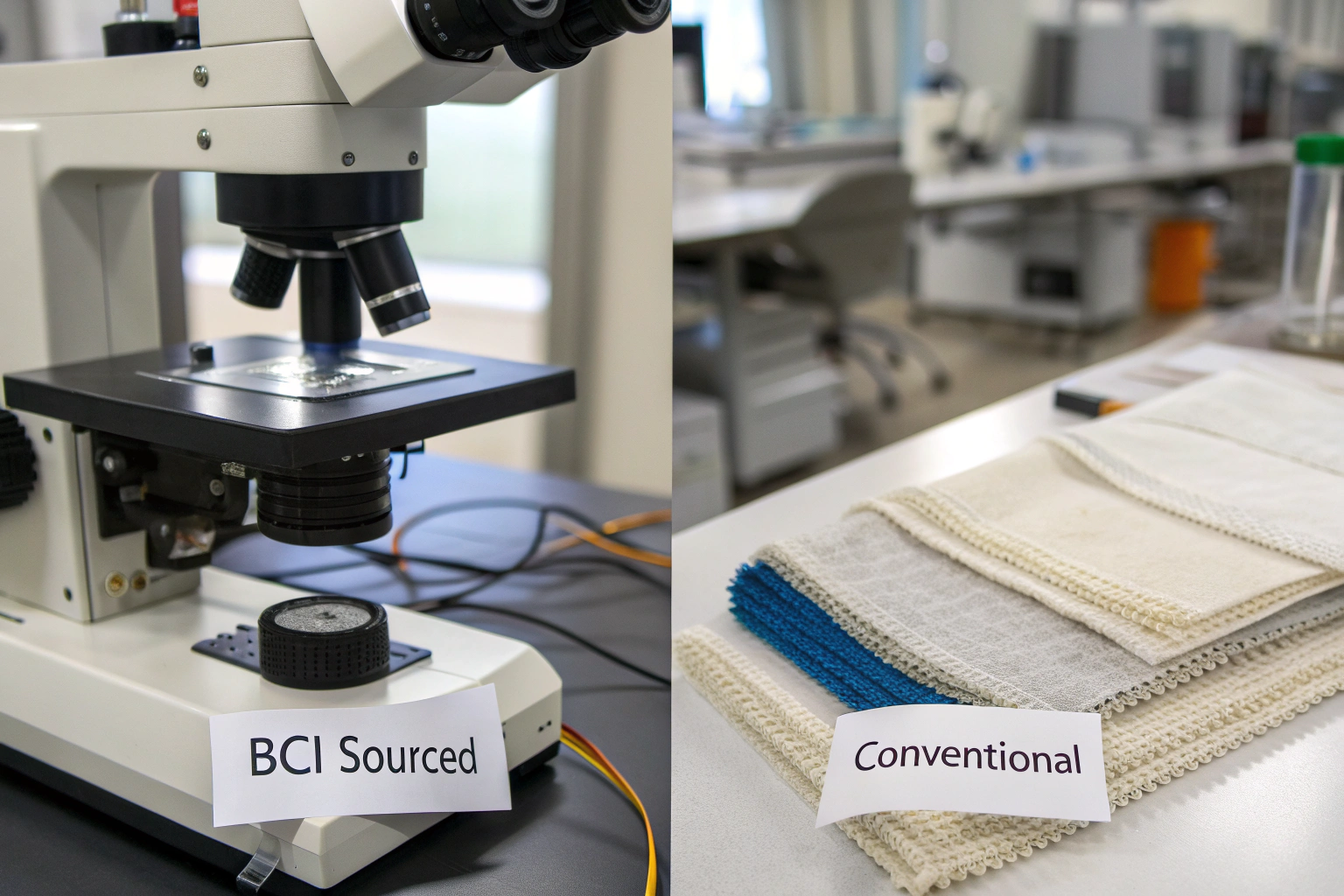
Here’s the truth you won’t hear from most marketing departments: At the fiber level, there is zero physical difference between BCI cotton and conventional cotton. Let me say that again. A strand of BCI cotton isn’t stronger, softer, or more durable because of the certification. The "Better" in Better Cotton refers to how it’s grown—focusing on environmental and social impacts—not to an inherent upgrade in the cotton fiber’s DNA. If you take two identical cotton plants, one grown under BCI principles and one grown conventionally, the fibers themselves will have the same fundamental properties.
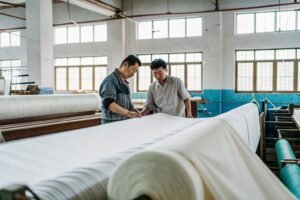
So, does this mean BCI cotton performs the same as regular cotton? Yes and no. The raw material is the same, but the performance of the final fabric is determined by what happens after the farm—the spinning, weaving, dyeing, and finishing. This is where your choice of manufacturer becomes absolutely critical. A poor-quality mill can turn premium BCI cotton into mediocre fabric, while an excellent technical partner like us at Shanghai Fumao can engineer BCI cotton into a high-performance textile that meets or exceeds any conventional standard. In 2023, we developed a BCI cotton-rich sateen for a UK-based luxury bedding brand. By using extra-long staple BCI cotton and a proprietary low-tension weaving process, we achieved a thread count and silky hand-feel that outperformed their previous "standard" Egyptian cotton supplier. The certification was their entry requirement; the superior performance we engineered was why they stayed.
This is the crucial understanding for brands and buyers. You’re not buying a "better fiber"; you’re investing in a more responsible supply chain that should, in the hands of a competent partner, deliver equal or better fabric quality. Let’s break down exactly how this plays out across every key performance metric.
Does BCI Cotton Feel Different or Have Better Comfort?
In your hands, no. Comfort is governed by:
- Fiber Quality (Staple Length & Grade): A shorter, coarser BCI cotton will feel harsher than a longer, finer conventional Pima or Supima cotton. The certification doesn’t change the plant’s genetics. Comfort starts with selecting the right type of cotton.
- Yarn Spinning Technique: Ringspun yarns, common in premium products, create a softer, stronger yarn than open-end spun yarns. This is a manufacturing choice.
- Fabric Construction & Finishing: A high-thread-count percale or a brushed fleece finish creates softness. A starchy finish creates crispness.
Therefore, a BCI fabric can be engineered to be incredibly soft, breathable, and comfortable—but so can a conventional fabric. The key is to specify what you want. For example, when a German athleisure brand wanted a buttery-soft BCI cotton jersey for premium loungewear, we didn’t just source any BCI cotton. We specified a high-grade, long-staple BCI cotton and used a compact spinning technology in our partner mill, followed by an enzyme wash. The result was a fabric with a 30% lower pilling rate and a superior hand-feel compared to their previous conventional supplier. The BCI element didn’t make it soft; our process did, using BCI as the responsible base.

How do you ensure BCI fabric meets high comfort standards?
You control the process, not just the certificate. Here is our checklist:
- Raw Material Specification: Demand BCI cotton of a specific grade (e.g., Middling or Better) and staple length.
- Spinning Method Request: Specify ringspun or compact spun yarn for premium softness and strength.
- Finishing Recipe: Use finishes like enzyme wash, peach skin finish, or silicone softeners. (We always opt for eco-friendly versions).
This level of specification requires a technically skilled supplier. It’s the difference between asking for "BCI cotton fabric" and asking for "BCI compact spun cotton jersey with an Oeko-Tex certified enzyme wash for maximum softness." The latter will perform better.
Are there any indirect comfort benefits from BCI farming?
Potentially, yes. Some argue that farming practices that promote soil health and reduce harsh pesticides could lead to healthier cotton plants and more consistent fiber. However, this is difficult to quantify at scale and is not a guaranteed performance benefit you should market. The primary comfort driver remains post-harvest processing.
Is BCI Cotton More Durable or Colorfast?
Durability and colorfastness are 100% determined after the farm. They are functions of:
- Yarn Strength: Influenced by spinning technique and fiber quality selection.
- Fabric Structure: A twill or canvas is more durable than a voile.
- Dyeing & Finishing Processes: This is where the magic (or failure) happens.
A BCI cotton fabric can be incredibly durable and colorfast if processed correctly. Our in-house CNAS-accredited lab runs every batch through rigorous tests. For a line of chef’s jackets for a French chain, we developed a BCI cotton-polyester blend twill. The BCI component met the sustainability brief, but the durability came from:
- A tight 2/1 twill weave.
- High-temperature, high-pressure dyeing for superior color penetration.
- A fluorocarbon-free durable press and soil-release finish.
The result? The fabric achieved a Martindale abrasion resistance of 40,000+ cycles and a colorfastness to washing of Grade 4-5 (excellent), outperforming their previous conventional fabric which faded and wore at seams faster. The BCI certification got us in the door; our technical execution won the long-term contract.

What specific tests prove performance equality or superiority?
| You must look at the data, not the label. Demand test reports for: | Performance Metric | Test Standard | What it Means for BCI vs. Regular |
|---|---|---|---|
| Tensile & Tear Strength | ISO 13934-1, ISO 13937-2 | Proves fabric durability. BCI fabric should meet or exceed specs. | |
| Martindale Abrasion | ISO 12947-2 | Measures resistance to rubbing. Critical for upholstery/workwear. | |
| Colorfastness to Washing | ISO 105-C06 | Ensures colors don’t run or fade. A function of dye quality. | |
| Pilling Resistance | ISO 12945-2 | Indicates how fabric surfaces will wear with friction. |
If your supplier can’t provide this data for their BCI fabrics, that’s a red flag. They might be treating it as a marketing checkbox rather than a performance product. We provide QR codes on our fabric rolls linking to full test data—this is the new standard for verifying fabric quality beyond certifications.
Does the BCI system affect dye uptake or consistency?
No. Dye affinity is related to fiber preparation (scouring and bleaching), not farm-level practices. A well-managed dye house is crucial. In fact, because BCI cotton enters the same global supply chain, dyers treat it identically. Consistency in dye lots depends on the dyer’s process control, not the cotton’s certification. Our partner dye houses use automated dispensing systems for perfect batch-to-batch color matching, whether the cotton is BCI or not.
How Does BCI Affect Fabric Consistency & Minimums?
This is a key logistical difference. BCI cotton can sometimes introduce more variables into your supply chain, which can indirectly affect consistency if not managed.
- Sourcing Complexity: You are now tied to sourcing from BCI-licensed gins and spinners. Their availability and geographic origin (e.g., Chinese, Indian, US, Brazilian BCI cotton) can vary. Different origins can have slight natural variations in fiber characteristics (like micronaire or maturity), which a good spinner will blend to neutralize.
- Batch Traceability: While the mass-balance system doesn’t require physical segregation, reputable suppliers (like us) often try to keep BCI-sourced yarn lots together for better traceability. This can mean your fabric MOQs are tied to the batch size of the BCI yarn we procure.
For instance, in early 2024, a Scandinavian brand needed a very specific shade of olive green in a BCI cotton poplin. Our usual BCI yarn spinner’s batch was slightly off in tone that season. Instead of compromising, we sourced a matching BCI yarn from a different licensed spinner with a tighter quality spec, ensuring color consistency. This required extra work but guaranteed the performance the brand expected. This proactive management is what separates suppliers.

Does BCI typically mean higher MOQs?
Not inherently, but it can. Some spinners set higher MOQs for BCI yarn to simplify their certification management. However, a fabric supplier who aggregates demand from multiple brands (like we do at Shanghai Fumao) can overcome this. By pooling orders, we meet higher spinner MOQs and can then offer lower fabric MOQs to individual small and medium brands. This is a core part of our service model for conscious brands.
How do you ensure consistency across large BCI fabric orders?
It boils down to technical specification and supplier capability. You must:
- Fix the Yarn Parameters: Specify count, twist, and even preferred spinning mill.
- Lock in the Dyeing & Finishing Recipe: Every step must be documented.
- Work with an Integrated Supplier: A supplier who controls or closely allies with the spinning, weaving, and dyeing stages (like our vertical network) has far more control over consistency than a trader who buys fabric on the spot market.
Are There Performance Drawbacks to Choosing BCI?
From a pure textile engineering standpoint, no, there are no inherent drawbacks. Any performance issue would stem from a supply chain hiccup, not the cotton itself. The potential "drawbacks" are commercial and logistical:
- Cost: The premium (5-15%) is for the system, not performance.
- Lead Time: Securing the right BCI yarn with the correct specs might add a few days to your sourcing timeline.
- Supplier Limitations: Not all factories are set up to handle the documentation or have relationships with BCI spinners. This limits your choice to more professional, forward-thinking partners.
Choosing BCI is a decision to prioritize supply chain responsibility. It filters your supplier options to those who are more organized and transparent, which, in the long run, often leads to better overall performance and reliability, not worse. It’s a filter for quality partners.

Can BCI cotton be used for high-tech performance fabrics?
Absolutely. BCI cotton is often blended with performance fibers. We produce BCI cotton blends with moisture-wicking polyester, recycled nylon, and even Tencel™ for enhanced drape and sustainability. The BCI component provides the natural, breathable comfort, while the synthetic or man-made fiber adds stretch, durability, or functional properties. For example, a BCI cotton / Coolmax® blend is excellent for performance polo shirts. The development process is identical; we just start with BCI cotton as the base.
Conclusion
So, how does BCI cotton perform compared to regular cotton? The performance is a function of manufacturing excellence, not certification.
BCI cotton provides the responsible foundation. It is the entry ticket to a more sustainable supply chain. The softness, durability, color brilliance, and consistency of the final fabric are entirely in the hands of your textile manufacturer. A superior partner will use BCI cotton to create a superior fabric. A mediocre partner will deliver mediocre fabric, regardless of the label.
Therefore, your sourcing question should evolve. Don’t ask, "Is BCI cotton better?" Ask, "Can my supplier engineer BCI cotton to meet my highest performance standards?" Demand test reports, specify processes, and choose a partner with proven technical capability alongside their certification credentials.
At Shanghai Fumao, we view BCI as the starting point. Our value is in applying two decades of textile engineering know-how to transform that responsible raw material into a fabric that excels in every measurable way. We prove that sustainability and high performance are not a trade-off—they are the new benchmark.
Ready to see how BCI cotton can be engineered to outperform your expectations? Let’s discuss your performance requirements. Contact our Business Director, Elaine, to access our technical portfolio and lab test data. Engineer your ideal fabric with a clear conscience: elaine@fumaoclothing.com.