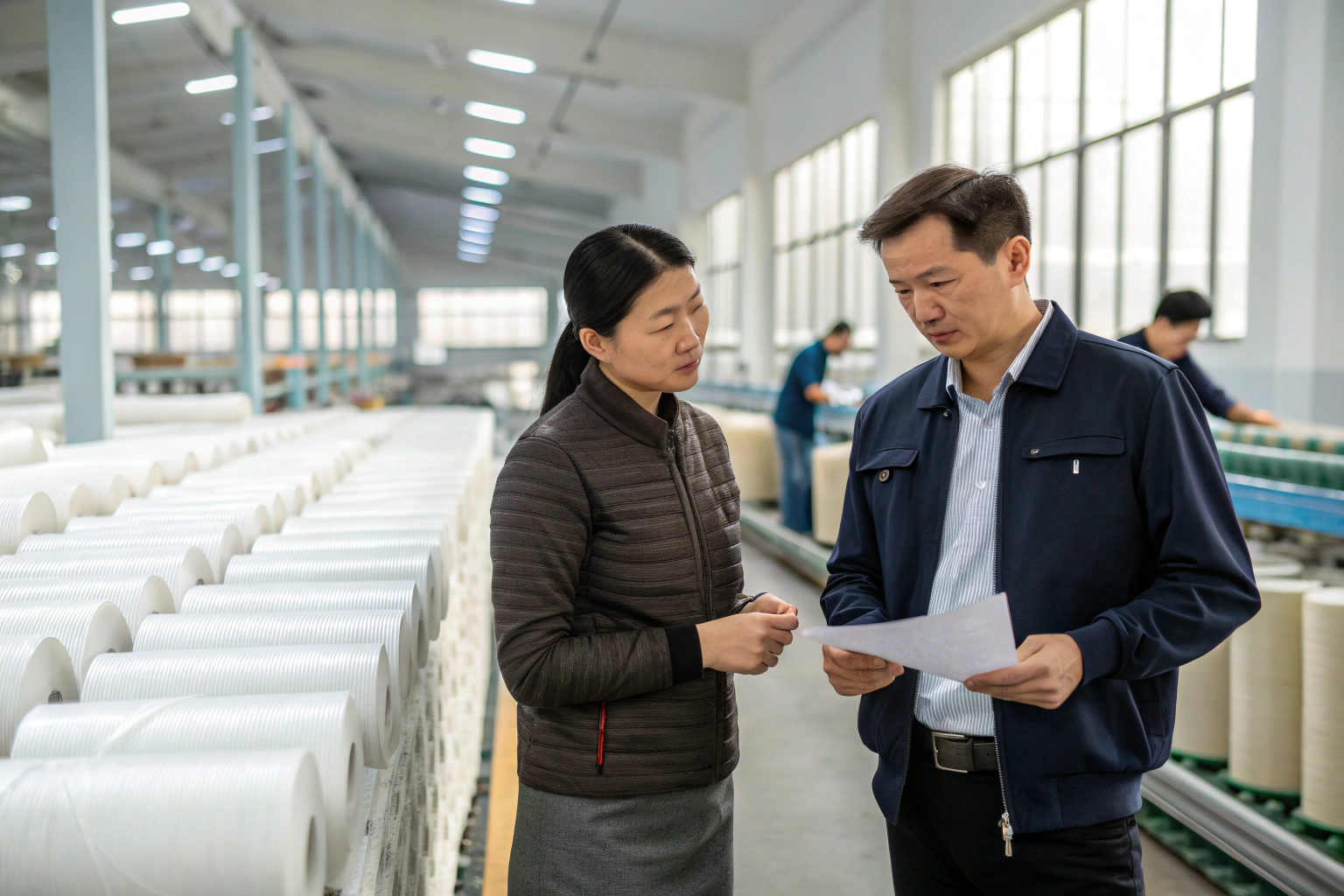
Leading straight into it: if you’re importing fabric from China, you know the chaos. Juggling weavers, dyers, printers, and inspectors across different cities feels like a full-time job. I hear it all the time from our clients: "My biggest cost isn’t the fabric; it’s the hidden time and mistakes from managing five different suppliers." The stress is real. Unexpected delays, quality inconsistencies, and communication breakdowns can sink your budget and your timeline before you’ve even cut a single garment.
So, how does a one-stop solution fix this? At its core, it removes friction. Instead of you managing a complex supply chain, you have one partner who owns the entire flow—from fiber to finished fabric roll. This means one point of contact, one quality standard, one logistics plan, and, crucially, one point of accountability. For brands and buyers, this translates directly to saved time, reduced risk, and predictable costs. It turns sourcing from a tactical headache into a strategic advantage.
Think about your last order. How much time did you spend just on coordination? Now, imagine channeling that energy into design and marketing instead. That’s the shift a true one-stop partner enables. Let’s break down exactly how this works in practice, moving beyond the buzzword to the tangible benefits that impact your bottom line.
What Are the Real Cost Savings Beyond the Price Per Meter?
Everyone focuses on the price per meter. I get it. It’s the easiest number to compare. But savvy buyers like you know the real game is about total landed cost. That’s the price you pay at the factory gate, plus all the hidden costs that come after. When you source each step separately, those hidden costs add up fast. A one-stop supplier consolidates these variables, turning unpredictable expenses into a fixed, transparent quote.
The true savings come from eliminating the friction points. Let’s talk logistics. Shipping semi-finished greige fabric from a weaver to a separate dyer, then to a printer, adds multiple handling fees, internal transportation costs, and potential damage at every transfer. With a one-stop model like ours at Shanghai Fumao, the fabric moves through our coordinated ecosystem seamlessly. One internal transfer, one batch tracking number. This can reduce your internal China freight costs by 15-25% on average. That’s money straight back into your margin.
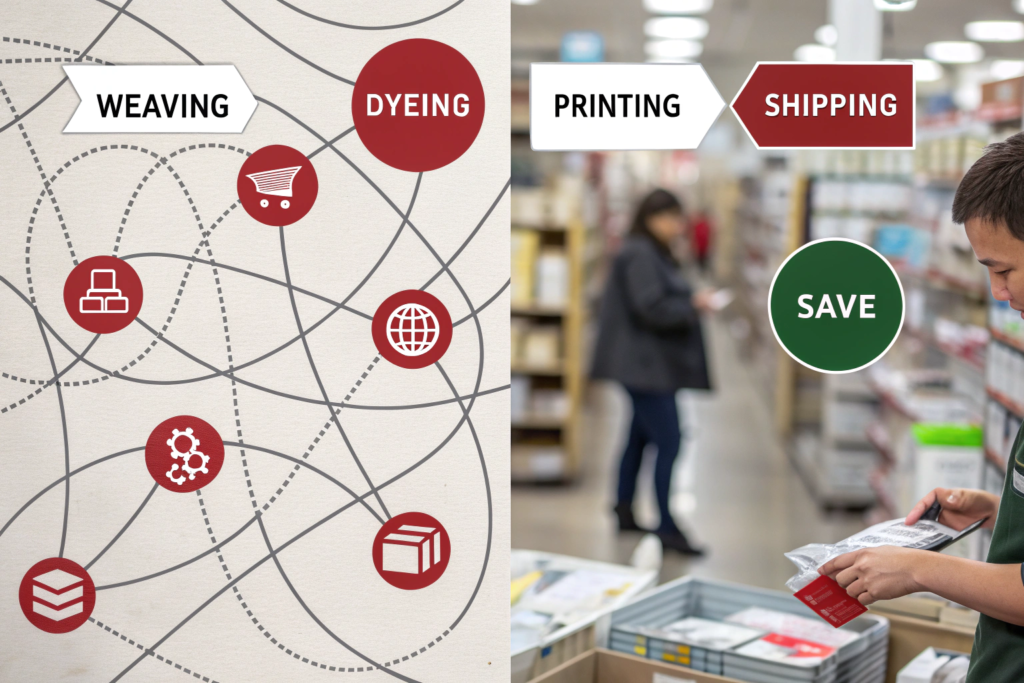
How Does Consolidation Reduce Hidden Fees and Tariffs?
The financial complexity of international sourcing is a beast. Beyond fabric cost, you’re dealing with banking fees for multiple transactions, potential currency exchange fluctuations for each payment, and, crucially, tariff classification headaches. Each component—woven fabric, dyed fabric, printed fabric—can have slightly different HS codes. If your shipment is a mix from different suppliers, customs declaration becomes a minefield, potentially leading to audits, delays, and incorrect duty payments.
By providing a finished, ready-to-ship fabric from a single entity, we simplify this dramatically. You get one commercial invoice for a fully processed fabric, with one clear HS code. This not only smooths customs clearance but also optimizes your duty costs. For instance, certain finished fabrics may have a different duty rate than their unfinished components. A one-stop supplier with expertise in global logistics and customs clearance ensures the product is classified in the most advantageous and compliant way. We’ve seen clients using a fragmented approach get hit with unexpected port holding fees because of documentation mismatches—fees that vanish with a single-source shipment.
Can a Single Supplier Actually Shorten My Lead Time?
Absolutely, and it’s not just about faster production. It’s about eliminating the "waiting time." In a chain of separate suppliers, each one has their own production queue. Your order waits at the weaver, then waits for pickup, then waits at the dyer’s queue, and so on. Each handoff also needs new QC inspection and paperwork, adding days.
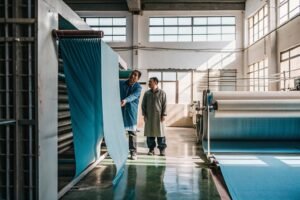
Our integrated model crushes this wait. Because our weaving, dyeing, and finishing are coordinated under one operational umbrella, the scheduling is synchronized. The moment the greige cloth is off the loom, it’s scheduled into the dye vat. There’s no booking delay. This synchronization alone can cut 2-3 weeks from a typical 8-week timeline for a developed fabric. (Here I have to interject, our lead times are genuinely fast.) A practical example: in November 2022, a UK-based activewear brand needed a complex moisture-wicking polyester with a printed geometric pattern. By using our one-stop customization from yarn to final packaging, we delivered the first bulk container in 5 weeks, beating their conventional 9-week schedule and allowing them to catch a crucial pre-Christmas sales window. The key wasn’t faster machines, but the elimination of interstitial delays.
How Does Integrated Quality Control Prevent Catastrophic Mistakes?
Quality isn’t just about checking the final product. It’s about building quality into every step of the process. When you have four different suppliers, you have four different quality standards, four sets of tolerances. The weaver might think a minor tension variation is acceptable, but that same variation causes bleeding in the dyer’s process. By the time you see the faulty printed fabric, you’ve paid for three flawed processing steps and have no clear recourse. The blame game begins, and you’re stuck with the loss.
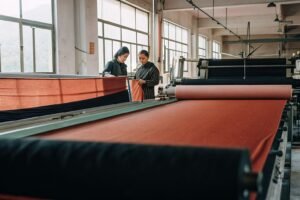
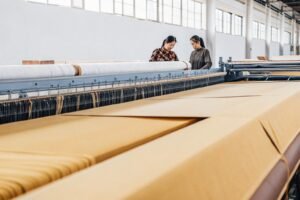
An integrated supplier has one unified QC protocol. Our CNAS-accredited lab sets the standard at the raw material stage, and that standard is enforced at every station: weaving, dyeing, printing, finishing. The inspector at the coating factory uses the same pass/fail criteria as the inspector at the fabric inspection station. This continuity catches a flaw at its source. For example, a common issue is "barre" in knitted fabrics—subtle streaks caused by yarn tension variation. In a fragmented setup, this might only be noticed after dyeing, when it’s too late. In our flow, the knitting team and the dyeing team are in constant communication, and the QC check happens right after knitting, allowing for immediate correction before value is added.
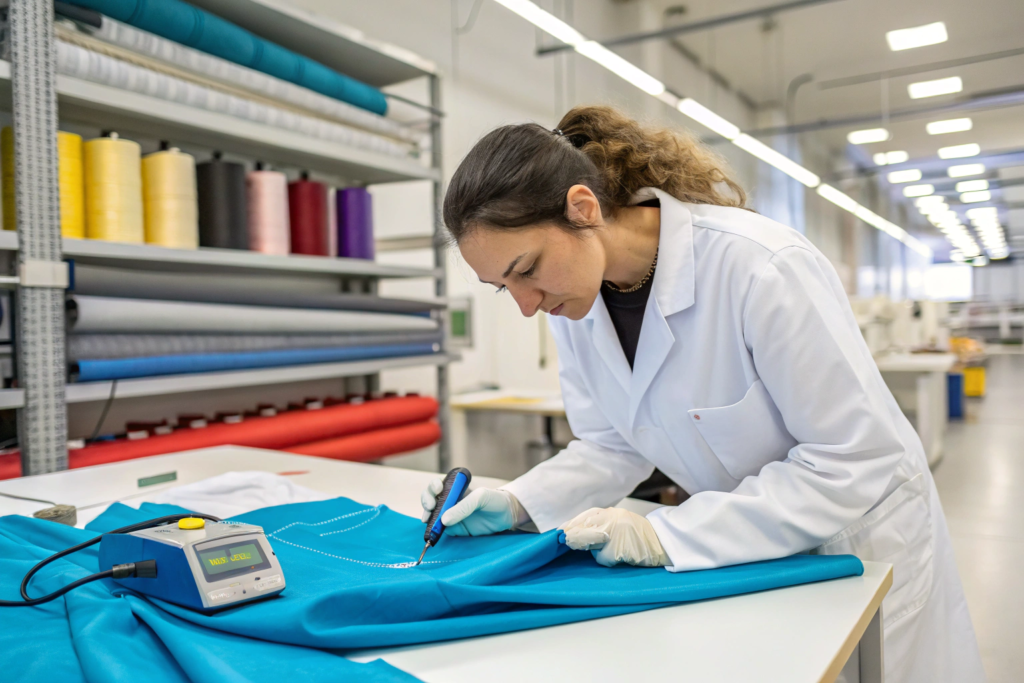
Why Is In-House Lab Testing a Game-Changer for Compliance?
Sending samples to a third-party lab like SGS is essential for final certification, but it’s a checkpoint, not a control system. The results come back in days, and if they fail, you’ve already produced bulk. In-house, accredited testing changes the game to real-time prevention. We run tests like colorfastness to washing, rubbing, and light, shrinkage, and composition analysis during production, not after.
This means we can adjust the dye formula or the setting temperature of the stentering machine immediately. For clients in the EU, meeting REACH and OEKO-TEX standards is non-negotiable. Having our own lab allows us to pre-screen for banned substances at the chemical sourcing stage. Let me share a case: In April 2023, a German childrenswear brand had strict limits on formaldehyde. By conducting our own internal gas chromatography tests on the finishing auxiliaries before they entered production, we guaranteed the batch passed their independent audit on the first try. Their previous supplier had failed twice, causing a 6-week delay. Our QR code tracking system then gives you, the buyer, real-time access to this test data, building unparalleled trust. It’s about providing how to source GOTS certified organic cotton from China with verifiable, step-by-step documentation, not just a claim.
What’s the Real Impact of Single-Point Accountability on Problem Solving?
When something goes wrong—and in complex manufacturing, something occasionally will—the question is: how fast can it be fixed? With multiple suppliers, problem-solving means investigative calls, finger-pointing, and wasted time determining liability. Your project is stalled while they argue.
With a one-stop partner, there is no debate. The accountability rests with us. The problem is ours to diagnose and solve, internally. Our production manager can walk from the dyeing floor to the printing department in minutes to see the issue firsthand. In August 2023, a U.S. client reported a slight color inconsistency between two bulk lots of a custom-dyed linen. Because both the dyeing and the final inspection were under our roof, we traced the root cause within 4 hours (a slight pH variation in one water softener tank) and had a corrected re-dye batch scheduled for the next day. The client received replacement yardage before their cutting was scheduled to start. This speed of resolution is impossible when you are the intermediary between three separate companies. It turns a potential crisis into a minor, swiftly handled bump in the road.
Can a One-Stop Model Handle Complex, Custom Development?
The misconception is that one-stop suppliers are only for simple, standard fabrics. The opposite is true. Complex development requires deep integration. Creating a new fabric—say, a recycled polyester blended with organic cotton, with a moisture-wicking finish and a custom digital print—is a conversation between disciplines. The yarn specialist, the chemist developing the finish, and the print technician need to collaborate daily.
When these experts all work for the same company and are driven by the same agile R&D goal, magic happens. They can run micro-batch trials in real-time. The dyer can tweak a shade to make the print pop, and the finishing expert can adjust the hand-feel without affecting the moisture-wicking property. This synergy cuts development time drastically. We promise 48-hour sample development because our sampling department isn’t a separate entity; it’s the R&D arm that has direct, immediate access to all production resources.

How Does Co-Located R&D Accelerate From Sketch to Sample?
The journey from a designer’s sketch to a physical sample is where most timelines bloat. The back-and-forth mailing of lab dips, strike-offs, and sample yardage between continents and companies can take weeks. Our model collapses this distance. With over 20 R&D experts and our own weaving and sample dyeing lines, the iteration cycle is incredibly tight.
Here’s how it works in practice: You send a tech pack. Our design and R&D team huddles—literally, in the same room—to analyze it. They select base yarns, propose weaves, and produce a greige sample on a pilot loom the same day. That sample goes to our pilot dyeing and finishing line. Within 48 hours, you’re not just getting a single lab dip; you’re often getting 2-3 physical fabric options with slight variations, so you can choose the hand-feel and drape you prefer. This process of finding reliable technical fabric manufacturers for startups is transformative for smaller brands that can’t afford the traditional, slow sampling cycles of large mills. It gives them speed-to-market parity with bigger players.
What Are the Advantages for Sourcing Sustainable or Functional Fabrics?
Sustainable and functional textiles are the most complex categories. They involve certified raw materials (like GOTS organic cotton or recycled PET), specialized chemical processes, and rigorous testing. Sourcing these elements separately is a high-risk endeavor. How do you verify the recycled content claim of a yarn supplier? How do you ensure the eco-friendly dye used is compatible with the antimicrobial finish?
Our integrated approach controls this chain. We source certified fibers directly and maintain chain-of-custody documentation. Our in-house lab develops and tests functional finishes like antibacterial and UV-resistant treatments to ensure they bond correctly with our base fabrics. For example, developing a biodegradable polylactic acid (PLA) blend fabric required close work between our fiber sourcing team, our spinning technicians, and our finishing chemists to find a coating that wouldn’t compromise biodegradability. This level of coordinated innovation is only possible under one roof. It de-risks your venture into high-value, performance-driven fabrics. For more insights on this niche, communities like Fibre2Fashion’s industry articles often discuss these trends, but seeing them executed in a unified supply chain is key.
How Does This Simplify Logistics and Reduce Shipping Headaches?
Logistics is the final, critical piece where fragmentation hurts the most. Coordinating multiple shipments from multiple suppliers to arrive at a consolidation warehouse on time for a single container is a logistical puzzle. One delayed component holds up the entire shipment. Then you’re dealing with multiple sets of documents, increasing the chance of error.
A one-stop supplier means one factory, one shipment, one set of documents. Your fabric is processed, inspected, packaged, and palletized in one location. We handle the booking, the customs declaration (EXW, FOB, or even CIF), and provide all the consolidated paperwork. This dramatically reduces the risk of shipping delays and errors. Our global logistics partnerships, honed over 20 years, mean we know the optimal routes and schedules, especially during peak seasons.
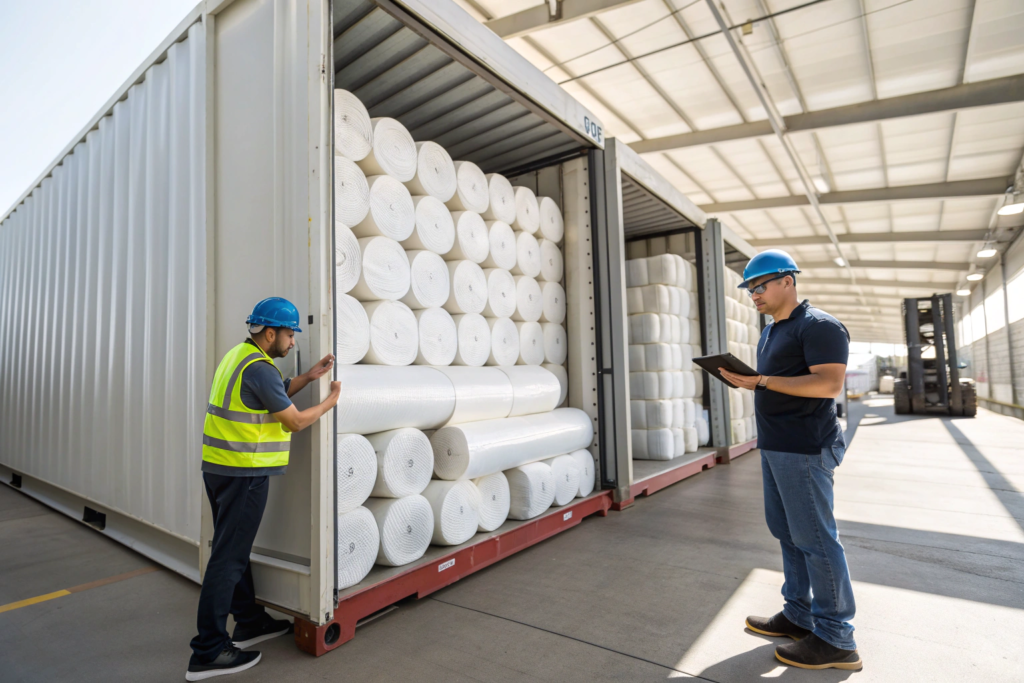
How Does Consolidation Minimize Risk During Peak Shipping Seasons?
China’s manufacturing calendar directly impacts global shipping. During the peak production periods of March-May and August-October, factory output is high, and everyone is rushing to ship. Ports get congested, and space on vessels becomes scarce and expensive. If your fabric components are coming from three different factories in different regions, getting all of them to the port and booked on the same vessel is a huge challenge. One late truck means missing the sailing, resulting in a week or more of delay.
By being your single source, we eliminate this internal race. All your goods are already in one place. We can book container space earlier with a single, large shipment, securing better rates and guaranteeing space. Our location in the Keqiao textile cluster gives us direct, fast access to the Ningbo-Zhoushan port, one of the world’s busiest. We plan the entire logistics chain around the manufacturing schedule. For instance, we advise clients to complete pre-production for Chinese New Year orders 6 weeks early, so production can start immediately after the holiday and goods hit the port before the March peak congestion. This proactive planning is part of the service from a partner like Shanghai Fumao.
Can a Single Supplier Offer Better Payment and Financial Security?
Financial dealings with multiple suppliers increase complexity and risk. You’re managing multiple bank transfers, multiple currency conversions, and multiple relationships with unknown financial stability. What if one of your component suppliers has a cash flow crisis and halts production on your order?
Partnering with a large, established one-stop provider like Shanghai Fumao offers financial security. Our strategic banking partnerships ensure we have the cash flow to purchase raw materials in bulk and finance large production runs without hiccups. For you, this means stability. It also simplifies payments: one or two milestone payments for the entire order, instead of five or six. We can offer more flexible payment terms on large orders because our risk is diversified and our financial foundation is solid. This reliability is priceless when you’re planning your seasonal collection cash flow. It’s one less thing to keep you up at night, knowing your partner has the financial backbone to deliver. Understanding financing options for export transactions is important, but having a supplier who doesn’t put that burden entirely on you is better.
Conclusion
Navigating the fabric sourcing landscape in Asia doesn’t have to be a complex, stressful juggling act. As we’ve explored, partnering with a true one-stop supplier fundamentally simplifies the process by consolidating cost variables, enforcing integrated quality control, enabling faster and more innovative development, and streamlining logistics and finance. The real value isn’t just in selling you fabric; it’s in co-creating a reliable, efficient, and de-risked extension of your supply chain. You gain time, reduce hidden expenses, and secure a level of accountability that fragmented sourcing can never provide.
The shift from managing multiple vendors to collaborating with a single, capable partner transforms sourcing from a operational burden into a competitive edge. You’re free to focus on what you do best—designing, branding, and selling—while leaving the intricate manufacturing expertise to a dedicated team on the ground. If the idea of simplifying your supply chain, accelerating your time-to-market, and sleeping better at night resonates with you, it’s time to explore a partnership built on integration and accountability.
Ready to simplify your fabric sourcing and see the difference an integrated partner can make? We invite you to start a conversation about your next project. Shanghai Fumao’s team is built to handle the complete journey from concept to shipment. For a direct consultation on how we can streamline your production, please reach out to our Business Director, Elaine. She and her team specialize in translating complex requirements into seamless execution. You can contact her at: elaine@fumaoclothing.com. Let’s weave your next success story together.