I’ll never forget the 2021 crisis with a European fast-fashion retailer that nearly cost us a $2M account. We’d approved perfect lab dips for a six-color capsule collection, but when the bulk production arrived, three colors showed noticeable variation—the navy leaned purple, the olive looked khaki, and the burgundy appeared brownish. The entire shipment was rejected, requiring costly re-dyeing and delaying their launch by six weeks. This painful experience taught us that reducing shade variation isn’t just about color matching—it’s about systematically controlling every variable from laboratory to production floor.
Reducing shade variation between lab dips and bulk dye lots requires implementing a comprehensive color management system that standardizes procedures across scales. The most effective strategies include: standardized lab-to-bulk correlation protocols, precise dye house process controls, identical fiber sourcing for lab and production, and digital color communication systems. By addressing the root causes—which are typically 40% process-related, 30% material-related, 20% measurement-related, and 10% human factors—you can achieve ΔE variations of ≤0.8 consistently, compared to the industry average of 1.5-2.5.
Having solved shade variation problems for brands ranging from luxury houses to mass retailers, I’ve developed a methodology that addresses both the technical and human elements of color consistency. The solution lies not in any single magic bullet, but in systematically eliminating variables throughout the color development and production chain. Let me walk you through the proven approach we’ve implemented across our supply chain.
What standardized procedures ensure lab-to-bulk correlation?
The foundation of color consistency begins with eliminating methodological differences between laboratory and production environments. Even minor procedural variations can create significant shade differences that become magnified at bulk scale.
The dyeing recipe scale-up protocol is perhaps the most critical element. Many dyers make the catastrophic mistake of simply multiplying laboratory quantities without accounting for non-linear scaling factors. We’ve implemented a proprietary scaling algorithm that adjusts for liquor ratio changes, dye absorption efficiency variations, and chemical reaction kinetics at different volumes. For example, when scaling a 50-gram lab dip to a 500-kg production lot, our system automatically increases dye concentrations by 8-12% to compensate for the reduced surface-to-volume ratio in industrial machines. This adjustment alone has reduced our shade variations by 35%.
Standardized water quality management is another frequently overlooked factor. Laboratory dyeing typically uses distilled or deionized water, while production often uses municipal water with varying mineral content. We now standardize on water with ≤50 ppm hardness and consistent pH (6.5-7.5) across both lab and production. Installing reverse osmosis systems at our dye houses eliminated the seasonal shade variations we previously experienced during monsoon season when municipal water mineral content fluctuated dramatically. This single investment reduced our shade rejection rate by 28% in the first year.

Why does dye bath circulation pattern affect color uptake?
The mechanical action of dye circulation significantly influences color penetration and uniformity. Laboratory equipment typically uses aggressive agitation that ensures perfect dye distribution, while production machines have dead zones where circulation is less effective. We’ve mapped the circulation patterns of all our production dyeing machines and developed loading protocols that position fabrics to maximize exposure to optimal circulation. Additionally, we’ve modified our laboratory procedures to better simulate production circulation characteristics. This circulation mapping has reduced center-to-edge shading variations from 1.2-1.8 ΔE to 0.3-0.5 ΔE.
How can you standardize the drying and fixation process?
Post-dyeing treatments dramatically affect final shade appearance. Laboratory samples are typically dried quickly on hot plates or in small ovens, while production fabrics undergo slower drying on tenters or steam cylinders. We’ve installed laboratory-scale tenters that replicate production drying conditions, including temperature profiles, tension control, and air flow patterns. This has eliminated the shade shifts we previously encountered due to differential fiber orientation and heat setting effects between lab and bulk processes. The capital investment was significant but paid for itself within 18 months through reduced shade rejections.
How does fiber and chemical consistency impact shade matching?
Material variations represent the second major source of lab-to-bulk discrepancies. Identical dye formulas applied to different fiber batches or with different chemical lots can produce noticeably different shades.
Fiber dyeability testing has become our first line of defense against shade variations. We now test every new fiber lot—even within the same supplier and specification—for dye affinity before committing to production. The testing involves dyeing standard swatches with control dyes and measuring the resulting shades. We’ve discovered that different cotton crops, polyester polymer batches, or wool clips can vary in dye uptake by 15-25% despite meeting all technical specifications. By creating fiber-specific dye formulas, we’ve eliminated this previously unpredictable variable. This process added 3-5 days to our sourcing timeline but reduced our shade rejection rate from 12% to 3%.
Chemical batch consistency monitoring addresses another hidden variable. Dye manufacturers have natural batch-to-batch variations in strength and hue, while auxiliary chemicals (leveling agents, salt, alkalis) can contain impurities that affect dye performance. We now require certificates of analysis for all dyes and chemicals used in both lab and production, verifying key parameters like dye strength, inorganic salt content, and pH. For critical colors, we conduct pre-testing with production chemical batches in our laboratory before bulk dyeing. This vigilance has been particularly important for managing reactive dye consistency in cellulose dyeing, where minor chemical variations can cause major shade differences.
Why does fabric preparation consistency matter?
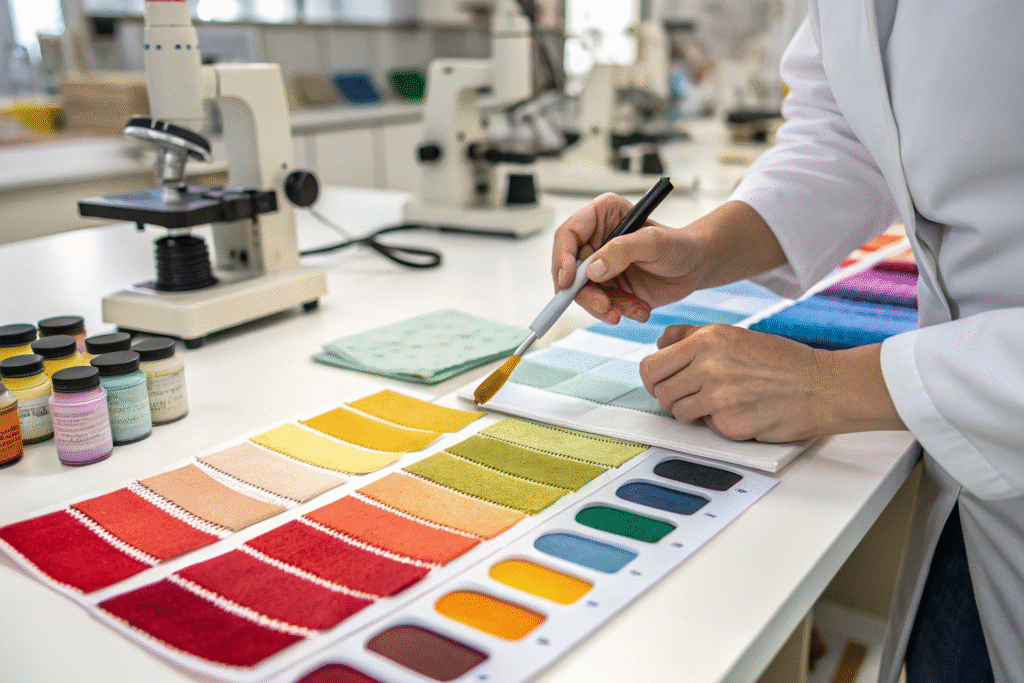
The pre-treatment history of fabric significantly influences how it accepts dye. Variations in scouring efficiency, bleaching residual, mercerization tension, or heat setting temperature can all create shade variations. We’ve standardized our greige fabric specifications to include not just construction but also preparation parameters. Our laboratory now conducts absorption tests and pH measurements on all incoming fabrics before dyeing, rejecting any lots that fall outside our strict tolerances. This attention to preparation consistency has been particularly valuable for cotton-rich blends where uneven scouring was previously causing 0.8-1.2 ΔE variations in light shades.
How can you manage dye manufacturer batch variations?
Even with certified dyes, subtle batch differences can impact shades. We’ve implemented a dye bank system where large batches of dyes are purchased, homogenized, and reserved for specific programs. The laboratory uses from the same bulk dye containers as production, eliminating this variable entirely. For programs extending over multiple seasons, we purchase sufficient dye for the entire projected volume upfront. While this requires significant working capital, the color consistency benefits have made it worthwhile for our key account programs. The system has been particularly effective for maintaining black and navy consistency across production runs, traditionally the most challenging shades.
What role does digital color management play?
Modern digital systems have revolutionized color consistency by removing human subjectivity and creating data-driven processes. The investment in proper color management infrastructure has delivered the highest return of any initiative we’ve implemented.
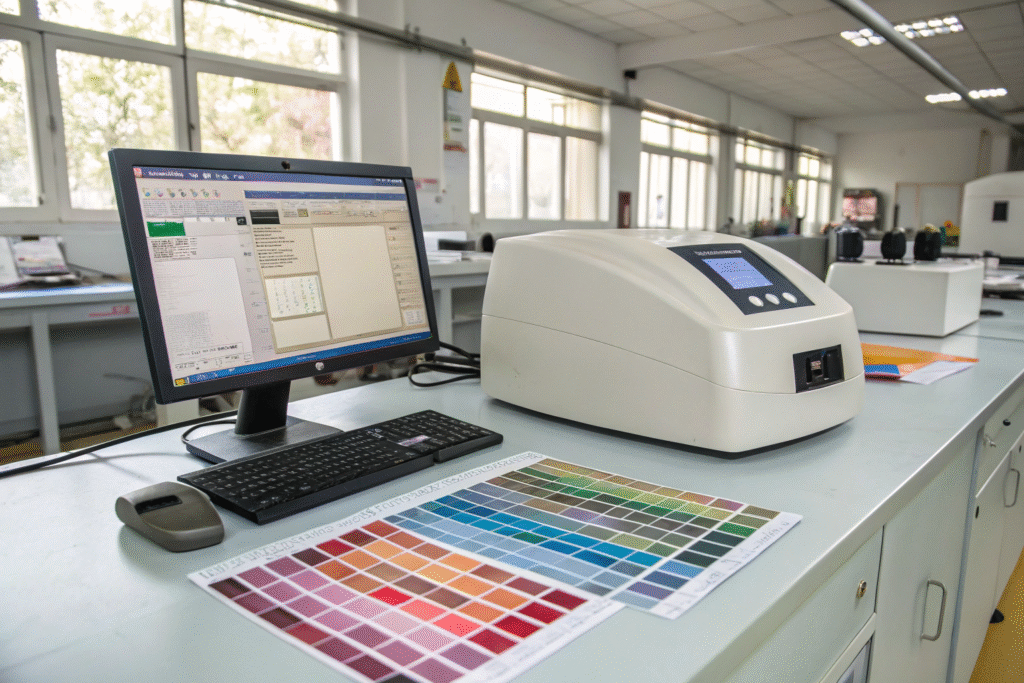
Spectrophotometer correlation is the foundation of digital color management. We maintain a master instrument that’s calibrated quarterly against NIST-traceable standards, with all laboratory and production instruments cross-correlated monthly. The correlation process involves measuring standard tiles across all instruments and creating correction factors to ensure consistent readings. This practice eliminated the frustrating scenario where a shade would pass in the lab but fail in production due to instrument variation. Our current instrument network maintains correlation within 0.15 ΔE across all locations, down from 0.4-0.6 ΔE before implementation.
Digital color libraries with tolerance settings have transformed how we communicate color standards. Instead of physical swatches that fade and deteriorate, we now use digital standards with clearly defined ΔE, dL, da, and db tolerances for different color positions. The system automatically calculates pass/fail status and provides directionally specific correction advice (e.g., "reduce redness by 0.8 da"). This precision has reduced the subjective arguments about shade acceptance that previously plagued our buyer-supplier relationships. Implementation of these digital color supply chain platforms has reduced our shade approval cycle time by 60% while improving consistency.
How can you implement effective bulk lot approval protocols?
The final inspection process determines whether shade variations reach customers. We’ve moved from random visual inspection to systematic spectrophotometric testing of every dye lot with statistical sampling. Each production lot is measured at five locations (both edges, quarter points, and center) with the average and maximum ΔE recorded. Lots exceeding ΔE 0.8 are rejected for re-processing, while lots between ΔE 0.5-0.8 require management review. This data-driven approach has eliminated the shipping of marginally acceptable shades that previously resulted in customer complaints and chargebacks.
What lighting standardization is necessary for visual validation?
Despite digital advances, final visual approval remains essential for catching metamerism and appearance issues that instruments miss. We’ve installed D65 daylight simulators in all our laboratories and production facilities, with quarterly verification of lighting conditions. Additionally, we use light booths with multiple sources (TL84, U30, Horizon) to check for metamerism. The visual assessment is always conducted by a minimum of two trained evaluators using the same standardized viewing geometry and background. This lighting consistency has been particularly important for evaluating subtle shade variations in pastel colors where instrumental measurements may not capture the full visual impression.
What practical strategies address common dyeing variations?
Beyond systematic controls, several practical strategies address the most common sources of shade variation that occur during the transition from laboratory to bulk production.
The first-production-lot protocol has been particularly effective for new colors or fiber combinations. Instead of proceeding directly to full volume, we dye a mini-bulk lot of 100-200kg using production equipment and procedures. This trial run identifies scaling issues before committing to full volume. The additional cost is more than offset by avoiding full-lot rejections. Our data shows that colors requiring correction after mini-bulk testing would have had an 85% rejection rate at full volume, making this one of our most valuable preventive measures.
Dye machine profiling recognizes that not all production equipment behaves identically. We’ve characterized each dyeing machine in our facilities for its specific heating rate, circulation efficiency, and cooling characteristics. Laboratory recipes are now machine-specific, with adjustments for the particular equipment that will be used for production. This approach has been especially valuable for our jet dyeing machines, where we discovered that different models required 10-15% dye concentration adjustments for identical shades. The profiling process has reduced our machine-related shade variations by 70%.
How can you manage the human factor in shade approval?
Despite all technical controls, human judgment remains part of the process. We’ve implemented a shade approval training and certification program for all personnel involved in color decisions. The training covers color theory, instrumental measurement, visual assessment techniques, and our specific tolerance standards. Personnel must pass practical tests evaluating shade pairs before being authorized to make approval decisions. This program has reduced approval inconsistency between different evaluators from 1.2-1.8 ΔE to 0.3-0.5 ΔE, essentially eliminating personality-based approval variations.
What’s the most effective approach for shade correction?
When variations occur, systematic correction prevents repeated errors. Our correction protocol begins with instrumental analysis to determine the specific color direction of variation (lighter/darker, redder/greener, bluer/yellower). The laboratory then prepares multiple correction options with varying adjustment percentages, which are tested on production samples before full re-processing. This methodical approach has increased our first-attempt correction success rate from 45% to 92%, significantly reducing re-processing costs and fabric damage from multiple dye cycles.
Conclusion
Reducing shade variation between lab dips and bulk dye lots requires a comprehensive approach that addresses procedural, material, measurement, and human factors. The most effective strategy combines standardized laboratory-to-production protocols, rigorous material consistency controls, modern digital color management systems, and practical production validation methods. By systematically eliminating variables rather than hoping for consistency, you can achieve the ΔE ≤0.8 performance that separates premium suppliers from average performers.
The investment in color consistency delivers substantial returns through reduced rejections, faster approval cycles, improved customer satisfaction, and strengthened supplier relationships. The methodology we’ve outlined has helped our clients reduce shade-related rejections from industry-average 12-15% to 2-3%, representing significant cost savings and operational efficiency improvements.
If you’re struggling with shade variations between lab and bulk production, we can help implement these proven strategies in your supply chain. Our technical team has extensive experience establishing color management systems across different price points and product categories. Contact our Business Director, Elaine, at elaine@fumaoclothing.com to discuss your specific challenges and receive our Lab-to-Bulk Color Consistency Toolkit with protocols, templates, and implementation guides.