
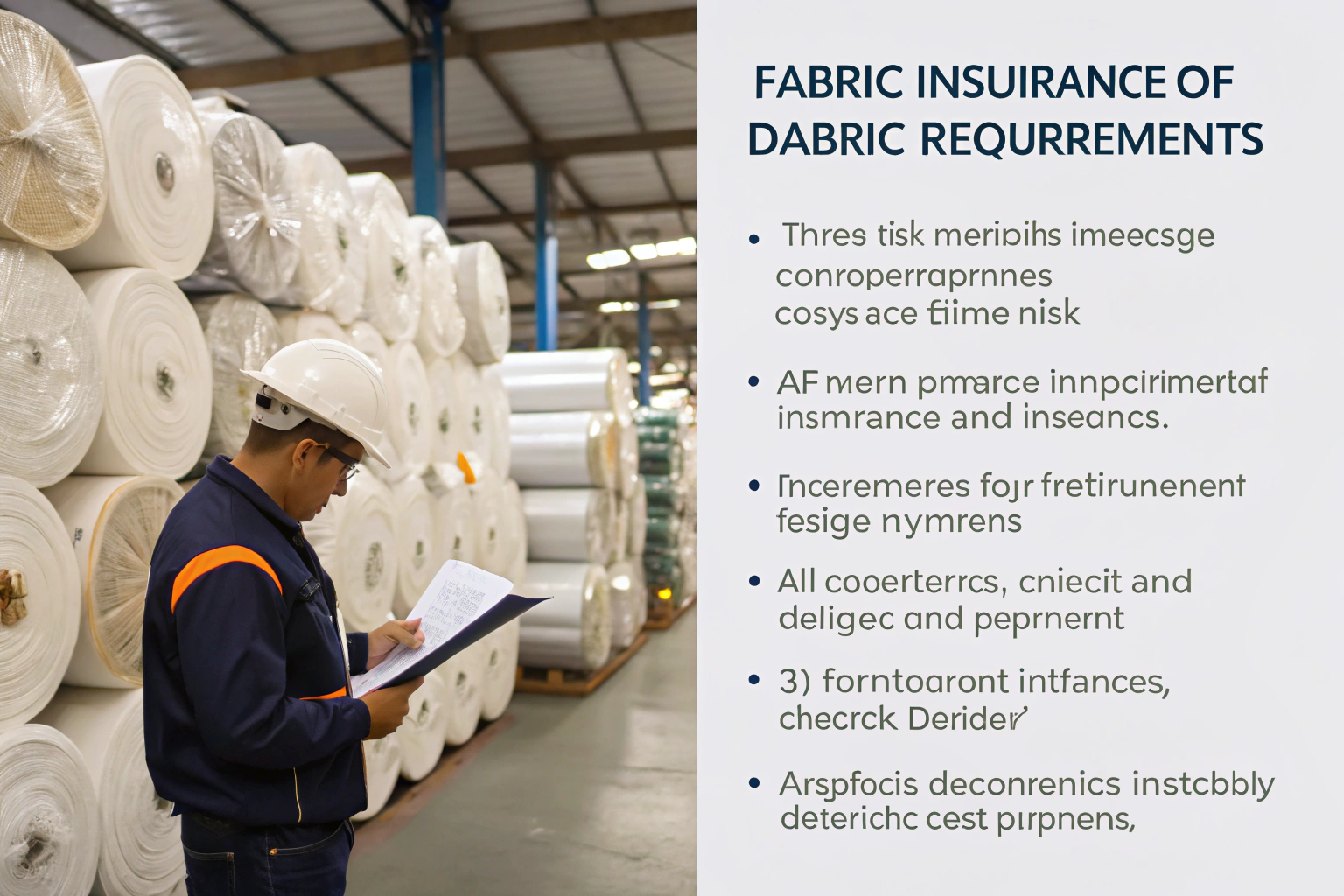
After twenty years shipping fabric from China to global markets, I’ve learned that insurance isn’t an expense—it’s strategic risk management. Last quarter alone, we helped clients recover over $200,000 from incidents that would have devastated their businesses. One particularly painful lesson came when a Miami swimwear brand lost $47,000 of technical fabric to container flooding. They’d declined "unnecessary" insurance to save $940, believing their forwarder’s basic liability was sufficient. The $500 recovery they received barely covered their documentation costs.
Fabric shipment insurance requires understanding three coverage types: All Risk marine insurance for physical loss/damage, contingent insurance for delay-related losses, and trade credit insurance for payment default. Effective protection combines these policies with proper documentation, accurate valuation, and strategic claim processes. Properly insured shipments typically cost 0.8-1.5% of cargo value but protect against 100% losses that can cripple businesses.
The complexity of fabric insurance became brutally clear when a client’s shipment of white wedding dress fabric arrived with water stains. The insurance company initially denied the claim, arguing the stains were "pre-existing" until we provided time-stamped photos from our loading documentation. That $28,000 recovery saved their entire seasonal collection and taught us that insurance is only as good as your documentation.
What Types of Insurance Cover Different Fabric Risks?
Fabric shipments face unique risks that standard insurance often misses. Understanding the specific coverage types and how they apply to textile shipments prevents devastating coverage gaps when incidents occur.
The most successful fabric importers layer multiple insurance types to create comprehensive protection. This approach recognizes that a single policy rarely addresses all potential loss scenarios, especially for high-value or time-sensitive fabric shipments.

How Does All Risk Marine Insurance Protect Physical Fabric?
All Risk marine insurance provides the broadest physical damage protection and should form the foundation of your fabric insurance strategy. Despite the name, it covers all transportation modes, not just ocean shipping.
Key Coverage Elements:
- Physical loss or damage: From any external cause during transit
- Theft and pilferage: Full replacement value for stolen goods
- Water damage: Critical for humidity-sensitive fabrics
- Container mishandling: Drops, crushing, improper stacking
- Contamination: From chemicals, oils, or other cargo
Notable Exclusions:
- Inherent vice: Natural deterioration of fabrics
- Improper packing: Unless damage occurs despite proper packing
- Delay: Unless directly causing physical damage
- War and strikes: Requires separate coverage
We recently processed a claim for a Los Angeles designer whose silk shipment was contaminated by leaking chemicals in a shared container. The All Risk policy covered the full $18,000 value because the contamination occurred during transit, despite the original source being another shipper’s cargo.
What Protection Does Contingent Insurance Provide?
Contingent insurance addresses the business losses from delays rather than physical damage. This is crucial for seasonal fabrics or production-tied shipments where timing matters as much as the physical goods.
Critical Coverage Scenarios:
- Missed production windows: Additional costs for air freight replacement
- Seasonal markdowns: Lost margin from late arrival
- Contract penalties: Liquidated damages from customer contracts
- Alternative sourcing: Premiums for local replacement fabrics
A sportswear brand used contingent insurance when their Chinese New Year shipment was delayed by 23 days. The $12,000 policy paid $48,000 to cover air freight for replacement fabric and penalties from their retail partners, saving their spring collection.
How Do You Calculate Proper Insurance Values?
Underinsurance is the most common and costly mistake in fabric shipment protection. Most policies include "average clauses" that reduce payouts proportionally to underinsurance. If you insure 60% of actual value, you’ll only receive 60% of any claim.
Proper valuation must include all costs, not just the fabric purchase price. We’ve developed a comprehensive valuation framework that captures the true financial impact of loss.

What Components Constitute Total Insurable Value?
The total insurable value should reflect your actual financial exposure:
| Cost Component | Calculation Method | Typical Percentage |
|---|---|---|
| Fabric cost | Purchase price + duties | 65-75% of total |
| Transportation | All freight charges to final destination | 10-20% of total |
| Insurance premium | Cost of the insurance itself | 1-2% of total |
| Profit margin | Lost profit on end products | 15-25% of total |
| Additional costs | Warehousing, handling, financing | 5-10% of total |
A Denver outerwear brand learned this lesson when they insured only their fabric cost. After a total loss, they discovered their $50,000 insurance coverage left them with a $23,000 shortfall when accounting for freight, duties, and lost profits.
How Does Incoterm Selection Impact Insurance Responsibility?
Your Incoterms determine who arranges and pays for insurance:
EXW/FCA (Seller’s premises): Buyer responsible for entire insurance
FOB/CIF (Port terms): Risk transfers at ship’s rail, careful coordination needed
DAP/DDP (Delivery terms): Seller typically maintains insurance until destination
We recommend CIF for most fabric shipments because it ensures consistent insurance coverage and simplifies claims processing. The slight additional cost (typically 0.2-0.5% over FOB) is justified by the reduced administrative burden and coverage consistency.
What Documentation Strengthens Insurance Claims?
Insurance claims are won or lost based on documentation. The most successful claimants treat every shipment as a potential claim, maintaining comprehensive records from order placement through final delivery.
Through hundreds of claims, we’ve identified the critical documents that make the difference between full recovery and denied claims.

How Do You Create an Unbeatable Claim File?
A successful claim file should tell the complete story without requiring additional investigation:
Pre-Shipment Documentation:
- Pre-shipment inspection reports: Third-party verification of condition
- Loading photographs: Time-stamped images showing proper packing
- Quality certificates: Fabric test reports and compliance documentation
- Packing lists: Detailed contents with weights and dimensions
In-Transit Documentation:
- Bill of Lading: Clean receipt acknowledging proper condition
- Customs filings: Evidence of declared value and contents
- Tracking updates: Regular status confirmation during transit
Post-Incident Documentation:
- Survey reports: Independent assessment of damage
- Damage photographs: Comprehensive images from multiple angles
- Mitigation evidence: Steps taken to minimize losses
- Communication records: All correspondence regarding the incident
A technical fabric importer used their comprehensive documentation to secure a $67,000 claim in 14 days—half the typical processing time. Their loading photos proved the water damage occurred during ocean transit, not from pre-existing conditions.
What Are the Real Costs and Coverage Limitations?
Insurance premiums represent only part of the total cost of risk management. Understanding the complete cost structure and policy limitations prevents unpleasant surprises when you need coverage most.
The most cost-effective approach balances premium costs with coverage breadth and claims support quality.

How Much Does Fabric Shipment Insurance Actually Cost?
Premium rates vary based on multiple factors:
| Risk Factor | Low Risk | High Risk | Typical Impact |
|---|---|---|---|
| Fabric Value | <$100/kg | >$300/kg | +0.3-0.8% |
| Transit Time | <15 days | >35 days | +0.2-0.5% |
| Destination | Stable markets | High-risk regions | +0.5-1.5% |
| Claim History | No claims | Multiple claims | +0.5-2.0% |
| Coverage Type | Basic | All Risk + Delay | +0.3-0.7% |
Most fabric shipments cost 0.8-1.5% of insured value for comprehensive coverage. The peace of mind justifies this cost when you consider that a single total loss could represent 50-100% of your annual profit.
What Common Exclusions Threaten Fabric Shippers?
Standard policies contain exclusions that specifically impact fabric shipments:
Humidity Damage: Many policies exclude "atmospheric conditions" unless specifically added
Color Matching: Variations between production batches typically excluded
Handfeel Changes: From compression or storage conditions rarely covered
Minor Soiling: Small stains or marks below deductible thresholds
We helped a luxury linen importer add "textile-specific conditions" coverage after their first shipment arrived with permanent fold marks from improper packing. The additional 0.15% premium cost proved worthwhile when their second claim covered $8,200 in finishing costs to remove the marks.
How Can Technology Improve Insurance Management?
Modern insurance technology has transformed risk management from administrative burden to strategic advantage. The right tools provide real-time visibility, automated documentation, and data-driven decision support.
We’ve integrated insurance technology throughout our operations, and the benefits extend far beyond cost savings to include better risk assessment and faster claims processing.

What Role Do Digital Platforms Play in Insurance Management?
Digital insurance platforms offer significant advantages:
Automated Documentation:
- Digital photo timestamping: Creates court-admissible evidence
- Blockchain verification: Prevents documentation tampering
- Cloud storage: Secure access from anywhere
- Integration capabilities: Connects with shipping and ERP systems
Analytics and Reporting:
- Risk scoring: Predicts potential claim likelihood
- Cost optimization: Identifies coverage overlaps and gaps
- Performance benchmarking: Compares rates across providers
- Claim prediction: Flags high-risk shipments for extra documentation
A San Francisco fashion tech company reduced their insurance costs by 22% while improving coverage by using analytics to identify that their high-value shipments qualified for premium discounts due to their exemplary packaging and documentation practices.
What Strategic Partnerships Enhance Protection?
The most successful fabric importers treat insurance providers as strategic partners rather than commodity suppliers. This relationship-based approach delivers better terms, faster claims processing, and valuable risk management advice.
We’ve cultivated relationships with specialty marine insurers who understand textile risks, and this expertise has proven invaluable during complex claims.
How Do You Select the Right Insurance Partner?
Effective insurance partners demonstrate these characteristics:
Textile Industry Expertise:
- Understanding of fabric-specific risks and valuation methods
- Experience with textile claims and common issues
- Knowledge of seasonal impacts and market conditions
Global Capabilities:
- Worldwide network for surveys and claims handling
- Multilingual support for international incidents
- Understanding of regional risk variations
Financial Stability:
- Strong ratings from A.M. Best or similar agencies
- Sufficient reserves for large claims
- Long-term commitment to marine insurance
Our primary insurance partner has specialized in textiles for 35 years. Their understanding that water-damaged technical fabric represents a total loss (not just a cleaning cost) has secured appropriate settlements for multiple clients.
Conclusion
Comprehensive fabric shipment insurance requires understanding multiple coverage types, accurate valuation methods, meticulous documentation practices, and strategic partner selection. All Risk marine insurance forms the essential foundation, while contingent and credit insurance address business interruption and payment risks. Proper implementation typically costs 0.8-1.5% of shipment value but protects against catastrophic losses that can destroy businesses. The most successful approach combines technical knowledge with relationship management and technology integration to create a robust risk management framework.
At Fumao Textiles, we’ve integrated insurance expertise into our fabric export operations, helping clients protect millions of dollars in shipments annually. Our experience with hundreds of claims has taught us how to structure coverage that addresses the unique risks of textile transportation while maintaining cost efficiency. We don’t just arrange insurance—we build risk management systems that protect your fabric investments throughout the supply chain. If you’re tired of insurance complexity and need reliable protection for your fabric shipments, contact our Business Director Elaine at elaine@fumaoclothing.com. Let’s build an insurance strategy that matches your risk profile and business objectives.









40 Responses
I don’t think the title of your article matches the content lol. Just kidding, mainly because I had some doubts after reading the article. https://accounts.binance.info/ph/register?ref=IU36GZC4
Thanks for sharing. I read many of your blog posts, cool, your blog is very good. https://accounts.binance.info/pl/register?ref=UM6SMJM3
I don’t think the title of your article matches the content lol. Just kidding, mainly because I had some doubts after reading the article. https://www.binance.com/en-NG/register?ref=YY80CKRN
Your article helped me a lot, is there any more related content? Thanks!
Can you be more specific about the content of your article? After reading it, I still have some doubts. Hope you can help me. https://www.binance.com/pt-BR/register?ref=GJY4VW8W
Thank you for your sharing. I am worried that I lack creative ideas. It is your article that makes me full of hope. Thank you. But, I have a question, can you help me?
I don’t think the title of your article matches the content lol. Just kidding, mainly because I had some doubts after reading the article. https://www.binance.info/vi/register?ref=MFN0EVO1
Thanks for sharing. I read many of your blog posts, cool, your blog is very good.
Can you be more specific about the content of your article? After reading it, I still have some doubts. Hope you can help me.
Can you be more specific about the content of your article? After reading it, I still have some doubts. Hope you can help me.
Your article helped me a lot, is there any more related content? Thanks! https://accounts.binance.info/fr-AF/register?ref=JHQQKNKN
I don’t think the title of your article matches the content lol. Just kidding, mainly because I had some doubts after reading the article. https://accounts.binance.info/register-person?ref=IHJUI7TF
I don’t think the title of your article matches the content lol. Just kidding, mainly because I had some doubts after reading the article.
Your point of view caught my eye and was very interesting. Thanks. I have a question for you.
Your article helped me a lot, is there any more related content? Thanks! https://accounts.binance.info/ar/register-person?ref=FIHEGIZ8
Can you be more specific about the content of your article? After reading it, I still have some doubts. Hope you can help me. https://www.binance.info/id/register?ref=UM6SMJM3
Thank you for your sharing. I am worried that I lack creative ideas. It is your article that makes me full of hope. Thank you. But, I have a question, can you help me?
Thanks for sharing. I read many of your blog posts, cool, your blog is very good. https://accounts.binance.com/pt-BR/register-person?ref=GJY4VW8W
Your article helped me a lot, is there any more related content? Thanks!
I don’t think the title of your article matches the content lol. Just kidding, mainly because I had some doubts after reading the article.
Thank you for your sharing. I am worried that I lack creative ideas. It is your article that makes me full of hope. Thank you. But, I have a question, can you help me?
Can you be more specific about the content of your article? After reading it, I still have some doubts. Hope you can help me. https://www.binance.com/kz/register?ref=K8NFKJBQ
Thanks for sharing. I read many of your blog posts, cool, your blog is very good. https://accounts.binance.com/es-MX/register-person?ref=GJY4VW8W
I don’t think the title of your article matches the content lol. Just kidding, mainly because I had some doubts after reading the article. https://www.binance.com/register?ref=IXBIAFVY
Can you be more specific about the content of your article? After reading it, I still have some doubts. Hope you can help me.
Your point of view caught my eye and was very interesting. Thanks. I have a question for you.
Your point of view caught my eye and was very interesting. Thanks. I have a question for you. https://accounts.binance.com/es-AR/register-person?ref=UT2YTZSU
Thank you for your sharing. I am worried that I lack creative ideas. It is your article that makes me full of hope. Thank you. But, I have a question, can you help me?
Thanks for sharing. I read many of your blog posts, cool, your blog is very good. https://accounts.binance.info/es-AR/register?ref=UT2YTZSU
Your article helped me a lot, is there any more related content? Thanks! https://accounts.binance.com/sl/register?ref=I3OM7SCZ
Thanks for sharing. I read many of your blog posts, cool, your blog is very good.
Thank you for your sharing. I am worried that I lack creative ideas. It is your article that makes me full of hope. Thank you. But, I have a question, can you help me?
Can you be more specific about the content of your article? After reading it, I still have some doubts. Hope you can help me. https://www.binance.com/register?ref=IHJUI7TF
I don’t think the title of your article matches the content lol. Just kidding, mainly because I had some doubts after reading the article.
Your article helped me a lot, is there any more related content? Thanks!
Your article helped me a lot, is there any more related content? Thanks!
Your article helped me a lot, is there any more related content? Thanks!
Can you be more specific about the content of your article? After reading it, I still have some doubts. Hope you can help me.
Can you be more specific about the content of your article? After reading it, I still have some doubts. Hope you can help me.
Thanks for sharing. I read many of your blog posts, cool, your blog is very good.