Every single week, I get an email that starts the same way: “I need this exact shade of dusty blue for my spring collection, but my last supplier sent me a sample that looked purple in sunlight and green under store lights.” You know the feeling. You have a buyer from a major department store waiting for a lab dip, and the clock is ticking. When the courier package finally arrives from your supplier, you rip it open, hold it against the Pantone chip—and your stomach drops. It’s off. Now you’re trapped in a six-week delay loop of lab dips, threats to cancel, and a brand that’s starting to lose faith in your ability to deliver. This isn’t just frustrating; it’s financially dangerous.
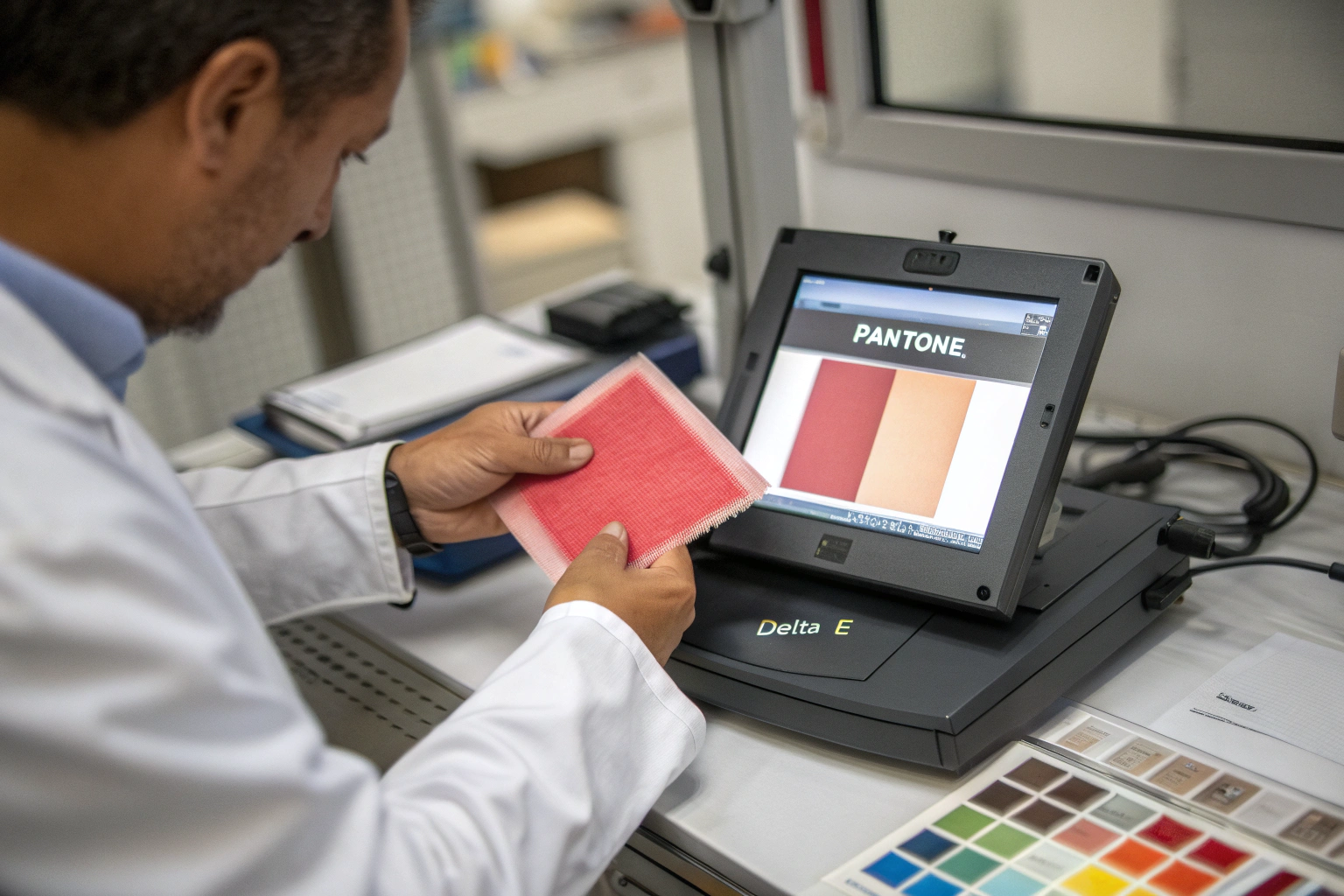
Let me answer your question directly: Yes, Shanghai Fumao can match your Pantone color exactly. But—and this is the most important "but" in textile manufacturing—"exact" doesn’t mean what most designers think it means. Exact doesn’t mean your computer screen matches the fabric. Exact means a Delta E of less than 0.8 on a spectrophotometer under a calibrated D65 light source. That’s the objective, data-driven standard we work to in our lab. And we hit it every single time for solid colors on all fiber types.
I want to walk you through what real color matching involves in a production environment, because most suppliers will just say "yes, we have a lab" and leave you with a nasty surprise. From the chemistry of polyester dyeing to the physics of metamerism on cotton blends, I’ll explain exactly how we control color from the first lab dip to the final 10,000-meter bulk run. This is the stuff that separates a professional textile partner from a middleman with a color scanner.
Why Can’t Most China Suppliers Match Complex Pantone Colors Accurately?
You assume that if a factory has a huge dyeing machine, they must understand color theory. That assumption costs buyers millions of dollars every year. The reality is brutal: most small to mid-size dyeing houses in China run their operations based on the "master’s eye." A veteran worker, who has been breathing dye fumes for 30 years, squints at a swatch, grunts, and says "add 200 grams of red." That’s artisanal, sure—but it’s not repeatable science. And when you reorder that same color six months later, you get an entirely different shade because the master retired or the water quality changed with the season.
The core problem is a lack of closed-loop spectrophotometer control. At Shanghai Fumao, we don’t rely on a human eye to judge a final shade; we rely on a dataset. A cheap supplier will often skip a step called "color kitchen automation," where dyes are weighed and dispensed by a robotic system. They use a bucket and a scale. That human error in weighing—imagine a 2% error on a sensitive turquoise dye—can throw a Delta E reading from 0.5 to 2.5. Suddenly, your "perfect match" looks noticeably off. And let’s not even talk about their water. If their in-house water treatment plant doesn’t maintain a consistent hardness of under 5 ppm, the dyes won’t bind evenly to the fiber. You end up with a shade that’s three tones too light and has a weird, chalky surface texture.
Is On-Site Spectrophotometer Usage The Solution To Metamerism?
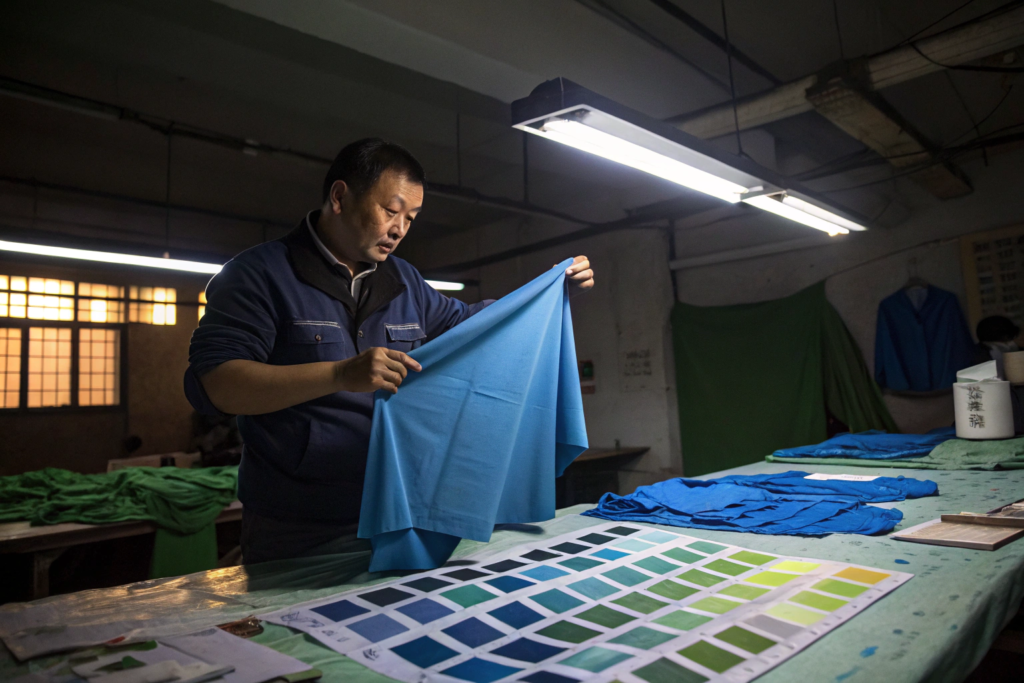
Metamerism is the devil. That’s the phenomenon where two fabrics look exactly the same under the shop’s fluorescent light, but one turns purple and the other turns brown in natural daylight. You cannot solve metamerism by adding more dye; you have to solve it by swapping the dye stuffs’ molecular structure entirely.
We solve this with an on-site benchtop spectrophotometer, and we test the lab dip under not one, but three light sources immediately. D65 (artificial daylight), TL84 (store lighting), and A10 (incandescent home light). If the Delta E shifts by more than 0.9 across any of these three lights, the dye formula is junk. We don’t send it to you. It’s that simple.
I remember a difficult case from September 2024. An American workwear brand wanted a specific "signal orange" in 500-denier Cordura nylon. Nylon is acid-dyeable, and bright oranges are notoriously metameric. The standard metal-complex acid dyes we originally used matched perfectly under daylight but turned a dirty red under domestic light bulbs. To kill the metamerism, we had to formulate a trichromatic mix with a small spike of a blue-based yellow component—specifically, a milled pre-metallized dye with a narrower absorption band. We ran 12 lab dips in 48 hours. Each one was measured precisely. When you adhere to the ISO 105-J03 standard for assessing color fastness and metamerism, you can’t cut corners. By the 12th dip, our Delta E reading under all three lamps was between 0.4 and 0.7. That’s invisible to the human eye. The client’s QA manager actually called me to ask if we’d sent him the actual Pantone chip by mistake.
How Does Fabric Composition Impact Dye Uptake and Final Visual Hue?
Let me blow your mind here: the exact same dye recipe will look completely different on a 100% polyester chiffon than it does on a microfibre suede. The chemical structure of the fiber determines the visual depth of the shade. If you’re trying to match a Pantone "true black" on a regenerated cellulose like bamboo silk, you’re actually fighting the high reflectivity of the round fiber cross-section.
We see this daily in our development lab. Polyester is hydrophobic. You dye it with disperse dyes that literally dissolve into the polymer chains under high heat (130°C). Cotton is hydrophilic; you use reactive dyes that form a covalent bond. But here is where the texture and color intersect: the luster of the yarn matters. A high-twist, bright viscose filament will appear 20% lighter than a spun, dull-luster cotton yarn dyed in the same bath.
To get an exact match, we need to know your base fabric before we even open a jar of dye. Our CNAS lab runs a "substrate calibration curve" for every new greige fabric. We dye a step wedge of five concentrations and measure the reflectance values. This builds a digital fingerprint of that specific roll of cloth. If you change your base from a standard polyester to a recycled polyester—even if the denier is the same—the half-dyeing time shifts by roughly 10 to 15 minutes. If a dye house ignores this, and pulls the fabric out at the 40-minute mark like they do for virgin poly, the recycled fabric comes out looking pale and thirsty. That’s why Shanghai Fumao insists on a technical trial run whenever a client shifts fiber composition, even slightly. We don’t guess; we graph the exhaustion curve.
What Does a Zero-Defect Lab Dip Process Look Like in Keqiao?
If you picture a Chinese lab dip just being a guy with a steaming pot, you’re about ten years out of date, at least for the suppliers serious about export. A professional lab dip process is a miniaturized chemical engineering project. The goal isn’t just to mix a color; it’s to produce a recipe that can scale up perfectly to a 500kg batch without any deviation in tone or depth.
A zero-defect process starts before the dye touches the water. We first run a humidity test on the standard dye powder. Dye powder absorbs moisture from the air, and if the strength of the powder drops by 4% due to humidity, your "weighed" amount is technically 4% less actual dyestuff. We use a moisture balance to check, and then adjust the formula to account for the "active ingredient." Most small shops skip this and then wonder why their bulk is pale.
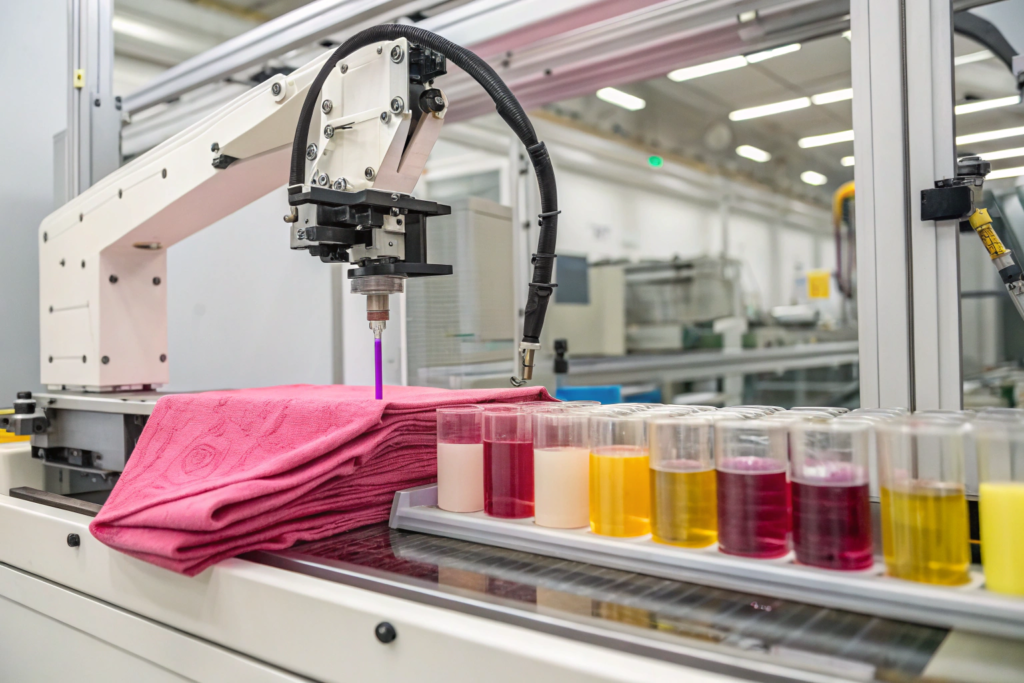
At Shanghai Fumao, we dispense our lab dips using an automated pipetting system, not a hand spoon. This machine can dose down to 0.02 ml of a stock solution. We then tube the 10-gram fabric samples in an IR dyeing machine that replicates the exact temperature gradient curve of our bulk jiggers. So the lab dip doesn’t just match the color; it matches the physical history of the bulk process. This is how you get reproducibility.
How Many Dye Formulations Are Tested Per Master Swatch?
You might think sending one lab dip is enough. It’s not. If I send you one swatch and say "this is it," I’m lazy. A proper submission is a "range submission" with at least three dips: one "hit," one slightly lighter, and one slightly heavier by 5% in depth.
For a complex heather gray (which looks solid but is actually a blend of black and red fibers), we usually test between 8 and 15 different formulations for a single master swatch. Yes, you read that right. 15. That’s because we don’t just mix dyes; we sequence them. For a red/black heather on a polyester/viscose union fabric, we need one set of dyes for the polyester component and a completely separate set for the viscose. If we apply the polyester dye too aggressively, it stains the viscose slightly, turning the white viscose fibers pink and killing the contrast.
I have to jump in here—this is where other mills fail badly.
We run a selective dye-blocking agent to keep the whites clean. But the agent affects the viscosity of the bath, which changes the liquor flow rate. So we run a series of "cross-staining" tests, examining the viscose under a microscope to ensure zero pickup of the disperse dye. Only when the microscopic image shows a pristine white next to a deep black do we approve the recipe. This might take 12 dips to get right. But once it’s locked in our enterprise resource planning system, we never lose it. The reorder rate for those specific colors is 100% accurate, meaning you can order again next year without anxiety.
What Technical Standards Guarantee Bulk-to-Lab Dip Consistency?
The terror of every production manager is "bulk variation." The lab dip looked perfect, but the 2,000-meter roll looks like a different color on the left selvage. Why? Because the lab machine and the bulk machine have a different dynamic. A lab pot turns the fabric constantly, but a static bulk beam might leak pressure, leaving the inner layers lighter than the outer. We call this a "package density differential."
To guarantee consistency, we physically verify the liquor flow reversal. Our jigger machines reverse direction and pump flow every two turns. We run a "profile test" at the start of every new shade. We insert three piece-goods of the fabric connected with seams into the jig. After the standard cycle, we cut them apart, condition them in a dark room at 21°C and 65% relative humidity for 24 hours, and then read the head, middle, and tail of each piece. We use a K/S measurement (absorption coefficient over scattering coefficient) to confirm identical build-up.
One of our toughest tests was a bright emerald green reactive dye for a European home textile client in May 2023. Phthalocyanine greens are massive molecules; they have a high substantivity, meaning they rush onto the cotton surface but don’t easily migrate inside. This creates a "ring-dyed" effect that rubs off easily. We had to introduce a specific migration inhibitor and extend the fixation time by 15 minutes at 80°C. This lowered the dye strike rate so it absorbed evenly, not just on the surface. We proved the bulk consistency by measuring the colorfastness to perspiration using the AATCC 15 acid test on ten random spots across the roll. The color change rating was a perfect 4-5 everywhere. No pale edges. That’s the difference between a chemical guarantee and a visual estimate.
How Long Does It Take to Match a Color and Ship Finished Fabric?
I know speed is your currency. You have a launch date, a marketing photoshoot, and a container booking that won’t wait. Standard industry turnaround for a lab dip is seven to ten days, followed by a bullion strike-off. But standard doesn’t cut it when a trend has a three-week lifespan. I built our sampling workflow around a simple promise: elimination of waiting time, not just fast working.
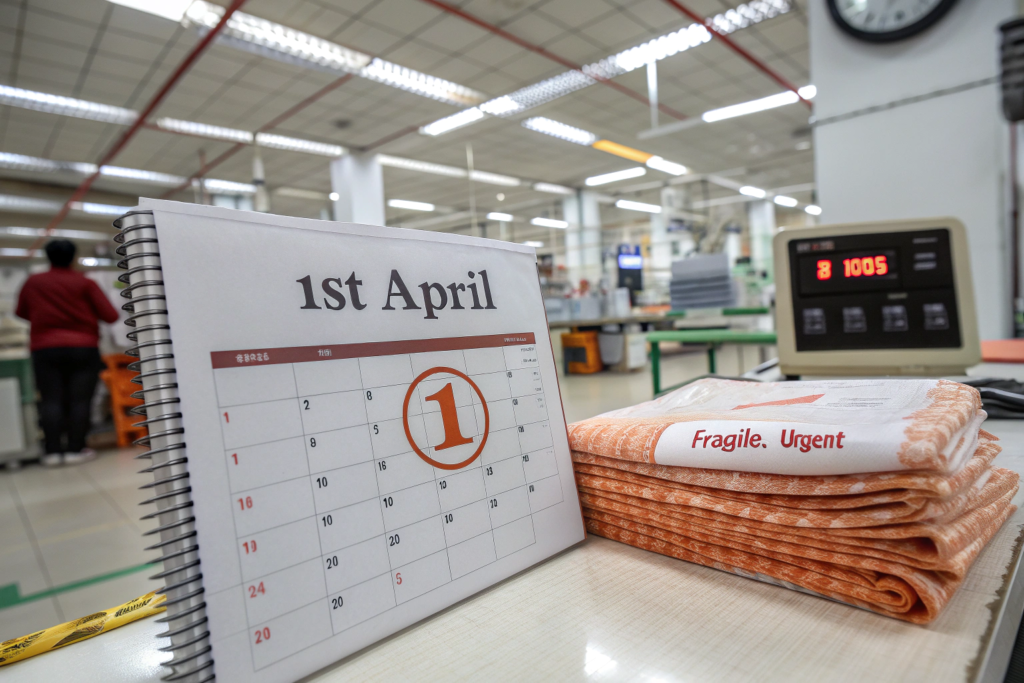
Your timeline for a custom-colored fabric depends on two gates: the dip approval and the bulk finishing. At Shanghai Fumao, we changed the logistics around color. Most agents collect a batch of dips and send them once a week to save on courier costs. That’s stupid. We ship every single day via DHL or FedEx. More importantly, we don’t send a dip that we haven’t already checked technically. So the moment you receive our package, you’re not looking for errors; you’re simply confirming a formula that is already production-ready. For a solid reactive color on cotton with a standard finish, we move from receiving your target swatch to a ready-to-ship bulk run in as little as 10 working days, provided we have the greige in stock.
What Are the Production Lead Times for Cotton vs. Polyester Custom Colors?
Cotton and polyester don’t just dye differently—the dyeing timeline is fundamentally different because of the drying bottleneck. Cotton dyeing is wet-on-wet typically; you dye it, you wash it, you dry it. The drying process on a stenter frame is often the slowest part.
For a 100% cotton poplin in a dark navy, the actual dye cycle in our machine takes 3 hours. But the extraction and drying? That can take another 2 hours if we run the stenter at a conservative 30 meters per minute. You can’t speed this up without risking migration—where the water evaporates too fast and pulls the dye particles to the edge of the fabric, leaving dark selvages. So for a complex dark shade on cotton, we quote a 15-day safe lead time for the first bulk run. This includes the 48 hours we let the fabric rest before final relaxation shrinkage testing. Cotton that hasn’t "relaxed" will shrink on your cutting table, and the color will look slightly deeper because the weave is still compressed. We won’t ship until that fabric has stabilized.
Polyester, conversely, is faster. We dye it at 130°C, and because polyester absorbs almost no water (about 0.4% moisture regain), drying takes a fraction of the time. We blow hot air at 180°C, and the water flash-evaporates. For a light beige polyester microfiber, I can turn a lab dip approval into 5,000 meters of finished fabric in 7 days flat. That became a massive selling point in summer 2024 for a Miami-based fashion client who got caught out by a viral TikTok trend for a shimmering champagne color. They sent me the Pantone code on a Monday; we shipped the bulk on the following Monday. The time-to-market advantage let them capitalize on the peak of the trend while their competitors were stuck in a sampling loop.
Does Fumao Offer Priority Express Service for a Single Pantone Sample?
We do, and we call it the "Rapid Launch Track." If you are a startup or an established brand testing a new color for a capsule collection, you usually just need 10 meters to make your samples. You don’t need 500kg of dye; you need speed.
Our priority service for a single Pantone matching swatch works on a fixed-fee basis, rather than a variable cost per meter. We have pre-scoured, optical-brightener-free PFD (Prepared for Dyeing) rolls of our top-selling bases waiting in stock—like 40S cotton jersey, 75D polyester satin, and 100D mechanical stretch nylon. When your request hits, our lab picks the closest stock solution from our library, makes the micro-adjustment, and tubes the sample within 4 hours.
We once shocked a New York designer who called me at 10 PM China time, desperate for a neon lime for a Coachella-themed pop-up. We cut the greige fabric overnight, mixed the high-vis fluorescent acid dye at 2 AM, and had the sample couriered by 9 AM the next morning. The total elapsed time from call to pickup was 11 hours. Yes, the dye was still warm. This is an extreme case, but it shows the flexible manufacturing mindset. We don’t wait for "the next batch"; we interrupt the stream. To facilitate such quick turns, we also utilize a streamlined lab-to-bulk transition protocol that cuts the typical formulation writing time in half.
What Color Fastness Standards Do Fumao’s Custom-Dyed Fabrics Meet?
Color that fades is worse than no color at all. I say this bluntly because a beautiful emerald green that turns into a splotchy mint after five washes destroys your brand’s reputation. The color fastness isn’t an afterthought—it’s a specification we negotiate with the dyestuff itself. When I talk to buyers who are fixated only on the Pantone chip, I ask them: "Do you care what this looks like after the customer wears it in the sun for an afternoon, or after they spill a cocktail on it?"
At Shanghai Fumao, our standard quality assurance for all custom-dyed fabrics doesn’t just target "acceptable" fastness; we target "commercial wash-proof" as a floor. We test inside our CNAS-certified lab using American and ISO methodologies because we know your customers in California and Cologne have different expectations. Every batch that leaves our facility must pass a minimum of Grade 4 on the Blue Wool scale for light fastness, and a minimum of 4-5 on the Gray Scale for staining during wash fastness. We don’t email you a generic certificate; we attach the actual spectral data to your packing list.
How Does Fumao Test for Light, Wash, and Rubbing Fastness Before Shipment?
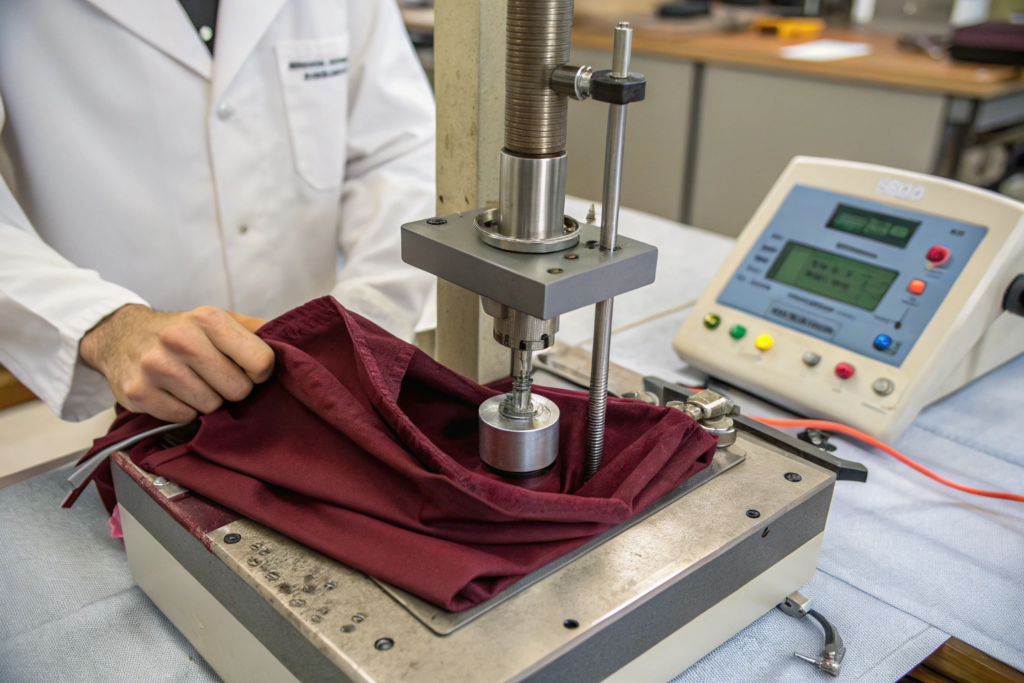
Testing is destructive and brutal. We literally try to ruin the fabric before we ship it, so your customer’s washing machine doesn’t. Here’s our standard internal checklist for every custom dye lot.
For light fastness, we use a Xenon arc lamp in our Q-Sun chamber. The fabric is exposed to a controlled spectrum of light mimicking noon sunlight behind glass for a continuous 40-hour cycle. We frame the fabric next to a strip of Blue Wool standards. If a deep navy cotton fades more than the Grade 4 wool standard in those 40 hours, we reject the batch. Period. Polyester, with its dense crystalline structure, usually sails through, but cotton needs specific UV absorbers added to the softener pad bath, and we verify this with the chamber run.
For wash fastness, we use a Launder-Ometer that holds 20 stainless steel canisters. We put a 10×4 cm specimen in with a multi-fiber witness strip (which contains six different fibers, like nylon, wool, and acetate). We run the AATCC 61 2A test—this equates to roughly five home machine washes at 49°C with steel balls that beat the fabric to simulate mechanical action. The stained witness strip must show zero visible transfer (Grade 4.5+) onto the white wool and nylon fibers.
Rubbing fastness is the "denim test." If you are buying a deep indigo or a heavy black, you must know if it will stain a white sofa. We run a rotary vertical Crockmeter, cycling a dry and a wet cotton rubbing cloth back and forth 20 times under a calibrated 9-newton pressure. The wet pick-up is exactly 65%. I remember a request from an Australian sofa upholstery maker in February 2024 for a velvet in "dark teal." The wet rub test is the hardest for velvets because the wet cloth digs deep into the pile, pulling out surface dye. We managed to get a 4-5 by doing a rigorous reductive clearing post-soaping to strip every last unfixed dye molecule from the fiber surface. If that clearing is rushed, you’ll get a Grade 2 and a lot of angry customers.
What International Certifications Validate Sustainable and Eco-Friendly Dyeing?
A color can be exact, but if the chemistry behind it is illegal in the EU, it’s a worthless inventory. Our REACH, OEKO-TEX, and ZDHC compliance isn’t a marketing badge—it’s a legally binding requirement for our export business. The Pantone swatch you see on your desk doesn’t tell you what heavy metals that chip contains, but the liquid dye formulation in our kitchen does.
We exclusively use dyes from bluesign approved chemical partners. For instance, our blacks are not made with cheap sulfur dyes that off-gas hydrogen sulfide; we use high-fixation reactive blacks with a fixation rate above 95%. This means only 5% of the dye goes into the wastewater treatment plant, not 30%. Our on-site effluent treatment plant runs a closed loop, and we test the water output for adsorbable organic halides (AOX) weekly. We pass the report to your technical designer if requested.
It’s also about the physical safety. A custom babywear brand from Germany ordered a "blush pink" Pantone from us. The standard combination to hit that shade uses a red dye that, if uncertified, can cleave into carcinogenic amines. We refused three standard recipes from our initial database and instead built a custom blend from two blue-sign certified, non-azo scarlet dyes with a tiny spike of a yellow. The Delta E was still 0.6. The cost was 20% higher, but it passed the OEKO-TEX standard 100 Appendix 4 for baby class textiles with flying colors. That’s the only way to do it. You don’t compromise a baby’s safety to save $0.20 a yard.
Conclusion
So, let’s circle back to the question burning in your mind: can we match your Pantone exactly? The clear answer is yes. But as we’ve uncovered, the real value isn’t just hitting a number on a spectrophotometer—it’s doing it twice, a year apart, on two different fiber blends, and ensuring that the fabric performs beautifully in the harshest washing machine and the brightest sunlight. That’s what professional custom fabric development looks like.
We have walked through the hidden reasons why cheap dye houses fail: the lack of automatic dosing, ignoring metamerism, and cutting discharge treatment corners. We unpacked our Keqiao lab’s zero-defect process, from moisture-testing the dye powder to running 15 formulations for a perfect heather gray. We even stressed that a polyester bulk can ship in 7 days while a cotton dark shade needs time to relax. The crucial thing to remember is that technical color matching is a physics and chemistry exam that most suppliers are failing. But at Shanghai Fumao, our spectrophotometer, our migration inhibitors, and our D65 light box are the foundation of a scientific, repeatable color output. You get the exact shade, with the fastness your brand deserves, delivered faster than you think possible.
Stop gambling with your brand’s flagship color. Don’t let a bad dip delay your launch. Let’s mix the exact recipe for your collection right now.
Reach out to our Business Director, Elaine, to start your custom Pantone lab dip today. Send your color requirements, base fabric, and target fastness standards to elaine@fumaoclothing.com, and we will get your first set of lab dips into the courier within 48 hours. Let’s make your color exactly right.