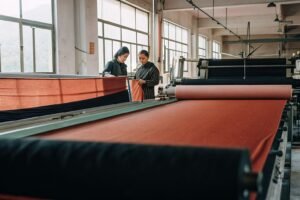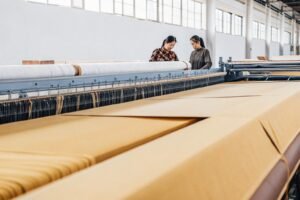
Let’s be honest. As an apparel buyer or brand, your two biggest headaches are probably lead times and compliance. You’ve finally nailed down the perfect fabric design, and then the factory mentions “certifications” – suddenly, your delivery date seems to float away. I’ve sat across from countless clients who see certifications like China’s CMIA (China Medical Device Industry Association) label as just another speed bump, another line item that adds weeks to their timeline. They ask, “Is this really necessary for my activewear or performance line?”
The direct answer is yes, and strategically, it can be a lead time accelerator, not a roadblock. While CMIA certification itself is a rigorous process for medical-grade textiles, its principles—mandating traceable, batch-tested materials and audited, standardized production—directly combat the unpredictable delays that plague complex supply chains. Think about it: the major causes of timeline blowouts—failed lab tests, inconsistent raw material quality, and unverified factory claims—are exactly what a CMIA-aligned production model is designed to eliminate. At Fumao Textiles, we’ve seen brands that integrate this disciplined approach from the yarn stage actually achieve shorter and, more importantly, more reliable lead times, even for non-medical performance apparel.
Understanding this link between certified processes and dependable scheduling is the key to turning compliance from a cost center into a competitive advantage. Let’s dive into how the CMIA framework shapes the production calendar and how you can use it to your benefit.
What Exactly is CMIA Certification in Textiles?
If you’re sourcing performance fabrics from China, you’ve likely heard of Oeko-Tex or GOTS, but CMIA can seem like uncharted territory. It’s not a mandatory standard for all textiles, but for segments touching medical, health, and high-stakes performance wear, it’s a gold standard of trust. Essentially, the CMIA framework certifies that a textile product meets stringent safety, quality, and traceability requirements, similar to how an FDA clearance might work in the U.S. but within China’s robust manufacturing ecosystem.
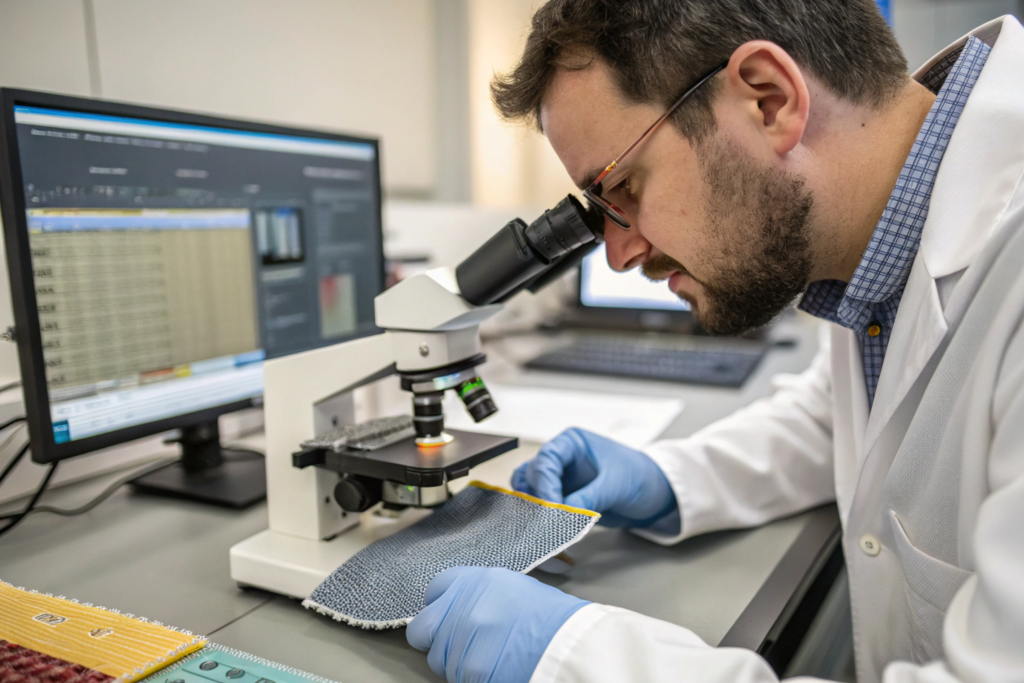
For you, the buyer, this translates to a verified chain of custody. It means every batch of antibacterial yarn, every meter of moisture-wicking fabric, or every roll of UV-protective material has a documented history—from its source to its finishing. This isn’t just paperwork; it’s a systemic guard against the variability that causes delays. When a factory operates under CMIA-aligned protocols, they aren’t just reacting to problems; they have pre-emptive controls at every stage. At Shanghai Fumao, we apply these principles across our functional fabric lines. For instance, our antibacterial and odor-control fabrics for European sportswear brands are produced in batches with full traceability, which dramatically reduces the risk of post-production rejection and those dreaded, project-killing reworks.
Why Should Non-Medical Apparel Brands Care About CMIA Standards?
You might think, “My brand makes yoga wear, not surgical gowns.” That’s fair. But the market is shifting. Consumers are now savvy; they want proof that the “antibacterial” claim on their yoga mat or the “hypoallergenic” tag on their base layer is real. CMIA-aligned production provides that proof through audited testing. More critically for your timeline, this process eliminates the “black box” of production.
Consider a common scenario: you order 10,000 meters of moisture-wicking fabric. A mid-production spot check finds inconsistent chemical uptake on 30% of the batch. Without a CMIA-style controlled process, identifying the root cause—was it the dye lot, the water quality Tuesday afternoon, or a temperature fluctuation?—can take weeks of finger-pointing between the weaver, dyer, and finisher. With integrated, traceable systems, the problem is isolated to a specific production run and often corrected within shifts. This is why many forward-thinking brands now ask suppliers like us about their traceability protocols beyond organic certification, seeing it as essential for timeline integrity.
How Do CMIA Protocols Differ from General Quality Control?
General QC is often about inspection at the end—checking for defects after the fact. CMIA-influenced protocols are about prevention throughout. Let’s break it down with a real example from our production floor.
A Comparative View: General QC vs. CMIA-Aligned Process Control
| Stage | General QC Approach | CMIA-Aligned Approach | Impact on Lead Time |
|---|---|---|---|
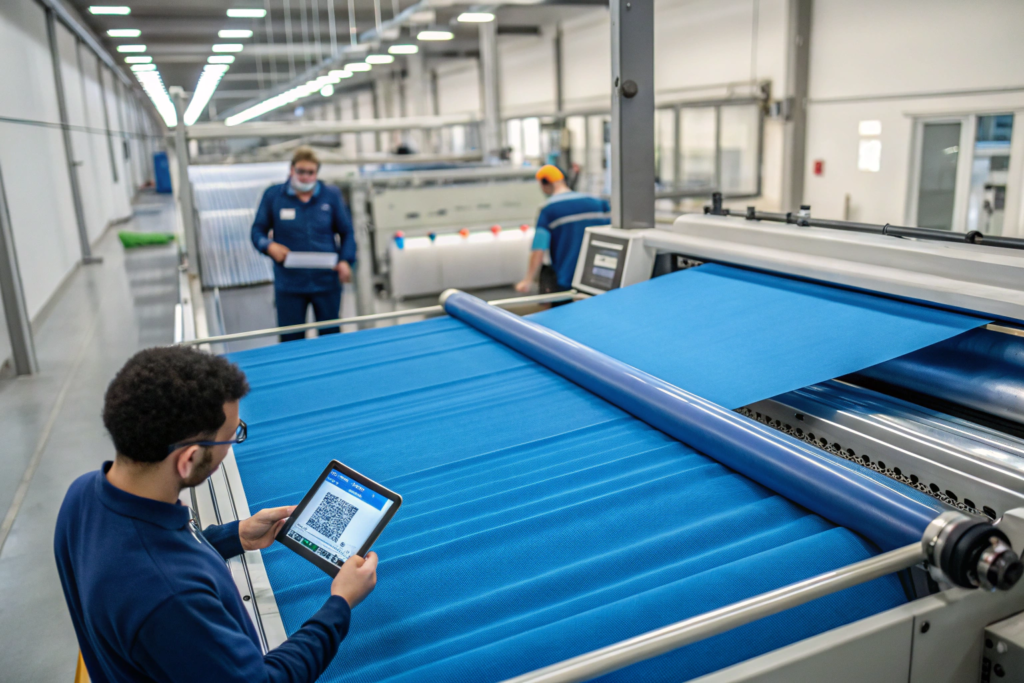
| Raw Material | Supplier COA is accepted. | In-house CNAS lab verifies every batch against spec; data is QR-coded to the batch. | Prevents 1-2 week delays from discovering subpar materials mid-production. |
| Production | Periodic checks; problems are fixed as found. | Real-time monitoring of key parameters (temp, pH, speed); deviations trigger automatic alerts. | Reduces batch failure rate, avoiding total reworks that can add 3-4 weeks. |
| Testing | Final product sent to 3rd party lab; wait for report. | In-process testing at our CNAS lab; final audit is a formality. | Cuts 1-2 week waiting period for external test results before shipping. |
Last August, a U.S. brand needed a rush order of temperature-regulating fabric for a fall launch. Their previous supplier’s general QC failed a final phthalates test, causing a 5-week delay. They came to us. Because our production for such functional fabrics follows these controlled, documented steps, we could provide interim lab reports and guarantee compliance from history. We shipped the order in 22 days, beating their critical deadline. The takeaway? This structured control is your best defense against supply chain visibility gaps that derail schedules.
How Does CMIA Certification Specifically Add Time to the Production Cycle?
Let’s not sugarcoat it. If you treat CMIA certification as a last-minute checkbox, it will delay your order. The added time isn’t from the bureaucratic stamp itself, but from the rigorous production discipline it requires. The key is to understand where the time goes so you can plan it into your schedule, turning a potential bottleneck into a predictable phase.
The major time investment comes from the upfront validation and in-process testing. For a product to be certified, the entire production pipeline—from the specific grade of recycled polyester chips to the dyeing auxiliaries and finishing chemicals—must be pre-approved. This means your development (sampling) phase becomes longer and more critical. You can’t just approve a hand sample; you must approve the entire “recipe” and its documented execution. For example, achieving a specific UPF 50+ rating on a lightweight nylon requires precise control over the polymer mix and coating application. Any deviation means the batch won’t pass, and reworking coated fabric is notoriously time-consuming. Integrating these steps from the start is what we do at Shanghai Fumao; we factor this into our 48-hour rapid sample development promise, ensuring the sample isn’t just pretty but production-valid.
Is the Certification Process the Biggest Timeline Culprit?
Surprisingly, no. The actual audit and certification issuance by the body is a defined, scheduled event. The real timeline variable is in your pre-audit readiness. This includes:
- Documentation Compilation: Creating a complete technical file for the product.
- In-House Validation Runs: Producing pilot batches to ensure consistency.
- Pre-Audit Testing: Running the full battery of tests in your own or a partner lab to identify any gaps.
A client from Germany in March 2023 learned this the hard way. They wanted a CMIA-certified anti-microbial uniform fabric. They spent 8 weeks on design and sampling but only allocated 2 weeks for “certification.” The problem was their sampler used a different dye house than their bulk order. The pilot batch failed the durability test (antimicrobial efficacy after 50 washes). They lost 4 weeks reformulating. Had they involved us, with our integrated dyeing partnership and CNAS lab, from the start, the validation would have been part of the 8-week sampling, adding zero extra time. The lesson is to choose a partner whose entire system is geared for this. You need a supplier who understands what a thorough factory audit for technical compliance truly entails.
Can You Quantify the Added Time for a Typical Order?
Absolutely. While every order is unique, here’s a realistic breakdown for a new functional fabric order (e.g., flame-retardant upholstery) aiming for CMIA-aligned compliance:
Traditional Timeline (Without Integrated Control):
- Sampling & Development: 3-4 weeks
- Bulk Production: 4-5 weeks
- Post-Production Testing & Certification Rush: 3-5 weeks (high risk of failure/rework)
- Total (Uncertain): 10-14+ weeks
CMIA-Aligned Timeline (With Integrated Control from Start):
- Enhanced Sampling & Process Validation: 5-6 weeks (This is longer upfront)
- Streamlined Bulk Production: 3-4 weeks (This is shorter and more reliable)
- Concurrent/Final Audit Testing: 1-2 weeks (Runs in parallel)
- Total (Predictable): 9-12 weeks
Notice the total is similar or even better, but the crucial difference is predictability. The CMIA-aligned model front-loads the risk. The time is invested where it provides certainty. The biggest advantage isn’t always a shorter overall timeline, but a harder, more reliable deadline. You can confidently plan your marketing launch. This reliability is why savvy brands are now asking about a supplier’s integrated management systems, not just their price.
How Can Smart Planning Turn CMIA Compliance into a Timeline Advantage?
The secret isn’t to avoid the CMIA framework but to embrace it as the backbone of your scheduling. It forces a discipline that, ironically, makes your supply chain more agile and resistant to shocks. When every variable is measured and controlled, surprises are minimized. Your production schedule changes from a hopeful estimate to a near-guaranteed roadmap.
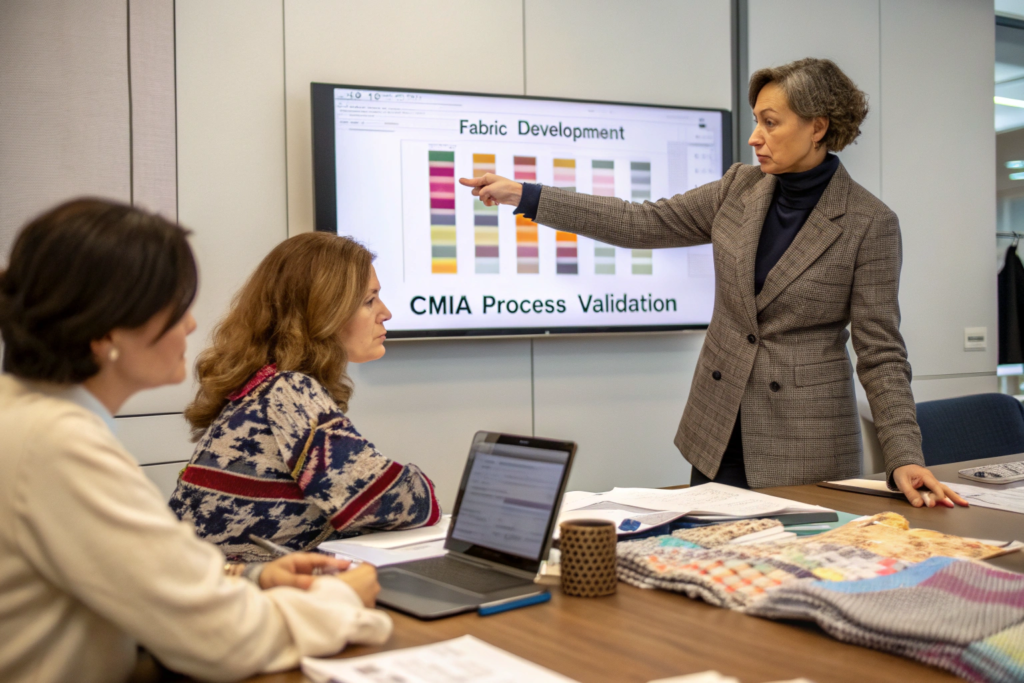
Think of it like building a house. Without blueprints and codes (your CMIA protocols), you might start building faster, but you’ll likely fail inspections, tear down walls, and blow your move-in date. With the blueprints, every step is pre-approved, and the inspector just verifies what’s already documented. Your “construction” flows smoothly. For a brand, this means aligning your entire product development calendar with these stages of validation. At Fumao, we work with clients to map their critical launch dates backward, baking in the validation phases from day one. This is how a Spanish fast-fashion retailer we work with manages to launch technically complex, eco-certified activewear lines with the same speed as their basic cotton tees.
What’s the Single Most Important Planning Step for CMIA-Certified Production?
Initiate partner selection and foundational sampling during the industry’s slower periods. Remember the seasonal rhythms of Chinese manufacturing: June-July and November-December are typically slower. This is the perfect window to begin the extended development and validation cycle for a CMIA-targeted fabric. You get more attention from factories, and there’s no queue at the testing labs.
Let me give you a concrete case. In November 2022, an Australian startup approached us for a CMIA-aligned biodegradable compression fabric. While their competitors were scrambling for Chinese New Year deliveries, we used the December lull to run three iterative validation batches in our lab, fine-tuning the lyocell-spandex blend for both performance and compliance. By the time production peaked in March, their technical file was complete, and bulk production was a simple matter of executing the pre-validated recipe. They secured a 7-week production slot that would have been impossible to book (or complete reliably) during the peak season. This strategic timing, informed by deep knowledge of China’s manufacturing calendar, turned a compliance requirement into a massive scheduling win.
How Does This Integrate with Other Calendar Challenges Like Chinese New Year?
This is where the power of the CMIA approach truly shines. The major holiday shutdowns (CNY, Golden Week) are fixed dates. The chaos comes from the pre-holiday rush and post-holiday labor instability, which disrupts quality and causes delays. A CMIA-aligned production plan mitigates this.
Here’s the strategy: Complete your pre-production validation (lab dips, pilot batch, full testing) at least 6-8 weeks BEFORE Chinese New Year. Your bulk order is then a straightforward execution job. You can place the bulk raw material order pre-CNY, and the factory can schedule the production for the first slot after reopening with clear instructions. Because the process is documented and standardized, it’s less dependent on a specific master operator who might not return after the holiday. The machine settings, chemical formulas, and QC checkpoints are all part of the digital tech pack.
We guided a French outdoor brand through this in early 2023. They had a history of missing Q3 deliveries due to post-CNY delays. For their fall collection, we locked down their recycled weatherproof fabric validation by early December. Production was scheduled for late February. When the factory reopened, there was no guesswork. The order shipped in mid-March, giving them a 4-week buffer compared to previous years. This level of planning requires a supplier that doesn’t just sell fabric but manages a certified production process. It transforms the holiday from a threat into a planned pause.
What Are the Real Cost vs. Time Trade-Offs?
It’s the eternal question in sourcing: Can you have it fast, good, and cheap? With CMIA-level compliance, the dynamic shifts. You’re investing upfront in “good” and “certain,” which ultimately protects your “fast” and can save your “cheap” by eliminating catastrophic delays and chargebacks.
The initial cost is higher. You pay for more intensive R&D, in-process testing, and audit fees. You might pay a 10-20% premium on the fabric cost compared to an uncertified version. But you must measure this against the cost of uncertainty: What is the financial impact of missing your key selling season? Of a product recall due to a failed safety test? Of air-freighting an entire order because of a 3-week production rework? For most established brands, these risks far outweigh the upfront premium. A reliable partner like Shanghai Fumao helps you quantify this. We show clients a true Total Cost of Ownership (TCO) analysis, not just a price-per-meter quote.

Does Investing in CMIA-Certified Production Actually Lower Long-Term Sourcing Costs?
In many cases, yes, by reducing hidden costs. Let’s categorize them:
Hidden Costs Reduced by CMIA-Aligned Sourcing:
- Expedited Shipping Costs: When production is reliable, you can use slower, cheaper ocean freight instead of panic air shipments.
- Quality Failure Costs: Chargebacks, returns, and lost customer trust from inconsistent products plummet.
- Management Time Cost: Your team spends less time firefighting delays and chasing suppliers, and more time on design and marketing.
In April 2023, we worked with a U.S. e-commerce brand on a line of eco-friendly baby carrier fabrics. Their previous supplier offered a lower price but had no controlled process. One batch had inconsistent colorfastness after washing, leading to a customer complaint storm and a costly, reactive testing campaign. With us, the CMIA-inspired protocol for all infant-contact fabrics included mandatory wash durability testing on every dye lot. The unit cost was higher, but their customer return rate dropped by 85%, and their logistics costs stabilized because every shipment left on time. They saved more on the back end than they spent upfront.
How Can a Supplier Like Shanghai Fumao Optimize This Balance?
It comes down to integration and scale. A fragmented supply chain—where weaving, dyeing, and finishing happen in separate, uncoordinated factories—multiplies the cost and time of implementing controlled processes. An integrated player like us has the advantage.
- Vertical Coordination: Our weaving, partnered dyeing, and finishing units operate under synchronized protocols. We don’t lose weeks shipping semi-finished goods between audits.
- In-House Lab Power: Our CNAS-accredited lab means we perform 90% of the required tests in-house, at cost, saving you both money and the 1-2 week turnaround of a third-party lab.
- Bulk Leverage: We apply the same rigorous raw material qualification across orders for multiple clients. You benefit from the economies of scale and pre-vetted supply chains that a small trader or single factory can’t access.
You’re not just buying fabric; you’re buying into a system. When you partner with a supplier who has already made the infrastructure investment, your incremental cost for a certified order is much lower. It’s the difference between building your own quality control department and renting a desk in a fully-staffed, state-of-the-art office. For insights on building such a resilient partnership, it’s worth reading about strategies for building a resilient post-pandemic supply chain.
Conclusion
Navigating lead times in today’s apparel market is less about finding the fastest supplier and more about finding the most predictable partner. As we’ve explored, frameworks like CMIA certification, often seen as a hurdle, actually provide the blueprint for that predictability. The discipline of traceable materials, audited processes, and in-process testing directly targets the root causes of delay: quality failures, communication gaps, and post-production surprises. By front-loading time into validation and planning your development cycle around industry rhythms, you transform compliance from a timeline killer into your most reliable scheduling tool.
The ultimate advantage goes to brands that see certifications not as a cost but as an investment in supply chain resilience. It’s about paying a known premium upfront to avoid the catastrophic, unknown costs of a missed season. In a world where consumers demand both speed and proof of responsibility, a supplier that masters this balance is your greatest asset.
Ready to make your next collection’s timeline predictable and compliant? Let’s co-create fabrics that meet the highest standards without missing your launch date. Shanghai Fumao Textiles is built for this exact challenge. With our integrated production, CNAS-certified lab, and deep expertise in functional and eco-friendly fabrics, we turn complex certifications into streamlined processes. Contact our Business Director, Elaine, today at elaine@fumaoclothing.com to discuss how we can bring reliability and innovation to your supply chain. Let’s build something great, on schedule.