You’ve invested in vibrant prints and rich dyes for your new collection. But after a few washes, the colors look faded and dull. Customer complaints start rolling in. Could the problem start not with your dye house, but with the cotton fiber itself? The link between fiber quality and color performance is often overlooked in the push for sustainability.
BCI cotton focuses on better farming practices, but does this translate to better colorfastness in your final garments? While BCI certification itself doesn’t directly test color retention, the farming and ginning standards it enforces can lead to more consistent, higher-quality fiber—which is the critical foundation for exceptional dye uptake and longevity.
This article will dig beneath the surface to show you how the principles of Better Cotton cultivation can indirectly influence the color vibrancy and durability you see in the finished fabric. We’ll connect the dots from farm-level practices to lab test results, giving you a clearer picture of what to expect and how to specify your orders for optimal color performance.
The Fiber Quality Foundation: How BCI Practices Influence Cotton
Color retention starts long before the fabric reaches the dye vat. It begins with the physical and chemical properties of the cotton fiber itself. The way cotton is grown, picked, and initially processed (ginning) has a profound impact on its uniformity, strength, and cleanliness—all factors that affect how well it accepts and holds dye.
BCI’s principles promote better soil health, careful water management, and reduced pesticide use. Healthier plants often produce more robust fibers. More importantly, BCI training emphasizes better harvesting and post-harvest handling. A key rule? Keep the cotton clean and dry. When cotton is picked and stored correctly, it minimizes contamination from plant debris, dust, and moisture—all of which can create inconsistencies that lead to patchy dyeing. In our experience sourcing from BCI-licensed farms in China, we see bales that are better classed, meaning the fiber length and strength are more uniform. Uniform fibers dye evenly.
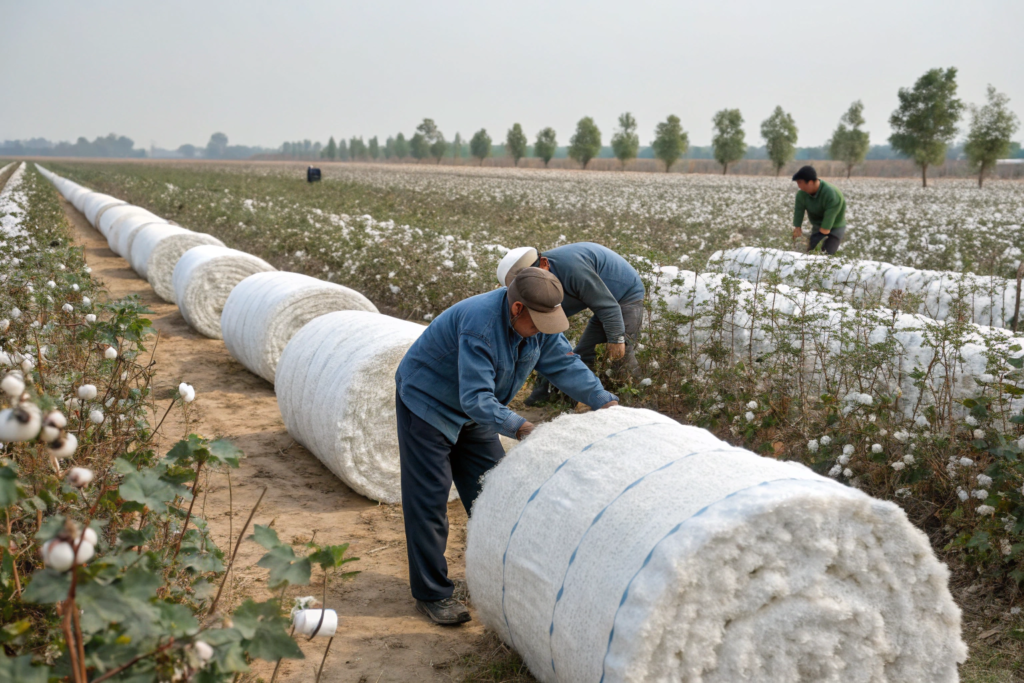
Does Healthier Soil Really Lead to Stronger, More Dye-Receptive Fibers?
It sounds like a stretch, but the science is there. Healthier soil with good organic matter and balanced nutrients supports stronger root systems. This allows the cotton plant to better manage water and nutrient uptake throughout the growing season, leading to more consistent fiber development. A stressed plant produces weaker, thinner fibers.
Stronger fibers with intact cell walls are more resilient during the harsh chemical and mechanical processes of spinning and dyeing. They are less likely to break or develop micro-damage that can cause uneven dye absorption. When we spin yarn from BCI-sourced cotton with higher fiber strength (measured in gram-force per tex), we notice fewer yarn breaks. This consistency carries through to the fabric, providing a superior "canvas" for dyes. This connection between soil management and textile performance is explored in agricultural research forums like Cotton Research and Development Corporation (CRDC) publications.
How Does Better Ginning Under BCI Affect My Fabric’s Color?
Ginning is where the cotton fiber is separated from its seed. It’s a brutal mechanical process, and poor ginning can damage fibers, creating "neps" (tiny knots) and short fibers. BCI’s social and environmental criteria extend to ginneries, which often means better-maintained equipment and more trained operators.
Well-ginned cotton has:
- Higher Fiber Length Retention: Longer "staple length" fibers align better in spinning, creating a smoother yarn surface. A smooth surface reflects light more evenly, making colors appear more vibrant and consistent.
- Fewer Neps and Short Fibers: Neps and short fibers can dye differently than the main body of the fiber, causing tiny, speckled flaws in solid-colored fabrics. This is a major headache for high-end knitwear.
We audited a ginnery in Xinjiang that had recently upgraded its machinery as part of its commitment to BCI’s continuous improvement. The raw cotton they output had a nep count reduction of nearly 15% compared to conventional sources. For our clients at Shanghai Fumao, this meant noticeably cleaner yarn for their premium jersey orders, which directly translated to fewer dyeing defects. Discussions on optimizing ginning for high-quality yarn are common in technical textile communities like Textile World.
From Farm to Dye Vat: The Reality of Colorfastness Testing
"Color retention" is formally measured in the lab through colorfastness tests. These are brutal simulations of washing, rubbing, light exposure, and perspiration. A fabric’s score depends on a combination of: 1) Fiber quality, 2) Yarn and fabric construction, 3) Dye selection, and 4) Dyeing process.
BCI certification does not mandate a specific colorfastness score. However, by promoting better raw material input (as discussed above), it sets the stage for higher potential performance. Think of it this way: you can’t bake a world-class cake with low-grade flour, no matter how good your recipe is. BCI helps ensure the "flour" is good. The rest is up to your fabric manufacturer’s expertise in recipe and execution.
If BCI Doesn’t Guarantee Colorfastness, What Should I Test For?
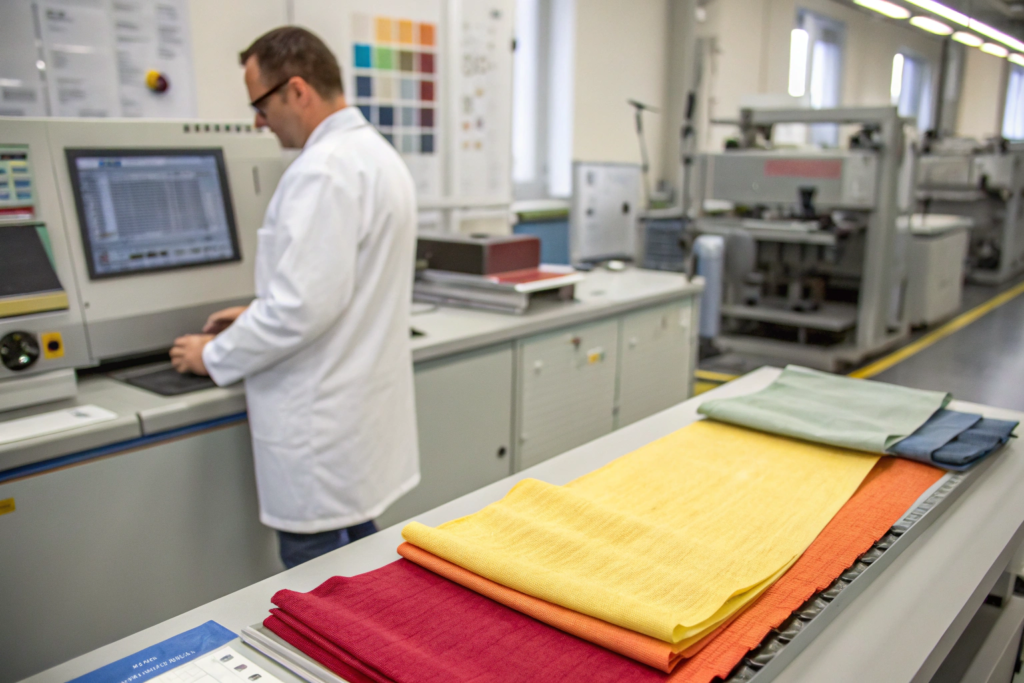
You must still conduct standard, rigorous lab testing on the final fabric. When you order BCI cotton fabric, your tech pack should still specify the exact colorfastness standards you require (e.g., AATCC 61 for washing, AATCC 8 for crocking). The advantage is that you’re starting with a more consistent base material.
Here’s a real-world example from our CNAS-accredited lab: In Q3 2023, we ran parallel tests on two batches of 40s combed cotton jersey. One used conventional Chinese cotton, the other used BCI-sourced Chinese cotton from a licensed farm group. Dyed with the same reactive dye recipe and process, the BCI-based fabric showed a half-point improvement (from 3-4 to 4) in wet crocking fastness and exhibited less "frosting" (color loss on surface edges) after 20 accelerated wash cycles. The dye house manager attributed this to the lower short-fiber content and fewer impurities in the BCI yarn, which allowed for more even and deeper dye penetration. For brands, understanding these key fabric quality tests for apparel is crucial, as outlined by testing bodies like SGS.
How Can I Specify My BCI Fabric Order for Optimal Color Results?
Communication with your supplier is key. Don’t just order "BCI cotton." Be specific about the end-use and your quality thresholds. Here’s what to ask:
- Request Fiber Origin Data: Ask which specific BCI-licensed farm region the cotton is from. Some regions are known for longer staple lengths (e.g., certain areas in Xinjiang).
- Specify Yarn Quality Metrics: In your purchase contract, include requirements for yarn evenness (CV%) and nep count. Better yarn = better dyeing.
- Choose the Right Dye for the Job: Discuss with your supplier. For ultimate wash-fastness on BCI cotton, reactive dyes or vat dyes are superior to direct dyes. A knowledgeable supplier like Shanghai Fumao can guide this choice based on your color palette and budget.
- Mandate Pre-production Lab Dips and Pilots: Never skip this step. It’s the only way to see how your specific color will behave on the specific BCI fabric batch.
A sportswear client from Poland learned this the hard way. They ordered a heather grey BCI cotton fleece but didn’t specify yarn sourcing. The first batch used a shorter-staple BCI cotton, resulting in pilling and color loss on the raised surface after minimal wear. For the re-order, we specified a longer-staple BCI source and adjusted the spinning twist. The problem was solved. The fashion industry’s approach to color management is a deep topic covered by specialists like Datacolor.
The Cost-Performance Balance: Is BCI Cotton Worth It for Color-Critical Projects?
For basic styles where cost is the primary driver, the incremental color benefit of BCI cotton might not justify a 5-10% premium over conventional cotton. However, for color-critical applications—think deep blacks, vibrant reds, pastel heathers, or printed fabrics where color consistency across meters is vital—the investment in a better fiber base makes clear business sense.
Reduced dyeing defects, lower rejection rates, and fewer customer returns for color fading all contribute to a lower total cost of ownership, even with a higher initial fabric cost. The ethical sourcing story becomes a powerful bonus on top of tangible quality benefits.
When Does the Color Benefit of BCI Cotton Outweigh the Cost?
Consider BCI cotton for these scenarios:
- Premium Basics: White t-shirts that must stay bright, black jeans that resist fading.
- Athleisure and Performance Wear: Garments subjected to frequent washing and sweat.
- Uniforms and Workwear: Where professional appearance and durability are mandated.
- Heavily Printed Fabrics: Where a uniform, clean base fabric is essential for print clarity.
We worked with an eco-conscious swimwear brand from California in early 2024. They needed a heavy, colorfast cotton blend for cover-ups. Their signature "Ocean Deep" navy had been fading with conventional cotton. We developed a fabric using BCI organic cotton blended with recycled polyester. The improved fiber quality from the BCI cotton, combined with a high-quality dye, resulted in a fabric that passed their rigorous 50-home-wash test with a rating of 4-5. They absorbed the 12% fabric cost increase because it eliminated their top customer complaint. This is a perfect example of strategic fabric sourcing for brand enhancement.
Can Poor Dyeing Ruin the Potential of Good BCI Cotton?
Absolutely. Excellent raw material can be ruined by bad processing. This is why partnering with a vertically-aligned or tightly-coordinated supplier is non-negotiable. The BCI standard doesn’t control the dye house. If the dye house uses cheap dyes, incorrect water ratios, or improper fixation, the fabric will perform poorly.
Your supplier must have control or a strong partnership with certified, technically proficient dyeing and finishing facilities. At Shanghai Fumao, our cooperative dyeing factories are audited for both environmental compliance (wastewater treatment) and technical capability. We provide them with the best possible BCI yarn and work with them to optimize recipes. This end-to-end control is where the theoretical benefits of BCI cotton are realized in the physical product you receive. Learning about advanced dyeing techniques for cellulosic fibers can be found in industry technical manuals and forums.
Conclusion
So, does BCI cotton offer better color retention? The answer is nuanced: BCI certification itself does not guarantee better colorfastness, but the improved fiber quality it fosters creates the optimal foundation for achieving superior and more consistent dyeing results. By starting with cleaner, stronger, and more uniform fibers, you reduce the variables that lead to dyeing defects, patchiness, and premature fading.
For brands where color integrity is a key selling point and a point of customer trust, sourcing BCI cotton is a smart technical decision that also delivers an ethical dividend. It’s about investing in quality from the very first link in the supply chain.
Ready to see the difference that a better fiber foundation can make in your colors? Let’s put it to the test. Shanghai Fumao can provide you with comparative swatches and lab data from our in-house testing facility, showing the performance of BCI versus conventional cotton in your specific fabric weights and colors. Contact our Business Director, Elaine, to start a technical conversation about your next color-critical order: elaine@fumaoclothing.com.