You’re curating a full collection—from heavyweight men’s workwear jackets to delicate women’s silk-blend blouses. You want a unified sustainability story, and BCI cotton seems like a solid foundation. But then a doubt creeps in: "Can this one certification really cover the immense technical and material diversity across my entire menswear and womenswear lines? Is it just for basics, or can it stretch to performance and luxury?" It’s a smart question. Committing to a standard only to find it doesn’t apply to half your collection is a sourcing and marketing nightmare.
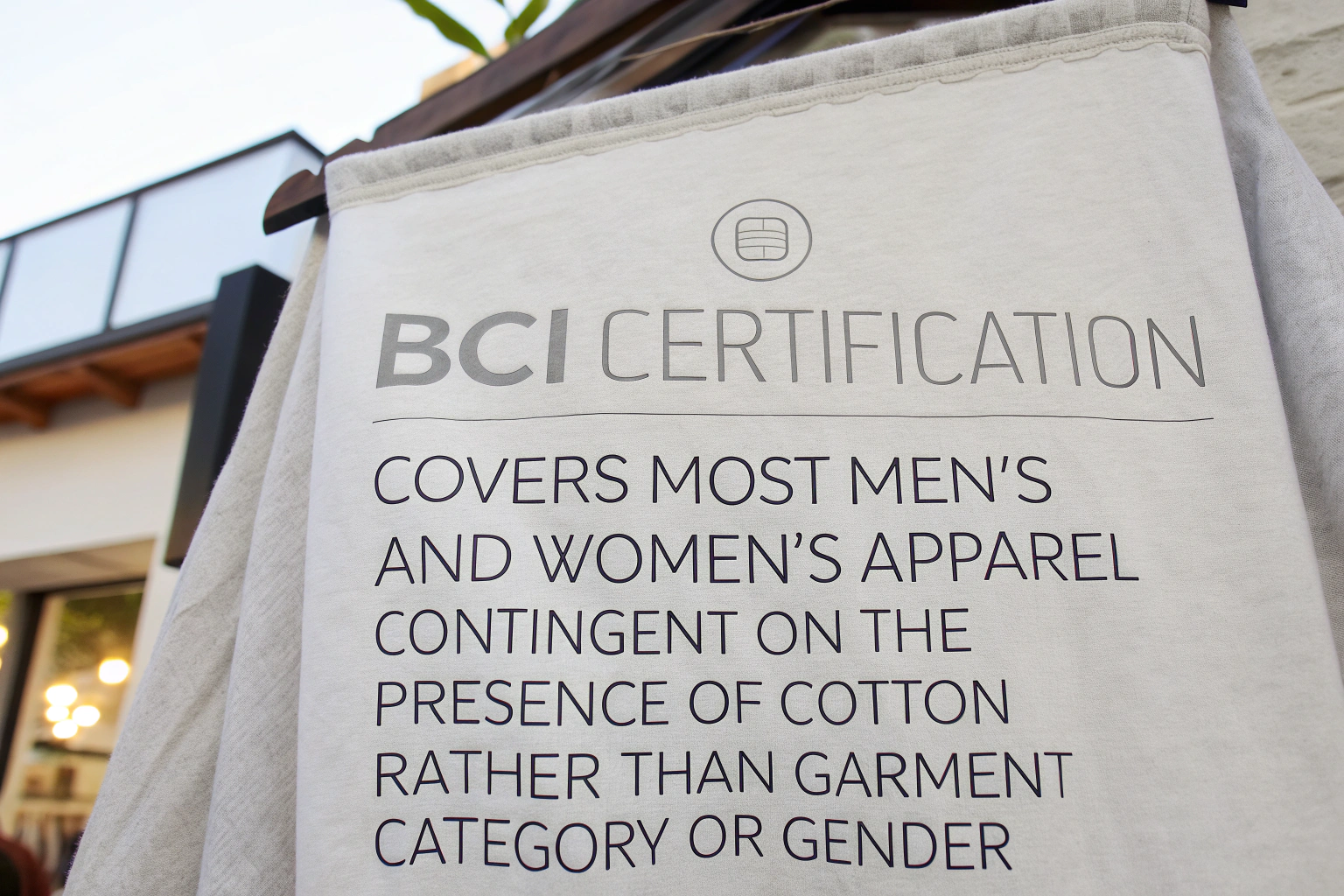
The direct answer is: BCI certification can cover the vast majority of men’s and women’s apparel, but its applicability is defined by the presence of cotton, not by the garment’s category or gender. The core question isn’t "Is this a dress or a pant?" but "Does this product contain cotton?" If the answer is yes, then that cotton component can be sourced via the Better Cotton Initiative. However, the ease and impact of integration vary dramatically based on the fabric construction, cotton content percentage, and the complexity of the supply chain for that specific item. BCI is not a product certification for finished garments; it’s a fiber sourcing program.
Think of BCI like buying certified free-range eggs. It doesn’t matter if you’re making a simple omelette (a cotton t-shirt) or a complex soufflé (a technical blended fabric). If the recipe contains eggs, you can choose certified ones. The certification covers the ingredient, not the final dish’s complexity. Your job as a brand is to ensure those certified "ingredients" are used and tracked correctly through your "recipes." Let’s map BCI’s coverage across the spectrum of apparel.
The Core Domains: Where BCI Shines & Is Ubiquitous
This is where BCI integration is straightforward, highly visible, and offers maximum impact due to high cotton content and volume.
1. Wardrobe Fundamentals & High-Volume Basics (For Both Men & Women):
- Fabrics: Jersey, interlock, rib knit, french terry, fleece, poplin, oxford, chambray, twill, denim, canvas.
- Garments: T-shirts, polo shirts, sweatshirts & hoodies, casual shirts, jeans, chinos, shorts, pajamas, underwear, socks (high cotton %), basic dresses, skirts.
- Why It Works: These categories are often 95-100% cotton. The supply chains for these fabrics are mature, and BCI cotton is widely available in standard constructions. Switching a 100% cotton jersey from conventional to BCI is a direct, simple swap for any competent supplier. This is the low-hanging fruit and the strategic starting point for any brand. At Shanghai Fumao, over 70% of our BCI fabric orders fall into these categories.
2. Home Textiles & Loungewear:
- Fabrics: Terry cloth, velour, jersey, lightweight wovens.
- Garments: Robes, loungewear sets, sleepwear.
- Why It Works: Similar to basics—high cotton content, comfort-focused, and produced at scale. The relaxed fit often means fewer complex performance requirements, making fabric substitution easier.

Is Denim a Good Candidate for BCI?
Denim is arguably one of the best and most impactful categories for BCI. Conventional cotton denim production has a significant environmental footprint. Sourcing BCI cotton for denim directly addresses the agricultural impact at the source. The process of spinning, dyeing (indigo), and finishing the denim remains the same. Many leading denim brands are major BCI members. The certification covers the cotton in the denim fabric itself.
The Complex Frontiers: Blends, Performance, and Outerwear
This is where your sourcing strategy needs more finesse. BCI still applies, but integration requires specific questions and supplier expertise.
3. Cotton-Blended Fabrics:
- Examples: Polyester-Cotton (e.g., 65/35 poplin for work shirts), Cotton-Spandex (for stretch jeans or jerseys), Cotton-Linen, Cotton-Tencel™, Cotton-Wool.
- How BCI Applies: BCI certification can cover the cotton portion of the blend. If a fabric is 60% cotton, 37% polyester, 3% spandex, then 60% of the fiber weight can be sourced as BCI. Your supplier must ensure the cotton yarn in that blend is BCI-tracked. The claim you make is still "We source our cotton via BCI," which is accurate. The key is traceability at the yarn spinning stage.
4. Performance & Activewear:
- Examples: Athletic jerseys, training shorts, yoga pants, performance polos.
- The Challenge: These fabrics are often complex blends (e.g., moisture-wicking polyester with a cotton touch for comfort). The cotton percentage might be lower (e.g., 20-30%). However, integrating BCI cotton here is highly valuable for storytelling. It shows you’ve considered sustainability even in technical categories. You need a supplier who can source or produce performance-grade yarns with a BCI cotton component.
A Technical Case from Our Work: In 2023, a Scandinavian activewear brand wanted BCI in their signature "training tee," a 50/50 cotton-poly blend. Our R&D team worked with a specialized spinner to create a BCI cotton yarn that met the strength and wicking requirements, then had it co-knit with recycled polyester. The result was a performance fabric with a verified, more sustainable cotton half.

Can BCI Cotton Be Used in Water-Repellent or Coated Fabrics?
Yes, but the certification stops at the base fabric. If you have a 100% BCI cotton canvas that is then coated with a PU layer for water resistance, the cotton substrate is BCI-sourced. The coating process itself is outside BCI’s scope. Your claim is valid for the cotton fiber. This is common in utility jackets or bags.
The Limits & Exceptions: Where BCI Does Not Directly Apply
Understanding the boundaries is crucial to avoid greenwashing and set correct expectations.
1. 100% Synthetic Garments:
- Examples: A 100% nylon windbreaker, a 100% polyester running top, a 100% acrylic knitwear.
- The Reality: BCI is for cotton. If there is zero cotton, BCI is not applicable. For these items, you would look to other certifications (e.g., Recycled Claim Standard for recycled polyester, GRS).
2. 100% Animal Fiber Garments:
- Examples: A 100% merino wool sweater, a 100% silk blouse, a cashmere coat.
- The Reality: BCI does not apply. Sustainability for these fibers is addressed by other programs (e.g., Responsible Wool Standard, ZQ Merino).
3. The "Garment" vs. "Fiber" Certification Clarification:
This is the most important limit to understand. BCI certifies the sourcing of the cotton fiber, not the social or environmental conditions of the final garment factory. A BCI Transaction Certificate proves demand for better cotton was created. It does not certify that the sewing factory paid fair wages or had safe conditions. For that, you need a separate social compliance audit (e.g., SMETA, BSCI, WRAP). This is a common point of confusion. A truly responsible brand uses BCI for material sourcing and a social standard for manufacturing conditions.

How to Build a Holocious Sustainability Portfolio?
The smart strategy is to use BCI as your cotton baseline. Then, layer on other certifications for other fibers:
- Cotton: BCI (or GOTS for organic).
- Recycled Polyester/Nylon: Global Recycled Standard (GRS).
- Wool: Responsible Wool Standard (RWS).
- Manufacturing: A social compliance audit standard.
This creates a comprehensive, honest, and credible sustainability profile for your entire collection.
Practical Implementation Strategy for Your Full Collection
-
Categorize Your Line: Break your collection into three buckets:
- Bucket A (Easy): 80-100% cotton items (Basics, Denim, Wovens). Start here.
- Bucket B (Strategic): Cotton blends (30-80% cotton). Plan these next, working with advanced suppliers.
- Bucket C (Out of Scope): 0% cotton items. Address with other certifications.
-
Communicate with Suppliers: For Bucket B items, your briefing must be precise: "This 60/40 cotton-poly fabric must use BCI-tracked cotton yarn." Ask for documentation on the cotton component’s sourcing.
-
Market with Precision: Tailor your messaging. For a 100% BCI cotton tee, you can be bold. For a performance blend, say: "Featuring cotton sourced via the Better Cotton Initiative, alongside recycled materials for performance." This is accurate and sophisticated.
Conclusion
So, does BCI certification cover all men’s and womenswear? It covers the cotton in all of it, which represents a massive portion of the global apparel industry. It is a powerful, scalable tool for the core of most brands’ collections. It is not, however, a universal seal that magically makes every garment sustainable.
Your role is to deploy this tool strategically: start with high-cotton basics to build expertise and volume, then thoughtfully integrate it into blends and more complex categories by partnering with technically adept suppliers. Simultaneously, build out your certification portfolio to cover non-cotton fibers and manufacturing ethics. This holistic approach is how you build a truly responsible and credible brand across every category you offer.
Need a partner who can navigate BCI across simple jerseys and complex performance blends? At Shanghai Fumao, our strength lies in our vertical understanding—from BCI cotton sourcing to advanced fabric engineering. We can help you map your entire collection and execute a phased, credible integration strategy. Contact our Business Director, Elaine, at elaine@fumaoclothing.com to develop a material roadmap that covers your full line.