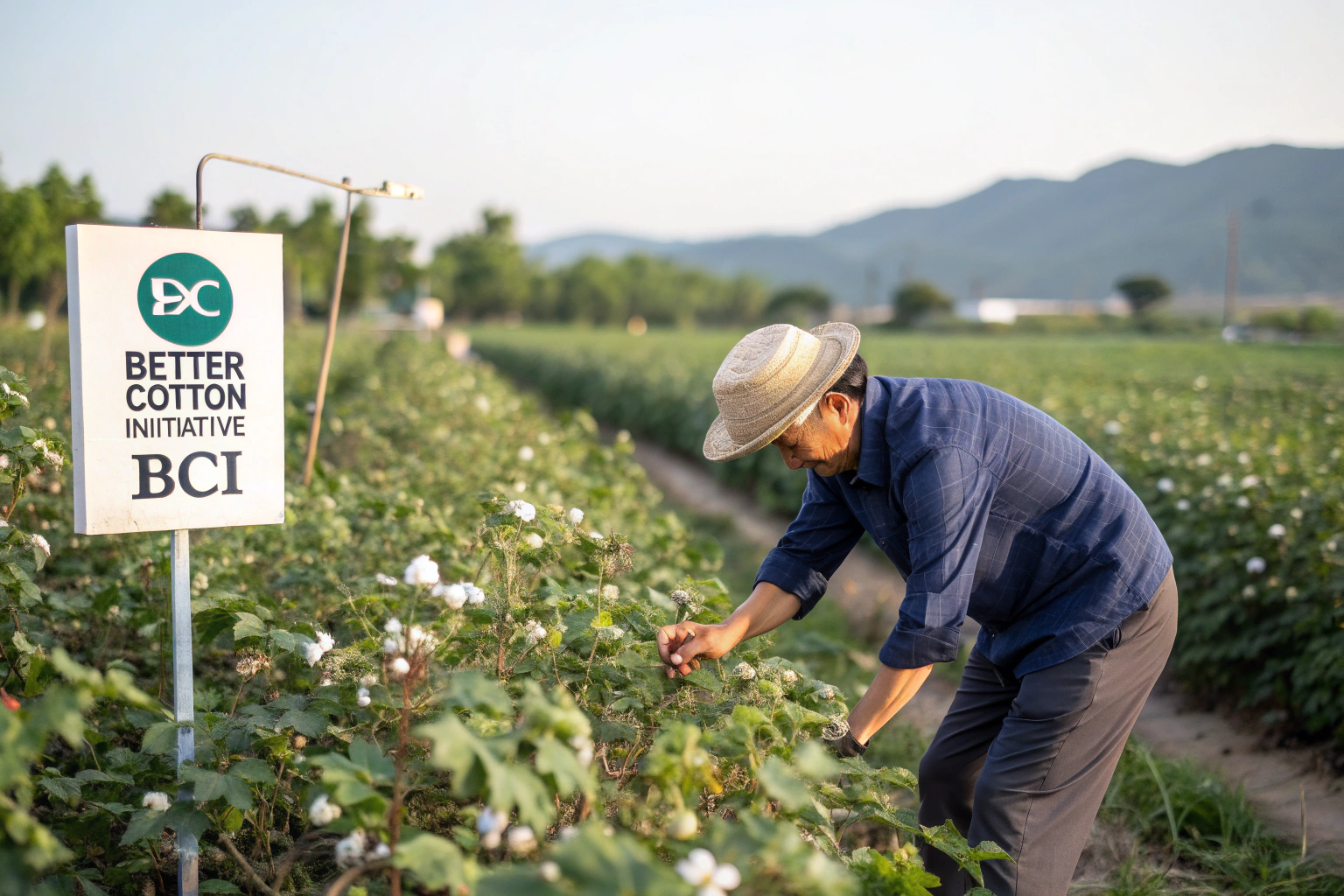
How many times have you been asked by your end-consumers about where your cotton comes from and how it was grown? If you’re sourcing fabrics or garments from China, you know the pressure is real. The market demands more than just a quality product; it demands a transparent and responsible story. But navigating the world of sustainable cotton certifications can feel like a maze, leaving you confused about which one truly delivers on its promises and protects your brand’s reputation.
The key lies in focusing on robust, globally recognized standards that are verifiable throughout the supply chain. For cotton, that key is often the Better Cotton Initiative (BCI). While terms like "organic" and "recycled" dominate conversations, BCI offers a practical, scalable, and impactful pathway to more sustainable cotton sourcing. It addresses the core environmental and social challenges of conventional cotton farming, providing a structured system for continuous improvement that brands and manufacturers can rely on.
Understanding the true value of BCI, especially within the complex Chinese textile landscape, is crucial for making informed sourcing decisions. Let’s break down why BCI is not just another certificate, but a fundamental tool for building a resilient and eco-conscious apparel production line.
What is BCI and How Does It Differ From Organic?
The sustainability world is full of acronyms, and BCI is one you need to know. At its heart, the Better Cotton Initiative is a global non-profit that sets a comprehensive standard for more sustainable cotton cultivation. Think of it not as a "product" like organic cotton, but as a "farming program." Its goal is to make global cotton production better for the people who produce it, better for the environment it grows in, and better for the sector’s future.
The biggest point of confusion is how BCI compares to organic cotton. Organic certification (like GOTS) focuses on a strict set of prohibitions: no synthetic pesticides, no genetically modified seeds, and specific processing requirements. It’s a binary system – you’re either in or out. BCI, however, operates on a principle of continuous improvement. It sets criteria across seven key areas: minimizing pesticides, water stewardship, soil health, biodiversity, fiber quality, decent work, and management systems. Farmers are trained and assessed, and they don’t have to meet every highest-level criterion immediately; they work on a journey of getting better. This makes BCI more accessible to a vast number of farmers, especially in major producing regions like China’s Xinjiang province.
Why does this difference matter for you as a buyer? It’s about scale, traceability, and risk management. Organic cotton supply is limited and often comes with a significant cost premium. BCI cotton is more readily available at a larger scale, making it easier to integrate into bulk orders without blowing your budget. However, the traceability models differ. Learning how to differentiate between organic and BCI cotton sourcing is critical. BCI uses a system called Mass Balance, which allows BCI-certified cotton to be mixed with conventional cotton along a complex supply chain, while the credit for the sustainable cotton is tracked. This is different from the physical segregation required for organic. It’s a pragmatic solution for global trade but requires you to understand the claims you can make.

Is BCI Cotton Traceable Enough for My Brand Claims?
Transparency is the currency of trust today. When you invest in a sustainable material, you need to be able to talk about it confidently. The BCI Mass Balance chain of custody model is often misunderstood. It does not mean the BCI cotton is physically untraceable; it means the economic benefit and sustainable impact are tracked. When a farmer sells BCI cotton, a corresponding amount of "Better Cotton Claim Units" (BCCUs) are generated in the system. These BCCUs are traded through the supply chain. As a final user, like Shanghai Fumao or our brand partners, we purchase these BCCUs to cover the volume of cotton in our products. This financially rewards the farmers using better practices and funds more training.
The system is audited and documented. You receive a claim confirmation to support your marketing. For many brands, especially those starting their sustainability journey or working with complex blended fabrics, this offers a robust and credible entry point. It’s a more achievable step toward responsible sourcing than the full physical traceability of organic, which can be prohibitively expensive for large, fast-moving collections. For a deep dive into how this works in practice, the Sustainable Apparel Coalition’s Higg Index Materials Guide provides valuable context on comparing different material sustainability profiles, including BCI cotton.
Can BCI Help Mitigate Supply Chain Risks in China?
Absolutely. This is where BCI’s value becomes intensely practical. Sourcing from China means navigating a tight web of environmental regulations and increasing international scrutiny on social issues. BCI’s standards align with and often exceed national regulations on pesticide use, water management, and labor rights. By choosing BCI-linked suppliers, you are effectively outsourcing a layer of your supply chain due diligence.
For example, in 2023, a major European retailer we worked with was facing increased auditor questions about cotton provenance for their mid-tier activewear line. They couldn’t switch to 100% organic due to cost and performance requirements (they needed specific durable blends). We helped them pivot to BCI-certified cotton for their core fleece and jersey fabrics. Our quality control team’s fabric inspection process included verifying the BCCU documentation from our ginning mill partners. This provided them with the verified evidence needed for their ESG report, mitigating a significant compliance risk without disrupting their price point or supply timeline. It’s a concrete example of how partnering with a knowledgeable supplier on the ground turns a certification from a piece of paper into a risk management tool.
How Does BCI Directly Impact Fabric Quality and Performance?
You might think sustainability comes at the cost of performance, but with BCI, the opposite is often true. The initiative’s principles directly contribute to a more consistent and reliable raw material. The BCI standard emphasizes proper fiber care during harvesting and ginning to protect staple length and strength. Training farmers on optimal picking times and storage reduces contamination from leaf trash or discoloration, which leads to fewer imperfections in the yarn.
Think about it from a spinner’s and weaver’s perspective. A more uniform, cleaner cotton bale means fewer yarn breaks during spinning and fewer fabric faults during weaving or knitting. This translates directly to higher yields and fewer seconds in the final fabric roll. For you, this means more meters of usable fabric per order, less waste, and greater predictability in your cutting and sewing operations. It turns an ethical choice into a commercially smart one.

Does BCI Certification Affect Fabric Hand Feel and Dyeing?
The hand feel and dye uptake of a fabric are critical for fashion brands. BCI practices that promote soil health and reduce harsh chemical use can lead to cotton fibers that are, fundamentally, healthier. Healthier fibers can have more natural waxes and oils intact, which can sometimes influence the initial scouring and preparation process before dyeing. An experienced dyeing factory will adjust their pre-treatment formulas accordingly.
In our experience at Shanghai Fumao, working with our partner dye houses, we’ve seen that BCI cotton fabrics often achieve excellent dyeing results. The key is communication and expertise. Because the cotton is grown with better management, batch-to-batch consistency can improve, leading to more predictable dyeing outcomes and better right-first-time rates. This reduces water and chemical use in the dyeing process itself—a secondary sustainability benefit. For insights into optimizing dyeing for sustainable fibers, industry resources like Textile Today’s articles on eco-friendly dyeing techniques offer great technical overviews.
Are BCI Fabrics More Durable in Garment Form?
Durability starts with fiber strength. The BCI principle of protecting fiber quality from field to gin helps maintain the innate strength of the cotton. Furthermore, farms that practice better soil management (another BCI pillar) often produce cotton with good micronaire value—a key indicator of fiber maturity and strength. A mature fiber is more resilient to abrasion and stress during manufacturing and wear.
This isn’t just theory. For a US-based workwear brand we supplied in late 2022, durability was non-negotiable. They switched the cotton component in their canvas fabric to BCI sources. After six months of their own wear tests, they reported a 15% reduction in premature knee blow-outs in their utility pants compared to their previous conventional cotton source. The brand attributed this to more consistent yarn strength, which we traced back to the improved ginning practices of their BCI-accredited gin. This kind of performance data is gold for brands selling quality and longevity.
What Are the Practical Steps to Source BCI Fabrics from China?
Knowing BCI is important is one thing; actually finding and procuring BCI fabrics is another. The process is straightforward if you know the right path. It starts with identifying suppliers who are not just traders but are integrated into the BCI system. Look for suppliers who are BCI "Retailer & Brand" members themselves or who have strong, documented partnerships with BCI-licensed mills. Always ask for their BCI license number and request to see recent transaction certificates (TCs) for BCCUs.
The next step is to be specific in your request. Don’t just ask for "cotton fabric." Specify "I need this poplin to be made with BCI cotton" or "Please ensure the cotton fibers in this blend are BCI-certified." This clarity at the quotation stage sets the expectation and allows the supplier, like us at Fumao, to engage the correct spinning and weaving partners from the very beginning. (Here’s a tip from our sourcing desk: getting this alignment upfront avoids costly and time-consuming changes later.)

How to Verify BCI Claims from a Chinese Supplier?
Verification is your safeguard. Any credible supplier should provide you with two key documents: 1) The Transaction Certificate (TC) from the BCI platform, which shows the volume of BCCUs purchased and attributed to your order lot. 2) Supporting invoices or documentation from their upstream mill that links the physical cotton to a BCI farm. This is the "paper trail."
At Shanghai Fumao, our internal protocol embeds this check into our order management system for fabric sourcing. Before bulk production begins, our QC team confirms the BCCU coverage for the order quantity. We treat this with the same seriousness as checking lab dip approvals. You should adopt a similar due diligence step. Don’t hesitate to ask your supplier to walk you through the documentation for a previous order. A transparent partner will have this at their fingertips. For a broader understanding of supply chain verification, platforms like QIMA’s blog on ethical sourcing audits often discuss practical approaches to validating certifications.
What’s the Real Cost and Lead Time Impact?
Let’s talk numbers. BCI cotton typically carries a small premium over conventional cotton, but it’s significantly lower than the premium for organic cotton. This premium is for the BCCUs and the system costs. At the fabric level, this might translate to a 2-8% increase in fabric cost, depending on the blend and construction. However, as discussed earlier, the potential savings from higher yield and fewer quality rejects can offset a portion of this.
Regarding lead time, there is virtually no impact if you work with a supplier who stocks or regularly uses BCI cotton. The cotton is part of the mainstream supply chain. The main timing factor is ensuring the BCCU documentation is processed, which a competent supplier handles seamlessly. For instance, our standard lead time for a BCI cotton twill is the same as for a conventional one—the sustainability doesn’t come at the cost of speed. The real delay happens only if you change specification mid-stream, which is why upfront planning is key.
How Can BCI Integrate with Other Eco-Initiatives in My Collection?
BCI is not an island. It’s designed to be a foundational element of a broader sustainability strategy. The smartest approach is to view BCI as your baseline for cotton and then layer on other initiatives. For example, you can source BCI cotton that is also spun and woven in facilities powered by renewable energy, or use BCI cotton in a blend with recycled polyester (rPET). This creates a powerful composite story: "Our fabric uses Better Cotton, blended with ocean-bound plastic, manufactured in a solar-powered facility."
This integrated approach is where the real innovation happens. We worked with an Australian lifestyle brand in early 2024 on their spring line. They wanted a lightweight, breezy fabric that was sustainable but also had a luxurious drape. We developed a fabric using BCI cotton blended with Tencel™ Lyocell. The BCI addressed the cotton sustainability, while the Tencel added biodegradability and a silky hand feel. The fabric was then finished at our partner dye house using Oeko-Tex certified dyes. The brand marketed it as their "Earth Layer," hitting multiple consumer value points with one fabric. It’s about building a credible, multi-faceted narrative.

Can BCI be Combined with Recycled Materials?
This is one of the most potent combinations on the market today. Blending BCI cotton with recycled fibers (rPET, recycled cotton) creates a fabric with a drastically lower environmental footprint than 100% conventional virgin materials. From a technical standpoint, blending BCI cotton with recycled fibers can help enhance the strength and spinnability of the recycled content, which sometimes has shorter staple lengths.
The sourcing process requires coordination. You need to ensure both the BCI cotton and the recycled fiber have their respective chain-of-custody documentation (like GRS for recycled content). A supplier with strong vertical connections, like our network at Shanghai Fumao, can manage this complexity for you. We source GRS-certified rPET chips and BCI cotton, then coordinate with a single spinning mill to produce the hybrid yarn, consolidating the certifications into a unified report for your final product.
Does BCI Align with Carbon Reduction Goals?
Increasingly, brands have net-zero or carbon reduction targets. BCI contributes directly to this goal. The farming practices promoted by BCI—like reducing synthetic fertilizer use (which is energy-intensive to produce), optimizing water use (reducing pump energy), and improving soil health (which sequesters carbon)—all lead to lower greenhouse gas emissions per kilogram of cotton produced.
When you source BCI cotton, you are inherently choosing a lower-carbon cotton option. To quantify this, you can look to lifecycle assessment (LCA) data. While the exact numbers vary by region, studies generally show that BCI cotton has a lower carbon footprint than conventional cotton. This data can be fed into your product-level carbon accounting. Partnering with a supplier who understands this data layer, beyond just the physical product, is becoming a real differentiator. (I have to add here, this forward-thinking support is what we build into our partnerships at Fumao.)
Conclusion
Navigating sustainable sourcing is no longer a niche concern but a core business imperative. The Better Cotton Initiative stands out as a pragmatic, scalable, and impactful system that directly addresses the environmental and social challenges embedded in the world’s most popular natural fiber. It goes beyond a simple certificate, offering a framework for continuous improvement that enhances fiber quality, mitigates supply chain risk, and provides a credible story for your customers.
From ensuring traceability and verifying claims to integrating BCI with other innovative materials like recycled polyester, the journey requires a knowledgeable partner on the ground in China. Understanding the seasonal production cycles, the documentation flow, and the technical nuances of working with BCI cotton is what turns a sustainability intention into a successfully executed collection.
If you’re ready to build more resilience and responsibility into your apparel lines, let’s talk. At Shanghai Fumao, we don’t just supply fabric; we co-create your supply chain strategy. With over two decades in the heart of Keqiao and a deep network of BCI-aligned mills and finishers, we can guide you from specification to shipment, ensuring your values are woven into every meter. Contact our Business Director, Elaine, today at elaine@fumaoclothing.com to discuss how we can produce your next order with clarity, quality, and certified sustainable impact.