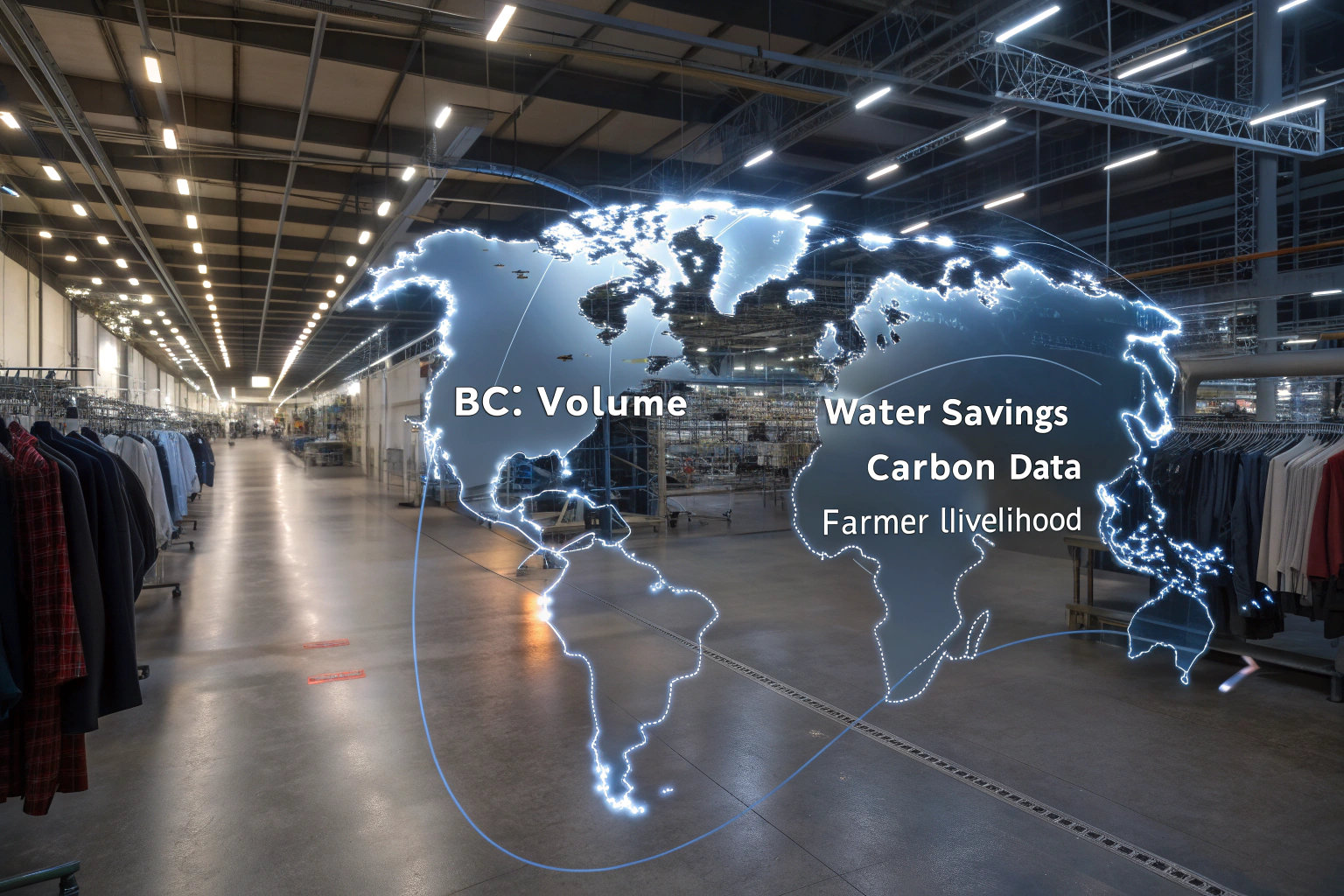
If you’re sourcing apparel today, you’ve felt the pressure: retailers want sustainability reports, consumers are scanning QR codes for origins, and new regulations are looming. In this shifting landscape, the Better Cotton Initiative (BCI) has grown from a niche concept to a major force. But is it just a current trend, or is it the foundation of a new normal? The future of BCI isn’t about whether it will exist—it’s about how it will evolve from a voluntary certification into an integrated, data-driven component of the entire apparel manufacturing ecosystem. It’s moving from a "nice-to-have" badge to the basic operating system for responsible cotton sourcing.
The future of BCI is one of ubiquity, integration, and data transparency. We predict it will become the default baseline for cotton sourcing, driven by retailer mandates, government regulations, and consumer expectation. Its "Mass Balance" model will evolve to become more granular, supported by blockchain-like traceability. Furthermore, BCI will increasingly intersect with other sustainability metrics (like carbon and water footprinting), providing a consolidated view of a garment’s impact. For manufacturers and brands, this means BCI compliance will shift from a specialized task to a fundamental, built-in feature of the supply chain, managed seamlessly by forward-thinking partners.
Let’s explore the key drivers and concrete changes that will shape this future over the next 3-5 years.
Will BCI Become a Mandatory Requirement, Not a Choice?
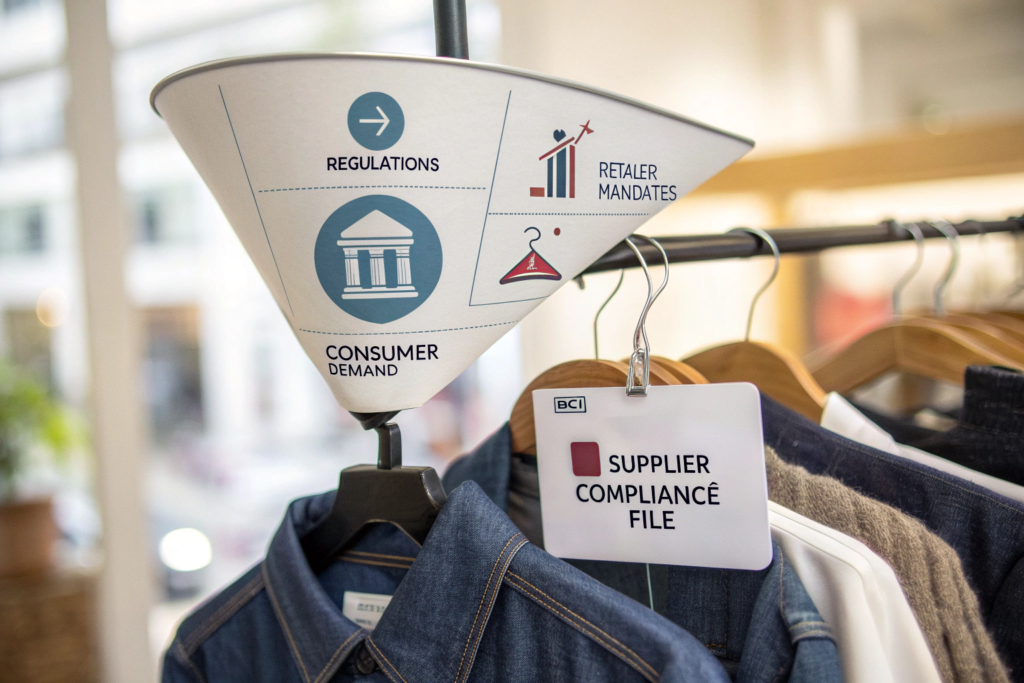
The trajectory points overwhelmingly toward yes. This shift is being driven from the top down and the bottom up. Major retailers and brands—from H&M and Zara to luxury groups—are setting public targets for 100% "more sustainable cotton" by 2025-2030. For most, BCI is the primary vehicle to hit these targets at scale. This turns BCI from a differentiating option into a table-stakes requirement for any supplier who wants to do business with them.
Next come government regulations. The EU’s upcoming regulations like the EUDR (European Union Deforestation Regulation) and the Corporate Sustainability Due Diligence Directive (CSDDD) will require proof that raw materials (including cotton) are not linked to deforestation or human rights abuses. BCI’s farm-level monitoring and principles provide a ready-made due diligence framework to help comply. We’re already seeing European brands preemptively demanding BCI as part of their risk mitigation strategy. In the future, importing a conventional cotton garment into the EU without verified sustainable credentials may incur additional due diligence costs or even restrictions, making BCI a financial and operational necessity.
How will this mandatory shift reshape supplier relationships?
The divide between "BCI-capable" and "non-BCI" suppliers will widen into a chasm. Brands will consolidate their supply chains around fewer, larger, fully compliant manufacturing partners. For factories, offering BCI production will be as basic as offering sewing. Small, non-compliant factories will struggle to secure orders from major brands.
This creates an opportunity for integrated suppliers like Shanghai Fumao. Our role evolves from being a provider of BCI fabric to being a guarantor of compliance for the entire garment. We will manage the BCI credit flow, document generation, and audit readiness for our network of partner garment factories, acting as a one-stop compliance hub for our brand clients. The relationship becomes strategic and sticky, based on trust and systemic capability, not just price.
What does this mean for sourcing costs and pricing?
The "BCI premium" will shrink and eventually disappear for standard items. As BCI cotton becomes the market norm, its price will converge with conventional cotton. The cost will be absorbed into the base price of cotton. However, the cost of verification and data management will become a new line item. Efficient suppliers who have automated this process will have a significant cost advantage. Brands will pay not for the BCI cotton itself, but for the assured, low-friction compliance that comes with it. This favors large, tech-savvy manufacturers.
How Will Technology Transform BCI Traceability?
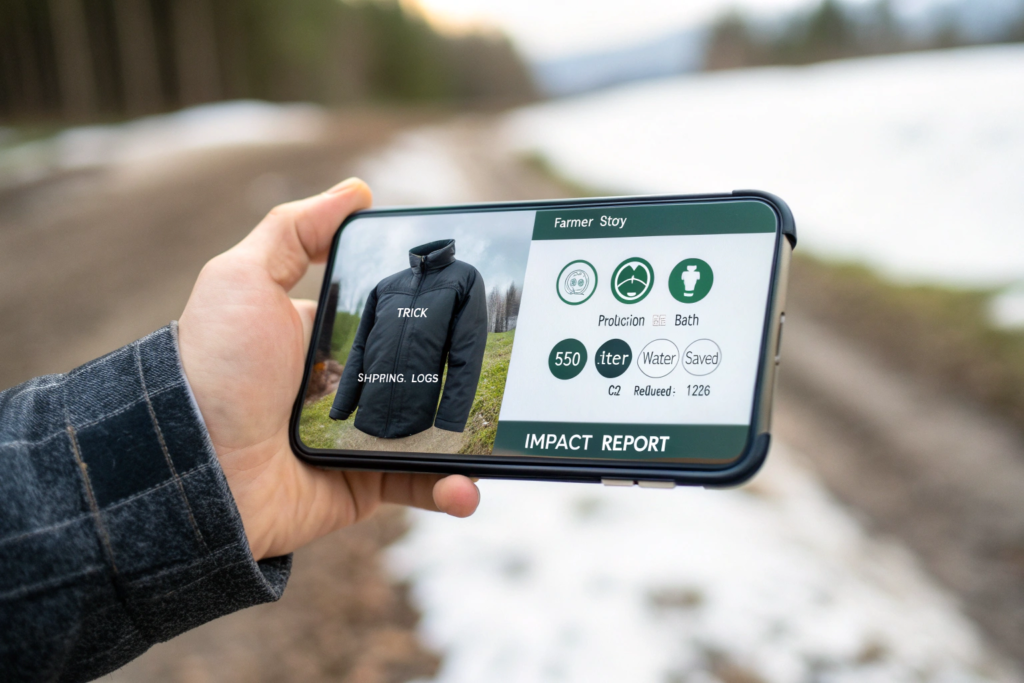
The current "Mass Balance" model is pragmatic but often criticized for its lack of physical traceability. The future lies in digitally supercharged Mass Balance. We will see the integration of blockchain or other secure digital ledger technologies to track BCI credits with unprecedented transparency. Imagine each bale of BCI cotton having a digital passport (an NFT, in essence) that records its journey, farm data, and water savings. These digital credits would be traded and applied to finished garments, providing a near-real-time, tamper-proof audit trail.
This isn’t science fiction. Pilot projects are already underway. The benefit for you as a brand is profound: marketing claims move from "we support BCI farmers" to "this specific garment’s cotton contribution saved X liters of water in Y region." This level of specificity is a marketer’s dream and a greenwasher’s nightmare.
What role will AI and data analytics play?
AI will be used for predictive sourcing and impact aggregation. For instance, AI could analyze historical BCI credit availability, weather patterns, and order books to predict supply bottlenecks and advise on purchasing timing. For brands, an AI tool provided by their manufacturer could automatically calculate and report the total environmental impact (water, carbon, chemical use) of their entire seasonal collection based on the BCI and other material data in their orders. At Shanghai Fumao, we are investing in systems that will eventually provide clients with a dashboard showing the live, aggregated sustainability impact of all their orders with us.
Will physical traceability replace Mass Balance?
Not fully, but it will grow for premium lines. "Identity Preserved" or "Segregated" BCI cotton (where BCI cotton is kept physically separate) will become a premium tier for brands wanting to make a "100% traceable" claim. This will carry a higher cost and require even more streamlined supply chains. The bulk of the market, however, will likely rely on the enhanced digital Mass Balance model for its balance of impact, scale, and cost-effectiveness. The key for brands is to have a supplier who can operate in both models.
How Will BCI Integrate with Other Sustainability Metrics?
BCI will not stand alone. It will become a core data node in a broader Integrated Sustainability Profile. The future is about convergence. BCI’s farm-level data on water and pesticide use will be combined with:
- Carbon Footprint Data from transport and manufacturing.
- Chemical Management Data (from standards like ZDHC) from dyeing and finishing.
- Social Compliance Data from factory audits.
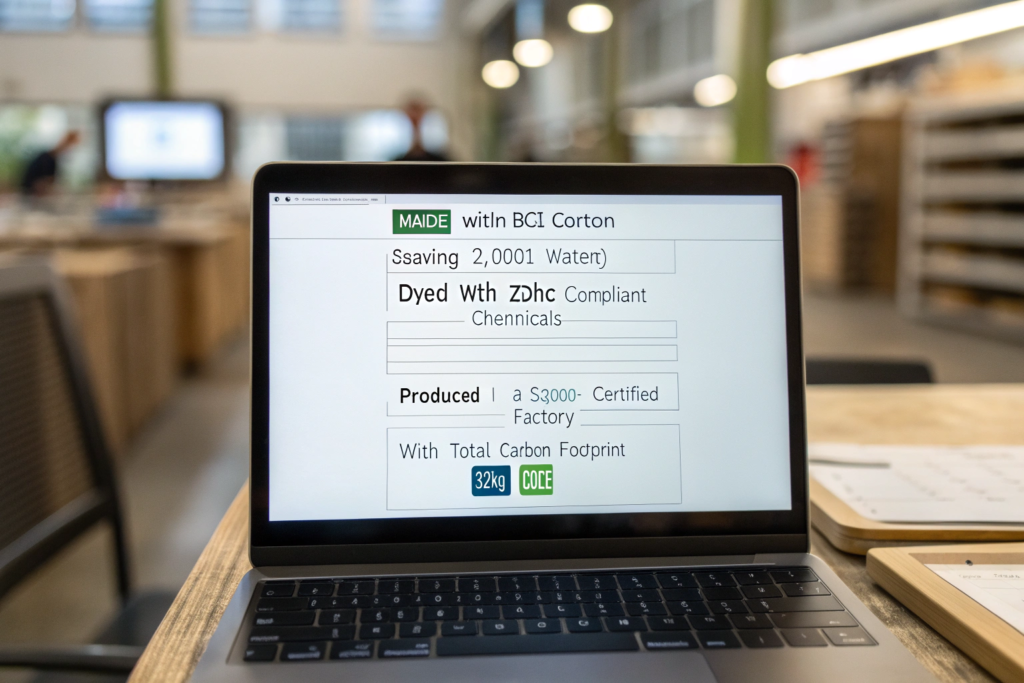
Your manufacturer will provide you with a single, digital "sustainability passport" for your order that pulls data from all these streams. For example, a hoodie’s passport might state: "Made with BCI cotton (saving 2,000L water), dyed with ZDHC-compliant chemicals, produced in a SA8000-certified factory, with a total carbon footprint of 8.2kg CO2e." This holistic view is what regulators and conscious consumers will ultimately demand.
What new standards or partnerships will emerge?
We will see formal alliances between BCI and other major systems. Imagine a unified label or digital platform that combines BCI, GRS (Global Recycled Standard), and Fair Trade. This reduces audit fatigue and simplifies communication. Brands will increasingly work with "super-suppliers" who are certified across this entire spectrum, offering a one-stop shop for comprehensive compliance. Developing a unified understanding of textile sustainability frameworks is already a priority for the industry. Furthermore, the push for circular economy integration in apparel manufacturing will force BCI to interface with recycling and end-of-life data streams.
How will this affect product development and design?
Designers will have sustainability metrics as a key parameter in their material selection software. When they select a "BCI cotton twill" from a digital library, they will instantly see its associated water savings, typical carbon footprint, and compliance status. This will make sustainable design choices intuitive and data-driven from the very first sketch. Material selection becomes an active part of impact calculation.
What Are the Practical Implications for Brands & Manufacturers?
For Brands: Your sourcing team will transform into a sustainability data management team. Partner selection will be based on a supplier’s digital integration capability and data transparency as much as on cost and quality. You will need fewer, but more deeply integrated, manufacturing partners.
For Manufacturers: The winners will be those who invest in digital supply chain management and vertical integration. Factories will need to source from spinners and weavers who are digitally connected into the BCI system. They will need in-house expertise to manage this data flow. At Shanghai Fumao, we’re preparing for this by building our proprietary fabric tracking system that assigns a unique digital ID to every batch, ready to link with future blockchain platforms. The factory of the future is a transparent, data-rich node in a global network.

What skills will be needed in the future supply chain?
New roles will emerge: Supply Chain Transparency Managers, Sustainability Data Analysts, and Digital Compliance Auditors. The traditional merchandiser’s role will expand to include monitoring the live compliance status of their orders. The most successful professionals will blend textile knowledge with data literacy.
Is there a risk of "sustainability monopoly" with BCI?
It’s a valid concern. BCI’s dominance could stifle innovation in alternative sustainable cotton models. The healthy future is a multi-standard ecosystem where BCI acts as the broad baseline, and other standards (like regenerative organic, fair trade, recycled) serve as premium add-ons for specific claims. This allows for choice, innovation, and continuous improvement beyond BCI’s current criteria.
Conclusion
The future of BCI in global apparel manufacturing is not a side plot; it is becoming the main storyline. It represents the industrialization of ethics—taking well-intentioned principles and scaling them through systems, standards, and technology. For forward-thinking brands and manufacturers, this is not a threat but an immense opportunity to build more resilient, transparent, and valuable businesses.
The transition will separate the leaders from the laggards. Leaders are already asking not "Can you do BCI?" but "How is your system built for the next phase of digital, integrated compliance?" They are seeking partners who are architects of this future, not just participants in the present.
At Shanghai Fumao, we are building that future-ready system today. We see ourselves as your gateway to not just responsible cotton, but to a seamlessly compliant, data-empowered supply chain. Let’s discuss how to future-proof your sourcing strategy. Contact our Business Director Elaine to explore how our integrated model prepares you for what’s next: elaine@fumaoclothing.com.