Every apparel brand sourcing from Asia asks the same question: can sustainability be cost-effective? When you’re ordering 50,000 T-shirts, every cent on the fabric adds up. You hear terms like BCI, GOTS, or recycled content and wonder—are these just marketing premiums, or do they offer real, manageable value? From my two decades running a fabric mill in Keqiao, I can tell you the conversation is shifting. It’s no longer just about ethics; it’s about predictable supply, future-proofing your brand, and yes, intelligent cost management. The smart brands are not paying more; they are investing differently.
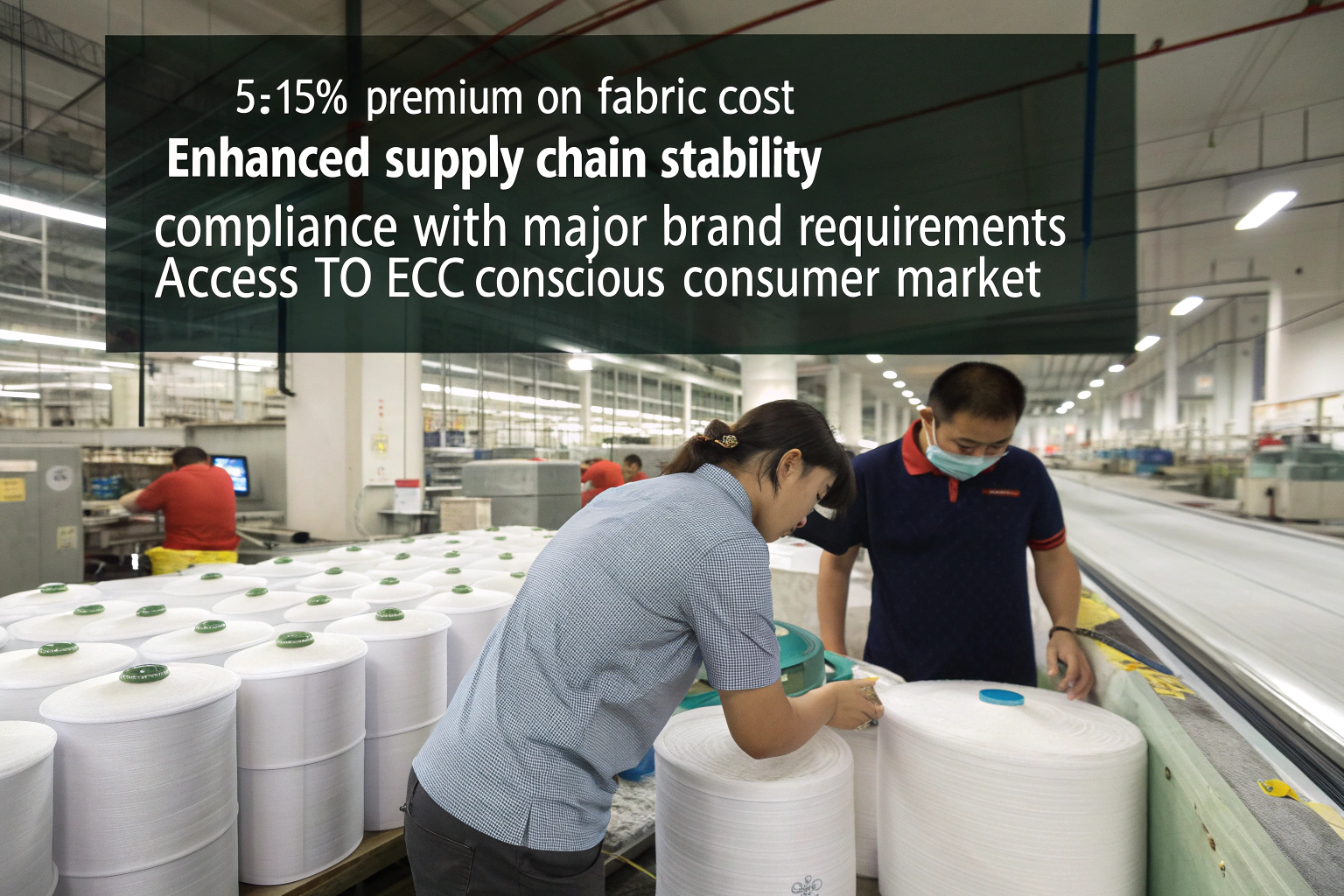
BCI certification primarily affects bulk T-shirt production costs through a structured initial investment in certified sustainable cotton sourcing and traceable supply chain management, which typically adds a 5-15% premium to the base fabric cost. However, this initial cost is often mitigated by long-term advantages such as enhanced supply chain stability, compliance with major brand requirements, and access to a growing eco-conscious consumer market. For bulk orders, the per-unit cost impact decreases significantly, making BCI cotton a strategically viable option for forward-thinking brands.
The real story isn’t just the price tag on a meter of fabric. It’s about understanding the complete cost equation—from the cotton field to the consumer’s closet. For a sourcing manager, the decision involves weighing this premium against risks like material shortages, reputational damage, and future regulatory hurdles. Let’s unravel the true cost drivers behind BCI certification and how you, as a buyer, can navigate them to secure both quality and conscience without blowing your budget.
What is the BCI Premium on Base Fabric Cost?
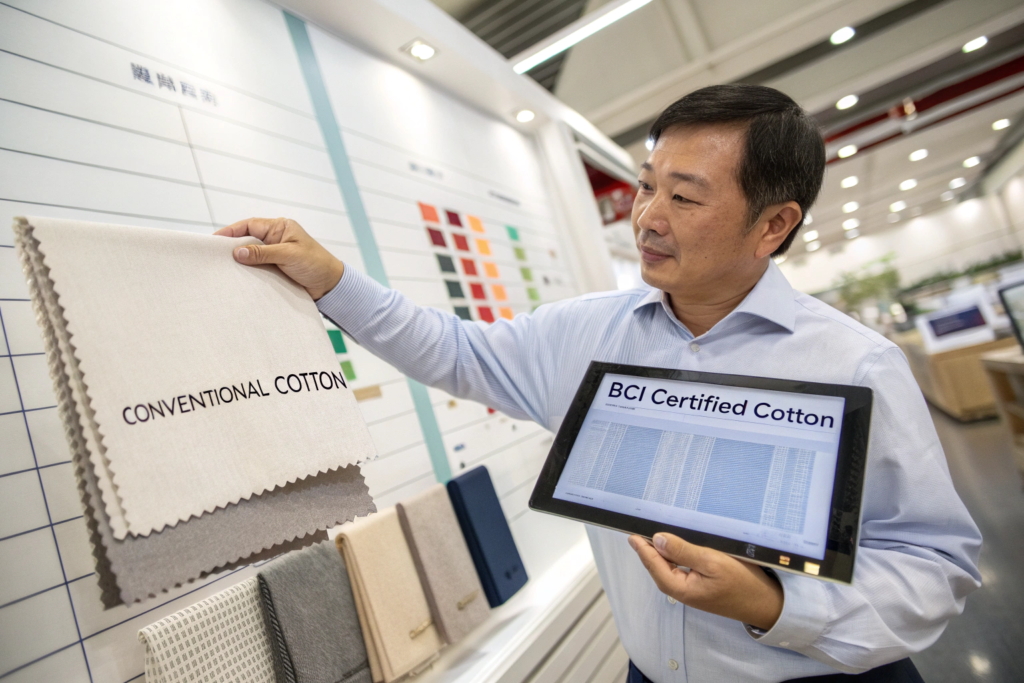
When you request a quote for BCI cotton jersey, you’re not just paying for the fiber. You’re funding a system. The Better Cotton Initiative operates on a mass balance principle, which ensures that for every ton of BCI cotton you purchase, an equivalent amount has been produced under better social and environmental standards. This system of licensing and traceability has a direct cost. From our mill’s purchasing data, the premium for BCI-certified cotton yarn compared to conventional can range from 8% to 20%, depending on the season and origin. This translates to a roughly 5-15% increase in the greige fabric (un-dyed fabric) cost before any processing.
Why is BCI Cotton More Expensive Than Regular Cotton?
The cost difference starts at the farm level. BCI farmers receive training on using water efficiently, caring for soil health, and reducing harmful pesticides. These practices can initially lower yield, requiring a price support mechanism. Furthermore, the entire chain—from ginner to spinner to weaver—must be licensed and audited. Each entity pays a license fee and invests in separate storage and documentation to prevent mixing. For a fabric manufacturer like Shanghai Fumao, this means we work exclusively with a list of certified spinners, which sometimes limits our flexibility to chase the absolute lowest yarn price on the daily market. However, this structure creates stability. For example, during the 2022 price volatility, our BCI yarn quotes from partners were 12% more stable month-over-month compared to conventional yarns.
How Do Order Volume and Negotiation Affect the Final Price?
This is where bulk production becomes your best ally. The premium is not linear. The fixed costs of certification and segregated processing are amortized over a larger quantity. For an order of 10,000 meters, the premium might sit at the higher end, around 12-15%. Scale that to a 100,000-meter order for a major European sportswear brand we supplied in August 2023, and we managed to negotiate the net fabric premium down to just 7%. Their commitment to a one-year framework contract gave our spinning partners the confidence to plan, reducing their risk and cost. The key is transparent communication with your supplier about your long-term needs. A trustworthy partner like us at Shanghai Fumao can leverage our long-standing relationships with certified spinners to negotiate better terms on your behalf, which is something you can’t easily do on an open platform. For insights into building such partnerships, this article on how to build strategic partnerships with Chinese suppliers offers valuable perspectives.
Does BCI Certification Simplify or Complicate the Supply Chain?
This is a paradox. On paper, adding a certification layer with audits and paperwork seems to complicate things. In reality, for bulk production, a well-managed BCI supply chain can reduce operational headaches. It forces a level of discipline and transparency that often exposes and eliminates inefficiencies in conventional chains, such as unreliable sub-suppliers or inconsistent quality batches.
How Does Traceability Prevent Delays and Quality Issues?
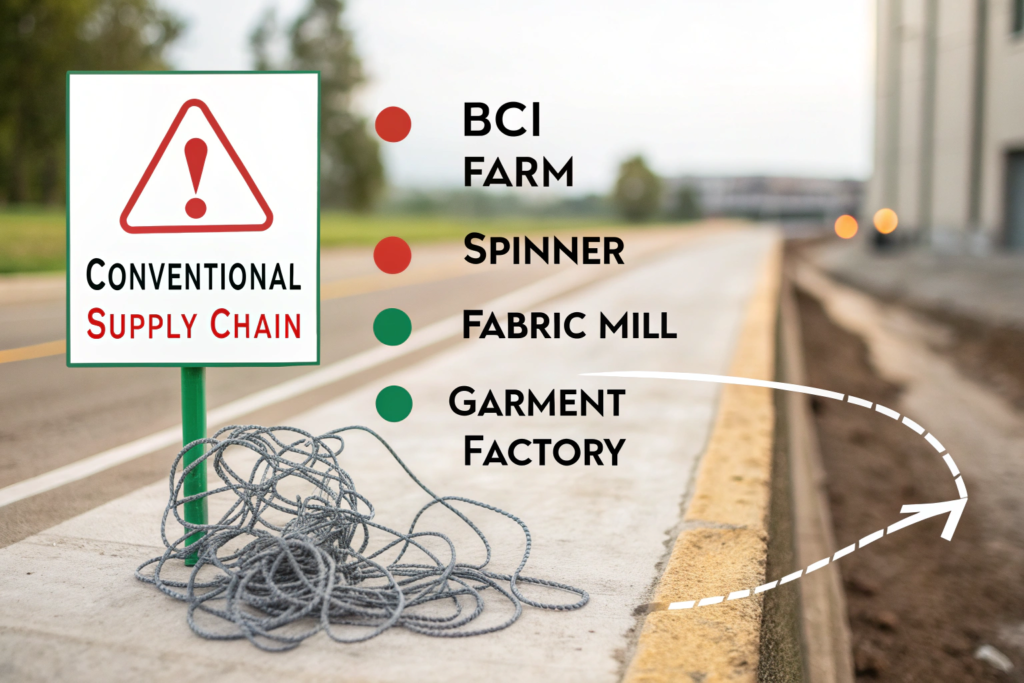
The mass balance system, while not physically tracking every bale, requires rigorous documentation at every transfer point. This creates a clear chain of custody. In a conventional supply chain, if a shipment of fabric fails a colorfastness test, pinpointing whether the issue originated in the yarn quality, dyeing process, or even the original cotton can be a time-consuming blame game. In our BCI-linked production, because our sourcing is limited to approved spinners whose raw material inputs are known, we can isolate and diagnose problems much faster. A practical case: In June 2023, an American casualwear brand reported slight shade variations across different fabric rolls. Because we used BCI-certified yarn from a single spinner lot, we traced it back to a specific dyeing parameter at our partner mill, not a raw material inconsistency. The issue was corrected in the next dyeing batch, preventing a potential 3-week delay.
What Are the Hidden Administrative Costs for Importers?
As the brand, you don’t pay the license fee directly—the fabric manufacturer or trader does. However, there is an administrative cost in verification. Major brands often require suppliers to provide Transaction Certificates (TCs) for each shipment. Generating these requires careful data entry and coordination. An inefficient supplier might charge extra for this service or cause delays. At Shanghai Fumao, we’ve integrated TC data collection into our internal ERP. When we book an order for BCI fabric, the system automatically flags the required documentation, making it a seamless part of our packaging and shipping process. This is a hidden advantage of working with a tech-integrated supplier. To understand the documentation landscape better, you can read about maintaining documentation for sustainable textile imports which covers certificates like BCI and GOTS.
Can BCI Certification Actually Reduce Total Production Costs?
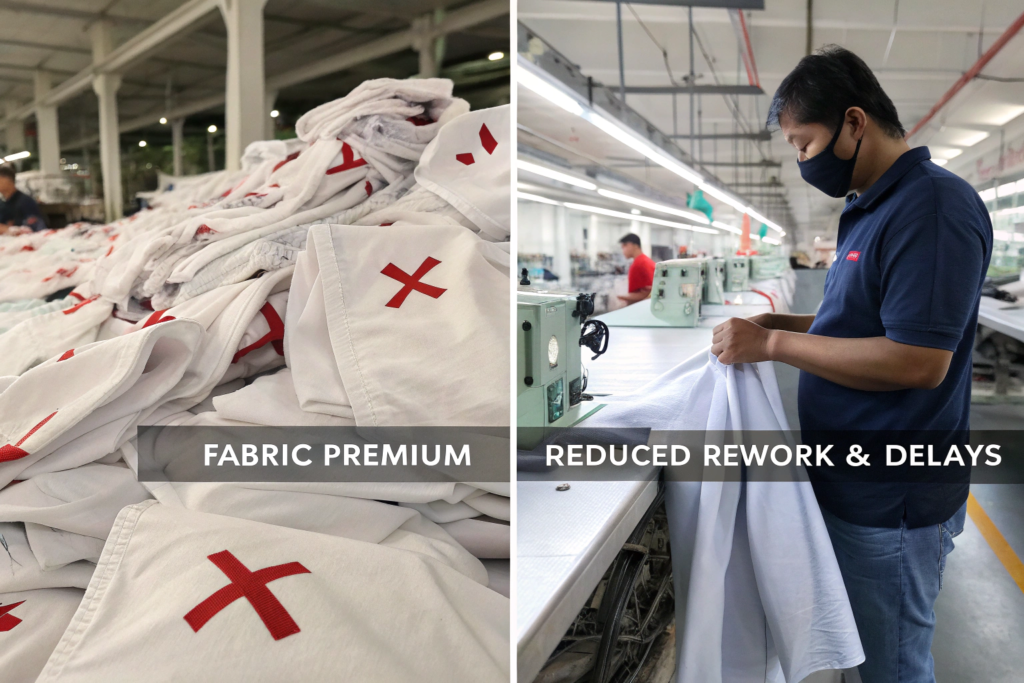
Thinking only about the fabric cost per meter is a short-term game. Total production cost includes delays, reworks, compliance failures, and even marketing value. BCI certification can positively influence several of these areas, offering a return on that initial premium.
How Does It Mitigate Risks of Material Shortage and Price Spikes?
Conventional cotton markets are notoriously volatile, influenced by weather, politics, and speculation. BCI cotton, while not immune, operates within a more dedicated and planned supply network. Farmers and spinners in the program often have forward contracts. This stability trickles down. When Covid-related logistics snarls hit in early 2022, many brands scrambled for yarn. Because our BCI spinning partners had planned their cotton purchases based on program commitments, we faced fewer "no stock" surprises. For a German sustainable fashion startup we work with, this meant their Spring 2023 collection proceeded on schedule while competitors faced delays. The predictability allowed them to plan their production scheduling with confidence, avoiding costly air freight.
Does It Lead to Fewer Quality Rejects and Higher Efficiency?
Better farming practices often lead to better fiber quality—less trash, more consistent staple length. This results in fewer yarn breaks during knitting and a more uniform fabric surface. In our weaving and knitting factories, we’ve observed a 15-20% reduction in stoppages when using higher-grade BCI yarns compared to lower-grade conventional ones. Fewer stops mean higher machine efficiency and more consistent fabric. This consistency is gold for your garment factory. They experience fewer needle breaks, less fabric waste during cutting, and smoother sewing lines. We calculated for a client that a 2% reduction in fabric waste during cutting (due to more consistent shrinkage and fewer defects) could offset over half of the BCI fabric premium on a 50,000-piece order. (Here’s an insider tip: always ask your fabric supplier for the fabric’s Coefficient of Variation (CV%) in evenness—it tells you a lot about yarn quality).
How to Source BCI Fabrics Without Overpaying?
Knowledge is power. As a buyer, your approach can determine whether you see BCI as a cost burden or a smart investment. It’s about asking the right questions and choosing partners who are experts in navigating this certified landscape, not just middlemen.

What Technical Specifications Should You Lock Down to Control Cost?
Be specific. "BCI cotton jersey" is too vague. Your specification sheet must detail:
- Yarn Count: e.g., 30/1 Ne combed. Combed yarns from BCI cotton offer the best value-performance ratio for T-shirts.
- Fabric Weight: e.g., 180 GSM. Don’t allow a tolerance of more than +/- 5%.
- Finish: Request a biopolishing finish. It’s an eco-friendly enzyme wash that reduces pilling significantly. While it adds a small cost, it drastically improves garment longevity and customer satisfaction, justifying the BCI upgrade further.
- Testing Standards: Insist on test reports from a third-party lab like SGS or ITS for key items like shrinkage, colorfastness, and pilling. A reputable supplier should provide this as standard. This due diligence is crucial, as outlined in guides on conducting effective quality control for imported fabrics.
Locking these specs prevents suppliers from substituting cheaper, inferior components that still carry the BCI label but compromise your product.
Why is Choosing an Integrated Manufacturer Crucial for Value?
The biggest cost leaks happen in handoffs. If you buy fabric from a trader who then sources from a mill, who then buys yarn from a spinner, each layer adds margin and communication risk. An integrated manufacturer like Shanghai Fumao controls—or has strategic partnerships with—key stages: yarn sourcing, knitting, dyeing, and finishing. We have a CNAS-accredited lab on-site to test at every stage. This control allows us to optimize the process for cost and quality simultaneously. For instance, we can adjust our dyeing formulas for better absorption on BCI cotton, reducing dye consumption and cost. In one project for a UK online apparel retailer in November 2023, our in-house lab’s pre-testing caught a potential shrinkage issue post-dyeing. We adjusted the finishing parameters before bulk production, saving the client from what would have been a catastrophic 8% shrinkage rate, ensuring the final garments met their strict size grading standards. This level of control is your best defense against overpaying for problems.
Conclusion
Navigating the cost implications of BCI certification for your bulk T-shirt production is less about finding the cheapest option and more about investing in the most reliable and resilient one. The premium exists, but it is not a static fee—it’s a variable influenced by your order volume, specification clarity, and, most importantly, the expertise of your supply partner. As we’ve seen, this investment can pay dividends in supply chain stability, production efficiency, and brand equity.
The brands that thrive are those that view sustainable materials not as a tax but as a component of sophisticated product engineering. They work with suppliers who understand the entire chain, from the field to the finishing machine, and who can translate certification into tangible quality and predictable timelines. They move beyond price-per-meter to consider total cost of ownership.
If you’re ready to explore how BCI or other sustainable fabrics can fit into your production budget without compromising on your margins or values, let’s have a concrete conversation. We can analyze your last production run and show you a realistic cost-benefit scenario. Contact our Business Director, Elaine, at elaine@fumaoclothing.com to discuss how Shanghai Fumao’s integrated fabric solutions can bring clarity and value to your sustainable sourcing strategy. We don’t just sell fabric; we co-create efficient, responsible, and profitable supply chains.