You see the market shift. Customers aren’t just asking for "organic" anymore—they’re demanding proof. Starting a private label with OCS (Organic Content Standard) certified organic cotton is your opportunity to build a brand rooted in verifiable trust, not just vague claims. But where do you begin? The gap between a great idea and a compliant, profitable product line is where most founders get stuck.
Launching a private label is complex. Launching one with a certification like OCS adds layers of sourcing, compliance, and storytelling that can’t be glossed over. This isn’t about finding a random supplier on Alibaba and slapping your logo on a generic tee. It’s about building a mini-supply chain with integrity from day one. The brands that succeed treat their OCS certification not as a cost, but as their core product feature and marketing engine.
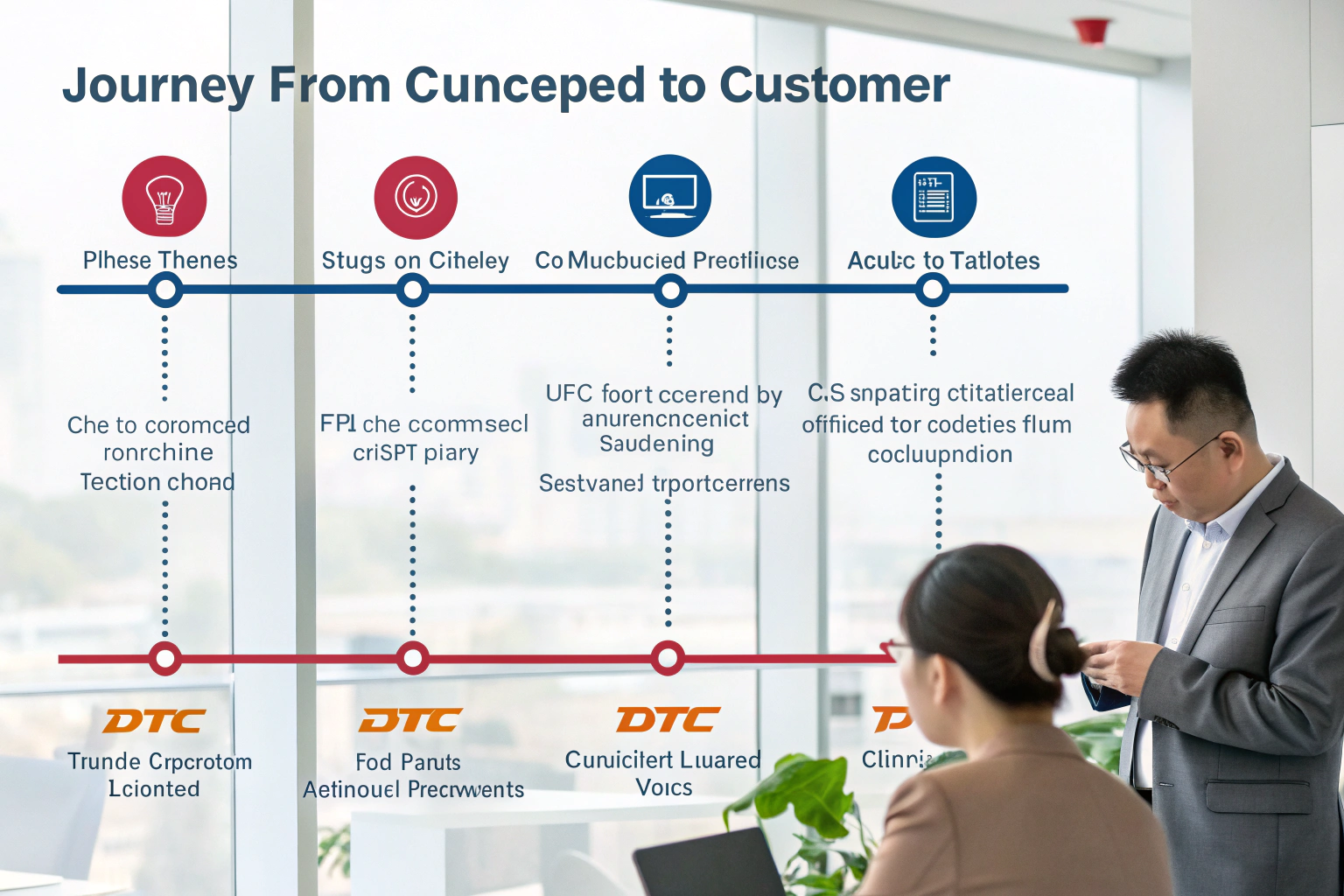
The journey from concept to customer involves five critical, sequential phases. Miss one, and you risk delays, certification failures, or a product that doesn’t resonate. As a partner to dozens of successful DTC (Direct-to-Consumer) brands, we at Shanghai Fumao have mapped this path. Let’s walk through it together, turning your vision for a trustworthy private label into a tangible, launch-ready reality.
Phase 1: Defining Your Brand & Compliance Foundation
Before you source a single thread, you must build your brand’s legal and ethical blueprint. This phase is about paperwork and positioning, and it’s non-negotiable.
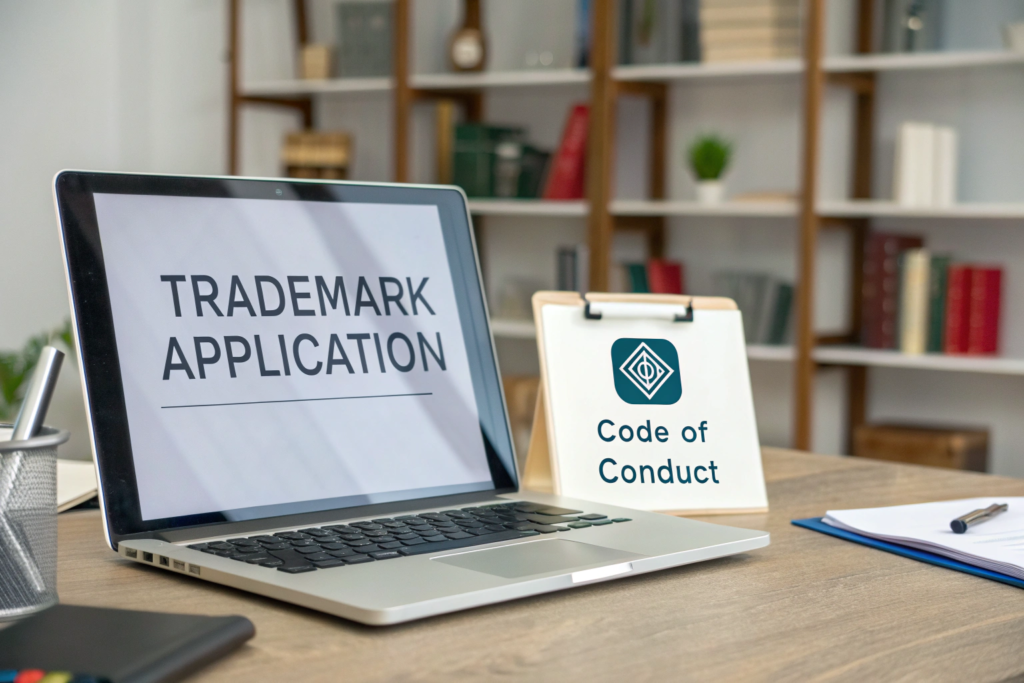
First, Secure Your Brand Identity. Trademark your brand name and logo in your target markets (especially the US, EU, or UK). This protects you and is required for applying for your own OCS license if you plan to use the OCS logo on your hangtags. Simultaneously, draft your Code of Conduct for suppliers. This document outlines your requirements for social compliance (like no forced labor, fair wages) and environmental practices. Presenting this to potential factories immediately signals you’re a serious, ethical partner.
Second, Understand Your Certification Obligations. As a brand selling OCS products, you have two options:
- Rely on Your Supplier’s Certification: You can sell products made from OCS-certified materials, using the claim "Made with X% OCS-certified organic cotton." The supplier’s Transaction Certificate (TC) is your proof.
- Obtain Your Own OCS Scope Certification: This allows you to use the official OCS logo on your labels and marketing. It involves an audit of your company’s management system for handling certified goods. For a startup, this is often a Phase 2 goal after your first successful shipment.
Our advice to most new private labels is: Start with Option 1, plan for Option 2. Use your first production run as a learning experience. Ensure your supplier (like us) provides flawless TCs and documentation. Then, for your second season, invest in your own certification to strengthen brand control. Resources like the Textile Exchange’s brand licensing portal are essential for this journey.
How to Craft a Compelling Brand Story Around OCS?
Your story is your differentiation. "Organic" is a feature; "traceably organic" is a benefit. Your narrative should answer: Why OCS? Why now?
- Focus on Transparency: "We believe you deserve to know what you’re wearing. Every one of our garments is backed by an OCS Transaction Certificate, tracing the organic cotton back to the field."
- Highlight the "Verified" Difference: Contrast yourself against brands using unverified "organic" claims. Position OCS as your brand’s promise of due diligence.
- Connect to Consumer Values: Link to wellness (purity against skin), environmental stewardship (water savings, soil health), or conscious consumption.
A client of ours, a maternity wear brand from Canada, built their entire launch campaign around the tagline: "For Your Skin, For Their Future. Traceably Soft." They used our provided TC documentation in their "Our Proof" page, building immense credibility with cautious new parents.
What Legal & Financial Steps Are Required Upfront?
- Business Registration: Legally establish your company.
- Bank Account & Payment Gateway: Set up business banking and Stripe/PayPal merchant accounts.
- Initial Budgeting: Factor in costs beyond product: website development, marketing, photography, legal, and a buffer for unexpected delays. A common rule is to have 3x your first production order value in total startup capital.
Phase 2: Sourcing & Partner Selection – Your Most Critical Decision
Your choice of supplier will make or break your OCS private label. You’re not just buying fabric; you’re buying into a supply chain.
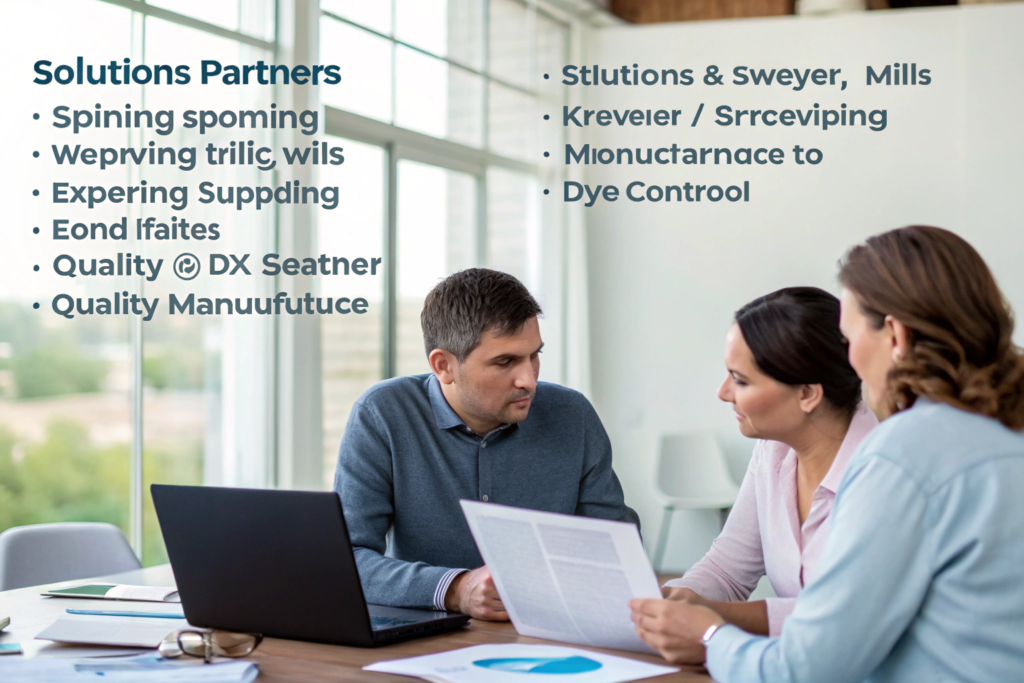
Forget Price-Only Sourcing. The cheapest OCS quote is often the riskiest. You need a solutions partner, not just a vendor. Look for a supplier who:
- Provides Full Documented Traceability: Can they show you the OCS certificates for the spinning mill, the knitting/weaving mill, and the dye house? Can they provide a sample TC?
- Offers End-to-End Service: Can they handle fabric sourcing, garment manufacturing, labeling, and quality control under one managed umbrella? This simplifies your life immensely.
- Has Experience with Startups: Do they have reasonable Minimum Order Quantities (MOQs)? Are they willing to guide you through the process?
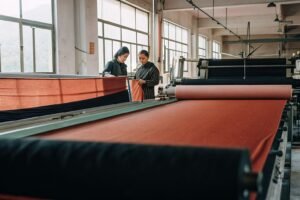
At Shanghai Fumao, we’ve structured our Starter Program for exactly this. We offer curated OCS fabric options with MOQs as low as 500 meters per color and connect you with our partnered, audited garment factories. We act as your quality and compliance guardian in China. For instance, in early 2024, we helped a UK-based athleisure startup launch their first OCS leggings line. We provided three fabric options, facilitated sampling with a factory we trust, and managed the OCS documentation flow, allowing the founder to focus on marketing and sales.
How to Vet a Potential OCS Supplier?
Conduct a thorough due diligence video call. Ask these specific questions:
- "Can you walk me through the OCS chain of custody for a basic jersey fabric, showing me each party’s certificate?"
- "What is your process for segregating OCS materials in the warehouse and factory?"
- "Can you connect me with a past private label client for a reference?"
- "What happens if a shipment fails certification verification at destination? What is your liability?"
Their answers will reveal their expertise. A trustworthy partner will be transparent, even about challenges.
Should You Source Fabric and Manufacturing Separately?
For your first private label run, we strongly advise against it. Managing two separate suppliers (a fabric mill and a garment factory) doubles your coordination effort, triples the certification complexity (you need a TC from mill to factory AND from factory to you), and magnifies the risk of something going wrong. An integrated partner or a fabric supplier who can manage the manufacturing partnership simplifies this to a single point of responsibility. This is the number one lesson from successful brand launches we’ve witnessed.
Phase 3: Product Development & Sampling – Getting It Right
This is where your idea becomes tangible. The sampling stage is for perfecting fit, feel, and compliance—not for cutting corners.
Start with Fabric Selection. Choose based on both aesthetics and ease of execution. For a first collection, we recommend:
- OCS Organic Cotton Jersey: For tees, tanks, casual dresses. Forgiving, stretchy, and widely understood by factories.
- OCS Organic Cotton French Terry: For sweatshirts and hoodies. A forgiving knit with a premium feel.
- OCS Organic Cotton Poplin: For structured shirts or dresses. Requires more precision in sewing.
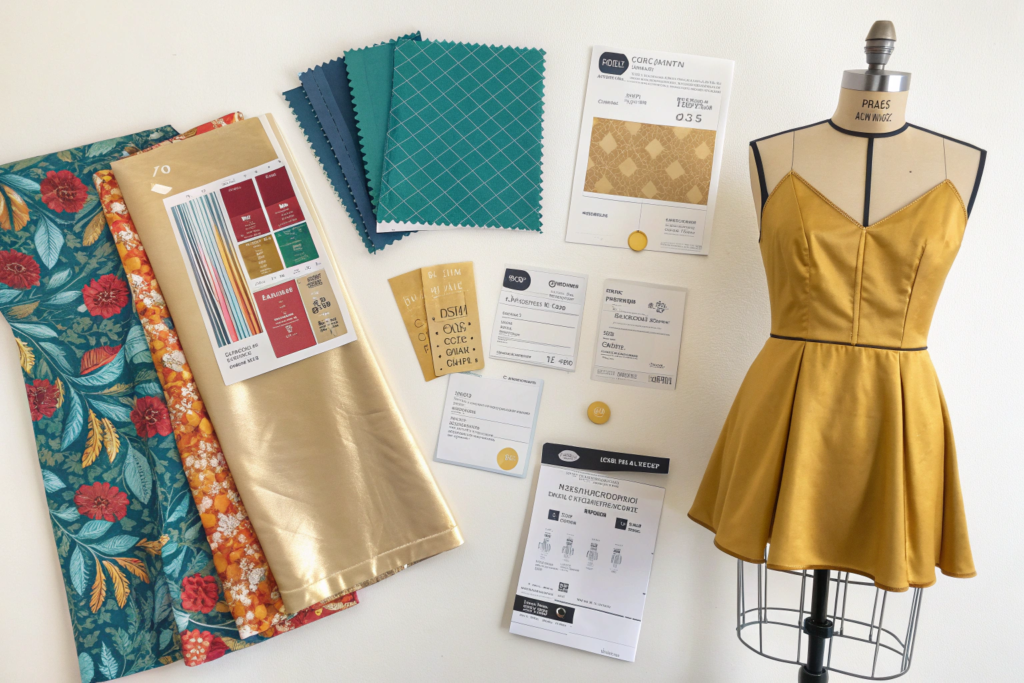
Request a Fabric Development Kit from your supplier. This should include large swatches, fabric specifications (GSM, width, shrinkage), and the OCS documentation for that specific fabric batch. Test the handfeel, drape it, and wash it multiple times to check for shrinkage and colorfastness.
Move to Proto Samples. Once fabric is chosen, provide your tech packs (detailed design documents with measurements, construction details, and label placement) to the factory. The first sample is for fit and silhouette. Be meticulous in your feedback. Remember, organic cotton can behave differently; ensure the factory is using the correct needle size and thread tension.
The Golden Sample. This is the final, approved sample from which bulk production will be copied. This sample must be perfect. It must also include all correct labels: care label with fiber content (e.g., "100% Organic Cotton") and OCS license number, size label, and your branded hangtag. Approve this sample in writing, and keep it as your physical benchmark for inspecting the bulk order.
Why Is a "Pre-Production Meeting" Essential?
Before the factory cuts thousands of meters of your expensive OCS fabric, insist on a formal pre-production meeting (via video call). Attendees should include you, your supplier representative, and the factory’s production and QC managers. Review:
- The approved golden sample.
- The tech pack, line by line.
- The OCS labeling requirements and placement.
- The quality inspection standards (AQL level).
- The production timeline.
This meeting aligns everyone and prevents costly mistakes. We mandate this for all our private label clients. For one Los Angeles-based streetwear brand, this meeting caught a discrepancy between the hangtag design and the required OCS logo usage rules, saving a $2,000 re-printing cost.
How to Manage the Critical Path Timeline?
Use a simple Gantt chart. Key milestones include:
- Fabric sourcing and approval (2-3 weeks)
- Proto sample rounds (2-3 weeks)
- Golden sample approval (1 week)
- Pre-production meeting (1 day)
- Bulk fabric procurement and production (4-6 weeks)
- Quality inspection and shipping (1-2 weeks)
Buffer each stage by 25%. Everything takes longer than you think, especially the first time. Factor in major Chinese holidays (Chinese New Year!). Starting this process at least 6 months before your desired launch date is prudent.
Phase 4: Production, QC & Certification Documentation
The bulk order is running. Your job now is vigilant oversight, not micro-management. Trust your partner but verify systematically.
Implement Staged Quality Control.
- During Production (DUPRO): Have your supplier or a third-party inspector visit the factory during sewing to check for early issues like seam consistency or correct label attachment.
- Final Random Inspection (FRI): Once 100% of the order is packed, a statistical AQL inspection is performed. For OCS goods, this inspection should also verify that the correct OCS labels are on every garment. You should receive a detailed report with photos and pass/fail status.
The Document Pack is Part of Your Product. As your order is being finalized, your supplier should compile and send you the OCS Document Pack for your review before shipment. This pack includes:
- The OCS Transaction Certificate (TC) for this shipment.
- Fabric and Garment Test Reports (for composition, colorfastness, etc.).
- Commercial Invoice & Packing List (values and descriptions must match the TC).
- Bill of Lading draft.
Verify that every detail matches across all documents: product description, quantities, your company name and address. Any mismatch can cause customs delays. We provide this as a digital pack with a clear checklist to our clients, making review straightforward.

What Are the Common Pitfalls in First Production Runs?
- Labeling Errors: The #1 issue. Wrong care instructions, missing OCS license number, misprinted hangtags. Solution: Triple-check label artworks and approve physical label proofs before production.
- Color Shading: Different dye lots can have slight variations. Solution: Insist the factory uses fabric from the same dye lot for the entire order of one color.
- Certificate Delays: The TC is issued after all data is final. If you change order quantities last minute, it delays the TC. Solution: Freeze your order specs after the pre-production meeting.
A European lingerie brand faced a two-week delay because their OCS thread supplier was late with their TC, which held up the final garment TC. We now advise clients to confirm lead times for all certified trims upfront.
How Much Should You Budget for Production?
| Create a detailed cost sheet. For 1,000 units of an OCS organic cotton t-shirt: | Cost Component | Estimated Cost (Per Unit) | Notes |
|---|---|---|---|
| OCS Fabric | $4.50 – $6.00 | Depends on weight and finish. | |
| Garment Manufacturing (CMT) | $3.00 – $4.50 | Includes cutting, sewing, trimming. | |
| Trims & Labels | $0.50 – $1.00 | OCS-compliant labels, hangtags, etc. | |
| Subtotal (FOB Cost) | $8.00 – $11.50 | Cost at Chinese port. | |
| Quality Control & Docs | $0.30 | Inspection and document management. | |
| Ocean Freight & Insurance | $0.80 – $1.20 | LCL shipping to US/EU. | |
| Import Duties & Taxes | Varies (e.g., 12% EU) | Percentage of FOB value. | |
| Total Landed Cost | ~$10.00 – $14.00 | Cost in your warehouse. |
Your retail price should be 4-5x the landed cost for a sustainable DTC brand.
Phase 5: Launch, Marketing & Building Your Proof
Your products have arrived. Now, market the integrity you’ve built.
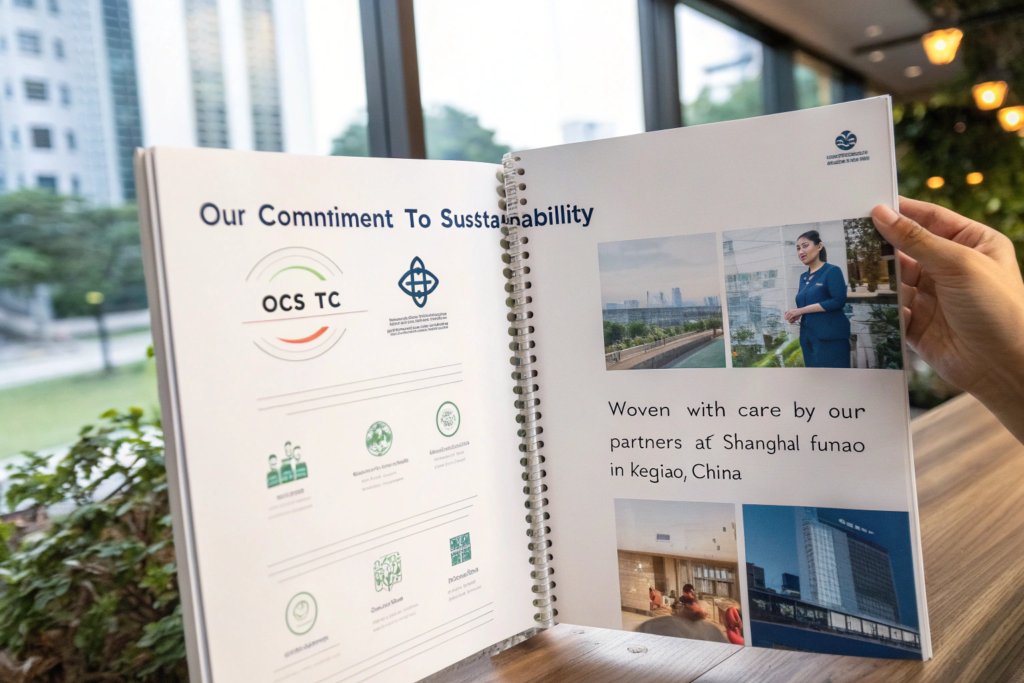
Build a "Transparency" Page on Your Website. This is non-optional. Don’t just say "we’re sustainable." Show it. Display your OCS TC (redact confidential supplier info), explain what OCS means, and introduce your suppliers (e.g., "Woven with care by our partners at Shanghai Fumao in Keqiao, China"). This builds immense trust.
Leverage the Certification in Storytelling. Use content to educate.
- Social Media: Create carousels explaining "What OCS means for you." Share BTS (Behind-the-Scenes) videos of fabric inspection or labeling.
- Email Marketing: Launch with the subject line: "Your Proof is Here." Explain the certification journey.
- Unboxing Experience: Include a small card in the package that explains the OCS label on the care tag. Make the customer feel part of the story.
Gather Feedback & Iterate. Your first collection is a learning platform. Track which OCS fabrics sell best, listen to customer feedback on fit and feel, and note any questions about the certification. Use this data to refine your next collection.
How to Scale from Your First to Second Collection?
Success means planning Collection 2 while launching Collection 1.
- Analyze Sales Data: What colors, styles, and fabrics performed best?
- Strengthen Partner Ties: Based on the experience, deepen your relationship with your supplier. Discuss volume discounts for repeat orders.
- Consider Your Own Certification: Now that you have a track record, invest in obtaining your own OCS scope certification to use the logo.
- Expand Responsibly: Maybe add one new OCS fabric (like a rib knit or twill) or a complementary product (OCS cotton socks).
The journey of a private label is iterative. Each season gets smoother, and your brand story gets richer with proof.
Conclusion
Starting a private label with OCS organic cotton is a deliberate, step-by-step process that prioritizes verified integrity over speed. It transforms the inherent complexity of certification into your brand’s most powerful asset: trust. By meticulously navigating the five phases—Foundation, Sourcing, Development, Production, and Launch—you build more than a clothing line; you build a credible, defensible brand with a transparent backbone.
The brands that win are those that partner not with the cheapest supplier, but with the most reliable guide—a partner who understands that your success is their success, and who provides the seamless integration of quality, compliance, and communication necessary for a startup to thrive.
At Shanghai Fumao, this is our specialty. We are the launchpad for conscious brands. Our integrated model, starter-friendly MOQs, and obsessive focus on documentation are designed to turn the daunting process of launching an OCS private label into a manageable, successful venture. Ready to build your brand on a foundation of verified quality? Contact our Business Director, Elaine, to start the conversation about our Private Label Starter Program. Email: elaine@fumaoclothing.com.