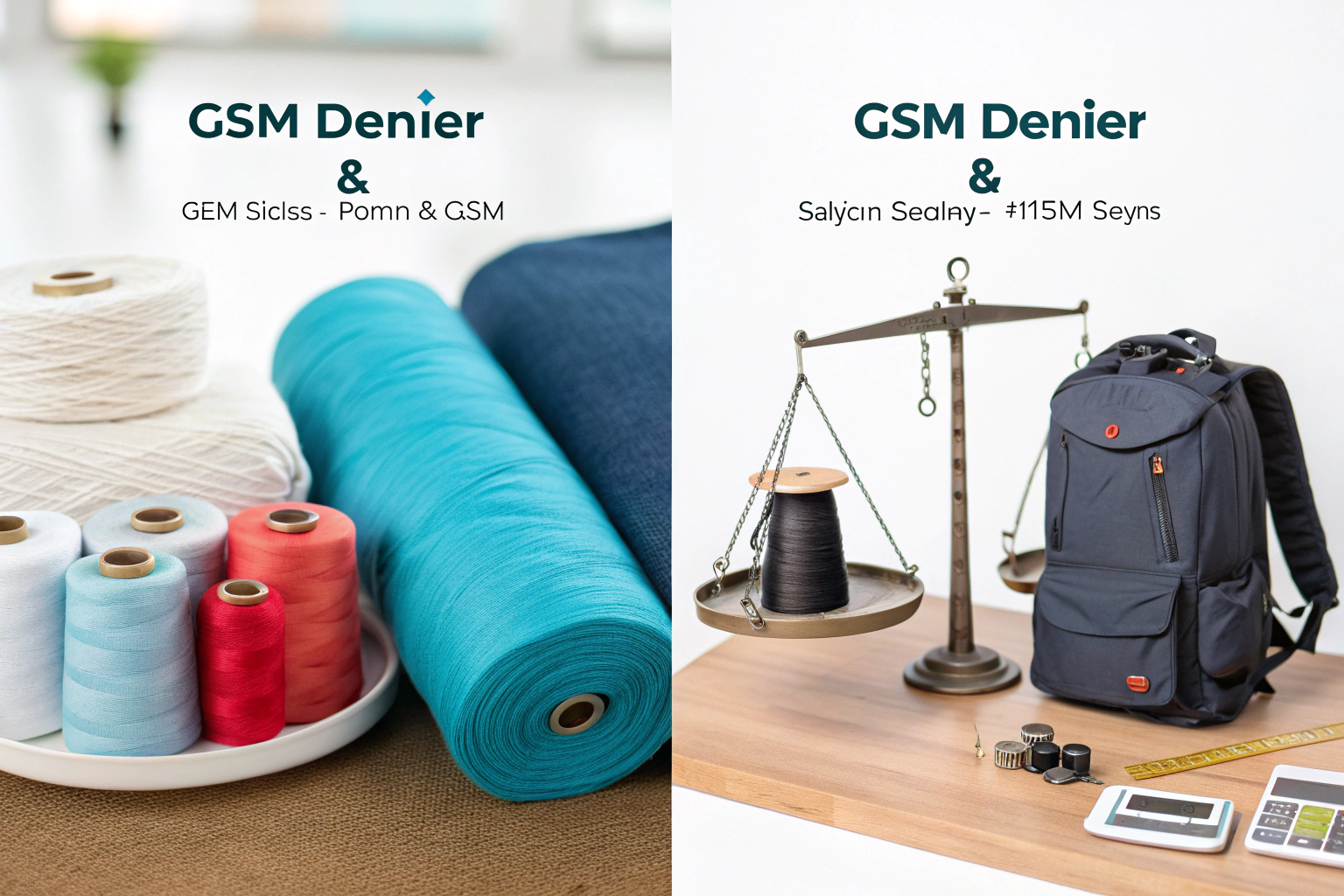
When sourcing or producing fabrics, many buyers, designers, and manufacturers encounter two key terms: GSM (grams per square meter) and Denier. At first glance, they may look similar because both describe fabric qualities, but in reality they measure two completely different properties. Misunderstanding them can lead to sourcing errors—like ordering fabric that feels too flimsy for a hoodie or too heavy for summer dresses—wasting time and money.
In short: GSM measures the weight of fabric per unit area, while Denier measures the thickness of yarn fibers.
From working with clients across Europe and the U.S., I’ve noticed that GSM matters most when they want consistent drape and hand feel in apparel, while Denier dominates conversations around durability in backpacks, tents, and technical textiles. Let’s dive deeper into both terms.
Understanding GSM in Fabrics
GSM (grams per square meter) indicates the weight of a fabric. It’s measured by cutting a one-square-meter sample and weighing it in grams. This figure tells buyers how heavy, thick, or substantial a fabric feels.

What does low, medium, and high GSM mean?
- Low GSM (100–150): These are lightweight fabrics, ideal for hot climates. A 120 GSM cotton T-shirt feels airy and breathable, perfect for California summers. Lightweight voile curtains at 110 GSM let sunlight filter through, creating a soft interior glow.
- Medium GSM (180–250): This range is used for versatile everyday wear. A 200 GSM polo shirt balances structure and comfort, while 220 GSM bedsheets feel durable yet smooth. Hotels often choose 200–250 GSM cotton percale to combine luxury with washability.
- High GSM (300+): Fabrics in this range feel dense, warm, and substantial. A 400 GSM hoodie provides noticeable weight on the shoulders and extra warmth, while denim jeans at 450–500 GSM withstand years of wear. Upholstery fabrics at 350–450 GSM keep their shape on sofas even after daily use.
According to Textile School, GSM is the industry’s go-to standard for ensuring bulk production fabrics stay consistent across batches, avoiding surprises in softness, thickness, or drape.
Why is GSM important in sourcing?
Because GSM directly influences comfort, production cost, and logistics. For instance, a buyer ordering 100,000 pieces of 120 GSM T-shirts will save significantly on shipping compared to 200 GSM shirts, since fabric weight affects freight costs. Conversely, luxury brands prefer 180–200 GSM cotton to give their T-shirts a premium feel. GSM therefore acts as a common language between buyers and manufacturers.
What is Denier and Why It Matters
Denier measures yarn thickness. It is defined as the mass in grams of 9,000 meters of fiber. A 20-denier yarn means 9,000 meters of that yarn weighs 20 grams. The larger the number, the thicker the yarn.

What does low and high Denier look like?
- Low Denier (10–40D): These yarns are extremely fine. A 15D nylon stocking is sheer, delicate, and almost invisible on the skin. Silk equivalents average around 21D, which explains their soft luster. Ultralight windbreakers often use 20D ripstop nylon to reduce weight for hiking gear.
- Medium Denier (70–200D): This range includes everyday polyester lining at 100D or jacket shells at 150D. These fabrics are flexible but durable enough for daily use. School backpacks often use 210D nylon for lightweight strength.
- High Denier (400–1000D+): Fabrics here are thick and rugged. A 600D polyester backpack resists abrasions from daily commuting, while 1000D Cordura nylon is used in military gear and motorcycle jackets because of its high tear resistance.
As ScienceDirect points out, Denier is vital for performance applications because fiber thickness determines not just feel, but also mechanical strength and transparency.
Why is Denier important in performance fabrics?
Because Denier dictates durability, transparency, and abrasion resistance. A 10D nylon tent fabric can collapse under rough use, but a 600D polyester tarp can withstand strong winds and sharp contact. Outdoor gear brands rely heavily on Denier specifications to meet safety and performance standards.
GSM vs Denier: Key Differences
Though both terms describe fabrics, GSM and Denier measure completely different aspects.
| Feature | GSM (Grams per Square Meter) | Denier (Fiber Thickness) |
|---|---|---|
| What it measures | Fabric weight per unit area | Thickness of individual yarn fibers |
| Units | g/m² | Grams per 9,000 meters of yarn |
| Focus | Whole fabric density | Yarn-level fineness or coarseness |
| Typical Range | 50–600+ GSM | 10D–1000D+ |
| Applications | T-shirts, hoodies, bedsheets, denim | Stockings, backpacks, tents, luggage |
| Example | 200 GSM cotton T-shirt | 600D polyester backpack |

Can GSM and Denier be used together?
Yes, and they often must be. A fabric’s GSM tells you its overall weight, while Denier reveals its yarn fineness.
👉 Example: A 70D ripstop nylon tent fabric may weigh only 80 GSM because it’s very thin, but the ripstop weave gives it enough durability to withstand outdoor use. On the other hand, a 300 GSM cotton twill uses fine yarns but has enough density to make it feel heavy and structured.
As Sewport emphasizes, professional sourcing requires both values, since GSM alone cannot predict strength, and Denier alone cannot explain drape or bulk.
Choosing the Right Metric for Your Needs
Both GSM and Denier are critical, but their importance shifts depending on product category.

When should you focus on GSM?
If you are sourcing apparel fabrics, GSM is the first metric to check. A buyer for a fashion brand ordering 180 GSM single-jersey cotton T-shirts knows they will feel premium compared to 140 GSM budget shirts. Similarly, luxury bedding companies specify 250 GSM percale to ensure their sheets deliver both durability and comfort.
When should you focus on Denier?
If you are sourcing technical textiles or outdoor gear, Denier becomes the priority. Backpack makers usually opt for 600D polyester because it offers the right balance of flexibility and abrasion resistance. Hosiery producers carefully choose 15D–20D nylon for transparency, while tent makers rely on 40D–70D ripstop nylon to balance weight and tear strength.
According to FabricLink, professional buyers rarely rely on a single metric. They combine GSM and Denier to avoid surprises during bulk production and to meet performance expectations.
Conclusion
GSM and Denier are not interchangeable; they complement each other. GSM measures the overall fabric weight, which affects comfort, drape, and pricing. Denier measures the fiber thickness, which influences strength, transparency, and durability.
For everyday apparel like T-shirts, hoodies, or bedsheets, GSM ensures the fabric feels right in hand and on the body. For outdoor, industrial, or performance products, Denier ensures fibers are strong enough to handle wear and stress.
At Shanghai Fumao, we work with global buyers every day to balance these two metrics in their sourcing decisions. Whether you need lightweight cotton T-shirts at 160 GSM, heavyweight French terry at 400 GSM, or rugged 600D polyester for backpacks, our integrated production—from weaving and dyeing to coating and finishing—ensures you get the exact fabric your market demands. Contact our Business Director Elaine at elaine@fumaoclothing.com to co-develop fabrics that meet both GSM and Denier standards, tailored for your business success.