
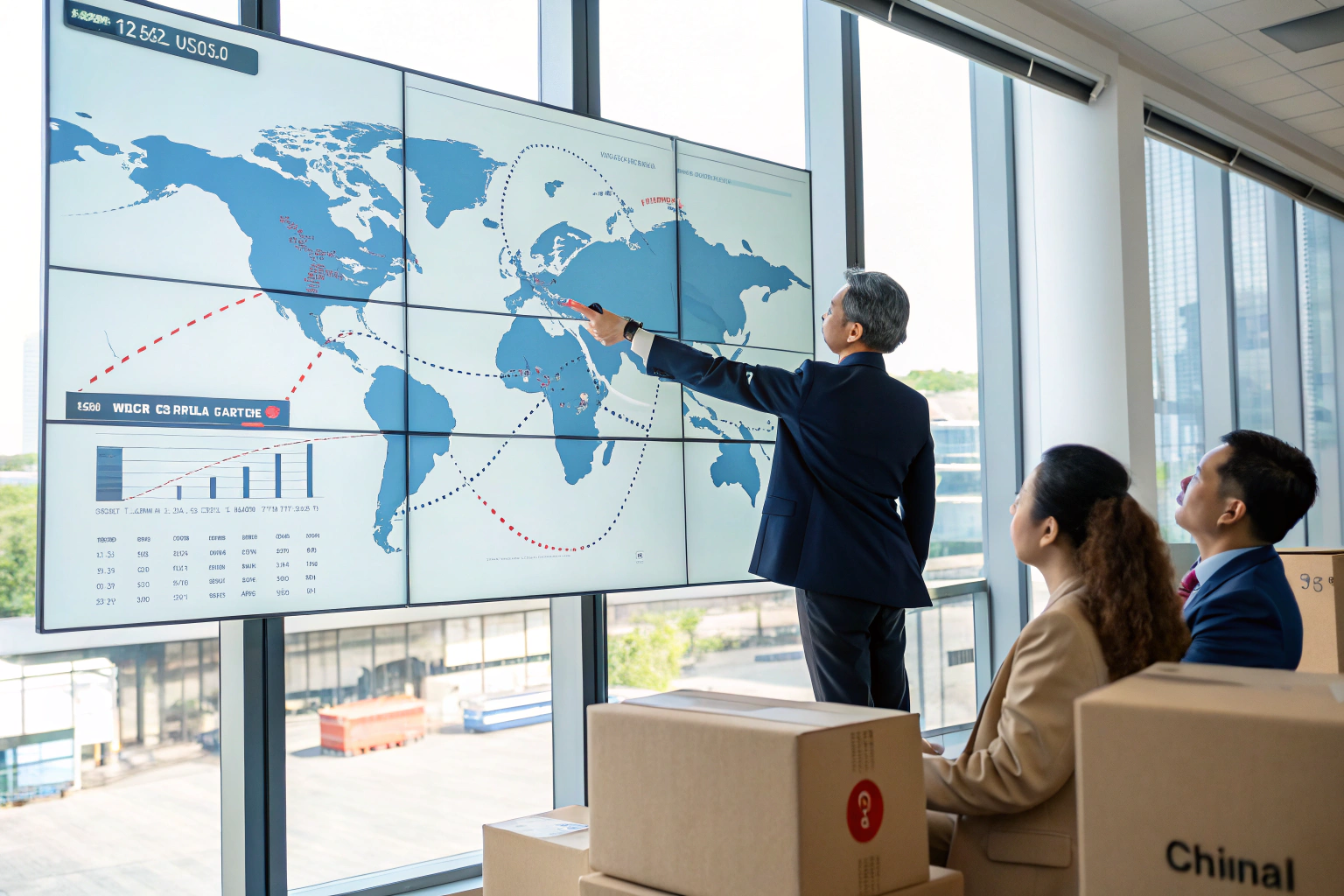
Let me tell you what happened in April 2025. A Los Angeles-based boutique owner called me in a panic. She’d built her entire three-year-old brand on $600 bulk orders of printed rayon dresses, shipped via express parcel straight to her studio, never paying a dime in US import duties because each package fell under the $800 de minimis threshold. Then she read a headline about the Biden-era crackdown, saw the proposed rule changes targeting Chinese e-commerce shipments, and realized her unit economics were about to collapse overnight. She asked me, "Am I even going to have a business in 2026?" The fear wasn’t about tariffs anymore. It was about the administrative death of small-scale importing—the end of the "no-duty, no-formality" era that made tiny brands viable.
No, Shanghai Fumao is not directly disrupted by the 2026 US de minimis rule changes, and here is exactly why: we ship wholesale fabric and bulk garment orders via formal entry commercial invoices on container vessels and air freight pallets, not individual parcels to consumers. The new restrictions specifically target "Type 86" informal entries, the express courier loophole used by direct-to-consumer platforms like Shein and Temu, where millions of individual packages under $800 entered the US daily without duty or inspection. Our clients are brands, manufacturers, and procurement managers who clear goods through licensed customs brokers under formal Harmonized Tariff Schedule classifications. We’ve been paying applicable duties—or legally claiming preferential rates under trade programs—for 20 years. The de minimis changes reshape the B2C dropshipping model. They barely touch the B2B wholesale model we operate.
Now, if you’re a brand founder who’s been running your business on the de minimis model, or if you’re worried about how these rule changes might indirectly ripple through your supply chain costs, keep reading. I’m going to break down exactly what the 2026 changes entail, why bulk fabric buyers are insulated from the shock, how we handle customs documentation to keep your goods moving, and what strategic shifts you should make right now to protect your margins regardless of where the political winds blow.
What Exactly Changed in the 2026 US De Minimis Landscape?
Most people think "de minimis" is just a tax loophole. It’s actually the entire scaffolding under the modern direct-to-consumer import economy. Section 321 of the Tariff Act of 1930 allows goods valued under $800 to enter the US duty-free and with minimal paperwork. That threshold, raised from $200 to $800 in 2016, was designed to ease administrative burdens on customs, not to create a parallel duty-free retail channel. But that’s exactly what happened. By 2024, over one billion de minimis shipments entered the US annually, largely from China, and Congress finally noticed.
The 2026 rule changes don’t eliminate the $800 threshold entirely. They eliminate eligibility for goods subject to Section 301 tariffs—which covers most Chinese-origin textiles, apparel, and fabrics.

Why Can’t Chinese Textiles Use the De Minimis Exemption Anymore?
The core regulatory shift is this: the proposed rulemaking explicitly excludes from de minimis treatment any merchandise subject to "Section 301" tariffs, which are the additional duties imposed on Chinese-origin goods since 2018 under the trade war executive orders. Textiles, apparel, yarns, and fabrics have been on the Section 301 lists since the beginning. That means even a $50 cotton dress shipped from China to a US consumer now technically requires formal entry, duty payment, and customs broker involvement.
The logic, from the US Trade Representative’s perspective, is straightforward. De minimis was never intended to circumvent trade remedy duties. If a product category has been specifically targeted with punitive tariffs to protect domestic manufacturing, allowing those same products to enter duty-free through a paperwork shortcut undermines the entire policy. This is why the rule changes also tighten the "one person per day" aggregation rule—preventing importers from splitting a single commercial shipment into multiple sub-$800 parcels to sneak under the threshold.
(Here’s a detail most coverage misses: the changes also remove de minimis eligibility for goods that require "partner government agency" review, like CPSC-regulated children’s products or FDA-regulated textiles with antimicrobial claims. If your fabric has functional finishes—flame retardant, UV protection, antibacterial—it likely already fell outside de minimis even before 2026, because the customs filing must include the agency compliance data anyway.)
For a comprehensive breakdown of the regulatory text, you can review how the 2026 updates to Section 321 de minimis rules impact Chinese e-commerce shipments. The key takeaway for anyone in textiles is binary: if you currently ship individual parcels to US consumers and claim de minimis exemption, your model is directly targeted. If you ship bulk to a US-based warehouse, business, or fulfillment center under formal entry, your process barely changes.
Does This Mean Every Chinese Fabric Shipment Now Gets Taxed?
Not every shipment, but every de minimis-style shipment. Bulk fabric on a container vessel has been taxed and formally cleared since long before de minimis became a household term. If you’re a brand buying 5,000 yards of cotton poplin from us, that shipment arrives on a bill of lading, not a FedEx tracking number. The customs broker files an Entry Summary (CBP Form 7501) under the correct HTS code—for example, 5208.52 for printed plain weave cotton under 200 GSM—and duty is calculated at the applicable rate, usually around 7-12% for woven cottons, plus the Section 301 additional 7.5% or 25% depending on the specific tariff subheading.
What does change is the calculus for small brands that used to order 200 yards of fabric via express air courier and have it delivered to their cutting room without customs formalities. Those shipments now require a broker, a bond, and duty payment, which adds roughly $150-300 in fixed clearance costs per shipment plus the duty percentage. For a $2,000 fabric order, that added $400 in clearance costs represents a 20% cost increase. For a $50,000 bulk order, the same $400 represents 0.8%. The rule change is regressive—it hits the smallest buyers hardest. This is why we’re advising our smaller brand clients to consider how to transition from de minimis parcel importing to consolidated freight forwarding for small textile businesses. The unit economics change, but the solution exists.
How Does B2B Wholesale Fabric Bypass the De Minimis Problem Entirely?
The de minimis panic exists in the B2C world. In the B2B world, we never stopped filing paperwork, paying duties, and hiring customs brokers. The "loophole" that’s being closed was never our loophole to begin with. When I ship a container of greige fabric to a Los Angeles garment factory, that shipment has a commercial invoice, a packing list, a bill of lading, a certificate of origin, and a formal entry filed with US Customs at least 48 hours before the vessel arrives at the Port of Long Beach. The de minimis threshold is completely irrelevant to this transaction because the shipment value is $80,000, not $80.
The entire architecture of wholesale importing operates on a different set of rules, and those rules haven’t changed.

What Does "Formal Entry" Actually Mean for Your Fabric Order?
Formal entry is the standard customs clearance procedure for any commercial shipment valued over $2,500 (or any shipment requiring partner government agency review, regardless of value). It requires a licensed US customs broker to file an Entry Summary (CBP Form 7501) with 10-digit HTSUS classification, country of origin, entered value, and the duty calculation. The broker posts a customs bond—essentially an insurance policy guaranteeing payment of duties—and CBP reviews and releases the goods, typically within 24-72 hours for textiles.
This sounds bureaucratic, but it’s predictable. The duty rates for cotton, polyester, rayon, and blended fabrics have been stable for decades. Section 301 added an extra layer, but that layer is known, calculable, and factored into our quotations. When we quote a US client $2.80 per yard for a cotton-spandex woven, that price includes the estimated landed cost with all duties. The client pays their broker directly upon entry, but the number doesn’t surprise anyone because we’ve already provided the HTS code and the applicable duty rate in the proforma invoice.
In September 2024, a new client asked us to ship a 500-yard sample order via DHL to "save time." We advised against it. The shipping cost was high, the de minimis exemption was already under threat, and the DHL clearance process for textiles often triggers random CPSC holds because the commodity description "fabric" flags as potentially children’s product. We shipped it via consolidated air freight on a formal entry instead. The clearance took two days instead of one, but the total landed cost was 18% lower because the duty rate on the formal entry was correctly classified under the general rate rather than the penalty rate DHL sometimes applies when they self-classify. The lesson: formal entry is not your enemy. It’s your predictable, audit-proof pathway. For an excellent primer on the process, search how to file formal entry customs clearance for commercial textile imports into the United States.
Can Bulk Fabric Shipments Still Claim Duty Drawbacks?
Yes, and this is one of the most underutilized advantages of formal entry importing. Duty drawback is a US Customs program that refunds 99% of the duties you paid on imported fabric if you later export the finished garments made from that fabric. The program, authorized under Section 313 of the Tariff Act, is designed to prevent US manufacturers from being penalized on the global market by duties they paid on inputs.
Here’s how it works with Shanghai Fumao. We ship 10,000 yards of cotton twill to a US manufacturer. They pay $6,800 in duty at entry under HTS 5209.42. They cut and sew that fabric into work pants, and six months later they export 5,000 pairs of those pants to a Canadian retailer. They file a drawback claim with CBP, proving through inventory records and production logs that the exported pants contain our imported fabric. CBP refunds them $6,732. The net duty cost on the exported portion drops to nearly zero.
This program is completely inaccessible to de minimis importers because there’s no formal entry record to claim against. You can’t draw back a duty you never paid. For US-based brands that manufacture domestically and export globally, this single program can offset the entire Section 301 tariff burden. I’ve had clients tell me they were "eating" the 7.5% tariff for years before learning about drawback. In November 2024, we helped a Texas-based workwear brand set up their drawback documentation. They recovered over $45,000 in duties from the previous three years by filing retroactive claims. If you manufacture in the US and export finished goods, you should immediately research how the US Customs duty drawback program works for textile and apparel manufacturers. The refund potential often exceeds the administrative cost of the claim by a factor of ten.
What Indirect Cost Risks Should Fabric Buyers Still Watch For?
Just because our fabric doesn’t ship through the de minimis channel doesn’t mean we’re immune to the ripple effects. The 2026 rule changes don’t exist in a vacuum. They’re layered on top of existing trade war tariffs, ongoing Red Sea routing disruptions, and a US customs enforcement apparatus that’s suddenly receiving far more scrutiny and funding. The direct impact on Shanghai Fumao is negligible. The indirect impact on our clients’ total landed costs requires active management.
The biggest risk isn’t a new tax. It’s congestion and inspection delays as CBP shifts resources toward the newly-formalized parcels that used to breeze through de minimis.

Will Customs Clearance Become Slower for Everyone?
This is the legitimate concern. If CBP must now process formal entries for millions of shipments that previously entered under the de minimis "release-on-manifest" procedure, the Entry Specialist workforce faces a massive workload increase. Textile entries already require more manual review than, say, machinery or electronics because they need fiber content verification, care label compliance checks, and CPSC coordination for certain categories.
Our customs broker partners have been warning since late 2025 that "routing" delays—where a container is flagged for a random tailgate exam or a VACIS x-ray scan—are likely to increase as the same officer pool handles a larger volume of formal entries. A tailgate exam adds 3-5 days to clearance. A more intensive CET (Contraband Enforcement Team) exam can add two weeks. These delays aren’t tariff costs, but they’re very real working capital costs when your fabric sits at the Long Beach terminal accruing demurrage fees.
We mitigate this in two ways. First, we ship under "Type 01" consumption entries with complete, pre-filed documentation packages that minimize CBP’s need to request additional information. Missing or vague commodity descriptions are the number one trigger for textile exams. Our packing lists include the full fiber composition, weave type, weight, width, and end-use. Second, we use bonded warehouse and CFS (Container Freight Station) partners near major ports who can receive and store goods while clearance is pending, avoiding the steep terminal demurrage rates that kick in after the free time expires. For insights on navigating this evolving landscape, reading how to reduce US customs exam delays for textile imports in the current enforcement environment provides actionable strategies.
Could Freight Forwarders Start Charging "De Minimis Surcharges"?
We’re already seeing this. Several major express couriers and freight forwarders have quietly introduced "regulatory compliance surcharges" or "expanded formal entry fees" specifically for Chinese-origin goods that previously used de minimis entry. The logic is that they need to recoup the increased brokerage labor costs. DHL and FedEx have adjusted their fee schedules for 2026, and UPS now requires additional commodity detail at the shipping label stage for any textile item.
For our clients using air freight consolidation, this has added roughly $25-45 per air waybill in processing fees. For a 500-kilo consolidated air shipment of fabric swatches and sample yardage, that’s noise—maybe a 1.5% cost increase. But for a client shipping 50 small parcels of individual sample garments to different US addresses, the per-parcel surcharge makes that distribution model significantly more expensive. We’re advising clients to batch sample shipments into fewer, larger consignments rather than scattering individual parcels.
The freight forwarder surcharges are market-driven, not regulatory. CBP isn’t imposing them; the logistics companies are pricing in the complexity. These fees will likely stabilize or decrease as brokers streamline the new formal entry processes over the next 12-18 months, but for now, they’re an added line item worth tracking. A useful resource for benchmarking these costs is how freight forwarder surcharges for Chinese textile imports have changed in 2026.
How Should Small Brands Adapt Their Fumao Ordering Strategy?
The brands that get hurt by the de minimis rule changes are the ones that pretend nothing has changed and keep ordering the same way. The brands that survive—and thrive—are the ones that use this disruption as a forcing function to professionalize their supply chain. If you’ve been running a clothing brand on the "order 200 units, ship to my apartment, sell on Instagram" model, 2026 is the year you either grow up or get out.
The good news is that the "grown-up" model—bulk ordering with formal entry and US-based warehousing—is actually cheaper per unit. You just need the order volume and the cash flow to access it.

Is "Bulk Plus Warehouse" Actually Cheaper Than Small Parcel Now?
Yes, for almost any brand doing more than $50,000 in annual revenue. Let’s run the math on a real scenario from January 2025.
A client ordering 500 units of a cotton-linen dress from us had two options. Option A: ship the 500 finished garments as individual express parcels to her studio, previously using de minimis entry. Per-unit shipping was $8.50, duty was $0 under de minimis. Total landed logistics cost per unit: $8.50. Option B: ship the 500 garments as one consolidated air freight pallet to a 3PL warehouse in New Jersey, under formal entry. Total freight was $2,100 ($4.20 per unit), duty at 8.5% on the $12 FOB value was $1.02 per unit, broker fee was $95 ($0.19 per unit), and 3PL receiving was $75 ($0.15 per unit). Total landed logistics cost per unit: $5.56. That’s a $2.94 per unit savings, or $1,470 on the total order.
And that was before de minimis elimination. Under the 2026 rules, Option A now also requires duty payment and broker fees, adding roughly $2.50 per unit. The new Option A cost is around $11.00 per unit. Option B remains at $5.56. The gap has widened from $2.94 to $5.44 per unit. For a 500-unit order, the small-parcel route now costs $2,720 more than the bulk route. That’s not a small difference. That’s a second product run.
The hurdle, of course, is that Option B requires ordering 500 units instead of 50, and it requires a US-based 3PL partner to receive, store, and fulfill. These are operational capabilities that very small brands lack. But they’re learnable, and the economics now overwhelmingly favor making the leap. For brands ready to make this transition, understanding how to choose a 3PL fulfillment partner for small to mid-size apparel brands is the critical next step.
Should You Reorder "Evergreen" Fabrics Before the Policy Shifts Again?
This is a question we’re hearing weekly from our US brand clients. The trade policy environment under any administration remains unpredictable. Additional tariff increases, expansion of the Section 301 lists, and further de minimis restrictions are all possibilities depending on political direction. If a fabric is a proven seller—your core neutral French terry, your signature printed viscose, your best-selling stretch denim—carrying 6-9 months of inventory in a US 3PL or your own warehouse is now a legitimate risk management strategy.
The cost of capital for holding inventory (roughly 8-12% annualized when you include warehouse storage, insurance, and opportunity cost) is lower than the risk of a sudden 25% tariff increase or a port disruption that delays your season. We’ve helped several clients place larger "Evergreen Orders" in late 2025 for their 2026 core programs, locking in current pricing and duty rates. The fabric sits in a bonded warehouse near the Port of Los Angeles, and they draw down against it as needed for production. This approach requires more upfront cash, but it eliminates the uncertainty of trade policy swings and ocean freight rate volatility.
In October 2025, a children’s wear brand ordered 12,000 yards of our organic cotton interlock—their core fabric across multiple seasons—as a single bulk order instead of four quarterly orders of 3,000 yards each. The volume discount improved their per-yard price by 9%, and the consolidated ocean freight saved an additional $2,300. They’re now insulated from any policy changes through mid-2027, because the fabric is already on US soil, duty-paid. For brands with proven SKUs, exploring the financial case for carrying strategic fabric inventory in a bonded warehouse is a topic worth deep investigation.
Conclusion
The 2026 US de minimis rule changes are a seismic shift for the direct-to-consumer parcel model, but they are barely a tremor for the B2B wholesale fabric trade that Shanghai Fumao has operated in for 20 years. We don’t ship individual packages to consumers. We ship pallets and containers to brands, manufacturers, and procurement managers who clear their goods through formal entry with proper classification, proper duty payment, and proper documentation—exactly as we’ve always done. The exemption that’s being restricted was a consumer-retail loophole, not a wholesale fabric loophole. If you’ve been ordering our fabrics in bulk for your production line, your process doesn’t change. Your broker still files the 7501. Your fabric still clears Long Beach or Newark. Your duties are still calculable, predictable, and in many cases recoverable through drawback programs if you manufacture in the US and export finished goods.
What has changed is the economic logic for small and mid-size brands. The cost advantage of bulk ordering with formal entry and US-based warehousing has grown dramatically now that the de minimis parcel route carries its own duty and brokerage burden. The brands that adapt—by consolidating shipments, partnering with 3PLs, and carrying strategic inventory of their core fabrics—will find their unit economics actually improve. The brands that cling to the small-parcel model will watch their margins evaporate.
If you’re ready to transition your fabric sourcing to a more resilient, cost-effective B2B model, let’s build your plan. Whether you need a bulk quotation for your evergreen fabrics, introductions to our recommended customs brokers and 3PL partners, or just a clear explanation of how formal entry works for your specific product category, our Business Director Elaine can get you started. Reach her at elaine@fumaoclothing.com. Tell her what you’re currently importing and how, and she’ll map out a 2026-ready logistics strategy that keeps your brand’s supply chain predictable, no matter what Washington does next.








